Tag: democracy

  • PM Shehbaz offers talks to Imran Khan

    PM Shehbaz offers talks to Imran Khan

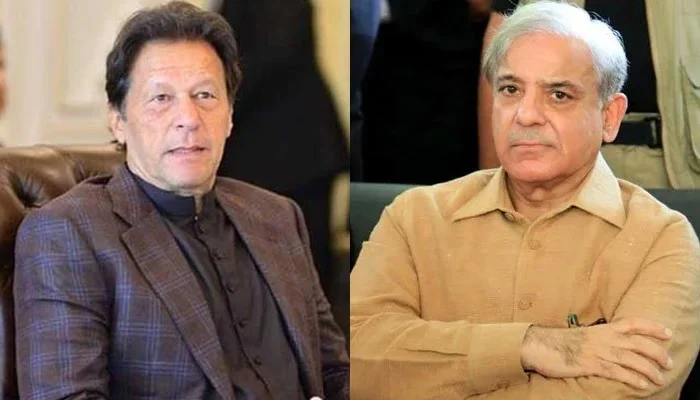
    Prime Minister (PM) Shehbaz Sharif has offered talks to incarcerated former Prime Minister Imran Khan to resolve political differences.

    During his address to the National Assembly (NA), the PM emphasized the importance of unity and cooperation in leading the country towards economic growth and political stability.

    “In my first speech, I stressed the importance of the Charter of Democracy. Now, it is imperative that we agree on a Charter of Economy,” said PM Shehbaz.

    “If their [PTI] founder is facing troubles [in jail], then I reiterate: come, let’s sit down and talk,” Shehbaz Sharif said during his speech in the National Assembly (NA).

    Talking about the February 8 polls, PM Shehbaz said: “We joined the parliament despite the [rigged] polls. The sort of slogans that were raised during my first speech will always be remembered as a dark chapter in the history books.”

  • Government says X is a national security threat

    Government says X is a national security threat

    The Federal Interior Ministry’s joint secretary told the Islamabad High Court (IHC) that “content uploaded on the internet” is a “threat” to Pakistan’s national security.

    Journalist Ehtesham Abbasi had filed a petition in IHC against the closure of X, formerly Twitter.

    X has been inaccessible in the country since February 17 and millions of users have been deprived of their basic rights.

    Justice Aamer Farooq heard the plea and asked the interior ministry about any written communication of the closure. “What is this method? What is this attitude? Assist the court,” said the IHC CJ, adding that everything is “closed and jammed”.

    The court expressed reservations that if the matter is as serious as national security then it should have been given in official writing. “Show us the documents. There will be no verbal conversation,” asserted Justice Farooq.

    “You closed X on the Intelligence Bureau’s (IB) report. There are no reasons written in it, only a report based on speculation,” he added.

  • CJP throws weight behind commission to probe Judges’ letter

    CJP throws weight behind commission to probe Judges’ letter

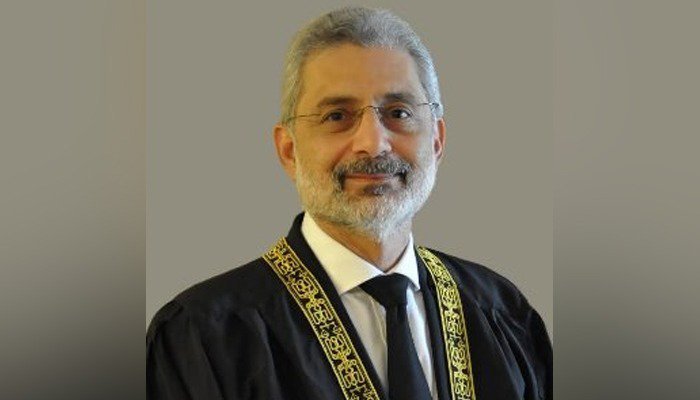
    Chief Justice of Pakistan (CJP) Qazi Faez Isa on Thursday said that any “interference by the Executive in the affairs and judicial workings of Judges will not be tolerated”.

    The statement came through a widely anticipated press release by the Supreme Court after the CJP met with the Prime Minister of Pakistan Shehbaz Sharif yesterday regarding the six judges’ letter alleging meddling by spy agencies in judicial matters.

    The press release stated “under no circumstances can independence of judiciary be allowed to compromise,” adding that the CJP and the Senior Puisne Judge believed that an independent judiciary is a “foundational pillar which upholds the rule of law” and fosters a strong democracy.

    It added that a proposal was made to constitute an inquiry commission under the Pakistan Commissions of Inquiry Act, 2017 and it would be headed by a retired judge of “impeccable integrity” to probe into the allegations.

    The PM will undertake a Federal Cabinet meeting today to seek approval for the constitution of the said commission. The PM also assured the judges that his office will be taking strong measures to ensure judiciary’s independence.

  • SC seeks details of military trials of civilians

    SC seeks details of military trials of civilians

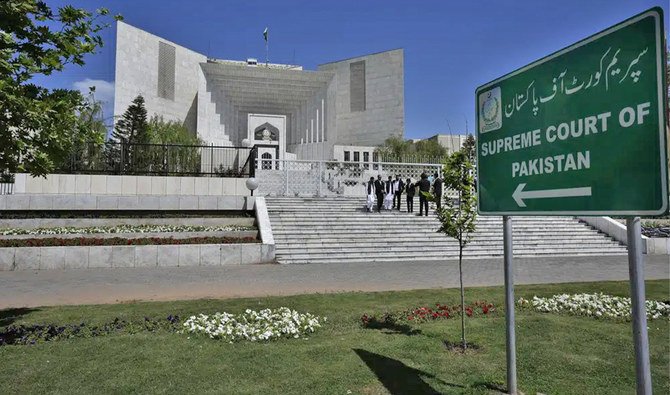
    The Supreme Court (SC) has sought details of civilians being tried in military trials over their alleged role in May 9 riots. A six-member bench — led by Justice Aminuddin Khan and including Justice Muhammad Ali Mazhar, Justice Syed Azhar Hasan Rizvi, Justice Shahid Waheed, Justice Musarrat Hilali and Justice Irfan Saadat Khan — heard a set of intra-court appeals (ICAs) against its Oct 23 unanimous ruling nullifying the military trials of civilians.

    The case references 103 civilians currently in army trials for their alleged involvement in attacks on army installations.
    It is important to note that last year, a five member bench had unanimously declared military trials of civilians as null and void.

    However, on December 13, ruling on an appeal filed by the then-caretaker federal government and provincial governments of Punjab, KPK, Balochistan, in a 5-1 majority verdict, the SC conditionally suspended its previous ruling.

    Recently, former CJP Jawad S. Khawaja, who is one of the petitioners to challenge military trials, had requested for an early hearing, stating that continued presence of civilians in military custody was worrying. His counsel also objected to the size of the bench saying, “It is my request to the court to urge the SC committee to constitute a nine-member bench.”

  • Imran Khan to write letter to IMF asking not to give loan to Pakistan over poll rigging

    Imran Khan to write letter to IMF asking not to give loan to Pakistan over poll rigging

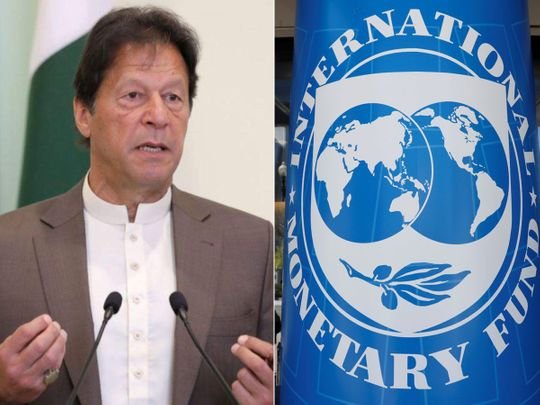
    Pakistan Tehreek-e-Insaf (PTI) leader Barrister Ali Zafar said on Thursday that PTI founder Imran Khan will write a letter to the International Monetary Fund (IMF) to bring attention to alleged rigging in the general elections held on February 8.

    “IMF, European Union, and other organisations have their charter that says these organisations will work in a country where there is good governance. For good governance, a country needs to have democracy that requires free and fair elections,” Ali Zafar said while speaking to media outside Adiala Jail.

    The PTI leader and lawyer also alleged that the people’s mandate was stolen, and those who were losing on February 8 were declared winners the next morning.

    “Democracy cannot be run with this fake mandate,” he said, adding that “no organization can give loans to a country where elections are rigged.”

    The prominent lawyer also said that, through a letter, the PTI founder will request that the IMF to send a monitoring team to look at the matter of poll rigging first and then give loans to Pakistan.

    He also mentioned that “any loan to the government that doesn’t have people’s mandate will not be in favour of Pakistan.”

  • Democracy slides amid wars and political polarisation, study says

    Democracy slides amid wars and political polarisation, study says

    Democratic standards across the world fell in 2023 amid the spread of wars, authoritarian crackdowns and declining levels of trust in mainstream political parties, the Economist Intelligence Unit (EIU) said on Thursday.

    While the number of countries categorized as democracies increased by two last year, the global average index score fell to 5.23 in 2023 from 5.29 the year before, its lowest level since the first study was published in 2006.

    “The world has entered an age of conflict, and the contours of a future major war are already visible,” said the study titled “Age of Conflict.”

    “Today’s wars are concentrated in countries where democracy is absent or in trouble.”

    Western Europe was the only region to improve its score, moving ahead of North America. The study said it was the first time that North America has not placed as the world’s highest-scoring region.

    Joan Hoey, the editor of the report, said scores fell for “not only those nations prosecuting wars (Azerbaijan and Russia), but for those on the receiving end (Armenia and Ukraine).”

    “However, growing democratic resilience and consolidation in EU member states in Central Europe, as well as in Balkan and Baltic countries, ensured that the overall regional score did not significantly fall,” Hoey added.

    “The narrative of democracy in Eastern Europe and Central Asia can be best summed up as a tale of resilience.”

    The London-based analysis group pointed to intensifying anti-immigration sentiment in many countries, saying the political landscape in the Americas and Europe has become increasingly polarised.

    “Three years after the COVID-19 pandemic, which led to a rollback of freedoms around the globe, the results for 2023 point to a continuing democratic malaise and lack of forward momentum.”

    “More countries are experiencing declining levels of trust in mainstream political parties and leaders, and succumbing to ‘culture wars’ of the sort that have long characterised the U.S.,” the study said.

    “Western Europe is plagued by low levels of trust in government.”

    The 27-nation EU holds elections for its European Parliament later this year and polls suggest the far-right could rise to become the third-biggest grouping in the legislature.

    The report said that Ukraine’s battle to repel Russia’s two-year invasion was taking a toll on its democratic institutions and practices, while Russia continued its steady slide toward “outright dictatorship.”

    Only 7.8% of the global population reside in a “full democracy” and substantially more than one-third live under authoritarian rule.

    The number of democracies increased by two in 2023, with Paraguay and Papua New Guinea being upgraded from “hybrid regimes” to “flawed democracies.”

    Greece became a “full democracy” while Pakistan was downgraded to an “authoritarian regime.” The United States remains a “flawed democracy.”

    The top three places in the index are occupied by Norway, New Zealand and Iceland, while the final three countries are North Korea, Myanmar and Afghanistan.

  • Renowned Washington Post faced extreme backlash for cartoon dehumanising Palestinian children, deleted later

    Renowned Washington Post faced extreme backlash for cartoon dehumanising Palestinian children, deleted later

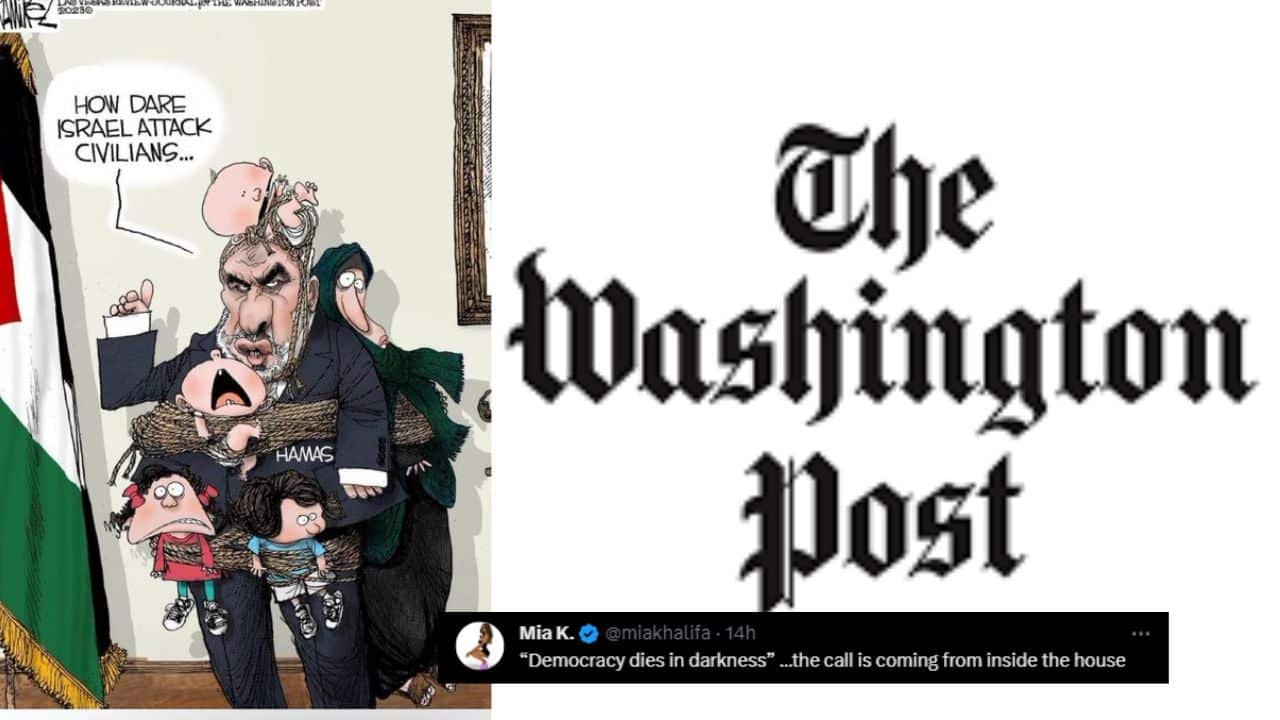
    Washington Post was slammed on the internet on Wednesday for a racist cartoon dehumanising the Palestinians. Right now the number of Gazans killed in Israeli airstrikes has reached 10,000. The cartoon has since been deleted, while Post has put out an editorial note.

    The offensive drawing shows a crudely drawn Arabic man labeled Hamas with three children and a woman tied around him with ropes.

    “This is the kind of anti-Palestinian racism that they think is acceptable for publication,” slammed Palestinian poet Remi Kanazi.

    Palestinian journalist Ahmed Eldin re-shared the post to point out how the racism Palestinians are enduring in the Western media is similar to how the Jews were drawn as evil with physical features that compared them to rats or cockroaches.

    “Before the Holocaust, Jews were portrayed as irrational and evil, with physical features that made them appear akin to cockroaches and rats. These images dehumanized Jews to justify their mass extermination. Now, the Western press is doing the same to Palestinians. The source of this obscene and offensive piece of propaganda masquerading as a “political cartoon” by Michael Pramirez is not a lesser-known publication, but rather the widely recognized

    @washingtonpost. Regardless of the validity of the claims regarding Hamas using human shields, the notion that thousands of children being killed can be justified or deemed acceptable as collateral damage is absolutely unacceptable. The dehumanization of Palestinians, which serves as a pretext to permit and rationalize their mass killing, is a disturbing trend that seems to have no boundaries within American discussions and debates.”

    ‘What’s more troubling than this racist depiction,” Palestinian-American poet Mohammad El-Kurd wrote. “Is that the Washington Post thinks it’s OK to kill civilians if, hypothetically, ‘terrorists’ hid behind them. Even if the “human-shields” myth was true, only those who kill civilians are responsible for the act of killing.”

    Columnist and writer Fatima Bhutto tweeted her outrage:

    “This cartoon is so anti-Muslim, so racist it boggles the mind that any newspaper could print it. Beyond which, Israel has murdered over 4,000 children- do you have absolutely no shame depicting Palestinian children in this manner? What a disgrace.”

    The Washington Post opinion editor David Shipley published an apology for the cartoon on their website and took it down:

    “A cartoon we published by Michael Ramirez on the war in Gaza, a cartoon whose publication I approved, was seen by many readers as racist. This was not my intent. I saw the drawing as a caricature of a specific individual, the Hamas spokesperson who celebrated the attacks on unarmed civilians in Israel. However, the reaction to the image convinced me that I had missed something profound, and divisive, and I regret that. Our section is aimed at finding commonalities, understanding the bonds that hold us together, even in the darkest times.”

  • US places visa restrictions on Bangladeshis as conflict continues

    US places visa restrictions on Bangladeshis as conflict continues

    The US Department State has released a statement on Friday stating that the country will be imposing visa restrictions on “Bangladeshi individuals responsible for, or complicit in, undermining the democratic election process in Bangladesh”.

    In the statement, State Department spokesperson Matthew Miller said that the step is a reflection of America’s commitment to supporting “Bangladesh’s goal of peacefully holding free and fair national elections, and to support those seeking to advance democracy globally,”

    The people in question are members of law enforcement, the ruling party, and the political opposition including current and former Bangladeshi officials, members of opposition and ruling political parties, and members of law enforcement, the judiciary, and security services.

    Moreover, any other individual or personnel found “responsible for, or complicit in, undermining the democratic election process in Bangladesh may also be found ineligible for US visas under this policy in the future”

    “The United States is committed to supporting free and fair elections in Bangladesh that are carried out in a peaceful manner,” the statement read.

    Previously this year, in May, US Secretary of State Antony Blinken announced the new visa policy under Section 212(a)(3)(C) (“3C”) of the Immigration and Nationality Act to support Bangladesh’s goal of holding free, fair, and peaceful national elections.

    Under this policy, the US could restrict the issuance of visas for any Bangladeshi individual found guilty in tampering with the election results.

    The United States has said it will not release the names or numbers of people in Bangladesh subject to the visa restrictions.

    Reported by Dhaka Tribune, US Embassy Spokesperson Bryan Schiller told UNB that “Visa records are confidential under US law,” and so, the names or numbers of people will not be revealed.

    He further added that the imposition of the restriction has been done “After a careful review of the evidence”

    On the contrary, Bangladesh’s State Minister for Foreign Affairs, Md Shahriar Alam responded to the update stating that the government has “nothing to lose and that they are not worried about the visa restrictions issue, as they are doing nothing wrong”.

  • Can democracy deliver? Pakistanis answer in new report

    Can democracy deliver? Pakistanis answer in new report

    Open Society Barometer conducted a survey on one question: Can Democracy Deliver?

    The survey is based on representative polling in 30 countries with a combined population of over 5.5 billion people, including Pakistan, to reflect on geographic, economic, and political diversity.

    The report surveyed 36,344 respondents aged 18 or older in each country

    According to the survey, 86 per cent of respondents have faith in democracy while only 20 per cent believe that authoritarian countries can deliver “what citizens want.”

    72 per cent believe that human rights have been a “force for good” in the world, and 71 per cent agree that “human rights reflect values that I believe in.”

    It is noteworthy that only 57 per cent of 18-35-year-olds prefer democracy to any other form of government, compared to 71 per cent of older respondents.

    Democracy and Pakistan
    The global average percentage of respondents who deem it important to live in a democratically governed country is 86 per cent while in Pakistan it is 79 per cent.

    Similarly, 56 per cent of Pakistanis preferred democracy over other form of governance in comparison to 62 per cent of the global average.

    The global average percentage of respondents who believe human rights have been a force for good in the world is 72 per cent while in Pakistan it is 81 per cent.

    Human Rights and Pakistan

    With the global average of 72 per cent respondents, 81 per cent Pakistanis believe human rights have been a force for good in the world.

    78 per cent of Pakistanis believe human rights reflect the values that they believe in in comparison to the global average of 71 per cent.

    The highest percentage of Pakistanis, i.e. 39 per cent, rank economic and social rights as the most important. This is followed by civil and political rights with 23 per cent, environmental rights with 16 per cent and digital rights with 12 per cent.

    Most importantly, 43 per cent of Pakistanis disagree with army rule as a “good way of running a country” in comparison to 33 per cent who agree.

    Likewise, 45 per cent of Pakistanis disagree with having a leader who “does not bother with parliaments or elections is a good way of running a country” while 33 per cent agree.

    Equity, justice and Pakistan

    73 per cent of Pakistanis fear that political unrest in their country could lead to violence next year in comparison to 58 per cent of the global average.

  • Punishments of military officers behind overthrowing Benazir Bhutto’s government upheld

    Punishments of military officers behind overthrowing Benazir Bhutto’s government upheld

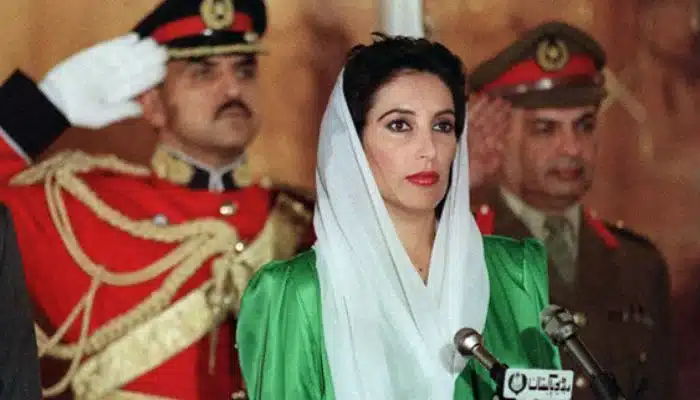
    The Supreme Court of Pakistan has upheld the sentences of military officers involved in the conspiracy to overthrow the government of former Prime Minister Benazir Bhutto.

    A hearing was held in the Supreme Court against the punishment of the officers involved in the conspiracy to overthrow Benazir Bhutto’s government.

    Supreme Court judge Muneeb Akhtar read out the reserved judgment on February 15.

    The court dismissed the appeals against the sentences of Colonel (retd) Azad Minhas and Colonel (retd) Inayatullah.

    It should be noted that after the petitions were rejected by the Lahore High Court, the petitioners approached the Supreme Court in 2016.

    A Field Court Martial had sentenced Azad Minhas to two years, Inayatullah to four years imprisonment with hard labor and dismissal from service. 

    Both former army officers were prosecuted in 1995 for plotting to overthrow Benazir Bhutto’s government.

    The two officers, alongside retired Maj Gen Zaheerul Islam Abbasi, now deceased, and Brig Mustansir Billah, were arrested on September 26, 1995 on charges of “plotting to storm a meeting of corps commanders scheduled to be held on September 30 that year at the General Headquarters in Rawalpindi”.