Tag: democracy

  • SBP issues commemorative coin of Rs50 to celebrate golden jubilee of Senate of Pakistan

    SBP issues commemorative coin of Rs50 to celebrate golden jubilee of Senate of Pakistan

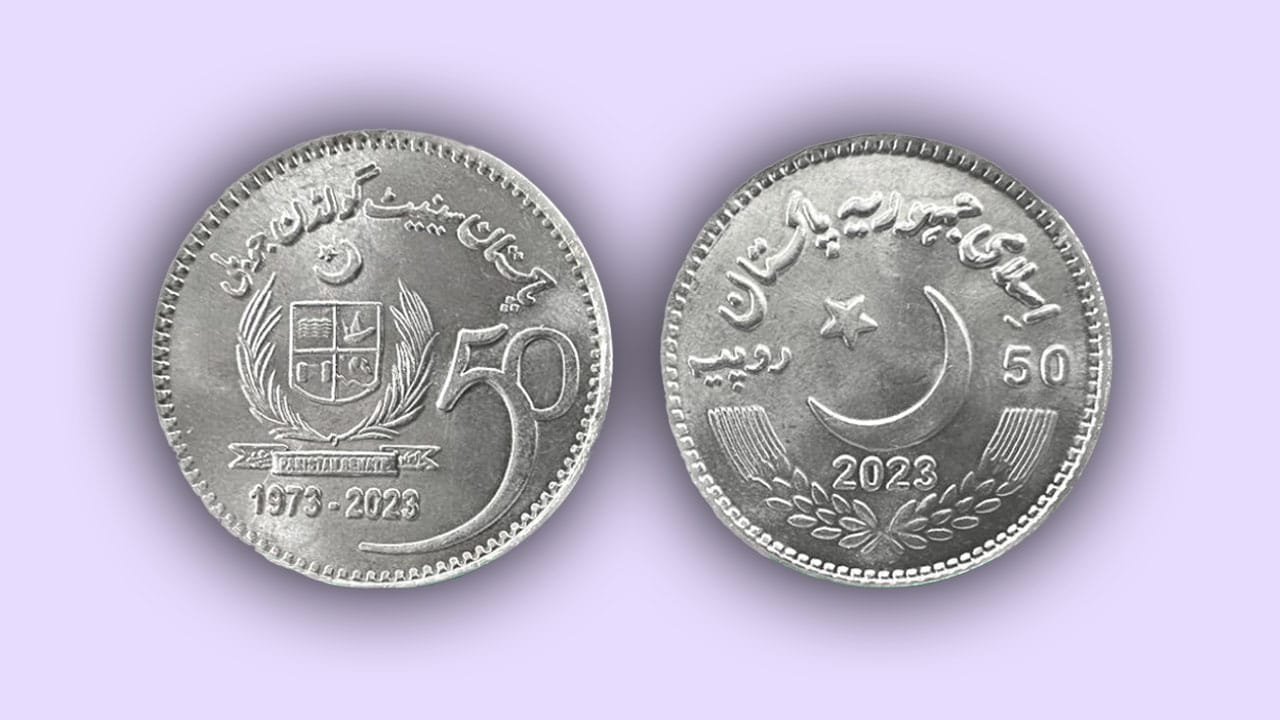
    The Federal Government of Pakistan has authorised the State Bank of Pakistan (SBP) to issue a commemorative coin of Rs50 to celebrate the Golden Jubilee of the Senate of Pakistan in 2023.

    The coin, which has a round shape milled with a dimension of 30.0 mm, weight of 13.5 grammes, and Cupro-Nickel metal contents (Copper 75 per cent & Nickel 25  per cent), shall be issued through the exchange counters of all field offices of SBP Banking Services Corporation starting from March 17, 2023.

    The Senate of Pakistan, also known as Aiwan-e-Bala Pakistan and constitutionally referred to as the House of the Federation, is the upper legislative chamber of the bicameral parliament of Pakistan. As a permanent House with equal representatives from all provinces of the country, the Senate symbolizes continuity in national affairs.

    The issuance of the commemorative coin is a fitting tribute to the Golden Jubilee of the Senate of Pakistan and underscores the significance of this occasion. It is expected to serve as a lasting reminder of the Senate’s contribution to Pakistan’s democratic process and its role in shaping the country’s political landscape.
  • No-confidence vote: Qasim Suri resigns as NA deputy speaker

    No-confidence vote: Qasim Suri resigns as NA deputy speaker

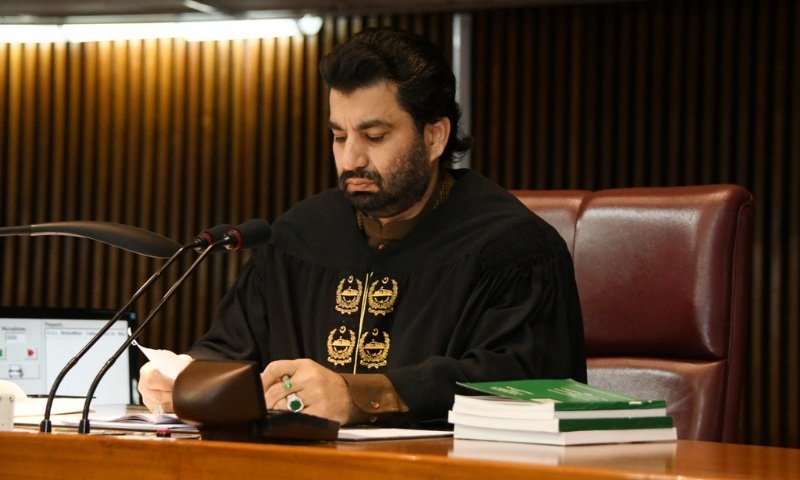
    Qasim Suri resigned as deputy speaker of the National Assembly on Saturday, less than an hour before a session of the house where voting on a no-trust motion against him was to take place.

    Sharing a copy of his resignation on Twitter, Suri said his move signified his association with the vision of his party, the Pakistan Tehreek-i-Insaf (PTI), and democracy.

    “We will never compromise on Pakistan’s sovereignty and integrity. We will fight for the country’s interests and independence. We will go to any length to protect Pakistan,” he tweeted.

    Suri, who had also been functioning as the acting speaker following the resignation of Asad Qaiser, faced severe criticism in recent days over a contentious April 3 ruling to dismiss a no-confidence motion against former prime minister Imran Khan and his decision to defer the session scheduled for the NA speaker’s election from April 16 to April 22.

  • Pakistan declared hybrid regime, ranks 104 out of 167: Democracy Index

    Pakistan declared hybrid regime, ranks 104 out of 167: Democracy Index

    Global democracy continued its decline in 2021, according to the latest edition of the Democracy Index, for The Economist Intelligence (EIU).

    The annual survey, which rates the state of democracy across 167 countries on the basis of five measures—electoral process and pluralism, the functioning of government, political participation, democratic political culture, and civil liberties—finds that more than a third of the world’s population lives under the authoritarian rule while just 6.4 percent enjoy full democracy.

    According to The Economist’s new intelligence index, Democracy Index 2021, Pakistan ranks 104th out of 167, and Pakistan’s overall score in 2021 is 4.31. India is 46th while Bangladesh is 75th. Norway ranks first in the index, followed by Norway, and Afghanistan ranks 167th.

    Democracy in Pakistan is declining compared to 2016 and previous years. Pakistan was included in the list of countries with a hybrid system because there is neither complete democracy nor dictatorship. Only three countries in Asia, Japan, South Korea, and Taiwan, have full democracy.

    Poor democracies in 10 Asian countries, hybrids in six countries, and dictatorships in seven countries. The report also mentions the negative effects of code, measures such as lockdowns and travel restrictions, hindering civil liberties in developed democracies and dictatorial regimes. The situation of democracy in 167 countries of the world was reviewed.

    According to this, only 21 countries in the world including Norway, New Zealand, Finland, and the UK have full democracy.
    In addition, 34 countries, including Pakistan, Turkey, Nigeria, and Bangladesh, where the electoral process is not transparent, while civil society and the rule of law are very weak. These countries are considered hybrid democracies. One-third of the world’s population, including Afghanistan, Myanmar, and North Korea, face authoritarian regimes or dictatorships, and the index ranks 59 countries without democracy.

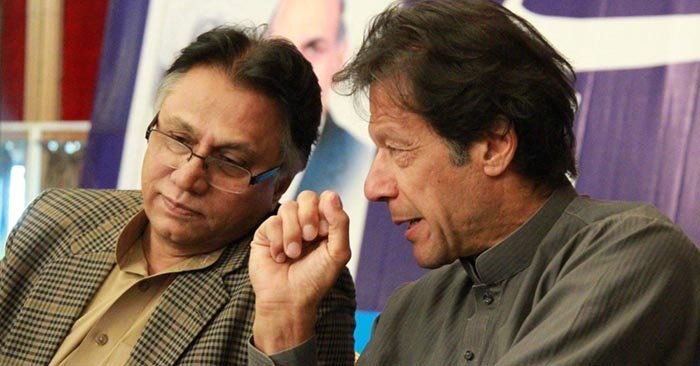
  • ‘Those who mention democracy should be shot’, says Hassan Nisar, Twitter reacts

    ‘Those who mention democracy should be shot’, says Hassan Nisar, Twitter reacts

    Senior journalist and analyst Hassan Nisar has received backlash over his ‘anti-democracy’ and ‘dangerous’ comments wherein he said that Pakistan must have 15 years of fascism and those seeking democracy should be shot.

    During an interview with Samaa Tv’s political talk show ‘News Beat’, Nisar said, “Pakistan needs uninterrupted 15 years of authoritarian rule to fix everything from primary education to population control.”

    “Anyone mentioning democracy should be dealt by a firing squad and his family should pay for the bullets fired on him. It’s our moral job to try and give Imran Khan five years uninterrupted,” said Nisar.

    Lamenting the state of primary education in the country, Nisar also asked, “Are these children going to take over the country?”

    Twitter reminded Nisar that Pakistan was founded as a constitutional democracy, and calls dictatorship to go against the authority of the state.

  • Pakistan declines United States invitation to Democracy Summit

    Pakistan has turned down an invitation by the United States (US) to the summit for democracy which was going to be held virtually from December 9-December 10.

    The Pakistan Foreign Office thanked the United States for the invitation to participate in the Democracy Summit. According to the statement issued by the Spokesperson. Pakistan said that they would engage with the country on a wide range of issues “at an opportune time in the future.”

    The statement further added that Pakistan is committed to promoting democracy, eradicating corruption, and safeguarding the human rights of all our citizens.

    “We value our partnership with the U.S. which we wish to expand both bilaterally as well as in terms of regional and international cooperation. We remain in contact with the U.S. on a range of issues and believe that we can engage on this subject at an opportune time in the future,” he added.

    The statement concluded, “Pakistan will, meanwhile, continue to support all efforts aimed towards strengthening dialogue, constructive engagement, and international cooperation for the advancement of our shared goals.”

    According to the official website of the State Department, President Biden will be hosting the virtual meetings on December 9-December 10. He will discuss issues regarding democracy with leaders from government, civil society, and the private sector.

    The statement stated, “The summit will focus on challenges and opportunities facing democracies and will provide a platform for leaders to announce both individual and collective commitments, reforms, and initiatives to defend democracy, and human rights at home and abroad.”

    The summit will be based on key important points which include defending against authoritarianism, addressing and fighting corruption, and promoting respect for human rights.

    In this summit, leaders will be persuaded to share their policies and plan of action for reforms and initiatives to curb the issues that meet the goals of the summit.

    Pakistan is being criticised by some for not attending the summit, with people saying that Pakistan has refused to attend because President Biden has not called PM Khan since he came to power.

    Afghanistan has not been invited to the summit and India’s PM Modi will be attending and speaking about commitment to democracy

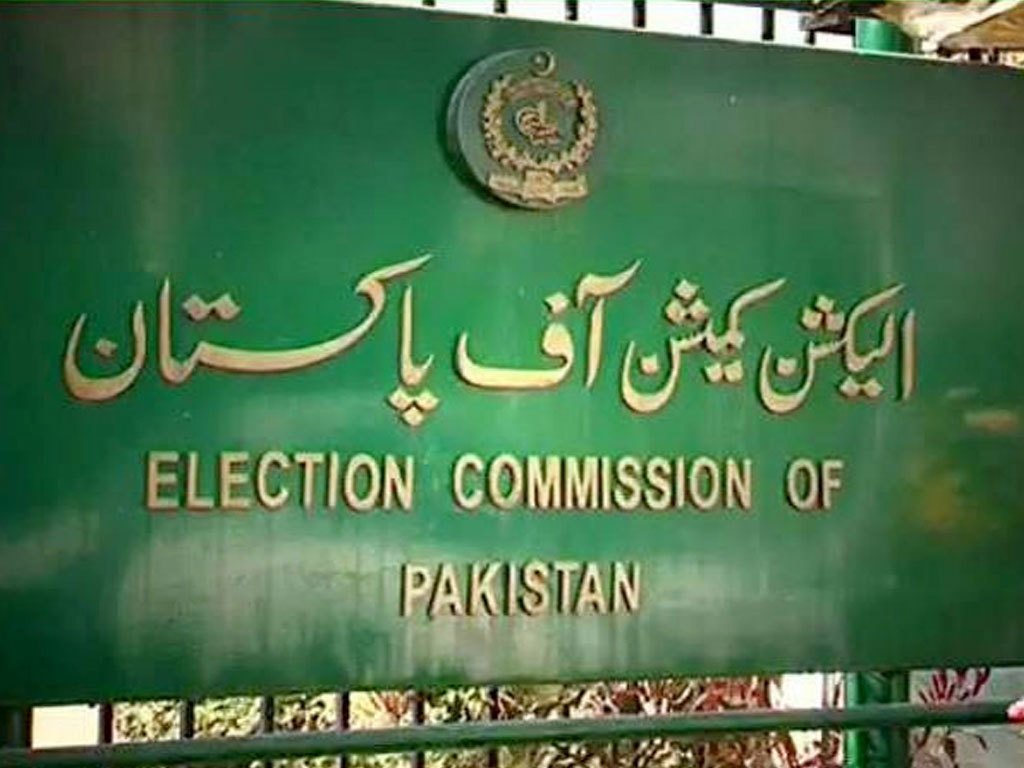
  • Election Commission sends notice to Fawad Chaudhry and Azam Swati for controversial comments

    Election Commission sends notice to Fawad Chaudhry and Azam Swati for controversial comments

    The Election Commission of Pakistan (ECP) has sent a notice to Federal Minister for Railways Azam Khan Swati and Federal Minister for Information and Broadcasting Fawad Chaudhry.

    The ECP has decided to ask for proof from Swati as the latter accused the institution [ECP] of taking bribes and being on the payroll of ‘someone’.

    Last week, Swati said that the ECP was responsible for destroying Pakistan’s democracy and for rigging all elections. Swati added that such institutions should be “set on fire”. 

    Meanwhile, Fawad Chaudhry in a press conference said, “The ECP seems to be acting as a mouthpiece of the Opposition, so much so that it seems to have become the headquarters for Opposition parties”.

    https://twitter.com/FawadPTIUpdates/status/1436319497338621955

    The minister said that the Chief Election Commissioner (CEC) should “either take a look at his behaviour or join politics”.

    “You better not become a tool used by small political parties,” Chaudhry told the chief election commissioner.

    https://twitter.com/FawadPTIUpdates/status/1436322520362258440

    Fawad Chaudhry responding to the notice tweeted, “If a notice comes, will give a detailed answer.”

    In March, seeking to disband the election watchdog, the ruling party had called on the CEC to resign for “failing to hold the Senate elections in a transparent manner”.

    Federal Minister Shafqat Mahmood said, “To ensure transparent elections are held is the responsibility of the election commission. This responsibility was not fulfilled,” he said. “The election commission failed to act as a neutral umpire hence it should resign,” added Mahmood.

    On the other hand, the ECP has given dates to the politicians from Pakistan Tehreek-e-Insaaf’s (PTI) and Pakistan Pakistan Peoples Party’s (PPP) leaders’ pending cases, which are due tomorrow (Wednesday) i.e. September 15.

    Those who have been called by the ECP from PTI include Senator Faisal Vawda who has a total of three cases, MNA Farrukh Habib and Mian Asif Mehmood. From PPP, Qadir Ali Mandokhel and Nawabzada Ghazanfar Ali Gul among others have also been asked to appear.

  • PMDA: Why all the secrecy?

    PMDA: Why all the secrecy?

    The mystery shrouding the elusive proposed draft of the Pakistan Media Development Authority (PMDA) is quite intriguing. Some consultations have been held with journalists, civil society members, and parliamentarians but without a copy of the proposed draft. Members of the National Assembly (NA) Standing Committee on Information and Broadcasting on Thursday demanded that the draft be shared instead of verbal briefings by the Information Ministry. Chairman of the NA standing committee Mian Javed Latif then formed a sub-committee, which will be headed by Marriyum Aurangzeb with Nafisa Shah and Kanwal Shozab as its members. Let’s see if the proposed draft will now be shared with the sub-committee. 

    Last month, representatives of media organisations issued a joint statement that rejected the proposed media authority. They said that it was unconstitutional and deemed it as a draconian law. It seems that this is yet another tactic by the government to curb media freedom. Human Rights Watch (HRW) recently also issued a statement on the PMDA saying that the Pakistani government is “seeking broad new powers to control the media as part of its crackdown on freedom of expression. Journalists, human rights activists, and political leaders across that country have raised the alarm about proposed legislation that would bolster powers of the government to censor and restrict the media.” The government reacted to HRW’s statement by issuing a rejoinder through the Pakistan Embassy in the US challenging the human rights organisation’s assertions on PMDA. Patricia Gossman, HRW’s associate director for the Asia division, asked for a draft, which has so far not been shared with anyone. 

    It is quite worrying that in a country where media freedom is already quite curtailed, where interviews have been stopped from going on air or stopped mid-way, where anchors have been taken off-air, where there are now so many red lines that media organisations have to tread very carefully, where attacks on journalists have become frequent and culprits are still at large, where online trolling of journalists has become a norm, where the government issues reports of social media trends and hashtags it deems anti-state, where government officials keep on targeting journalists and media organisations without any shred of evidence, a new media authority with immense powers is being proposed without sharing the details of the proposed law and/or taking the main stakeholders on board.

    We hope that the government will share the proposed draft with all stakeholders so that the mystery shrouding this media authority ends once and for all. There is already a lot of mistrust between the government and the media. We hope the government will listen to the legitimate concerns of media organisations and not dismiss them. A free and independent media is essential for any democracy. Pakistan is a democracy and we hope the government will not undermine it in any way. 

  • We accept the Chinese version on Uyghurs in Xinjiang: PM Khan

    We accept the Chinese version on Uyghurs in Xinjiang: PM Khan

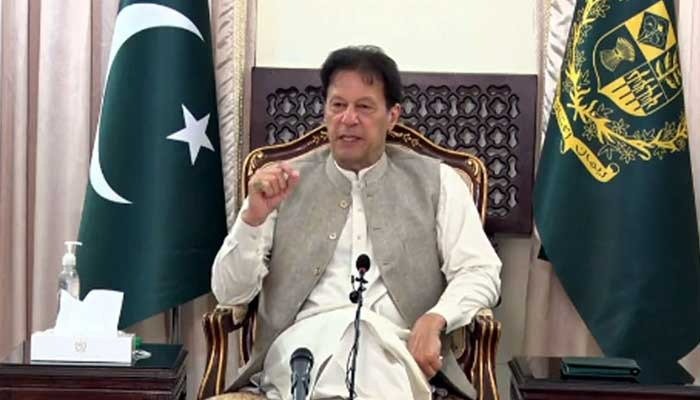
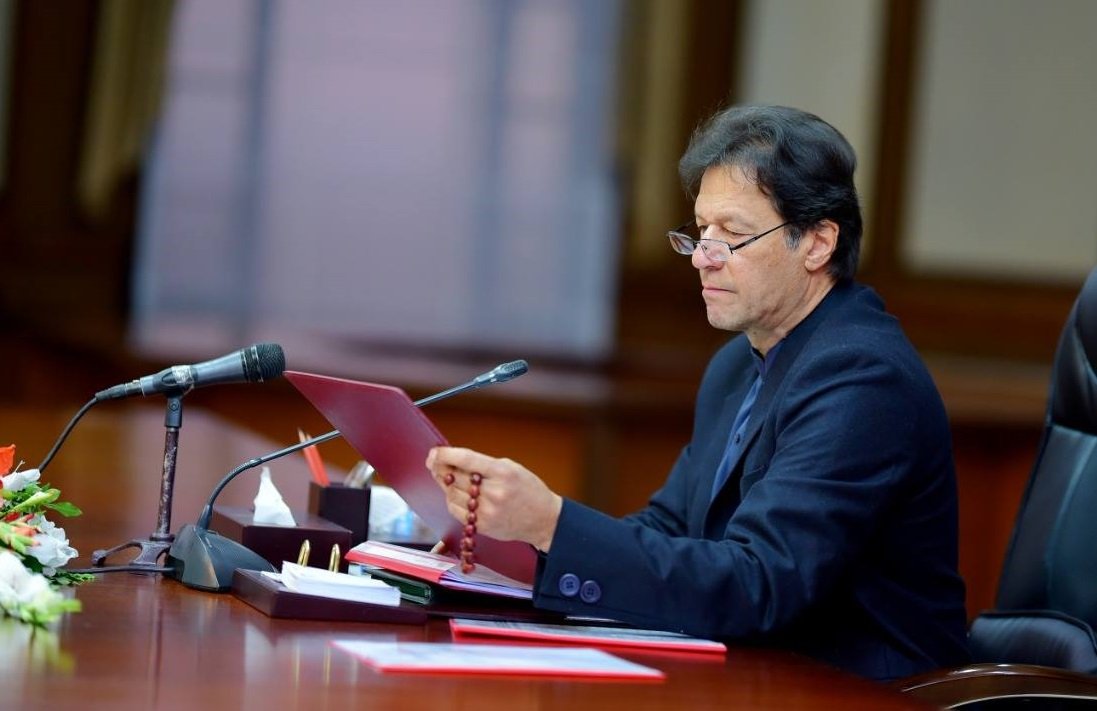
    Prime Minister (PM) Imran Khan on Thursday said that the relationship between Pakistan and China is very deep. “It’s not just the governments, but it’s a people-to-people relationship.”

    “Whatever will happen…[the] relationship between our two countries, no matter what pressure is put on us, is not going to change,” PM Khan said in response to a question.

    Speaking to Chinese journalists as Beijing marked the centenary of the ruling Communist Party of China (CPC), the premier said the Chinese version about the treatment of Uyghur Muslims in Xinjiang was completely different from what was being reported in the western media.

    “Because of our extreme proximity and relationship with China, we actually accept the Chinese version,” added PM Khan.

    He said that it was hypocritical that while the Uyghur situation and Hong Kong were being highlighted, attention was not being given to the human rights violations in Indian-Occupied Kashmir.

    “It is hypocritical. There are much worse human rights violations taking place in other parts of the world such as in occupied Kashmir. But western media hardly comments on this,” he said.

    PM Khan praised the Communist Party. He said that until now, it was believed that electoral democracy is the best way to bring leaders on merit and hold them accountable.

    “But China’s process to hunt talent and then polish it is better than any electoral democracy.”

    PM Khan also praised President Xi for his success in the fight against poverty and corruption in China.

    “China has lifted 700 million people out of poverty in a few years, which is a great achievement. We want to further develop political, economic and trade relations between the two countries.”

    PM Khan said that Pakistanis are impressed by the Chinese president’s fight against corruption and consider him “a great politician of modern times”.

    “President Xi Jinping’s anti-corruption campaign is effective and successful.”

    PM Khan said that it is unfair of the US and western powers to expect countries like Pakistan to take sides. “Pakistan will not downgrade its relations with China.

    “The United States expects Pakistan to choose a side. This is not appropriate,” he added.

  • Sindh Assembly: PTI lawmakers bring charpoy to mark ‘funeral of democracy’

    Sindh Assembly: PTI lawmakers bring charpoy to mark ‘funeral of democracy’

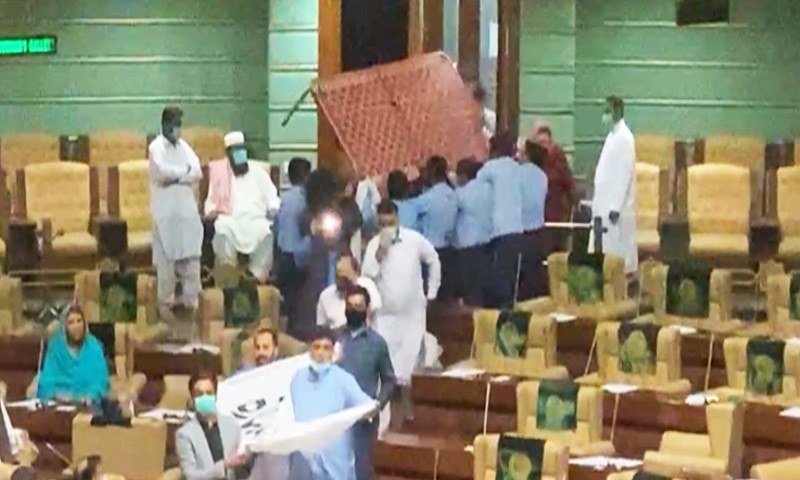
    There was a ruckus in the Sindh Assembly when Pakistan Tehreek-e-Insaf (PTI) members disrupted the ongoing session after opposition leader, Haleem Adil Sheikh, was denied permission to address the assembly.

    Haleem Adil Sheikh requested to speak first but Speaker Sindh Assembly Agha Siraj Durrani denied him permission, saying the scheduled business would be carried out first and members would be allowed to speak on their points of order later, reports Dawn.

    This caused the Opposition members to protest against the Speaker. Amid the sloganeering, some of the protesting members brought a folding charpoy into the House, marking ‘funeral of democracy’ in the Sindh Assembly.

    “Jamhooriyat ka janaaza hai, zara dhoom se nikle” (It is the funeral of democracy, should be taken out with fanfare).

    Speaker Siraj Durrani said this was an insult to the House.

  • Global Democracy Index ranks Pakistan 105/167; says Islamabad has ‘hybrid democracy’

    Global Democracy Index ranks Pakistan 105/167; says Islamabad has ‘hybrid democracy’

    Democracy has had yet another bad year globally, according to the latest edition of the Democracy Index from The Economist Intelligence Unit (EIU).

    The annual EIU’s Democracy Index provides a snapshot of the state of democracy worldwide in 167 countries. This covers almost the entire population of the world and the vast majority of the world’s states (microstates are excluded).

    The index is based on five categories, electoral process and pluralism, the functioning of government, political participation, political culture and civil liberties.

    Based on its scores on a range of indicators within these categories, each country is then itself classified as one of four types of regime: “full democracy”, “flawed democracy”, “hybrid regime” or “authoritarian regime”.

    This year, the index classified 23 countries as full democracies, 52 as flawed democracies, 35 as hybrid regimes and 57 as authoritarian regimes.

    Securing the 105th slot, Pakistan, like last year, has been placed under the head of hybrid democracy, next to Turkey at the 104th rank. India, on the other hand, has been classified as a “flawed democracy” along with countries such as the United States (US), France, Belgium and Brazil.

    Among the countries topping the list are Norway, Iceland, Sweden, New Zealand and Canada, followed by Finland, Denmark, Ireland, Australia and Netherlands.

    “The authorities’ handling of the coronavirus pandemic led to a further erosion of civil liberties in 2020,” the report said.