Tag: Depreciation

  • Pakistani rupee finally ends 28-day winning streak, loses against US dollar

    Pakistani rupee finally ends 28-day winning streak, loses against US dollar

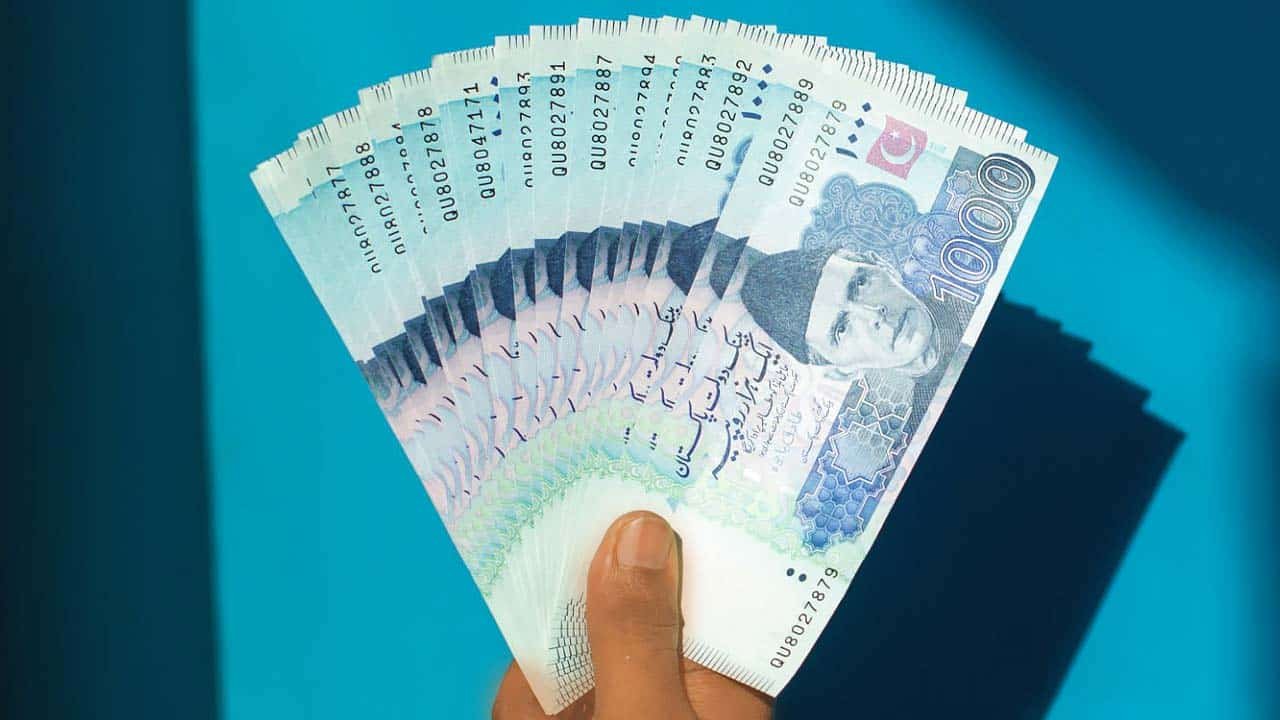
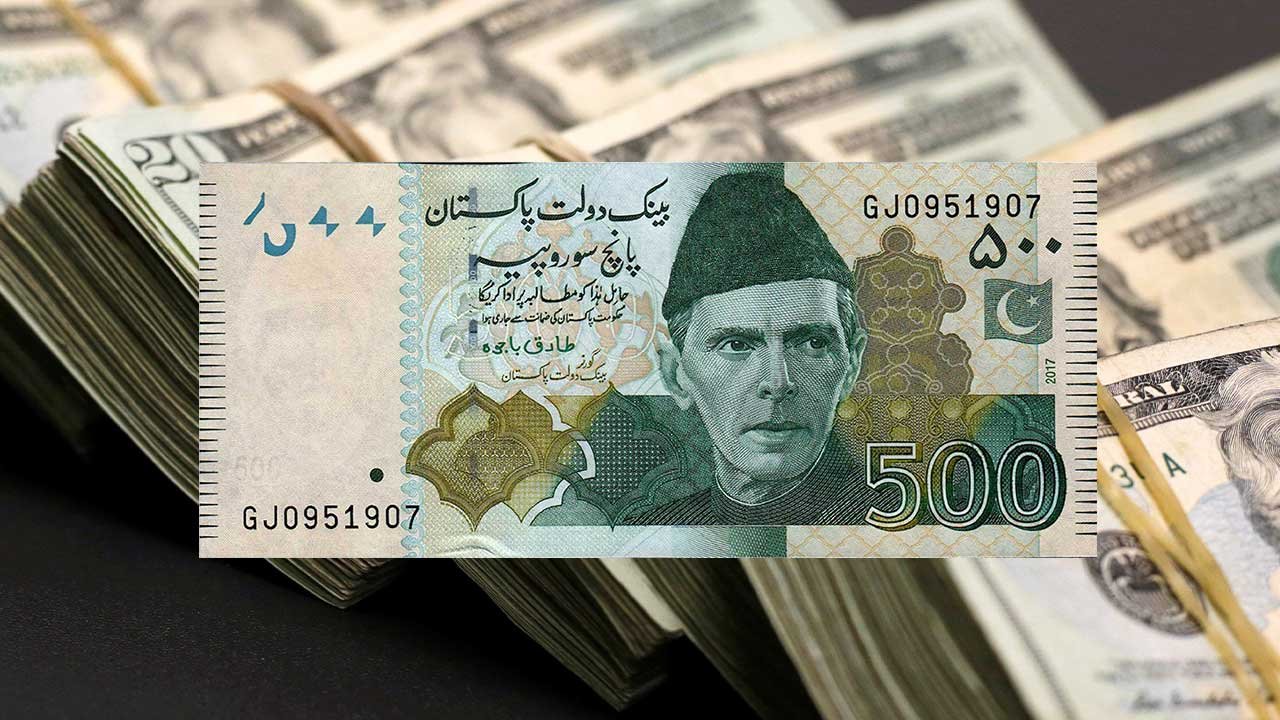
    The Pakistani rupee’s remarkable 28-day winning streak against the US dollar came to an end today, as it recorded losses following an initial trade opening at Rs278.5 in the interbank market.

    In the morning, the rupee had steadied, maintaining a level of Rs276 against the greenback. Subsequently, between 1:00 PM and 2:35 PM, the interbank rate dipped to Rs278 before settling at Rs277 for the rest of the day. 

    Open market rates, observed across various currency exchange counters, ranged from Rs277 to Rs279 throughout the day.

    At the close of the trading day, the PKR experienced a depreciation of 0.07 per cent, concluding at Rs277.03 after losing 20 paisas against the US dollar.

    Despite today’s setback, it is noteworthy that the disparity between interbank and open market rates has significantly decreased by Rs60 since September 4th. The rates have fluctuated between as low as Rs277 and sporadic spikes up to Rs280 today.

  • Pakistani rupee slides to Rs297.13 against US dollar on first day of the week, losing Rs1.35

    Pakistani rupee slides to Rs297.13 against US dollar on first day of the week, losing Rs1.35

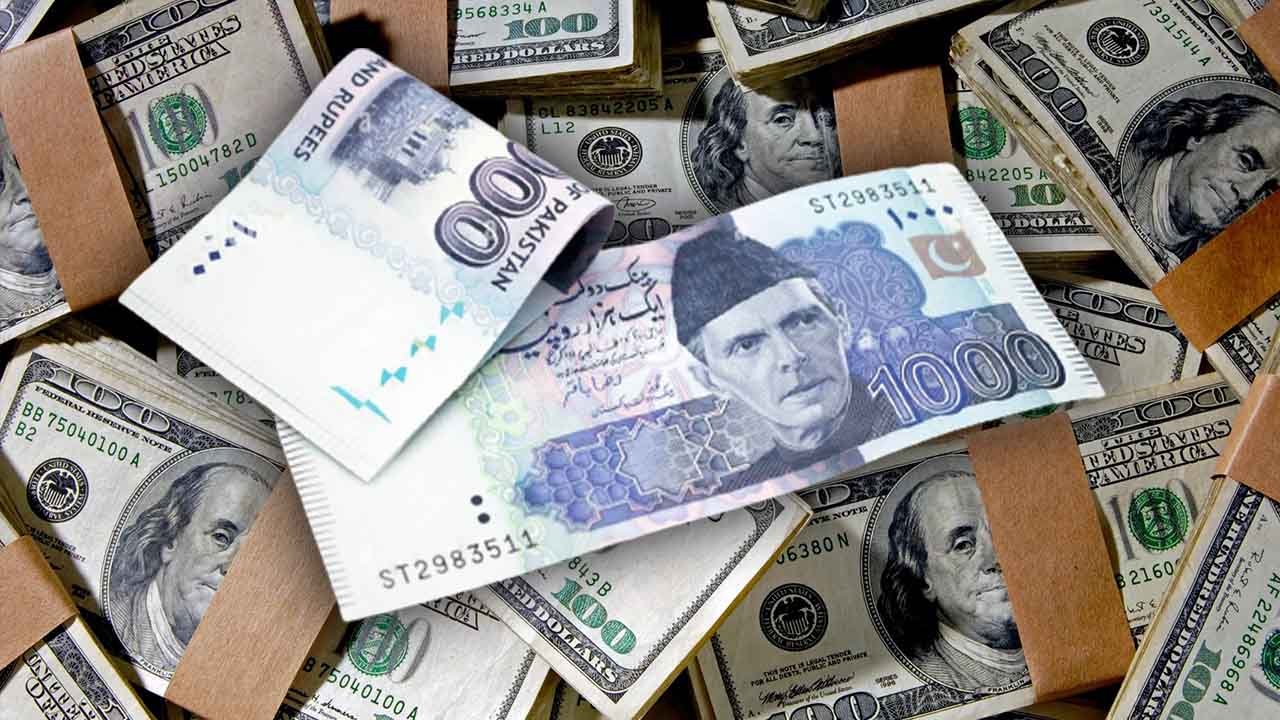
    The Pakistani rupee (PKR) continued its decline against the US dollar on the first working day of the week. PKR went down by 0.45 per cent, which is about Rs1.35, and closed the day at Rs297.13 in the interbank market, as reported by the State Bank of Pakistan.

    This shows that over the past five trading sessions, the Pakistani rupee has lost a total of Rs8.64. It’s important to note that on the previous Friday, the rupee had closed at Rs295.78 after losing 0.86 paisas, which is about 0.29 per cent.

    Looking at last week, from Tuesday to Friday, the Pakistani rupee experienced a significant loss of Rs7.29. This indicates a period of notable fluctuation for the rupee in the foreign exchange market.

  • Short-term inflation skyrockets to record 45.64% in Pakistan: What’s causing the surge?

    Short-term inflation skyrockets to record 45.64% in Pakistan: What’s causing the surge?

    The Pakistan Bureau of Statistics (PBS) has released data revealing that short-term inflation based on the Sensitive Price Index (SPI) rose to a record 45.64 per cent for the combined income group on a year-on-year basis for the week ending March 16.

    This increase was driven by the consistent rise in the prices of essential commodities. However, on a week-on-week basis, short-term inflation increased by 0.96 per cent due to the rising cost of tomatoes, potatoes, cooking oil and fruits.

    The SPI is expected to intensify further as the full impact of depreciation, an increase in petroleum products, a hike in general sales tax and higher energy costs has yet to be reflected in official data. Commodity prices are likely to increase rapidly with a spike in demand. The year-on-year SPI surged to 45.5 per cent during the week ending September 1, 2022, and stayed above 40 per cent for the first time since August 18 last year when the reading was 42.31 per cent.

    Of the 51 items in the SPI basket, prices of 28 items soared, while those of 11 items decreased, and rates of 12 items remained unchanged. During the week under review, the prices of onions, cigarettes, gas charges for Q1, diesel, tea Lipton, petrol, rice irri-6/9, rice basmati broken, bananas, eggs, pulse moong, wheat flour and bread increased the most over the same week a year ago.

    On a week-on-week basis, the biggest change was observed in the prices of tomatoes, tea Lipton, potatoes, bananas, sugar, wheat flour, cooking oil 5 litre, vegetable ghee 2.5 Kg, lawn, diesel, shirting, and petrol. Products whose prices saw the highest decline over the previous week were onions, chicken, garlic, pulse masoor, eggs, LPG, vegetable ghee 1 Kg, pulse gram, pulse mash, pulse moong, and mustard oil.

    The government has been taking strict measures, such as hikes in fuel and power tariffs, withdrawal of subsidies, market-based exchange rate, and higher taxation, under the International Monetary Fund (IMF) programme to generate revenue for bridging the fiscal deficit, which may result in slow economic growth and higher inflation in the coming months. The increase in the policy rate to 20 per cent, general sales tax rate from 17 per cent to 18 per cent on most items, and to 25 per cent on more than 800 imported food and non-food items will further increase the retail prices of consumer goods.
  • Govt hikes petrol price by Rs5 to Rs272 per litre to match global market changes

    Govt hikes petrol price by Rs5 to Rs272 per litre to match global market changes

    As per a press release from the Finance Division, the government has decided to raise the price of petrol by Rs5 per litre to Rs272 per litre for the next two weeks, effective from March 16 (Thursday).

    The statement noted that the increase was due to the rise in Platts Singapore prices over the past two weeks and the depreciation of the Pak Rupee, resulting in a hike in petroleum, oil, and lubricant (POL) products in Pakistan.

    The notification further disclosed that the price of high-speed diesel has been increased by Rs13 per litre to Rs293 per litre, and kerosene has been raised by Rs2.56 per litre to Rs190.29 per litre by reducing government dues on them. However, the price of light diesel oil has been kept constant at Rs184.68 per litre by adjusting government dues.

    It’s worth mentioning that Finance Minister Ishaq Dar had previously announced a reduction in petrol prices by Rs5 per litre on February 28.

  • Pakistani rupee bounces back after steep decline against dollar

    Pakistani rupee bounces back after steep decline against dollar

    During the early hours of trading on Friday, the Pakistani rupee (PKR) saw a significant recovery against the US dollar, with an increase of 4.51 per cent. The inter-bank market quoted the PKR at Rs272.78 by 11:50 am, representing an increase of Rs12.31 against the US dollar.

    This follows a steep decline of 6.66 per cent or nearly Rs19 to settle at an all-time low of Rs285.09 against the US dollar on Thursday.

    On Thursday, the State Bank of Pakistan’s Monetary Policy Committee (MPC) raised the key policy rate by 300 basis points (bps) to 20 per cent, aiming to curb inflation.

    The committee also emphasized the need for energy conservation measures to ease pressure on the external account and meet import requirements. The MPC expects this decision to stabilize inflation expectations and bring it to a medium-term target of 5 per cent-7 per cent by end-FY25.

    Globally, the US dollar eased back from a 2-1/2-month high against the yen on Friday, and weakened toward its first weekly loss since January against major peers. This comes as traders tried to gauge the path for Federal Reserve policy.

    According to Geo, the dollar index, which measures the currency against the yen, euro, and four other major peers, fell 0.11 per cent to 104.85, from its peak of 105.36 earlier this week. The index has decreased by 0.36 per cent since last Friday.

    Meanwhile, oil prices, a critical currency parity indicator, dropped on Friday, but remained poised for a weekly gain due to renewed optimism regarding China’s demand recovery, outweighing concerns over growing crude inventories in the US and tighter monetary policy in Europe.

    This is an intraday update.

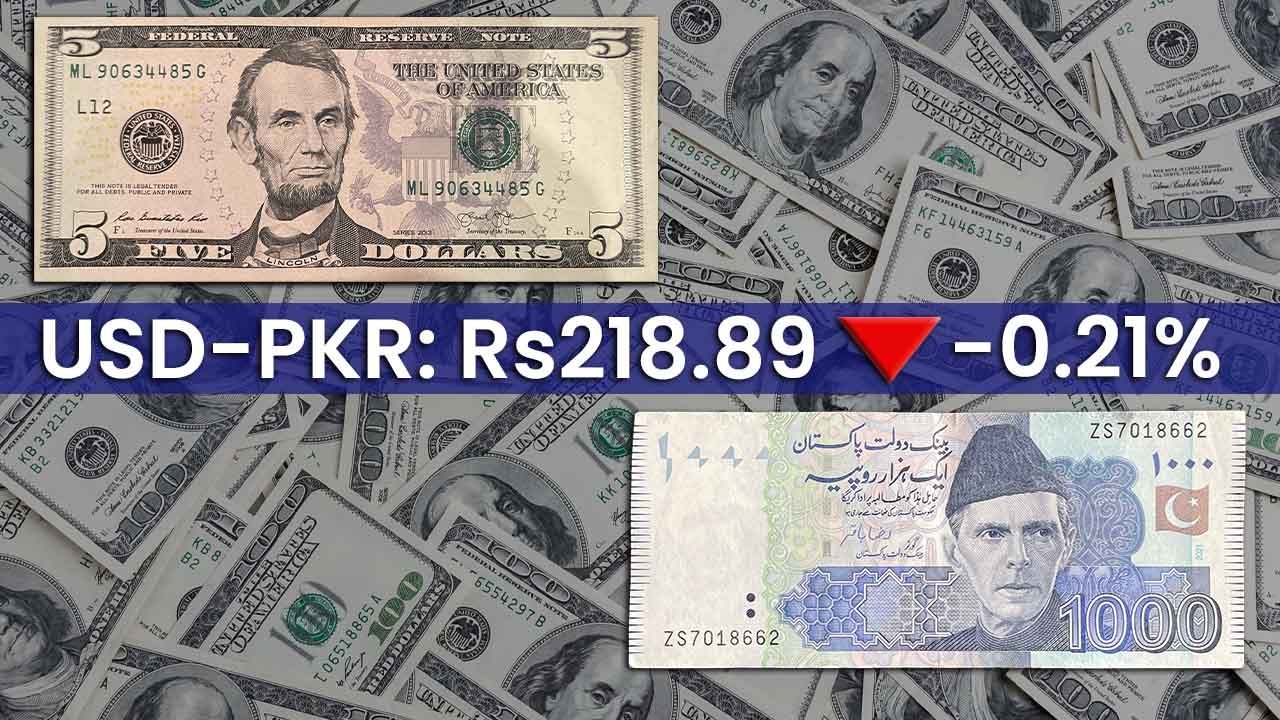
  • 4th consecutive decline: PKR drops by 46 paisas to Rs218.89

    4th consecutive decline: PKR drops by 46 paisas to Rs218.89

    The Pakistani Rupee (PKR) lost ground against the US Dollar (USD) today, reversing last week’s gains.

    The local unit fell 0.21 per cent against the US dollar today, closing at Rs218.89 after losing 46 paisas in the interbank market. During today’s open market session, the rupee hit an intraday low of Rs219.500 against the US dollar.

    When trade resumed against the greenback, the local unit was all red and opened trade at Rs219.00 in the open market. By midday, the dollar had risen to Rs219.25 against the rupee. After 2 pm, the local currency remained in the red and remained at Rs218 against the top foreign currency before the interbank close.

    Today was the fourth consecutive day that the rupee fell against the US dollar. Money changers are sceptical of a PKR recovery unless the government enacts stringent policies to combat the forex slowdown.

    According to one regular trader, the market is also reacting to Imran Khan’s Pakistan Tehreek-e-Insaf (PTI) winning six National Assembly seats in a by-election on Sunday, which was viewed as a direct contest between the former ruling party and the current ruling coalition.

    While the market watches for any changes in monetary policy, the local unit is expected to fall further against the dollar. The State Bank of Pakistan (SBP) has begun clearing importers’ letters of credit (LCs), but money changers say the process could be put on hold if another shortage hits the dollar aisle in the coming days.

  • Pakistani rupee crashes against US dollar for 11th day in a row

    Pakistani rupee crashes against US dollar for 11th day in a row

    For the eleventh session in a row, Pakistan’s rupee has lost value versus the US dollar, falling 0.41 per cent on Friday in the interbank market as the dollar gained momentum throughout the world and investors’ concerns about the increasing trade imbalance intensified.

    The rupee dropped by Rs0.96, according to the State Bank of Pakistan (SBP), and ended the day at Rs236.84. The rupee has lost Rs18.24, or 7.7 per cent, overall over the last 11 trading sessions against the US dollar.

    In the interbank market on Thursday, the Pakistani rupee declined against the US dollar for the tenth straight session as investors expected funding from allies and foreign creditors. It ended the day down 0.66 per cent at Rs235.88.

    The local currency increased in value last month as a result of Pakistan fulfilling all previous IMF requirements, which allowed the programme to resume. This development enabled Pakistan to receive $1.17 billion under the Extended Fund Facility (EFF).

    The local currency has recently, however, been under intense pressure once more and is currently hovering close to its all-time low as funding anticipated from allies has not yet materialised.

    Additionally, the State Bank of Pakistan’s (SBP) foreign exchange reserves decreased by $176 million, reaching $8.62 billion as of September 9, 2022, according to information made public on Thursday.

    According to the SBP, the nation possessed $14.32 billion in liquid foreign reserves. Commercial banks held $5.7 billion in net foreign reserves.

    Globally, the dollar remained close to recent highs on Friday as Treasury yields rose and the demand for the currency persisted on expectations that the Federal Reserve would need to raise rates further to control inflation.

    The US dollar index, which compares the value of the dollar to a basket of other currencies, increased to Rs109.69, which is not far from its two-decade high of Rs110.79.

    In the meantime, oil prices—a crucial factor in determining currency parity—were largely stable on Friday, but they were headed for a weekly decrease due to worries about sudden interest rate hikes that would likely slow global economic growth and fuel demand.

  • Hyundai-Nishat announces a hefty price hike following KIA

    Hyundai-Nishat announces a hefty price hike following KIA

    Hyundai-Nishat Motors raised the pricing of its Tucson variants by Rs1.1 million, citing the decline in the currency as the primary cause, following Lucky Motor Corporation’s price increases for its KIA-brand vehicles.

    After an increase of Rs1.1 million price increase for the c, the Hyundai Tucson FWD model is now offered for Rs6.89 million. The price of the AWD version has increased by Rs1.1 million to Rs7.39 million.

    According to a sales representative, the company would accept reservations upon full payment, and delivery is anticipated to occur in August and not take longer than 60 days.

    Prior to that, Lucky Motor announced an increase in the prices of its KIA-brand vehicles starting on July 19, with the rise reaching as high as Rs1.1 million.

    The corporation said that the ongoing depreciation of the rupee versus the dollar was to blame for their need to raise pricing.

    “Kia and Hyundai have taken the initiative to increase car prices but the rest of the automakers will follow too,” said Sunny Kumar, Research Analyst at Topline Securities.

    “The last pricing most of the carmakers did was when the dollar stood at Rs185. It has now crossed Rs225. The price hike was imminent and announcements from other automakers could be expected anytime now.”

    According to Brecorder, the CEO of Lucky Motor Corp, Asif Rizvi, acknowledged that the auto sector primarily employs imported materials and that localised parts also contain a large percentage of foreign components while speaking on the sidelines of the Peugeot 2008 launch in March.

  • Pakistani rupee plunges to Rs227 against US dollar at midday trading

    Pakistani rupee plunges to Rs227 against US dollar at midday trading

    On Thursday, the rupee’s decline against the US dollar reached an all-time low of Rs227 in the interbank market.

    Experts blame the losses on political unrest and the fact that the dollar is bolstering against other currencies as well, according to DAWN. On Wednesday, the rupee had a closing value of Rs224.92.

    According to the Foreign Exchange Association of Pakistan (FAP), the local currency fell by Rs2.08 to Rs227 versus the US dollar when the session started today at 10:57 AM.

    According to experts, the country’s political unrest had reduced investor confidence, which had caused importers to worry and “unnecessarily” buy dollars from the market. He claimed that as a result, there was an increase in the interbank market’s demand for dollars.

    Furthermore, over the past week, the dollar’s value had increased against over 40 currencies, including the British pound and the Japanese yen, which had an impact on the local market’s use of the rupee, according to Bostan.

    After reaching Rs211.93 on June 22, the local currency climbed to Rs204.56 in the first week of July. When the country’s staff-level agreement with the international lender was reached on July 15, it briefly appreciated but again continued to depreciate against the US dollar.

  • Interbank trade: Pakistani rupee falls to all-time low of Rs214.74 against US dollar

    Interbank trade: Pakistani rupee falls to all-time low of Rs214.74 against US dollar

    As a result of the ruling PML-N’s defeat in the Punjab by-elections, which has caused political turmoil in the nation, the Pakistani rupee (PKR) on Monday fell to an all-time low of Rs214 against the US dollar in interbank trade.

    Today’s intraday trade saw Rs3.79 depreciation of the local currency against the US dollar. It is still unknown where the local currency will end up after the day’s trading.

    The local currency has reached an all-time low because the US dollar was trading for Rs214.74 on the interbank market, according to the Exchange Companies Association of Pakistan (ECAP).

    Pakistani rupee’s record low against the dollar was Rs211.48 on June 21. Since then, the currency has remained erratic.

    The Pakistan Stock Exchange’s (PSX) benchmark KSE-100 index is also down, with the bears controlling trading at the bourse. As of 11:34 am, the index was trading at 41,532.46 points, down nearly 550 points.

    Pressure on import payments and political unpredictability, according to Samiullah Tariq, Head of Research at Pakistan-Kuwait Investment Company, are to blame for the rupee’s decline.

    The results of the by-election on Sunday, according to the analyst, provided clarity, but the market is still waiting for a plan of action.

    PKR is weakening, but Arif Habib Limited analyst Ahsan Mehanti expressed optimism that it would soon rebound because all predictions favour the local currency.

    Mehnti was of the view that Pakistan will benefit greatly from the funds it will receive from the International Monetary Fund (IMF) as a result of the staff-level agreement.