Tag: Deputy Speaker Qasim Suri

  • ‘Acha khasa mard zanana lagta hai’: Twitter slams PTI’s Suri for comment on Hamza

    ‘Acha khasa mard zanana lagta hai’: Twitter slams PTI’s Suri for comment on Hamza

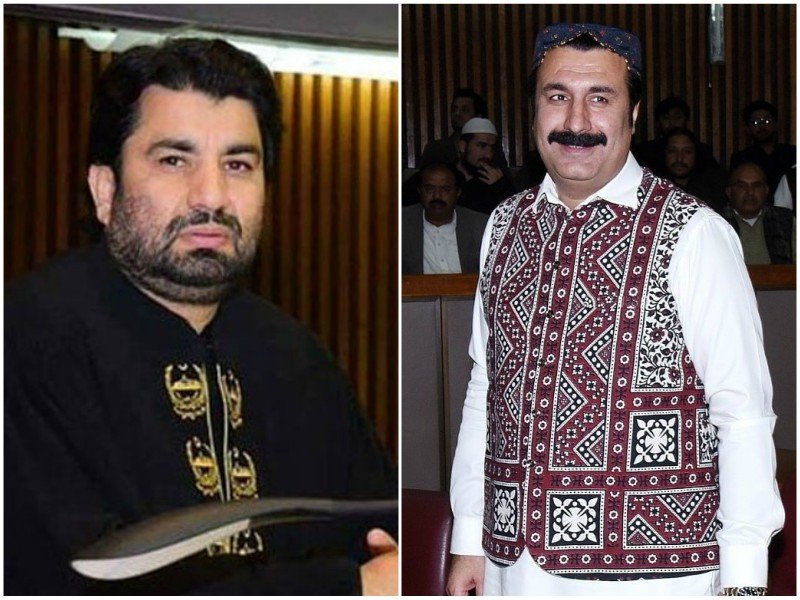
    Former Deputy Speaker Qasim Suri passed a misogynist comment about Chief Minister (CM) Punjab Hamza Shehbaz.

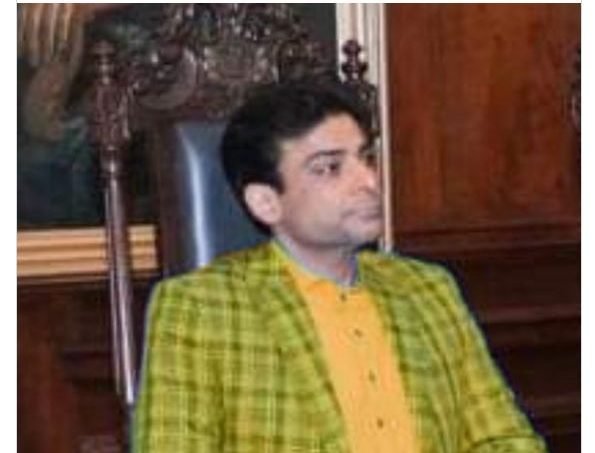
    Suri quote-tweeted a picture of Hamza and wrote in the caption, “Fashion ka yeh daur suhana lagta hai [This era of fashion seems wonderful]. Acha khasa mard zanana lagta hai [A man looks like a woman]. Pal bhar main kesay badaltay hain naqshay [How do personalities change within minutes]. Humko tu yeh larka shabana lagta hai [to us this boy looks like Shabana].”

    Twitterati slammed Suri for his comment.

    https://twitter.com/hassaanibl/status/1532026513595543558?s=20&t=lFtlxQk-RcM-3DKNBgcqHQ

    https://twitter.com/samuraijacckk/status/1532106085179564032?s=20&t=lFtlxQk-RcM-3DKNBgcqHQ

  • ‘Yeh darmiyana hamara Foreign Minister ban gaya hai:  KP CM Mahmood Khan

    ‘Yeh darmiyana hamara Foreign Minister ban gaya hai: KP CM Mahmood Khan

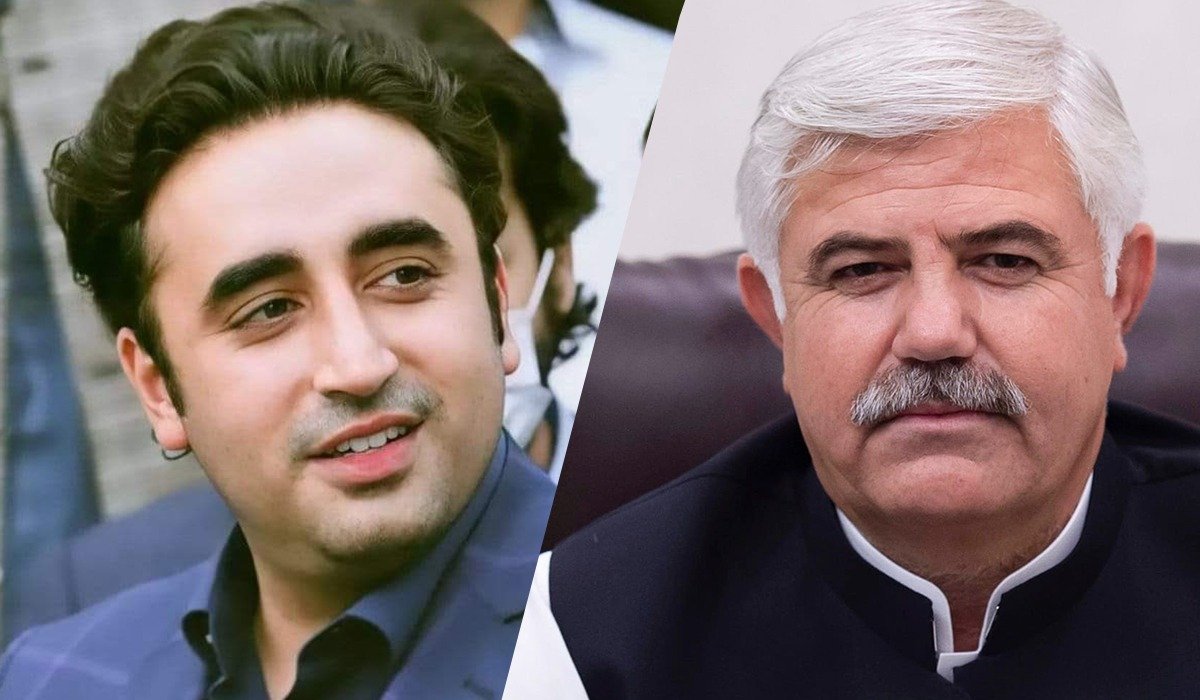
    The Pakistan Tehreek-e-Insaf (PTI) leadership is underfire for passing sexist and derogatory comments toward Foreign Minister (FM) Bilawal Bhutto-Zardari and Pakistan Muslim League-Nawaz (PML-N) Vice President Maryam Nawaz.

    “This darmiyana man has become our FM. May God bless him, how will he move Pakistan forward,” said Chief Minister Khyber Pakhtunkhwa Mahmood Khan.

    “I said it earlier, if he is coming, we will move to Afghanistan, at least we will be able to live there,” added CM Khan.

    Former Education Minister of Punjab Murad Raas passed derogatory comments about Bilawal, Maryam, and another PML-N leader Attaullah Tarar.

    Former Deputy Speaker National Assembly (NA) Qasim Suri tweeted a picture of a PTI supporter holding a placard with an insensitive comment on Bilawal and shared it with the caption “lethal”.

    Netizens called out the three PTI leaders for their comments. Twitter reactions are as follows:

  • Shehbaz Sharif – the 23rd Prime Minister of Pakistan

    Shehbaz Sharif – the 23rd Prime Minister of Pakistan

    The Joint Opposition’s candidate Shehbaz Sharif was elected as the 23rd Prime Minister of Pakistan, after the former Prime Minister Imran Khan was voted out of office through a no-confidence motion on Saturday, April 9.

    Shehbaz bagged a total of 174 votes as opposed to PTI’s candidate Shah Mahmood Qureshi. Qureshi received no votes after his party decided to boycott the polling process.

    Pakistan Muslim League-Nawaz’s (PML-N) Ayaz Sadiq presided over the session after Deputy Speaker Qasim Suri said his conscience did not allow him to conduct the session.

    Born in Lahore in 1950, Shehbaz is the younger brother of PML-N supremo Nawaz Sharif. Shehbaz has served three times as Punjab’s chief minister.

    Taking the floor, the newly-elected prime minister Shehbaz Sharif said that it was for the first time in the history of Pakistan that a prime minister was ousted through the no-confidence motion.

    April 11 historic day

    Terming April 11 a “historic day”, he mentioned that the happiness of the people can be seen through the economic indicators. Shehbaz mentioned that the rupee regained its value — which was trading at Rs190 per dollar and closed at Rs182 per dollar today.

    ‘Will probe threat letter’

    The newly-elected prime minister said the Opposition was discussing the no-confidence motion days before Imran Khan’s “concocted threat letter controversy”.

    “They say that this letter came to them on March 7, but our decisions were made way before that, so, if [what the previous government claimed] is a lie, then the matter should be disclosed transparently before the public,” he said.

    PM Shehbaz Sharif announced that the parliament’s security committee would be given a briefing on the “threat letter” to the members of the committee in presence of the armed forces personnel and bureaucrats — the director-general Inter-Services Intelligence, foreign secretary, and the ambassador who wrote it, who has now been transferred to Brussels.

    “If there’s an iota of evidence that we were backed by foreign conspirators […] then with you Mr speaker and God as my witness, I will not think for another second and resign from the office of the prime minister,” PM Shehbaz Sharif said, vowing to hold an in-camera session of the security committee at the earliest.

    Economy

     Shehbaz Sharif said that hard work was required for Pakistan’s progress as if only statements could move the country forward, then during PTI’s tenure, we would have been among the leading nations.

    “We will need to wash out the effects of the previous government by working together, otherwise, we will fail […] our economy is in a bad situation right now,” the prime minister said.

    “We will need to wash out the effects of the previous government by working together, otherwise, we will fail […] our economy is in a bad situation right now,” said PM Shehbaz.

    “The minimum wage will be jacked up to Rs25,000 (from April 1). 10 per cent increase in pensions of retired civil, and military officials (from April 1). Cheap wheat to be introduced at utility stores.”

    “Laptop and technical education for youth. Reintroduction of Benazir Card. Appeal to industrialists to increase salaries of employees who earn up to Rs100,000 by 10 per cent.”

    Shehbaz’s take on foreign policy

    Shehbaz said China has been Pakistan’s partner through thick and thin. “No one can snatch Pakistan and China’s friendship from us,” he said, calling it a “long-lasting relation.”

    “But this friendship is for forever and … I assure that we will make progress on the CPEC,” he added, thanking Chinese President Xi Jinping.

    Speaking about India, the newly-elected prime minister lamented that despite them wanting peaceful ties with India, they know that until the Kashmir issue is resolved, relations between the two cannot be strengthened.

    Urging Indian premier Narendra Modi to understand the issues of the people living on both sides, he questioned there is poverty, unemployment, medical issues, etc. then “why are we harming ourselves and the generations to come?”

    “Why do we want our coming generations to suffer. Come, let’s resolve the Kashmir issue in line with United Nation resolutions and Kashmiris’ expectations, so that we are able to end poverty on both sides of the border.”

    Underlining the significance of having good ties with Saudi Arabia, Turkey, European Union nations, the United Arab Emirates, Britain, and Iran, he said that ties needed to be strengthened with the US on the basis of equality and “we need to raise our voice for Afghanistan” where the situation was dire.

    “We want peace in Afghanistan.”

    The session was subsequently adjourned till 4pm on April 16.

    Sanjrani administers the oath to Shehbaz in President Alvi’s absence

    Prior to the ceremony, President Dr Arif Alvi had complained of discomfort and was advised to rest for a few days, according to an update posted on his Twitter account.

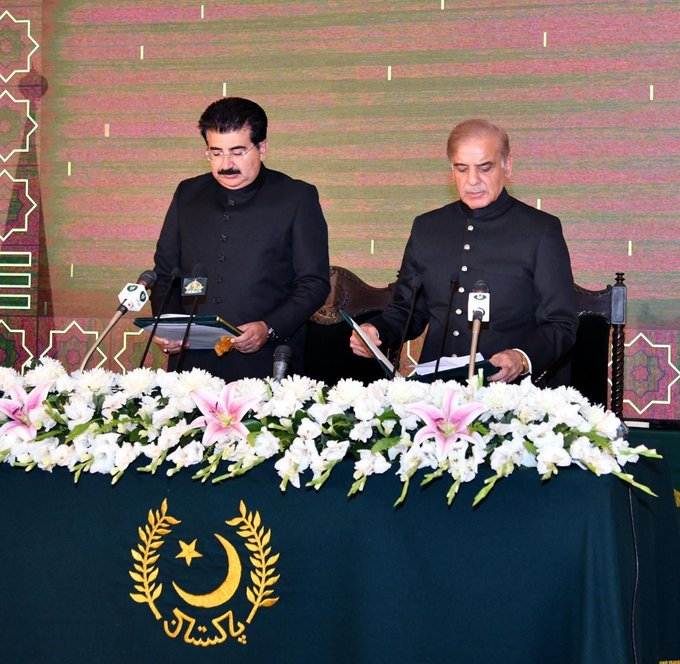
    In the president’s absence, Senate Chairman Sadiq Sanjrani administered the oath to PM Shehbaz.

    Modi, Turkey’s Erdogan congratulate Shehbaz on becoming PM

    Indian Prime Minister Narendra Modi and Turkish President Recep Tayyip Erdogan Monday congratulated Prime Minister Shehbaz Sharif on becoming the 23rd premier of Pakistan.

    Meanwhile, in a telephonic conversation with Shehbaz, Turkish President Erdogan told the newly-elected prime minister that he was “extremely happy” about him being elected as the premier.

    Guard of honour

    Earlier this morning, the premier was given a Guard of Honour at Prime Minister’s House.
  • ‘Dissolution of Assembly deprives Pakistanis of right to choose govt’: Human Rights Watch

    ‘Dissolution of Assembly deprives Pakistanis of right to choose govt’: Human Rights Watch

    Human Rights Watch (HRW) denounced Prime Minister (PM) Imran Khan’s action of dissolving the National Assembly and escaping from facing the no-confidence motion tabled against him. “This move of the premier has infringed on the rights of Pakistani citizens to choose their government.”

    “To dissolve parliament rather than face a no-confidence vote that could remove him from power effectively deprives Pakistani citizens of their right to choose their government,” said HRW in a statement.

    The watchdog for advocating human rights said, “Move has plunged Pakistan into a constitutional crisis. Under Pakistan’s constitution, the prime minister ceases to hold office if a majority of the National Assembly votes for a motion of no confidence – Imran Khan’s party appeared to have lost its majority by April 3. The action allows Khan to continue as prime minister until a caretaker government takes over, with neither a national assembly nor a federal cabinet.”

    “Government officials threatened to blow up the Opposition in a suicide attack and called on supporters to go out and take traitors to the task,” said HRW.

    “One member of parliament from Khan’s party tweeted that all Opposition members should be shot – a tweet he subsequently deleted. Senior members of Khan’s party have called for Opposition members to be arrested for treason,” added Human Rights Watch.

    Pakistan is in a state of political chaos as the no-confidence motion against Khan was dismissed abruptly on Sunday, April 3. Deputy Speaker Qasim Suri said that the no-confidence motion, presented on March 8, should be according to the law and the Constitution. “No foreign power shall be allowed to topple an elected government through a conspiracy,” he said, adding that the points raised by the minister were “valid”.

  • ‘Didn’t show up because of the no-confidence motion against me’: Speaker Asad Qaiser clarifies stance

    ‘Didn’t show up because of the no-confidence motion against me’: Speaker Asad Qaiser clarifies stance

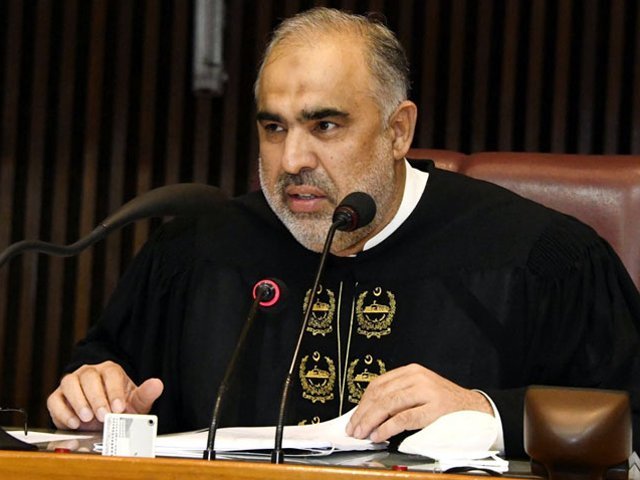
    National Assembly (NA) Secretariat in a statement has refuted all rumours circulating in the media in relevance to Speaker (NA) Asad Qaiser refusing to endorse the assembly dismissal on Sunday, April 3.

    “Qaiser decided not to preside over the meeting due to a no-confidence motion against him”, read the statement.

    Speaker Asad Qaiser had resisted the Pakistan Tehreek-e-Insaf (PTI) leadership’s script of rejecting the vote of no-confidence against Prime Minister (PM) Imran Khan under Article 5 of the Constitution, reports Geo News.

    On the day of voting, Qaiser did not preside over the lower house session. Instead, Deputy Speaker NA Qasim Suri conducted the session.

    Geo reports that sources privy to the matter have revealed that Qaiser reportedly was not ready to give a ruling under Article 5 of the Constitution to reject the no-trust motion against PM. The news outlet further reveals that the premier’s legal team tried hard to pursue Qaiser to foil the trust motion; however, he disagreed and refrained from attending the NA session.

    Qaiser responded with “no comments” on Geo News’ attempt to get his version. “The matter is in the Supreme Court of Pakistan, therefore I cannot talk on this,” he said.

    However, Qaiser tweeted the detailed ruling of the dismissal of the no-trust motion.

    It is pertinent to mention here that Pakistan is in a state of political chaos as the no-confidence motion against Khan was dismissed abruptly on Sunday. The move came after Suri termed it “unconstitutional”, saying that it was backed by “foreign powers”.

  • All eyes are on the Supreme Court: What can we expect today?

    With what seems like an uncalled-for use of power, the abrupt dismissal of the no-confidence motion against Prime Minister (PM) Imran Khan is being termed an “unconstitutional trump card”. Citizens of Pakistan have serious reservations over how Article 5 has been used as an ‘excuse’ by the Pakistan Tehreek-e-Insaf (PTI) government to effectively subvert the constitution.

    Pakistan is in a state of constitutional crisis and all eyes are on the Supreme Court of Pakistan (SCP). The main question is which way will the SCP direct the future of Pakistan? The two options that seem likely to emerge after the hearing will primarily shape the future politics and state of democracy in Pakistan.

    The Supreme Court of Pakistan is scheduled to hold a hearing on the suo motu notice taken by Chief Justice of Pakistan (CJP) Umar Ata Bandial. A five-member Supreme Court bench will hear the case for and against the dismissal of the no-confidence motion yesterday. CJP Bandial will head the session starting at 1pm on Monday.

    If the apex court decides in favour of the Opposition

    If the five-member bench decides in favour of the Opposition, the NA session will reconvene and the Lower House will have to continue with the voting on the no-confidence motion tabled against PM Khan. If Khan loses the majority, he can no longer hold office. And that the apex court will call for a fresh election in a time period of six months.

    If the apex court decides in favour of the government

    If the honourable judges of the Supreme Court decide in favour of the government, then fresh elections will be called in a time of 90-120 days. Meanwhile, it is also being speculated that the apex court will remark that it has nothing to do with the parliament and that what does goes inside the assembly strictly stays within the assembly.

    It is pertinent to mention here that Deputy Speaker of National Assembly Qasim Suri, on Sunday, April 3, dismissed the no-trust motion against Khan, terming it “unconstitutional”, saying that it was backed by “foreign powers”.

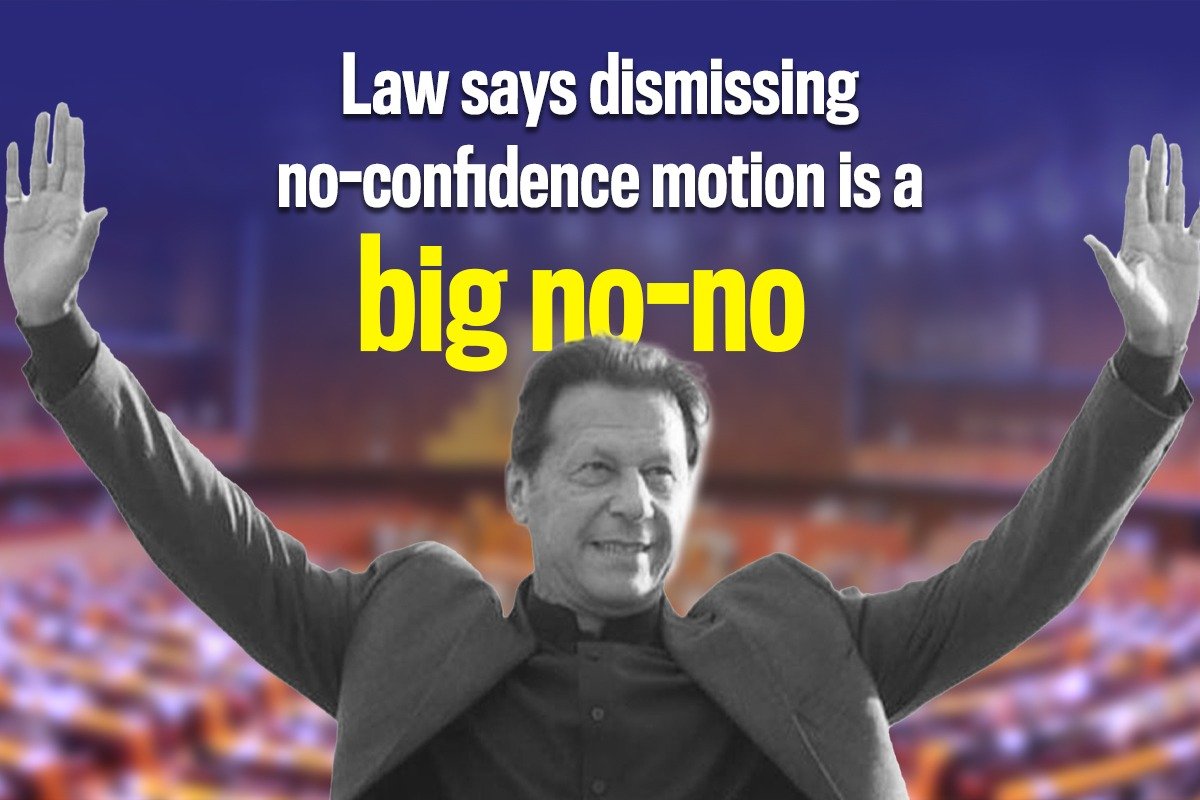
  • Explainer: Law says dismissing no-confidence motion is a big no-no

    Explainer: Law says dismissing no-confidence motion is a big no-no

    Pakistan is in a state of political chaos as the no-confidence motion against Prime Minister (PM) Imran Khan was dismissed abruptly on Sunday. The move came after National Assembly (NA) Deputy Speaker Qasim Suri termed it “unconstitutional”, saying that it was backed by “foreign powers”.

    Suri then quickly disallowed voting on the no-confidence motion and adjourned the session. Later, on PM Khan’s advice, President Arif Alvi dissolved the National Assembly, with the premier asking the nation to get ready for fresh polls.

    After the nation was left in shock, there was much talk about the “unconstitutional trump card” used by PM Khan.What everyone wants to know is: did Khan subvert the constitution of Pakistan?

    Lawyer Salaar Khan tweeted a brief comprehension of the constitutional premise of what happened on Sunday, April 3, which went viral on Twitter.

    “Instead of allowing the vote to proceed against the Prime Minister, the Deputy Speaker dismissed the resolution. After this, the President was able to dissolve the National Assembly on the PM’s advice,” tweeted Salaar.

    “Under Article 58 of the Constitution, the President may dissolve the National Assembly on the PM’s advice. However, a PM against whom a vote of no confidence ‘has not been voted upon’ cannot ask the President to dissolve the house,” wrote Salaar.

    “To get around this, the Deputy Speaker first ‘dismissed’ the no-confidence resolution submitted against the PM. He did this on the basis of a personal interpretation of Article 5, which provides for loyalty to the state.”

    “The rather feeble argument here was that because the letter that Pakistan had received from the US suggested a regime change would improve relations, the vote of the no-confidence motion, itself, was against anti-state,” said the lawyer.

    “The irony, of course, is that Article 5 also provides for obedience to the Constitution – which was arguably violated in the process of the dismissal of the no-confidence motion.”

    “Procedurally, a ‘motion’ for no-confidence is first moved and, if leave is granted, it becomes a ‘resolution’. Under the Rules of Business in the National Assembly, there is no provision that actually allows a Speaker or Deputy Speaker to dismiss a resolution.”

    “In fact, the role of the Speaker is very clearly defined in Schedule 2 of the Rules of Business in the NA, and is essentially limited, in a VoNC, to announcing the result.”

    “And so, because the Speaker can’t dismiss a resolution for a VoNC, there is still a VoNC that has not been ‘voted upon’ by the Prime Minister. Consequently, the PM could not have advised that the assembly be dissolved under Article 58.”

    “In fact, in doing so, it may even be argued that he not only violated Article 5, by not obeying the Constitution but also subverted the Constitution under Article 6. It is, however, important to note that Article 6 is often used rather flippantly in common parlance.”

    “Finally, is the question of what the SC may do in all of this. One provision of the Constitution that has been mentioned a lot is Article 69, which bars courts from interfering in certain Parliamentary proceedings.”

    “However, the SC has laid out exceptions to this bar. Courts can interfere where there is not an ‘irregularity’ but a ‘patent illegality’, where there is clear mala fide, or where the matter in question affects the composition of the house, itself (such as in Farzand Ali).”

    “But while the SC may well find that it can interfere, how far it will go is another question. In theory, the SC could find the dissolution to be without legal effect and even order voting to resume on the VoNC. But given recent precedent, that may be a long shot.”

    The Supreme Court of Pakistan took suo moto notice of the Assembly proceedings on Sunday, April 3, and restrained the state institutions as well as the political parties from taking any unconstitutional acts and exploiting the situation.

  • Deputy Speaker Qasim Suri throws PPP leader out of NA session

    Deputy Speaker Qasim Suri throws PPP leader out of NA session

    In a bid to enforce order in the National Assembly amid a ruckus, Deputy Speaker Qasim Suri directed Pakistan People’s Party (PPP) leader Agha Rafiullah to leave the house for “disrupting the session”.

    The house witnessed pandemonium after the opposition leaders started protesting the deputy speaker’s refusal to allow the opposition lawmakers to make speeches on point of order.

    Geo News reported PPP leader Agha Rafiullah Awan initiated cross-talk when the treasury benches started discussing the Pakistan Democratic Movement’s (PDM) rallies.

    At this, he was told by Suri not to disrupt the house. However, instead of backing down, Rafiullah approached the desk of the deputy speaker and demanded his right to speak. Suri, who was chairing the session in the absence of Speaker Asad Qaiser, got irked by the attitude of Rafiullah and told him to leave the house.

    In a video, Agha Rafiullah can be seen arguing with the deputy speaker, while Suri can be heard asking the sergeant to escort the lawmaker out of the National Assembly.

    After the lawmaker was told to leave the premises, PPP leader Raja Pervaiz Ashraf issued an apology on Rafiullah’s behalf and asked the deputy speaker to review his decision.

    However, Suri refused to agree and told the PPP leader to advise his colleague to leave the house. “If Rafiullah leaves the house for a while and then apologise upon his return, he can be allowed to sit here,” a visibly irked Suri told Ashraf.

    However, the PPP leader had not left the house on the deputy speaker’s directives, prompting Parliamentary Affairs Minister Ali Mohammad Khan to read out a clause of the rules and regulation that stated a member could be suspended over non-compliance with the speaker’s directives.

    The minister said it was imperative upon the lawmaker to comply with the ruling of the speaker for the sake of the sanctity of parliament.

    Finally, the PPP lawmaker, joined by his colleagues, agreed to leave the house for a few minutes.