Tag: developing countries

  • WTO launches $50m fund for female entrepreneurs in developing world

    WTO launches $50m fund for female entrepreneurs in developing world

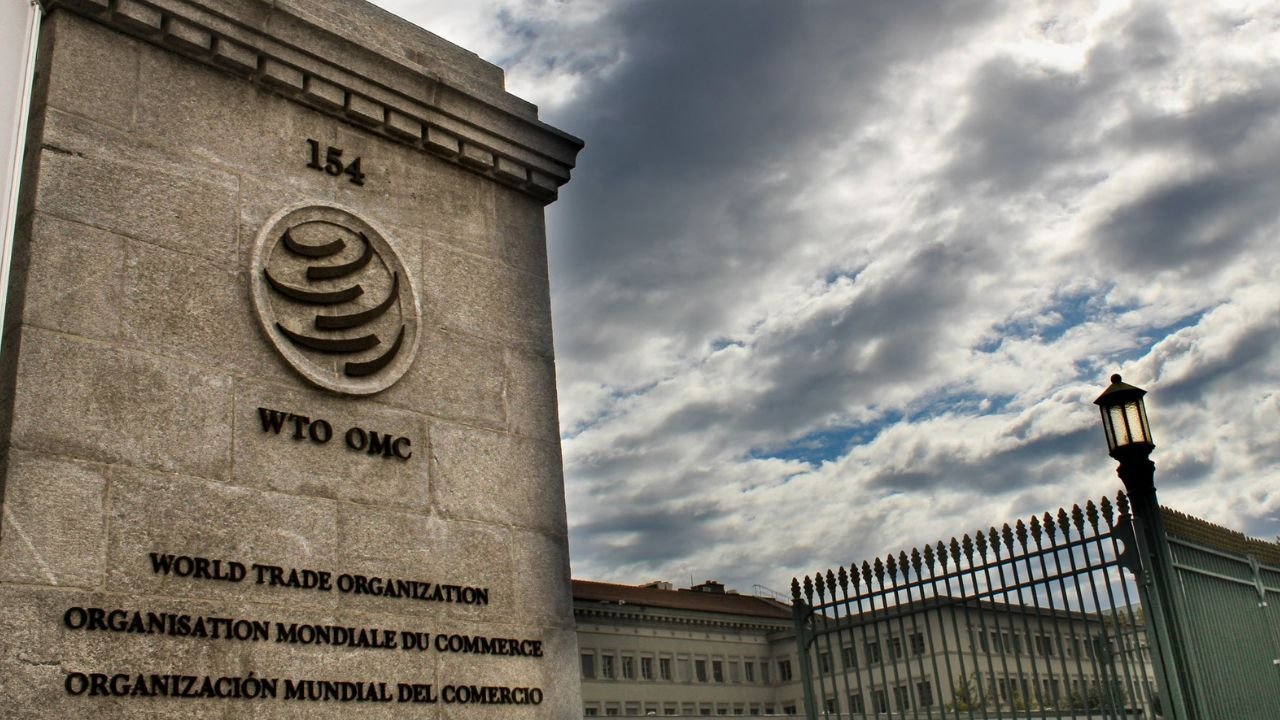
    The director general of the World Trade Organisation, Ngozi Okonjo-Iweala, on Sunday launched a $50 million fund to help female entrepeneurs in developing countries to export more using the opportunities offered by the digital economy.

    The announcement came ahead of the 13th ministerial conference of the WTO which opens on February 29 in the United Arab Emirates.

    Okonjo-Iweala, speaking alongside the Emirati Minster of State for Foreign Trade Thani al-Zeyoudi, said the “ground-breaking initiative… embodies our collective commitment to empower women”.

    “We need catalytic solutions to solve the financing issue that women face,” she added.

    The fund will help businesses run by women in developing countries to adopt digital technologies and increase their online presence.

    Zeyoudi said his country would contribute $5 million to the fund, adding “this initiative allows us to celebrate the invaluable contribution of women entrepreneurs and women led businesses around the world and to recognise the critical role they play in driving economic growth”.

    “While women are one half the world’s population, they only contribute 37 percent to the global GDP,” he said.

    Also at the announcement was Saudi Arabian Minister of Commerce Majid al-Kasabi, who called it a “milestone” and said his country was “dedicated” to supporting female empowerment.

    Okonjo-Iweala said that in meeting female entrepeneurs, “a common refrain among them is the need for adequate financing to scale their businesses and to tap into the vast opportunities of global trade”.

    apo/dcp/fz

    © Agence France-Presse

  • Climate crises drove 27 million children into hunger in 2022

    Climate crises drove 27 million children into hunger in 2022

    Extreme weather events in countries vulnerable to climate change drove more than 27 million children into hunger last year, Save the Children said on Tuesday.

    The figure represented a sharp 135 percent increase over 2021, the UK-based charity said in an analysis ahead of the COP28 climate summit opening in Dubai on Thursday.

    It said children made up nearly half the 57 million people pushed into crisis levels of acute food insecurity or worse across 12 countries because of extreme weather in 2022, according to data from the IPC hunger monitoring system.

    Out of the 12, countries in the Horn of Africa were most affected, with Ethiopia and Somalia accounting for about half of the 27 million children facing hunger, Save said.

    “As climate-related weather events become more frequent and severe, we will see more drastic consequences on children’s lives,” Save’s CEO Inger Ashing said in a statement.

    The charity called on leaders meeting at COP28 in Dubai to take action on the climate crisis by recognising children as “key agents of change” but more broadly to address other causes of food insecurity such as conflict and weak health systems.

    Save highlighted the situation in Somalia, which is considered one of the most vulnerable countries to climate change, locked in a vicious cycle of drought and floods.

    It said the recent torrential rains and flooding that have engulfed many parts of the country had displaced about 650,000 people, about half of them children.

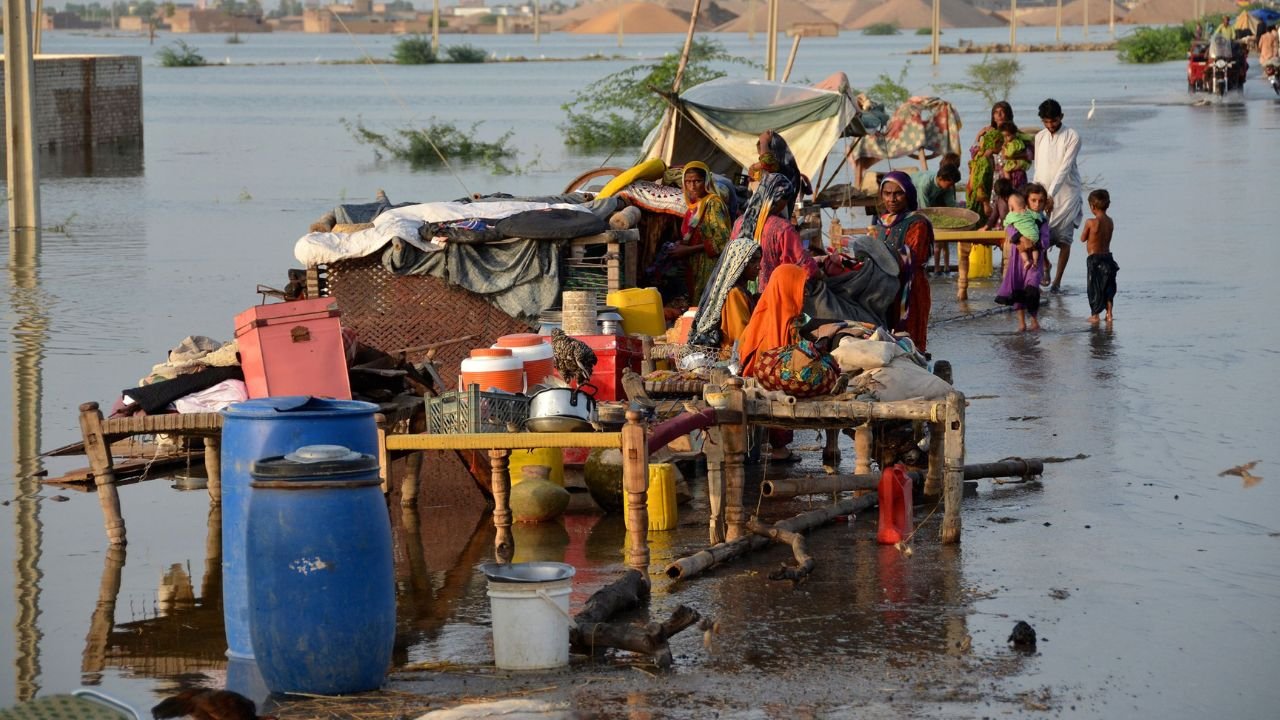
    Elsewhere, Save noted that two million children in Pakistan remained acutely malnourished after floods that swamped a third of the country last year.

    Across the planet, Save estimated that 774 million children -– or one third of the global child population — are living with the dual impacts of poverty and high climate risk.

    In a report issued last week, Save said that more than 17.6 million children will be born into hunger this year, one-fifth more than a decade ago.

  • Extreme Rainfall Increases Exponentially With Global Warming: Study

    State-of-the-art climate models drastically underestimate how much extreme rainfall increases under global warming, according to a study published Monday that signals a future of more frequent catastrophic floods unless humanity curbs greenhouse emissions.

    It comes as countries prepare to meet at the COP28 summit in Dubai beginning later this week, amid fears it could soon be impossible to limit long-term warming to the 1.5 degrees Celsius scientists say is necessary to curb the worst effects of human-caused climate change.

    Researchers from the Potsdam Institute of Climate Impact Research (PIK) looked at the intensity and frequency of daily precipitation extremes over land in 21 “next generation” climate models used by a UN body in its global assessments.

    They then compared the changes projected by the models with those observed historically, finding that nearly all climate models significantly underestimated the rates at which increases in precipitation extremes scaled with global temperature rise.

    “Our study confirms that the intensity and frequency of heavy rainfall extremes are increasing exponentially with every increment of global warming,” said Max Kotz, lead author of the paper published in the Journal of Climate.

    The changes track with the Clausius-Clapeyron relation in physics, which established that warmer air holds more water vapor. This finding underpinned the fact that temperature and not wind dominate the global change in extreme rainfall events, according to the authors.

    Stronger increases in rainfall intensity and frequency were found across the tropics and high-latitudes, like in Southeast Asia or Northern Canada, according to the study.

  • Pakistan’s climate problems partially due to world’s richest one per cent: Report

    Pakistan’s climate problems partially due to world’s richest one per cent: Report

    Oxfam has released a new report, “Climate Equality: A Planet for the 99%”, revealing that “The richest one per cent of the world’s population produced as much carbon pollution in 2019 as the five billion people who made up the poorest two-thirds of humanity.”

    While fighting the climate crisis is a shared challenge, not everyone is equally responsible and government policies must be tailored accordingly, Max Lawson, who co-authored the report, told AFP.

    “The richer you are, the easier it is to cut both your personal and your investment emissions,” he said. “You don’t need that third car, or that fourth holiday, or you don’t need to be invested in the cement industry.”

    Among the key findings of this study are that the richest one percent globally—77 million people—were responsible for 16 percent of global emissions related to their consumption.

    That is the same share as the bottom 66 percent of the global population by income, or 5.11 billion people.

    Pakistan

    The difference in recent floodings in Germany and Pakistan unveils how a country’s wealth can “enable or hinder its ability to respond to a climate emergency”.

    German floods affected a population of 40,000 people, resulting in damage and economic costs of 40 billion dollars. They were able to mobilise funding through federal and state government flood relief funds for reconstruction of 35 billion dollars within weeks.

    On the contrary, Pakistan floods affected a population of 33 million people, leading to damage and economic costs of 30 billion dollars. International donors pledged a funding of 8.57 billion dollars as of January 2023 for the next three years.

    While Germany could easily manage the financial and technical resources required, debt-troddened Pakistan was unable to allocate the necessary resources resulting in suffering from “the lasting impacts of the floods”.

    The report explains that this comparison between the two countries shows “a common double standard practised by many Global North countries: they rapidly find the funds needed when disasters hit within their borders, but fail to do so when they occur in the Global South”.

  • Pakistan’s history of IMF bailouts: A look at 75 years of economic challenges

    Pakistan’s history of IMF bailouts: A look at 75 years of economic challenges

    Pakistan is currently facing yet another economic crisis, a recurring issue that has caused the country to repeatedly seek help from the International Monetary Fund (IMF) for financial assistance.

    Unfortunately, most of the previous 13 bailouts granted since the late 1980s were left unfinished, as Pakistan failed to implement any meaningful structural changes to rein in government spending or boost revenue.

    The country’s current government, led by Prime Minister Shehbaz Sharif, is currently in talks to revive its latest $6.5 billion loan programme as a result of the ongoing economic downturn, exacerbated by last year’s devastating floods and continued political instability. However, the implementation of the necessary belt-tightening measures may prove to be challenging, given the upcoming national elections planned for later this year.

    Pakistan and the IMF had agreed to a $6 billion bailout program in 2019, but disputes over monetary policies have prevented the release of over $1 billion. Furthermore, donors and lenders have demanded structural reforms before providing any further financial aid to Pakistan.

    Pakistan’s traditional partners have made it clear that their assistance is conditional upon the revival of the IMF program and the successful implementation of reforms, including the expansion of tax collection.

    Based on the prevailing Special Drawing Rights (SDR), also known as XDR, rates, the International Monetary Fund (IMF) has approved loans totaling $31.629 billion for Pakistan.

    It is worth noting, however, that not all of the approved funds have been disbursed, with only one out of 22 loans having been fully transferred to Pakistan. This highlights the complex political and economic dynamics that underlie IMF programs.

    Pakistan’s history of borrowing from the IMF

    Pakistan has a history of borrowing from the International Monetary Fund (IMF), which can be divided into four distinct periods. The early years of borrowing spanned from 1950 to 1988, followed by the Benazir and Nawaz Sharif era from 1988 to 1999. The third period was marked by the Musharraf and Zardari administrations from 2000 to 2013. The current period is led by Nawaz Sharif and Imran Khan.

    During these periods, each government worked with the IMF differently, especially in the past two decades. While the Benazir and Nawaz Sharif administrations alternated in seeking IMF programs in the 1990s, the Musharraf government, despite experiencing substantial foreign currency inflows, also had to turn to Washington for financial assistance.

    The Zardari administration, on the other hand, abandoned the largest-ever IMF program when it deemed it expedient to do so. This trend illustrates how Pakistan’s borrowing from the IMF has been characterised by inconsistency and shifting priorities.

    2013-2022

    Pakistan’s recent history of borrowing from the IMF has been marked by different governments seeking assistance in their own unique ways. While the Imran Khan government initially refused to seek assistance from the IMF, it eventually sought an Extended Fund Facility (EFF) loan worth SDR4.268 billion in July 2019. This was due to the country’s financial deterioration and instability, which had eroded the stability gains made since late 2016.

    Under Imran Khan’s government, the IMF disbursed a total of SDR3,159.5 million to Pakistan in four tranches. However, talks for the fourth tranche proved challenging and the government sought help from the US Assistant Secretary of State Donald Lu. Despite receiving SDR750 million in February 2022, then-Prime Minister Imran Khan announced a subsidy on petrol and diesel, effectively breaking the agreement with the IMF. As a result, the IMF suspended Pakistan’s $6 billion loan programme in March 2022.

    Negotiations for the revival of the fund facility did not commence until May, when Shehbaz Sharif of the PML-N took over the government. Talks on reviving the fund facility were concluded in late June, but only after the government took some harsh decisions, including withdrawing tax relief for salaried individuals. The next tranche will only be released after the IMF Executive Board takes up the combined 7th and 8th reviews.

    2000-2013

    During Pervez Musharraf’s government, Pakistan received significant foreign aid in the form of military and civil assistance, resulting in a low reliance on IMF loans for financial support. However, Pakistan did receive two IMF loans in the first two years of Musharraf’s regime, totaling SDR520 million. The first loan was a stand-by arrangement of SDR465 million, of which SDR150 million were disbursed, and the second was an extended credit facility of SDR1.033 billion, of which only SDR315 million were disbursed. Pakistan did not require IMF assistance from 2001 to 2008, as foreign aid prevented a balance of payment crisis.

    However, the aid failed to boost Pakistan’s forex reserves, which experienced a sharp decline between 2006 and 2008. In 2008, the Pakistan Peoples Party government negotiated with the IMF for the largest-ever loan of SDR7.235 billion, also the largest stand-by arrangement. Only SDR5.2 billion were disbursed between 2008 and 2010 in three tranches. Afterward, the PPP government did not complete the program as it received funds under the Kerry-Lugar program until 2013, when the United States ceased funding. The PPP government was unable to implement tough reforms demanded by the IMF due to impending elections.

    1989-1999

    During the 1990s, Benazir Bhutto and Nawaz Sharif sought eight bailouts from the IMF due to the consequences of the Soviet-Afghan war and political instability in Pakistan. In 1988, Bhutto signed up for two IMF packages, totaling SDR655 million. The IMF made two payments of SDR122.4 million and SDR189.5 million in 1991 and 1992. In 1993, Nawaz Sharif negotiated a loan of SDR265.4 million, with the IMF paying SDR88 million that year.

    Bhutto’s government signed three IMF programs of SDR379 million, SDR606 million, and SDR562 million between 1994 and 1995, with lower disbursements of SDR123 million, SDR133 million, and SDR107 million before being removed in 1996. Sharif then negotiated two loans in 1997 of SDR682.4 million and SDR454.9 million, respectively, with SDR250 million disbursed before his government was toppled in 1999. Bhutto negotiated a total of five programs of SDR2.2 billion, receiving SDR676.26 million, while Sharif signed up for three programs of SDR1.4 billion, with Pakistan receiving only SDR608 million. The instability of the government prevented the implementation of IMF reforms, which often led to increased tariffs and taxes, causing a negative perception of the IMF in the country.

    1958-1988

    The Zia-ul-Haq government received the largest amount of foreign aid from the International Monetary Fund in Pakistan’s history, surpassing the sum of all seven previous programs approved since 1958. In 1980, the IMF granted SDR1.268 billion to the government, followed by another program of SDR919 million in 1981. The Zia-ul-Haq administration received SDR1.079 billion out of the total SDR2.187 billion approved by the IMF.

    Before that, Zulfikar Ali Bhutto signed four loan programs with the IMF between 1972 and 1977 for a total of SDR330 million, of which SDR314 million was withdrawn. In 1958, Ayub Khan initiated Pakistan’s first loan from the IMF, seeking only SDR25 million, and in 1968 and 1969, two more programs of SDR37.5 million and SDR75 million were approved, respectively. The Ayub government received SDR112 million of the total SDR137.5 million approved.

    Pakistan has received a total of SDR23.656 billion in IMF-approved programs, of which SDR14.189 billion was disbursed. Pakistan was offered three long-term Extended Credit Facilities, five medium-term Extended Fund Facilities, at least 12 short-term Standby Arrangement loans, and one Structural Adjustment Facility over 63 years.

    This news story was created by compiling information from various news platforms as well as the IMF website.

  • World Bank and IMF spring meetings to address global economic uncertainties and climate change

    World Bank and IMF spring meetings to address global economic uncertainties and climate change

    On Monday, the 2023 spring meetings of the World Bank Group and the International Monetary Fund (IMF) commence in the US capital to examine the “uncertainties and risks weighing heavily” on the global economy. The meetings, which run from April 10 to 16, will take place at the IMF and World Bank headquarters and will focus on the impact of climate change, which is endangering lives and livelihoods worldwide.

    Finance ministers and central bank governors from around the world will attend the meetings to reconnect with international financial leaders, and some may hold one-on-one meetings with officials from the US Treasury and State Department. Pakistan will be represented at the meetings by the secretaries of finance and economic affairs, as well as the State Bank governor, in place of Finance Minister Ishaq Dar.

    An official statement outlining the issues to be discussed at the meetings indicated that “stubborn inflation, the cost-of-living crisis, and slower growth effects” are causing harm to the poor and most vulnerable. The statement further highlighted that record-high debt is impeding the progress of developing countries, and that the consequences of climate change are threatening lives and livelihoods globally. According to Dawn, experts are urging the World Bank and the IMF to create a comprehensive strategy to address the challenges that developing nations are facing.

    A picture on the UN Foundation’s website illustrates the widespread devastation caused by last year’s floods in Pakistan, prompting international financial institutions to devise a new mechanism to “assist communities affected by (climate change) catastrophes.” The caption beneath the photo emphasised that “many lives were lost, and millions lost their homes, with one-third of the country submerged.”

    According to a World Bank study released shortly after the floods, “Pakistan urgently requires substantial investment in climate resilience to safeguard its economy and reduce poverty.”

  • Pakistan received over $48 billion in bailout loans from China between 2008-2021

    Pakistan received over $48 billion in bailout loans from China between 2008-2021

    A study published on Tuesday revealed that China has spent $240 billion rescuing 22 developing countries between 2008 and 2021. This amount has increased in recent years as more countries struggled to repay loans taken for the building of “Belt & Road” infrastructure.

    The researchers, from the World Bank, Harvard Kennedy School, AidData, and the Kiel Institute for the World Economy, found that almost 80 per cent of the rescue lending was made between 2016 and 2021, primarily to middle-income countries such as Pakistan, Argentina, and Mongolia. However, lending has decreased since 2016 as many projects failed to generate expected financial dividends.

    The report also highlighted that Beijing’s ultimate objective was to rescue its banks, which is why it engaged in the risky business of international bailout lending. Chinese loans to countries in debt distress increased from less than 5 per cent of its overseas lending portfolio in 2010 to 60 per cent in 2022.

    Argentina received the highest amount of bailout money with $111.8 billion, followed by Pakistan with $48.5 billion and Egypt with $15.6 billion, while nine countries received less than $1 billion.

    According to Reuters, the People’s Bank of China (PBOC) swap lines accounted for $170 billion of the rescue financing, including in Suriname, Sri Lanka, and Egypt. Bridge loans or balance of payments, supported by Chinese state-owned banks, amounted to $70 billion. Rollovers of both types of loans totaled $140 billion. However, the study criticized some central banks for potentially using the PBOC swap lines to artificially pump up their foreign exchange reserve figures.

    China is currently negotiating debt restructurings with several countries, including Zambia, Ghana, and Sri Lanka. However, it has been criticized for holding up the processes. In response, it has called on the World Bank and International Monetary Fund to offer debt relief as well.