Tag: Diesel prices

  • OGRA reduces LPG price to Rs234 per kg amidst cost-cutting measures by OGDCL

    OGRA reduces LPG price to Rs234 per kg amidst cost-cutting measures by OGDCL

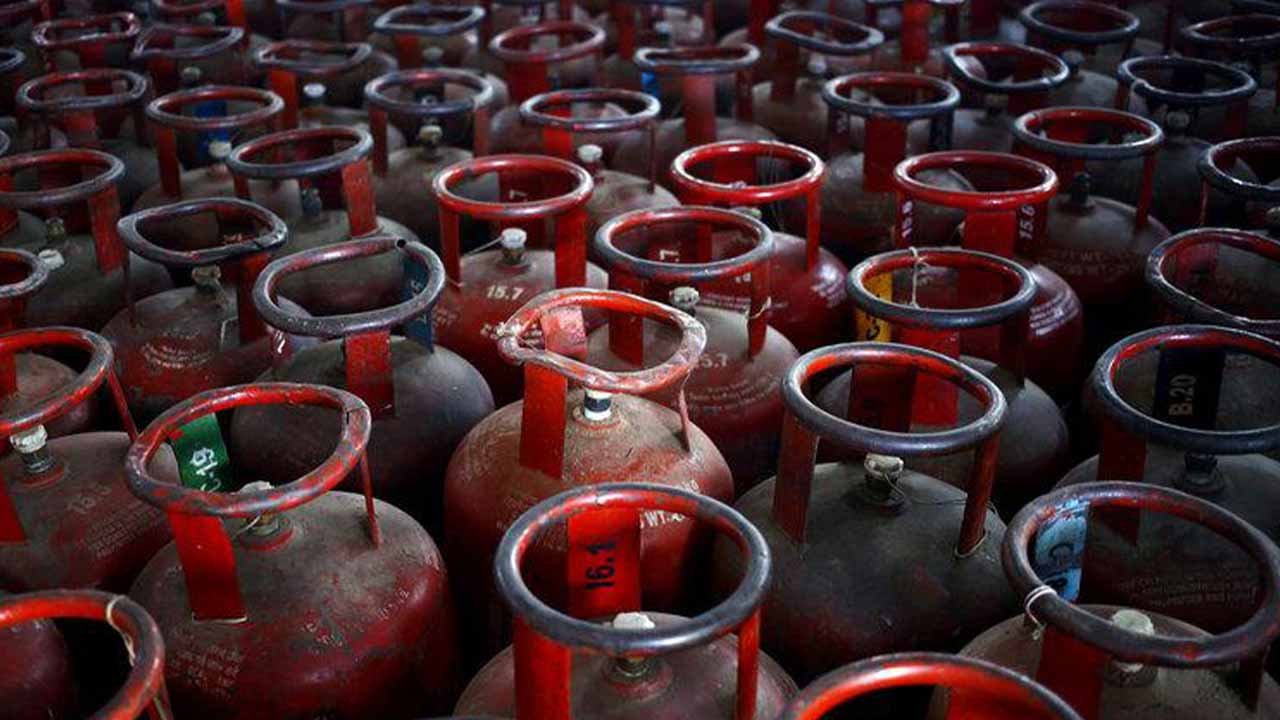
    The Oil and Gas Regulatory Authority (OGRA) has announced a reduction in the price of Liquefied Petroleum Gas (LPG), providing relief to consumers who depend on LPG.

    According to a recent notification, LPG prices have been cut by Rs3.87, bringing the cost down to Rs234 per kilogramme. This new rate is effective immediately.

    This development follows a significant cost reduction in production by the Oil and Gas Development Company (OGDCL), attributed to the arrival of three ships carrying imported LPG.

    The increased supply has enabled OGDCL to lower production costs, subsequently leading to the reduced consumer prices.

    In a related development, the prices of petrol and diesel in Pakistan are also anticipated to drop from June 1. According to sources, petrol prices are expected to decrease by Rs5 per litre, while diesel prices may see a reduction of Rs4 per litre.

    The Ministry of Finance will announce the new rates after consulting with the Prime Minister.

    The OGRA summary proposing the price reductions will be submitted to the Petroleum Division by May 31st, sources added.

    This move is part of a broader strategy to alleviate the financial burden on the public by ensuring affordable fuel prices amidst fluctuating global oil markets.

  • Petrol and diesel prices expected to surpass Rs300 per litre this week

    As global oil rates surge and the rupee’s value against the US dollar weakens, there are growing indications that petrol and diesel prices in Pakistan could soon breach the significant Rs300 mark. The Oil and Gas Regulatory Authority (Ogra) is reportedly contemplating recommending a substantial increase in petroleum product prices for the upcoming fortnight, in an attempt to address the challenges posed by these economic dynamics.

    Sources indicate that if the proposal is approved, petrol prices might experience a sharp upswing of around Rs12 per litre, while diesel could see an even more substantial increase of Rs14.83 per litre. These potential hikes, set to take effect from September 1, 2023, have sparked concerns about their impact on the already high inflation rate, which currently stands at 28 per cent.

    A senior official from the Energy Ministry has expressed apprehensions regarding the potential consequences of these price adjustments. Balancing the need to mitigate citizens’ financial burdens with the demands of existing agreements, the government is grappling with a challenging decision. Notably, any attempt to counteract the price hikes could put the caretaker government in a precarious situation, as it might be perceived as a default on the International Monetary Fund’s (IMF) stipulations tied to a $3 billion standby agreement (SBA) loan.

    The depreciation of the rupee against the dollar has further fueled the need for these adjustments. With the dollar’s value reaching Rs301.75 in the interbank market and around Rs319 in the open market, the impact on petroleum prices is undeniable. The authorities have decided to recalibrate their calculations, opting for a dollar rate of Rs299 to account for the recent Rs12 exchange rate impact.

    Beyond the exchange rate, the recent surge in LC (letter of credit) confirmation charges, marked by a 10 per cent increase, has also played a role in pushing petroleum prices upwards. These charges have contributed to the overall increase in the cost of PSO (Pakistan State Oil) petroleum products. Presently, Mogas (motor gasoline) is priced at Rs290.45 per litre; however, this could rise by Rs12 per litre if the recommendations are greenlit. Similarly, the price of HSD (high-speed diesel) might surge from Rs293.40 per litre to Rs308.23 per litre, assuming the proposed Rs14.83 increase goes into effect.

    According to The News, of particular concern is the potential hike in diesel prices, given its primary use in powering heavy transport vehicles, trains, and various agricultural engines. This ripple effect could raise the cost of essential commodities, putting pressure on consumers’ wallets. 

    On the other hand, a surge in petrol prices would directly affect private transportation, rickshaws, two-wheelers, and small vehicles, disproportionately impacting the budgets of middle and lower-middle-class citizens. The impending decision on petroleum prices presents a delicate challenge for the government, requiring a careful balance between economic realities, inflation concerns, and public sentiment.
  • Goods transporters implement 20% fare hike in response to soaring diesel prices

    Goods transporters implement 20% fare hike in response to soaring diesel prices

    Goods transporters raised their fares by 20 per cent in response to a recent surge in diesel prices on Thursday. The announcement came as the goods transporters association revealed their decision to implement a fare increase of 20 per cent, citing a substantial rise in diesel prices of up to Rs40 per litre over the span of 15 days.

    Rana Shoaib, the General Secretary of the Goods Transporters Association, conveyed in an official statement that their operational expenses had been significantly impacted by the substantial surge in diesel prices.

    He further elaborated that the provision of goods transportation services between major cities such as Karachi, Multan, Lahore, Faisalabad, Islamabad, and Peshawar has been sustained. However, the transporters are finding it increasingly challenging to bear the escalating financial burdens associated with fuel costs and spare parts.

    According to ARY News, Shoaib said that the decision to raise fares was a necessary step due to the considerable escalation in government-imposed fuel prices. Notably, earlier in the same month, local transporters independently elevated fares by as much as 20 per cent in response to a previous hike in fuel prices without any intervention or oversight from relevant authorities.

    Details indicate that local transporters unilaterally implemented fare increases ranging from Rs15 to Rs20 for stop-to-stop journeys, despite the absence of formal notifications regarding fare adjustments by the district administration.

    Furthermore, the fare hikes extended to transportation services between Karachi and other destinations like Hyderabad, Larkana, and Sukkur. This trend of fare increases also extended to buses and coaches operating within the city limits.

  • Here are the revised diesel and petrol prices effective July 16, 2023

    Here are the revised diesel and petrol prices effective July 16, 2023

    Finance Minister Ishaq Dar announced on Saturday that the prices of petrol and diesel will be reduced in the upcoming fortnightly review.

    During a televised address, the minister said that petrol prices will be reduced by Rs9 per litre, while diesel prices will see a decrease of Rs7 per litre. These adjustments were made due to changes in the international market over the past 15 days, with one petroleum product’s price increasing and the other decreasing.

    Following these revisions, the new price for petrol will be Rs253 per litre, and high-speed diesel (HSD) will be priced at Rs253.50 per litre. Minister Dar clarified that the petroleum development levy (PDL), which was previously raised to Rs60 per litre in response to the International Monetary Fund’s (IMF) request, will remain unchanged.

    The new prices will take effect on July 16, Sunday. Minister Dar also highlighted that the local currency has strengthened against the US dollar in the last 15 days, following Pakistan’s successful negotiation of a $3 billion Stand-By Arrangement (SBA) with the IMF.

    Here are the new diesel and petrol prices effective from tomorrow (July 16, 2023):

    Petroleum Product Previous Price Reduction Revised Price
    Petrol Rs263 per litre Rs9 per litre Rs254 per litre
    Diesel Rs260.50 per litre Rs7 per litre Rs253.50 per litre
  • Govt expected to reduce petrol price by Rs10 per litre in a pre-budget relief move

    Ahead of the much-anticipated federal budget for 2023-24, set to be announced on June 9, the government is planning to alleviate the burden of inflation by reducing the prices of petroleum products, according to industry officials.

    Starting from June 1, it is expected that the price of petrol will decrease by Rs10 per litre due to a decline in the ex-refinery price. Industry insiders have revealed that the ex-refinery price of petrol is projected to decrease by Rs10-12 over the next two weeks. However, due to exchange rate adjustments, the government will likely pass on relief of up to Rs10 per litre to consumers.

    Furthermore, industry officials have indicated that the ex-refinery price of diesel is showing a decline of Rs4-5 per litre in the next review. The government may incorporate this decrease during the upcoming fortnightly review, offering relief to diesel consumers.

    According to The News, in the previous price review, the government implemented a substantial reduction of Rs30 in the price of diesel. This resulted in a decrease from Rs288 to Rs258 per litre. Similarly, the price of petrol was slashed by Rs12, dropping from Rs282 to Rs270 per litre.

    These measures are aimed at mitigating the impact of rising prices on the general public and easing the financial burden faced by individuals as the government prepares to present the federal budget for the upcoming fiscal year.

  • Govt expected to increase petrol price by up to Rs14 per litre for the next fortnight

    Govt expected to increase petrol price by up to Rs14 per litre for the next fortnight

    Petroleum prices are expected to jump by approximately Rs10-14 per litre for the upcoming two weeks. Credible industry sources suggest that the government may contemplate increasing the prices of petroleum products in response to the increasing oil prices in the global markets.

    If the government considers compensating for exchange rate losses, as opposed to the previous review where the authorities did not transfer the impact of rupee devaluation to the public, the hike in prices could increase to as much as Rs14 per litre.

    The ex-depot price of petrol in the country is currently Rs272 per litre, and according to the workings of the oil sector, it is expected to reach Rs286.77 per litre in the next review if the government passes on the impact of global oil prices and exchange rate losses. However, even if the government does not adjust for exchange losses, petrol prices are still likely to increase due to higher global oil prices. The anticipated increase in the price of petrol is based on the current rate of taxes, with the government levying an Rs50 per litre charge on petrol and zero general sales tax.

    The expected rise in petrol prices is based on the Rs5 per litre exchange loss adjustment of Pakistan State Oil (PSO), which the government did not include in the past to keep petrol prices low. The prices of petroleum products would have been higher following the massive depreciation of the rupee against the dollar in the last two and a half months when, under International Monetary Fund (IMF) conditions, the market-based exchange rate was allowed.

    On the other hand, the price of high-speed diesel (HSD) is expected to remain unchanged in the next review of prices, as the current ex-depot price of HSD is the same as the expected price for the next fortnightly period. The anticipated unchanged price of HSD is based on the Rs17.50 exchange loss adjustment of PSO, which was pending when the dollar price increased massively in the last few weeks. Sources suggest that if the government does not adjust for exchange rate losses, the diesel price may decrease by Rs15 per litre.

    The government raised the petroleum levy on HSD to Rs50 per litre under IMF conditions in the last review of prices and charged no GST on it. According to sources, while the oil sector’s workings reflect a rise in petrol prices and no change in HSD, it is up to the government to decide. In the current scenario, the government has no option but to increase the price of petrol, as its financial space is already squeezed. Additionally, the government is making desperate efforts to revive the IMF program to shore up forex reserves.

  • Punjab Transport Department increases non-AC bus fares by over 250%

    Punjab Transport Department increases non-AC bus fares by over 250%

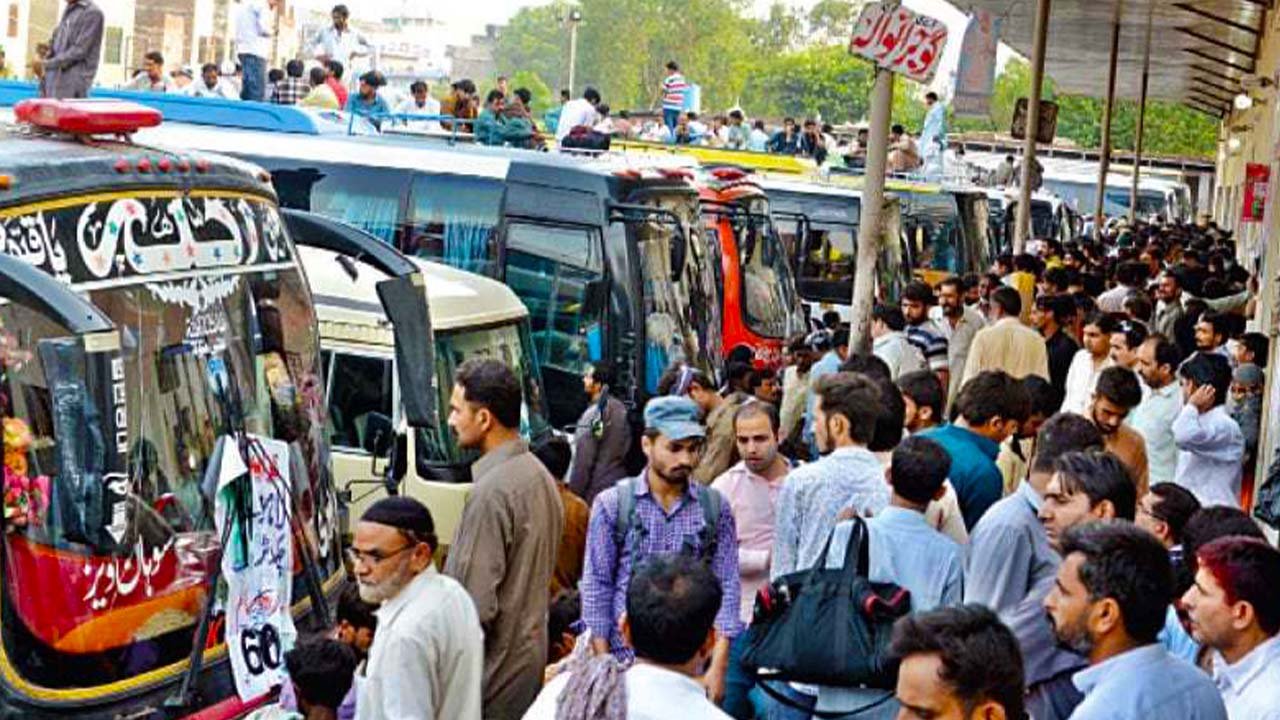
    The Punjab Transport Department (PTD) has announced that it will increase the fares of non-AC buses in response to the rising prices of diesel and petrol.

    This decision will place an additional burden on the poor, as fares will increase by more than 250 per cent. The new fares for both inter and intra-city non-AC bus services will be implemented from April 25th.

    The fare for non-AC bus services operating between different cities will increase by 233 per cent to 267 per cent. Additionally, an increase of up to 267 per cent in the fares of non-AC buses and wagons has also been approved.

    Under the new policy, passengers travelling one to four km will see an increase from Rs14 to Rs47, a difference of Rs33.

    This fare hike will also make it more expensive for passengers to return to their cities from native towns, particularly after Eid-ul-Fitr.

  • International petrol, diesel prices drop, but no relief for Pakistanis

    The government has decided not to reduce the prices of diesel and petrol for local consumers, despite a significant decrease in their international prices. This decision is intended to offset previous exchange losses and raise taxation.

    On February 28, 2023, the average fortnightly prices of petrol and diesel in the global market will be used for the next price revision. According to industry sources, the average price of diesel for the next fortnightly review has dropped by $7 per barrel, which equates to a reduction of Rs30 per litre for domestic diesel prices.

    The global average price of diesel has fallen to approximately $100 per barrel compared to $107 per barrel in the previous fortnight. Similarly, the average price of petrol has dropped to $90 per barrel for the next review of prices compared to $93 per barrel in the last fortnightly review, which translates into a reduction of Rs10 per litre for consumers in the local market.

    According to Geo, the appreciation of the Pakistani rupee against the dollar in the last two weeks has also contributed to the reduction in import prices of diesel and petrol. However, industry sources do not expect any significant reduction in the prices of diesel and petrol for domestic consumers.

    The government is expected to adjust the exchange losses, which were not passed on fully to the oil sector in the last several reviews. For example, an exchange loss adjustment of Rs88 per litre was due on diesel, but the government only transferred Rs12 per litre on this head, leaving the remaining amount to be adjusted. The same is true for petrol, with an exchange loss adjustment of Rs34 per litre due, but only Rs12 per litre being given to the oil industry.

    Under the conditions set by the International Monetary Fund (IMF), the government may increase the petroleum levy (PL) on diesel to Rs50 per litre, as it now has room to do so. Currently, the PL on diesel is Rs40 per litre.

    If the government does not impose GST, sources expect a cut of Rs10 per litre in diesel prices, which would otherwise deprive local consumers of the drop in diesel prices in the global market.

    However, official industry sources do not anticipate any reduction in the price of petrol for local consumers, which would otherwise have been down by Rs10, as per the trends of its price in the global market.

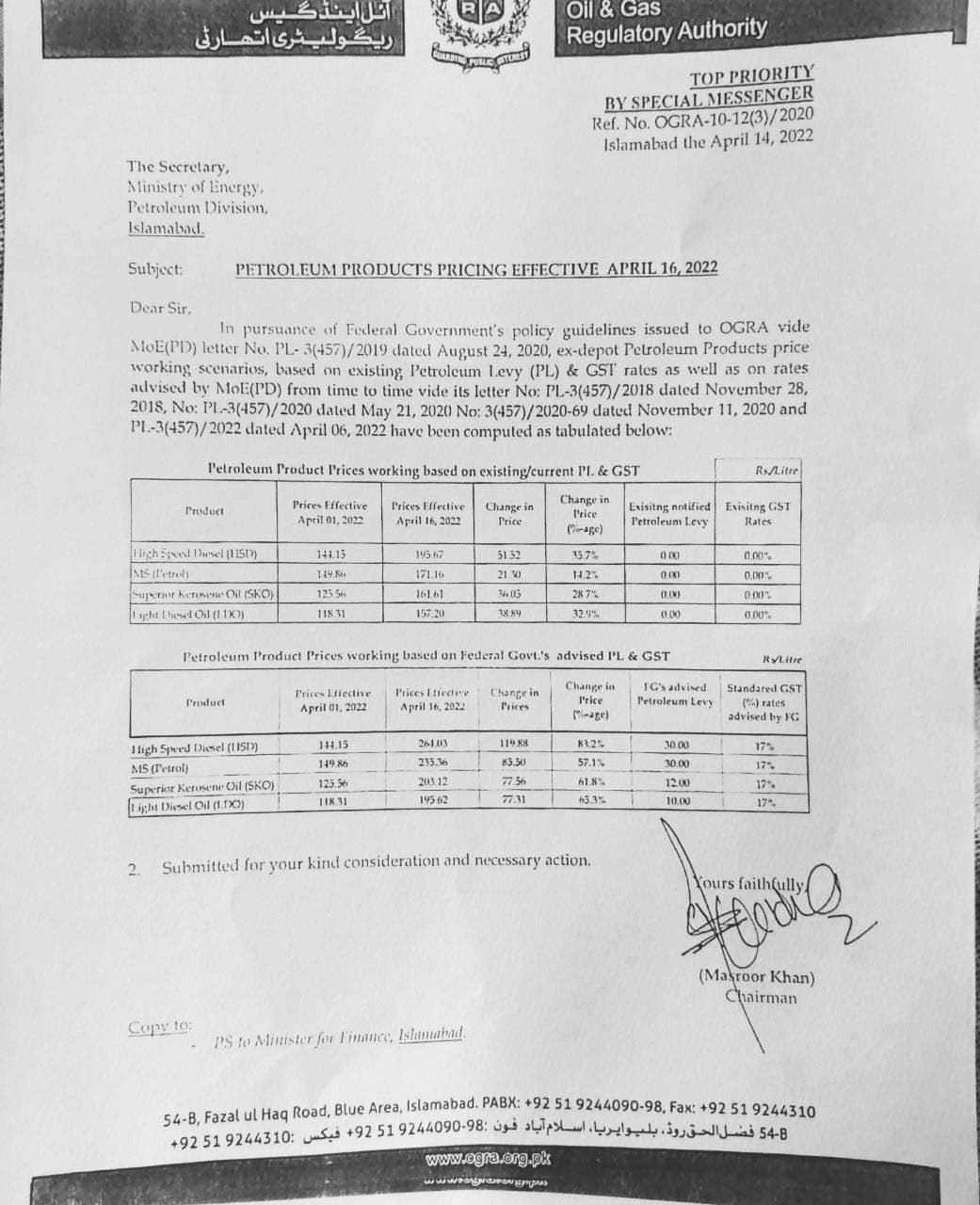
  • Massive hike of Rs83.5 for petrol, Rs119 for diesel proposed by OGRA

    Massive hike of Rs83.5 for petrol, Rs119 for diesel proposed by OGRA

    The Oil and Gas Regulatory Authority (OGRA) suggested the federal government elevate fuel prices by up to Rs83.5 per liter for petrol and Rs119 for diesel.

    A summary to the petroleum division was presented by OGRA for the huge increase in petroleum rates to come into effect on April 16 in Pakistan.

    The proposed raise was calculated using a 70 per cent GST rate plus a Rs30 per liter levy. It is worth noting that the current duty on fuel and diesel is Rs30 per liter, plus 17 per cent GST.

    On the basis of complete levy and taxes, the body has recommended raising petrol prices by Rs83.5 per liter, while diesel prices should be raised by Rs119 per liter.

    According to reports, the OGRA proposed raising the petrol price to Rs21.53 per liter in line with the current tax rate, Rs51.3 for diesel, and Rs77.56 for kerosine oil on the grounds of full tax and levy.

    Read more: Gold prices go up by Rs350 per tola to Rs130,300

    Concerning other oil products, a full tax rate and levy hike of Rs77.31 was suggested for light diesel, Rs36.5 for kerosine oil, and Rs38.89 for light diesel. According to sources, the finance ministry would make the final decision on the OGRA summary after briefing Prime Minister Shehbaz Sharif.