Tag: diesel

  • Govt hikes petrol and diesel prices by nearly Rs20 per litre

    Govt hikes petrol and diesel prices by nearly Rs20 per litre

    In a move to fulfill its commitment with the International Monetary Fund (IMF), Pakistan’s Finance Minister Ishaq Dar has announced a substantial increase in petrol and diesel prices. The revision has taken effect immediately today (August 1st), with petrol price rising by Rs19.95 per litre and diesel price climbing by Rs19.90 per litre.

    Here are the new petrol and diesel prices:

    Product Old prices New prices Increase
    Petrol Rs253 Rs272.95 Rs19.95
    Diesel Rs253.50 Rs273.40 Rs19.90

    Minister Dar stated that the price hike was necessary to comply with the IMF’s requirement to impose a petroleum development levy (PDL) on the rates. He mentioned that despite attempts to mitigate the impact on inflation-weary citizens, the government had little room to maneuver due to the binding agreement with the IMF.

    The announcement was originally scheduled for July 31, but the government delayed the decision as officials sought ways to minimise the impact on the general public. The Finance Minister, making this announcement for the last time before his government’s term ends on August 12, emphasised that the decision was taken in the “national interest.”

    Dar clarified that if it were not for the IMF agreement, the government would have attempted to reduce the PDL to provide relief to the masses. He referred to the measures taken by the previous government that decreased petrol prices but resulted in a breach of commitments with the IMF.

    Explaining the reasons behind the price hike, the finance minister highlighted the surge in international market prices of high-speed diesel, which necessitated adjustments in local rates. He stressed that it was crucial to pass on the minimum amount to the consumers, considering the nation’s interests.

    The sudden increase in fuel prices is likely to have significant implications on the overall economy, including its impact on inflation rates and the cost of living for ordinary citizens. With the government’s term ending soon, the incoming administration will face the challenge of managing economic stability and addressing public concerns over rising fuel costs.
  • Petroleum dealers’ strike averted: Govt approves Rs1.64 per litre profit margin increase

    Petroleum dealers’ strike averted: Govt approves Rs1.64 per litre profit margin increase

    The government has successfully reached an agreement with the Pakistan Petroleum Dealers Association (PPDA) to avert the strike they had threatened last week. After extensive negotiations, the government agreed to increase the profit margin on petroleum products for dealers by Rs1.64 per litre.

    Chairman of the PPDA, Abdul Sami Khan, made the announcement regarding the deal. Initially, the government had proposed a lower increase of Rs1.64 per litre, but the dealers, who had originally sought a higher increase of Rs5 per litre, resisted, deeming it insufficient to cover their rising business costs. Eventually, they accepted the government’s offer.

    The new profit margin for dealers will be implemented in four phases. Every fortnight, it will be raised by Rs0.41 per litre, culminating in a full raise of Rs1.6 per litre within two months. This will bring the dealers’ margin to Rs7.6 per litre, up from the current Rs6 per litre.

    The decision to strike was initially announced by the PPDA in response to the ongoing inflation crisis. The association stated that increasing interest rates and inflation had severely impacted their businesses and demanded a raise in the dealership margin to cope with the challenges they were facing. They also pointed out a decline in sales by 30%, partly due to the smuggling of Iranian fuel into the country.

    Read more: Petroleum dealers and Minister set to meet today to resolve profit margin dispute

    However, the strike was deferred for two days after the PPDA members engaged in discussions with the State Minister for Petroleum, Musadik Malik. The minister’s visit to Karachi was aimed at convincing the PPDA to call off the nationwide strike.

    In summary, following negotiations with the government, the Pakistan Petroleum Dealers Association has agreed to suspend their planned strike, and the government will increase their profit margin on petroleum products in a phased manner over the next two months.

  • Govt increases levy on petrol to Rs55 per litre, maintains Rs50 levy on diesel

    Govt increases levy on petrol to Rs55 per litre, maintains Rs50 levy on diesel

    In a recent development, the government has decided to raise the petroleum development levy (PDL) on petrol in accordance with a staff-level agreement worth $3 billion signed with the International Monetary Fund (IMF).

    Starting from today, the PDL on petrol will be increased from Rs50 to Rs55 per litre, while there will be no change in the development levy on high-speed diesel (HSD), which remains at Rs50 per litre.

    The announcement was made by Finance Minister Ishaq Dar, who clarified that petrol prices would not be affected by this decision. However, diesel prices will see an increase of Rs7.50 for the next two weeks, with the new price becoming effective from July 1.

    Minister Dar emphasised this during a late-night press conference, ensuring that there would be no change in the price of petrol.

    To enable this adjustment, the government sought the power to amend the Petroleum Products (Petroleum Levy) Ordinance, 1961 (XXV of 1961) through the Finance Act 2023-24. This amendment grants the government the authority to increase the petroleum levy, eliminating the requirement for parliamentary approval to determine the maximum limit of the levy.

    According to The News, the Ministry of Finance shared with the Senate Standing Committee on Finance that the PDL has been set at Rs60 per litre, aiming to generate revenue of Rs879 billion in the upcoming fiscal year. This target surpasses the revised target of Rs542 billion for the previous financial year, which concluded on June 30, 2023.

  • Govt keeps petrol price unchanged, implements Rs7.50 hike in diesel rate

    Govt keeps petrol price unchanged, implements Rs7.50 hike in diesel rate

    The Finance Minister, Ishaq Dar, announced that the price of petrol will remain unchanged while the price of diesel will see an increase of Rs7.50 per litre for the next fortnight. 

    During a late-night press conference, Minister Dar clarified that there would be no adjustments made to the price of petrol, but the price of diesel would experience a rise of Rs7.50 per litre. The revised price for diesel will take effect from 12:00 am on July 1.

    As per the government’s announcement, the existing price of petrol, as of June 30, 2023, will be maintained at Rs262 per litre. There will be no change in the petrol price. 

    On the other hand, the existing price of diesel, also as of June 30, 2023, stands at Rs253 per litre. However, starting from July 1, 2023, the new price for diesel will be Rs260.50 per litre, reflecting an increase of Rs7.50 per litre.

    It is worth noting that earlier reports had indicated a potential increase of Rs5 in the Petroleum Development Levy (PDL) for both petrol and diesel, scheduled to be implemented on July 1. 

    The government had been considering raising the petroleum levy from Rs50 to Rs55 per litre for both fuels. The adjustment in the PDL is set to commence at the start of the next fiscal year.

    To enable this change, the government has sought the authority to amend the Petroleum Products (Petroleum Levy) Ordinance, 1961 (XXV of 1961), specifically in the Fifth Schedule, column (1), through the Finance Act 2023-24. This amendment grants the government the power to adjust the petroleum levy as required.

  • Petrol price slashed by Rs8 to Rs262 per litre for next fortnight

    Petrol price slashed by Rs8 to Rs262 per litre for next fortnight

    In a televised address on Wednesday, Finance Minister Ishaq Dar announced a significant reduction in the prices of petroleum products by the federal government.

    Effective from 12 am tonight, the price of petrol will be lowered by Rs8 per litre, bringing it down to Rs262 per litre. Similarly, the price of diesel will be reduced by Rs5 per litre, making it Rs253 per litre.

    Minister Dar said that these revised prices would remain unchanged for the next fortnight, providing stability and predictability for consumers. He further stated that this reduction in prices is part of a cumulative effort, as the government has already decreased the prices of petrol and diesel by Rs20 and Rs35 per litre respectively throughout the month of May.

  • Petrol price expected to decrease by Rs10 per litre for the next fortnight

    Petrol price expected to decrease by Rs10 per litre for the next fortnight

    The prices of petroleum products are expected to decrease starting from May 16, as the coalition government intends to provide some relief to the distressed public amidst the severe economic crisis and record inflation.

    According to reports in local media, petrol price will see a reduction of Rs10 per litre for the rest of May.

    It has been reported that the Oil and Gas Regulatory Authority (OGRA) has recommended a decrease in the prices of petroleum products. Based on these reports, the price of petrol may be reduced by Rs10 per litre, while the price of diesel is anticipated to decrease by Rs8 per litre.

    OGRA has submitted a summary to the government, and Finance Minister Ishaq Dar and other officials will seek the input of Prime Minister Shehbaz Sharif on the recommendations. The final decision will be announced today.

    The revised prices of petroleum products for the upcoming two weeks will be implemented after midnight on May 15.

    Earlier this month, the federal government announced a reduction of Rs5 per litre in the price of diesel, while the price of petrol remained unchanged. Presently, petrol is being sold at Rs282, HSD at Rs288, kerosene oil at Rs176.07, and light diesel oil at Rs164.68 per litre.

  • Pakistan’s weekly inflation reaches record high of 48.35%

    Pakistan’s weekly inflation reaches record high of 48.35%

    According to data from the Pakistan Bureau of Statistics (PBS), the Sensitive Price Indicator (SPI) has risen by 1.05 per cent to reach a record high of 48.35 per cent year-on-year for the week ending May 4. The SPI for the aforementioned week was recorded at 254.84 points, compared to 252.2 points the previous week.

    Of the 51 monitored items, 30 items experienced an increase in average price, while 9 items decreased, and 12 items remained unchanged during the week.

    The items that experienced an increase in average prices on a week-on-week (WoW) basis were chicken (8.91 per cent), potatoes (3.99 per cent), powdered milk (3.81 per cent), pulse gram (1.96 per cent), pulse masoor (1.83 per cent), eggs (1.81 per cent), mutton (1.71 per cent), pulse mash (1.58 per cent), cooked daal (1.36 per cent), and bread (1.13 per cent). The non-food items that saw an increase were gents sponge chappal (58.05 per cent), gents sandal (33.36 per cent), ladies sandal (14.31 per cent), and washing soap (1.27 per cent).

    On the other hand, a decline was seen in the prices of onions (16.69 per cent), garlic (3.44 per cent), tomatoes (3.41 per cent), diesel (1.70 per cent), mustard oil (0.99 per cent), LPG (0.96 per cent), cooking oil 5 litre (0.40 per cent), and vegetable ghee 2.5kg & 1kg (0.10 per cent each).

    Monitored Items Average Price Increase/Decrease
    Chicken +8.91%
    Potatoes +3.99%
    Powdered Milk +3.81%
    Pulse Gram +1.96%
    Pulse Masoor +1.83%
    Eggs +1.81%
    Mutton +1.71%
    Pulse Mash +1.58%
    Cooked Daal +1.36%
    Bread +1.13%
    Onions -16.69%
    Garlic -3.44%
    Tomatoes -3.41%
    Diesel -1.70%
    Mustard Oil -0.99%
    LPG -0.96%
    Cooking Oil 5L -0.40%
    Vegetable Ghee 2.5kg -0.10%
    Vegetable Ghee 1kg -0.10%
  • Weekly inflation in Pakistan spikes above 44%

    Weekly inflation in Pakistan spikes above 44%

    The Pakistan Bureau of Statistics (PBS) has reported that for the week ending on April 6, 2023, the Sensitive Price Indicator (SPI) based inflation has increased by 0.92 per cent. This rise is mainly due to an increase in the prices of food items such as chicken (15.87 per cent), sugar (13.48 per cent), potatoes (5.11 per cent), bananas (4.95 per cent), wheat flour (3.10 per cent), gur (2.12 per cent), eggs (1.26 per cent), fresh milk (1.24 per cent), and non-food item long cloth (1.95 per cent).

    The year-on-year trend indicates an increase of 44.49 per cent, which is primarily due to a surge in the prices of cigarettes (165.88 per cent), wheat flour (131.72 per cent), gas charges for q1 (108.38 per cent), diesel (102.84 per cent), eggs (98.34 per cent), Lipton tea (97.63 per cent), broken basmati rice (84.92 per cent), bananas (82.23 per cent), petrol (81.17 per cent), irri-6/9 rice (80.61 per cent), moong (68.14 per cent), potatoes (65.95 per cent), maash (56.70 per cent), and onions (55.75 per cent). However, a decrease in prices has been observed for tomatoes (50.39 per cent) and powdered chillies (6.48 per cent).

    The SPI for the week under review has been recorded at 252.06 points compared to 249.75 points in the previous week, as per the latest data released by PBS on Friday. During the week, out of 51 items, prices of 27 (52.94 per cent) items increased, seven (13.73 per cent) items decreased, and 17 (33.33 per cent) items remained stable.

    The average prices of commodities that have increased during the week over the previous week include chicken (15.87 per cent), sugar (13.48 per cent), potatoes (5.11 per cent), bananas (4.95 per cent), wheat flour (3.10 per cent), gur (2.12 per cent), long cloth 57” Gul Ahmed/Al Karam (1.95 per cent), eggs (1.26 per cent), fresh milk (1.24 per cent), irri-6/9 rice (0.80 per cent), shirting (0.75 per cent), beef with bone (0.71 per cent), broken basmati rice (0.69 per cent), curd (0.60 per cent), toilet soap Lifebuoy (0.56 per cent), lawn printed Gul Ahmed/Al Karam (0.55 per cent), prepared tea (0.44 per cent), powdered salt (0.39 per cent), Georgette (0.36 per cent), Sufi washing soap (0.31 per cent), mutton (0.18 per cent), moong (0.16 per cent), masoor (0.15 per cent), maash (0.09 per cent), cooked beef (0.04 per cent), cooking oil Dalda or other similar brand (sn), 5 litre tin each (0.04 per cent), and cooked daal (0.02 per cent).

    The commodities that have recorded a decrease in their average prices are tomatoes (14.96 per cent), onions (12.66 per cent), LPG (3.73 per cent), pulse gram (1.20 per cent), vegetable ghee Dalda/Habib 2.5 kg tin each (0.71 per cent), garlic (0.16 per cent), and mustard oil (0.03 per cent).

    Commodity Year-on-Year Change Week-on-Week Change
    Cigarettes 165.88 per cent N/A
    Wheat flour 131.72 per cent 3.10 per cent
    Gas charges for q1 108.38 per cent N/A
    Diesel 102.84 per cent N/A
    Eggs 98.34 per cent 1.26 per cent
    Lipton tea 97.63 per cent N/A
    Broken basmati rice 84.92 per cent 0.69 per cent
    Bananas 82.23 per cent 4.95 per cent
    Petrol 81.17 per cent N/A
    Irri-6/9 rice 80.61 per cent 0.80 per cent
    Moong 68.14 per cent 0.16 per cent
    Potatoes 65.95 per cent 5.11 per cent
    Maash 56.70 per cent 0.09 per cent
    Onions 55.75 per cent 12.66 per cent
    Tomatoes -50.39 per cent -14.96 per cent
    Powdered chillies -6.48 per cent N/A
    Chicken N/A 15.87 per cent
    Sugar N/A 13.48 per cent
    Gur N/A 2.12 per cent
    Long cloth 57” Gul Ahmed/Al Karam N/A 1.95 per cent
    Fresh milk N/A 1.24 per cent
    Shirting N/A 0.75 per cent
    Beef with bone N/A 0.71 per cent
    Curd N/A 0.60 per cent
    Toilet soap Lifebuoy N/A 0.56 per cent
    Lawn printed Gul Ahmed/Al Karam N/A 0.55 per cent
    Prepared tea N/A 0.44 per cent
    Powdered salt N/A 0.39 per cent
    Georgette N/A 0.36 per cent
    Sufi washing soap N/A 0.31 per cent
    Mutton N/A 0.18 per cent
    Masoor N/A 0.15 per cent
    Cooked beef N/A 0.04 per cent
    Cooking oil Dalda or other similar brand (sn), 5 litre tin each N/A 0.04 per cent
    Cooked daal N/A 0.02 per cent
    LPG N/A -3.73 per cent
    Pulse gram N/A -1.20 per cent
    Vegetable ghee Dalda/Habib 2.5 kg tin each N/A -0.71 per cent
    Garlic N/A -0.16 per cent
    Mustard oil N/A -0.03 per cent
  • Petrol, diesel prices expected to decrease following decline in global crude oil prices

    Petrol, diesel prices expected to decrease following decline in global crude oil prices

    Petroleum product prices in Pakistan are expected to reduce from April 1st following a decline in international crude oil prices. The oil marketing companies (OMCs) estimated that the price of diesel could go down by Rs15-20 per litre, while the price of petrol is expected to decline by Rs4-5 per litre.

    However, industry sources suggest that the Finance Division may keep the prices unchanged.

    In its last fortnight review, the federal government had increased the price of petrol to Rs272 per litre, attributing the hike to the depreciation of the Pakistani rupee against the US dollar and an increase in the prices registered by Platts Singapore.

    The government raised the price of MS (petrol) by Rs5 per litre and hi-speed diesel by Rs13 per litre. The price of kerosene oil saw an increase of Rs2.56 by reducing the government’s dues, while the price of light diesel oil remained constant by adjusting the government dues.

    The new prices came into effect on March 16 and will remain in place until March 31. The Finance Division is expected to announce the new rates late on March 31, which will remain in place for the next 15 days.

  • PSO reportedly planning to buy Telenor to expand its business beyond oil

    PSO reportedly planning to buy Telenor to expand its business beyond oil

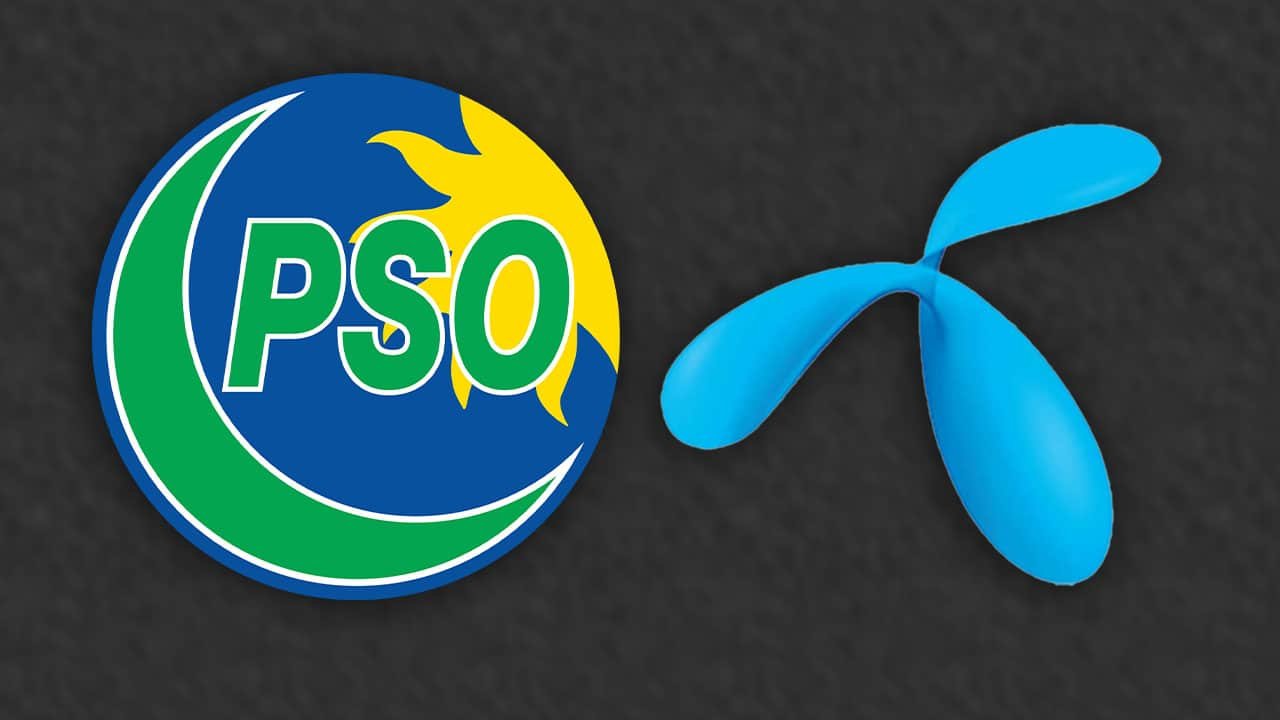
    Pakistan State Oil (PSO) is reportedly conducting due diligence on the Pakistani operations of a Norwegian telecommunications operator, in response to Telenor’s plans to sell its Pakistani operations valued at around $1 billion. Pending regulatory approval, PSO has expressed interest in acquiring Telenor Pakistan and Easypaisa, following the completion of bidding documentation and due diligence.

    Easypaisa, a leading mobile wallet, mobile payments, and branchless banking services provider, boasts a significant customer base of nine million monthly active users. Launched in 2009 as a money transfer service through Unstructured Supplementary Service Data (USSD) channels, Easypaisa introduced a mobile app in 2016, offering a broad range of financial transactions. Telenor Microfinance Bank owns Easypaisa, and jointly, Telenor Group most recently launched a debit card on January 17, 2023.

    According to Mettis Global, Telenor Pakistan’s decision to exit the market stems from heavy taxation on the telecommunications industry and the policies of the Pakistani Telecommunication Authority (PTA), which have significantly reduced its revenues. Although Telenor Pakistan has faced operational losses for the past three years, there is no certainty that discussions regarding the sale of its Pakistani operations will result in a transaction.

    For PSO, the potential acquisition of Telenor’s operations in Pakistan aligns with its efforts to expand its business beyond traditional oil and gas. If successful, the acquisition could enable PSO to diversify its revenue streams and leverage Pakistan’s growing digital payments market.