Tag: diesel

  • Fuel Cost Adjustment: Consumers protest against inflated electricity bills

    Fuel Cost Adjustment: Consumers protest against inflated electricity bills

    Power consumers protested in major cities against the government and power supply companies due to excessive residential and commercial bills that were issued under the pretext of Fuel Cost Adjustment (FCA).

    A number of Lahore residents were seen protesting outside LESCO offices, complaining about the skyrocketing electricity bills, chanting anti-LESCO slogans at Dharam Pura, Begum Kot and Ghazi Road.

    A number of farmers in Jhang also participated in a protest by burning their power bills while obstructing traffic on the Jhang Road. On the other hand, the shopkeepers and locals of Faisalabad organised a sizable protest against FESCO for billing residential and commercial customers for nearly twice the actual cost of electricity.

    PM Shehbaz demands urgent report on inflated electricity bills

    In response to complaints from the public about excessive electricity bills, Prime Minister Shehbaz Sharif ordered the relevant authorities to provide an immediate report to address the issue.

    The premier ordered the concerned officials to present a thorough report with recommendations for resolving consumer complaints against energy bills on an urgent basis.

    What is FCA?

    In addition to criticising the power supply companies, consumers are questioning the FCA charges that take up a significant portion of their monthly bills.

    Understanding the actual fuel cost (the cost of fuel in a month) and the reference fuel cost is crucial for comprehending the fuel price adjustment.

    Simply put, FCA is charged/adjusted in customers’ monthly bills to reflect the actual increase or decrease in fuel prices.

    Based on the price of fuel (such as coal, LNG, or furnace oil) used in the nation’s various energy sources, the total cost of fuel used in the production of electricity in a month (basket fuel cost) is calculated.

    The entire fuel cost for that month is therefore compared to the reference fuel cost at the end of each month, and as a result, the FCA is applied to the power bills after two months.

    The electricity bill will reflect a change in the FCA amount if the total fuel cost for that month exceeds the reference cost, while it will reflect a change in the FCA amount if the total fuel cost is less than the reference cost. We refer to this as a fuel price adjustment.

    How power suppliers calculate FCA?

    Whenever a power plant uses coal, it is possible to estimate how much coal was burnt and at what cost, as well as the total cost of the energy needed to generate the power.

    For instance, if hydel electricity generation has increased, the overall fuel price will reduce; likewise, if gas is consumed more frequently in a month due to its higher price, the fuel price would climb.

    It is also impacted by the rupee’s appreciation or depreciation. This is due to the fact that coal, LNG, and furnace oil are imported, therefore a weakening or strengthening rupee directly affects the cost as a whole.

  • Govt raises petrol price by Rs6.72 to Rs233.91 per litre

    Govt raises petrol price by Rs6.72 to Rs233.91 per litre

    Despite several reports of an expected decrease in prices of petroleum products, the government increased the price of petrol by Rs6.72 per litre and decreased the price of high-speed diesel (HSD) by Rs0.51 and kerosene oil by Rs1.67 per litre.

    The price of light diesel oil (LDO) was raised by Rs0.43 per litre by the government.

    Prior to this, the coalition administration had decreased the cost of petrol and LDO starting on August 1 by Rs3.05 and Rs0.12, respectively.

    However, starting on August 1, 2022, the government had increased the price of HSD by Rs8.95 per litre and kerosene oil by Rs4.62 per litre.

    With the most recent announcement, the price of petrol has gone up from Rs227.19 per litre to Rs233.91 per litre, and that of LDO has gone up to Rs191.75 from Rs191.32 per litre; and that of HSD has gone up to Rs244.95 from Rs244.44.

    Kerosene oil is now available for Rs199.40 per litre as opposed to its earlier price of Rs201.07 per litre.

    The rapid depreciation of the rupee against the dollar had previously also been a significant determinant of oil prices.

    The standing of the rupee against the dollar had improved recently. In spite of this, the cost of gasoline had increased.

    Additionally, there had not been a significant decrease in the cost of diesel, which is widely used in the nation’s transportation and agricultural sectors.

  • Annual inflation in Pakistan jumps to 38.63% after weekly increase of 0.82%

    Annual inflation in Pakistan jumps to 38.63% after weekly increase of 0.82%

    The sensitive price indicator (SPI) hit an annualised high of 38.63 per cent due to a lack of perishable goods brought on by severe rains, and weekly inflation increased by 0.82 per cent for the seven days ending August 4, 2022.

    The base for most cooked meals in the country is an onion and tomato. Onions increased in price from Rs75.41/kg to Rs94.2/kg while tomatoes increased from Rs74.07/kg to Rs82.91/kg.

    Data from the Pakistan Bureau of Statistics (PBS) indicates that the increase is attributable to the increased price of diesel (109.15 per cent), onions (107.95 per cent), pulse masoor (106.71 per cent), petrol (88.94 per cent), cooking oil 5 litre (74.44 per cent), mustard oil (73.89 per cent), chicken (73.42 per cent), vegetable ghee 1 kg and 2 kg (72.26 and 70.48 per cent), washing soap (62.62 per cent), pulse gramme (59.07 per cent), electricity for Q1 (52.61 per cent), gents sponge slippers (52.21 per cent), pulse maash (46.01 per cent) and garlic (41.16 per cent).

    According to The News, consumers are struggling with soaring food and fuel prices. Hi-speed diesel was being sold last August 5 for Rs117.58 per litre, but it is now Rs245.92 per litre.

    Various items in the SPI basket are given varying weightages. The goods with the heaviest weights in the bottom quintile are milk (17.5449 per cent), electricity (8.3627 per cent), wheat flour (6.1372 per cent), sugar (5.1148 per cent), firewood (5.0183 per cent), long cloth (4.2221 per cent), and vegetable ghee (3.2833 per cent).

    While the cost of firewood and electricity remained consistent, the cost of milk, wheat flour, sugar, long fabric, and vegetable ghee 2.5kg increased. Vegetable ghee 1kg saw a decrease in price.

    SPI is made up of 51 necessities that were gathered from 50 markets spread over 17 cities across the nation.

    Out of 51 goods, 33 (64.71 per cent) of the prices rose during the week, 4 (7.84 per cent) of the prices fell, and only 14 (27.45 per cent) of the prices kept the same.

    The price of onions increased by 24.92 per cent, tomatoes by 11.93 per cent, pulse moong by 5.72 per cent, pulse mash by 5.28 per cent, potatoes by 5.03 per cent, pulse masoor by 4.43 per cent, diesel by 3.78 per cent, pulse gramme by 2.69 per cent, eggs by 2.44 per cent, powdered milk by 1.61 per cent, gur by 1.53 per cent, LPG by 1.49 per cent, salt by 1.46 per cent, and garlic by 1.30 per cent on a WoW basis.

  • Govt slashes petrol price by Rs3.05,  raises diesel by Rs8.95 per litre

    Govt slashes petrol price by Rs3.05, raises diesel by Rs8.95 per litre

    Due to changes in oil prices on the global market, the government announced a revision in petroleum prices on Sunday.

    According to a statement released by the Finance Division, the cost of petrol has been reduced by Rs3.05 a litre for the first half of August 2022.

    Petrol will now be sold for Rs227.19 per litre as a result of the pricing revisions. Previously, the price of petrolin the country per litre was Rs230.34.

    The price of high-speed diesel has been upped by Rs8.95, the new price per litre is now Rs244.95.

    The depreciation of the rupee against US dollar has raised the cost of purchasing petroleum products, the Ministry of Energy notified the Economic Coordination Committee (ECC) of the cabinet today.

  • Petrol, diesel prices may increase by Rs10-17 per litre

    Petrol, diesel prices may increase by Rs10-17 per litre

    Despite the fact that the prices for petroleum products and crude oil have remained largely stable, the price of petrol and diesel may increase by Rs10 to Rs17 per litre as of August 1, 2022. The depreciation of the Pakistani rupee is anticipated to be the cause of the upcoming increase.

    According to The News, sources claim that without taking into account the petroleum levy (PL), a price increase of Rs10 for petrol and Rs16–17 for diesel has been estimated. Additionally, Mogas prices have been forecasted at Rs15 per litre and diesel at Rs23 per litre if the government increases the petroleum levy of Rs5 per litre on gasoline.

    The anticipated increase in POL prices has also been calculated without taking into account the ECC’s Thursday approval of an increase in dealers’ margins (DMs) on POL prices of Rs2.10 per litre for gasoline and Rs2.87 per litre for diesel to Rs7 per litre. Petrol’s price could increase by Rs2.10 to Rs17.10 per litre, and diesel’s price could increase by Rs2.87 to Rs25.87 per litre.

    The increase in dealers’ margin will take effect on August 1, 2022, if the federal cabinet approves this decision in the next two days. Industrial sources reported that the US dollar has increased in value by Rs40 so far this month.

    The current exchange rate against the US dollar is Rs239.9427, and the open market price is Rs246.15. However, they did say that the exact price of gasoline and diesel will depend on the exchange rate in force as of today (Friday).

    Since the price of crude oil as of Thursday settled at $99.4 per barrel, according to independent experts, Pakistani consumers won’t be able to benefit from the decrease in price of POL as a result of the rising exchange rate. The government seems more inclined to impose PL on both gasoline and diesel by Rs5 per litre each.

    Liquefied petroleum gas (LPG) costs also rose by Rs10 per kilogramme on Wednesday without an Oil and Gas Regulatory Authority notification (OGRA).

    The chairman of the LPG Distribution Association (LDAP), Irfan Khokhar, told Profit that a household cylinder now costs Rs2,750 after an increase of Rs150, while the cost of a commercial cylinder has increased by Rs450 to Rs10,438 as a result of the unannounced price increase.

  • Petrol price reduced by Rs18.50 per liter, Diesel by Rs40.54 per liter

    Petrol price reduced by Rs18.50 per liter, Diesel by Rs40.54 per liter

    In an attempt to provide relief to the masses and share the advantages of falling crude prices on the global market, the price of petrol has been slashed by Rs18.50 per liter.

    The price reductions for petroleum products were announced by the Prime Minister, Shehbaz Sharif, in an address to the nation.

    Diesel will now cost Rs236 per liter, while gasoline will now be sold at Rs230.24 per liter. The new prices for petroleum products, according to the Prime Minister, will take effect from midnight.

    He went on to explain why, after taking office, his government had to raise the price of gasoline. He continued, “We had raised fuel prices to meet the demands made by the International Monetary Fund (IMF), which were approved by the previous administration.

    “The government has decided to pass on the relief to the people and has therefore reduced the price of petrol and diesel by Rs18.50 and Rs40.54 per liter, respectively,” he continued.

  • Govt may reduce petrol prices before midnight: Miftah Ismail

    Govt may reduce petrol prices before midnight: Miftah Ismail

    The government will lower petroleum prices before midnight, according to Finance Minister Miftah Ismail, who also announced that Prime Minister (PM) Shehbaz Sharif has received a report from the Oil and Gas Regulatory Authority (Ogra) recommending the drop.

    Speaking to the media, he emphasised that the International Monetary Fund (IMF) had no issues with the government’s decision.

    The announcement came the same day the IMF announced that it had reached a staff-level agreement with Pakistan for the conclusion of the combined seventh and eighth reviews of the Extended Fund Facility; the agreement is now awaiting the Executive Board’s approval.

    Additionally, he declared that the government will lower oil prices now rather than wait until July 15th (14 July). “PM Shehbaz wants to announce immediate relief to the people of Pakistan,” he said. “The public stood with the government during difficult times and bore the burden of inflation and now we want to provide relief.”

    In its conclusion, Ogra suggested lowering the cost of gasoline by Rs18 per liter and diesel by more than Rs20 per liter.

    The decision to lower petroleum product prices was made in response to recent sharp declines in the price of crude oil on the world market.

    The government approved a price increase for petroleum products on June 30. The increase brought the new ex-depot price of gasoline to Rs248.74 per liter (up Rs14.85), and diesel to Rs276.54 (after a hike of Rs13.23).

    On July 1, the new rates became effective. In the pricing structure, a petroleum levy of Rs10 had been added to the cost of gasoline, and Rs5 had been added to the cost of kerosene, high-speed diesel, and light diesel oil per liter.

  • Oil sales fell by 11 per cent as prices rose to highest levels

    Oil sales fell by 11 per cent as prices rose to highest levels

    In June 2022, overall sales of petroleum and lubricants were 1.93 million tonnes, down 11 per cent from the previous month but unchanged from the previous year.

    Petrol and high-speed diesel (HSD) sales both experienced significant monthly declines, falling by 12 and 16 per cent, respectively.

    Sales of all oil products rose by 16 per cent YoY to 22.595 million tonnes during FY22 from 19.45 million tonnes during the same period in FY21.

    Analyzing the data demonstrates that expansion was seen in all categories, with offtake increasing to 8.95 million tonnes, 8.87 million tonnes, and 4.04 million tonnes, respectively, up by 9 per cent, 15 per cent, and 35 per cent on YoY compared to the same period last year.

    Ismail Iqbal Securities analyst Abdullah Umer stated, “We believe that significant rise in both diesel and petrol prices are the main reason behind the decline in retail sales.”

    According to the brokerage house, “Healthy economic activity, robust agricultural activity, upbeat automobile sales, and curb of HSD smuggling remained major drivers behind such stupendous growth.”

    Although the current government has chosen to manage petroleum product prices by levying a Petroleum Development Levy (PDL) and sales tax even if international oil prices decline, the brokerage house anticipated a further slowdown in diesel and gasoline sales going forward.

    In the coming months, retail fuel demand is likely to be further impacted by an increase in carpooling, increased use of public transportation, a change in consumer behaviour (moving from passenger cars to two-wheelers), high inflation, and a general slowdown in economic activity.

    “We expect RFO sales to remain intact due to a likely decline in RLNG & imported coal-based power generation.”

    The government announced a late-night price increase for petroleum products on Thursday, raising the ex-depot price of gasoline to Rs248.74 per liter (after an increase of Rs14.85) and diesel to Rs276.54 (after a hike of Rs13.23).

    Diesel was previously priced at Rs263.31 per litre and petrol at Rs233.89.

    The pricing structure included a Rs10 petroleum levy on gasoline. The cost of high-speed diesel, kerosene, and light diesel oil has also increased by Rs5 per litre.

    Finance Minister Miftah Ismail announced the government’s decision, stating that these prices would go into effect at midnight in order to make up for the Rs-230 billion loss experienced during the fiscal year that ended on June 30th, 2022.

    According to him, the country’s budget deficit, which reached a historic high of Rs5 trillion, made the increase in these prices inevitable.

  • Petroleum levy of Rs50 per liter approved in Finance Bill 2022–23

    Petroleum levy of Rs50 per liter approved in Finance Bill 2022–23

    On Wednesday, the National Assembly approved an amendment to the Finance Bill 2022 that will allow the government to increase the fuel levy to Rs50 per liter.

    During the National Assembly session held to discuss the amendments to Finance Bill 2022, Finance Minister Miftah Ismail made it clear that the amendment grants the government the authority to impose a tax of no more than Rs50 per liter. The levy will not be implemented instantly, he said.

    He went on to say that the levy had been temporarily kept at zero by the government. Throughout the upcoming fiscal year, the levy will be gradually implemented.

    According to The News, about 80 per cent of the amendments to the finance bill, according to State Minister for Finance and Revenue Ayesha Ghous Pasha, were tax-related.

    She emphasised that the government’s objective was to burden the wealthy while sparing the rest of us.

    The participants also agreed to impose a 5 per cent tax on the services of IT and software consultants in addition to the collection of sales tax through shopkeeper utility bills.

    Additionally, a change to revoke the salary class’s relief was approved. Individuals earning between zero and Rs600,000 annually would not be subject to income tax, per the initial budget proposals (where salary income exceeds 75 per cent of taxable income). The following slab would have had a nominal deduction of Rs100 per year (those earning between Rs600,000 and Rs1.2 million per year).

    With the new rates, those making between Rs0.6 and Rs1.2 million annually will now be required to pay 2.5 per cent in income tax.

    Furthermore, a 10 per cent super tax on 13 high-income sectors was approved by the National Assembly. The 10 per cent super tax on large industries was announced by Prime Minister Shehbaz Sharif on Friday in his “bid to relieve the general public of tax pressures.”

    “The revenue generated by this tax will be used to alleviate poverty in Pakistan, and it will be funded by high-income earners,” he said following a meeting with the government’s economic team.

    The tax will be levied on the cement, steel, sugar, oil and gas, fertiliser, LNG, textile, banking, automobile, beverages, chemicals, and tobacco industries. Later, Miftah Ismail, the finance minister, added airlines to the list, bringing the total to 13 sectors.

    Miftah went on to explain that the indirect tax (super tax) was intended to help the state accumulate funds under the heading of tax collection and reduce the budget deficit. He also stated that the fee was a one-time levy.

    The government’s proposed 1-4 per cent super tax on high-income individuals’ salaries was also approved by the National Assembly.

    The leadership levied a 1 per cent tax on those making up to Rs150 million annually, a 2 per cent tax on those making up to Rs200 million annually, a 3 per cent tax on those making up to Rs250 million annually, and a 4 per cent tax on those making up to Rs300 million annually.

    Additionally, a change was approved that imposes a tax on imported mobile phones that ranges from Rs100 to Rs16,000 depending on their value.

    Late Tuesday night, new amendments were added to the Finance Bill, 2022, including a potential reduction in the sales tax rate on the import of pharmaceutical raw materials from 17 per cent to 1 per cent, a tax exemption for theatres and production companies, and a change in the definition of “deemed rental income” by replacing the words “immovable properties” with “capital assets” and other changes.

    Under the revised Finance Bill 2022, the FBR also decreased the capital value tax (CVT) on vehicles from 2 per cent to 1 per cent.

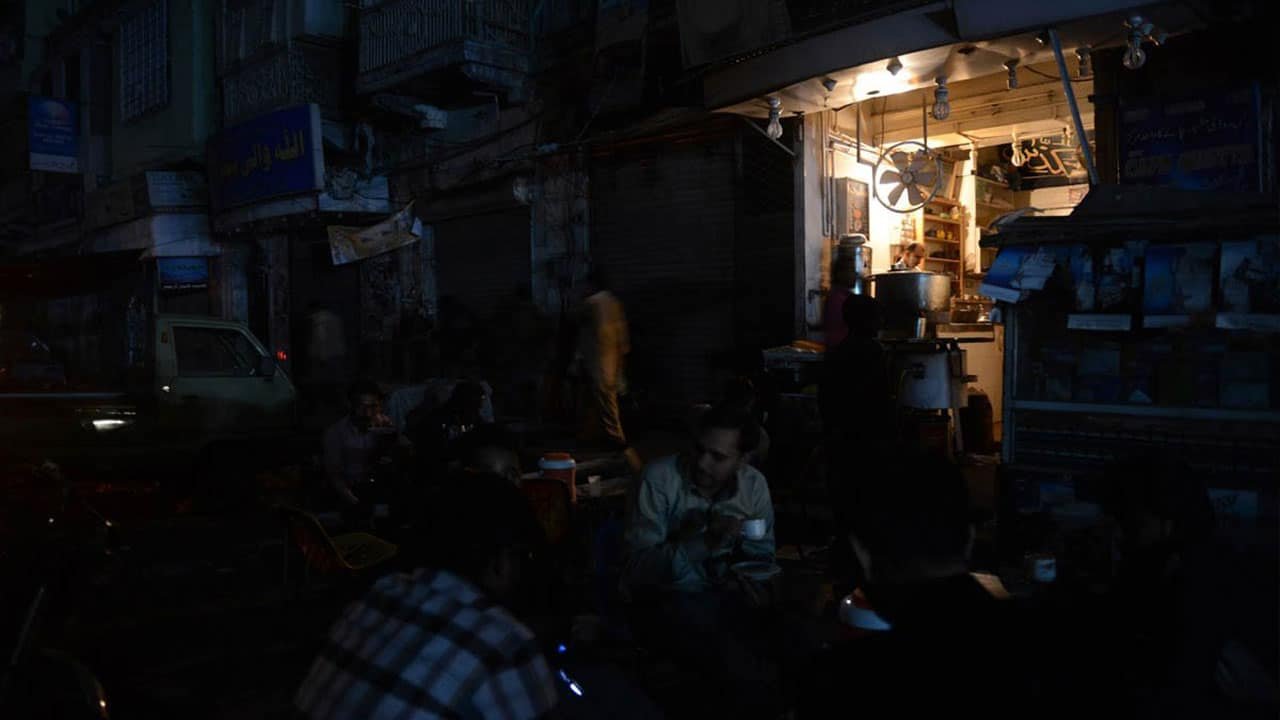
  • Pakistan pushed into darkness due to Europe’s decision to cut off Russian fuel

    Pakistan pushed into darkness due to Europe’s decision to cut off Russian fuel

    The European attempt to abandon Russian oil is intended to punish Moscow for its invasion of Ukraine. It’s also wreaking havoc thousands of miles away, throwing Pakistan into darkness, destabilising one regime, and jeopardising the country’s new leadership’s stability.

    According to Bloomberg, Pakistan invested heavily in liquefied natural gas and inked long-term contracts with Italian and Qatari suppliers. Some of those suppliers have now defaulted, although continuing to sell into the more lucrative European market, putting Pakistan in the very situation it hoped to avoid.

    The country took particular precautions a decade ago to protect itself from the sorts of price increases that are currently shaking the market.

    Last month, the government spent about $100 million on a single LNG shipment from the spot market to avert outages during the Eid holiday, a record for the cash-strapped country.

    The country’s LNG costs could reach $5 billion in the fiscal year ending in July, more than double what they were a year ago. Even still, the government is powerless to protect its citizens: the IMF is in talks to bail out the country on the condition that it reduces fuel and energy subsidies.

    Outages lasting more than 12 hours

    Parts of Pakistan are currently suffering scheduled blackouts lasting more than 12 hours, reducing the ability of air conditioning to provide respite during the current heat wave. The former prime minister continues to gather enormous audiences to demonstrations and marches, exacerbating voters’ discontent with 13.8 per cent inflation. The hosts of prime-time talk shows frequently discuss how Pakistan will obtain the petroleum it requires and how much it would have to spend.

    The administration introduced a fresh set of energy-saving measures last week. Civil servants were relieved of their normal Saturday shifts, and the security budget was slashed by half.

    Prime Minister (PM) Shehbaz Sharif remarked in an April tweet before of the Eid holiday, “I am acutely aware of the sufferings people are facing”. That same week, he ordered his government to resume purchasing costly overseas natural gas shipments.

    He also warned earlier this month that they don’t have the money to keep importing gas from other countries.

    Rerouted supply to power plants

    There will be more than just outages as a result of the supply shortage. The government has rerouted existing natural gas supply to power plants, causing fertiliser manufacturers to be shortchanged. This approach could jeopardise the next harvest, resulting in even higher food prices the following year. Backup generators are being used by cellphone towers to keep service going during the blackouts, but they, too, are running out of fuel.

    There’s not much hope in the future. LNG prices have risen by over 1,000 per cent in the previous two years, first due to post-pandemic demand and subsequently due to Russia’s invasion of Ukraine. Russia is Europe’s largest natural gas supplier, and the possibility of supply disruptions pushed spot rates to an all-time high in March.

    Increasing LNG demand in Europe

    Meanwhile, Europe is increasing its need for LNG. Europe’s LNG imports have increased by 50 per cent so far this year compared to the same period last year, and show no signs of slowing down. As they cut ties with President Vladimir Putin’s regime over the crisis in Ukraine, European Union policymakers created a plan to considerably increase LNG deliveries as an alternative to Russian gas.

    Floating import terminals are being built at a breakneck pace in countries like Germany and the Netherlands, with the first ones set to open in the next six months.

    “Europe is draining LNG from the rest of the globe,” according to Steve Hill, executive vice president of Shell Plc, the world’s largest LNG trader. “However, this means that less LNG will be sent to developing markets”.

    Pakistan was formerly thought to be the LNG industry’s bright future. Demand for the fuel had peaked in developed markets by the mid-2010s. However, technological developments had reduced the costs and time it took to build import terminals, and new gas sources had reduced the cost of the fuel itself.

    Poor nations could finally contemplate the gasoline at the new, lower prices. Suppliers flocked to these new markets, and when Pakistan published a request for long-term LNG supply, over a dozen businesses competed for the contract.

    Pakistan chose Italy’s Gunvor Group Ltd to sell LNG to the country for the next decade in 2017. The terms were favourable at the time, and the prices were lower than those of a comparable arrangement struck with Qatar the previous year.

    Delay in supplies

    However, due to the rise in European gas prices, the two suppliers have postponed more than a dozen shipments slated for delivery between October 2021 and June 2022.

    According to Bruce Robertson, an expert at the Institute for Energy Economics and Financial Analysis, such defaults are nearly unheard of in the LNG market. Bloomberg spoke with traders and industry insiders who couldn’t recall the last time so many cargoes were rejected without being linked to a big outage at an export terminal.

    Eni and Gunvor stated they had to cancel because they were experiencing their own supply problems and didn’t have enough LNG to export to Pakistan. When exporters confront such difficulties, they typically replace deliveries by purchasing a consignment on the spot market, but Eni and Gunvor have not done so.

    Vendors are generally averse to cancelling orders. It harms the company connection and is often extremely costly. In established markets, fines for “failure to deliver” might be as high as 100 per cent.

    “It’s quite rare for LNG suppliers to renege on long-term contracts beyond force majeure occurrences,” says Valery Chow, an analyst at Wood Mackenzie Ltd.

    Pakistan’s contracts stipulated a lower cancellation penalty of 30 per cent, most probably in exchange for cheaper overall costs. The European spot market prices are currently high enough to more than compensate for the penalties.

    Pakistan’s $12 million LNG supply contract

    As per sources, an LNG supply to Pakistan for delivery in May under a long-term contract would cost $12 per million British thermal units. In comparison, spot cargoes to Europe for May delivery were trading for more than $30. Eni and Gunvor have kept their promises to customers in the region.

    As a result, Pakistan is back to square one, in a weaker negotiation position than before. After a dispute with Pakistan’s army over a variety of problems, including his management of energy supply and the greater economy, Prime Minister Imran Khan was deposed in April.

    Shehbaz Sharif, the new prime minister, has directed the state-owned importer to obtain the petroleum at any cost in order to end the debilitating blackouts. It’s also attempting to reach new long-term LNG purchase agreements, albeit the conditions will almost probably be harsher than six years ago.

    High risk of default

    The cost is having its own cascading repercussions. The government is now “at high risk of default,” according to a paper published last month by the Institute for Energy Economics and Financial Analysis. Moody’s Investors Service reduced Pakistan’s outlook from stable to negative, citing financial worries including a potential IMF bailout delay.

    Pakistan’s dependency on LNG, as well as its suppliers’ tendency to default, has exacerbated the country’s energy dilemma. Pakistan isn’t alone in this regard. Emerging economies all around the world are trying to meet their residents’ requirements while staying within their budget restrictions.

    It has also prompted them to purchase electricity from Russia, reducing the impact of Europe’s attempts to isolate them.

    Pakistan seeks LNG supply contract with Russian companies

    According to reports, Pakistan is also looking at long-term LNG supply agreements with Russian companies. India has already increased its purchases from Russia, and this trend is likely to continue. The government has directed power plants to purchase fuel from overseas in response to the scorching summer heat.

    Other cash-strapped importers, such as Bangladesh and Myanmar, are likely to suffer as a result of Pakistan’s problems. Bangladesh’s state-owned utility recently purchased the country’s most expensive LNG shipments on the spot market to keep the grids functioning and industry stocked, while Myanmar has stopped importing LNG for the past year owing to price increases.

    Other nations, such as India and Ghana, may be prompted to reconsider long-held plans to increase their reliance on super-chilled fuel as a result of Europe’s major change. Instead, governments would increase their reliance on polluting coal or oil, thwarting efforts to meet ambitious emission reduction objectives this decade.