Tag: digital

  • Federal government begins consultations for establishment of social media regulatory authority

    Federal government begins consultations for establishment of social media regulatory authority

    The federal government has begun consultations for the establishment of a social media regulatory authority.

    According to sources, the proposed social media regulatory authority (PECA) Amendment Bill 2024 is to be tabled soon in the Parliament.

    Media houses and other stakeholders have also been invited for consultation to establish the authority of the committee.

    Prime Minister Shehbaz Sharif reportedly formed a cabinet committee on this matter whose task is to consult the social media regulatory authority and give suggestions to the government on issues related to digital rights.

    The authority will ensure responsible use of the internet and compliance with regulations in addition to considering the issue of regulating online content and procedures for investigating violations of law on social media.

    The issue of summoning witnesses and violators of social media laws will also be considered in the consultation.

    The bill is intended to protect the private life of citizens from threats posed by social media.

  • Samsung returns to top of the smartphone market: industry tracker

    Samsung returns to top of the smartphone market: industry tracker

    San Francisco (AFP) – Samsung regained its position as the top smartphone seller, wresting back the lead from Apple as Chinese rivals close the gap on both market leaders, industry tracker International Data Corporation (IDC) reported Monday.

    South Korea-based Samsung overtook Apple as worldwide smartphone shipments grew nearly 8 percent in the first quarter of this year to 289.4 million, IDC said, citing its preliminary data.

    It was the third consecutive quarter of growth in the global smartphone market, signalling that a recovery from a slump in the sector is underway, according to IDC.

    IDC Worldwide Mobility and Consumer Device Trackers team vice president Ryan Reith expected top smartphone companies to gain share and small brands to struggle for position as recovery progresses.

    Samsung shipped 60.1 million smartphones in the first quarter of this year, claiming nearly 21 percent of the market, according to IDC figures.

    Apple shipped 50.1 million iPhones, garnering just over 17 percent of the market in the same period, IDC reported.

    Apple smartphone shipments were down 9.6 percent in a quarter-over-quarter comparison, while Samsung shipments slipped less than one percent, according to the market tracker.

    Meanwhile, China-based Xiaomi saw shipments grow about 33 percent to 40.8 million and Transsion about 85 percent to 28.5 million, taking third and fourth positions in the overall smartphone market, IDC reported.

    “While Apple managed to capture the top spot at the end of 2023, Samsung successfully reasserted itself as the leading smartphone provider in the first quarter,” Reith said.

    IDC expects Samsung and Apple to maintain their hold on the high end of the smartphone market while Chinese competitors seek to expand sales, according to Reith.

    Nabila Popal, research director with IDC’s Worldwide Tracker team, said: “There is a shift in power among the Top 5 companies, which will likely continue as market players adjust their strategies in a post-recovery world.

    “Xiaomi is coming back strong from the large declines experienced over the past two years and Transsion is becoming a stable presence in the Top 5 with aggressive growth in international markets.”

  • OpenAI comes to Asia with new office in Tokyo

    OpenAI comes to Asia with new office in Tokyo

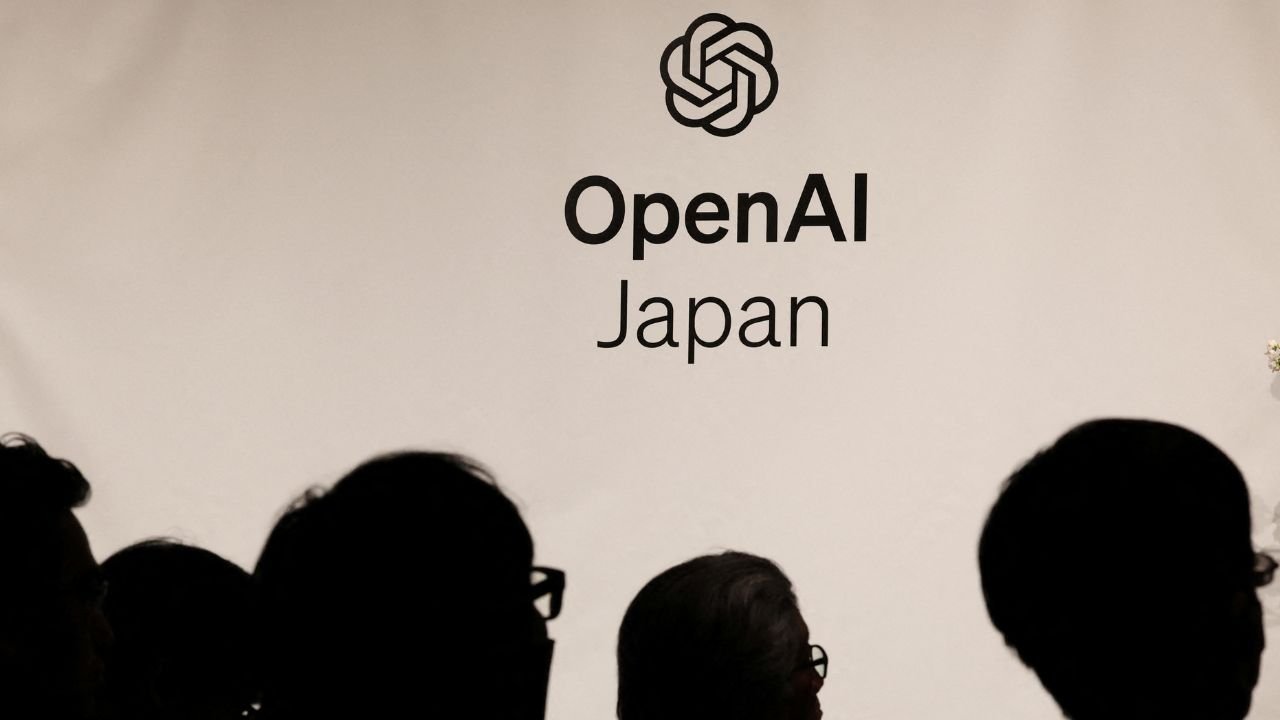
    Tokyo (AFP) – ChatGPT creator OpenAI opened a new office in Tokyo on Monday, the first Asian outpost for the groundbreaking tech company as it aims to ramp up its global expansion.

    Thanks to the stratospheric success of its generative tools that can create text, images and even video, OpenAI has become a leader in the artificial intelligence revolution and one of the most significant tech companies in the world.

    The Japan office is the latest part of the Microsoft-backed firm’s international push, having already set up bases in London and Dublin.

    “We’re excited to be in Japan which has a rich history of people and technology coming together to do more,” OpenAI CEO Sam Altman said in a statement.

    “We believe AI will accelerate work by empowering people to be more creative and productive, while also delivering broad value to current and new industries that have yet to be imagined.”

    OpenAI said its Japan office would bring it closer to enterprise clients — including global auto leader Toyota, tech conglomerate Rakuten and industrial giant Daikin — that are using its products “to automate complex business processes”.

    “We chose Tokyo as our first Asian office for its global leadership in technology, culture of service, and a community that embraces innovation,” the company added.

    OpenAI also announced a new Japanese-language version of ChatGPT on Monday, and hailed the country as a “key global voice on AI policy”, offering potential solutions to issues such as labour shortages.

    The company said its Japan office would also help “accelerate the efforts of local governments, such as Yokosuka City” in their drive to improve the efficiency of public services.

    The Tokyo ‘buzz’

    The San Francisco-based firm has been reportedly in discussions with hundreds of companies as it looks to expand revenue sources.

    OpenAI’s chief operating officer Brad Lightcap told Bloomberg in an interview published this month that the firm has seen huge demand for its corporate version of ChatGPT.

    “We have a very global base of demand,” he said in the interview.

    “So we want to show up where our customers are. We feel a lot of pull from places like Japan and Asia broadly.”

    OpenAI, reportedly valued at $80 billion or more earlier this year, is the latest major tech firm to invest in Japan.

    Microsoft, one of OpenAI’s biggest investors, last week announced a separate $2.9 billion investment to provide Japan with the powerful graphics processing units crucial for running AI apps, and to train three million Japanese workers in AI skills.

    Amazon Web Services is spending $14 billion to expand its cloud infrastructure in Japan, while Google has launched a regional cybersecurity hub in the country.

    Experts say geopolitical tensions have made Japan an increasingly attractive partner for tech firms compared to China, in addition to advantages such as supportive policies and a highly educated talent pool.

    “What happens in Tokyo can create a buzz,” Hideaki Yokota, vice president of the MM Research Institute, told AFP.

    “A base in Tokyo should help (OpenAI) attract much young talent.”

  • English court jails first offender for ‘cyber-flashing’

    English court jails first offender for ‘cyber-flashing’

    London, United Kingdom – A court in eastern England on Tuesday became the first in the country to jail someone for a new cyber-flashing offence, sentencing a convicted sex offender to 66 weeks in prison.

    A judge at Southend Crown Court handed Nicholas Hawkes, 39, the jail term after he previously admitted to the newly designated offence at an earlier appearance.

    Cyber-flashing, which can involve offenders sending people an unsolicited sexual image on social media, dating apps or by other electronic communication, became a crime in England and Wales on January 31.

    It was part of the government’s Online Safety Act.

    Hawkes, from Basildon, east of London, pleaded guilty to two counts of sending a photograph or film of genitals to cause alarm, distress or humiliation.

    He had admitted the latest offences of sending unsolicited images to a 15-year-old girl and a woman on February 9.

    The woman took screenshots of the photograph on WhatsApp and reported him to police the same day.

    Hawkes was already on the sex offenders register after a conviction last year of sexual activity with a child under 16 years old and exposure, for which he also received a community order.

    On Tuesday he also pleaded guilty to breaching that order and breaching a suspended sentence for another sexual offence.

    Victims of the new cyber-flashing offence and other image-based abuses have lifelong anonymity from the moment they report it under the Sexual Offences Act.

    jj/phz/

    © Agence France-Presse

  • TikTok and its ‘secret sauce’ caught in US-China tussle

    TikTok and its ‘secret sauce’ caught in US-China tussle

    Seoul (AFP) – As a US campaign to sever TikTok from its Chinese parent heads to the Senate, analysts say Beijing’s response to a forced sale of the app – and its ‘secret sauce’ algorithm – will be clear: Hands off.

    Under new legislation that passed the House of Representatives last week, TikTok could be banned in the United States if it does not cut all ties with Chinese tech giant ByteDance.

    But in the battle over TikTok’s future in the United States, what strikes many as a contradiction has emerged: while the company tries to convince Congress of its independence from Beijing, China has come out swinging in its defence.

    Beijing does not want a precedent to be set where a Chinese company is strong-armed into selling one of its most valuable assets, including an algorithm that is the envy of competitors, analysts say.

    “This kind of threat is like daylight robbery,” Mei Xinyu, a Beijing-based economist, told AFP. “All things considered, the Chinese government’s actions so far have been very mild.”

    “What the US government is proposing is way over the line.”

    US lawmakers and security agencies say TikTok presents a threat because China can access and use the vast troves of data the app collects for influence and espionage.

    TikTok has denied the allegations, saying it has spent around $1.5 billion on “Project Texas”, under which US user data would be stored in the United States.

    However, many lawmakers and bodies including the FBI remain unconvinced.

    Some critics have said the data itself is only part of the issue, and that the algorithm that produces personalised recommendations for TikTok users must also be disconnected from ByteDance.

    ‘The secret sauce’

    That ByteDance algorithm has helped drive TikTok’s stratospheric success since the app was launched for the international market in 2017.

    It crunches huge amounts of user data, such as their interactions on the app and their location, to provide more content tailored for them.

    Its precise details are a closely guarded secret, but it helped propel TikTok to one billion users in just four years. Facebook, by comparison, took more than eight years to reach that milestone.

    Other social media platforms also deploy tailored recommendations based on algorithms that analyse user data, but analysts say TikTok’s has been so successful that it is considered by some to be the company’s most precious asset.

    The algorithm is “valuable because TikTok is sticky. People spend more time on TikTok than they do on other social media”, James Andrew Lewis, a technology expert at the Center for Strategic and International Studies (CSIS), told AFP.

    “This is the secret sauce that makes TikTok a success.”

    The algorithm has been at the centre of discussions about any potential sale of TikTok since the administration of then US president Donald Trump sought to ban TikTok in 2020.

    That year, the Chinese government designated algorithms that provide recommendations based on user data analysis as a protected technology, meaning their export would require Beijing’s approval.

    While no specific app or firm was cited, the economist Mei said the move was “to a very large extent” because of US pressure against TikTok.

    TikTok has said that under Project Texas, its recommendation algorithm for US users is stored along with their data on Oracle servers in the United States.

    However, The Wall Street Journal reported in January that ByteDance employees in China updated the TikTok algorithm so frequently that Project Texas workers could not track all changes.

    TikTok did not respond to AFP’s questions about the Wall Street Journal report or about where its algorithm is updated.

    CEO Shou Zi Chew has said previously that TikTok will not be “manipulated by any government” and that it has never been asked by the Chinese government for US user data.

    ‘Commercial plunder’

    In Beijing, however, officials have not minced words in their opposition to the TikTok bill, saying China will take all necessary measures to protect its interests.

    “You’ve got the desire to protect the option for a relationship with the intelligence services, and you’ve got a little bit of nationalist pride because it’s so successful,” said Lewis at CSIS.

    “Some of it is just (being) annoyed with the Americans for trying to force them to sell. All of that puts Beijing right behind ByteDance.”

    Beijing wants to avoid a forced sale to protect Chinese firms, Zhang Yi, founder of the Guangzhou-based tech research firm iiMedia, told AFP.

    “Once the precedent is set, there may be countless other Chinese companies that will face a similar fate in the future.”

    Hu Xijin, a former editor of the nationalist Chinese newspaper Global Times, urged ByteDance not to give in to US pressure.

    “The essence of this matter is commercial plunder,” he wrote this month.

    “As long as ByteDance remains firm, willing to shut down TikTok rather than give up ownership, it will create reverse pressure on the passage of the bill.”


  • China warns proposed TikTok ban will ‘come back to bite’ US

    China warns proposed TikTok ban will ‘come back to bite’ US

    Beijing (AFP) – Beijing warned on Wednesday that a proposed ban on Chinese-owned video-sharing app TikTok would “inevitably come back to bite the United States”.

    The US House of Representatives is set to vote later Wednesday on a bill that would force the app to cut ties with its Chinese owner or get banned in the United States.

    The legislation is the biggest threat yet to the video-sharing app, which has surged to huge popularity across the world while raising fears among governments and security officials over its Chinese ownership and potential subservience to the Communist Party in Beijing.

    Ahead of the vote, foreign ministry spokesperson Wang Wenbin condemned the proposed ban.

    “Although the United States has never found evidence that TikTok threatens US national security, it has not stopped suppressing TikTok,” he said.

    “This kind of bullying behaviour that cannot win in fair competition disrupts companies’ normal business activity, damages the confidence of international investors in the investment environment, and damages the normal international economic and trade order,” he added.

    “In the end, this will inevitably come back to bite the United States itself,” Wang said.

    The vote is likely to occur at 10:00 am (1400 GMT) and is expected to pass overwhelmingly in a rare moment of bipartisanship in politically divided Washington.

    The fate of the bill is uncertain in the Senate, where key figures are against making such a drastic move against an hugely popular app that has 170 million US users.

    President Joe Biden will sign the bill, known officially as the “Protecting Americans from Foreign Adversary Controlled Applications Act,” into law if it comes to his desk, the White House has said.

    TikTok staunchly denies any ties to the Chinese government and has restructured the company so the data of US users stays in the country, the company says.

    TikTok CEO Shou Zi Chew is in Washington, trying to shore up support to stop the bill.

    “This latest legislation being rushed through at unprecedented speed without even the benefit of a public hearing, poses serious Constitutional concerns,” wrote Michael Beckerman, TikTok’s vice president for public policy, in a letter to the bill’s co-sponsors seen by AFP.

  • Bushra Ansari goes digital, launching YouTube channel in Ramzan

    Bushra Ansari goes digital, launching YouTube channel in Ramzan

    Veteran comedian Bushra Ansari is gearing up to go digital. Renowned for her diverse talents including acting, singing, playwriting, and comedy, she is one of the country’s most respected entertainers.
    Ansari recently impressed audiences once again with her role as Maa Begum in the popular TV serial ‘Tere Bin’. Praised for her character portrayal and exceptional skills, Ansari once again captured the limelight after a brief hiatus from acting.

    Ansari is gearing up to connect with her fans in a new way this Ramzan. The celebrated artist has announced the launch of her own YouTube channel.
    With decades of experience, Bushra Ansari has won the hearts of audiences of all ages with her talent and charisma. Now, she is embracing the digital world to engage more closely with her fans and share her experiences.

    Set to debut during the holy month of Ramzan, Ansari’s YouTube channel promises diverse content. From behind-the-scenes insights into her projects to personal vlogs revealing aspects of her life, fans can expect an intimate glimpse into the world of one of Pakistan’s most beloved entertainers.
    In a video message posted on Instagram, Bushra said, “Assalam o Alaikum to all my fans, I am starting my YouTube channel in Ramzan. All of you guys have to subscribe to my channel and see what I am doing.”

  • Online learning driving license app launched

    Online learning driving license app launched

    Caretaker Chief Minister of Punjab, Mohsin Naqvi, has inaugurated an online learning driving license app.

    The inauguration ceremony of the online learning driving license app was held at the Chief Minister Office in Lahore, with Information Minister Amir Mir and Inspector General of Punjab Police Usman Anwar present at the event.

    Chairman Punjab Information Technology Board Faisal Yusuf and related officials were also present in the ceremony.

    Speaking at the ceremony, Chief Minister Naqvi said that learning license facility is being provided at patrol posts, service centers and police stations. Citizens will be able to benefit from the facility of online learning license while sitting at home. Learner license facility has also been started at the front desk of police stations.

  • MoU signed between Pakistan, Saudi Arabia to promote digital economy

    MoU signed between Pakistan, Saudi Arabia to promote digital economy

    Pakistan and Saudi Arabia have signed a Memorandum of Understanding (MoU) to work together in communication and information technology, in a bid to promote the digital economy.

    According to Saudi Arabia’s official news agency SPA, the purpose of the memorandum is to establish cooperation in the fields of communication and information technology for digital transformation, promotion of innovation and development of digital infrastructure.

    This memorandum of understanding was signed by Saudi Arabia’s Minister of Communications and Information Technology, Engineer Abdullah Bin Amir Al-Sawaha and Pakistan’s Caretaker Federal Minister for Information and Communication Technology, Dr. Umar Saif.

    Under the MoU, the two countries will establish innovation hubs, centres of excellence and university branches for advanced technologies, as well as strengthen cooperation in the systems of small and medium-sized enterprises and emerging companies.

    They will also work on policies, technologies, systems and legislation in the field of digitization and electronic manufacturing.

    Both sides have pledged to focus on e-governance, smart infrastructure, e-health and e-education, the use of emerging technologies such as artificial intelligence, robotics, cloud computing, games and more.

  • Fact Check: Did the federal government shut down the internet?

    Fact Check: Did the federal government shut down the internet?

    Claim: Internet was shut down for people in various parts of Pakistan in order to suppress the coverage of Imran Khan’s PTI rallies

    Fact: The internet was not shut down but there is evidence of internet ‘throttling’ by internet service providers throughout the country

    On May 25, several social media users took to Twitter to condemn the government’s “draconian” decision to shut down the internet. Popular personalities came out on Twitter, with their verified accounts with millions of followers and announced that the federal government has decided to shut down the internet, in light of the escalating tensions in Islamabad and to avoid social media coverage of Imran Khan’s rally.

    Internet throttling is when your internet service providers limit the speed or bandwidth of your internet without taking your consent or informing you. In some cases, throttling also helps manage an unusual amount of traffic on the internet in order to equally distribute the bandwidth.

    However, this is false.

    Several people also tweeted that they had internet services available. However, everyone noted varying speeds at different times in the day. At The Current Check‘s office, we faced internet slowdowns throughout the day, but it was never shutdown.

    Hija Kamran, digital rights advocate working at Media Matters for Democracy, tweeted asking people in Pakistan to confirm whether their internet is working fine and several people reported operational internet in Karachi and Islamabad, others claimed that they were facing issues in internet speed.

    An internet observatory organization called Net Blocks released a report on the same day confirming “disruptions” in the internet across Pakistan. However, according to their report these disruptions only lasted for two hours within the whole day, which does not even come close to the claim that the internet was shut down.

    In their report, NetBlocks confirms that disruptions were faced by multiple internet service providers across Paksitan after 5pm on Wednesday, May 25. The service was restored within two hours, following the surge in complaints being posted on social media about the internet being throttled by ISPs across the country.

    NetBlocks used “diffscans”, a tool which allowed them to map the IP address space of Pakistan in real time and display corresponding internet connectivity levels and outages, which are represented in the graph attached in their tweet.

    Verdict: FALSE