Tag: digital economy

  • World Bank approves $149.7 million financing for key projects in Pakistan

    World Bank approves $149.7 million financing for key projects in Pakistan

    The World Bank’s Board of Executive Directors has greenlit a significant sum of $149.7 million in financing for Pakistan, marking a milestone in bolstering the nation’s development efforts.

    The approval, granted on Friday, will allocate funds to support two vital projects aimed at enhancing the country’s infrastructure and digital landscape.

    According to a press statement released by the international financial institution, a substantial portion of the funding, totaling $78 million, has been earmarked for the Digital Economy Enhancement Project (DEEP).

    This initiative seeks to bolster digitally enabled public services delivery for both citizens and businesses, thereby fostering greater accessibility and efficiency.

    Simultaneously, an allocation of $71.7 million has been designated as second additional financing for the Sindh Barrages Improvement Project. This endeavor aims to fortify resilience against floods while enhancing the reliability, safety, and management of the Sindh barrages, crucial components of Pakistan’s water management infrastructure.

    Najy Benhassine, the World Bank Country Director for Pakistan, emphasised the imperative of fortifying infrastructure in the wake of catastrophic events such as the floods of 2022. He underscored the importance of bolstering barrages and their management to mitigate the impact of such disasters effectively.

    Additionally, Benhassine highlighted the significance of nurturing Pakistan’s burgeoning digital economy. He stressed that fostering connectivity and access to government and financial services is pivotal for economic and social development, particularly for marginalised groups like women and entrepreneurs.

    The Digital Economy Enhancement Project (DEEP) aims to develop robust digital authentication and data-sharing platforms.

    These platforms will enable Pakistan to respond more effectively to shocks, deliver enhanced e-government services, and facilitate regulatory reforms to promote private participation in the sector while strengthening personal data protection and online safety.

    Moreover, the project endeavors to promote financial inclusion, particularly among women, by facilitating access to banking services and credit through smartphone applications. It also seeks to address barriers such as limited mobility and digital literacy, ensuring inclusivity in the digital realm.

    Shan Rehman, Task Team Leader for the project, emphasised the comprehensive nature of the initiative, which adopts a holistic approach to digital transformation. He emphasised the importance of inclusivity and trust in digital platforms to meet the evolving needs of the populace.

    Meanwhile, the second additional financing for the Sindh Barrages Improvement Project (SBIP) aims to complete and commission rehabilitation works for barrages, including Guddu and Sukkur. Additionally, it seeks to enhance the management of three barrages in Sindh, namely Guddu, Sukkur, and Kotri.

    Francois Onimus, Task Team Leader for the SBIP, stressed the critical role of barrages in ensuring the livelihoods and climate-resilience of the Sindh Province. He highlighted the project’s focus on bolstering canal systems fed by these barrages, thereby mitigating the adverse impacts of extreme weather events.

    In essence, the approval of financing for these projects underscores the World Bank’s commitment to supporting Pakistan’s development agenda, spanning both infrastructure and digital innovation, in its journey towards sustainable growth and resilience.
  • WTO launches $50m fund for female entrepreneurs in developing world

    WTO launches $50m fund for female entrepreneurs in developing world

    The director general of the World Trade Organisation, Ngozi Okonjo-Iweala, on Sunday launched a $50 million fund to help female entrepeneurs in developing countries to export more using the opportunities offered by the digital economy.

    The announcement came ahead of the 13th ministerial conference of the WTO which opens on February 29 in the United Arab Emirates.

    Okonjo-Iweala, speaking alongside the Emirati Minster of State for Foreign Trade Thani al-Zeyoudi, said the “ground-breaking initiative… embodies our collective commitment to empower women”.

    “We need catalytic solutions to solve the financing issue that women face,” she added.

    The fund will help businesses run by women in developing countries to adopt digital technologies and increase their online presence.

    Zeyoudi said his country would contribute $5 million to the fund, adding “this initiative allows us to celebrate the invaluable contribution of women entrepreneurs and women led businesses around the world and to recognise the critical role they play in driving economic growth”.

    “While women are one half the world’s population, they only contribute 37 percent to the global GDP,” he said.

    Also at the announcement was Saudi Arabian Minister of Commerce Majid al-Kasabi, who called it a “milestone” and said his country was “dedicated” to supporting female empowerment.

    Okonjo-Iweala said that in meeting female entrepeneurs, “a common refrain among them is the need for adequate financing to scale their businesses and to tap into the vast opportunities of global trade”.

    apo/dcp/fz

    © Agence France-Presse

  • MoU signed between Pakistan, Saudi Arabia to promote digital economy

    MoU signed between Pakistan, Saudi Arabia to promote digital economy

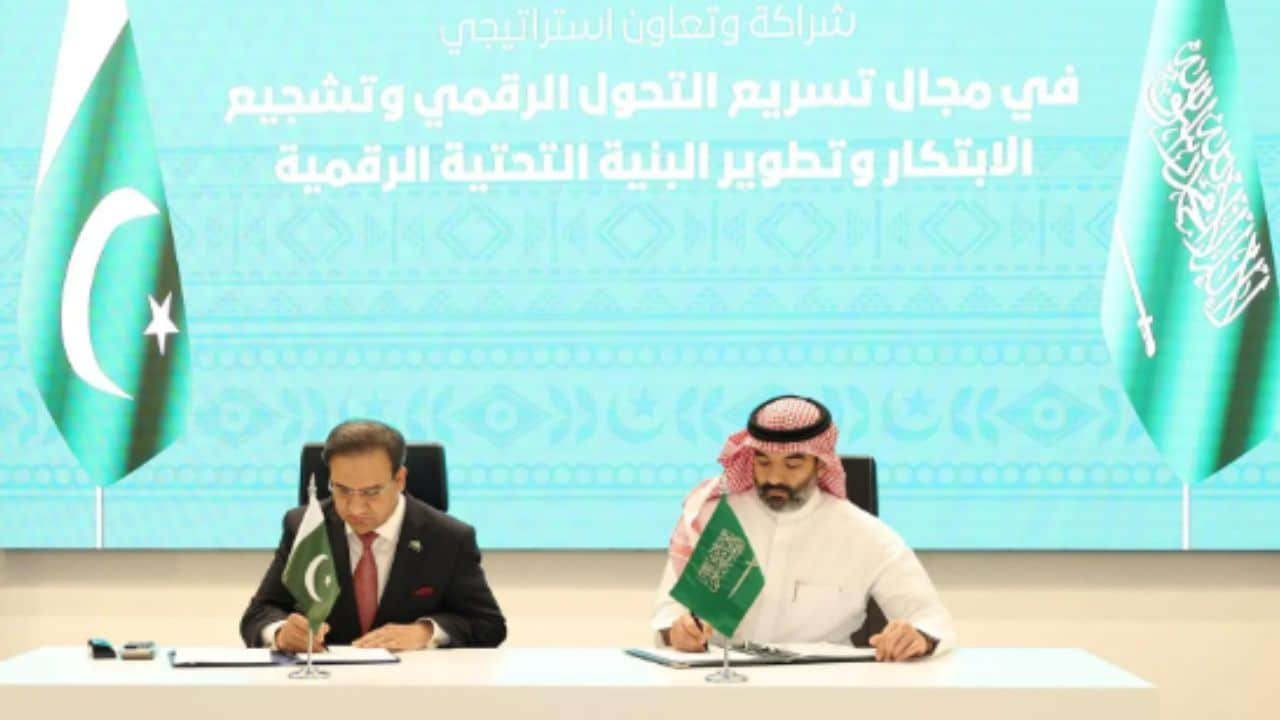
    Pakistan and Saudi Arabia have signed a Memorandum of Understanding (MoU) to work together in communication and information technology, in a bid to promote the digital economy.

    According to Saudi Arabia’s official news agency SPA, the purpose of the memorandum is to establish cooperation in the fields of communication and information technology for digital transformation, promotion of innovation and development of digital infrastructure.

    This memorandum of understanding was signed by Saudi Arabia’s Minister of Communications and Information Technology, Engineer Abdullah Bin Amir Al-Sawaha and Pakistan’s Caretaker Federal Minister for Information and Communication Technology, Dr. Umar Saif.

    Under the MoU, the two countries will establish innovation hubs, centres of excellence and university branches for advanced technologies, as well as strengthen cooperation in the systems of small and medium-sized enterprises and emerging companies.

    They will also work on policies, technologies, systems and legislation in the field of digitization and electronic manufacturing.

    Both sides have pledged to focus on e-governance, smart infrastructure, e-health and e-education, the use of emerging technologies such as artificial intelligence, robotics, cloud computing, games and more.

  • New laws to fight cybercrime in Pakistan: Cabinet passes e-safety and data protection bills

    New laws to fight cybercrime in Pakistan: Cabinet passes e-safety and data protection bills

    In a significant development, the federal cabinet of Pakistan granted principle approval to two crucial pieces of legislation on Wednesday, which are expected to have a far-reaching impact on digital rights, e-commerce, and the digital economy of the country.

    The first bill, named the E-Safety Bill 2023, aims to tackle and prevent online crimes such as cyberbullying, online harassment, and blackmailing. To enforce the provisions of this bill, the cabinet also greenlit the establishment of a regulatory authority known as ‘The E-Safety Authority.’ This authority will be responsible for registering and monitoring websites, web channels, YouTube channels, and existing media houses’ websites. The main objective behind this initiative is to safeguard the rights of citizens, businesses, as well as public and private institutions from online harassment and blackmail.

    Presently, the Pakistan Telecommunication Authority (PTA) has the authority to monitor content and enforce relevant laws online, while the Federal Investigation Agency (FIA) handles cybercrime-related cases. However, the proposed E-Safety Authority will take charge of the front-end monitoring of all websites, promptly addressing violations and imposing penalties. This measure is deemed necessary due to the rapid pace at which cybercrime incidents occur, often exceeding the FIA’s investigative capacity, while the PTA’s role is primarily limited to regulatory functions for internet and telecom service providers.

    According to Dawn, the second bill, titled the Personal Data Protection Bill 2023, focuses on protecting user data and preventing the unauthorised use of information systems. The bill will apply to all types of online services, including online shopping platforms, various companies, and social networking websites operating in Pakistan. It aims to safeguard consumers’ data and ensure that it is not misused or illegally accessed.

    As per the official statement, “personal data” under the proposed legislation refers to any information directly or indirectly related to an identifiable individual, encompassing sensitive or critical personal data. The bill mandates all entities collecting or maintaining data, digitally or non-digitally operational in Pakistan, to register themselves locally and appoint a data protection officer. The National Commission for Personal Data Protection (NCPDP) will oversee the registration process and will establish sub-offices in provincial capitals and other necessary locations within six months of the bill’s passage.

    However, the approval of the Personal Data Protection Bill 2023 has raised concerns among international bodies representing internet-based platforms. The Asia Internet Coalition (AIC), through its Managing Director Jeff Paine, highlighted that the bill’s current form falls short of international data protection standards and imposes unnecessary complexities that may increase the cost of doing business and hinder foreign investment. The requirement for “critical” data to be stored locally and the restriction on cross-border transfer of other personal data could potentially limit access to global digital services for Pakistanis.

    In response to these concerns, the AIC has called for more transparent stakeholder consultations by the government. Digital rights campaigner and Meta board member, Nighat Dad, expressed similar sentiments, stating that while the bill addresses important issues, the lack of consultations is undemocratic.

    Despite concerns from international bodies, an official from the IT ministry defended the legislation, emphasising that the government’s primary responsibility is to protect Pakistan’s interests and its citizens. He asserted that commercial entities’ apprehensions are primarily driven by their business concerns.

    The approval of these significant bills marks a crucial step towards enhancing digital rights and data protection in Pakistan. As the nation progresses into a more digitally interconnected era, finding a balanced approach that addresses concerns from both local and international stakeholders will be crucial for the country’s digital economy and growth.

  • Pakistani rupee sinks to record low of Rs308 against US dollar in open market

    Pakistani rupee sinks to record low of Rs308 against US dollar in open market

    On Tuesday, the Pakistani currency experienced a significant decline, reaching a new record low of Rs308 against the US dollar in the open market. This marked a 1 per cent decrease, or Rs3, from the previous day’s closing rate, as reported by the Exchange Companies Association of Pakistan.

    Consequently, the disparity between the exchange rates in the open market and the inter-bank market widened considerably, reaching a historic high of Rs21 to a dollar. Just a couple of months ago, this difference was in the range of Rs1-3.

    In inter-bank transactions, the central bank stated that the rupee continued its downward trend for the fifth consecutive working day, dropping by 0.21 per cent, or Rs0.59, to a 12-day low at Rs287.15 against the US dollar.

    There has been speculation in the market that the rupee is facing mounting pressure due to the expanding gap between the demand and supply of the US dollar in the currency market.

    In the meantime, Pakistan’s foreign exchange reserves have been consistently depleting and have now reached a critically low level of $4.3 billion. This is concerning because the country requires a comparatively large amount of foreign currency to cover import expenses and repay foreign debt.

    By the end of June 2023, Pakistan has to repay $3.7 billion in foreign debt. Additionally, it needs another $3.7 billion each month to ensure smooth importation of essential goods.

    Currency dealers in the open market have revealed that commercial banks are purchasing dollars in the informal market (kerb market) to settle international payments made through their clients’ credit cards. Furthermore, individuals are acquiring Saudi riyals and US dollars to cover expenses during the Hajj and Umrah pilgrimages.

    Experts strongly emphasize that the government must persuade the International Monetary Fund (IMF) to resume its $6.7 billion loan programme. Additionally, they urge friendly countries to provide fresh financing, which will help mitigate the risk of defaulting on external debt obligations.

    The resumption of the IMF programme will not only assist Pakistan in averting an imminent default but will also enable the country to attract financing from other global lenders and friendly nations. This new financing will bolster the foreign exchange reserves and aid in the reopening of the partially closed economy.

  • AIC warns of reputational damage to Pakistan’s investment appeal due to internet shutdown

    AIC warns of reputational damage to Pakistan’s investment appeal due to internet shutdown

    The Asia Internet Coalition (AIC), an industry association of major internet and technology companies, has released a statement urging the Pakistani government to consider the serious consequences of their recent actions on the people and economy of the country.

    The AIC has called for the immediate restoration of internet access in Pakistan. Jeff Paine, the Managing Director of the AIC, has expressed concern that the government’s actions will damage the country’s reputation as an investment destination, and has urged the government to focus on the opportunities presented by the digital economy to promote overall economic growth.

    More than one hundred prominent members of the Pakistani business community, tech entrepreneurs, and civil society have condemned the government’s use of partial and complete internet shutdowns, as well as targeted content and app blocking.

    These actions have been taken in response to recent nationwide protests. Tens of millions of Pakistanis rely on internet-dependent services for essential business activities, and by blocking or shutting down these services, the government is limiting civic space, creating economic uncertainty, and disrupting access to healthcare, emergency services, and financial services.

    The government’s decision to shut down mobile internet services across the country has resulted in significant revenue losses for mobile phone companies and online taxi and bike services. This decision was made in response to the arrest of former Prime Minister Imran Khan, which led to nationwide protests.

    As a result of the internet shutdown, online taxi and bike services have been unavailable for the past two days, causing inconvenience to commuters who depend on these services for transportation.

    According to sources in the Pakistan Telecommunication Authority, there are no plans to restore internet access in the country today.

  • IT sector’s GDP contribution will increase from 2.7% to 13% by 2025: MoITT

    IT sector’s GDP contribution will increase from 2.7% to 13% by 2025: MoITT

    According to estimates from the Ministry of Information Technology and Telecommunication (MoITT), the GDP share of the digital and information technology (IT) sectors would rise to 13 per cent by 2025 as a result of the rapid growth of the digital economy over the next five years.

    MoITT’s offical documents reveal that the size of the digital economy will significantly increase over the next five years as Pakistan’s adoption of digital technology expands. In the upcoming years, the GDP’s share of the digital economy will increase, according to Brecorder.

    While the GDP contribution of the digital and IT sectors will rise from 2.7 per cent to 13 per cent, the GDP contribution of the Information and Communication Technology (ICT) core industry will rise from 1.2 per cent to 8.15 per cent.

    According to the data that is currently available, Pakistan’s digital economy is measured in two ways, i.e. The key industries of ICT, digital technology, and IT. The ICT core industry’s share of the global GDP in 2019 was 1.2 per cent. The IT and telecom industry in Pakistan makes about 2.7 per cent of the country’s GDP.

    Modern ICTs have the ability to accelerate social and economic growth, and this promise will be further realised with the maturation of four enabling technologies: IoT, cloud computing, big data analytics, and AI.

    The cornerstone for nations to build a digital economy and improve their overall economic competitiveness and well-being is ICT infrastructure and services. They can support sustainable cities and communities by lowering poverty and hunger, improving health, generating new jobs, reducing climate change, and enhancing energy efficiency.

    In low- and middle-income nations, mobile remains the main method by which many users access the internet (LMICs). The Information Technology University (ITU) estimates that 87 per cent of broadband connections in developing nations occurred through mobile devices in 2019. Mobile networks and devices are propelling economic growth by connecting consumers and businesses and delivering public and commercial e-services across a range of industries.

    According to the report, Pakistan’s mobile ecosystem is becoming more and more crucial to the country’s economic development due to its direct impact on GDP and the productivity and efficiency benefits it fosters in a variety of economic sectors.

    The majority of nations currently use 4G as the cornerstone of mobile broadband, and this number is continually increasing. The switch from 4G to 5G is happening at the same time all across the world.

    In 2019, 4G connections made up more than 50 per cent of all mobile connections worldwide for the first time, according to the most recent GSMA research. In low and middle-income countries (LMICs), 4G covered 82 per cent of the population compared to 90 per cent for 3G. Compared to 10 years for 3G, LMICs took about seven years to reach more than 80 per cent coverage for 4G.

  • PM says no money for development due to ‘lowest tax collection rate’

    PM says no money for development due to ‘lowest tax collection rate’

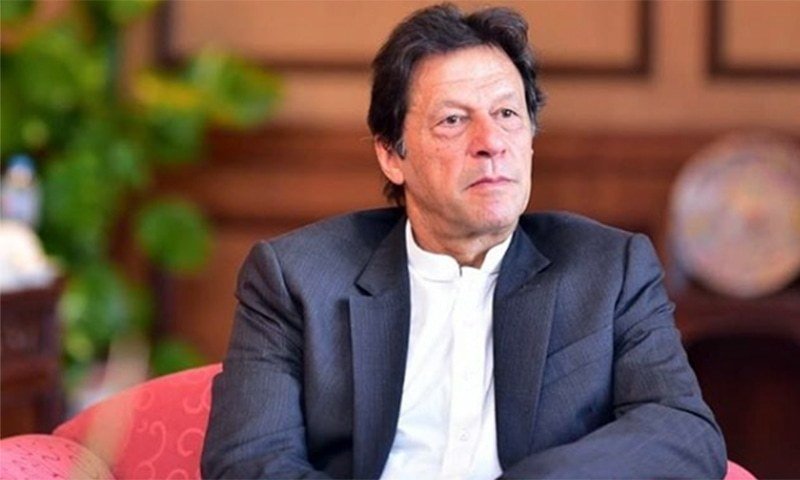
    Prime Minister Imran Khan has said that Pakistan cannot spend money on its infrastructure development, such as hospitals and schools, because it has the “lowest tax collection rate” in the world.

    The PM was addressing the inaugural ceremony of the State Bank of Pakistan’s digital payment project, Raast, in Islamabad when he made these remarks.

    The PM said the cash economy has badly affected tax collection, which is directly proportional to the lower tax rate. “Out of 220 million people, only two million people are filers,” said the PM, adding that only 30,000 people account for 70 per cent of the total tax collection.

    However, the digital payment programme would help Pakistan transition from cash economy to a digital economy, said the PM.

    The PM said: “Our biggest problem is the informal economy that’s so big that we could not collect taxes to develop Pakistan.”

    “This is an obstacle in tapping our true potential is because we can’t build our infrastructure, we can’t educate children, we can’t improve hospitals, the fastest growing country in the region 50 years ago can’t move forward because it does not have that much money for the development of the country,” he added.

    As per the PM, the news SBP initiative will allow the government expand the scope of the development to the lower classes.

    He also congratulated the SBP for efficient dealings with the overseas Pakistanis that led to capital growth at an unprecedented rate.

    “Our Pakistanis abroad sent money in an official manner due to which the current account deficit, which had been going on for years went into surplus for five months and the people did not care how much benefit was gained from it,” he added.

  • ‘Wapistani’: A new programme for Pakistanis wishing to return to the country

    ‘Wapistani’: A new programme for Pakistanis wishing to return to the country

    The Indus Valley Capital has announced the launch of a dedicated programme for returning Pakistani, known as Wapistani, at 021Disrupt 2020, an online conference by Nest I/O.

    This announcement was made by Aatif Awan, the Founder & Managing Partner at the Indus Valley Capital.

    Indus Valley Capital is an early stage venture capital fund investing in Pakistani startups. This fund has a well-established network that is deployed to help early stage startups build products that can be scaled to hundreds of millions.

    Awan explained that the Wapistani programme aims to make the move to Pakistan easier for Pakistanis who are returning to the country.

    Indus Valley Capital plans to bring back 200 Wapistanis within the next 2 years through this programme.

    Wapistani will help returning Pakistani in three main areas:

    1- Career: This program will help returning Pakistanis in making the right career decisions through personalized intros and connections with top startups looking for senior or specialized talent.

    2- Concierge: There will be dedicated resources to help returning Pakistanis with important life choices related to housing, children’s schooling and medical care.

    3- Community: This programme will build a network of Wapistanis, who are moving back to the country at the same time.

    Indus Valley Capital is targeting people in tech, who plan on moving back in the next 6 months.