Tag: Digital Payments

  • World Bank greenlights $350 million for Pakistan’s fiscal reforms

    World Bank greenlights $350 million for Pakistan’s fiscal reforms

    The Board of Executive Directors of the World Bank gave its approval on Wednesday for a financing package of $350 million to support Pakistan’s fiscal and competitiveness reforms.

    This funding is allocated for the Second Resilient Institutions for Sustainable Economy (RISE-II) Operation, with the primary goal of strengthening fiscal management and promoting competitiveness for sustainable and inclusive economic growth, according to a statement from the World Bank.

    Najy Benhassine, the World Bank Country Director for Pakistan, stressed the urgent need for fiscal and structural reforms in Pakistan to restore macroeconomic balance and establish the groundwork for sustainable growth.

    He highlighted that RISE-II builds upon previous phases of tax, energy, and business climate reforms, aiming to generate additional revenues, improve expenditure targeting, and stimulate competition and investment.

    The RISE-II Operation is designed to enhance fiscal management by improving fiscal policy coordination, increasing debt transparency and management, strengthening property taxation, and enhancing the financial viability of the power sector.

    Additionally, the operation seeks to boost growth and competitiveness by reducing the cost of tax compliance, improving financial sector transparency, promoting digital payments, and facilitating exports through reduced import tariffs.

    Derek H. C. Chen, Task Team Leader of the operation, emphasised the crucial opportunity for Pakistan to address long-standing structural distortions in its economy after the upcoming general elections.

    Failing to seize this opportunity, he warned, could lead the country back into stop-and-go economic cycles.

    Recently, the World Bank projected a decrease in remittance flows to Pakistan, estimating a decline to $24 billion in 2023 and a further drop below $22 billion with a 10 per cent decline in 2024.

    The report attributed this trend to growing economic turmoil, a balance of payment crisis, and high debt, resulting in a loss of public confidence and a shift of remittances from formal to informal channels.

    Addressing Pakistan’s economic challenges, Martin Raiser, the World Bank’s Regional Vice President for South Asia, noted difficult situations, floods, and climate change.

    He highlighted that the country is trapped in a low-growth scenario with poor human development outcomes and increasing poverty. Raiser urged Pakistan to make crucial decisions for a brighter future, emphasising the need for difficult but necessary steps.

    In its October report, ‘South Asia Development Update Towards faster, cleaner growth,’ the World Bank projected positive growth for Pakistan in fiscal years 2023–24, albeit at a modest rate of 1.7 per cent.

    The report underscored the country’s dependence on capital inflows to finance substantial fiscal and current account deficits.

  • Senators propose discontinuation of Rs5,000 currency note to fight corruption

    Senators propose discontinuation of Rs5,000 currency note to fight corruption

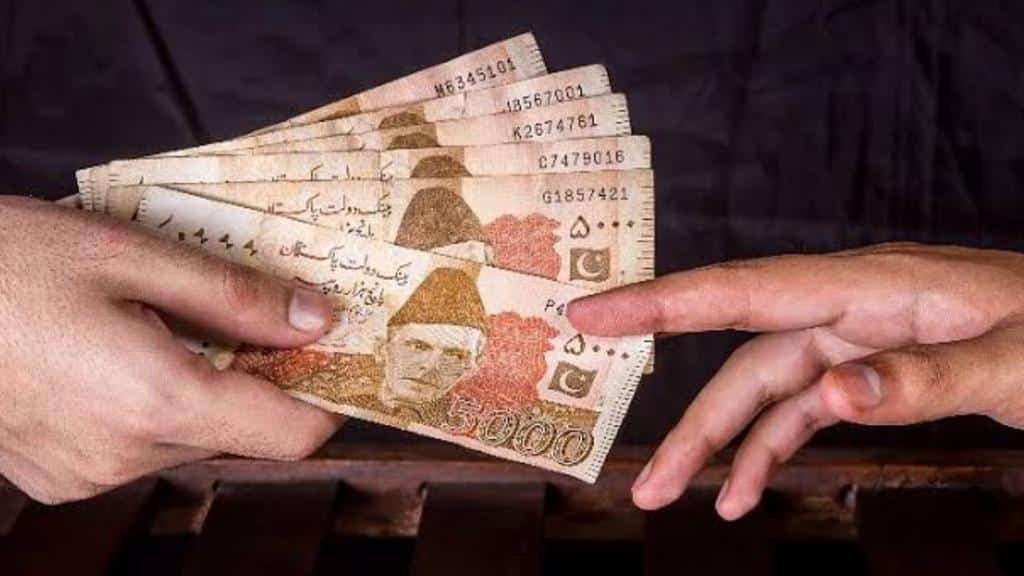
    Pakistan Tehreek-e-Insaf (PTI) senators are advocating for the discontinuation of the Rs5,000 currency note as a strategic move to combat corruption and inflation.

    On Monday, Senator Mohsin Aziz presented a resolution in the Upper House of Parliament urging the prohibition of the highest-denomination currency.

    According to Senator Aziz, the Rs5,000 note is frequently associated with corruption, terrorism, and smuggling.

    Providing details, Senator Aziz revealed that Rs5,000 currency notes totaling Rs3.5 trillion have been issued to date.

    Notably, he emphasised that Rs2 trillion worth of Rs5,000 notes are not currently in circulation but are securely stored in “safe deposit,” which he alleges is linked to money laundering, tax evasion, and smuggling.

    Senator Aziz called for a specific timeframe during which individuals should surrender the highest denomination notes.

    Supporting this initiative, another PTI Senator, Waleed Iqbal, echoed Senator Aziz’s call to discontinue the Rs5,000 currency note.
    He suggested that promoting digital payments would be instrumental in reducing reliance on physical currency.

    Responding to these claims, Caretaker Information Minister Murtaza Solangi stated that Rs5,000 currency notes totaling 905 million have been issued thus far, with Rs4.5 trillion currently in circulation.

    Solangi attributed the autonomy granted to the State Bank of Pakistan (SBP) by the previous government as a contributing factor to the situation. He asserted that the SBP operates within the confines of its laws.

    This isn’t the first time that officials have targeted the highest denomination note for its alleged role in fostering corruption.

    In September of this year, former Federal Board of Revenue (FBR) chief Shabbar Zaidi emphasised the importance of discontinuing Rs5,000 notes and imposing restrictions on the physical movement of dollars as crucial steps in curbing the cash economy in the country.

  • Here’s when PayPal and Stripe payment services will be available in Pakistan

    Here’s when PayPal and Stripe payment services will be available in Pakistan

    Dr Umar Saif, Pakistan’s interim Federal Minister for IT and Telecommunications, shared noteworthy developments on Wednesday regarding the imminent availability of PayPal and Stripe payment gateways within the country. Addressing the flourishing freelancing community, he drew attention to the current scarcity of financial tools to facilitate payments within this sector. 

    During these discussions with major industry players, including PayPal, Stripe, and Wise, a compelling case for Pakistan was presented, despite reservations, including those arising from the Financial Action Task Force (FATF). 

    Dr Saif expressed optimism, foreseeing promising updates on PayPal and Stripe services in the coming four to six weeks, heralding positive implications for the freelancer community. 

    Highlighting the substantial size and potential of Pakistan’s IT freelancing workforce, the country ranks as the world’s second-largest online workforce, boasting approximately 1.5 million active IT freelancers. Nonetheless, the sector’s growth has been stymied by infrastructure limitations. 

    To address these challenges, the E-Rozgar programme is set to offer interest-free loans to the private sector, with plans for establishing co-working spaces capable of accommodating 500,000 individuals. Dr Saif also revealed a collaborative initiative with the Higher Education Commission (HEC) to introduce standardised testing for IT graduates. 

    The significance of Pakistan’s IT sector cannot be understated, with around 19,000 companies contributing substantially to both employment and the national economy, boasting official exports worth $2.5 billion. 

    Another pertinent issue discussed by Dr Saif is the reluctance of some IT companies to maintain foreign exchange reserves and revenues abroad due to constraints on repatriating US dollars. Despite conservative estimates placing Pakistan’s IT exports at $4–4.5 billion, the reality is obscured by restrictions on US-dollar spending. 

    Fueled by cooperative efforts between the IT ministry and P@SHA, a positive development has emerged. IT companies can now retain 50 per cent of their revenue in US dollar accounts and receive corporate debit cards from banks, facilitating international payments without hindrance. 

    In addition, the State Bank of Pakistan (SBP) has played a crucial role in assisting IT exporters. The SBP recently increased the permissible retention limit for IT exporters, allowing them to hold 50 per cent of their export proceeds in Exporters’ Specialised Foreign Currency Accounts (ESFCAs) with the aim of bolstering IT and IT-enabled services exports. 

  • Telecom operators, govt suffer major revenue losses due to mobile internet shutdown

    Telecom operators, govt suffer major revenue losses due to mobile internet shutdown

    According to reliable sources, the suspension of mobile broadband services has had a devastating impact on the economy in Pakistan. Telecom operators have incurred a revenue loss of approximately Rs820 million, while the government has lost around Rs287 million in tax revenue.

    The suspension has also caused significant losses for digital app users, such as Careem, InDrive, and FoodPanda, as well as brought digital payments to a halt. The situation has caused widespread inconvenience and hardship for the general public, necessitating the immediate attention of the relevant authorities to resume data services.

    Furthermore, social media platforms like Facebook and Twitter remained partially or fully suspended on the second day. Jazz CEO, Aamir Ibrahim, expressed his dissatisfaction through a tweet, emphasising that shutting down the internet is not a solution to any problem, but instead, it creates more problems than it solves. He stated that the impact on the economy is quantifiable, but the inconvenience to the people is incalculable.

    According to Brecorder, Muhammad Zohaib Khan, the Chairman of Pakistan Software Houses Association (P@SHA), strongly criticised the indiscriminate blockage of internet services in Pakistan due to the emergent political situation. He condemned the mindless and consultation-less decision and highlighted that the IT industry has come to a standstill since Tuesday evening.

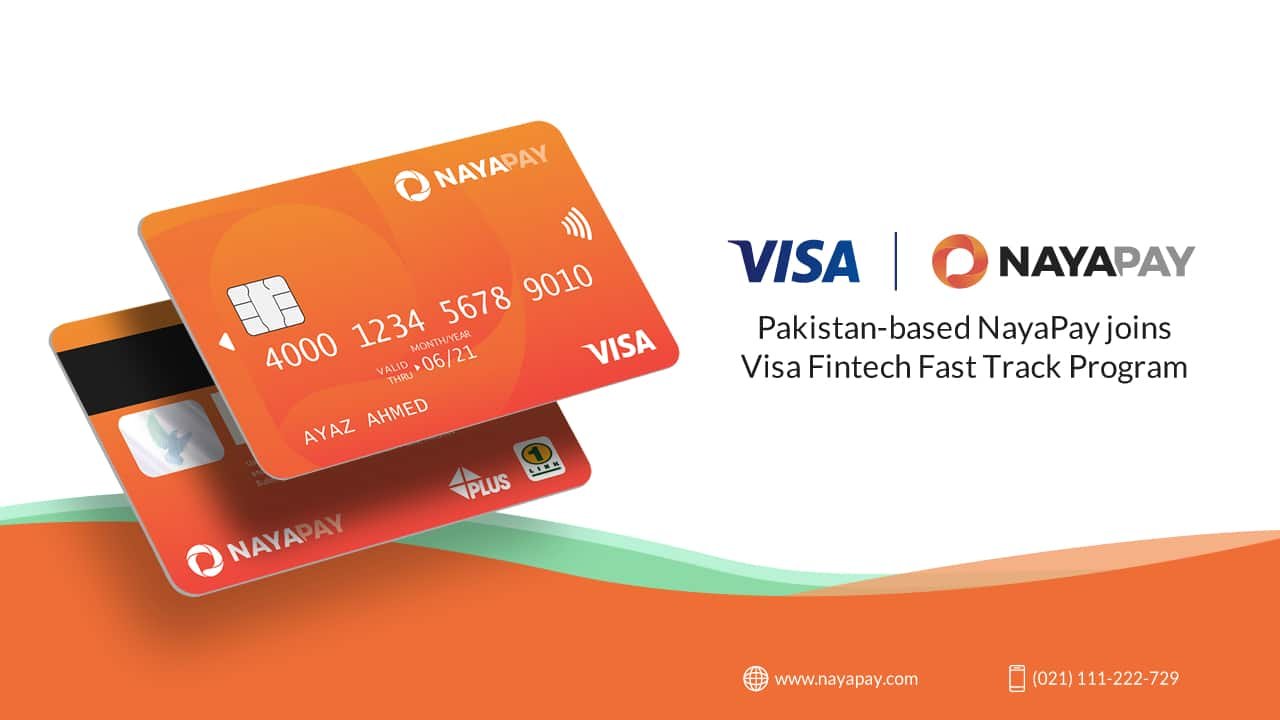
  • VISA, NayaPay Partner to revolutionise digital payment system in Pakistan

    VISA, NayaPay Partner to revolutionise digital payment system in Pakistan

    NayaPay, an Electronic Money Institution (EMI), has collaborated with Visa, a leading global payment solution. Now they have access to Visa’s growing partner and global payments network, technology, and resources to accelerate innovation in digital payments in Pakistan.

    NayaPay will enable users to open electronic (E)-Money accounts within a few minutes and make hassle-free digital payments to each other and to businesses.

    NayaPay consumers and merchants can use their NayaPay Visa debit card to perform online and in-store transactions with millions of retailers worldwide as well as withdraw cash conveniently at any ATM location.

    NayaPay customers can also scan Visa merchant QR codes to make payments directly through their app.

    NayaPay will also facilitate cross-border money transfers for freelancers and other Pakistan-based businesses working with international clients, and households receiving remittances from their families abroad.

    Users will be able to accept funds instantly and directly into their NayaPay wallets from over a billion Visa cards across the globe.

    Danish Lakhani, CEO NayaPay, said: “We are delighted to have found a partner in Visa that shares our goals of making financial services simpler, more convenient and accessible to Pakistani users – the needs of whom have been overlooked for far too long. Over the past few months, we have been integrating Visa’s offerings to reinforce our issuing and acquiring capabilities and to deliver on our promise of becoming a part of citizens’ daily lives.”

    “We are committed to helping fintech achieve their potential – enabling big ideas to flourish and supporting them through the reach, scale, and security of the Visa network,” said Kamil Khan, Country Manager, Pakistan, Visa.

    “By joining Visa’s Fintech Fast Track program, exciting fintech like NayaPay gain unprecedented access to Visa experts, technology, and resources,” said Otto Williams, Vice President, Strategic Partnerships, Fintech and Ventures, CEMEA at Visa.