Tag: Digital Transformation

  • Pakistan’s IT exports poised to surpass $3 billion this year

    Pakistan’s IT exports poised to surpass $3 billion this year

    Minister of State for Information Technology and Telecommunications, Shaza Fatima Khawaja, expressed optimism on Monday that Pakistan’s IT exports will exceed the $3 billion mark this year.

    Addressing the National Assembly, she outlined ambitious targets, projecting IT exports to reach $25 billion within the next five years, aligning with Prime Minister Shehbaz Sharif’s vision.

    Highlighting the strategic importance of the IT sector during Prime Minister Shehbaz’s international engagements, Khawaja noted significant developments. She announced a pivotal agreement with Huawei of China to transform Islamabad into a smart city, with plans to expand the Safe City project nationwide.

    Under this initiative, 300,000 youths are set to undergo specialised training starting next month, in collaboration with global tech giants such as Google and Microsoft, aiming to certify 1.5 million IT professionals over the next five years.

    Khawaja also underscored the expansion of the DigiSkills program and plans to establish a Centre for Excellence for Gaming, aimed at fostering the local gaming industry and creating a conducive startup environment.

    On the legislative front, she highlighted key initiatives including Pakistan’s first Cyber Emergency Policy, draft National Artificial Intelligence policy, and the Personal Data Protection Bill. Additionally, efforts are underway towards a National Semiconductor policy, underscoring Pakistan’s commitment to digital transformation.

    The Minister further elaborated on Pakistan’s National Digitisation plan, encompassing Digital Economy, Governance, and Society. Recently, a high-level delegation from Google met with Khawaja to discuss enhancing technology’s role in education, Artificial Intelligence (AI), and the digital economy.

    The delegation included Andrew Ure, Kyle Gardener, and Farhan Qureshi, reaffirming Google’s commitment to advancing Pakistan’s digital landscape.


  • Pakistan seeks global assistance to overhaul tax system amidst significant drop in active taxpayers

    Pakistan seeks global assistance to overhaul tax system amidst significant drop in active taxpayers

    In a significant development, the count of active taxpayers has dwindled to 3.4 million, marking a 41 per cent decrease from the previous year. The government is contemplating seeking financial support from the Bill and Melinda Gates Foundation to enhance digital services within the Federal Board of Revenue (FBR).

    According to Express Tribune, approximately 500,000 individuals were excluded from the Active Taxpayers List (ATL) for tax year 2023 due to delayed submission of annual income tax returns. These individuals will incur a nominal penalty for reinstatement. Newly appointed economic czar, Muhammad Aurangzeb, chaired his inaugural meeting to explore avenues for improving digital services and expanding the tax base.

    The gathering, which included representatives from Karandaaz Pakistan, a firm specializing in financial inclusion services, concluded with the decision for Karandaaz to approach the Bill and Melinda Gates Foundation for financial backing in establishing a digital platform within the FBR.

    The government aims to streamline interactions between tax authorities and taxpayers, fostering transparency and curbing corruption. This initiative arises as the number of active taxpayers further drops to a mere 3.4 million, compared to last year’s figure of over 5.7 million—an alarming 41 per cent reduction.

    The FBR, having received 3.9 million income tax returns, removed approximately 500,000 individuals from the active list due to delayed filings. Consequently, those not on the active taxpayers list will face a 0.6 per cent withholding tax on cash withdrawals.

    To encourage compliance, the government allows the reactivation of approximately 500,000 individuals by paying a nominal Rs1,000 fine for late filing of returns. The International Monetary Fund (IMF) is expected to exert pressure on the government to expand the tax base and simplify tax slabs for both salaried and business individuals.

    Recent data reveals a noteworthy contribution of Rs217 billion from the salaried class in the first eight months of the current fiscal year, surpassing the combined taxes paid by rich exporters and real estate players by Rs37 billion, or one-fifth.

  • Pakistan welcomes PayPal through strategic alliance

    Pakistan welcomes PayPal through strategic alliance

    In a groundbreaking move for Pakistan’s burgeoning freelance community, PayPal is set to establish its presence in the country through a strategic partnership with an existing international payment gateway.

    The joint venture announcement is anticipated for next week, marking a significant milestone for the approximately 1.5 million freelancers and IT professionals in Pakistan, making it the fourth-largest community globally.

    Caretaker Minister for IT and Telecom, Dr Umar Saif, confirmed that PayPal would operate indirectly in Pakistan through this collaboration. This development follows persistent efforts by previous governments to convince PayPal to operate within the country, which initially faced resistance citing security concerns.

    Dr Saif emphasised the positive impact of this move on IT exports and freelancer remittances, underscoring recent measures supporting a more liberal financial regime. He revealed that IT exports have already experienced a notable surge, with a 13 per cent increase in November alone, and expressed confidence that this growth trajectory will continue.

    The IT Ministry, under Dr Saif’s leadership, has implemented various initiatives to bolster the IT sector. These include providing smartphones through installment plans, standardising quality tests for IT graduates, and approving the National Space Policy. Dr Saif expressed optimism about launching 5G services in Pakistan by July 2024, with a spectrum auction offering 300 MHz.

    The government aims to boost IT exports from the current $2.6 billion to approximately $5 billion by facilitating a more liberal financial regime. As part of this effort, IT companies can now retain 50 per cent of their export revenue in dollars in a local account, simplifying international payments.

    In addition to these measures, the government plans to launch 10,000 e-Rozgar centres across the country, providing facilities for freelancers and start-ups. The recently approved National Space Policy allows companies to utilise low-orbit satellites for communication services, further enhancing the technological landscape in Pakistan.

    The upcoming joint venture between PayPal and an international payment gateway is expected to usher in a new era of financial opportunities for Pakistan’s freelancers and IT professionals, contributing significantly to the country’s economic growth and global standing in the IT sector.

  • ‘Virtual Prison Meetings’ coming to Khyber-Pakhtunkhwa

    ‘Virtual Prison Meetings’ coming to Khyber-Pakhtunkhwa

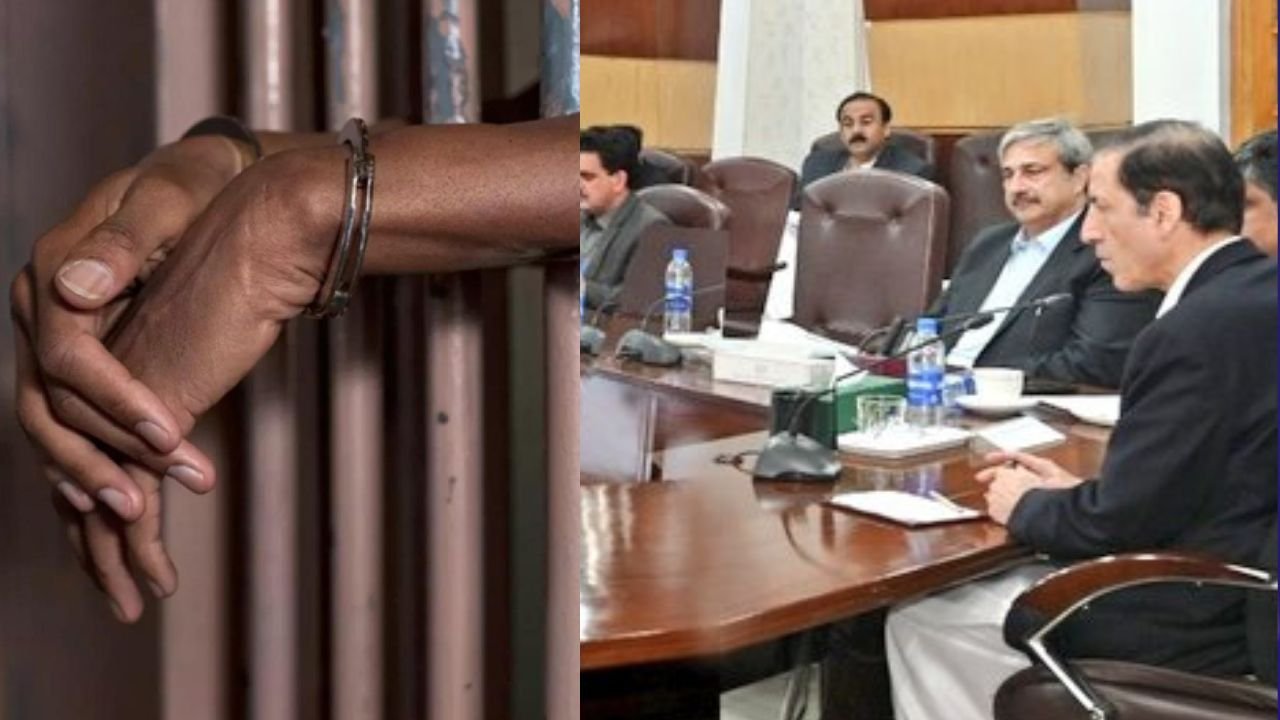
    In a historic move, the Khyber-Pakhtunkhwa (K-P) government has introduced a virtual system in prisons to facilitate inmates’ meetings with their family members.

    It has also unveiled a transformative digital governance initiative, shifting the entire arms licensing system to an online platform.

    The groundbreaking initiative was announced during a comprehensive progress review meeting for the “Khushhal Khyber-Pakhtunkhwa” program, where Caretaker Chief Minister Justice (retired) Syed Arshad Hussain Shah presided over the session.

    The meeting brought together key figures, including concerned provincial ministers, the chief secretary, administrative secretaries of relevant departments, divisional commissioners, and deputy commissioners attending via video link. The primary focus of the meeting was to assess the progress of various initiatives under the “Khushhal Khyber-Pakhtunkhwa” program.

    Significant headway has been made in the digitization process of manual mutations, resulting in a notable decrease from 813 to 386 cases in recent weeks.

    The statement released on X (former Twitter) also added, “The CM emphasized the program’s vital role in public welfare, urging a collective effort for its full implementation. He stressed the need for a comprehensive approach against issues like encroachments, drugs, adulteration, corruption, and illegal activities. Addressing concerns about revenue matters, he directed swift resolution of cases, emphasizing personal responsibility for officers.”

    One of the major highlights of this digital transformation is the transition of the entire arm licensing system to an online platform. This move is expected to streamline and modernize the licensing process, bringing it into the digital era.

    Simultaneously, the innovative approach of virtual systems in prisons to facilitate inmates’ meetings with their family members aims to enhance communication and connection between inmates and their loved ones, contributing to their overall well-being.

  • FBR restructuring: Govt plans to separate Customs and revenue collection system

    FBR restructuring: Govt plans to separate Customs and revenue collection system

    Caretaker Finance Minister Dr Shamshad Akhtar has announced that the government is implementing significant restructuring measures within the Federal Board of Revenue (FBR) to eliminate apparent conflicts of interest in tax collection and enhance overall performance. 

    Speaking at the Future Summit organised by the Nutshell Group, she outlined the action plan for restructuring Pakistan’s tax administration, emphasising the crucial aspect of strengthening the internal governance of the FBR. 

    One notable decision involves separating customs from the revenue collection mechanism. Customs will focus on tracking smuggling and related activities, while revenue collection will remain the exclusive mandate of the FBR. 

    Akhtar noted that a formal notification for this change will be issued next week, with additional notifications expected for further FBR restructuring initiatives. 

    Discussing FBR reforms, Akhtar highlighted the adoption of innovative digital technologies to broaden the tax base, minimise the tax policy and compliance gap, and increase tax collection. 

    The government aims to reduce the share of the shadow economy by more effectively identifying non-filers and those under-reporting incomes or business activities. 

    Furthermore, Akhtar revealed plans to separate the tax policy and revenue division, making it an independent entity reporting directly to the Minister of Finance. 

    According to Brecorder, this move aims to eliminate perceived conflicts of interest in tax collection, emphasising the need for fair, equitable, and productive tax policy design. 

    Collaboration with the National Database and Registration Authority (NADRA) is also underway to upgrade data systems, with a technical committee chaired by NADRA and FBR chairpersons established for this purpose. 

    The overall objective is comprehensive tax administrative reforms and increased efficiency in revenue collection. 

  • Smart solutions for cleaner Lahore: LWMC integrates AI into waste management operations

    Smart solutions for cleaner Lahore: LWMC integrates AI into waste management operations

    In a significant stride towards modernising waste management operations and addressing the escalating waste challenges within the provincial capital, Lahore Waste Management Company (LWMC) has harnessed the power of artificial intelligence (AI).

    According to the recent communication from LWMC, a transformative journey towards digitalization has been set in motion to revamp waste management practices. In its initial phase, AI-driven route optimisation has been deployed in Gulberg Town, yielding remarkable outcomes. Notably, the integration of AI has led to a reduction in both the number of vehicles deployed and the distance covered, resulting in substantial fuel savings.

    In addition, the implementation of AI-powered attendance monitoring has not only bolstered the presence of field staff but has also unveiled instances of ghost employees, thereby fortifying operational credibility. The commitment of LWMC to digitalization is further exemplified by its initiatives encompassing GIS-based live mapping of containers and vehicle routes, the introduction of the ‘Hot Spot’ application for real-time container monitoring, and an upcoming Android application tailored for waste-related entity registration.

    According to Brecorder, speaking about these innovative measures, Babar Sahib Din, the CEO of LWMC, said that these endeavours underscore the organisation’s dedication to efficiency, ecological sustainability, and revenue enhancement. He underscored that waste management remains a universal challenge for urban centres worldwide, and Lahore, akin to the global arena, faces a mounting waste predicament. To effectively address this challenge, the adoption of digital reforms for comprehensive solid waste management is imperative.

    Din stated, “By harnessing the capabilities of artificial intelligence, LWMC has introduced pivotal interventions, including AI-optimised routes, waste segregation via a three-bin system, digital monitoring of field operations, vehicle tracking, and a centralised command center.” This transformative approach has been realised in collaboration with the Centre for Urban Information, Technology, and Policy at LUMS University.”

    He further highlighted, “The recent strategic partnerships with Harvard University, the International Growth Centre, and the Centre for Economic Research in Pakistan attest to LWMC’s commitment to evidence-based research, innovation, and digitization for sustainable waste management. As Lahore residents, it was incumbent upon us to support these advancements and maintain a clean city. Through these transformative digital initiatives, we envision a cleaner, more efficient waste management landscape that benefits both the environment and the community.”

    Furthermore, LWMC has diversified its revenue streams with the aim of elevating the annual collection rate from the current Rs40 million to an impressive Rs1 billion. This ambitious goal has been realised by extending coverage to encompass a wide spectrum of establishments, including previously untapped revenue sources such as private clinics and industrial units.