Tag: disaster

  • UK’s £1.5 million financial support for Pakistan flood victims termed ‘pathetically small’

    UK’s £1.5 million financial support for Pakistan flood victims termed ‘pathetically small’

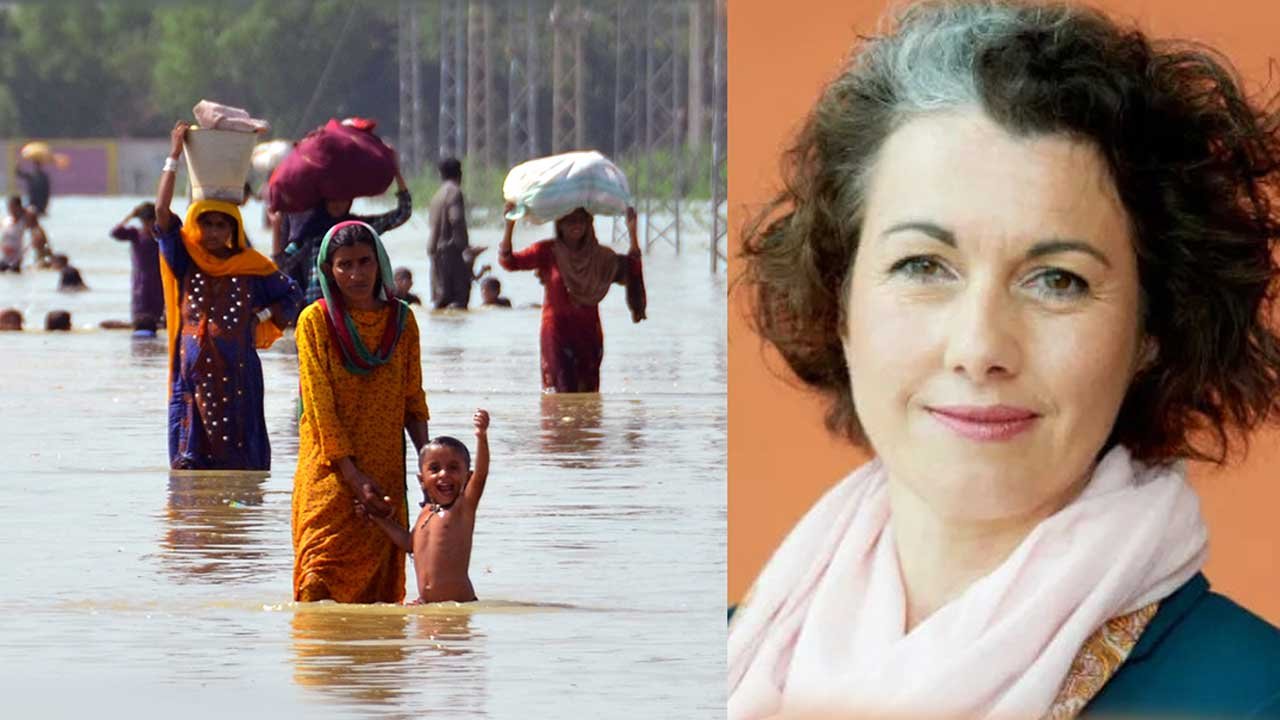
    The International Development Committee (IDC) of the British Parliament has called the UK’s financial support for disastrous floods in Pakistan ‘risible’.

    The “pathetically small” amount of support provided, according to IDC chair Sarah Champion, made her feel ashamed. She further said that by choosing to take the money out of Pakistan’s current aid, the UK was really doing nothing for Pakistan.

    According to Independent, the contribution of up to £1.5 million announced last week, according to IDC chair Sarah Champion in a letter to foreign secretary Liz Truss, equals less than 5p for each individual impacted by the heavy rain that has devastated more than 700,000 homes.

    As soon as parliament reconvened on Monday after its summer recess, she requested Ms Truss make an urgent statement regarding the calamity.

    The response to the floods, according to Ms Champion, revealed Boris Johnson’s administration policy of continued apathy towards Pakistan, which has dropped from first to seventh in the list of countries receiving bilateral aid from the UK since 2019.

    Last week, Lord Ahmad, a minister in the Foreign Office, expressed his thoughts and prayers for the millions of people impacted by the floods that have apparently inundated a third of Pakistan’s territory. “The UK stands with the people of Pakistan during this time of need,” he said.

    And on Tuesday, Mr Johnson expressed his deepest sympathies for the Pakistani people, saying, “We have witnessed the destruction there, and it is truly heartbreaking.

    “Pakistan is traditionally one of the biggest recipients of UK overseas aid. We will of course make sure that we send a fitting package commensurate with the vital relationship that there is between the UK and Pakistan and people’s natural sympathies with those who have been affected by the floods.”

    However, Ms. Champion wrote to Ms Truss in her letter, saying, “Considering the scope and impact of the flooding, I was ashamed to read the government’s declaration of ‘up to £1.5m from the UK’ in humanitarian support on August 27, 2022.”

    “Even if the full £1.5m were delivered, it would amount to less than 5p for each person affected.”

    “Furthermore, that pathetically small sum will be subtracted from ‘existing support to Pakistan’. The UK government’s risible response to this humanitarian disaster arguably amounts to nothing.”

     “However, UK aid funding to Pakistan has been cut dramatically. Pakistan has fallen to seventh in the list of UK bilateral aid recipients since it experienced the largest single decrease in any country budget.”

    A Foreign Office spokesperson said that Ms Champion’s letter had been received and a response would be made in due course.

    It is important to note that Ahsan Iqbal, Pakistan’s Minister of Planning, previously estimated that the cost of the flood damage could reach $10 billion.
  • What caused Pakistan’s greatest flood in a decade?

    What caused Pakistan’s greatest flood in a decade?

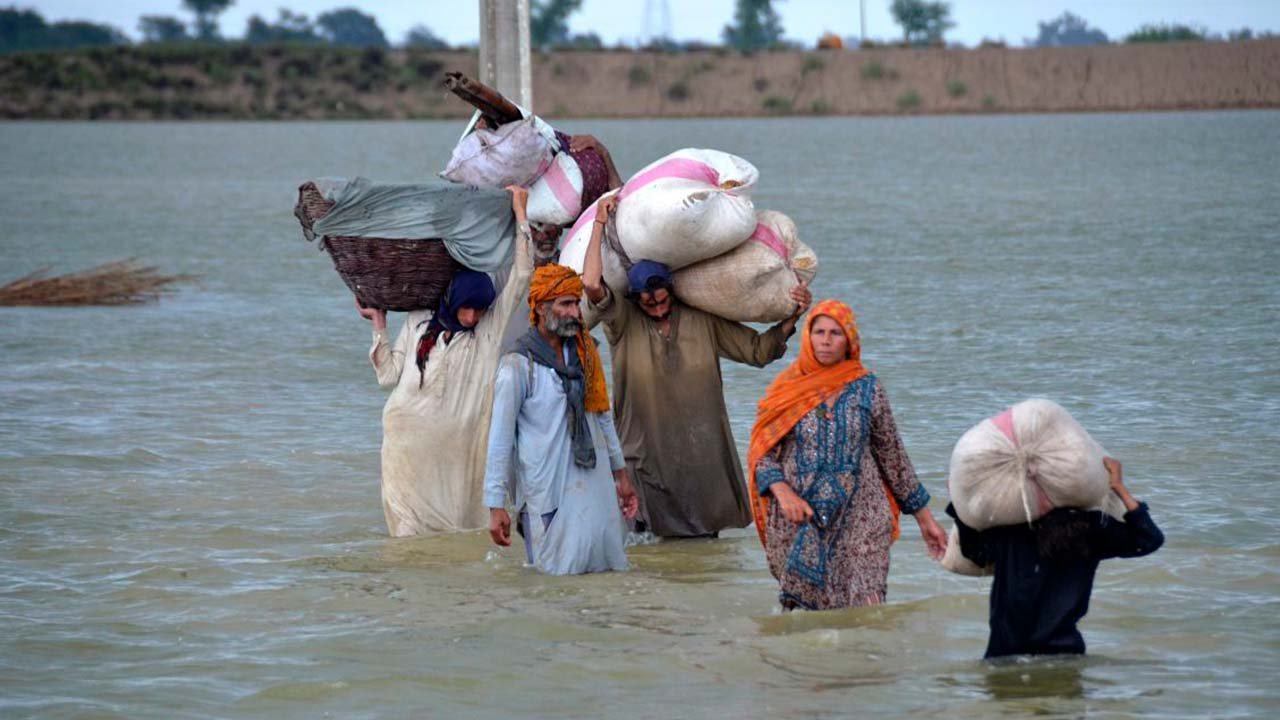
    Floods in Pakistan have affected millions of people, drowned hundreds, and prompted the government to proclaim a national emergency.

    Nearly 1,000 people have died since June, according to the National Disaster Management Authority (NDMA). People are looking for shelter as torn tents fill the streets of Sukkur.

    Around 15,500 people sacrificed everything in the 1,000-kilometer-long coastal area patch of Sindh’s Thatta district.

    The flood water has swallowed up people’s entire life savings, earned after years of hard work, meant to get their kids educated.

    The locals are concerned that the standing water may spread waterborne diseases. There hasn’t been any relief for residents expecting to return home to see what can be salvaged because it has been raining all week in Sindh province.

    Many houses in the city’s center have sustained damage, leaving only the walls standing.

    Over 300 people have died as a result of the floods in the province of Sindh alone. People set up tents along the narrow alleyways in any remaining dry area because further rain is predicted.

    About 15 per cent of the population, or 33 million people, were affected by the floods, according to Prime Minister (PM) Shehbaz Sharif on Friday.

    The nation has pleaded for greater international assistance, as PM met with ambassadors from other countries in Islamabad.

    He claimed that this season’s flood losses were on par with those from the floods of 2010–2011.

    The country is currently experiencing its eighth monsoon cycle, whereas typically there are only three to four cycles of rain, according to climate minister Sherry Rehman.

    She claimed that the proportions of super flood torrents are startling.

    Numerous monsoon cycles that have hit Pakistan since the start of summer have destroyed more than 400,000 homes.

    The Office for the Coordination of Humanitarian Affairs (OCHA), the UN organization in charge of disaster relief, announced on Thursday that at least 184,000 people had been relocated to relief camps.

    The rains have notably affected Sindh, which has seen nearly eight times its normal August rainfall. Southern Pakistan has been severely hit.

    On Thursday, Ms. Rehman claimed that officials had requested a million tents to house the refugees.

    What led to Pakistan’s floods?

    Extreme weather conditions or rains brought on by climate change are to blame for the recent floods that have affected Pakistan. Some floods originate in inland regions because of excessive rain, whereas others happen at the seashore because of sea-level rise, causing devastation in coastal districts.

    High tides in the sea cause heavy flooding primarily in coastal locations. Because of the daily rise in global temperature, this is related to climate change.

    There are two main causes of the floods: The experts noted that sea-level rise is a result of expanding saltwater caused by glacier and Arctic sea ice melting as well as cyclones and heavy rains brought on by warming ocean temperatures.

    Seawater intrusion inland has been caused by a significant sea-level rise of 1 millimeter along coastal Sindh recorded over hundreds of years. Communities in coastal regions, where economic activity is concentrated, are significantly impacted by invasive sea water.

    Experts have noted that the storms that have occurred more frequently and with greater severity in the Arabian Sea over the past 50 years as a result of climate change have an economic impact on urban areas like Karachi, Badin, and Thatta.

    According to a research, the primary causes of sea incursion include thermal expansion, freshwater inflows, physical forces, monsoon fluctuation, and ocean current variance.

    As seawater warms, the top layers of the ocean release some heat into the sky, while the lower layers hold onto this heat for a longer time and in greater amounts. As a result, saltwater gradually warms up due to a process known as thermal expansion.

    According to a study, freshwater inflow from melting glacial layers, ice sheets, and sea ice contributes to sea level rise. Freshwater input also rises as a result of the hydrogen cycle brought on by the warming of the oceans and surface areas.

    The scenario of subsidence and lifting also affects sea level without changing the volume of ocean water. This is caused by tectonic activities such extraction for oil, gas, and water.

    A direct connection between climate change and variations in monsoon rainfall. In recent years, Pakistan has had numerous instances of extreme monsoon rainfall and flooding.

    Regional ocean currents, which transfer a lot of water from one place to another, do not alter the volume but have an impact on sea level in another place.