Tag: disbursement

  • Pakistan’s forex reserves witness a dip of $127 million

    Pakistan’s forex reserves witness a dip of $127 million

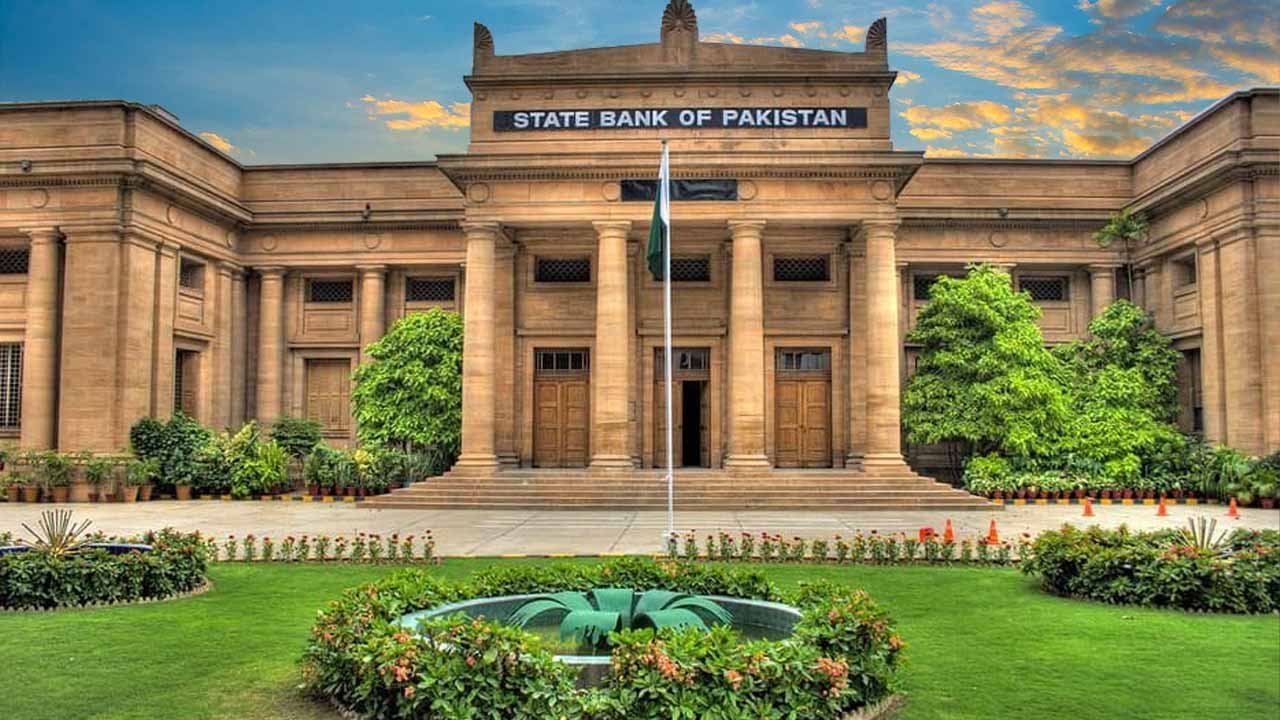
    In a recent report, it was revealed that the foreign exchange reserves held by the State Bank of Pakistan (SBP) experienced a decline of $127 million during the week ending January 12, settling at $8.03 billion.

    The country’s total liquid foreign reserves, including those held by commercial banks, amounted to $13.15 billion. Specifically, commercial banks held net foreign reserves of $5.12 billion.

    The SBP attributed the reduction in reserves to debt repayments, stating, “During the week ending on January 12, 2024, the SBP’s reserves decreased by US$ 127 million to US$ 8,027.4 million due to debt repayments.”

    Notably, the previous week had also seen a decrease in Pakistan’s central bank reserves, amounting to $66 million.

    In a significant development, Pakistan received a tranche of $705.6 million from the International Monetary Fund (IMF), as confirmed in a statement by the SBP on Wednesday.

    The central bank stated, “The SBP has received SDR 528 million (equivalent to $705.6 million) on January 16, 2024, from the IMF following the successful completion of the first review by the Executive Board of the IMF under Standby Arrangement (SBA).”

    The impact of this disbursement will be reflected in the central bank reserves for the week ending January 19.
  • SBP receives second IMF installment, total disbursements reach $1.9 billion

    SBP receives second IMF installment, total disbursements reach $1.9 billion

    The State Bank of Pakistan (SBP) announced today that it has successfully received the second installment of SDR 528 million, equivalent to $705.6 million, from the International Monetary Fund (IMF).

    This disbursement, slated to be reflected in SBP reserves for the week ending on January 19, 2024, marks a significant step in the ongoing financial collaboration between Pakistan and the IMF.

    The latest disbursement brings the total disbursements under the stand-by arrangement (SBA) to a substantial $1.9 billion.

    It is noteworthy that the remaining $1.1 billion is expected to be received after another comprehensive review scheduled for February 2024.

    As of January 5, 2024, the State Bank of Pakistan’s total reserves stand at $8.15 billion, showcasing the positive impact of the financial support received through the IMF programme.

    To recall, Pakistan secured a $3 billion SBA from the IMF towards the end of FY23, crucially preventing the nation from defaulting on its sovereign debt.

    The disbursement of the IMF funds has been phased out over two installments, subject to meticulous reviews.

    On January 11, 2024, Pakistan successfully completed the first review of the economic reform programme, a significant milestone in ensuring the country’s financial stability.

    Following the board’s approval, the IMF highlighted that economic activity has stabilised, though acknowledging that the outlook remains challenging and is contingent on the implementation of sound policies.

    Pakistan’s 9-month SBA aims to provide a robust policy anchor for addressing both domestic and external balances, serving as a framework for continued financial support from multilateral and bilateral partners.

    This financial collaboration with the IMF is instrumental in navigating Pakistan through economic challenges, providing a solid foundation for sustained growth and stability in the region.

    The country remains committed to implementing prudent economic policies as outlined in the reform programme, with the ongoing support of international partners.

  • IMF greenlights $700 million for Pakistan’s economic stabilisation programme

    IMF greenlights $700 million for Pakistan’s economic stabilisation programme

    In a significant development, the International Monetary Fund (IMF) successfully concluded its first review of Pakistan’s economic reform programme on Thursday.

    This programme, backed by a $3 billion and-by a arrangement (SBA), has now received a boost with the immediate approval and disbursement of $700 million, as confirmed by the finance ministry.

    According to an official statement from the ministry, the completion of the first review by the IMF’s Executive Board, coupled with the payment of $528 million in special drawing rights, has elevated the total disbursements under the SBA to $1.9 billion.

    The infusion of funds from the IMF, combined with recent inflows from multilateral lenders, is anticipated to contribute to the stability of the Pakistani rupee, which has demonstrated relative steadiness over the past few months.

    The finance ministry highlighted that this fresh tranche would play a crucial role in facilitating rollovers from allied countries, including the United Arab Emirates, China, and Saudi Arabia.

    Additionally, it is expected to alleviate external debt repayment pressures faced by Pakistan.

    This positive development traces back to June 2023, when the IMF Executive Board granted approval for a much-needed nine-month arrangement with Pakistan to support its economic stabilisation program.

    The initial disbursement of $1.2 billion was promptly released in July, with the remainder subject to two quarterly reviews over the programme’s duration.

    The current IMF programme is slated to conclude in the second week of April, with the recent disbursement marking a significant step towards its successful execution.

    Notably, a staff-level agreement was reached in November 2023 between the IMF staff and Pakistani authorities, paving the way for the first review under Pakistan’s SBA.

    This agreement was contingent upon subsequent approval by the IMF’s Executive Board.

    Looking ahead, Pakistan is poised to receive the remaining amount in March under the $3 billion SBA.

    Despite facing challenging conditions, particularly persistently high inflation, which rose to 29.7 per cent in December from 29.2 per cent in the preceding month, Pakistan remains committed to navigating through these economic challenges with the assistance of international financial institutions.

  • IMF board’s January meeting to shape future disbursements for Pakistan

    IMF board’s January meeting to shape future disbursements for Pakistan

    The International Monetary Fund’s (IMF) Executive Board is scheduled to convene on January 11 to endorse the Staff-Level Agreement (SLA) with Pakistan, marking the inaugural review of the $3 billion Stand-By Arrangement (SBA).

    In June, the IMF Executive Board granted approval for a crucial nine-month arrangement with Pakistan, aimed at supporting its economic stabilisation programme.

    This approval facilitated an immediate disbursement of $1.2 billion, with the remaining funds to be disbursed over the programme’s timeline, contingent upon two quarterly evaluations.

    Following negotiations between IMF staff and Pakistani authorities on November 15 in Islamabad, the SLA was successfully reached, paving the way for Pakistan to access SDR 528 million (approximately $700 million).

    This latest disbursement brings the cumulative total under the nine-month $3 billion SBA to nearly $1.9 billion.

    While the initial plan had tentatively slated the IMF Board meeting for December 7 to approve the initial tranche, the confirmed date is now set for January 11.

  • Pakistan expects positive outcome in talks with IMF, eyes $700 million disbursement

    Pakistan expects positive outcome in talks with IMF, eyes $700 million disbursement

    Pakistan is optimistic about the successful completion of the initial review under the $3 billion standby arrangement (SBA) with the International Monetary Fund (IMF). 

    According to reports, the ongoing negotiations, now in their final phase, are anticipated to culminate positively, marking a crucial milestone. 

    Commencing on Monday, policy-level discussions between Pakistani authorities and the IMF are scheduled to persist until November 15, spearheaded by Finance Minister Shamshad Akhtar.  

    The Pakistani delegation, including key figures such as State Bank of Pakistan Governor Jameel Ahmad and Federal Board of Revenue Chairman Malik Amjed Zubair Tiwan, along with representatives from the finance and energy ministries, has been actively engaged in the deliberations. Nathan Porter leads the IMF team in this dialogue. 

    During the latest session, the IMF delegation articulated their recommendations and requirements, while technical-level talks involved the sharing of pertinent economic data with the international lender’s team, according to The News.  

    Sources within the finance ministry assert that Pakistan has diligently fulfilled all stipulated conditions set forth by the IMF. 

    It is anticipated that the staff-level agreement will be finalised during the ongoing policy-level talks, paving the way for the disbursement of approximately $700 million to Pakistan upon the successful completion of the first review. 

    Earlier this month, the IMF review mission commended the Pakistani government for its commendable progress towards economic recovery, as stated by the finance ministry.  

    The IMF’s $3 billion loan programme, sanctioned in July, played a pivotal role in averting a sovereign debt default. The initial tranche of $1.2 billion was disbursed in July, with the remaining amount contingent on subsequent reviews. 

    Finance Minister Shamshad Akhtar has unequivocally ruled out any requests to the IMF for an extension of the SBA programme’s timeframe or an increase in its size. 

  • PSX resumes recovery as KSE-100 index gains 670.87 points

    PSX resumes recovery as KSE-100 index gains 670.87 points

    The KSE-100 increased for the fourth consecutive session on Friday as the rupee continued to strengthen against the US dollar, maintaining positive investor confidence at the Pakistan Stock Exchange (PSX).

    The price of WTI crude oil was $87.95 per barrel during the day, while Brent crude oil was being sold at $93.75 per barrel, bringing the global oil prices to multi-month lows.

    The domestic equities market gained 670.87 points, or 1.62 per cent, to close at 42,096.24 points as a result of this development.

    The Pakistani currency’s ongoing rebound, which continued for the sixth day in a row against the US dollar, provided additional support for the market.

    Despite initial selling pressure on the market and a period of time in which the KSE-100 index traded flat, investor interest picked up toward the end of the first session, and the market closed roughly 300 points higher.

    The rise gained momentum in the second session, which enabled the index to pass the 42,000-point threshold and conclude with significant gains.

    The day ended strongly for index heavyweights in the banking, fertiliser, cement, chemical, automobile, and cement industries. On a weekly basis, the benchmark KSE-100 increased by 4.85 per cent. Capital Stake said that the PSX had strong sentiment for the fourth straight session.

    According to Topline Securities’ analysis, Pakistan’s stocks saw good momentum as a result of softening global energy prices for coal and oil, which experienced some correction.

    The decline enabled the market maintain its purchasing mood from Thursday and helped the KSE-100 index conclude the day at 42,096 points.