Tag: disruption

  • Tesla cancels affordable electric car, shifts focus to Robotaxis

    Tesla cancels affordable electric car, shifts focus to Robotaxis

    Tesla has made a significant shift in its strategy, announcing the cancellation of its long-awaited affordable electric car, a move that has left investors and consumers stunned.

    The decision, revealed by three reliable sources familiar with the matter and corroborated by company messages obtained by Reuters, marks a departure from Tesla’s earlier mission of bringing affordable electric vehicles to the masses.

    The automaker, instead, will pivot its resources towards the development of self-driving robotaxis, utilizing the same small-vehicle platform, according to insiders. This strategic redirection signifies a significant deviation from Tesla CEO Elon Musk’s previous commitments and vision outlined in the company’s initial “master plan” in 2006.

    Musk, who has often emphasized the goal of making electric cars accessible to a broader audience, had initially promised investors and consumers an affordable vehicle following the success of luxury models. However, despite repeated assurances from Musk, including as recent as January, wherein he outlined plans for production at Tesla’s Texas factory by the second half of 2025, those aspirations have been dashed.

    Tesla’s cheapest model currently available, the Model 3 sedan, comes with a price tag of approximately $39,000 in the United States. The now-scrapped entry-level vehicle, often referred to as the Model 2, was anticipated to be priced around $25,000.

    In response to inquiries, Tesla remained silent, offering no official comment on the matter. However, Musk took to social media platform X to dispute the Reuters report, without specifying any inaccuracies, leading to a momentary fluctuation in Tesla’s stock prices.

    Following Musk’s online intervention, where he hinted at an upcoming Tesla Robotaxi unveiling, the company’s shares experienced a rebound in after-hours trading. This abrupt change in direction comes amidst mounting competition in the global electric vehicle market, particularly from Chinese manufacturers offering vehicles at significantly lower price points.

    The decision to prioritize the development of self-driving robotaxis, though potentially lucrative, poses considerable engineering challenges and regulatory hurdles, as highlighted by industry experts.

    Leaks reveal that the decision to scrap the Model 2 was communicated to employees in a meeting held in late February, further underscoring Tesla’s strategic pivot in the face of evolving market dynamics.

  • Mohsin Naqvi seeks to review social media laws amid nationwide X disruption

    Mohsin Naqvi seeks to review social media laws amid nationwide X disruption

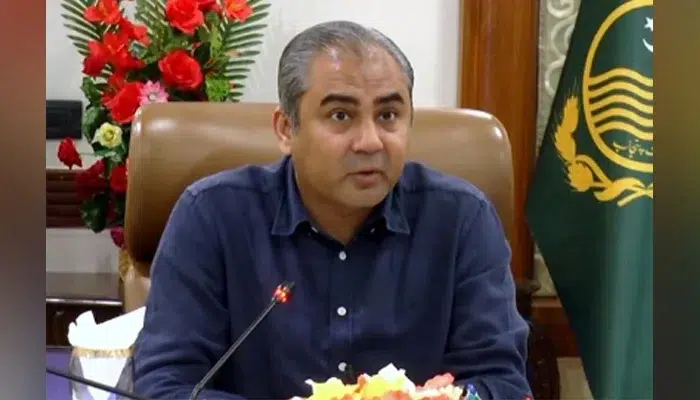
    Interior Minister Mohsin Naqvi has sought a review of social media laws to prevent misuse, as the popular social networking platform X has been disrupted nationwide for over a month.

    X, formerly Twitter, is not accessible to millions of Pakistani citizens without a VPN, getting suspended before the February 8 general elections.

    “Social media laws should be envisaged,” Naqvi said while speaking to journalists in Lahore on Tuesday, adding that “social media is being misused. Social media regulations have been implemented across the globe.”

    Mohsin Naqvi also said that it is necessary to maintain a difference between freedom of expression and spreading propaganda. “Everyone has the right to freedom of speech; however, it should not be misused.”

    The interior minister also said smear campaigns against politicians, the judiciary, and other national institutions should be stopped, further adding that there should be the implementation of social media laws in the country.

  • Toyota IMC announces shutdown of production plant once again due to parts shortage

    Toyota IMC announces shutdown of production plant once again due to parts shortage

    Indus Motor Company Limited (INDU), the company known for assembling and selling Toyota-brand vehicles in Pakistan, has announced the temporary shutdown of its production plant from March 24 to March 27 due to raw material and component shortages.

    In a notice to the Pakistan Stock Exchange (PSX), Indus Motor cited difficulties in opening Letters of Credit (LCs) for raw materials by banks, which have caused a disruption in the supply chain of the company and its vendors.

    As a result, the company is unable to continue its production activities due to insufficient inventory levels. This is the second time this year that Indus Motor has announced the shutdown of its plant, with the first being from February 1 to February 14 due to an inventory shortage.

    The CEO of Indus Motor, Ali Asghar Jamali, had previously acknowledged the challenges facing the local auto industry, including the restrictions on Completely Knocked Down (CKD) kits, which have resulted in manufacturers operating at only 40-45 per cent of their capacity.

    The auto industry in Pakistan is heavily reliant on imports and has been affected by the State Bank of Pakistan’s (SBP) restrictions on the opening of LCs, following a sharp depreciation of the rupee.

    The SBP has imposed restrictions on imports due to the country’s low foreign exchange reserves, which has resulted in operational hindrances for many industries, including the auto sector.

    Although the SBP withdrew import restrictions in January, many industries are still struggling due to the dollar shortage.

  • IT Minister warns of service disruption in many areas due to unavailability of technical parts

    IT Minister warns of service disruption in many areas due to unavailability of technical parts

    The restrictions imposed for the letters of credit (LCs) facility for the telecom sector, according to IT & Telecom Minister Syed Aminul Haque, are insufficient.

    “Without much-needed tec­hnical parts there are fears of service disruptions in many areas,” Mr Haque warned while presiding over the 44th Policy Com­mittee meeting of the Universal Service Fund (USF).

    He claimed that the restricted LC licenses were impeding the import of equipment for upgrading mobile networks and interfering with the general efficiency of the IT and telecom industries.

    “Telecom companies were facing difficulty in importing parts and equipment due to limited permission of LCs and it may also result in a delay in projects for the provision of 4G services in far-flung areas of the country,” the minister noted.

    The authorities reported to the meeting that telcos, IT firms, and their backend equipment suppliers had complained that it was impossible for them to import even the basic hardware required to run systems.

    The minister promised to speak with the Ministry of Finance again and let them know about the critical circumstance.

    Out of the budget of Rs32.13 billion set aside for the Universal Service Fund (USF) for 2022–2023, the meeting approved the release of a development fund of Rs5 billion for the second and third quarters, while Rs8.25 billion had already been released for the first quarter.

  • SBP instructs banks to inform customers in advance about downtime of digital banking services

    SBP instructs banks to inform customers in advance about downtime of digital banking services

    The use of banking apps and sites for carrying out day-to-day transactions has considerably increased. However, it has been noted that in cases of service outages, customers are not properly informed in a timely manner, due to which they face issues with transactions.

    Now, in order to ensure that customers are informed about service disruptions due to any scheduled or unforeseen activity, the State Bank of Pakistan (SBP) has issued fresh instructions to facilitate the customers of the financial institutions.

    According to the most recent instructions, banks must now notify customers and the SBP of any planned activity that may result in service disruptions.

    Financial institutions are required to inform customers at least two days in advance through SMS alerts, social media platforms, and in-app notifications, while SBP will be notified at least one week in advance for any maintenance activity.

    SBP, as part of its oversight responsibility, will regularly monitor the availability of digital channels itself.

    Monthly cumulative downtimes must be reported to SBP. The central banks shall be apprised of the actions taken by the relevant bank to avoid inconvenience in the future if the unforeseen outage exceeds three hours each quarter.