Tag: distance learning

  • Pakistan ‘least prepared country’ for digital education

    Pakistan ‘least prepared country’ for digital education

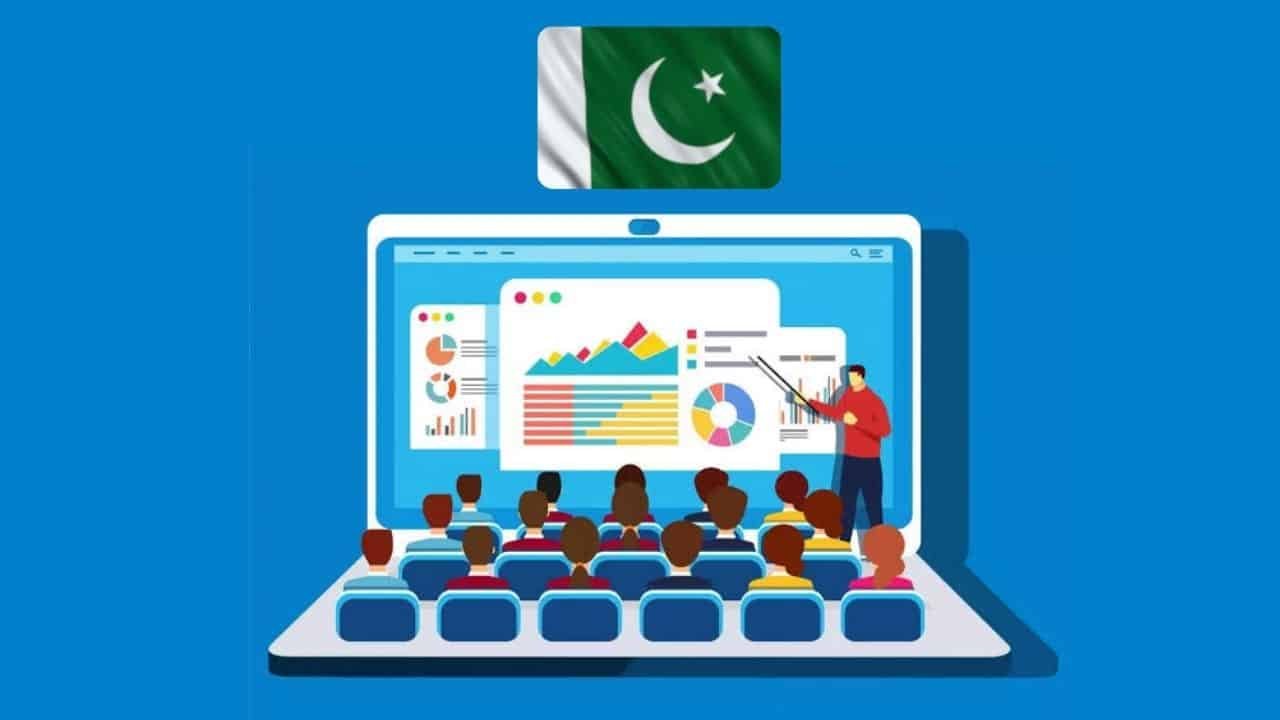
    Among the developing member countries of the Asian Development Bank (ADB), Pakistan ranks as the least prepared nation for digital education, according to the ADB’s report titled “Towards Mature Digital Education Ecosystems, the Digital Education Readiness Framework.” 

    The report underscores several areas where Pakistan needs improvement, including low internet connectivity (only 34.1 per cent of households are connected), slow fixed broadband speeds, high fixed line broadband costs, and limited rural electricity access.

    In contrast, Uzbekistan stands out as the most prepared country for digital education, closely followed by Indonesia. On the flip side, Pakistan is the least ready, with Fiji following suit. 

    Across all five evaluation pillars, the “Providers” category shows the lowest performance, with six out of the ten DMCs categorised as “initial” in readiness, including Cambodia, Bangladesh, the Kyrgyz Republic, Mongolia, Pakistan, and Fiji (in descending order of scores). The remaining four countries are classified as “emerging” in readiness, comprising Indonesia, the Philippines, Viet Nam, and Uzbekistan.

    The gap between the model country’s normalised score and the highest-scoring country is a significant 45 points. While the 10 DMCs manage to keep mobile broadband costs relatively low as a per centage of GNI per capita, there is considerable variation in fixed broadband costs. 

    Cambodia, Indonesia, and Pakistan emerge as the least affordable in this aspect, while Bangladesh, Mongolia, and Uzbekistan offer more cost-effective solutions.

    In terms of urban electricity access, most countries excel, with nearly 100 per cent of urban households having access to electricity. Rural electricity access in the 10 DMCs ranges from 90 per cent to 100 per cent, with Pakistan lagging behind at just 41.3 per cent of rural households lacking access to electricity.

    Households with TV coverage are relatively high across the board, averaging 81.7 per cent. Cable TV subscriptions per 1,000 individuals vary from low to moderate among the countries studied, with Pakistan having the highest subscription rate.

    Pakistan’s National Education Policy for 2017–2025 focuses on enhancing ICT access in schools, using ICT to improve teaching quality and student learning, and developing complementary ICT approaches. However, it lacks clarity on access to devices.

    Teacher training in ICT skills, particularly for online education delivery, is lacking. Although teachers do create their own educational content, it tends to be basic, such as documents and presentations. Internet quality varies, with schools having some limitations in handling heavier content, while higher education and TVET teachers enjoy better quality.

    Institutional support for teachers in delivering online education requires improvement, particularly in schools, where paper-dependent systems are prevalent. Students in Pakistan exhibit reasonable proficiency in digital skills, but access to devices at home is limited, with smartphone access being the primary means.

    The utilisation of private EdTech platforms for conducting classes or interacting with students is quite low among teachers. Pakistan also has a relatively small share of ICT graduates among tertiary education graduates.

    Pakistan, as a partner state of the Global Partnership for Education (GPE), has utilised GPE grants for tech tools to deploy teachers where needed and introduced apps for teacher attendance in certain regions. These initiatives aim to support distance learning across the country.


  • MIT offers 2,000 free online courses, here are 7 of the best ones

    MIT offers 2,000 free online courses, here are 7 of the best ones

    The Massachusetts Institute of Technology (MIT) is one of the most prestigious universities in the world. The institute currently offers 2000 free online courses with different time durations. You can do them online, so all you need is good access to the internet.

    In these online courses, MIT is offering courses that are the essential need of every learner and can be seen as life changers for those who take part in the courses. Entrepreneurship, art and craft, machine learning, coding, and programming are included in the modules.

    MIT wants to spread knowledge and encourage new ideas, and these courses help them do that. They let people from all walks of life learn from top MIT professors and explore the latest research and subjects.

    MIT’s free online courses are great for lifelong learning and personal growth. They give you the freedom to learn at your own pace and choose what you want to study. You can fit your learning around your schedule, whether you’re working, taking care of your family, or doing other things. The online format makes it easy for everyone to join in and learn, no matter where they are. MIT is using technology to make education accessible and exciting for everyone.

    Here are the 7 Best of the 2000 courses offered my MIT

    1. MIT’s Introduction to Computer Science and programming using python

    Time Duration: 9 weeks

    If you want to learn about computer skills and programming and you have the nose to learn the skilled languages, this course is for you. This introductory course focuses on breadth rather than depth; you will learn about Python, simple algorithms, testing and debugging, and data structures. You’ll also get an informal introduction to algorithm complexity.

    1. Becoming an Entrepreneur

    Time Duration: 6 weeks

    Learn the business skills and startup mindset needed to embark on your entrepreneurial path from the premier program for aspiring entrepreneurs, MIT Launch.

    1. Design Thinking for Leading and Learning

    Time Duration: 6 weeks (self-paced)

    A hands-on course for education leaders to learn about design thinking and explore how it can transform classroom learning and school communities.

    1. Art, Craft, Science

    Time Duration: NA

    Also through MIT OpenCourseWare, students can examine crafts or, artworks that are created to be used as well as viewed through historical, theoretical, and anthropological lenses. Professor Heather Paxson examines the historical and contemporary creation, consumption, commodification, and value of crafts. Ultimately, students should be able to apply the same tools to form and articulate their own ideas about crafts.

    1. Supply Chain Analytics

    Time Duration: 15 weeks

    Master and apply the core methodologies used in supply chain analysis and modeling, including statistics, regression, optimization and probability – part of the MITx Supply Chain Management MicroMasters Credential.

    1. Block Chain and Money

    Time Duration: NA

    This course is for students wishing to explore blockchain technology’s potential use—by entrepreneurs and incumbents—to change the world of money and finance. The course begins with a review of Bitcoin and an understanding of the commercial, technical, and public policy fundamentals of blockchain technology, distributed ledgers, and smart contracts. The class then continues on to current and potential blockchain applications in the financial sector.

    1. Machine Learning with Python

    Time Duration: 14 weeks

    An in-depth introduction to the field of machine learning, from linear models to deep learning and reinforcement learning, through hands-on Python projects. — Part of the MITx MicroMasters program in Statistics and Data Science.