Tag: #doctor

  • ‘Marriage is very important but not the end game’: Sajal Aly

    ‘Marriage is very important but not the end game’: Sajal Aly

    Powerhouse Sajal Aly is an inspiration to many fans, not just for her performances but also for being remarkably level headed.

    The actress recently gave an interview to Fuchsia Magazine at the launch event of Zard Patton Ka Bun. The conversation turned to society’s expectations, and Sajal did not hold back.

    “Marriage is often pitched as the endgame for a woman in our society, but that’s not the truth. Marriage can be a beautiful and important part of a woman’s life, but it’s not the ultimate goal. What marriage should be is a support system, and that’s only possible if you find a supportive partner. A woman should always seek independence through education and never lose her sense of self.”

    She also shared that, unlike her character Meenu, she never dreamed of becoming a doctor when she grew up. ‘I like always, connected deeply with the character of Meenu and loved being a part of a socially relevant show. Meenu’s story is so important, and I felt honored to bring it to life,” she remarked.

    The toughest part of the show for her? Surprisingly, riding the bicycle. “The bike was too big and I fell down a few times. I was scared and hurt, but I didn’t give up,” she said.
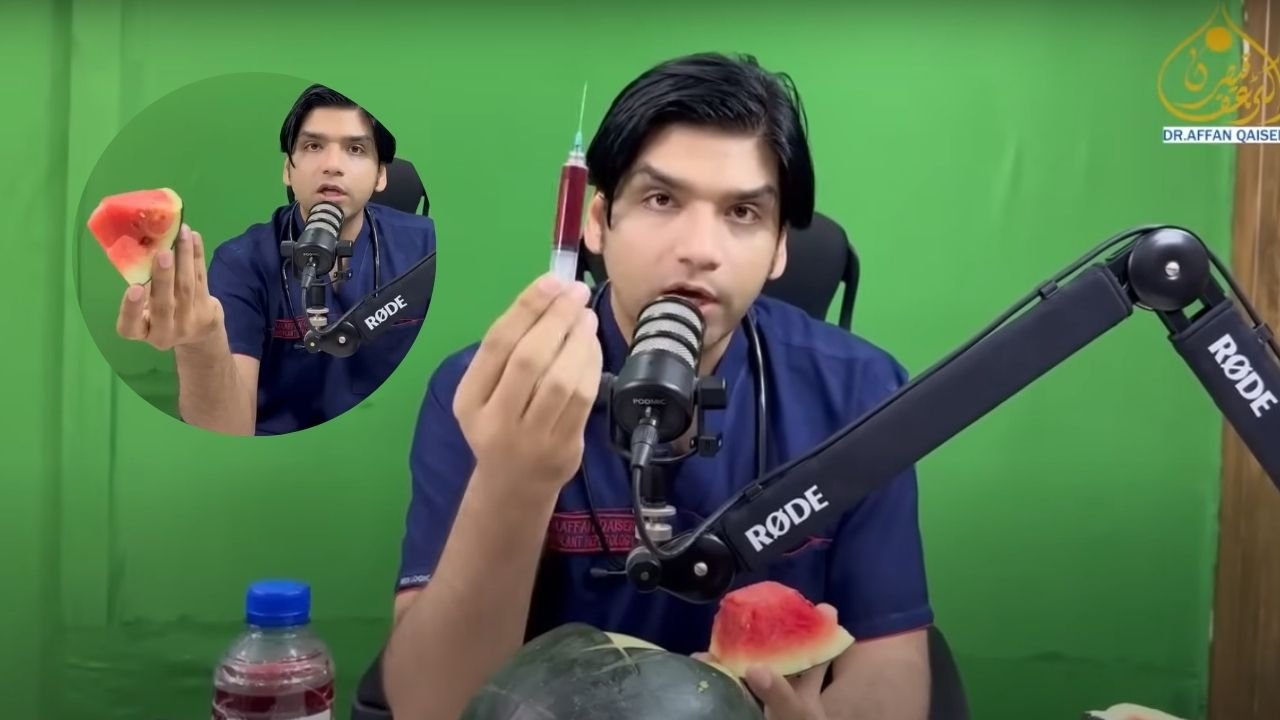
  • Farmer slams Dr. Qaiser for targeting watermelons

    Farmer slams Dr. Qaiser for targeting watermelons

    Dr. Affan Qaiser, a doctor from Multan is known on social media for videos that are usually part social commentary and many times, factually incorrect.

    In his latest video, he raised the issue of “adulterated watermelons” i.e. injecting watermelons with chemicals in order to give them the red colour that consumers accept as a sign of the fruit being sweet.

    The video was followed by criticism as people debunked the supposed myth — particularly farmers.

    One farmer pointed out that today, in the age of social media, everyone is a supposed expert in everything, adding that while Dr. Qaiser gives his two cents on everything, he doesn’t realise how his claims can be detrimental for certain people.

    He also said that Qaiser should instead focus on his profession i.e. doctor, and talk about the exploitation by medical labs and pharmaceutical companies instead of farmers.

    A couple days later, Dr. Qaiser released another video, justifying his claims with online articles while also pointing that he never put the blame on farmers.

    Who is Dr. Qaiser?

    Dr. Affan Qaiser and his partner-in-crime – his wife, Nazish Butt -are widely followed on social media.

    As internet personalities, apart from explainers, they also host podcasts and interviews.

    Time and again, people have criticised Dr. Qaiser for having a holier-than-thou attitude while being hypocritical all the same. For example, he persistently and strongly disapproves eating out in efforts to encourage a healthy diet yet simultaneously, he and his wife have often been seen at restaurants.

    But he is mostly known for his criticism of the widely loved Pakistani snack: samosa.

    According to Dr Qaiser, the samosa is an “atom bomb of 400 calories”, and that samosas are fried in poor quality oil.

  • Recklessly drifting BMW lands doctor in jail

    Recklessly drifting BMW lands doctor in jail

    A doctor has been apprehended and his BMW confiscated by the police for reportedly causing significant damage to recently constructed infrastructure in Defence Housing Authority, Karachi, with his allegedly drifting car.

    The incident, which occurred in Bukhari Commercial Area, resulted in substantial harm to the area’s development, according to a senior police official.

    Dr Salman is currently being interrogated as his BMW was allegedly involved in the incident.

    The police revealed that two luxury cars were involved in the drifting, one of which belonged to the detained doctor, while efforts are under way to apprehend the owner/driver of the other vehicle.

    The complaint, filed by a sub-engineer of the Cantonment Board Clifton (CBC), highlighted the negligence of the drivers, who caused damage to the official infrastructure through overspeeding and drifting, and then abandoned their vehicles at the scene.

    The incident, which occurred on April 12, follows a similar event on April 10 involving another unidentified car and driver. Both incidents have led to the registration of FIRs against the drivers underSections 279 and 427 of the Pakistan Penal Code.

  • Hajra Yamin opens up about battling Dengue fever and Hepatitis

    Hajra Yamin opens up about battling Dengue fever and Hepatitis

    Hajra Yamin, the talented theater and film actor, began her acting journey on stage. She has starred in popular Pakistani dramas like ‘Mohabbat Chor Di Maine’, ‘Jindo’, ‘Jalan’, but is also recognized for her outspoken views on various social issues.
    Recently, Hajra appeared on Nadia Khan’s latest Ramadan show on Green Entertainment where she talked about her experience of feeling helpless when she got sick with dengue fever.

    “Two years ago, I caught Dengue fever from a set, it was the second time I got infected. All my tests were coming back negative. A doctor gave me antibiotics, which caused hepatitis A. My liver got damaged. During Dengue fever, you can’t take antibiotics because they react badly. At that time, COVID was also at its peak. I was so sick, I was choking when I called the doctor, who immediately suggested I go to the emergency room. None of my friends helped me; strangers took me to the hospitals.”

    She also added, “Those who claim they are Sufi are the most fake people.”

  • Saudi court orders media to publicly disclose identity of harasser doctor

    Saudi court orders media to publicly disclose identity of harasser doctor

    A Saudi court has sentenced a doctor to five years in prison after he was found guilty of harassing a nurse, ordering the media to publicise the case and expose the harasser.

    The doctor was reportedly a Syrian who sexually harassed a Filipino nurse.

    Hospital management sent the issue to Public Prosecution which led to an extensive investigation, proving the doctor guilty of misconduct.

    The arrest was made without any delay after solid proof against the doctor and legal proceedings were initiated right away.

    In criminal court, the doctor was initially ordered to to pay SR5,000 in fine and sentenced to one year in prison but then the Court of Appeal increased the sentence to five years.

    In addition to the prison sentence, the Saudi court also issued an order to publicly disclose the doctor’s name.

  • Fallout of cheating scandal: MDCAT test to be conducted again

    Fallout of cheating scandal: MDCAT test to be conducted again

    Fall out of the cheating scandal of the Medical Dental College Admission Test (MDCAT) continues, with the government of Khyber Pakhtunkhwa announcing that it will again conduct the test following the insistence of candidates.

    Chief Education Secretary Arshad Khan presented a report regarding MDCAT in the supervisory cabinet meeting presided over by Chief Minister Khyber Pakhtunkhwa Muhammad Azam Khan.

    After discussing the report in the meeting, it was decided to conduct the test again within six weeks under the supervision of Khyber Medical University.

    On this occasion, caretaker information minister Barrister Feroze Jamal Kakakhel told the media in a briefing that the forensics of the gadgets seized from more than 200 students in MD CAT will be carried out.

    The minister said that samples of all the gadgets have been sent to Islamabad, to clean the systems from duplication and prevent such incidents.

    Previously, Peshawar police arrested seven suspects, including the mastermind “facilitating” cheating in MDCAT.
    City police also received several complaints of some students cheating via Bluetooth devices and more equipment.

    Additionally, 74 candidates, including men and women have also been arrested and 19 cases have been registered at eight police stations in the provincial capital.

    The case

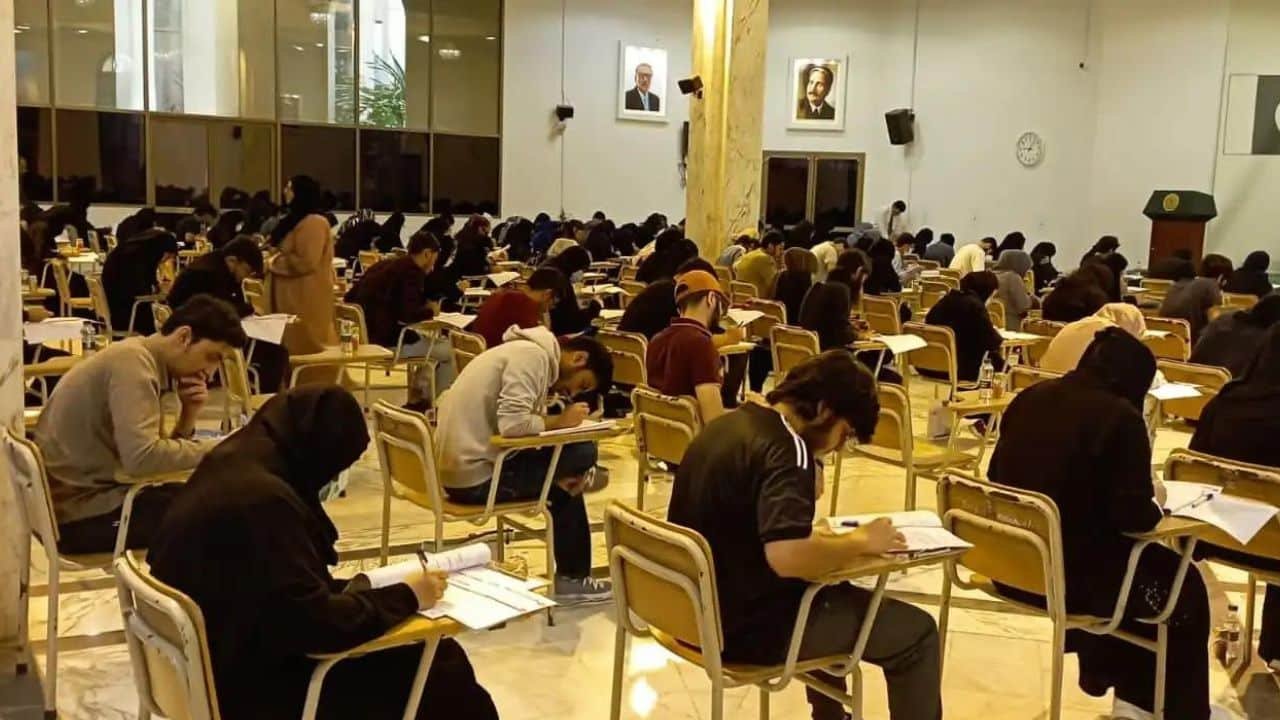
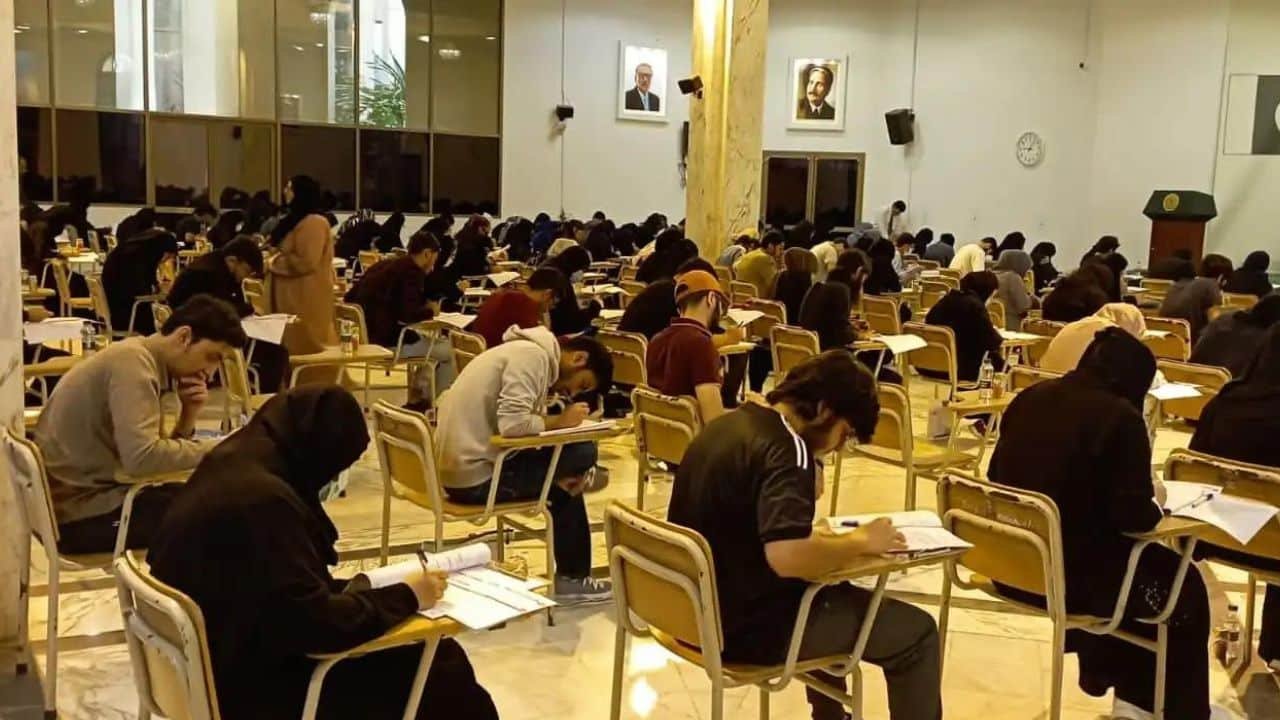
    Dozens of candidates had been caught cheating in the Pakistan Medical and Dental Council (PMDC) MDCAT exams conducted in a number of cities on September 10.

    Over 40 candidates, including 20 female candidates, were arrested in Peshawar while 10 were taken into custody in DI Khan.

    All of the detainees were said to be using Bluetooth to cheat in the test. And as reported by Geo, DI Khan police sources claimed that VIP passes were issued to the candidates for which a hefty amount was paid to take the exam through dishonest means.

    Students and parents filed complaints to the Human Rights Cell in Peshawar regarding the results and integrity of the system which were then sent to the PHC chief justice.

    The applicants asserted that approximately 200 students were caught using Bluetooth devices during the examination.

  • Over 80,000 errors in medical prescriptions reported

    Over 80,000 errors in medical prescriptions reported

    On World Pharmacists Day 2023 on Tuesday, The News highlighted that 80,000 prescription errors have been reported in the past year at major health centres in Islamabad, Lahore and Karachi.

    Prescription errors means that doctors either prescribed wrong medicine, incorrect dosage, or did not take into consideration the interaction between drugs, a potentially fatal error.

    “Of these 80,000 prescription errors, 96% errors were accepted and recognized by the prescribing physicians and surgeons and they rectified their prescriptions in consultation with clinical pharmacists to ensure patient safety”, Sardar Shabbir Ahmed, President of Pakistan Pharmacists Association (PPA), told a ceremony to mark the World Pharmacists Day 2023.

    He also highlighted that prescription error is the sixth leading cause of death in developed countries like America as 7000-9000 people die every year due to this mistake.

    He urged that there is an urgent need to “introduce clinical pharmacy services at all the public and private health facilities to prevent deaths and disabilities due to medication errors and adverse drug reactions”.

    A solution for that, as Shabir Ahmed provided, is pharmacovigilance centers across the country that will keep the prescription procedure in check by detecting, monitoring and preventing “adverse drug reactions” and keep patients safe.

  • MDCAT candidates caught cheating via Bluetooth

    MDCAT candidates caught cheating via Bluetooth

    Dozens of candidates have been caught cheating in the Pakistan Medical and Dental Council (PMDC) MDCAT exams conducted in a number of cities on Sunday.

    Over 40 candidates, including 20 female candidates, were arrested in Peshawar while 10 were taken into custody in DI Khan.

    All of the detainees were said to be using Bluetooth to cheat in the test. And as reported by Geo, DI Khan police sources claimed that VIP passes were issued to the candidates for which a hefty amount was paid to take the exam through dishonest means.

    Moreover, police received reports of MDCAT paper getting leaked via Bluetooth devices.

    Initially, FIRs were lodged at police stations Sharqi, Faqirabad and Pahari Pura. All the 43 candidates were later released on personal surety and will be produced before the court on September 11.

    Khyber Pakhtunkhwa (KP) Chief Secretary has issued instructions on tracking down government officials involved in cheating and to bring the facilitators to justice. He also asked the IT Board and higher education department to ameliorate their test strategy.

  • 31 cities accommodate more than 180,000 MDCAT candidates

    31 cities accommodate more than 180,000 MDCAT candidates

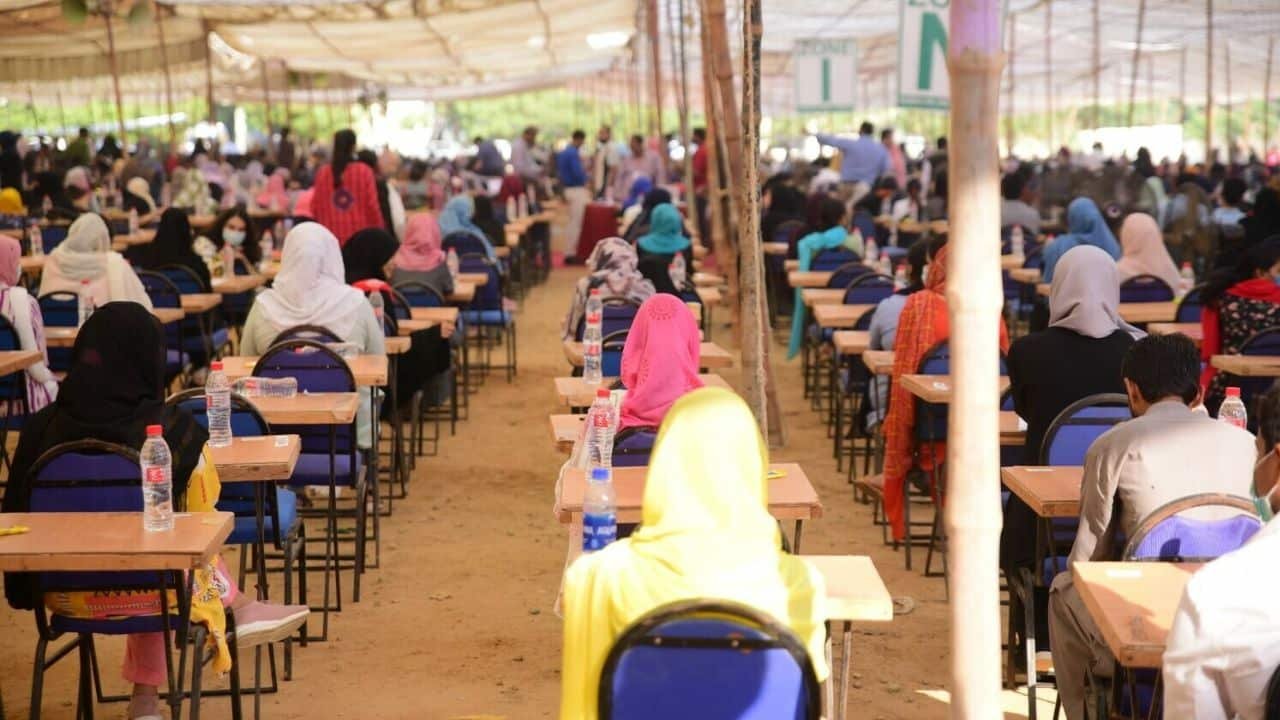
    Pakistan Medical and Dental Council (PMDC) conducted this year’s MDCAT on Sunday. The paper-based exam took place in centres across the country.

    PMDC President Professor Dr Rizwan Taj said that a total of 180,534 students from Pakistan appeared in the MDCAT exam. 180,151 registered candidates appeared in national venues whereas 382 candidates appeared at two international centres; 185 candidates in Dubai and 197 candidates in Saudi Arabia.

    Punjab hosted 66,875 candidates, Sindh 40,528, Khyber Pakhtunkhwa 46439, Balochistan 9,230, Gilgit 926, Azad Jammu and Kashmir 4,036 and Islamabad 12,118.

    The candidates were accommodated in 31 different cities including Islamabad, Rawalpindi, Lahore, Multan, Faisalabad, Bahawalpur, Gujranwala, Sahiwal, Sialkot, DG Khan, Sargodha, Gujrat, Faisalabad, Karachi, Jamshoro, Dera Ismail Khan, Malakand, Nawabshah, Swat, Swabi, Peshawar, Mardan, Kohat, Bannu, Abbottabad, Quetta, Gilgit, Muzaffarabad, Huripur, Larkana, Mansehra, and Mirpur.

    Dr. Taj pointed that special assistance had been provided to candidates with special needs or handicaps to fill out answer sheets.

    As per the spokesperson of the Sindh Medical University, MDCAT results will come out after around one week.

  • Hyderabad woman suffers vision impairment after using phone in the dark

    Hyderabad woman suffers vision impairment after using phone in the dark

    Indian doctor Sudhir Kumar has shared details of a case on Twitter where a woman began suffering from vision impairment for one and a half year. Her symptoms included seeing bright flashes of light, dark zig zag lines and some times, the inability to see or focus on objects.
    In a lengthy Twitter thread, he said that the 30 year old woman had quit her job as a beautician to take care of her specially-abled son, which is when she picked up the habit of scrolling through her phone for several hours at night with the lights switched off.

    “I reviewed the history. Symptoms had started after she quit her job of a beautician in order to take care of her specially abled child. She picked up a new habit of browsing through her smartphone for several hours daily, including >2 hours at nights with lights switched of.”

    After this, the doctor revealed that it was clearly a case of ‘smartphone vision syndrome’ which occurs after long term usage of tablets, phones or computers which can cause disabling optical symptoms.

    “The diagnosis was obvious now. She was suffering from smartphone vision syndrome (SVS). Long-term use of devices such as computer, smartphones or tablets can cause various eye-related disabling symptoms, referred to as computer vision syndrome (CVS) or digital vision syndrome.”

    The doctor had advised the woman to reduce her use of phones and only use it when it is completely necessary. Now, 18 months later the woman’s eyesight has been restored and she no longer sees flashes of light or zig zag lines.

    Using this case as an example, he advised his followers to reduce phone usage to take care of their bodies better. His two reminders were:

    1 Take 20-second break, every 20 min, to look at something 20 feet away, while using a digital screen (20-20-20 rule).

    2 Avoid looking at screens of digital devices for long, as it can cause severe and disabling vision-related problems.