Tag: dollar shortage

  • IMF’s disapproval of budget raises odds of default and economic fallout for Pakistan

    IMF’s disapproval of budget raises odds of default and economic fallout for Pakistan

    In a recent report, the International Monetary Fund (IMF) expressed criticism of Pakistan’s latest budget, increasing the likelihood that the lender may withhold the much-needed aid before the bailout programme concludes at the end of June.

    According to Bloomberg, this development could lead to a severe dollar shortage in the first half of the upcoming fiscal year, potentially resulting in a higher chance of default, lower growth, and increased inflation and interest rates.

    The IMF’s critique of the budget stems from its belief that it does not adequately address the need to broaden the tax base and includes a tax amnesty. The current foreign currency reserves of Pakistan stand at $4 billion. However, with approximately $900 million in debt repayment due this month, the reserves will deplete by the end of June unless the expected IMF aid materialises.

    The country faces the challenge of repaying an additional $4 billion between July and December, which cannot be rolled over. Given the projected reserves falling below $4 billion at the start of fiscal year 2024, default seems highly probable, according to the report titled “Pakistan Insight.”

    The absence of an IMF programme would significantly limit the options for obtaining fresh external funding. The report suggests that negotiations for a new bailout agreement with the IMF are unlikely to commence until after the elections in October. Furthermore, even if an agreement is reached, actual aid disbursement under a new programme would not occur until December.

    In the meantime, Pakistan must focus on conserving dollars by restricting import purchases and maintaining a surplus in its current account balance to fulfill its obligations. To avert default in the first half of fiscal year 2024, the country will also need to seek assistance from friendly nations.

    The report warns of severe consequences for Pakistan’s economy if the anticipated IMF aid is not received by the end of June. Import restrictions will need to remain in place, and the State Bank of Pakistan is expected to raise interest rates above the current level of 21 per cent to further reduce demand for imports and preserve foreign exchange reserves.

    The report’s base case assumes that the State Bank of Pakistan will maintain its current policy stance until December, but that prediction relies on the assumption of IMF aid arriving by the end of June.

    Continued import restrictions and a weaker Pakistani rupee are likely to contribute to higher inflation in fiscal year 2024 compared to current forecasts. It is projected that inflation will average around 22 per cent, while increased borrowing costs and limitations on importing raw materials will further hamper production and dampen consumption.

    In addition, if the expected IMF aid does not materialise this month, the report predicts that Pakistan’s growth in fiscal year 2024 will be much weaker than the current forecast of 2.5 per cent.

    Furthermore, the higher interest rates resulting from the aid shortfall will lead to increased debt servicing costs for the government. The report reveals that approximately half of the fiscal year 2024 budget is allocated to debt servicing, exacerbating the country’s fiscal challenges.

    With the IMF aid hanging in the balance, Pakistan faces a critical period in its economic trajectory, where strategic financial decisions, reliance on friendly nations, and stringent economic measures will be essential to avoid further complications and ensure stability in the future.

  • Commercial importers forced to suspend food and drink imports due to dollar shortage

    Commercial importers forced to suspend food and drink imports due to dollar shortage

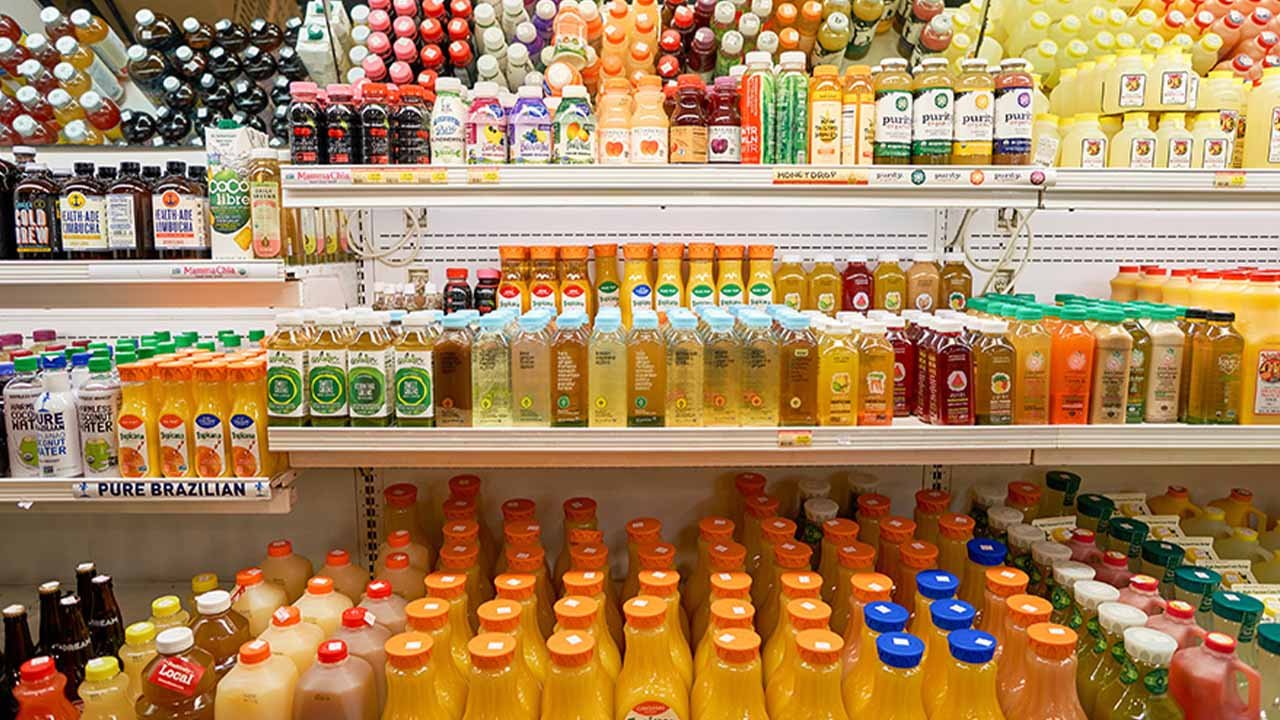
    In a significant development impacting the country’s economy, commercial importers in Pakistan have announced their decision to suspend the import of all eatables and beverages starting from June 25. The move comes as a result of the unavailability of dollars, with banks refusing to provide the necessary foreign currency to importers.

    The decision was taken following a comprehensive discussion among members of the Karachi Wholesale Grocers Association, represented by Secretary Farhat Siddique. In a statement issued by the association, it was revealed that all importers have been instructed to inform their indenters not to dispatch any shipments after June 25. Importers will only be responsible for the clearance of goods that have either arrived at the port or are en route. No shipments dispatched after June 25 will be cleared for entry.

    According to Geo, one of the major concerns highlighted by the association is the mounting number of containers stranded at the port due to the lack of foreign currency. Importers are currently facing fines and other charges as a result. The statement further criticised the State Bank of Pakistan (SBP) for its failure to provide the much-needed foreign exchange, citing its policies as detrimental to the country’s economy.

    This recent development comes at a time when the coalition government is grappling with a balance of payments crisis and striving to combat soaring inflation, which reached a record high of nearly 38 per cent last month. With foreign exchange reserves barely enough to cover a month’s worth of imports, the situation has prompted restrictions on imports and delays in opening letters of credit, severely impacting various sectors across the country. As a result, none of these sectors have been able to meet the growth targets set for the fiscal year 2022-23.

    The implications of the shortage of dollars and the subsequent halt in food and beverage imports are far-reaching, potentially affecting the availability and affordability of essential commodities for consumers. The government and relevant authorities will need to address the foreign currency shortage promptly and implement measures to stabilise the economy, restore confidence, and mitigate the impact on businesses and consumers alike.

    As the situation unfolds, stakeholders and policymakers will be closely monitoring the developments and seeking viable solutions to tackle the ongoing challenges faced by the country’s economy.

  • ‘We are unable to serve new customers’: Pak Suzuki announces booking suspension for all motorcycles

    ‘We are unable to serve new customers’: Pak Suzuki announces booking suspension for all motorcycles

    Pak Suzuki Motor Company (PSMC) stated on Thursday that it had halted taking reservations for motorbikes until further notice due to issues with manufacturing and procurement following the consecutive closures of its automobile assembling factories caused by an ongoing inventory crisis.

    “Under the present economic circumstances, import-based supply chain constraints and uncertain production possibilities, we are unable to serve new customers,” the company said in a letter to dealers.

    The suspension of reservations would start today.

    “We will, therefore, stop bookings of our motorcycle products from January 20, 2023, for the time being. However, bookings will resume as the situation becomes favourable to serve fresh customers.”

    With the rupee falling and inflation at decades-high levels, Pakistan’s economy has collapsed along with a simmering political crisis, but disastrous floods and a worldwide energy crisis have added to the strain.

    Almost all industries, including the automotive sector, have been slowed down by a lack of imported components and materials, and an alarmingly large number of businesses have been forced to cease operations.

    As Pakistan struggles with a dire foreign exchange crisis, thousands of containers filled with basic food supplies, raw materials, and medical equipment have been held up at the Karachi port.

    According to Express Tribune, banks are refusing to issue fresh letters of credit for importers due to a shortage of needed dollars, which is hurting an economy already under pressure from high inflation and weak growth.

  • Exchange companies suggest higher US dollar rate to increase remittances

    Exchange companies suggest higher US dollar rate to increase remittances

    The government has been advised by the Exchange Companies Association of Pakistan (ECAP) to “set” the dollar rate to lessen currency market volatility as the country fights a severe economic crisis and declining foreign exchange reserves.

    The general secretary of ECAP Zafar Paracha said in a statement on Monday, “It is advised to fix the rupee/dollar exchange rate for export-import bills and remittances”. He further said these remittance proceeds could be received by banks and money changers at a fixed rate of Rs240 per dollar.

    Pakistani rupee closed at Rs228.34 per US dollar, compared with the previous close of Rs228.15 in the interbank market. In the open market, the local unit was trading at Rs238.75 against the greenback.

    Paracha suggested the government to set the rate of Rs240 per dollar for overseas Pakistanis and for inward remittance.

    He expects that by making the change, the official channel would be strengthened, remittances would increase, Hundi/Hawala would decline, and eventually, the grey market would vanish.

    According to Paracha, the exchange rate between the dollar and the local currency has hit Rs267 to Rs270. The offer could be made at Rs228 against/ the dollar in order to obtain exporters’ revenues. Additionally, the rate for importers would be determined by the weighted average of the exporter and home remittance rates. He said that it would help remittances and exporters.

    It will boost the nation’s foreign exchange reserve, encourage exporters to bring dollars, and strengthen the exchange companies’ remittances division.

    The country received $14.1 billion in remittances during the first six months (July-December) of the current fiscal year, a decline of 11.1 per cent from a year earlier.

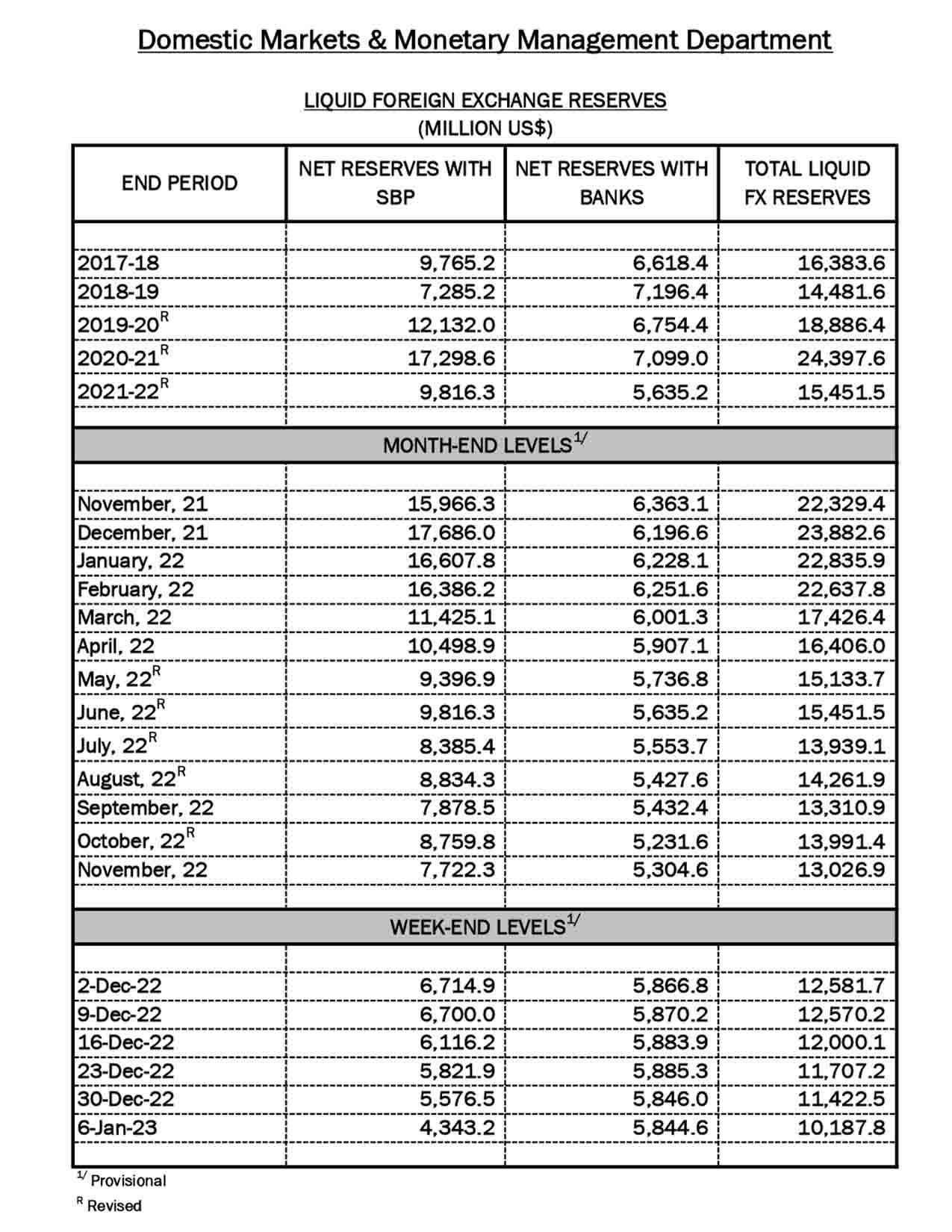
    As of January 6, Pakistan’s foreign exchange reserves at the State Bank of Pakistan fell by $1.2 billion to $4.3 billion, just enough to fund three weeks’ worth of imports.

    Due to significant repayments of foreign debt and a lack of external funding, which have severely reduced Pakistan’s foreign reserves and resulted in ongoing dollar shortages, the country is currently facing a balance of payments crisis.

  • Export industry is one of the highest priorities of govt: Ishaq Dar

    Export industry is one of the highest priorities of govt: Ishaq Dar

    Federal Minister for Finance and Revenue Ishaq Dar on Monday said that the government will make it easier for all exporters to import the raw materials, components, and accessories they need to meet their demands, including five previously zero-rated export-oriented sectors.

    “Export industry is one of the highest priority of our government,” the minister wrote on Twitter.

    “Five (previously) zero-rated export-oriented sectors and all other exporters will be given complete facilitation for import of raw material, parts, and accessories to meet their export requirements,” Dar added.

    The announcement comes as the country battles a dire foreign exchange crisis and industries, notably exporters, struggle to get their Letters of Credit (LC) issued

    At Karachi port, thousands of containers containing raw materials, food items, and medical supplies are stranded due to a shortage of dollars.

    Banks are refusing to grant fresh letters of credit for importers due to a shortage of needed dollars, which is undermining an economy already under pressure from high inflation and weak GDP.

  • SBP-held foreign exchange reserves dropped to 9-year low of $4.34 billion

    SBP-held foreign exchange reserves dropped to 9-year low of $4.34 billion

    The State Bank of Pakistan’s (SBP) foreign exchange reserves fell to $4.34 billion, its lowest level since February 2014, due to a lack of dollar inflows from the International Monetary Fund (IMF) or friendly nations.

    The SBP disclosed on Thursday that due to the repayment of external debt, its reserves fell by $1.23 billion during the week ended January 6.

    The country has been experiencing a severe dollar shortage, which is having a negative impact on the capacity to import even food and industrial raw supplies. The country doesn’t have enough dollars, according to the most recent status of foreign exchange reserves, to pay for even one month’s worth of routine imports.

    Data showed that commercial banks held $5.84 billion in net foreign currency reserves, while the overall amount of liquid foreign exchange reserves was $10.18 billion.

    Ever since the beginning of 2022–2023, reserves have been rapidly decreasing. In the upcoming months, analysts predict rising inflation and limited industrial output as manufacturing is constrained by the scarcity of imported raw materials.

    According to Geo, United Arab Emirates (UAE) will roll over the existing loan of $2 billion and give an additional $1 billion loan, which should stabilise the reserve position in the coming days.

    As the government strives to reduce imports amid a dollar shortage, the reserves, which fell to their lowest level since February 2014, would now only provide import coverage of 0.82 month.

  • Pakistan continues to face liquidity crunch despite IMF programme’s revival

    Pakistan continues to face liquidity crunch despite IMF programme’s revival

    Even though the International Monetary Fund (IMF) programme has resumed after a seven-month hiatus, Pakistan continues to struggle with a major dollar liquidity crunch as the catastrophic floods have exacerbated the macroeconomic conditions.

    According to Geo, since many politicians and economists advocated for Pakistan to ask the IMF for a Rapid Financing Instrument (RFI) or Natural Calamity Response-related Funding Facility, the Pakistani government has not yet submitted a new request in anticipation of the Washington-based international lender’s unenthusiastic response.

    After being put on hold in February 2022 by the previous PTI-led government’s provision of unfunded fuel and energy subsidies, the IMF project under $6.5 billion was restarted in late August.

    Since then, there has been pressure on Pakistan’s currency; nevertheless, the recent devastating floods have hurt the economy, contrary to what experts had anticipated would happen with the restart of the IMF programme.

    The rupee has dropped 9 per cent against the US dollar in recent days due to intense pressure on the currency rate.

    According to reports, the issue has gotten worse as demand for imports has multiplied and there are not enough dollars in the country. Pakistan’s macroeconomic risks are not going away without greater dollar inflows.

    The early estimates of damages have now increased to almost $18 billion as a result of the severe flooding, with Pakistan’s agriculture industry taking the biggest hit.

    The worst agricultural performance will put pressure on rising import demand for commodities, and if Pakistan cannot attract the appropriate levels of dollar inflows, food shortages may occur in the ongoing financial year.

    In contrast to the projected aim of 3.9 per cent for the current fiscal year 2022–2023, the agriculture growth could remain zero or perhaps turn negative.