Tag: Dollar

  • Pakistani rupee witnesses biggest single-day decline against dollar in more than two decades

    Pakistani rupee witnesses biggest single-day decline against dollar in more than two decades

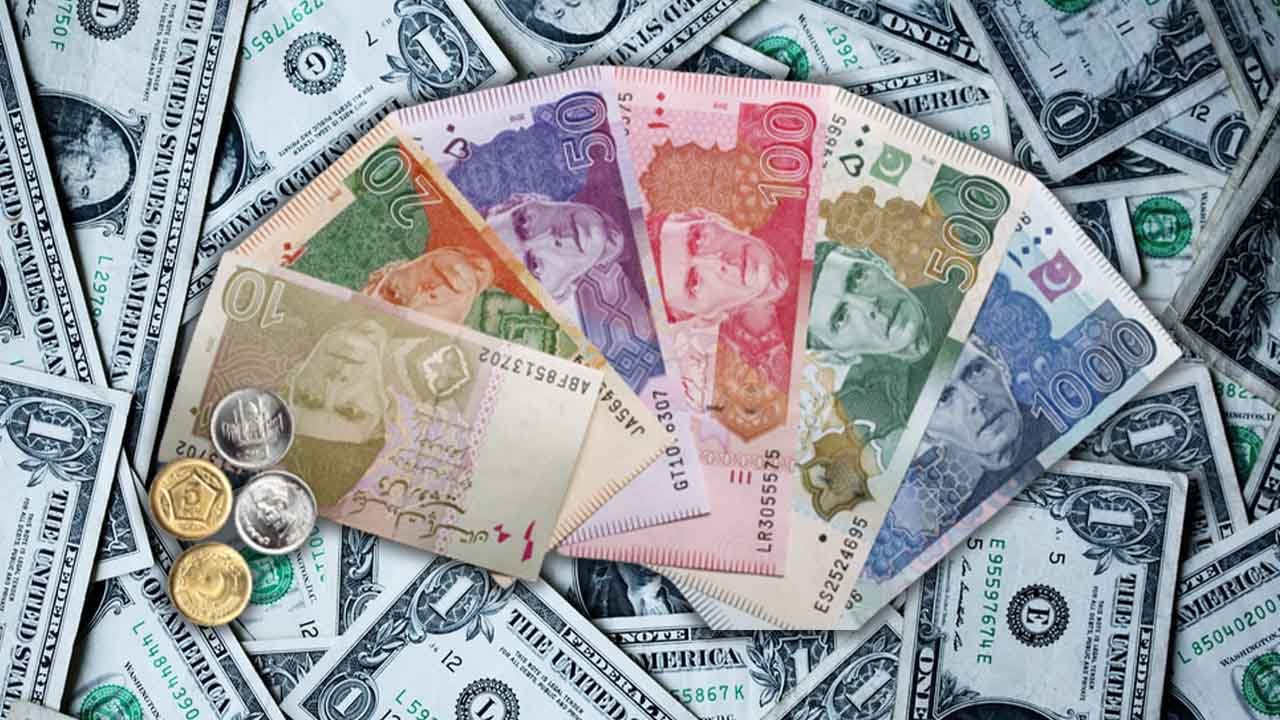
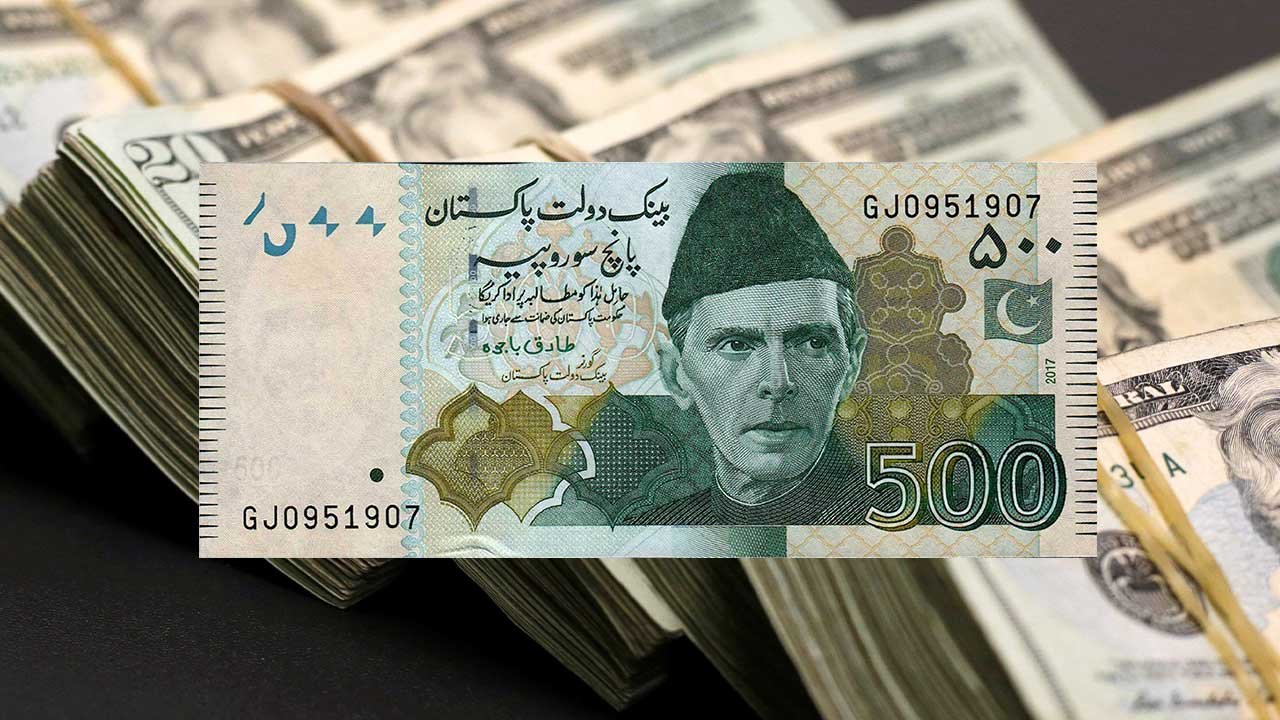
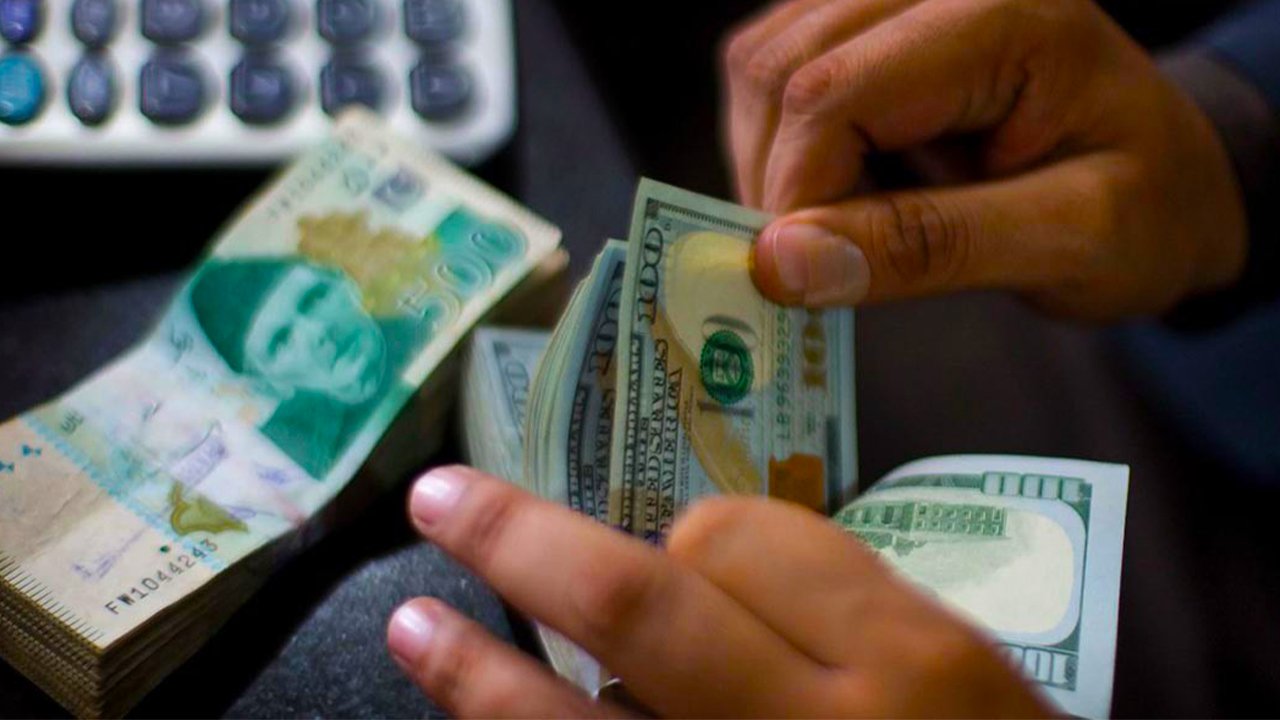
    Pakistani rupee dropped significantly against the US dollar in the interbank market on Thursday, as it fell more than 9 per cent during the intraday trade. Around 1:30 PM, the dollar’s intraday quote was Rs254.75, which represents a depreciation of Rs23.86.

    According to Ismail Iqbal Securities, “This is the largest single-day decline in both absolute and percentage terms, at least since 2000.”

    Earlier in the day the local unit was trading under Rs231.

    Experts predicted that as Pakistan attempted to meet the International Monetary Fund’s (IMF) requirements to renew its bailout programme, the local currency would depreciate significantly in the coming days.

    While speaking to Brecorder, the Head of Research at Ismail Iqbal Securities Limited, Fahad Rauf, said it seems like the rupee has been let go today.

    “This is a market-driven rate,” Rauf said. “This is a sign that we are moving closer to reviving the stalled IMF programme.”

    The market expert said the development was much-needed, as capping the interbank rate only led to the creation of the grey market. He said that the development will improve the greenback supply to a significant extent.

    On Wednesday, the rupee registered a loss for the 26th successive session against the dollar to settle at Rs230.89, a decrease of Re0.49 or 0.21 per cent.

    Pakistani rupee on Thursday fell 9.61 per cent or Rs24.54 to a shocking all-time low of Rs255.43, according to the State Bank of Pakistan (SBP).

  • Exchange companies remove cap on dollar-rupee exchange rate to abolish grey market

    Exchange companies remove cap on dollar-rupee exchange rate to abolish grey market

    The exchange companies have decided to stop artificially keeping Pakistani rupee (PKR) overvalued against US dollar in the open market and let the rupee-dollar exchange rate depreciate to its actual value.

    Pakistani rupee may steadily lose value until it reaches the level of the grey market in a few days, according to reports.

    The black market price of local currency is currently between Rs250 and Rs260 per US dollar, although traders had artificially kept the rate at Rs238 till Tuesday.

    “The association has decided to remove cap on rupee-dollar exchange rate,” Exchange Companies Association of Pakistan (ECAP) President Malik Bostan said in audio and video messages after chairing a zoom meeting on Tuesday.

    “The move would help eliminate black currency markets, increase flow of foreign currencies to the dealers and available to public (for international travelling, education and hospital fees and etc.”

    He said that in the interest of the country, traders voluntarily opted to restrict the exchange rate. But the choice led to an underground market for cash that seemed to be more detrimental to the country.

    “People were buying dollars from open market (at Rs238) and selling in black market (at Rs250-260), making it a business to mint profit,” he said, adding no one was coming to the dealers’ counters to sell foreign currency which resulted into drying up supplies on the other hand.

    According to ECAP General Secretary Zafar Paracha, the decision to abolish the exchange rate ceiling will aid in the eradication of the black market and restore the inflow of foreign money from the illicit system into the legitimate one.

    Additionally, the government has been urged by the International Monetary Fund (IMF) to relinquish control over the rupee-dollar exchange rate in the interbank market and allow market forces to decide the rate while taking the demand and supply of US dollars into account.

    Accordingly, it is anticipated that the local currency would also reach Rs250-260 in the interbank market as compared to the US dollar.

    Pakistan technically has three currency markets, including the interbank, open, and black markets. As a result, each of the three markets is providing a different rate.

    The black currency market was formed after Finance Minister Ishaq Dar tried to keep the currency artificially overvalued at Rs180–200 to the US dollar after returning to the ministry in late September 2022.

    The currency, therefore, appreciated to Rs218 in the early days of October from its all-time low of Rs240 the first time in late July 2022 and the last time in September 2022.

    Dar opened an investigation against the commercial banks, blaming them for market forces that had artificially devalued the currency to Rs240 per dollar.

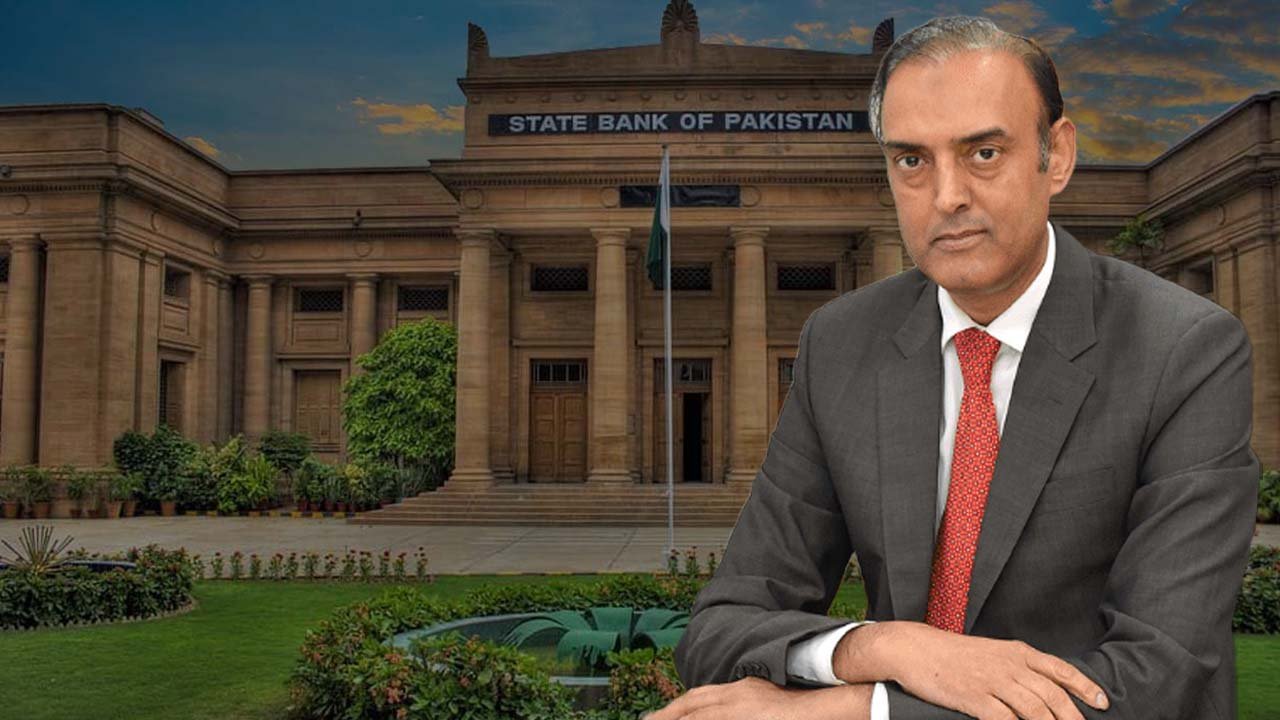
    Governor State Bank of Pakistan (SBP) Jameel Ahmed said that the central bank has completed the investigation against 13 commercial banks allegedly involved in rupee-dollar parity manipulation.

    “The central bank is all set to take action against them in days (instead weeks and months). The action could be fiscal or regulatory one,” he added.

  • Pakistan has ample fuel stocks available: PSO denies reports of petrol, diesel shortage

    Pakistan State Oil (PSO) on Friday denied all the rumours about the shortage of fuel reserves and said that there is ample stock of petroleum products in the country.

    The Ministry of Energy and Oil & Gas Regulatory Authority (OGRA), according to the PSO spokesman, is keeping an eye on the general situation regarding product availability by other oil marketing companies to ensure that the nation’s supply chain is maintained smoothly.

    He claimed that PSO would continue to supply the nation with petroleum products on an uninterrupted basis, that there is enough gasoline and diesel in the country, and that 80,000MT and 90,000MT, respectively, of each have arrived at Karachi Port.

    According to the OGRA spokesperson, local oil marketing firms and refineries are also working to meet the demand for petroleum products.

    The Oil Companies Advisory Council (OCAC) requested last week that the federal government step in right away to guarantee the prompt issuing of lines of credit to import petroleum products in order to prevent a fuel scarcity in the nation.

    On behalf of oil marketing companies (OMCs) and refineries, the OCAC sent a letter outlining the difficulties resulting from the opening of letters of credit (LCs) for the import of petroleum products being delayed.

    There haven’t been many oil shipment cancellations as a result of the LCs being closed.

    Mogas, High-Speed Diesel (HSD), and 650,000 MT of crude oil must all be imported into Pakistan on a monthly basis for a total cost of about $1.3 billion.

  • Dollar inflows from next week will increase foreign exchange reserves: SBP governor

    Dollar inflows from next week will increase foreign exchange reserves: SBP governor

    Governor of the State Bank of Pakistan (SBP) Jameel Ahmad expressed hope on Wednesday that the situation of Pakistan’s foreign exchange reserves will improve as the country is anticipated to receive capital inflows in the coming days.

    “We are expecting inflows from next week onwards, which would reduce pressure on our foreign exchange reserves,” the SBP governor said.

    Ahmad reaffirmed his commitment to addressing the concerns of manufacturers and claimed that the nation’s foreign exchange reserves have reached very low levels. But as projects in the pipeline start to take shape, he predicted, “we will see a boom in reserves, which will increase our ability to support businesses.”

    According to the most recent SBP data, the central bank’s foreign exchange reserves dropped significantly by $1.23 billion, to a critically low level of $4.34 billion. SBP’s reserves are at their lowest point since February 2014.

    The country held $10.19 billion in liquid foreign reserves, and commercial banks kept $5.85 billion in net foreign reserves, according to Brecorder.

    To the dismay of many importers and firms in Pakistan, who claimed these limits as the cause for closing or curtailing operations, the SBP restricted imports earlier this year due to the low level of reserves.

    According to Ahmad, the SBP facilitated shipments under the headings of necessities, energy, industries focused on exports, agricultural inputs, deferred payment / self-funded imports, and imports for projects focused on exports that were almost finished.

    Prior to this, the central bank made the decision to remove import restrictions beginning on January 2, 2023.

    “Our capacity to export will build up only after we complete export-oriented projects, thus we have facilitated the timely completion of these projects,” he said.

    “We want to facilitate all the industries, however, we can only do so under our given capacity of inflows. We do not produce dollars locally, they come through exports, remittances, and inflows from lenders,” said Ahmed.

    “We are focusing on improving our capacity, and are also taking administrative intervention to bring our imports on a reasonable level,” he added.

    The SBP chief said evaluating the Letter of Credit (LC) is a time-consuming exercise. “We have cleared 33,000 LC cases,” he said.

    He added that steps had been done to control the current account deficit and that the central bank was aware of issues facing the business community.

    The governor stated that an action plan in this regard will soon be launched after the SBP carefully evaluates the business community’s ideas.

    He assured the business community that the central bank will ensure the approval of 365 days or over LCs from banks. “Similarly, if you have arranged a project loan, and yet the LCs are not being opened, the SBP will ensure it,” he said.

    The SBP had recommended banks to compel the retention of 35% of their export receipts in special foreign currency accounts in order to encourage IT companies and independent contractors to bring their foreign exchange earnings into the nation.

    “We are hopeful that the problems of the IT sector will be addressed, and as a consequence, our exports from the IT sector will increase,” said Ahmed in his address.
  • Export industry is one of the highest priorities of govt: Ishaq Dar

    Export industry is one of the highest priorities of govt: Ishaq Dar

    Federal Minister for Finance and Revenue Ishaq Dar on Monday said that the government will make it easier for all exporters to import the raw materials, components, and accessories they need to meet their demands, including five previously zero-rated export-oriented sectors.

    “Export industry is one of the highest priority of our government,” the minister wrote on Twitter.

    “Five (previously) zero-rated export-oriented sectors and all other exporters will be given complete facilitation for import of raw material, parts, and accessories to meet their export requirements,” Dar added.

    The announcement comes as the country battles a dire foreign exchange crisis and industries, notably exporters, struggle to get their Letters of Credit (LC) issued

    At Karachi port, thousands of containers containing raw materials, food items, and medical supplies are stranded due to a shortage of dollars.

    Banks are refusing to grant fresh letters of credit for importers due to a shortage of needed dollars, which is undermining an economy already under pressure from high inflation and weak GDP.

  • Experts predict gold price may reach Rs200,000 per tola soon

    Experts predict gold price may reach Rs200,000 per tola soon

    On Wednesday, the price of gold reached another record high as it continued its upward trend. The price of precious yellow metal in Pakistan is currently higher than the global market.

    Gold prices increased by Rs900 per tola and Rs772 per 10 grammes, respectively, according to the All-Pakistan Sarafa Gems and Jewellers Association (APSGJA). These prices now stand at Rs188,600 and Rs161,694 respectively.

    Owing to the Pakistani rupee’s depreciation against the US dollar during the present cycle and the lack of US dollars, traders predict that the price of gold would reach Rs200,000 per tola.

    According to market analysts, the $6–$8 billion inflow from multilateral and bilateral creditors will pop Pakistan’s gold price bubble.

    Silver’s price per tola, however, stayed constant at Rs2,150. The cost of 10-gramme silver remained essentially constant at Rs1,843.27.

    Gold prices increased more than 1 per cent on Wednesday, reaching their highest level since mid-June due to a weaker rupee and mounting predictions that the Federal Reserve will raise interest rates gradually rather than aggressively.

    The markets have now priced in the possibility that the central bank may raise interest rates by a full 50-100 basis points on January 23 after Pakistan’s December inflation data was revealed on Monday.

    Greater interest rates increase the opportunity cost of owning non-yielding metal, despite the fact that gold is regarded as a safe investment during times of uncertainty and a hedge against higher inflation.

  • Pakistani rupee remains unchanged for the 4th time in a week

    Pakistani rupee remains unchanged for the 4th time in a week

    The Pakistani rupee (PKR) once again remained unchanged versus the US dollar in the interbank market during the final trading session of the week.

    It is worth noting that this is the fourth time that the local currency has shown a 0.00 per cent change this week. The only change witnessed in the rupee’s value was reported by the State Bank of Pakistan (SBP) on December 1, when the rupee appreciated only 0.12 per cent to close at Rs223.69.

    The rupee closed at Rs223.69 against the US dollar on Friday. On a weekly basis, the PKR registered an increase of 0.11 per cent against the greenback.

    Additionally, the SBP’s foreign exchange reserves declined by $327 million every week, totaling $7.5 billion as of November 25, 2022.

    For Pakistan, which has been frantically pursuing dollar inflows to meet its balance-of-payments needs, the reserve position is crucial. A low reserve level puts pressure on the currency, which has recently only experienced stability.

    As data showing increased US consumer spending in October encouraged investor hopes that the peak in interest rates was on the horizon, the dollar held steady on Friday but was pinned down near 16-week lows against a basket of major currencies.

    A stronger US dollar limited gains as oil prices, a major metric of currency parity, edged up in Asian trading on Friday on expectations for further easing of COVID controls in China, which might aid in the recovery of demand in the world’s second-largest economy.

  • PKR remains largely stable after Pakistan receives $500 million

    PKR remains largely stable after Pakistan receives $500 million

    Strangely, the Pakistani rupee (PKR) did not increase or decrease at the time of closing on Tuesday. The PKR’s closing rate was Rs223.95 and showed no change from its previous closing rate of Rs223.95.

    The local currency only declined by one paisa on Monday.

    After falling for four straight days, the rupee’s slide against the US dollar came to an end today. The market confidence was bolstered by the Finance Division’s earlier confirmation of receiving $500 million from the Asian Infrastructure Investment Bank (AIIB).

    What do Pakistanis think of the current dollar exchange rate?

    Some Twitter users claim that the government is controlling exchange rates, which will harm the economy in the long run since exporters are reluctant to accept payments made through banking channels and question why they should sell dollars to banks for less when the open market price is more than Rs250.

    The daily dollar rate announcement from SBP, according to a Twitter user, has lost all relevance because “the rate is controlled and not determined by market forces. The hefty difference between the interbank rate and the open market rate proves the point.”

  • Pakistani rupee depreciates for the 5th day in a row, settles at Rs222.67

    Pakistani rupee depreciates for the 5th day in a row, settles at Rs222.67

    The Pakistani rupee (PKR) lost 0.12 per cent on Thursday in the inter-bank market, continuing its downward trend against the US dollar.

    The rupee dropped by Rs0.26 and ended the day at Rs222.67. The rupee has decreased by Rs1.25, or 0.56 per cent, over the last five trading sessions.

    PKR continued to lose value against the US dollar on Wednesday, falling Rs0.50 (0.22 per cent) to settle at Rs222.41.

    In a significant breakthrough on Wednesday, the State Bank of Pakistan (SBP) promised the Standing Committee on Finance of the National Assembly that action would be taken against banks by the end of the month for allegedly overcharging importers when establishing Letters of Credit.

    The SBP informed the banks in person about the practise and counselled them to rationalise the margins they were charging customers, according to information provided to the committee.

    Additionally, Pakistan’s external debt and liabilities reduced by $3.282 billion from $130.196 billion as of June 30, 2022, to $126.914 billion at the end of September 2022.

    The dollar recovered globally on Thursday as strong US retail data challenged the recent narrative that inflation is declining and US interest rates do not need to increase significantly more.

    The US reported overnight that retail sales increased 1.3 per cent in October, exceeding economists’ expectations of 1.0 per cent, a positive sign but one that dashed expectations for a pause in rate increases.

    The dollar index, which compares the value of the dollar to six important peers, increased 0.18 per cent to 106.46.

    A key indicator of currency parity, oil prices fell on Thursday due to easing geopolitical tensions and worries about Chinese demand, though signs of tighter supply, such as lower US inventories, provided support.

  • Pakistani rupee drops by 0.35% to close at Rs221.43 versus dollar

    Pakistani rupee drops by 0.35% to close at Rs221.43 versus dollar

    As investors await the US Federal Reserve’s decision on the policy rate, the Pakistani rupee (PKR) depreciated by 0.35 per cent against the greenback on Wednesday.

    According to the State Bank of Pakistan (SBP), the local unit appreciated by Rs0.78 and ended the day at Rs221.43.

    The Pakistani rupee enjoyed gains against the US dollar on Tuesday, and it ended the day at Rs220.65 after rising by Rs0.24 (or 0.11 per cent) in the interbank market.

    Gains were recorded when market confidence improved as a result of discussions held by Finance Minister Ishaq Dar with senior bank and exchange company executives.

    However, in a significant development, according to the most recent data released by the Pakistan Bureau of Statistics (PBS) on Tuesday, consumer price index (CPI)-based inflation increased to 26.6 per cent on an annual basis in October 2022 as opposed to an increase of 23.2 per cent in the previous month and 9.2 per cent in October 2021.

    Globally, the US dollar slipped on Wednesday as investors awaited the US Federal Reserve’s policy decision amid speculation it might indicate a slowdown in future rate hikes. The central bank will soon release its policy statement with investors widely expecting a 75 basis points (bps) rate hike, the fourth such increase in a row.

    The dollar index – which gauges the greenback against a basket of six counterparts that includes the yen, euro and sterling – eased 0.2 per cent to 111.28, but was not far below Tuesday’s high of 111.78, the strongest level since October 25. The index has fluctuated widely around the 112 level since its retreat from a two-decade high of 114.78 at the end of September.

    Oil prices, a crucial gauge of currency parity, increased on Wednesday after data from the sector revealed a surprising decline in US oil supplies, indicating that demand is still strong despite sharp interest rate increases that are slowing down global development.