Tag: Dollar

  • Pakistani rupee makes strong recovery against dollar during intraday trade

    Pakistani rupee makes strong recovery against dollar during intraday trade

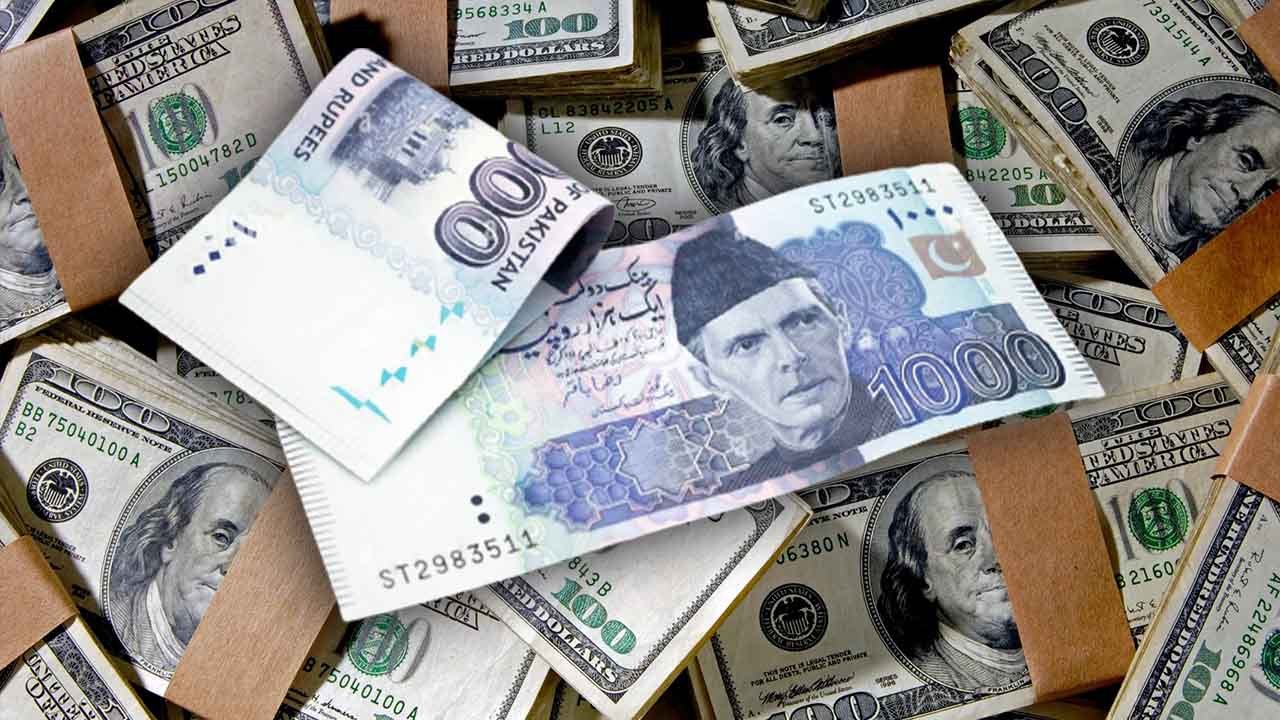
    In the first hours of trading on Monday, the Pakistani rupee advanced significantly versus the US dollar, rising by more than 1.5 per cent.

    In intraday trade, the rupee appreciated by Rs3.66 (1.6 per cent), or around 10:30 am, to Rs235.99 against the US dollar.

    The local unit fared somewhat better the week before after the US Federal Reserve announced raising the main interest rate, ending the week 1.2 per cent weaker versus the US dollar.

    Before eventually snapping a 15-session losing streak to settle at Rs239.65 on Friday, the rupee lost value in four of the five sessions, edging perilously close to its all-time low in the inter-bank market.

    However, Monday’s triumph is the result of political development. Miftah Ismail, the Federal Minister of Finance and Revenue, stated in a statement on Sunday that he will submit his formal resignation after orally resigning at a party meeting in London.

    Ishaq Dar, a senior PML-N leader, would take Miftah’s post as finance minister.

    Dar is largely seen as an advocate for a higher rupee, and experts claim that since he was appointed finance minister, markets have tended to be optimistic on the local currency.

    Furthermore, in another significant step, the nation’s central bank on Friday prohibited ECs for cash sale transactions of $2,000 and above in order to further improve the regulatory regime for Exchange Companies (ECs) and promote the use of banking channels.

    According to the SBP’s new guidelines, ECs must now complete all foreign currency selling transactions against PKRs totaling $2,000 or more through banking channels.
  • Euro drops to two-decade low against the US dollar

    Euro drops to two-decade low against the US dollar

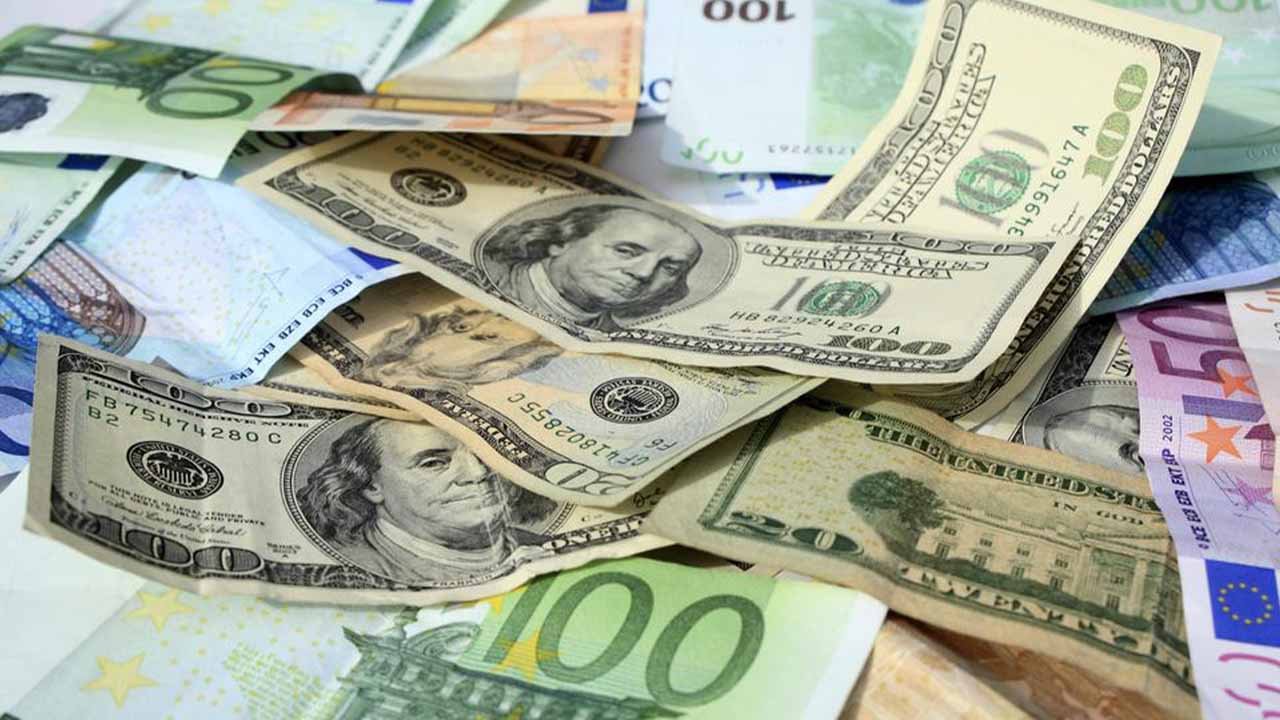
    As the Federal Reserve implemented yet another aggressive interest rate hike in reaction to out-of-control inflation on Wednesday, the US dollar soared to a level that is almost 20 years higher against the euro.

    Only a few months after the euro was become the sole legal money of the 12 member states of the European Union, the euro to dollar ratio reached 0.9814 for the first time since October 2002.

    Prior to the 1800 GMT Fed speech, Wall Street equities were in the green. However, after the statement, they plunged into the red.

    Interest rate projections for the end of 2023 and 2024 in the most recent Fed announcement were higher than anticipated, indicating that the US central bank now believes a longer monetary tightening cycle is necessary in light of inflation trends.

    According to a report from High-Frequency Economics, “Overall, the message from the (Fed) remains hawkish, with the Fed committing to further rates hikes to combat inflation and keep inflation expectations anchored.”

  • Intraday trade: PKR slides to new all-time low of Rs240.30 versus dollar

    Intraday trade: PKR slides to new all-time low of Rs240.30 versus dollar

    On Wednesday, the Pakistani rupee (PKR) maintained its declining trend versus the US dollar for the fourteenth session in a row. In intraday trading, the PKR lost Rs1.09 and fell to Rs240.

    In comparison to its previous closing rate of Rs237.91, the rupee lost 0.42 per cent on Tuesday, ending the day at Rs238.91.

    Fears that Pakistan won’t be able to pay its debts have been raised by floods that have harmed 33 million Pakistanis, caused billions of dollars worth of damage and killed more than 1,500 people.

    One of the poorest performing currencies in emerging economies, the local currency has lost about 9 per cent of its value so far this month due to a variety of causes.

    While Pakistan was able to revive its IMF programme and receive a $3 billion rollover from Saudi Arabia, the record floods have eclipsed everything else and have caused an economic blow of at least $18 billion and possibly as much as $30 billion.

    Experts believe that the heavy flooding and lifting of the import ban have put pressure on the rupee. To address the ongoing economic crisis, Pakistan continues to look for assistance from ally nations and international and bilateral organisations.

  • Pakistani rupee inching towards all-time low once again

    Pakistani rupee inching towards all-time low once again

    In the first hours of trade on Tuesday, the Pakistani rupee (PKR) fluctuated between Rs238 and Rs239 as it lost value versus the US dollar in the interbank market.

    During intra-day trade at roughly 10:20 am, the rupee was quoted at Rs237.99, a devaluation of Rs0.08 or 0.03 per cent versus the greenback.

    In the interbank market on Monday, the local currency fell for the 12th straight session to end at Rs237.91 as pressure on the currency increased due to the expectation of a higher import bill and the globally strong dollar.

    The PKR has continued to lose value after receiving the IMF tranche of $1.2 billion at the beginning of September and has not yet seen a positive session this month.

    According to experts, the country’s borrowing requirements would rise in the wake of the devastating flash floods, which will also boost the cost of imports. As floods destroy standing crops in Sindh and lower Punjab, the country’s borrowing requirements may rise further in the near future.

  • Pakistani rupee crashes against US dollar for 11th day in a row

    Pakistani rupee crashes against US dollar for 11th day in a row

    For the eleventh session in a row, Pakistan’s rupee has lost value versus the US dollar, falling 0.41 per cent on Friday in the interbank market as the dollar gained momentum throughout the world and investors’ concerns about the increasing trade imbalance intensified.

    The rupee dropped by Rs0.96, according to the State Bank of Pakistan (SBP), and ended the day at Rs236.84. The rupee has lost Rs18.24, or 7.7 per cent, overall over the last 11 trading sessions against the US dollar.

    In the interbank market on Thursday, the Pakistani rupee declined against the US dollar for the tenth straight session as investors expected funding from allies and foreign creditors. It ended the day down 0.66 per cent at Rs235.88.

    The local currency increased in value last month as a result of Pakistan fulfilling all previous IMF requirements, which allowed the programme to resume. This development enabled Pakistan to receive $1.17 billion under the Extended Fund Facility (EFF).

    The local currency has recently, however, been under intense pressure once more and is currently hovering close to its all-time low as funding anticipated from allies has not yet materialised.

    Additionally, the State Bank of Pakistan’s (SBP) foreign exchange reserves decreased by $176 million, reaching $8.62 billion as of September 9, 2022, according to information made public on Thursday.

    According to the SBP, the nation possessed $14.32 billion in liquid foreign reserves. Commercial banks held $5.7 billion in net foreign reserves.

    Globally, the dollar remained close to recent highs on Friday as Treasury yields rose and the demand for the currency persisted on expectations that the Federal Reserve would need to raise rates further to control inflation.

    The US dollar index, which compares the value of the dollar to a basket of other currencies, increased to Rs109.69, which is not far from its two-decade high of Rs110.79.

    In the meantime, oil prices—a crucial factor in determining currency parity—were largely stable on Friday, but they were headed for a weekly decrease due to worries about sudden interest rate hikes that would likely slow global economic growth and fuel demand.

  • Intraday trade: PKR resumes downward spiral against US dollar, falls to Rs223

    Intraday trade: PKR resumes downward spiral against US dollar, falls to Rs223

    The Pakistani rupee was trading between Rs222-223 on Wednesday as losses against the US dollar persisted in the early hours of trading.

    During intra-day trading, the rupee was quoted at Rs222.49 at roughly 10:30 am, depreciating by Rs1.07 or 0.48 per cent against the US dollar.

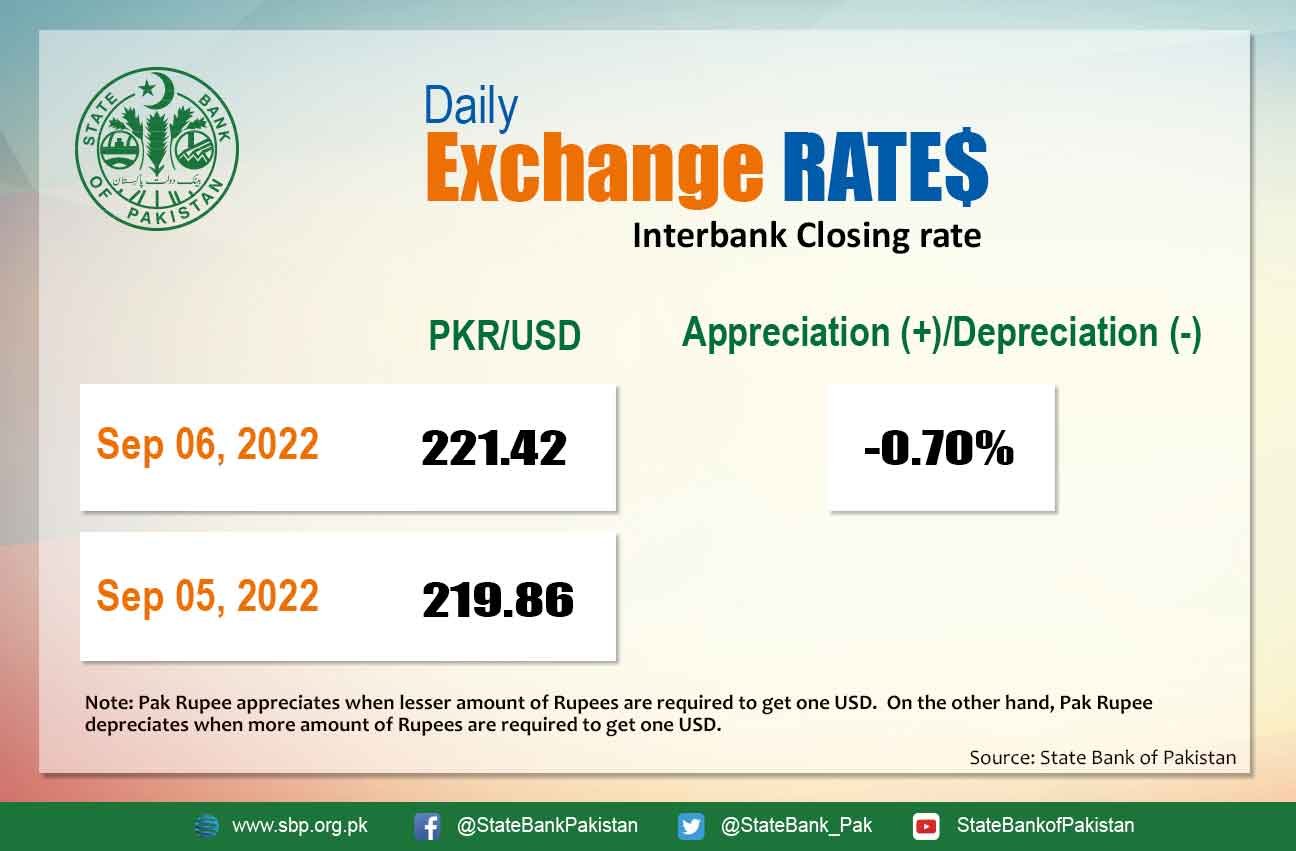
    The local unit lost for the third session in a row on Tuesday, falling down Rs1.56 or 0.7 per cent against the dollar to close at Rs221.42.

    According to analysts, the government’s decision to let the duty-free import of edible commodities to promote food security after floods severely damaged the nation’s agriculture sector has led to a spike in demand for dollars on the local market.

    However, the dollar is also strengthening globally. On Wednesday, after U.S. economic data supported the notion that the Federal Reserve will continue with policy tightening, it reached fresh highs against the yen and the Australian and New Zealand dollars.

    The US dollar index, which compares the value of the dollar to six important rival currencies, increased 0.08 per cent to Rs110.43, remaining close to the 20-year high set on Tuesday of Rs110.57.

    On Wednesday, oil prices, a major factor in determining currency parity, fell more than $1 to their lowest level since before Russia invaded Ukraine as COVID-19 restrictions in the world’s top crude importer China and anticipation of further interest rate increases stoked concerns about a global economic slowdown and a decline in fuel demand.

  • Pakistani rupee extends losses, nearing Rs219 against dollar

    Pakistani rupee extends losses, nearing Rs219 against dollar

    After closing at Rs218.38 on Wednesday, the Pakistani rupee (PKR) dropped further versus the US dollar on Thursday morning during the intraday trade.

    As of 11:00am, the rupee depreciated by Rs0.61 or 0.27 per cent against the US dollar to Rs218.99 during intraday trading.

    It is worth noting that the local unit has been witnessing a downward trend since the beginning of this week. PKR fell on Wednesday for the third straight session showing a decline of 0.33 per cent.

    The fall occurs amid news that Pakistan’s cash-strapped economy may receive support from an investment of $3 billion by the Qatar Investment Authority, one of the biggest sovereign funds in the world.

    Oil prices, a crucial factor in determining currency parity, increased on Thursday as supply fears mounted in the wake of delays to Russian exports, the potential for major producers to reduce output, and the partial suspension of a US refinery.

    US West Texas Intermediate crude increased 42 cents, or 0.4 per cent, to $95.31 a barrel, while Brent crude increased 59 cents, or 0.6 per cent, to $101.81 per barrel.

    On Wednesday, the PKR declined by Rs7 for both buying and selling against the USD on the open market, finishing at Rs227 and Rs229, respectively.

  • Pakistani rupee loses Rs2.01 against dollar to close at Rs216.66

    Pakistani rupee loses Rs2.01 against dollar to close at Rs216.66

    On Monday, the Pakistani rupee (PKR) remained under pressure to start the week, falling Rs2.01, or 0.93 per cent, versus the US dollar in the interbank market.

    The local currency dropped from Friday’s closing rate of Rs214.65 to Monday’s closing rate of Rs216.66 per dollar, according to the State Bank of Pakistan.

    The dollar fluctuated between Rs213-214 during the previous week. It ended at Rs214.65 on Friday after ending at Rs213.98 on Monday. Last week, the rupee lost 0.31 per cent of its value against the dollar.

    The KSE 100-index of the Pakistan Stock Exchange (PSX), on the other hand, experienced a bearish trend on Monday, shedding 443.99 points, or 1.03 per cent, and finishing at 42,826.66 points as opposed to 43,270.65 points on the last working day.

    When compared to the previous trading day, when 306,208,580 shares were traded, a total of 194,667,559 shares were traded on Monday (today). The price of the shares was Rs5.331 billion as opposed to Rs6.393 billion on Friday.

  • Toyota announces price cut for all vehicles

    Toyota announces price cut for all vehicles

    Toyota Indus Motor Company (IMC) has announced a reduction in car prices after the Pakistani rupee’s spectacular comeback against the US dollar.

    It is worth mentioning that Toyota had increased car prices up to Rs3.16 million less than two weeks ago.

    The latest car prices for Toyota’s Completely Knocked Down (CKD) units are listed below:

    Vehicle Old Price New Price Reduction
    Toyota Yaris
    Yaris 1.3 Gli M/T Rs3,799,000 Rs3,539,000 Rs260,000
    Yaris 1.3 Gli CVT Rs4,039,000 Rs3,769,000 Rs270,000
    Yaris 1.3 ATIV M/T Rs3,999,000 Rs3,729,000 Rs270,000
    Yaris 1.3 ATIV CVT Rs4,209,000 Rs3,929,000 Rs280,000
    Yaris 1.5 ATIV X M/T Rs4,309,000 Rs4,009,000 Rs300,000
    Yaris 1.5 ATIV X CVT Rs4,569,000 Rs4,259,000 Rs310,000
    Toyota Corolla
    Corolla Altis 1.6 M/T Rs4,899,000 Rs4,569,000 Rs330,000
    Corolla Altis 1.6 A/T Rs5,139,000 Rs4,789,000 Rs350,000
    Corolla Altis SE 1.6 A/T Rs5,639,000 Rs5,279,000 Rs360,000
    Corolla Altis 1.8 CVT Rs5,679,000 Rs5,269,000 Rs410,000
    Corolla Altis 1.8 Grande CVT Beige Interior Rs6,149,000 Rs5,709,000 Rs440,000
    Corolla Altis 1.8 Grande CVT Black Interior Rs6,189,000 Rs5,749,000 Rs440,000
    Toyota Hilux Revo
    Hilux Revo G 2.8 M/T Rs9,819,000 Rs9,169,000 Rs650,000
    Hilux Revo G 2.8 A/T Rs10,299,000 Rs9,609,000 Rs690,000
    Hilux Revo V 2.8 A/T Rs11,349,000 Rs10,599,000 Rs750,000
    Hilux Revo Rocco Rs11,999,000 Rs11,179,000 Rs820,000
    Toyota Fortuner
    Fortuner G A/T Rs12,489,000 Rs11,579,000 Rs910,000
    Fortuner V A/T Rs14,279,000 Rs13,259,000 Rs1,020,000
    Fortuner Sigma 4 A/T Rs15,069,000 Rs13,969,000 Rs1,100,000
    Fortuner Legender Rs15,839,000 Rs14,699,000 Rs1,140,000
    Toyota cars latest price list effective from 16 August 2022

    The automaker decreased the price of Corolla variants by Rs330,000-Rs440,000. The price of the Corolla 1.6 manual model was reduced by Rs330,000, from Rs4.899 million to Rs4.569 million. After a reduction of Rs350,000, the Corolla 1.6 automatic model is now priced at Rs4.789 million.

    Similar reductions were made in the price of Yaris variants, which were reduced between Rs260,000 and Rs310,000. The Yaris 1.5 CVT received the largest price reduction in the aforementioned category, falling by Rs310,000 to a new price of Rs4.259 million from its previous price of Rs4.569 million.

    The price of Hilux Revo was reduced between Rs650,000 to Rs820,000. While the invoice of Revo V AT Rocco dropped from Rs11.999 million to Rs11.179 million, the cost of Revo G MT reduced from Rs9.819 million to Rs9.169 million.

    Read more: Cheapest new cars to buy in Pakistan

    IMC also reduced the prices for the Fortuner models between Rs910,000 and Rs1.14 million.

    After a drop of Rs910,000, the Toyota Fortuner Lo Petrol variant is now offered for Rs11.579 million. The Fortuner Diesel Legender model witnessed a major price decrease, dropping from Rs15.839 million to Rs14.69 million.

  • Pakistani rupee gains Rs2.13 to close at Rs221.91

    Pakistani rupee gains Rs2.13 to close at Rs221.91

    In line with improved market sentiment, the Pakistani rupee (PKR) kept strengthening versus the US dollar, closing at Rs221.91 on Wednesday in the inter-bank market.

    According to the State Bank of Pakistan (SBP), the local currency appreciated by 0.96 per cent or Rs2.13 against the dollar to settle at Rs221.91.

    The uptick on Wednesday marked the seventh straight rebound for the currency, which last month touched an all-time low of Rs239.94 against the US dollar. Since then, it has increased by almost 8 per cent.

    Pakistani rupee significantly increased last week, rising 6.8 per cent to settle at Rs224.04 in the interbank market.

    The rupee maintained its strength throughout the week as Pakistan reported a smaller trade deficit and a significantly lower import bill in July, relieving pressure on the currency that had previously been battered by the dollar.

    The International Monetary Fund (IMF) also stated that the board meeting is tentatively scheduled for late August once adequate financing assurances are confirmed.

    An official source in Abu Dhabi later emphasised in a public statement the UAE’s plan to invest $1 billion in Pakistani businesses across a range of economic and investment sectors, bringing Pakistan one step closer to closing what the IMF refers to as a financial gap.

    Market analysts anticipate significant growth in the upcoming days, assuming Pakistan manages to arrange its finance requirements.