Tag: Dollar

  • Pakistani rupee reaches a new all-time low of Rs190 against the US dollar

    Pakistani rupee reaches a new all-time low of Rs190 against the US dollar

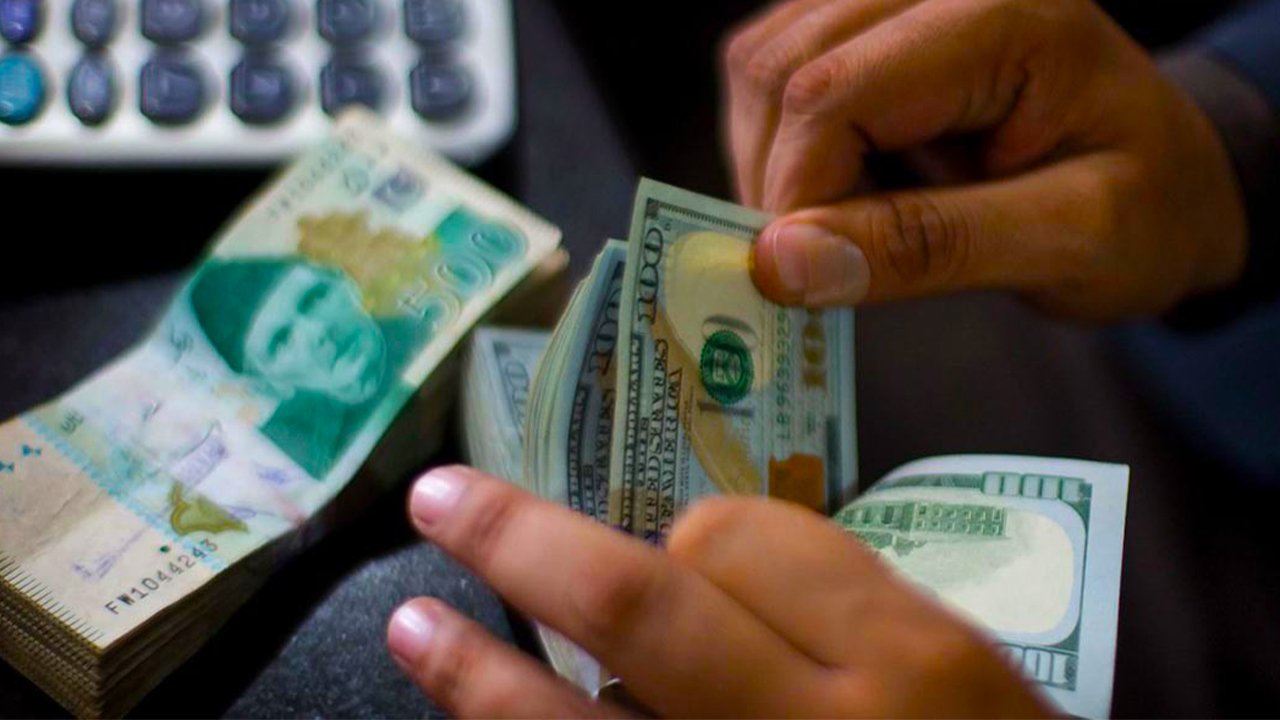
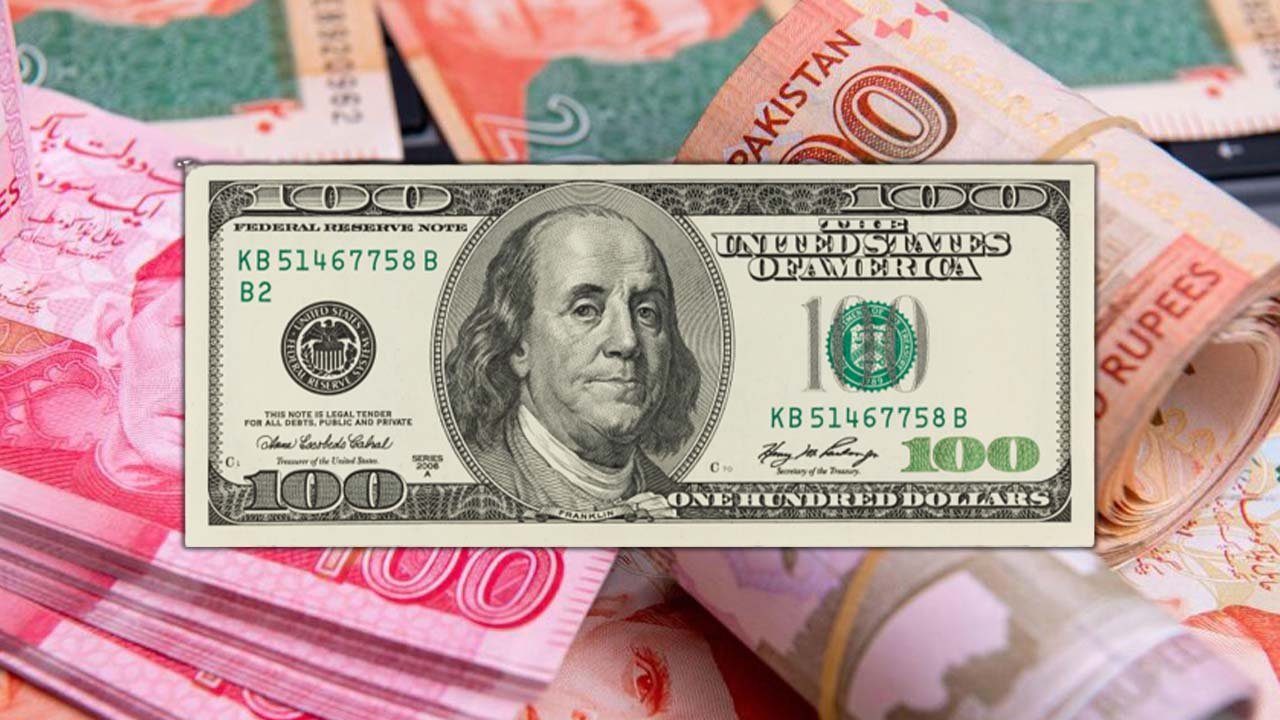
    In the interbank market on May 11, the US dollar soared to an all-time high against the Pakistani rupee (PKR), reaching Rs190.10.

    In the morning. the local currency was trading at Rs189.89 to Rs190.04, with deals reported at Rs190.

    The dollar gained Rs1.44, surpassing the prior day’s finish of Rs188.66. The greenback touched an all-time high on May 11, when it surpassed the Rs189 level.

    It had gone down in the immediate aftermath of the April 11 change of government, but the adjustment soon ran out of steam, and the greenback is now flying again, hitting a new all-time high.

    Read more: CNG prices pushed to Rs140 per kg for sales tax collection

    Experts say the rupee is under pressure because of increased oil import bills and speculation about the Saudi package. Foreign reserves were also under strain due to delays in talks with the International Monetary Fund.

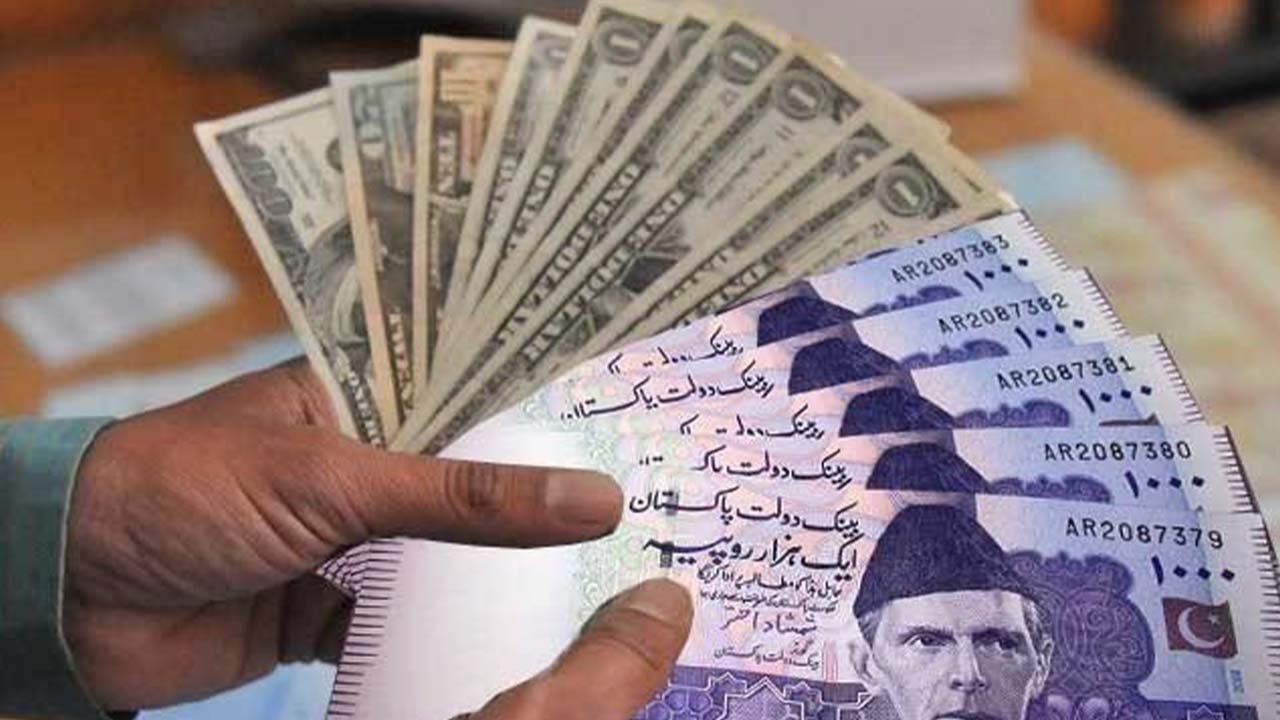
  • 15 lakhs goes missing from passenger’s carry-on on flight from Karachi

    15 lakhs goes missing from passenger’s carry-on on flight from Karachi

    A Pakistani-born United States (US) citizen— Imtiaz Rafiq— lost his cash worth $8,000 (1,514,256) while travelling to Houston from Jinnah International Airport, Karachi via Doha on Qatar Airways reports Geo News.

    As per the Federal Investigation Agency (FIA), the money went missing from Rafiq’s backpack. He claimed that at Doha airport he checked his bag and realised the cash was gone.

    He has registered a complaint and asked for an investigation into the incident.

    According to Rafiq, he doubts that the money was stolen in Karachi as he had removed his backpack from his shoulders twice at the Karachi airport and found the cash in the backpack. He believes it likely happened during the flight from Karachi to Doha.

  • Pakistani Rupee crashes to a record low against US dollar 

    After a fourth consecutive session of losses on May 10, Pakistan’s currency hit an all-time low in the interbank market due to a lack of clarity on foreign cash inflow and a stronger US dollar.

    The rupee ended the day at Rs188.66, down Rs1.13, or 0.60 per cent, according to the State Bank of Pakistan (SBP). After a 0.48 per cent decline on Monday, the rupee finished at Rs187.53. Prior to Tuesday, the PKR’s lowest closing was Rs188.18 on April 7, 2022.

    Oil prices, a key indicator of currency parity, dipped in tumultuous trade on Tuesday as the market weighed the impact of expected European Union penalties on Russian oil against demand concerns stemming from China’s coronavirus lockdowns, a strong dollar, and rising recession threats.

    Read more: Pakistani rupee nearing an all-time low

    Despite the decline, the price of oil remains far above $100 per barrel, a high level for oil-importing nations like Pakistan, which is already grappling with a growing current account deficit and dwindling foreign exchange reserves.

  • Pakistani rupee nearing an all-time low

    Pakistani rupee nearing an all-time low

    On Monday, the Pakistani rupee (PKR) fell for the third consecutive session as depleted foreign exchange reserves and uncertainty over the renewal of the International Monetary Fund (IMF) programme weighed on the local currency.

    The PKR lost 0.48 per cent of its value against the US dollar in the interbank market.

    The rupee ended the day at Rs187.53, down 90 paisas, or 0.48 percent, according to the State Bank of Pakistan (SBP). After a 0.5 per cent decline, the rupee finished at Rs186.63 on Friday.

    Considering the latest decline, the local currency is only 65 paisas away from reaching an all-time low of Rs188.18 on April 7, 2022.

    Oil prices fell on Monday alongside equities, driven down by a strong dollar and demand fears stemming from China’s continued coronavirus lockdowns.

    Read more: Bitcoin falls to lowest since January after stock market

    The key cause driving the rupee’s decline against the greenback, according to Arif Habib Limited Head of Research Tahir Abbas, is uncertainty on the IMF front.

    Uncertainty about the programme led to a surge in selling pressure in Pakistani stocks, which fell throughout the day.

  • Turkey: Food prices surged by 89 per cent, transportation costs increased by 106 per cent

    Turkey: Food prices surged by 89 per cent, transportation costs increased by 106 per cent

    Turkey’s inflation rate skyrocketed to almost 70 per cent last month, creating a substantial challenge for President Recep Tayyip Erdogan, whose unusual economic strategies are frequently blamed for the country’s economic woes.

    Erdogan, defying economic conventional wisdom, insists that major interest rate cuts are essential to reduce spiralling consumer costs.

    Turkey’s consumer price index (CPI) climbed by 69.97 per cent on a year-on-year (YoY) basis in April 2022, compared to 61.14 per cent in March 2022, according to the national statistics agency, indicating a massive increase.

    The transportation industry saw the largest price rises in April, up 105.9 per cent, while food and non-alcoholic drinks cost increased by 89.1 per cent.

    Likewise, lira’s depreciation has quadrupled the cost of energy imports, and international investors are progressively fleeing the formerly emerging economy. Energy price hikes and production constraints have been worsened by Russia’s invasion of Ukraine and the coronavirus outbreak.

    According to economists, Turkey’s yearly inflation rate – the highest since Erdogan’s ruling AKP party took office in 2002 – is entirely due to Erdogan’s unusual economic thinking.

    Read more: Transporters continue to overcharge ahead of Eid-ul-Fitr

    Erdogan has pushed the supposedly independent central bank to reduce interest rates. Despite strong inflation, the bank maintained its benchmark interest rate for the fourth month in a row in April, yielding to criticism.

  • Honda Atlas announces price hike instead of fixing delivery issues

    Honda Atlas announces price hike instead of fixing delivery issues

    Honda Atlas, like its counterpart Indus Motor Company, announced a price hike for the second time in less than two months, increasing ex-factory prices up to Rs170,000, claiming rupee devaluation as the cause for transferring the burden to the consumers.

    The ‘latest generation’ of Honda city in Pakistan is now priced at Rs3,264,000 after getting a hike of Rs135,000. Aspire 1.5 variants of Honda city witnessed a hike of nearly Rs150,000 in their previous rate.

    Meanwhile, Civic prices increased by Rs150,000 across all three variants: the Civic 1.5L CVT, Civic 1.5L Oriel M CVT, and Civic RS 1.5L CVT. The top variant of Honda civic RS 1.5 LL CVT from May 1 will be offered at a price of Rs6,649,000 which was previously sold at Rs6,499,000.

    Honda’s MPV, the BRV, is now priced at Rs4,249,000 after a price increase of Rs170,000. BRV was earlier sold at Rs4,079,000.

    Read more: Toyota Pakistan announces another massive price hike for all cars

    Also, these prices are exclusive of freight charges and any government tax applicable at the time of delivery that will be paid by the consumer.

  • Pakistan’s foreign currency reserves down by $328 million

    Pakistan’s foreign currency reserves down by $328 million

    State Bank of Pakistan (SBP) on April 28, revealed that the central bank’s foreign exchange reserves fell by 3 per cent on a weekly basis.

    The central bank’s foreign currency reserves were $10,558.2 million on April 23, a $328 million decrease from the previous day’s total of $10,885.7 million. according to the SBP, this decline was caused by external debt and other payments.

    Pakistan’s total liquid foreign currency reserves, comprising net reserves held by banks other than the SBP, were $16,668.2 million. Banks held a total of $6,110 million in net reserves.

    SBP’s foreign exchange reserves reached an all-time high of $20.15 billion in the week ending August 27, 2021, after Pakistan received a general allocation of Special Drawing Rights (SDRs) worth $2,751.8 million from the IMF on August 24.

    Pakistan bought $2.5 billion using Eurobonds on March 30, 2021, by offering attractive interest rates to lenders in order to enhance foreign exchange reserves.

    Read more: All banks to remain open this Saturday

    On July 9, 2019, it received the first loan amount of $991.4 million from the IMF, which helped to boost reserves. The IMF released the second loan tranche of approximately $454 million in late December 2019.

  • Pakistani rupee plunges by Rs1.05 against the US dollar

    Pakistani rupee plunges by Rs1.05 against the US dollar

    In today’s interbank session, the Pakistani rupee (PKR) fell by Rs1.05 versus the US dollar (USD), concluding at Rs186.97 per US Dollar, compared to Rs185.92 per USD on April 20.

    The rupee had a tumultuous market session, with an intraday high of Rs187.10 and a lowest of Rs186.25. This depreciation of PKR is attributed to the country’s expanding current account deficit and dwindling foreign exchange reserves. However, the country must pay a significant amount in the final quarter of FY22, putting additional strain on the local unit.

    Pakistan’s currency has lost Rs29.42 versus the US dollar since July 21. According to data published by Mettis Global, the rupee declined by Rs10.45 in CYTD, with the month-to-date (MTD) position showing a drop of 1.87 percent.

    PKR has shed 18.56 per cent versus the US dollar in the previous 52 weeks, with a low of 186.97 today and a peak of 152.27 on May 7, 2021.

    Furthermore, the local currency has lost 10.11 per cent versus the euro since its high on May 5, 2021. Since its high on May 7, 2021, it has declined 13.24 per cent against the pound.

    Read more: PKR continues losing streak against US dollar, sheds Rs1.48

    The PKR slid Rs2.4 against the pound sterling, completing the day at Rs244.4 per GBP, down from Rs241.97 per GBP the previous session. Similarly, the PKR lost three rupees against the euro, closing at Rs204.08 at the interbank today.

  • Gold price jumps Rs900 per tola as Rupee declines

    Gold price jumps Rs900 per tola as Rupee declines

    The price of gold in Pakistan increased by Rs900 per tola as the Pakistani rupee continued its downward trend against the US dollar, crossing the Rs184 threshold in the interbank market once more. The yellow metal increased by Rs900 per tola and Rs771 per ten gramme to Rs133,300 and Rs114,283, respectively.

    Gold fell $15 per ounce on the international market, settling at $1,976 per ounce. When compared to the Dubai market, gold prices in Pakistan are roughly Rs4,000 lower.

    Silver prices in the local market, meanwhile, remained stable at Rs1,520 and Rs1,303.15.

    The rupee declined by 0.54 per cent versus the US dollar, closing at Rs182.54 after winning three paisas and settling at Rs181.55 on Saturday, April 16. During the open market session, the Indian rupee (INR) touched an intraday high of Rs181.00 versus the US dollar.

    Read more: PKR declines against US Dollar after winning for a week

    The consumer market is still torn between those who see gold as a hedge against inflation, growth concerns, and high volatility in other financial markets and those who do not.

  • International oil prices declined by 4%, crashing below $100 per barrel

    International oil prices declined by 4%, crashing below $100 per barrel

    Brent crude slid below $100 for the first time since March 16 amid plans to release huge amounts of petroleum and oil products from strategic storage, and also China’s prolonged coronavirus closure.

    Crude oil was down $4.1, or 3.99 per cent, at $98.68 per barrel. The price of US West Texas Intermediate (WTI) crude fell $4.28 a barrel, or 4.28 per cent, to $94.07 per barrel.

    The International Energy Agency (IEA) recently announced that member countries will release 60 million barrels over the next six months, with the United States matching that amount as part of its 180-million-barrel release announced in March.

    The actions are meant to make up for a shortfall of Russian crude after Moscow was extensively sanctioned for what it claims was a “special military operation” in Ukraine.

    As per JP Morgan analysts, the release of Strategic Petroleum Reserve (SPR) volumes will amount to 1.3 million barrels per day (BPD) over the next six months, enough to cover a 1 million BPD shortfall in Russian oil supplies.

    The release of strategic government oil reserves is projected to relieve some market tightness in the coming months, reducing the likelihood of oil prices rising and re-enforcing near-term supply constraints.

    While this is the largest release since the IEA stockpile was established in 1980, market participants believe it will fail to affect the principles of the oil market and will just delay further increases in production from crucial suppliers.