Tag: domestic consumers

  • OGRA notifies major gas price hike for November

    OGRA notifies major gas price hike for November

    The caretaker government’s decision to implement a gas price increase of over 172 per cent for non-protected domestic consumers has left many shocked and outraged.  

    Starting on November 1, the revised prices are set to impose a significant financial burden on households already grappling with financial difficulties. 

    According to the notification released by the Oil and Gas Regulatory Authority (OGRA), the new gas prices represent a substantial hike across various consumption levels.  

    For instance, customers consuming 100 cubic metres of gas per month will now be charged Rs1,000, up from the previous rate of Rs400. Those using 150 cubic metres will see their monthly costs rise from Rs600 to Rs1,200. 

    On the other hand, the price for a monthly consumption of 200 mmbtu has increased to Rs1,600 from the previous Rs800, and for users consuming 300 mmbtu monthly, the cost has risen to Rs3,000 from Rs1,100. 

    Moreover, the charge for consuming 400 mmbtu of gas per month has gone up from Rs2,000 to Rs3,500. For those using more than 400 mmbtu per month, the new rate is Rs4,000, up from the earlier Rs3,100. 

    This significant and unexpected price surge is anticipated to have a severe impact on household budgets, especially for low-income families who heavily depend on natural gas for cooking and heating. 
  • Winter chills and rising bills: Govt may hike gas tariff by up to 200%

    Winter chills and rising bills: Govt may hike gas tariff by up to 200%

    The interim government is in the process of preparing a significant gas tariff increase proposal, set to be presented to the Economic Coordination Committee (ECC) tomorrow. 

    According to ARY News, the Petroleum Division will lay out a plan for a 200 per cent hike in gas tariffs for various consumer categories, with domestic consumers facing a 172 per cent increase in anticipation of the upcoming winter season.

    The proposal encompasses a broad spectrum of changes, including a 200 per cent price hike for different consumer categories and a staggering 3,900 per cent surge in monthly fixed charges for protected consumers, soaring from Rs10 to Rs400.

     For non-protected consumers, the plan suggests an increment of Rs100 for those using 0.25 cubic metres per month, Rs300 per mmBtu for those using 0.60 cubic metres, and up to Rs1,900 per mmBtu for consumers utilising 300 cubic metres per month.

    Export units may see their rates rise from Rs950 to Rs2,050 per mmBtu, while non-export units might face an increase from Rs1,400 to Rs2,600 per mmBtu. The CNG sector could experience a hike of Rs2,595 per mmBtu.

    For other industries, the suggested rates are Rs2,900 per mmBtu for the cement sector and Rs4,400 per mmBtu for the CNG sector. However, the current rates for power generation units and tandoors are expected to remain unchanged.

    Sources indicate that the caretaker finance minister has called for an ECC session at 4:00 pm on Monday, proposing the implementation of these gas tariff adjustments starting on October 1. 

    Earlier, there were reports from within the finance ministry that the International Monetary Fund (IMF) had urged Pakistan to promptly increase gas tariffs by 100 per cent to address the losses and circular debt in the country’s gas sector.

    The IMF, during a virtual meeting with Pakistan’s finance ministry officials, expressed concerns over the failure to raise gas tariffs on July 1, emphasising that this was a violation of their standby agreement. 

    The IMF further advised the recovery of a Rs46 billion loss incurred by gas companies from July to September. It should be noted that caretaker Finance Minister Dr Shamshad Akhtar is currently in China.

  • SSGC, SNGPL customers face load shedding and low gas pressure

    SSGC, SNGPL customers face load shedding and low gas pressure

    Many households in Pakistan served by the Sui Southern Gas Company (SSGC) and Sui Northern Gas Pipelines (SNGPL) are experiencing low gas pressure or no gas supply in the month of May. SSGC customers are facing seven to eight hours of load shedding, from 10 pm to 5-6 am, while SNGPL residential consumers are encountering a similar situation.

    The SSGC is facing a gas shortfall of 265 mmcfd as its demand is 1,165 mmcfd, but its supply is only 900 mmcfd, including 90 mmcfd of RLNG. The Sui Northern system has also lost 85 mmcfd gas for 12 days due to annual maintenance.

    A spokesperson from SSGC stated that the gas load shedding is being done for seven to eight hours to maintain the gas line pack so that the gas supply can be provided for 16-17 hours. Balochistan is receiving only 109 mmcfd of gas. The Sui Northern system’s situation is also vulnerable due to the suspension of supply from the Nashpa plant for 12 days.

    An official from Sui Northern stated that the gas companies are only providing gas for cooking times as per their agreement with residential consumers and not for 24 hours. However, the gas companies used to supply gas for 24 hours, which was not agreed upon by the domestic consumers.

    According to The News, the Punjab power sector is receiving 605 mmcfd RLNG, while the fertiliser sector is receiving 88 mmcfd. The power sector’s RLNG consumption has reduced to 605 mmcfd due to low temperatures. The government is receiving 900 mmcfd gas, but it has a purchasing capacity of 1,200 mmcfd. Pakistan is receiving RLNG of nine cargoes on long-term agreements, eight from Qatar and one from ENI.

    Despite the decline in RLNG prices to $12-13 per barrel in the international market, Pakistan LNG Limited (PLL) is reportedly unable to purchase spot cargoes due to a dollar liquidity crisis.

  • ‘It’s fake news’: Hammad Azhar says govt never promised gas supply three times a day

    ‘It’s fake news’: Hammad Azhar says govt never promised gas supply three times a day

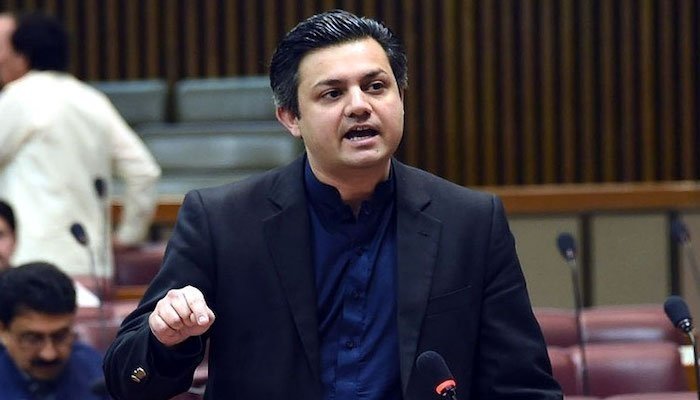
    Federal Energy Minister Hammad Azhar, while discussing Pakistan’s gas crisis on the Geo News‘ programme ‘Naya Pakistan’, said that the media reports stating that the government had ordered gas supply only three times a day was “fake news”.

    “First of all, this fake news [was associated with me] that gas will only be supplied three times a day,” he stated. “I was asked in the Senate about it to which I said the government never made any such commitment simply because it is not possible to do so.”

    The minister said it is not “logistically possible” to cut off gas supply connections in people’s homes numerous times during the day to ensure that gas is available three times a day.

    “We did, however, tell the gas companies to try and prioritise gas pressure for domestic consumers three times a day when people prepare breakfast, lunch, and dinner,” he clarified.

    Earlier in November, the government decided to provide gas to the residential sector only three times a day for cooking purposes throughout December to March to minimise gas shortages in Pakistan.

    “Gas to residential sector shall be provided three times a day for cooking only,” the meeting was informed by the Ministry of Energy (Petroleum Divi­sion), who added that Regasified Liquefied Natural Gas (RLNG) diversion to domestic consumers is to be made bare minimum for stability.

    This was all decided by Cabinet Committee on Energy (CCoE) during a meeting presided over by Minister for Planning and Develop­ment Asad Umar. This is part of the Gas Load Management Plan for winter 2021-22, which was presented to the committee.