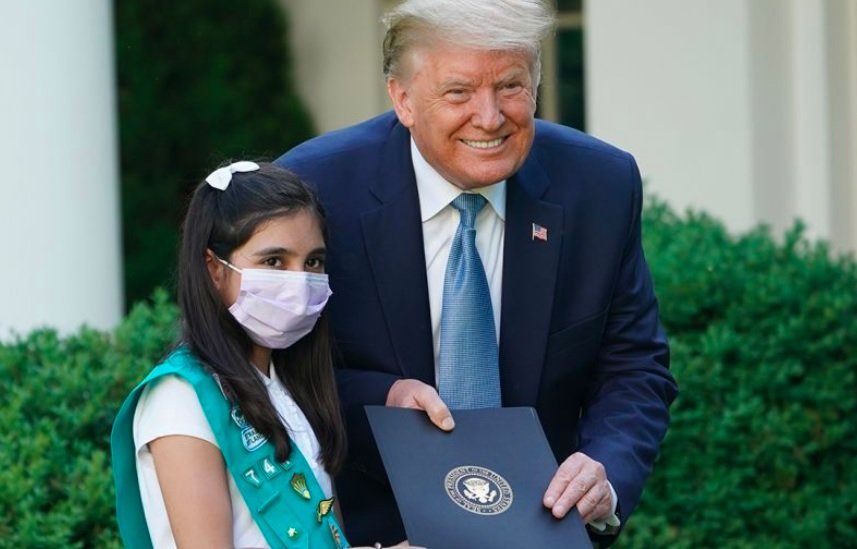
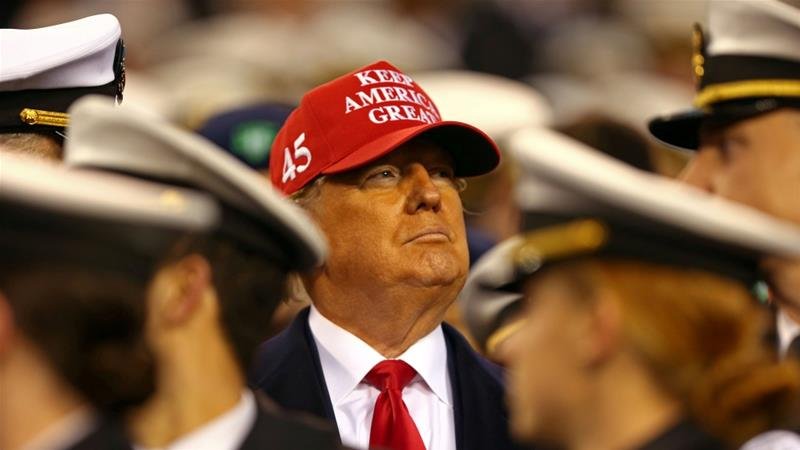
President Trump and first lady Melania Trump on Friday paid tribute to several American heroes who are helping on the front lines of the coronavirus crisis, including Girl Scouts from Maryland who donated cookies to nurses and firefighters. Among those girl scouts was a ten-year-old Pakistani-American girl Laila Khan.
According to a report in APP, Laila who hails from Maryland was recognised as American coronavirus hero as she had donated cookies to nurses and firefighters. Laila, along with Lauren Matney and Sravya Annappareddy – all 10 years old – had donated 100 boxes of Girl Scout cookies to local doctors, nurses and firefighters. They also wrote 200 personalized cards for health care workers.
Speaking about the recognition, Khan said: “While we are honoured that our troop was invited to be here today, we know that we are just part of the millions of other children out there that are doing amazing things to support their communities, their friends and their families. It is a privilege to be here representing all of them.”
Meanwhile, President Trump in a ceremony in the White House Rose Garden had said: “The men and women we honour today remind us that the bonds that unite us in times of hardship can also raise us to new heights as we reopen and recover and rebuild.”
Ambassador of Pakistan to the US Asad Khan also appreciated Laila and thanked President Trump for honouring her.
Thank you very much Mr President @realDonaldTrump. A moment of pride for the Pakistani Americans who are making important contributions in fighting Covid-19 both in the US and Pakistan. https://t.co/muldkkD5QZ
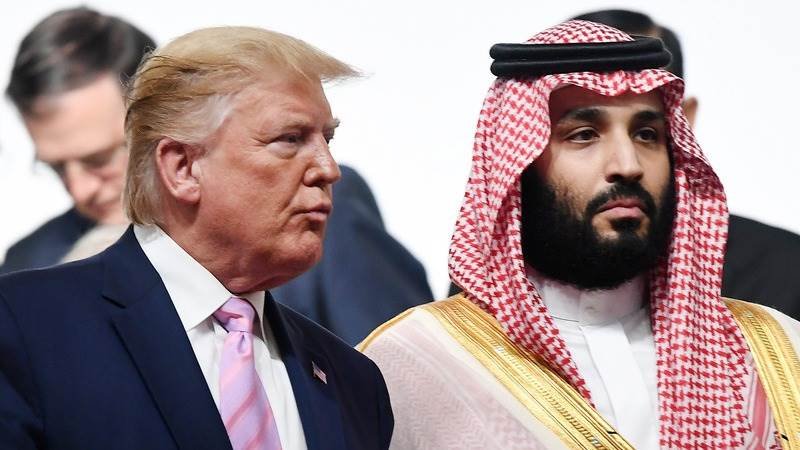
With the United States (US) continuing to press Saudi Arabia to end its oil price war with Russia, President Donald Trump has given the Kingdom an ultimatum.
According to Reuters, in an April 2 phone call, Trump told Saudi Crown Prince Mohammed bin Salman that unless the Organisation of the Petroleum Exporting Countries (OPEC) started cutting oil production, he would be powerless to stop lawmakers from passing legislation to withdraw US troops from the Kingdom.
The threat to upend a 75-year strategic alliance, which has not been previously reported, was central to the US pressure campaign that led to a landmark global deal to slash oil supply as demand collapsed in the coronavirus pandemic — scoring a diplomatic victory for the White House.
Trump delivered the message to the crown prince 10 days before the announcement of production cuts. The kingdom’s de facto leader was so taken aback by the threat that he ordered his aides out of the room so he could continue the discussion in private, according to a US source who was briefed on the discussion by senior administration officials.
The effort illustrated Trump’s strong desire to protect the US oil industry from a historic price meltdown as governments shut down economies worldwide to fight the virus. It also reflected a telling reversal of Trump’s longstanding criticism of the oil cartel, which he has blasted for raising energy costs for Americans with supply cuts that usually lead to higher gasoline prices.
Now, Trump was asking OPEC to slash output.
A senior US official told Reuters that the administration notified Saudi leaders that, without production cuts, “there would be no way to stop the US Congress from imposing restrictions that could lead to a withdrawal of US forces”. The official summed up the argument, made through various diplomatic channels, as telling Saudi leaders: “We are defending your industry while you’re destroying ours.”
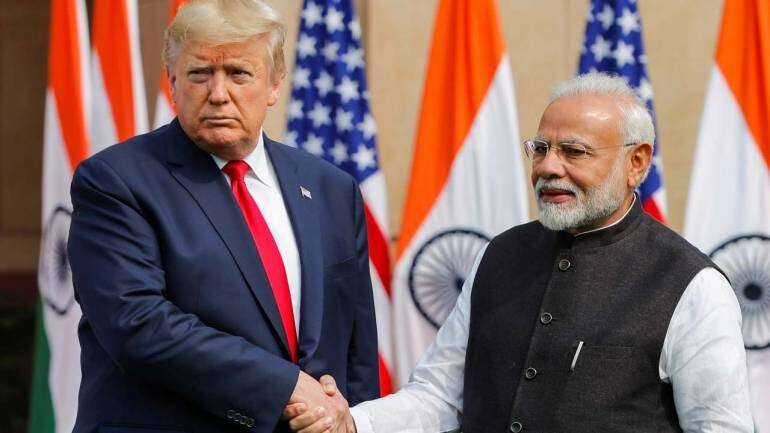
The White House has unfollowed Prime Minister (PM) Narendra Modi on Twitter, leaving Congress party leader Rahul Gandhi ‘dismayed’ at the American administration’s decision.
Indian media reported on Wednesday that The White House, which has 22 million followers on Twitter, followed the Indian premier till April 11, unfollowed him recently.
“The official Twitter account of White House, the residence and workplace of the president of the US, doesn’t follow Indian PM Narendra Modi anymore on the micro-blogging site,” reported Outlook India.
Modi was the only world leader followed by The White House on Twitter till April 11. Other Indian Twitter accounts unfollowed were those of the president of India, the Indian PM’s Office and the Indian Embassy in Washington D.C.
The move ‘dismayed’ Congress party leader Rahul Gandhi, who urged India’s External Affairs Ministry to take note of the incident.
I’m dismayed by the “unfollowing” of our President & PM by the White House. I urge the Ministry of External Affairs to take note.
“I’m dismayed by the “unfollowing” of our President & PM by the White House. I urge the Ministry of External Affairs to take note,” tweeted Gandhi.
The development took place as a US commission recommended India be placed on a list of countries that violate religious freedom.
The US Commission on International Religious Freedom recommended that India be re-designated as a ‘Country of Particular Concern’ because of the Modi government’s policies and treatment towards the Muslim population.
“Perhaps the steepest, and most alarming deterioration in religious freedom conditions is in India,” the vice-chair of the USCIRF vice had said after the release of the Commission’s annual report.
The report also recommended 13 other countries to the State Department for designation as “countries of particular concern” because their governments engage in or tolerate “systematic, ongoing, egregious violations of religious freedom”.
These include nine that the State Department designated as CPCs in December last year, which were Burma, China, Eritrea, Iran, North Korea, Pakistan, Saudi Arabia, Tajikistan, and Turkmenistan. The five others include India, Nigeria, Russia, Syria, and Vietnam.
WHAT DOES IT MEAN?
According to reports, the White House has explained that its Twitter handle typically follows the accounts of officials from host countries for a brief period during a presidential trip to retweet their messages in support of the visit.
“The White House Twitter account normally follows senior US government Twitter accounts, and others as appropriate. For example, during the time of a presidential visit, the account typically follows for a short time, the host country’s officials to retweet their messages in support of the visit,” a senior administration official told the Press Trust of India.
The Pentagon — headquarters of the United States (US) Department of Defense — has released three declassified videos that show US Navy pilots encountering what appear to be unidentified flying objects, The Guardian reported.
The grainy videos, which the Pentagon says depict “unexplained aerial phenomena”, were previously leaked, with some believing they show alien UFOs.
The Pentagon said it released the footage to “to clear up any misconceptions by the public on whether or not the footage that has been circulating was real or whether or not there is more to the videos,” a statement on the Department of Defense website said.
“After a thorough review, the department has determined that the authorized release of these unclassified videos does not reveal any sensitive capabilities or systems, and does not impinge on any subsequent investigations of military air space incursions by unidentified aerial phenomena,” the statement said.
The videos had been “circulating in the public domain after unauthorized releases in 2007 and 2017”, the statement said, adding that “the aerial phenomena observed in the videos remain characterized as ‘unidentified’”.
The three videos show what the pilots saw during training flights in 2004 and 2015. Two of the videos were published by theNew York Times in 2017. The other video was released by the To the Stars Academy of Arts and Science group, a media and private science organisation.
The 2004 video shows an incident that happened 100 miles out over the Pacific, according to the New York Times. Two Navy fighter pilots found an oblong object hovering above the water. It then flew quickly away. “It accelerated like nothing I’ve ever seen,” one of the pilots, Commander David Fravor, told the NYT.
The 2015 videos show objects moving quickly through the sky, one of them seeming to spin in the air. “Look at that thing, dude!” a pilot says. “It’s rotating!”
The release of the videos by the Pentagon adds to the legitimacy of the videos and will spur more speculation that humans have recently interacted with extraterrestrials.
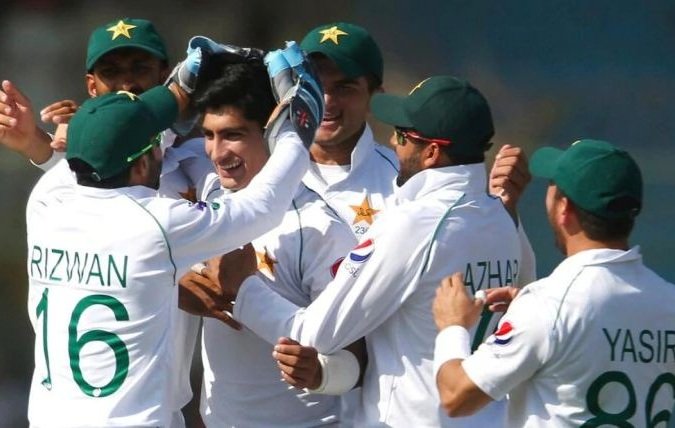
Special Assistant to the Prime Minister (SAPM) on Information and Broadcasting Dr Firdous Ashiq Awan has announced the federal cabinet’s decision to send chloroquine tablets — an anti-malarial medicine that some studies found has a strong antiviral effect on COVID-19 — to “friendly nations” to help them in their time of need.
Addressing a press conference after the weekly cabinet meeting, she said that one million chloroquine tablets will be sent to Saudi Arabia and the United States each, 500,000 to Turkey and Italy each, five million to the United Kingdom, 700,000 to Kazakhstan and 300,000 to Qatar.
Firdous revealed that leaders of some countries had called Prime Minister Imran Khan and expressed a desire to import the tablets from Pakistan following some encouraging results in treating the coronavirus.
“Pakistan has always been asking these countries for something or the other. So, for the sake of humanity and to improve Pakistan’s credibility and face value, this is a good chance to help them in this time of need,” she said.
She also said that Pakistan had some 40 million tablets in stock and possessed the raw material to make even more.
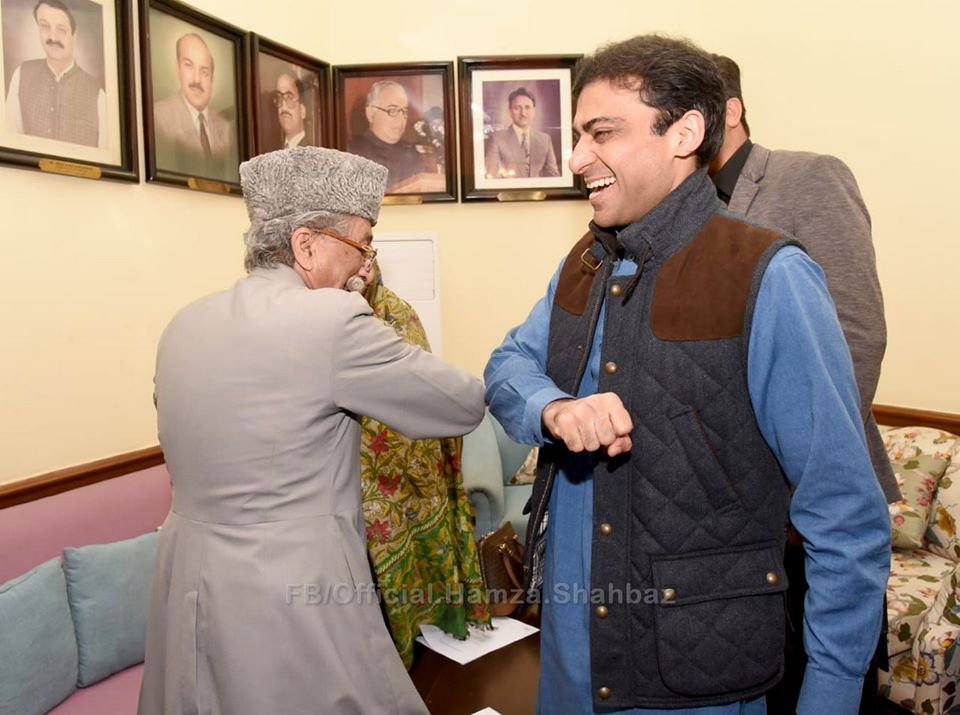
As the new coronavirus — COVID-19 — continues to spread across the globe and the infections tally in Pakistan reaches 94, many, including Pakistan Muslim League-Nawaz (PML-N) leader Hamza Shehbaz, have been spotted avoiding direct physical contact such as handshakes, and resorting to new, cooler ways of greeting others.
A viral photo on Monday showed the leader of opposition in the Punjab Assembly (PA) greeting PML-N leader and ex-speaker of the provincial house, Rana Muhammad Iqbal Khan, with an elbow bump instead of a handshake during a meeting in the former’s chamber.
The two had met on Saturday to discuss the current political and economic situation of the country. PML-N Punjab lawmakers and local leaders were also in attendance.
While Hamza might be the first prominent Pakistani to be spotted resorting to an elbow bump amid coronavirus fears, he is not the first political leader in the world to be doing so.
United States (US) President Donald Trump was last week seen elbow bumping health executive Bruce Greenstein following a press conference during which a national emergency in response to coronavirus outbreak was declared.
EVP of home health care services company Bruce Greenstein offers Pres. Trump an elbow bump after speaking at WH Rose Garden press conference, during which @POTUS declared a national emergency in response to coronavirus outbreak https://t.co/FUR5cMnxiLpic.twitter.com/kdjyTl56cc
Here are a few other leaders avoiding physical contact as per the guidelines of the World Health Organization (WHO):
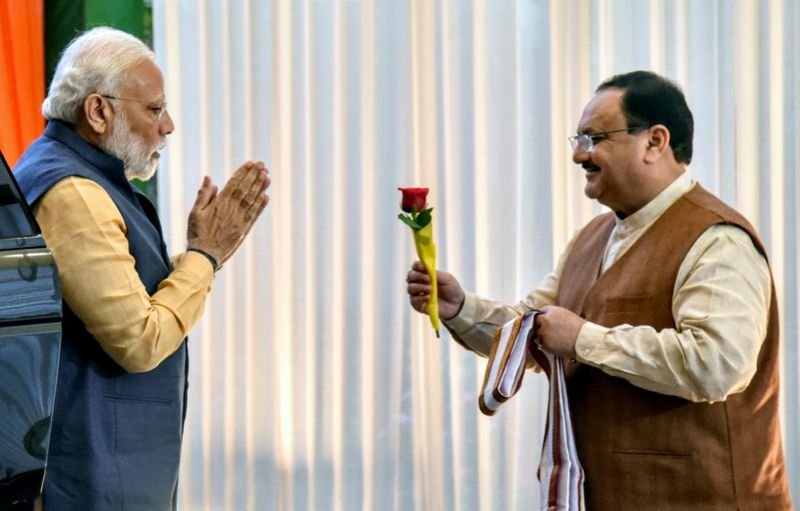
Indian Prime Minister (PM) Narendra Modi being welcomed by Bharatiya Janata Party (BJP) President JP Nadda as he arrives to attend a party meeting in New Delhi.
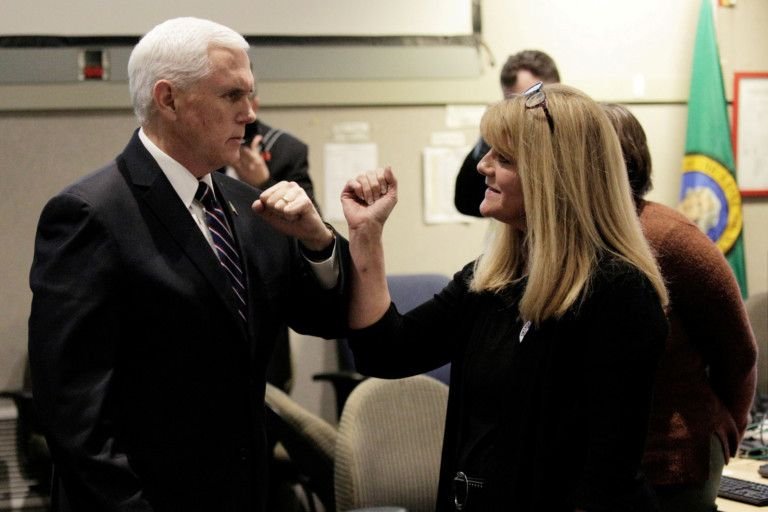
US Vice President Mike Pence, who heads the government’s coronavirus task force, greets a woman at the Washington State Emergency Operations Center during a tour.
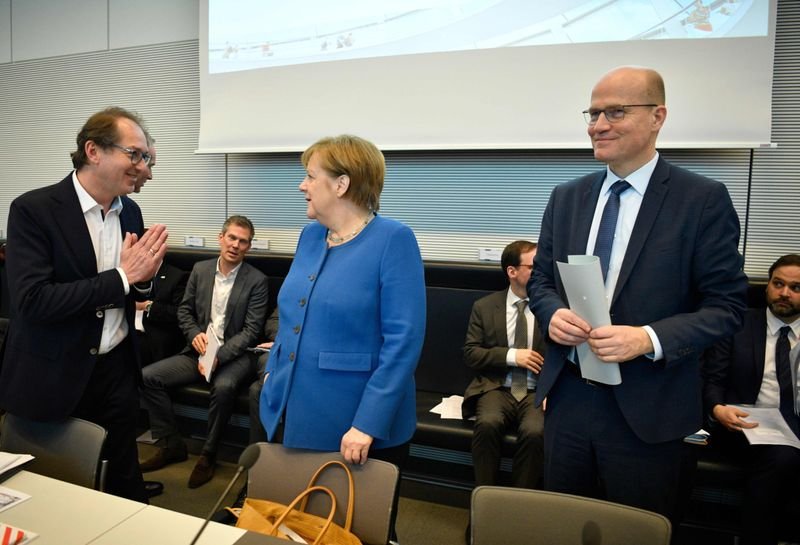
Union parties leader Alexander Dobrindt greets German Chancellor Angela Merkel in a Buddhist style to avoid a handshake in times of coronavirus.
Globally, more than 6,000 people have died and more than 156,000 have been infected by COVID-19 as the disease spreads rapidly to new territories.
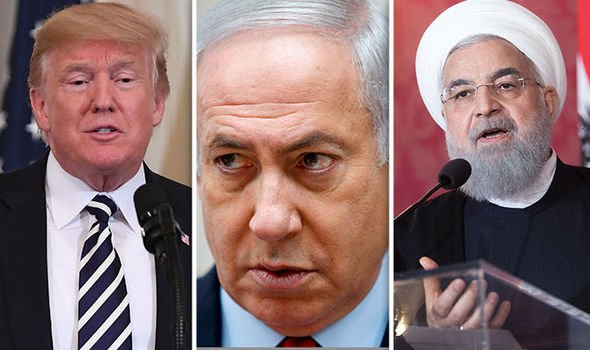
As tensions continue to soar between Iran and the United States (US) over the past week, and both Tehran and Washington issuing threats against each other, Prime Minister (PM) Benjamin Netanyahu has said that Israel should not be dragged into the conflict.
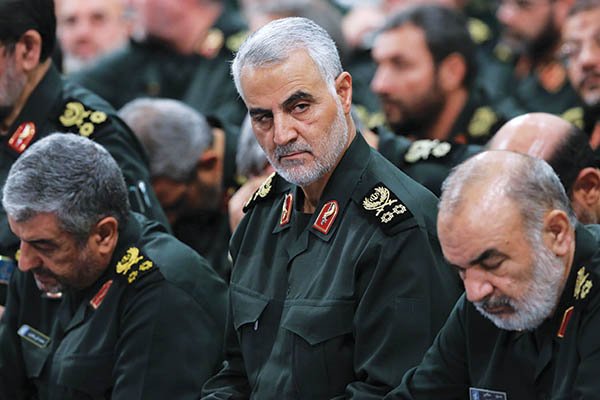
According to Anadolu Agency, Netanyahu, while chairing a security cabinet meeting Monday, said the killing of top Iranian General Qassem Soleimani was carried out by the US, stressing his country was “not involved”.
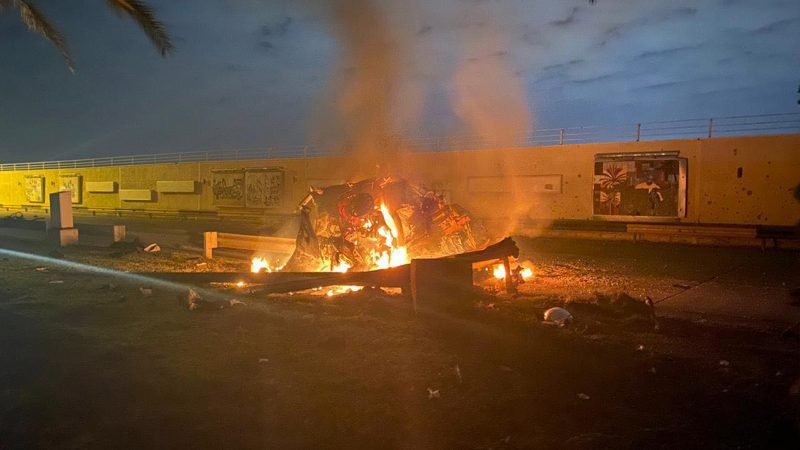
Soleimani, commander of Islamic Revolutionary Guards Corps’ Quds Forces, and Abu Mahdi al-Muhandis, vice president of the Hashd al-Shaabi group, were assassinated in a US drone strike on Friday outside Baghdad International Airport.
With the dramatic escalation making headlines and Iran issuing threats of severe consequence, Netanyahu has urged his ministers to reiterate Israel’s support for America’s right to defend itself when speaking to the media.
During the meeting, top Israeli intelligence officials reassured the ministers that the likelihood of a retaliatory attack by Iran against Israel was low, since “Israel stayed at a distance from the incident”, according to Channel 13.
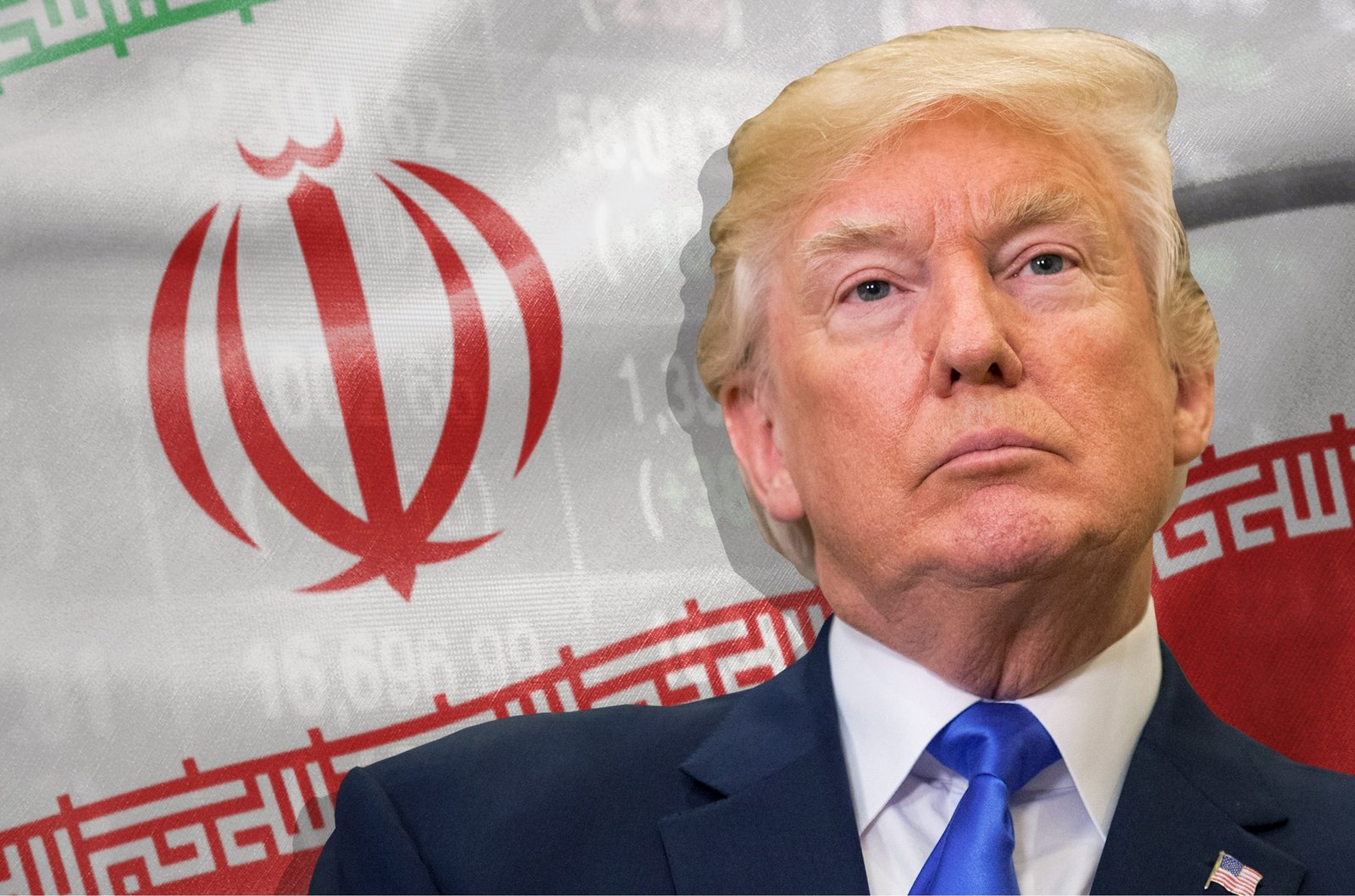
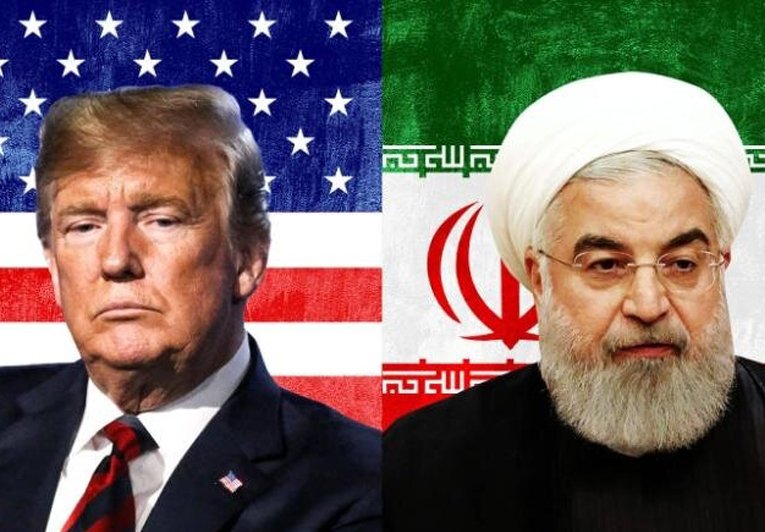
Soleimani’s slaying marked a new high in tensions between the US and Iran, which have often been at a fever pitch since President Donald Trump chose in 2018 to unilaterally withdraw Washington from a nuclear pact world powers struck with Tehran.
Iran has now promised to avenge Soleimani’s killing and announced that it would stop complying with the 2015 nuclear deal. Trump has since threatened to target cultural sites in Iran.
An $80 million bounty has been placed on United States (US) President Donald Trump’s head in the wake of General Qasem Soleimani’s assassination and the dramatic escalation that followed, a foreign media outlet has reported.
During the televised funeral of the top Iranian military leader, official state broadcasters said one US dollar would be tabled for every Iranian in the country, with the cash going to whoever killed the US president.
“Iran has 80 million inhabitants. Based on the Iranian population, we want to raise $80 million which is a reward for those who get close to the head of President Trump,” it was announced, according to en24.
Commander of Islamic Revolutionary Guard Corps’ Quds Force, Soleimani was killed in a US airstrike last week. The attack took long-running hostilities between Washington and Tehran into uncharted territory and raised the spectre of wider conflict in the Middle East.
While Trump has threatened “major retaliation” if Iran avenges the killing, Iran has announced it was further reducing compliance with a tattered international nuclear accord, ending limitations on numbers of centrifuges used to enrich uranium.
Tensions between the United States (US) and Iran have escalated to an all-time high after top Iranian commander Qassem Soleimani was killed on Friday in a US strike on Baghdad’s international airport.
The development has been confirmed by both Tehran and Washington, and the Pentagon has said that President Donald Trump “ordered Soleimani’s killing”, after a pro-Iran mob this week laid siege to the US embassy.
Following Soleimani’s death, Trump tweeted an image of the US flag without any further explanation.
The pre-dawn developments mark the most major escalation yet in a feared proxy war between Iran and the US on Iraqi soil.
Here’s everything you need to know about the dramatic escalation:
WHO WAS QASSEM SOLEIMANI?
Head of Iran’s Islamic Revolutionary Guard Corps’ (IRGC) Quds Force Soleimani acquired celebrity status at home and abroad as leader of the foreign arm of the Revolutionary Guards and for his key role in fighting in Syria and Iraq.
He was instrumental in the spread of Iranian influence in the Middle East, which the US and Tehran’s regional foes Saudi Arabia and Israel have struggled to keep in check, Al Jazeera reported.
Soleimani survived several assassination attempts against him by Western, Israeli and Arab agencies over the past 20 years.
Under Soleimani’s leadership, the IRGC vastly expanded its capabilities, becoming a significant influence in intelligence, financial, and political spheres beyond Iran’s borders.
WHY WAS HE KILLED?
It all started on Sunday with US military airstrikes in Iraq and Syria that killed 25 fighters and left militias vowing revenge.
SUNDAY (DEC 29)
According to a report, the US military carried out airstrikes on five sites in Iraq and Syria against the Iranian-backed Kataeb Hezbollah militia, calling it retaliation for last week’s killing of an American contractor in a rocket attack on an Iraqi military base that it blamed on the group.
At least 25 fighters were killed and dozens wounded. The targeted group, which is a separate force from the Lebanese militant group Hezbollah, operates under the umbrella of the state-sanctioned militias known collectively as the Popular Mobilization Forces, or PMF. Abu Mahdi al-Muhandis, the deputy commander of the PMF and a founder of Kataeb Hezbollah, was also killed in the strikes Thursday that killed Soleimani in Baghdad.
The two were scheduled to meet and were leaving Soleimani’s plane at the airport when Friday’s attack occurred.
MONDAY (DEC 30)
The Iranian-backed Iraqi militia vowed to retaliate while a spokesperson for Kataeb Hezbollah denied the group was behind last week’s rocket attacks, including the one that killed the American contractor, saying Washington was using them as a pretext to attack his group.
“These forces must leave,” he said of American troops in Iraq, calling Sunday’s attack a “crime” and a “massacre”.
The Iraqi government said it would reconsider its relationship with the US-led coalition — the first time it has said it will do so since an agreement was struck to keep some US troops in the country. It called the attack a “flagrant violation’’ of its sovereignty.
TUESDAY (DEC 31)
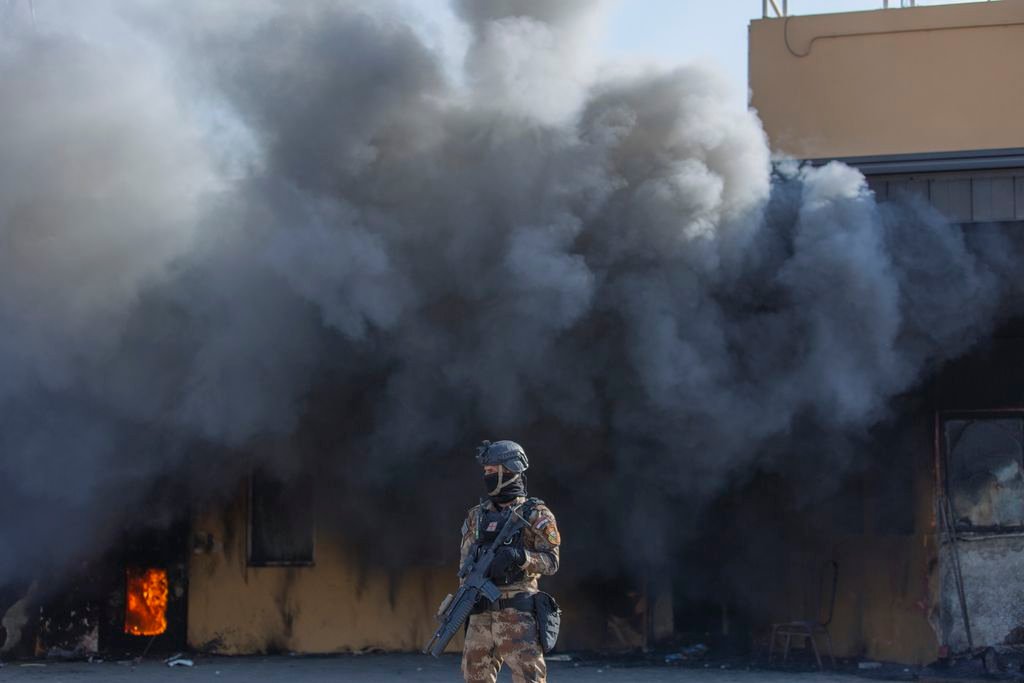
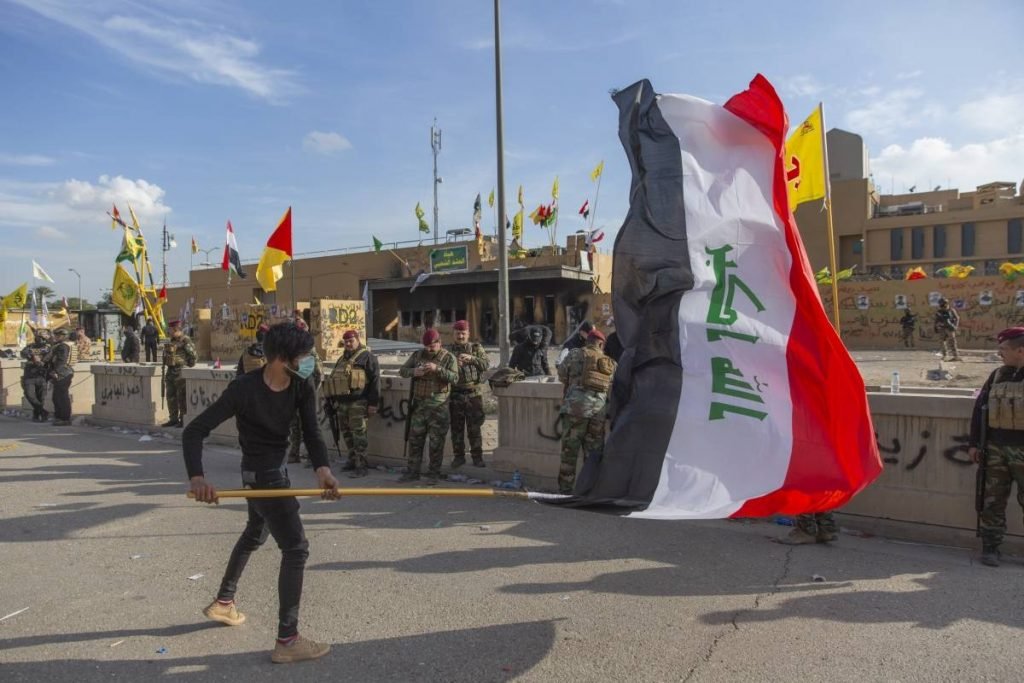
Hundreds of Iraqi militiamen and their supporters broke into the American Embassy compound in Baghdad, smashing a main door and setting fire to a reception area.
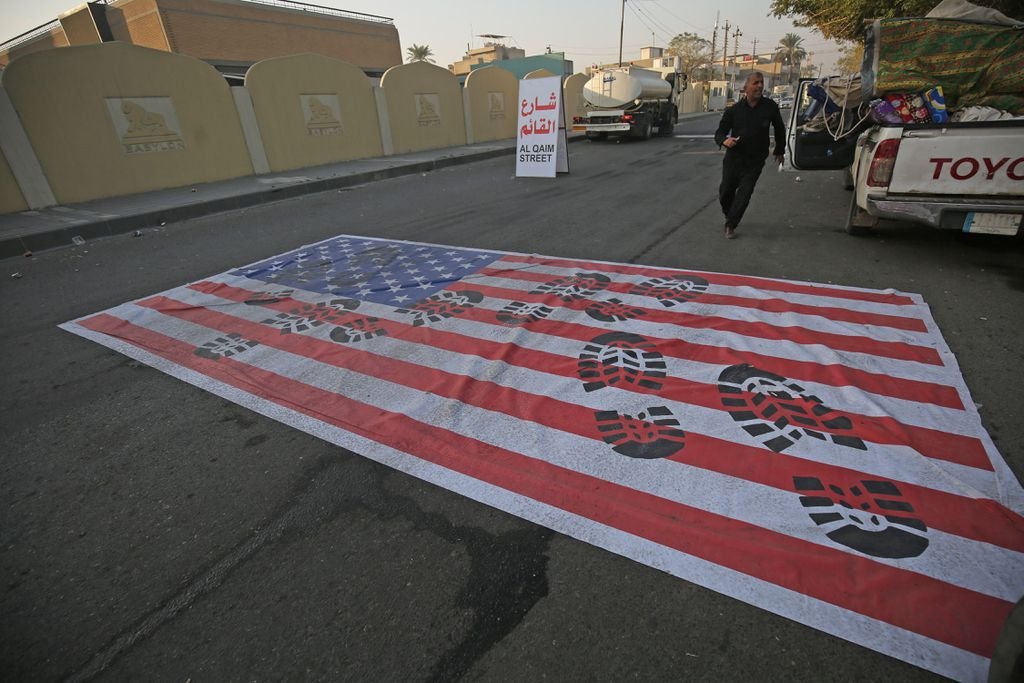
The marchers, many of them in militia uniforms, shouted “Death to America” and “Death to Israel” outside the compound, hurling water and stones over its walls. The group set up a tent camp overnight in front of the embassy and sprayed graffiti on its walls.
Some commanders of militia factions loyal to Iran joined the protesters outside the embassy in a strikingly bold move. Among them was Qais al-Khizali, the head of one of the most powerful Iranian-backed group in Iraq, who is on a US terror list, and Hadi al-Amiri, the head of the PMF, the umbrella group for the Iran-backed militias.
President Trump blamed Iran for the breach of the embassy compound in Baghdad and called on Iraq to protect the embassy.
Iran killed an American contractor, wounding many. We strongly responded, and always will. Now Iran is orchestrating an attack on the U.S. Embassy in Iraq. They will be held fully responsible. In addition, we expect Iraq to use its forces to protect the Embassy, and so notified!
There were no reports of casualties. The State Department said all American personnel were safe and that there were no plans to evacuate the embassy. Following the storming of the compound, Defence Secretary Mark Esper ordered roughly 750 additional American troops to deploy to the region, with another 3,000 placed on standby.
The political influence of the PMF has risen in recent years, and their allies dominate the parliament and the government. That has made them the target of the anti-government protesters, who set up a sprawling protest camp in central Baghdad, and who for weeks have been trying to enter the Green Zone. Iraqi security forces have beaten them back with tear gas and live ammunition, killing hundreds.
The militiamen and their supporters, however, were able to quickly enter the Green Zone on Tuesday and mass in front of the embassy, with little if any resistance from authorities. Iraqi security forces made no effort to stop the protesters as they marched to the heavily fortified Green Zone after a funeral for those killed in the airstrikes.
WEDNESDAY (JAN 1)
The Iran-backed militiamen withdrew from the American Embassy compound after two days of clashes with American security forces.
US Marines had fired tear gas in response to stones thrown by protesters but no one was reported killed and the tent camp dispersed after the PMF called on its supporters to depart, suggesting their message had “been received.”
“We rubbed America’s nose in the dirt,” said Fadhil al-Gezzi, a militia supporter.
Embassy workers and diplomats were ultimately holed up for more than 24 hours during the situation at the embassy. Ambassador Matt Tueller, the American ambassador to Iraq, was traveling at the time of the attack but State Department officials told The Hill that he would return to the embassy amid the tensions.
FRIDAY (JAN 3)
General Qassem Soleimani, Abu Mahdi al-Muhandis, and five others were killed in the early-morning airstrike at Baghdad International Airport, Iraqi officials said.
A senior Iraqi security official said the airstrike, conducted by an American drone, took place on an access road near the cargo area of the airport after Soleimani left his plane to be greeted by al-Muhandis and others. The official said the plane had arrived from either Lebanon or Syria.
United States (US) President Donald Trump has been impeached for abuse of power in a historic vote in the House of Representatives, setting up a Senate trial on removing him from office after three turbulent years.
By a 230 to 197 vote in the Democratic-majority House, the 45th US president on Wednesday became the third occupant of the White House in American history to be impeached.
But what happens next and who can replace Trump if the Senate convicts him?
According to AFP, the stage is set for the US president’s trial where the party of defendant Trump gets to set the rules and some senator, who will be jurors, are already delivering their verdicts.
Trump is expected to stand trial in the Republican-led Senate beginning in early January, and if convicted, he will be removed from office. While it would be an unprecedented outcome, it looks like a highly unlikely conclusion.
THE TRIAL:
If the procedures used in the 1868 and 1999 Senate trials of Andrew Johnson and Bill Clinton are repeated, Democratic prosecutors will enter the Senate to read out the charges against Trump.
“All persons are commanded to keep silence, on pain of imprisonment,” the Senate sergeant at arms will admonish. This is the official who notifies the White House by summons that the president has been charged.
After that the 100 senators — 53 Republicans and 47 Democrats — will sit in judgement on one of the world’s most powerful men.
To remove him from office, 67 of them have to find him guilty — highly unlikely, given the Republicans’ numerical strength.
Their numbers also mean they get to decide if witnesses can be called, and which ones, how long prosecutors can take to present their case and how long the trial will last. If the Senate doesn’t want to try Trump at all, it can simply dismiss the case, by a simple majority vote.
And given Trump’s political hold over his party, the rules can be dictated by the White House itself.
WHO CAN SUCCEED TRUMP?
In the unlikely event that the Senate convicts and removes Trump from office, Vice President Mike Pence would become president and complete Trump’s term, which ends on January 20, 2021.
The 48th vice president of the US has previously also served as the 50th governor of Indiana from 2013 to 2017 and a member of the US House of Representatives from 2001 to 2013.
He is the younger brother of U.S. representative Greg Pence.