Tag: Dr Abdus Salam

  • Miftah Ismail commended for his ‘bold and clear’ comments on violence against religious minorities

    Miftah Ismail commended for his ‘bold and clear’ comments on violence against religious minorities

    Speaking on Geo News’ programme “Naya Pakistan”, Finance Minister (FM) Miftah Ismail on Sunday said that most Pakistanis are driven by emotions and not rationality.

    “How many people spoke up for a Christian couple burnt alive in an industrial kiln? A few days ago, an Ahmadi was killed but not many people raised their voices. People are scared.”

    Read more: Ahmadi man allegedly murdered for not chanting slogans in praise of Khadim Rizvi

    A 62-year-old member of the Ahmadi community named Naseer Ahmad was stabbed to death in Chenab Nagar on August 12, for allegedly refusing to chant slogans in praise of Tehreek-i-Labbaik Pakistan (TLP) founder Khadim Hussain Rizvi.

    https://twitter.com/SAMRIReports/status/1559108747502538753?s=20&t=1PbwDx-IqmjAnhPaRqTy-A

    Miftah went on to say that we don’t value education and that we are an emotionally driven country. “We are an emotional country that does not give much precedence to rationality and thinking.”

    “We don’t own Nobel laureate, Dr Abdus Salam, because he was an Ahmadi. Our daughter, Malala [Yousafzai] won a Nobel Prize and we find all kinds of faults in the world and associate them with her,” said Miftah.

    The minister also said that our country lacks the basic awareness required for a country to progress because we don’t give preference to education.

    Twitterati reacted to Miftah’s comments about minority rights.

  • Actor Jamal Shah created the Dr Abdus Salam sculpture in Vienna

    Actor Jamal Shah created the Dr Abdus Salam sculpture in Vienna

    Veteran Actor and Sculptor, Jamal Shah took to his Twitter to reveal that he is the mastermind behind the creation of the sculpture of the first Pakistan’s Nobel Laureate, Dr Abdus Salam. The bust is placed at the International Atomic Energy Agency (IAEA) in Vienna, Austria.

    The sculpture of Dr Abdus Salam was unveiled at the IAEA to mark his 60th birth anniversary in September 2017.

    While talking to The Express Tribune, he revealed, “At IAEA’s headquarter of the atomic energy commission, there were almost all scientists sculptures but not of Dr Abdus Salam so I decided to make a sculpture of him. I handed over this sculpture to them and now it is present there. It is in bronze and it was specifically made to give a tribute to him. I usually don’t make portraits as my sense and style of sculpture making is different but this type of sculpture is just for him.”

  • Chomsky says Pakistan has no future if it doesn’t come out of world of ‘religious superstition’

    Chomsky says Pakistan has no future if it doesn’t come out of world of ‘religious superstition’

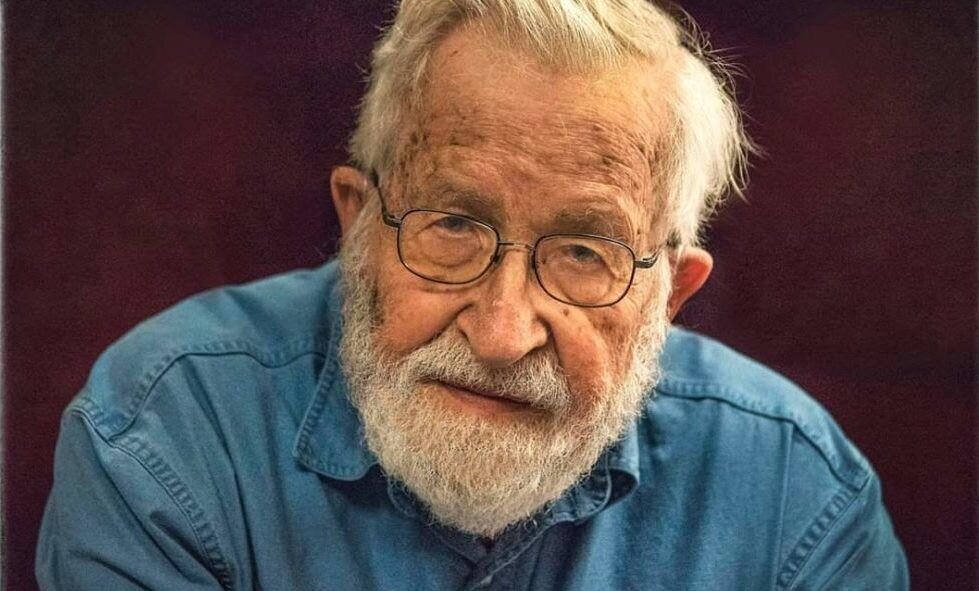
    Professor Noam Chomsky, renowned linguist and analytic philosopher, has said that Pakistan lacks “serious scientists” to preserve a rational education system to deal with the reality of the world.

    Speaking at a seminar organised by Karachi’s Habib University, Prof Chomsky said it’s sad that science has virtually disappeared from the country’s educational system.

    “Pakistan used to have an advanced scientific establishment, Nobel Prize laureates [Abdus Salam] and so on,” the American linguist said. “Now science has virtually disappeared from the educational system.” “Pakistan has no future if it is going to live in a world of religious superstition,” he said.

    During the lecture, Chomsky talked about a number of issues, including climate change, nuclear weapons, and the rise of populist leaders.

    Speaking about Indian PM Narendra Modi, the US professor said India is destroying the remnants of Indian secular democracy, crushing the Muslim rights and placing Kashmir under a brutal rule. “Pakistan is not too far behind,” the philosopher said, referring to the rights abuses in the country.

    Speaking about Iran-US ties under outgoing president Donald Trump, he said the Trump admin “is in a state where it is willing to do anything”. He said the tensions between US and Iran boiled over after Trump came to power.

    The assassination of Iranian general Qasem Soleimani in a US airstrike in Baghdad and the recent killing of its nuclear scientist Mohsen Fakhrizadeh near Tehran have further escalated these tensions. Iranian authorities have pointed fingers at two US allies – Saudi Arabia and Israel.

    “There is a possibility of war,” he said, adding that Iran has no “match for the US war machine” because its relatively low defence expenditure. But Iran would respond by attacking Saudi oil installations and other US allies in the region and that could lead to a full-blown war, said Chomsky.

    Speaking about sanctions imposed on Iran by the US government, Prof Chomsky was of the view that “sanctions against Iran have absolutely no legitimacy”. These sanctions “are means of torturing and terrorizing the Iranian population”. He said the people of Iran have to suffer from those sanctions because the Iranian government is not obeying the US orders.

    He also talked about Iran’s nuclear programme, saying it is very likely that Iran wants to use it as ‘deterrent’. Chomsky believes the countries that want to rampage freely in the region don’t want deterrents, and the US is one of them and its “Israeli client” another.

    “They don’t want a deterrent,” Chomsky said. The US doesn’t even admit that Israel has nuclear weapons, let alone getting its nuclear war inspected, the American philosopher said, pointing out the problems with the US approach towards the Middle East region.
  • Blue plaque unveiled at London home of Abdus Salam

    A blue plaque has been unveiled by English Heritage to mark the home of Professor Abdus Salam in Putney, London, where he used to live from 1957 to 1996, until his death.

    Blue plaque – a symbol of English Heritage pride – is placed outside the historically significant building to honour the people and organizations who have lived or worked there. Salam joins Charles Darwin, Rosalind Franklin and Alan Turing among the scientists with blue plaques.

    Salam was awarded the Nobel Prize for Physics in 1979, alongside Sheldon Glashow and Steven Weinberg, for his contribution to the electroweak unification theory. Additionally, he founded the Theoretical Physics Department at Imperial College London, with the late Professor Paul T Matthews.

    “A blue plaque on the house in Putney where he lived for 40 years is a fitting tribute to Nobel Laureate Abdus Salam, who was not only one of the finest scientists of the twentieth century, having unified two of the four fundamental forces of nature, but who also dedicated his life to the betterment of science and education in the developing world,” said a professor at the Physics Department of Imperial College, Michael Duff, who completed his Ph.D. under the supervision of Salam in 1972.

    When he won the Nobel prize in 1979, Salam became the very first Pakistani to achieve this distinction and only the fourth from the subcontinent. His contributions to science are undeniable and they have been recognised and hailed by the world and especially the state of Pakistan.

    However, he is criticised back home because of his faith. Two months ago, a group of youngsters smeared his portrait, outside Gujranwala’s National Science College.

    The viral video showed the group, allegedly consisting of State Youth Parliament Pakistan members, painting Salam’s portrait black while raising slogans against the minority Ahmadiyya community, of which Salam was a member.

  • Dishonouring our heroes

    A few days ago, a group of youngsters smeared a portrait of the first Nobel laureate from Pakistan, Dr Abdus Salam. The video was widely circulated on the internet that showed the group, consisting of State Youth Parliament Pakistan members, painting Dr Salam’s portrait black while raising slogans against the minority Ahmadiyya community, of which Dr Salam was a member, outside Gujranwala’s National Science College.

    It was tragic to see that science students, rather than honouring Dr Salam, a world renowned physicist from Pakistan and champion of science in the developing world, would take pride in vandalising his portrait due to bigotry. Dr Salam’s contributions to science are undeniable and they have been recognised and hailed by the state of Pakistan as well. Thus it is unfortunate to see that our society is still reluctant to acknowledge him as a hero because he belonged to a religious minority. The white part in the Pakistani flag represents our minorities but if we can continue to persecute them, then we are in fact dishonouring our flag, our founding father’s vision for Pakistan and our Constitution that guarantees that all citizens are to be treated equally regardless of their faith, caste and creed.

    Why do we treat our heroes so badly? Pakistan’s second Nobel laureate and the youngest laureate Malala Yousafzai has also faced a barrage of criticism from Pakistani society. Many a conspiracy theory is associated with the assassination attempt on her life despite the fact that she barely survived the attack. Thankfully, the state of Pakistan has been consistently supportive of Malala and Dr Salam. This gives us hope that one day our society, too, will learn to honour those who have made Pakistan proud in the international arena. We always complain how Pakistan’s image is portrayed negatively in the international press but people like Dr Salam and Malala and many others continue to make us proud due to their contributions in areas like science, education, arts, among others. Asma Jahangir’s work for human rights and women’s rights was hailed around the world but she was not recognised by several segments of society because of her bold views on fundamental freedoms. It is high time that we put an end to such thinking and be more tolerant and appreciative of the work that our countrymen and country-women continue to do for the betterment of Pakistan.

    In an environment where we see rising political polarisation, religious intolerance, the state needs to continue to promote tolerance and honouring those who have made a mark. Dr Salam does not need validation from those who smeared his portrait; his work speaks for itself but at the same time, it is a tragedy that he does not have the same acceptance from fellow Pakistanis that the international community has given him. Let’s hope that one day, those who smeared his portrait too would feel ashamed of doing what they did.

  • Hardliners smear portrait of Nobel laureate Dr Abdus Salam outside National Science College

    A group of youngsters, allegedly science students, has smeared a portrait of the only Nobel laureate physicist from Pakistan and champion of science in the developing world, Dr Abdus Salam.

    A video doing rounds over the internet showed the group, consisting of State Youth Parliament Pakistan members, painting the portrait black while raising slogans against the minority Ahmadiyya community, of which Dr Salam was a member, outside Gujranwala’s National Science College.

    “They are students of so-called science colleges, what a shame,” read a strongly-worded post by Facebook page ‘The Hoodbhoyist’ that describes itself as a “social club for liberal, secular, humanists and progressive”.

    When he won the Nobel prize in 1979, Dr Salam became the very first Pakistani to achieve this distinction, and only the fourth from the subcontinent.

    Born in 1926 in a remote village in Punjab, British India, Salam was a child prodigy. He came from humble beginnings, growing up in a small brick house with a large family of eleven. While Salam’s legacy looms large in the world of physics, he is largely forgotten in Pakistan because of his faith.

    “Salam — The First ****** Nobel Laureate” — a feature-length film on Dr Salam’s life — was released on Netflix in October last year.

    It has won accolades on the international film festival circuit, including DFW South Asian Film Festival, South Asia Human Rights Festival, South Asian International Film Festival and the South Asian Film Festival of Montreal, among others.

  • Fawad Chaudhry calls Dr Salam a ‘visionary’

    Fawad Chaudhry calls Dr Salam a ‘visionary’

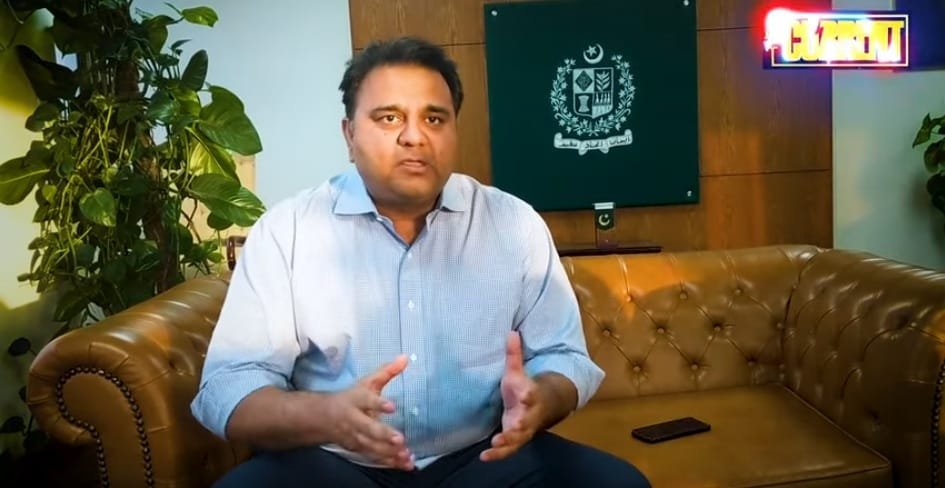
    Federal Minister for Science and Technology Fawad Chaudhry paid a rich tribute to Pakistan’s first Nobel Laureate Dr Abdus Salam by saying that he was a “visionary” who launched Pakistan’s space programme when China and India hadn’t even started.

    Addressing at the convocation of Capital University for Science and Technology (CUST) at the Convention Centre, the minister said, “When we started our space program and established SUPARCO in 1962 under the patronage of a great scientist like Dr Abdus Salam, a visionary, China and India had not even thought about the idea.”

    “We [Pakistan] are the second country in Asia, after USSR, to launch our rocket, Rehbar, into space in 1963. Our space program is one of the most modern space programs in the world,” Fawad revealed.

    “And now when we talk about sending our mission to space in 2022, people are shocked and are unable to believe it,” the minister added.

    Watch video here:

    https://www.instagram.com/p/B5ua2QKBtEO/

    The minister also shared that work on introducing agriculture drone to enhance crops production was in progress.

    He said that Prime Minister Imran Khan was focusing on the development of the science and technology sector and that the budget of it was increased 600 times in the last eight months. He added that the government intends to further increase the budget up to 1500 times through public-private partnerships.

    Fawad regretted that the science and technology sector was not given its due importance in the past because of which there was a lack of progress in this field.

    Pakistan lost its focus on development after involvement in the Afghan war, Fawad said.