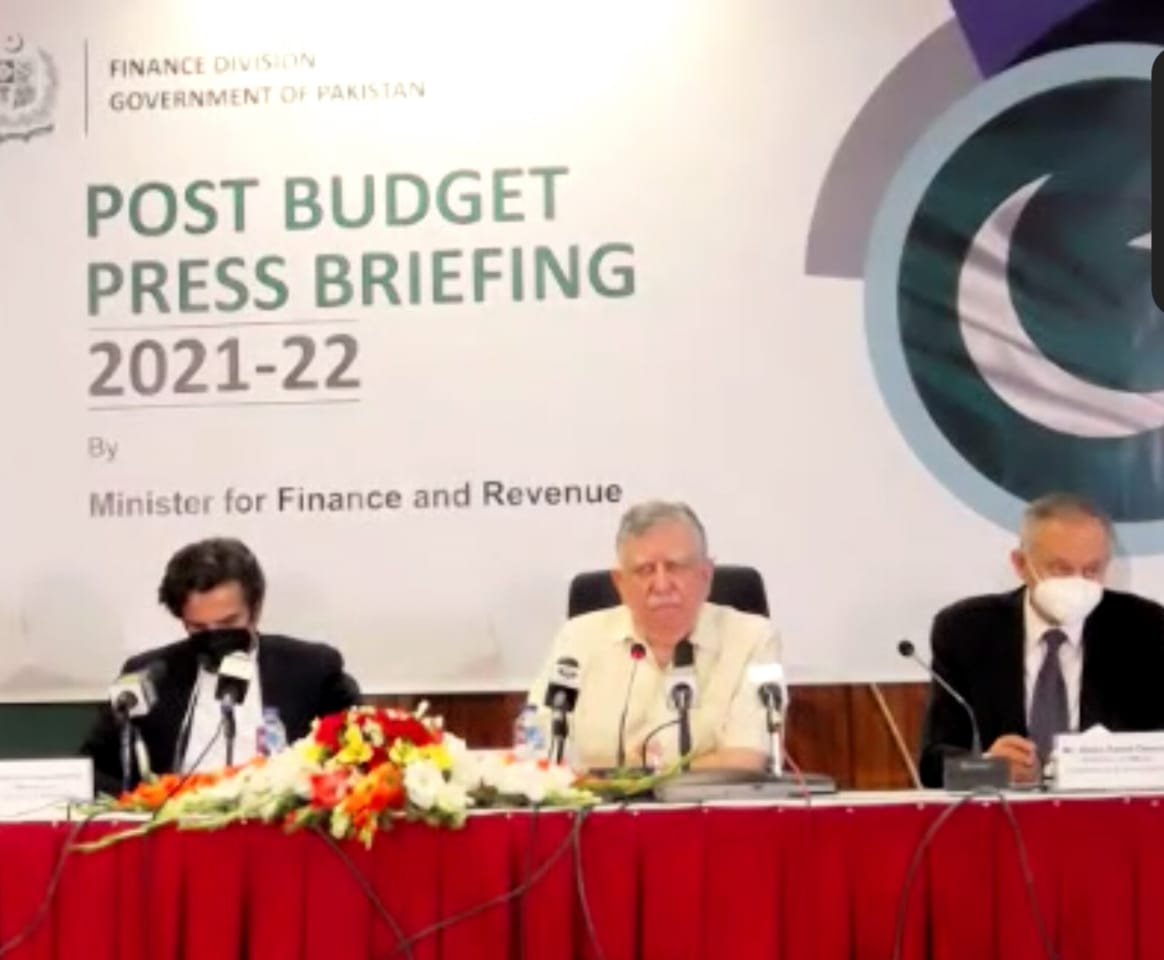
Addressing a post-budget press conference in Islamabad, Finance Minister Shaukat Tarin said that ” Prime Minister Imran Khan and the cabinet opposed the imposition of tax on mobile phone calls, internet data, and SMS. “Now there will be no increase in the tax rate for all these services.”
The original decision, if it had been implemented, would have affected over 98 million people.
Tarin said the government has presented a total growth budget and their challenge is to stabilise growth.
Tarin said that additional tax of Rs500 billion will be collected in the next financial year. “We have to earn dollars by increasing exports and add an additional tax of Rs500 billion in the next financial year.”
The finance minister said that Pakistan had to go to the International Monetary Fund (IMF) for help when its position is weak.
“We need 20 per cent growth in exports. Our savings rate is 15 per cent and our investment rate is up to 16 per cent. If we do not have revenue, how will we achieve growth?”
Tarin said that the poor in the country have not received loans and training for the last 70 years. Loans up to Rs 2 million will be given to build a roof and loans to poor farmers will go up to Rs 500,000. Pakistan has become a food deficient country and we are now importing what we used to export, Tarin said, adding that the country is importing pulses, wheat, and sugar.
“We did not pay attention to our crops, but now we will pay attention to it,” he assured.
“We should not play politics with the poor,” he added.
Tarin unveiled the Budget 2021-22 yesterday. The total expenditure of the budget had been kept at Rs 8,478 billion and had set the tax collection target at Rs 5,829 billion.
2020 has pretty much been all about COVID-19 and the pandemic. The year has perhaps been one of the most challenging ones in recent times and has been difficult for everyone. As the year nears its end, The Current decided to look back and reflect upon some happy moments which brought a smile to our faces.
Kaavan’s Relocation to Cambodia
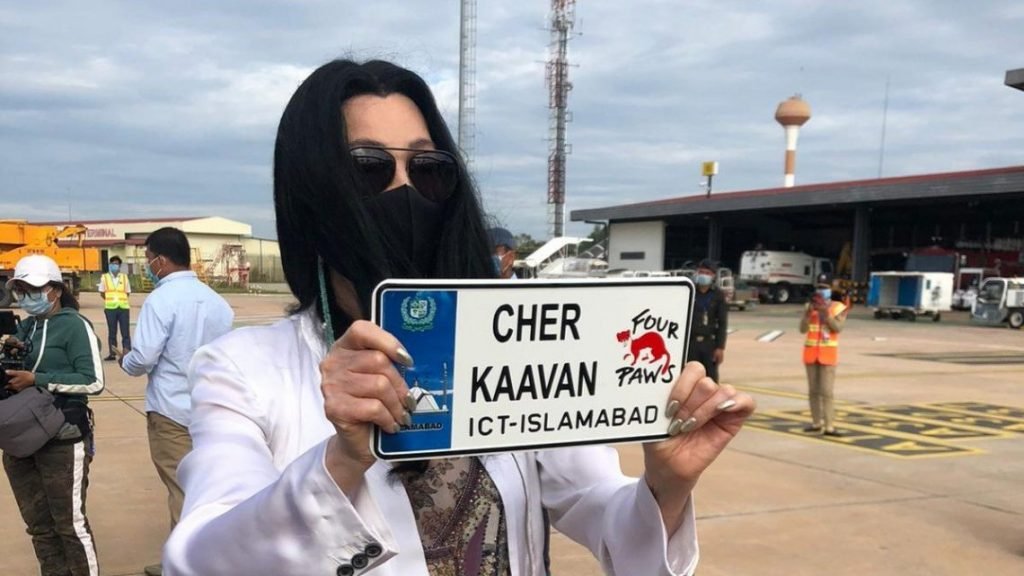
After spending years chained in Islamabad Zoo, the world’s former ‘loneliest elephant’ Kaavan was relocated to a local sanctuary in Cambodia where he will spend the rest of his days in the open and among his own. Kaavan’s freedom was assisted by American singer Cher, who came to Pakistan to personally see Kaavan off. She also welcomed the elephant in Cambodia with a very cute nameplate.
As per the latest details, Kaavan has found new friends in Cambodia and has been spotted enjoying himself at his new home.
Kavaan’s case and relocation also paved the way for other animals to be relieved of their plight. A few weeks after he left, two brown Himalayan bears at the Islamabad Zoo Suzie and Babloo were sent to a sanctuary in Jordan where they will be rehabilitated and nursed to health. Following their departure, the Islamabad Zoo was shut down.
Tough anti-rape law
The federal cabinet approved tough new anti-rape law under which special courts will be established to speed up rape trials and convicted rapists and perpetrators will be chemically castrated. It also prohibits the disclosure of the identity of rape victims and will create a national sex offenders’ register.
Increased exports
Pakistan’s exports for the month of November passed the $2 billionmark amid a resurgence of economic activity after the coronavirus lockdown. As per reports, Pakistan’s move to loosen pandemic restrictions early has helped the nation’s exports emerge stronger than its South Asian peers including India and Bangladesh.
Construction of Hindu Temple
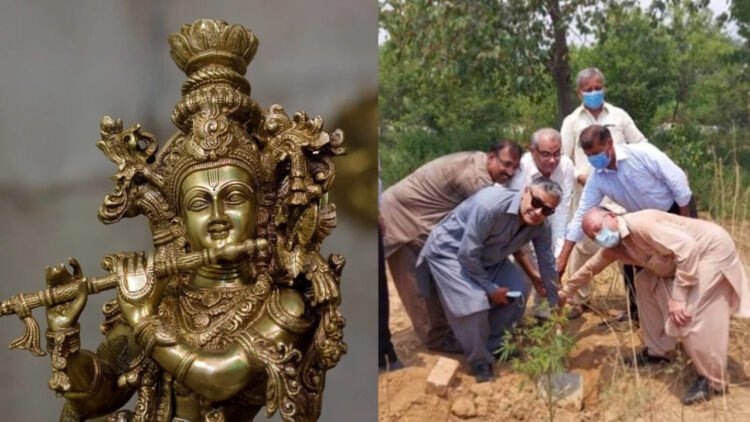
The Council of Islamic Ideology (CII) approved the construction of a new temple for minority Hindus, ruling that Islamic law allows minorities a place of worship. The CII also allowed the government to hand over the temple site as well as its adjoining Dharamshala (community centre) in Saidpur village of Islamabad to the Hindu community “so that it can offer religious rites as per their beliefs”. Many people including celebrities like Hamza Ali Abbasi lauded the initiative.
Mahira Khan, Dr Sania Nishtar among BBC’s ‘100 women of 2020’
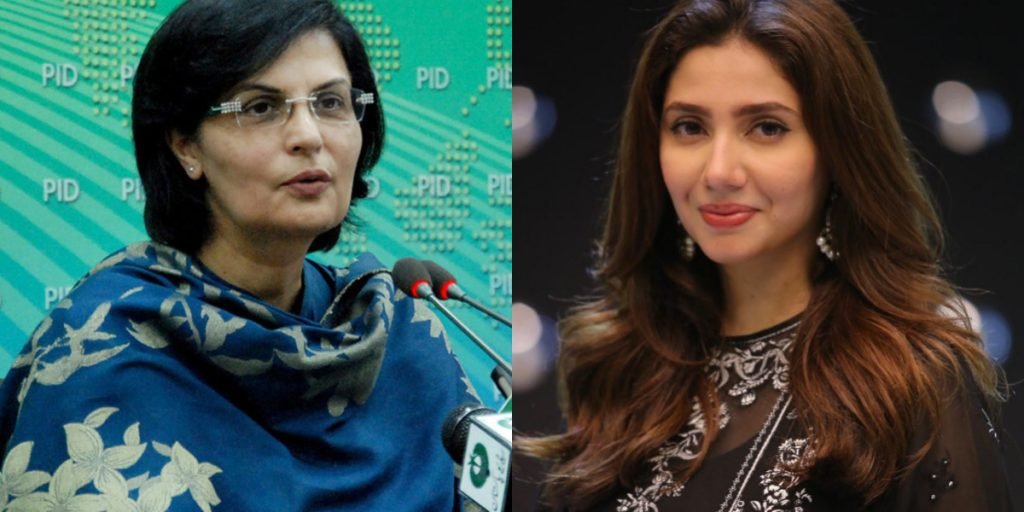
Special Assistant to the Prime Minister (SAPM) on Poverty Alleviation and Social Protection Dr Sania Nishtar and Mahira Khan were listed among BBC’s ‘100 women of 2020‘. According to the publication, the list included “100 inspiring and influential women from around the world for 2020”.
“This year 100 Women is highlighting those who are leading change and making a difference during these turbulent times,” said the publication.
While Mahira was lauded for her outspoken views against sexual violence, refusal to endorse skin-lightening creams and supporting the fight against racism, Dr Nishtar was honoured for “spearheading the transformative Ehsaas Poverty Alleviation programme, which has improved the livelihoods of millions of Pakistanis by providing mobile banking and savings accounts, and other basic resources.”
It is pertinent to add here that Mahira was also part of the inaugural Forbes Asia’s 100 Digital Stars list, along with Aiman Khan and Atif Aslam. The list highlighted celebrities from across the Asia Pacific region who have taken the digital world by storm.
Have more good news to share? Let us know in the comments.
A proud moment for Pakistan as Special Assistant to the Prime Minister (SAPM) on Poverty Alleviation and Social Protection Dr Sania Nishtar and Mahira Khan make it to BBC’s ‘100 women of 2020‘ list.
According to BBC, the list includes “100 inspiring and influential women from around the world for 2020”.
“This year 100 Women is highlighting those who are leading change and making a difference during these turbulent times,” said the publication.
Writing about Mahira, BBC said: “Mahira Khan is no ordinary actress – she is outspoken against sexual violence, refuses to endorse skin-lightening creams and supports the fight against racism. She wants to tackle social issues in her native Pakistan by changing the narrative in films and on TV.”
“Mahira is a national goodwill ambassador for the United Nations High Commissioner for Refugees, raising awareness of the plight of Afghan refugees in Pakistan. She’s been a firm favourite with audiences ever since starting out as an MTV video jockey (VJ) in 2006. Mahira is also a devoted mother to her 11-year-old son,” it added.
Mahira Khan with son Azlan
Similarly, talking about Dr Nishtar, BBC wrote: “Dr Sania Nishtar is a leader in global health and sustainable development. Since 2018, she has been spearheading the transformative Ehsaas Poverty Alleviation programme, which has improved the livelihoods of millions of Pakistanis by providing mobile banking and savings accounts, and other basic resources.”
“As SAPM on Poverty Alleviation and Social Protection, Sania has helped to empower the masses by taking the necessary first steps toward the development of a welfare state in Pakistan.”
Explaining the process behind the selection, BBC stated: “The BBC’s 100 Women team drew up a shortlist based on names gathered by them and suggested by the BBC’s network of World Service languages teams. We were looking for candidates who had made the headlines or influenced important stories over the past 12 months, as well as those who have inspiring stories to tell, achieved something significant or influenced their societies in ways that wouldn’t necessarily make the news. The pool of names was then assessed against this year’s theme – women who led change – and measured for regional representation and due impartiality before the final names were chosen.”
The list also includes Sanna Marin, who leads Finland’s all-female coalition government, Michelle Yeoh, star of the new Avatar and Marvel films and Sarah Gilbert, who heads the Oxford University research into a coronavirus vaccine. Meanwhile, one name on the list has been left blank as a tribute to countless women “around the world who have made sacrifices to help others”.