
Tag: e-commerce

  • New laws to fight cybercrime in Pakistan: Cabinet passes e-safety and data protection bills

    New laws to fight cybercrime in Pakistan: Cabinet passes e-safety and data protection bills

    In a significant development, the federal cabinet of Pakistan granted principle approval to two crucial pieces of legislation on Wednesday, which are expected to have a far-reaching impact on digital rights, e-commerce, and the digital economy of the country.

    The first bill, named the E-Safety Bill 2023, aims to tackle and prevent online crimes such as cyberbullying, online harassment, and blackmailing. To enforce the provisions of this bill, the cabinet also greenlit the establishment of a regulatory authority known as ‘The E-Safety Authority.’ This authority will be responsible for registering and monitoring websites, web channels, YouTube channels, and existing media houses’ websites. The main objective behind this initiative is to safeguard the rights of citizens, businesses, as well as public and private institutions from online harassment and blackmail.

    Presently, the Pakistan Telecommunication Authority (PTA) has the authority to monitor content and enforce relevant laws online, while the Federal Investigation Agency (FIA) handles cybercrime-related cases. However, the proposed E-Safety Authority will take charge of the front-end monitoring of all websites, promptly addressing violations and imposing penalties. This measure is deemed necessary due to the rapid pace at which cybercrime incidents occur, often exceeding the FIA’s investigative capacity, while the PTA’s role is primarily limited to regulatory functions for internet and telecom service providers.

    According to Dawn, the second bill, titled the Personal Data Protection Bill 2023, focuses on protecting user data and preventing the unauthorised use of information systems. The bill will apply to all types of online services, including online shopping platforms, various companies, and social networking websites operating in Pakistan. It aims to safeguard consumers’ data and ensure that it is not misused or illegally accessed.

    As per the official statement, “personal data” under the proposed legislation refers to any information directly or indirectly related to an identifiable individual, encompassing sensitive or critical personal data. The bill mandates all entities collecting or maintaining data, digitally or non-digitally operational in Pakistan, to register themselves locally and appoint a data protection officer. The National Commission for Personal Data Protection (NCPDP) will oversee the registration process and will establish sub-offices in provincial capitals and other necessary locations within six months of the bill’s passage.

    However, the approval of the Personal Data Protection Bill 2023 has raised concerns among international bodies representing internet-based platforms. The Asia Internet Coalition (AIC), through its Managing Director Jeff Paine, highlighted that the bill’s current form falls short of international data protection standards and imposes unnecessary complexities that may increase the cost of doing business and hinder foreign investment. The requirement for “critical” data to be stored locally and the restriction on cross-border transfer of other personal data could potentially limit access to global digital services for Pakistanis.

    In response to these concerns, the AIC has called for more transparent stakeholder consultations by the government. Digital rights campaigner and Meta board member, Nighat Dad, expressed similar sentiments, stating that while the bill addresses important issues, the lack of consultations is undemocratic.

    Despite concerns from international bodies, an official from the IT ministry defended the legislation, emphasising that the government’s primary responsibility is to protect Pakistan’s interests and its citizens. He asserted that commercial entities’ apprehensions are primarily driven by their business concerns.

    The approval of these significant bills marks a crucial step towards enhancing digital rights and data protection in Pakistan. As the nation progresses into a more digitally interconnected era, finding a balanced approach that addresses concerns from both local and international stakeholders will be crucial for the country’s digital economy and growth.

  • Amazon plans to lay off 10,000 employees due to declining sales

    Amazon plans to lay off 10,000 employees due to declining sales

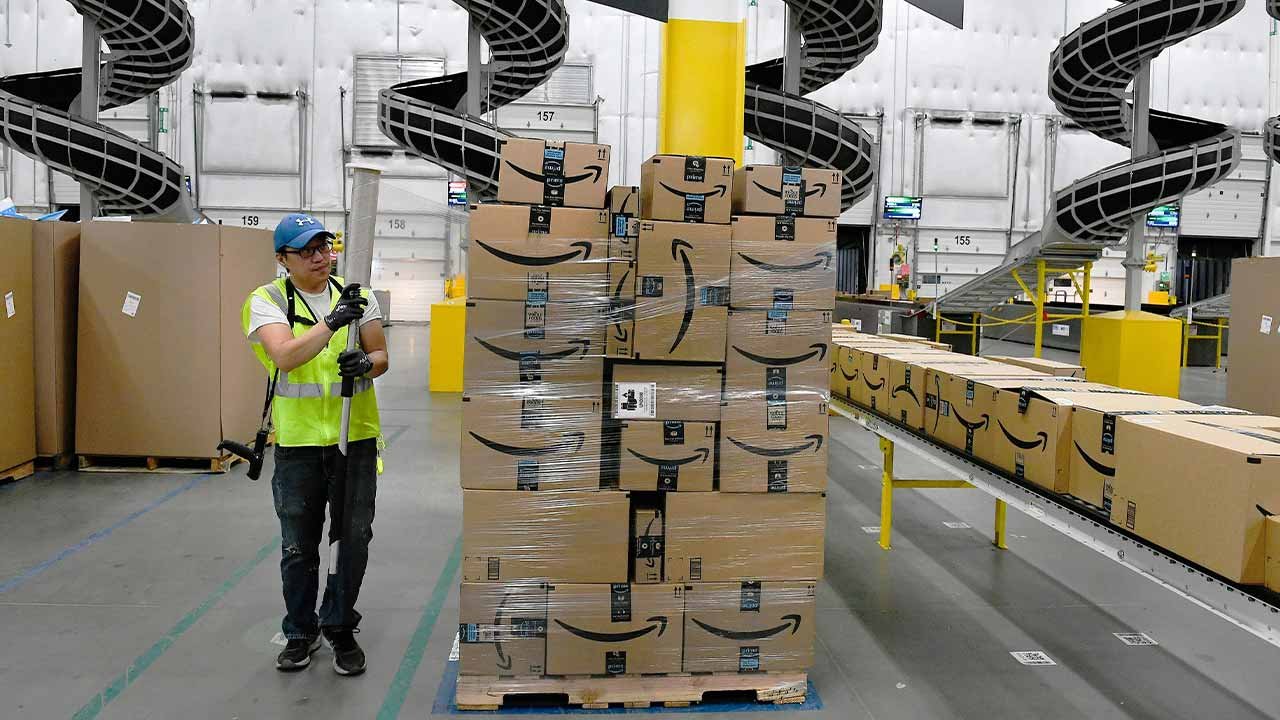
    Amazon is reportedly getting ready to lay off thousands of office workers due to decreasing sales and worries about an impending recession.

    The e-commerce giant’s office personnel could lose about 10,000 of their employees, according to US media sources who requested anonymity.

    Cuts are anticipated to have an impact on departments like e-commerce and personal devices.

    The business warned it had overhired during the pandemic and had previously implemented a hiring freeze and stopped some of its warehouse expansions. Additionally, it has taken steps to close off some areas of its operations by shelving plans for things like a personal delivery robot.

    The business announced last week that cutting costs would be a priority in its annual review of business operations. “As part of this year’s review, we’re of course taking into account the current macro-environment and considering opportunities to optimize costs,” the e-commerce company said in a statement.

    According to media sources, the precise number of positions that will be eliminated is still uncertain.

    Amazon is battling a dip in online sales after the epidemic saw a surge in its revenue. Despite a 15 per cent increase in overall revenue in the most recent quarter, the company has remained concerned about the forecast as the slowdown spreads to other industries, including its long-profit-boosting cloud computing division, Amazon Web Services.

    On social media, the company’s founder Jeff Bezos, who is no longer serving as CEO but is still chairman of the board, declared that it was time to “batten down the hatches.”

    Amazon joins a long list of other tech firms that have announced layoffs in an effort to signal an impending economic collapse. Included in the list is Meta, the parent company of Facebook, Instagram, and WhatsApp, which recently announced plans to eliminate 11,000 jobs, the largest reduction in staff in company history.

    According to a survey by Challenger, Gray & Christmas, which analyses such announcements, US-based tech companies have cut more than 28,000 jobs overall this year, more than double the number from a year ago.

  • Gen Z is more likely to buy products promoted by influencers, celebrities

    Gen Z is more likely to buy products promoted by influencers, celebrities

    People born between 1997 and 2012 are known as Generation Z. They are not just digitally aware, but real digital natives who have grown up immersed in digital networking.

    Gen Z has been identified as being nimble, active, and bold. Every generational shift leads to a transformation in demand and expectations.

    A research study conducted by Meta reveals how Gen Zers interact with marketers and invest their online time.

    Social media – more than a picture uploading platform

    Over two-thirds of Gen Zers are surveyed on Facebook and Instagram, according to Comscore research. By time spent on mobile and desktop, these two applications list third among the top ten digital sites.

    For many people, social media is more than a basic way to keep in touch with friends and loved ones. It’s where people can spend time discovering their passions and interacting with the brands they care about. Gen Zers are delighted to see advertisers on Meta platforms, according to a Meta-commissioned study. In fact, 60 per cent of those questioned claimed they follow a company on social media.

    Gen Zers crave engagement with favourite brand

    Gen Z craves a genuine engagement with the brands they adore. According to a Meta study, 41 per cent of Gen Zers surveyed stated they feel more personally connected when brands share content that makes them feel like they’re a member of the brand’s group.

    The yearning to be a part of something and to know what’s going on can go a long way: According to the survey, 29 per cent of respondents feel a stronger bond to businesses that provide an inside glimpse into their activities. Gen Zers also highly value real chats with brands, with more than a quarter of those polled expressing a desire to be able to ask product experts questions directly through social networks.

    Gen Zers fancy writing feedback

    Following a brand on social media is a method for 60 per cent of Gen Zers surveyed to engage more deeply with their interests. One of the most common methods for people to engage with their passions is through stories shared on social media by companies and influencers, according to 43 per cent of those polled.

    They do, however, want a more engaging experience: As a way to communicate with brands, 38 per cent of respondents love completing product feedback questionnaires. 

    Impact of involving celebrities, influencers

    The key to establishing a stronger bond between businesses and Gen Z is through influencers and artists. According to Meta data, 79 per cent of Gen Zers have made a purchase as a result of watching a creator’s content. Influencers let customer feels more attached to and satisfied with the businesses, products, and services they offer.

    Read more: Pakistanis will get slow Internet on Thursday

    Luckily for marketers, 35 per cent of those polled indicated that creator material caused them to promote a brand, product, or service.

    Role of social justice

    Advocating for social justice and ethnic diversity is critical for Gen Zers. According to a second Meta research of interactional analytics, Gen Zers used Instagram to express their views on social justice issues, with discussion volume increasing by 300 per cent year over year since May 2020. However, deeds speak louder than speech for this age.

    According to Meta study, Gen Z consumers expect brands to work with influencers from a variety of racial and cultural backgrounds. The study also found that more than half of Gen Zers polled learn about new businesses through content from influencers from multiple origins.

  • PM Khan welcomes $85 million foreign investment in Airlift

    PM Khan welcomes $85 million foreign investment in Airlift

    On Friday, Prime Minister Imran Khan welcomed the latest $85 million foreign investment in the quick commerce startup, Airlift, by leading Venture Capitals of the world.

    “Pakistan has huge potential and we are open for business,” PM Imran Khan stated in a tweet. The prime minister further guaranteed his government’s commitment towards creating such investment opportunities in Pakistan.

    Airlift is a Lahore-based online shopping delivery service, has successfully raised $85 million foreign investment in Series B funding round, the largest single private funding round in Pakistan’s history.

    Apart from PM Imran Khan, Punjab Chief Minister Usman Buzdar also commented on the success of the private firm. He said he was “glad” to share that international investors were showing confidence in Pakistan’s evolving technology ecosystem.

    The company has set a new model for bringing world-class financers to invest in Pakistan. This will collect confidence that great technology and user products can be developed in Pakistan, and this area of the world has some of the best expertise for producing practical and innovative tech advancement. Furthermore, Airlift Express alone, with its series B funding of $85 million, has added 5 per cent to the country’s FDI for the monetary year 2021.

    Airlift runs a quick commerce service in eight cities covering Lahore, Karachi, and Islamabad in Pakistan. Customers can order groceries, farm-fresh produce, other necessary items including medicines as well as sports gear from the company’s website or app and have the articles delivered within 30 minutes.

    In addition to this, using the latest foreign investment, the quick commerce startup, Airlift expects to place more offerings to its services in the near future and create nearly a quarter-million more jobs in Pakistan within the next five years.

  • Airlift raises $85 million in Pakistan for online delivery service

    Airlift raises $85 million in Pakistan for online delivery service

    As Pakistan joins a regional startup financing boom, Airlift Technologies Pvt. has raised the biggest single private investment round in the country’s history, ahead of plans to enter international markets.

    As per details, with involvement from former Y Combinator president Sam Altman, the Lahore-based online retail delivery company received $85 million in Series B funding headed by Harry Stebbings of 20VC and Josh Buckley of Buckley Ventures Ltd. According to a data tracker from venture capitalist firm Invest2Innovate, it would be the largest-ever investment for a Pakistani company.

    Pakistan is “in the very early stages, but the transformation is happening very, very quickly and we are seeing a shift in behavior,” Airlift co-founder Usman Gul said in an interview. “We have a lot of people who previously didn’t shop online.”

    The investment in Pakistan, a country with a population of more than 200 million people and a nascent digital sector, parallels a surge of investment over the border in India.

    According to Invest2Innovate statistics, Pakistani entrepreneurs, most of which are focused on e-commerce, raised a record $101 million in the first half of this year, compared to $66 million in all of 2020. That still pales in comparison to its neighbor, where technology companies made a record $6.3 billion in the second quarter.

    The investment comes after Airlift switched to e-commerce with 30-minute shipping in September after the epidemic forced them to abandon their primary business of providing air-conditioned bus trips. It joins a very competitive market across the globe, where supermarkets and e-commerce companies like Dunzo, Gorillas, Getir, and GoPuff compete for fast deliveries in congested areas ranging from Delhi to New York and London.

    The total money raised by Pakistani startups in the first half of the year is equal to the amount raised by Airlift. According to statistics collected by Bloomberg, it also surpasses the biggest initial public offering by the private sector in the United States.

    It now intends to expand to 15 Pakistani cities by the end of the year, up from the existing eight. It’s also on a recruiting frenzy, with ambitions to increase its core staff to 400 people by the end of next year, according to Gul. In approximately three months, the firm plans to join a growing market abroad.

    “Very quickly we realised that the distribution of consumer goods was quite broken,” he said. “I ordered groceries and had to wait six hours to get that delivery. So we wanted to change that.”

  • Teen receives table after he orders a cheap iPhone online

    Teen receives table after he orders a cheap iPhone online

    A teenager was left gobsmacked after he ordered a cheap iPhone online, which actually turned out to be a massive iPhone-shaped table.

    As per details, the teen from Thailand, had been excited when he stumbled upon what seemed to be a great deal for one of Apple’s beloved iPhones.

    While the shipping costs were a bit higher than he had expected, he couldn’t say not to what he thought was a total bargain. Unfortunately for him, he got a new bit of furniture instead of a brand new iPhone.

    The teen shared his story on social media, and it was clear to see he must have noticed something was wrong as soon as the package arrived.

    Instead of getting a phone-sized parcel, he was greeted with a cardboard box that measured a good few feet in length.

    When he unpackaged the item, he realised that he hadn’t actually ordered one of Apple’s phones, but a large iPhone-shaped table.

    According to the reports, the shopper later admitted he hadn’t checked the details of his order as closely as he probably should have.

    The story quickly gained a lot of attention on social media, as many people used it to warn others that they need to shop with care when buying items online.

    It is not yet known whether the teen attempted to return his phone-shaped table after realising his mistake.

  • E-commerce can create two million jobs and boost GDP up to $40 billion in Pakistan

    E-commerce can create two million jobs and boost GDP up to $40 billion in Pakistan

    E-commerce in Pakistan has the potential to create two million jobs and it can boost the country’s Gross Domestic Product (GDP) up to the level of $40 billion in the next couple of years.

    President of Rawalpindi Chamber of Commerce and Industry (RCCI) Saboor Malik, stated that transformation is required in the Information, Communications, and Technology sectors to uplift the digital economy of Pakistan.

    Saboor Malik has urged the government of Pakistan to adopt new dimensions of the economy as the digital platforms have been rapidly growing around the world and countries like Pakistan are still far behind in this race.

    More than 66 per cent of payments for e-shopping are being made as Cash on Delivery (COD) which does not reflect the true sense of digital platform.

    The Federal cabinet has already approved the E-commerce policy for promoting the digital culture and paperless trade to help enhance the trade volume.

    RCCI President remarked that Pakistan has huge participation in the global mobile market, with over 160 million mobile phone subscribers and around 150 million internet users.

    He suggested that the government must overhaul the whole banking infrastructure and encourage businesses, retailers, petrol pumps, PIA, Railways ticketing, superstores, schools and colleges to introduce payment gateways and banks should offer credit cards to businessmen.