Tag: Earth

  • Lunar spectacle double supermoons coming our way in August

    Lunar spectacle double supermoons coming our way in August

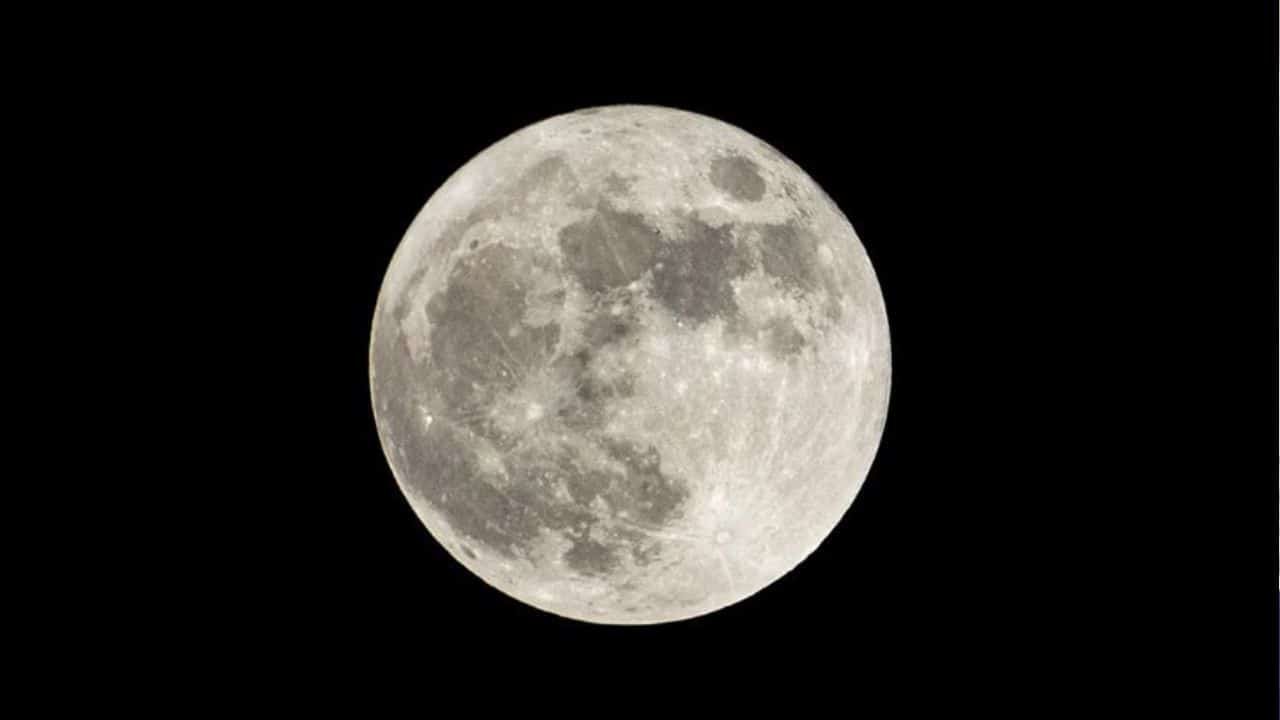
    A celestial extravaganza is set to bedazzle sky watchers this month with not one, but two spectacular supermoons, beginning with the Sturgeon Moon tonight, August 1st, and culminating in a rare super Blue Moon at the month’s end.

    Visible in various parts of the world, including the United States and Saudi Arabia, tonight’s supermoon, coined the Sturgeon Moon, will rise less than 226,000 miles away from Earth, as per USAToday.

    This supermoon will make the lunar orb appear 14% larger and 30% brighter than an ordinary full moon, according to Pakistani space scientist Dr. Jawed Iqbal. The Sturgeon Moon, named after the large fish found in the Great Lakes, will reach its zenith at 2:32pm ETD Tuesday, as reported by the Old Farmer’s Almanac.

    In Makkah, Majed Abu Zahra, the president of the Astronomical Society in Jeddah, forecasts the supermoon to peak at 9:30pm local time. Sky gazers can look towards the southeast after sunset to capture this magnificent sight.

    Supermoons, scientifically known as perigean full moons, occur when a full moon coincides with its perigee, the closest point to Earth in its elliptical orbit. This makes the moon appear larger and brighter than a typical full moon. While supermoons typically occur three to four times annually, this month’s double spectacle is indeed a rare treat.

    The second supermoon, a super Blue Moon, will illuminate the skies on August 30, promising to be the largest and brightest of 2023 due to its exceptionally close distance of 222,043 miles to Earth, nearly 17,000 miles closer than average. This super Blue Moon will peak close to sundown in the U.S., offering another chance for enthusiasts to marvel at the moon’s magnified radiance.

    However, if missed, the next opportunity to witness a super Blue Moon will not arrive until August 2032, almost nine years from now. While Blue Moons – the second full moon in a calendar month – recur approximately every two and a half years, Blue Supermoons, like the one expected this month, occur far less frequently, the last one having occurred back in December 2009.

    This extraordinary series of lunar events offers a golden opportunity for all sky-watchers to enjoy the night sky’s grandeur, serving as a vivid reminder of the fascinating phenomena that our celestial neighborhood continually offers.

  • ‘Of course’: Bilawal confirms he shook hands with Indian FM but no bilateral engagement held

    ‘Of course’: Bilawal confirms he shook hands with Indian FM but no bilateral engagement held

    Pakistani Foreign Minister (FM) Bilawal Bhutto-Zardari, who just wrapped up his visit to Goa, said that he did shake hands with his Indian counter partner S. Jaishankar at a dinner that was held in an unofficial capacity.

    During an interview with India Today, Bilawal said, “In all our unofficial engagements we always shake hands and we had dinner conversations amongst other foreign ministers but we did not hold a bilateral engagement.”

    Earlier, when both ministers greeted each other in front of the media they didn’t shake hands and this created headlines in India.

    Clearing up the confusion, Bilawal said that his aim to visit India was to attend Shanghai Cooperation Organisation (SCO). “Unless India reviews the action it took on August 5, 2019 (abrogation of Article 370), Pakistan is not in a position to engage bilaterally with India.”

    When pointed out by a journalist that “Pakistan can’t sponsor terror directed against India”, the minister, taking a jibe at Bharatiya Janata Party (BJP), said “This wolf whistling around the word terrorism which is ultimately an Islamophobic wolf whistle not only to whip up Hindu sentiment in India but also to brow beat Pakistan, that might be election strategy for some but not effective terrorism strategy”

    The Pakistani foreign minister said the country wishes to quell terrorism “not because India said it or the Indian government said so, but because we want to end this menace”. He said terrorism has caused the “largest number of casualties” in Pakistan among any of the other SCO countries.

    “India will have to explain what Kulbhushan Jadhav, a state actor, a navy commander, was doing in Pakistan carrying out terrorist attacks on Pakistani soil. Does that not come under cross-border terrorism?” he asked.

    Bilawal also reminded Indian Journalist Rajdeep Sardesai that Pakistan is the only country on Earth that has completed two Financial Action Task Force (FATF) objectives.

    He said that it is not productive for India to continue accusing Pakistan of sponsoring terror activities.

    Pointing out that India violated bilateral agreements and international agreements on Aug 5, 2019, by revoking the special status of Jammu Kashmir, Bilawal Bhutto also mentioned the 2007 Samjhauta Express bombing where around 70 people, mostly Pakistanis, were killed. “We are yet to see any justice,” he reminded Sardesai.

    He repeatedly said that both India and Pakistan have different perspectives on terrorism, adding that Pakistan is “willing to engage with any concerns that India might have but India will also have to address our concerns.”

  • NASA captures ultraviolet image of the Sun ‘smiling’ back at Earth

    NASA captures ultraviolet image of the Sun ‘smiling’ back at Earth

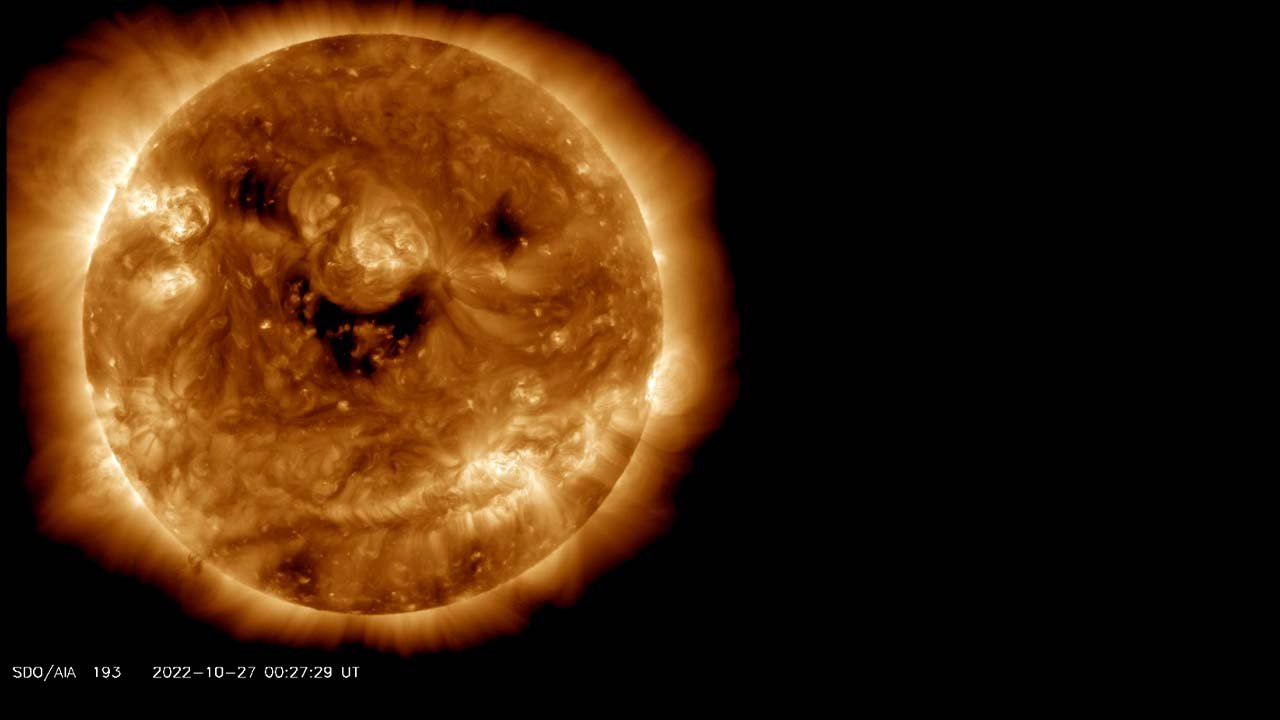
    This week, NASA’s Solar Dynamics Observatory (SDO) captured an ultraviolet image of the sun with three black spots that resemble a smiling face. This face may be a harbinger of a solar storm that might cause issues for Earth.

    A small geomagnetic storm watch has been issued for Saturday by the Space Weather Prediction Center of the National Oceanic and Atmospheric Administration. While geomagnetic storms may produce stunning auroras in the sky, they can also interfere with GPS and cause dangerous currents to flow through the electricity system and pipelines.

    The coronal holes, which are black patches, are places where solar wind escapes into space more rapidly and readily, keeping those places colder. According to the Exploratorium, a museum in San Francisco, these winds may reach speeds of up to 1.8 million miles per hour.

    People took advantage of the chance to create memes and change the smiling sun to resemble a pumpkin or the Stay-Puft Marshmallow Man from the Ghostbusters series.

    In 2014, NASA acquired pictures of the sun that similarly resembled jack-o-lanterns and gave them the name “Pumpkin Sun.” The sun’s active regions, which are what made up the jack-o-face, lantern’s indicate magnetic field disruptions that give rise to solar storms like solar flares and coronal mass ejections.

    Solar physicists employ telescopes that can picture the sun in the extreme ultraviolet spectrum because the human eye cannot see some wavelengths of sunlight. SDO highlights a specific region of the sun’s atmosphere using 13 different light wavelengths.

    “Ultraviolet light from the sun can show us the origins of solar storms that can lead to power outages, cell phone disruptions, and delays in shipping packages due to the rerouting of planes from over the pole,” Joseph Gurman, a researcher at the NASA Goddard Space Flight Center’s Solar Data Analysis Center said.

    “Wednesday’s image was taken at 193 angstrom light, giving it the yellow, light orange hue. The 2014 image was taken at a blend of 171 and 193 angstrom light, colorizing the sun in gold and yellow “to create a Halloween-like appearance,” according to NASA.

    Shockingly, both pictures were taken in October, just in time for Halloween.

  • Did water come to earth by asteroids?

    Did water come to earth by asteroids?

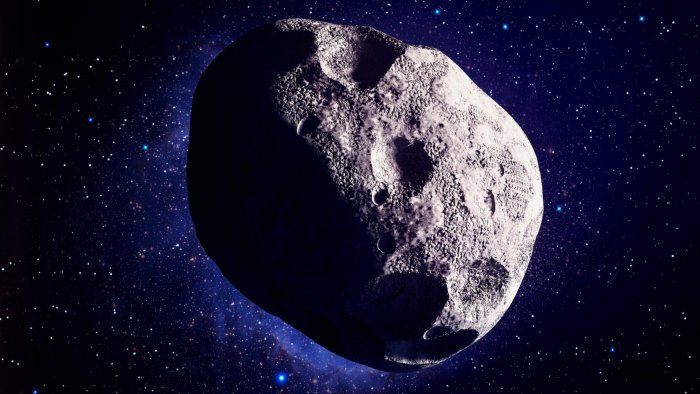
    Water may have been brought to Earth by asteroids from the outer edges of the solar system.

    A report in Deccan Herald (DH) suggests that scientists said this after analysing rare samples collected on a six-year Japanese space mission. Researchers scrutinised material brought back to earth in 2020 from the asteroid Ryugu.

    The 5.4 grams (0.2 ounces) of rocks and dust were gathered by a Japanese space probe, called Hayabusa-2, that landed on the celestial body and fired an impactor into its surface.

    In a new paper published in the journal Nature Astronomy, scientists said the Ryugu samples could give clues to the mystery of how oceans appeared on Earth billions of years ago.

    “Volatile and organic-rich C-type asteroids may have been one of the main sources of Earth’s water,” said a study by scientists from Japan and other countries.

    But the organic materials found “in Ryugu particles, identified in this study, probably represent one important source of volatiles”.

  • First solar eclipse of 2021 to occur on June 10

    First solar eclipse of 2021 to occur on June 10

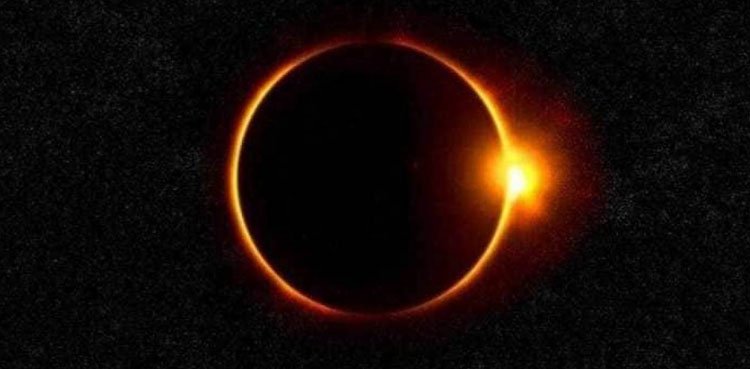
    The first solar eclipse of the year will occur on June 10. This eclipse is going to appear as a ‘ring of fire’.

    As per details, the eclipse will be seen in Russia, Greenland, Northern Canada, North Asia, Europe, and the United States.

    Astronomer and Director Institute of Space Science and Technology Karachi University Professor Dr Javed Iqbal said that the first solar eclipse of 2021 could not be witnessed in Pakistan.

    The eclipse can take place at 1:12pm Pakistani time while it would be at its peak at 3:42pm and expectedly end at 4:34pm, the professor said.

    Also Read:13 mesmerising photos of the Super Flower Blood Moon

    The annular solar eclipse occurs when the sun, moon and the earth come in a straight line and almost on the same plane. It is a partial eclipse when a ring of fire appears in the sky.

    They occur every year or two and can only be seen from a thin pathway across the planet.

    A solar eclipse always occurs about two weeks before or after a lunar eclipse, when the Moon moves into Earth’s shadow. Lunar eclipses are evident from about half of the Earth’s surface.

    The last lunar eclipse which was also notseen  in Pakistan was witnessed on May 26.

  • NASA shares picture of snow-covered Himalayan ranges from space

    NASA shares picture of snow-covered Himalayan ranges from space

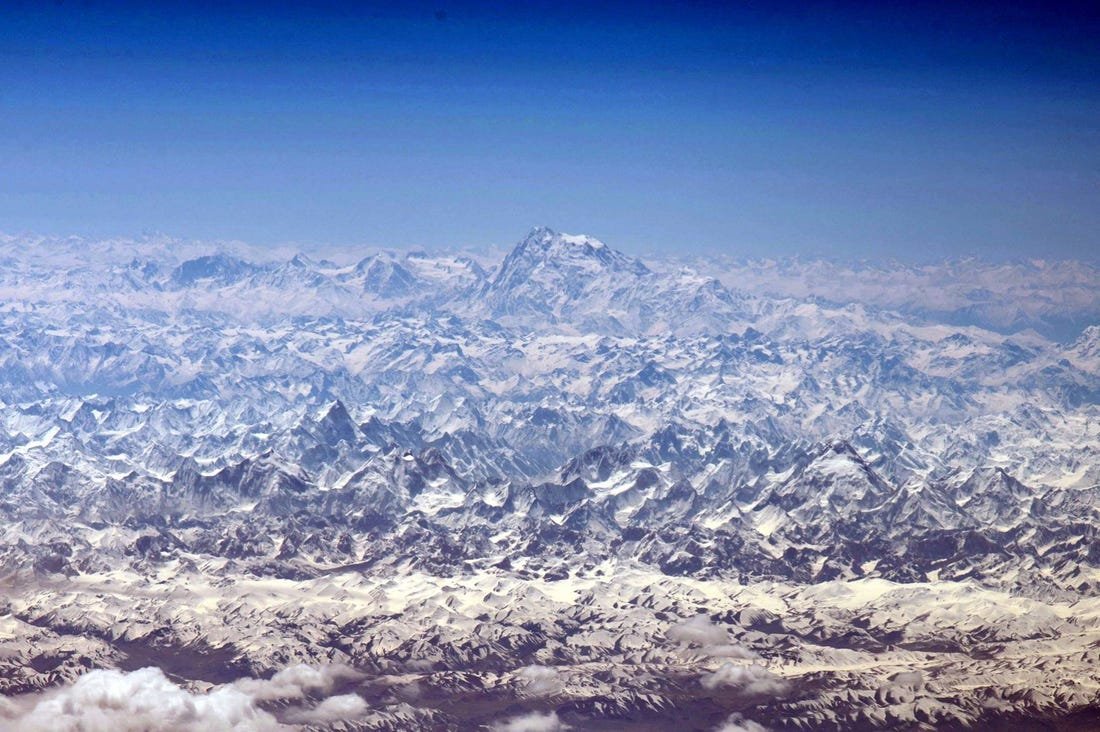
    The National Aeronautics and Space Administration (NASA), which often shares pictures of the planet as seen from the space, has shared a picture of the snow-covered Himalayan ranges.

    The long exposure shot sees not just the expanse of bright white mountain ranges but also captures the city lights of New Delhi and Lahore to the south and the arid Tibetan plateau, the “Roof of the world,” to the north.

    Among these details is also a faint, orange airglow of atmospheric particles reacting to solar radiation.⁣ The horizon of the Earth adds the element of the beauty of this universe.

    Following months of coronavirus lockdown, people were lucky to see the mighty Himalayan mountains from their cities due to reduced pollution.

    The Himalayas are the highest mountain range in the world and are a sight to behold even on Earth. But the shot NASA shared from space is absolutely breathtaking. The picture has gone viral on social media with over a million likes and comments.