Tag: ECC

  • Shaandar renovation? Government approves more than Rs16 crore for renovating Shehbaz’s office

    Shaandar renovation? Government approves more than Rs16 crore for renovating Shehbaz’s office

    The government on May 7 approved a supplementary budget worth Rs147 billion for various expenses including more than Rs36 crore for renovating the Prime Minister Office and expenses for the employees of the Karachi Shipyard and Engineering Corporation.

    The Economic Coordination Committee (ECC) approved a budget of Rs162.5 million for renovating the PM’s Office, the Express Tribune has reported.

    The ECC of the Federal Cabinet authorized the financial decisions, including increasing the federal government’s wheat procurement quota by another 400,000 metric tonnes.

    Punjab farmers have suffered due to the flawed decision-making of the past caretaker government which imported 3.5 million tonnes of wheat despite domestic surplus.

    Correspondingly, the government also allowed borrowing Rs41.5 billion to buy the commodity from farmers at Rs3900 per 40kg rate.

  • Bajwa, Faiz Hameed didn’t violate constitution, says Khaqan Abbasi

    Bajwa, Faiz Hameed didn’t violate constitution, says Khaqan Abbasi

    Former prime minister of Pakistan Shahid Khaqan Abbasi has said on Sunday that he didn’t ever seen former Army Chief General (R) Qamar Javed Bajwa and former Director General (DG) Inter-Services Intelligence (ISI) Lt. General (R) Faiz Hameed breach the constitution.

    Any wrongdoing should be addressed in a proper way, the former Prime Minister said on Samaa TV’s show “
    Do Tok with Kiran Naz. He also talked about different domestic issues and Pakistan’s relationship with other countries.

    Abbasi criticised the debate about Muhammad Aurangzeb’s selection as Finance Minister in the federal cabinet, emphasising the significance of competence rather than just party membership.

    Shahid Khaqan Abbasi also advocated for accountability and said that the establishment of a truth commission is necessary to keep the facts transparent.

    Abbasi also emphasised that the Prime Minister should chair the Economic Coordination Committee (ECC) to ensure quick and effective decision-making in economic affairs.

  • PM Shehbaz transfers ECC chairmanship to Finance Minister Aurangzeb

    PM Shehbaz transfers ECC chairmanship to Finance Minister Aurangzeb

    Prime Minister (PM) Shehbaz Sharif, in a reversal of his earlier decision, has transferred the chairmanship of the Economic Coordination Committee (ECC) to Finance Minister Muhammad Aurangzeb.

    According to a notification, the ECC will now be led by the finance minister, with ministers of economic affairs, planning, commerce, power, and petroleum being integral members of the committee.

    Previously, PM Shehbaz had announced himself as the chair of the ECC when unveiling the composition of seven major committees. This move had drawn criticism for potentially limiting the authority of the new finance minister. 

    Furthermore, the premier had initially chosen to preside over the Cabinet Committee on Energy (CCoE).

    Similarly, the Cabinet Committee on State-Owned Enterprises (CCoSOEs) was formed earlier under the chairmanship of the finance minister. Accordinng to Aaj News, the Minister for Finance will head the CCoSOEs, with ministers of Maritime Affairs, Economic Affairs Division, Science and Technology, and Housing and Works serving as its members.

    In a report by APP, PM Shehbaz emphasised the government’s commitment to implementing tough economic measures to navigate the country out of crisis while ensuring the protection of the underprivileged segments of society. 

    He stressed that the brunt of these measures would primarily be borne by the affluent, with mechanisms in place to safeguard the interests of the poor and vulnerable.

    Speaking at the meeting of the Apex Committee of the Special Investment Facilitation Council (SIFC), the prime minister disclosed that the International Monetary Fund (IMF) had completed the review for the disbursement of the last tranche of US$1.1 billion, expected to be received next month.

  • Is Aurangzeb being pushed in background to give Dar more control?

    Is Aurangzeb being pushed in background to give Dar more control?

    In a surprising move, the Finance Minister of Pakistan finds himself cut from two major financial decision-making committees, while paving the way for a much bigger role in financial matters for Ishaq Dar, Express Tribune has reported.

    Prime Minister Shehbaz Sharif has reshuffled four cabinet committees. As a result, Finance Minister Aurangzeb now heads only one committee instead of three.
    PM Shehbaz kept the chairmanship of the very important Economic Coordination Committee (ECC) of the cabinet instead of giving the Finance Minister the portfolio.

    Meanwhile, the PM has given Foreign Minister Ishaq Dar the chairmanship of Cabinet Committee on Privatization (CCOP) – a post normally headed by the Finance Minister of the country.

    Tribune reported that there was some apprehension within the ruling party Pakistan Muslim League (PML-N) regarding the appointment of Aurangzeb as the Finance Minister and it was decided within the party leadership that Dar would stay in charge of economic affairs but in a different capacity.

    Finance Minister Muhammad Aurangzeb now chairs only the Cabinet Committee on State-owned Enterprises (CCoSOEs).

  • ECC greenlights 25% sales tax increase on domestic cars

    ECC greenlights 25% sales tax increase on domestic cars

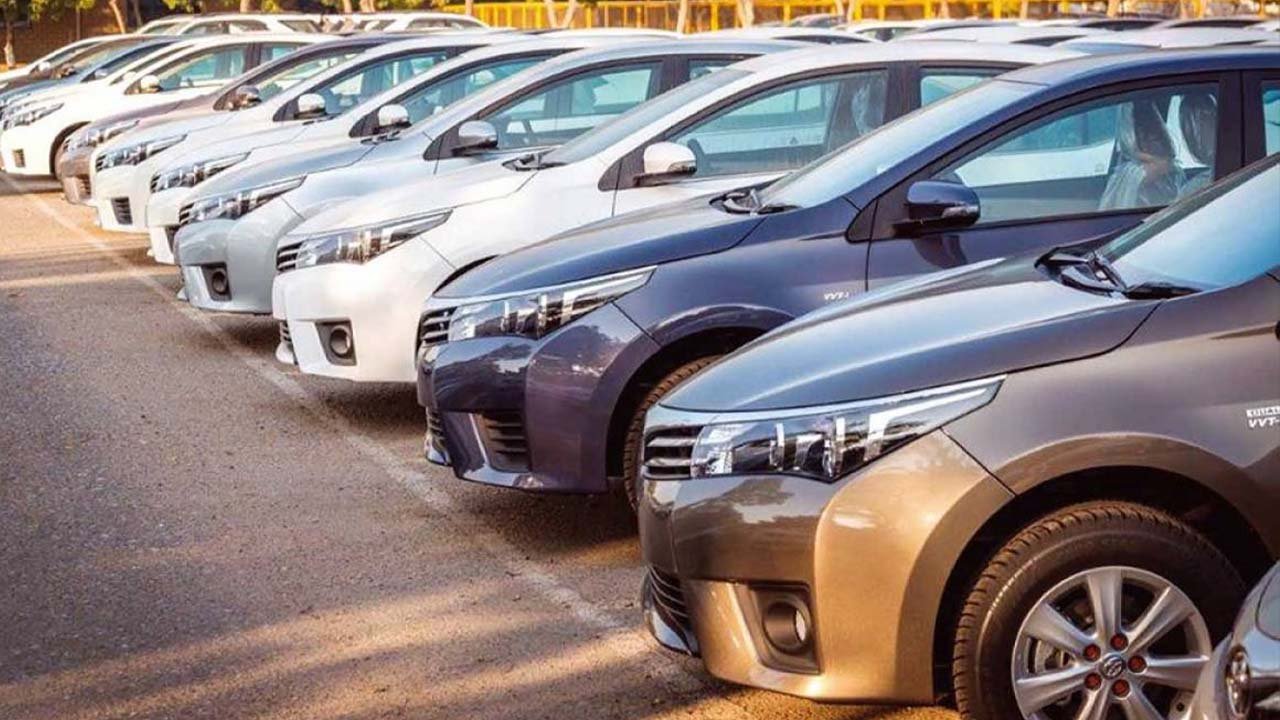
    In a significant development, the Economic Coordination Committee (ECC) of the Cabinet has given its nod to a proposal for increasing the sales tax on vehicles manufactured and assembled within the borders of Pakistan.

    The decision was finalised during a pivotal ECC meeting held in the capital city on Wednesday.

    The proposal, presented by the Federal Board of Revenue (FBR), suggested an elevation in the sales tax applicable to the auto sector, particularly on vehicles produced and assembled domestically.

    Following a comprehensive deliberation, the ECC cabinet sanctioned the process for determining a 25 per cent sales tax rate on locally manufactured and assembled vehicles.

    As per the endorsed proposal, vehicles valued at Rs4 million or equipped with 1400 cc engines will be subject to a 25 per cent sales tax.

    This taxation structure is anticipated to persist in the upcoming budget, signalling potential implications for consumers as a result of the price hike.

    The imposition of a 25 per cent sales tax on 1400cc vehicles is expected to have a direct impact on the pricing structure, leading to a potential surge in vehicle costs. The ECC’s decision aligns with ongoing efforts to streamline fiscal policies in the country.

    In addition to this decision, the ECC also greenlit a substantial subsidy of Rs7,492.75 million under the Ramazan Relief Package 2024.

    Chaired by Caretaker Finance Minister Shamshad Akhtar, the meeting aimed to address the financial aspects of the relief package, particularly subsidising the targeted beneficiaries of the Benazir Income Support Programme (BISP).

    According to a press statement issued by the finance ministry, the subsidy allocation is part of the budget for 2023–24, with a primary focus on providing support to those identified under the BISP. This move underscores the government’s commitment to social welfare initiatives.

    Furthermore, the ECC approved a proposal related to the “Permission to Import Wheat and Export of Wheat Flour under the Export Facilitation Scheme 2021.” This decision, brought forth by the Ministry of Commerce, reflects the government’s strategic measures to balance wheat supply and demand dynamics in the country.

    The ECC meeting signifies a pivotal moment in shaping economic policies, with decisions that carry far-reaching implications for both the automotive sector and social welfare initiatives in Pakistan.

    The approved proposals are poised to contribute to the broader economic landscape and address pertinent challenges in the nation’s fiscal framework.
  • Tariff hike of Rs1.72 per unit approved for K-Electric consumers 

    Tariff hike of Rs1.72 per unit approved for K-Electric consumers 

    The Economic Coordination Committee (ECC) has granted approval for quarterly tariff adjustments of Rs1.72 per unit for K-Electric, alongside government guarantees of Rs100 billion for Pakistan State Oil (PSO) and a Rs20 billion credit facility for Punjab’s Green Cooperative Initiative. 

    The ECC session, presided over by Federal Minister for Finance Dr Shamshad Akhtar and attended by other federal ministers and senior officials, addressed various summaries submitted by ministries such as Interior, Maritime Affairs, Energy (Power Division), Energy (Petroleum Division), Poverty Alleviation and Social Safety, and Defence. 

    The decision to adjust the tariff for K-Electric was reached after careful consideration of a summary presented by the Ministry of Energy regarding “Uniform Quarterly Tariff Adjustments for K-Electric Consumers on a par with XWDISCOs 2nd and 3rd Quarterly FY 2023.” 

    Following in-depth discussions, the ECC concluded that the tariff rationalisation through adjustments for K-Electric, aligning with the uniform Quarterly Tariff Adjustment (QTA) guidelines already issued to NEPRA, will be applicable to the consumption of July, August, and September 2023.  

    According to The News, these adjustments are set to be recovered from K-Electric consumers in December 2023, January 2024, and February 2024, respectively. 

  • IMF-backed gas price hike in Pakistan aims to tackle rising circular debt

    IMF-backed gas price hike in Pakistan aims to tackle rising circular debt

    The Economic Coordination Committee (ECC) recently made a decision to raise gas prices, a move that financial experts at Topline Securities, a brokerage firm, believe is a crucial step in Pakistan’s efforts to reach an agreement with the International Monetary Fund (IMF). This agreement is set for review in November.

    The decision to increase gas prices is seen as a necessity due to the alarming escalation of gas circular debt, which has now reached a staggering Rs2.1 trillion.

    Unfortunately, this debt is increasing at a rate of Rs350–400 billion annually, as stated by the Energy Minister.

    The IMF has consistently advocated for reducing circular debt by raising gas tariffs, as it places a substantial burden on Pakistan’s fiscal accounts. We anticipate that this, in conjunction with the rationalisation of power tariffs, will pave the way for Pakistan to secure a staff-level agreement during the November review.

    Notably, the ECC approved the proposed tariff schedule submitted by the Ministry of Energy, which will come into effect on November 1, 2023, instead of the initially proposed date of October 1, 2023.

    According to the approved schedule, there will be an increase of up to 173 per cent for non-protected domestic consumers, 136 per cent for commercial consumers, 86 per cent for export, and 117 per cent for non-export industries.

    Looking ahead, Pakistani authorities are gearing up for discussions with the IMF during the upcoming review of the $3 billion loan programme scheduled for November.

    Analysts predict that the rise in gas tariffs will help to minimise the disparity in gas tariffs for Sui Southern Gas Company (SSGC) and Sui Northern Gas Company Limited (SNGPL), resulting in a positive impact on their cash flow.

    The combined revenues of both Sui companies, which totaled around Rs1.6 trillion, are expected to experience significant improvement following this gas price hike as the tariff differential narrows.

    Furthermore, the increase in gas prices will have a positive impact on exploration companies like the Oil & Gas Development Company (OGDC) and Pakistan Petroleum (PPL) as it aids in reducing gas circular debt.

  • ECC approves margin hike for petroleum dealers and OMCs starting September 15

    ECC approves margin hike for petroleum dealers and OMCs starting September 15

    The Economic Coordination Committee (ECC) of the Cabinet, in a significant move, has given its nod to incrementally raise the margins of petroleum dealers and oil marketing companies (OMCs) starting from September 15. This decision followed a detailed review of a proposal submitted by the Ministry of Energy (Petroleum Division).

    The ECC’s decision entails an enhancement of the margins for petroleum dealers handling Motor Spirit (MS) and High-Speed Diesel (HSD) by Rs1.64 per litre. This increment will be implemented through four fortnightly installments of Rs0.41 per litre, effective from September 15, 2023.

    Furthermore, OMCs will also see their margins on MS and HSD increase by Rs1.87 per litre. This increment will likewise be phased in over four installments, each amounting to Rs0.47 per litre, also commencing on September 15, 2023.

    To ensure transparency and efficiency in determining these margins, the ECC has entrusted the responsibility to the Oil and Gas Regulatory Authority (Ogra). Ogra is expected to develop a systematic mechanism for margin calculation, taking into account the operational costs incurred by OMCs and dealers, with specific reference to Pakistan State Oil (PSO).

    In a separate development, the ECC meeting addressed the financial challenges faced by Pakistan International Airlines (PIA). The national carrier had requested a provision of Rs22.9 billion, as well as the deferment of Rs1.3 billion per month to the Federal Bureau of Revenue (FBR), along with loans and markup amounts until the finalization of the restructuring plan.

    However, the ECC decided to reject PIA’s request. It was also agreed upon that the Finance Division and the State Bank of Pakistan would extend their support to PIA once a concrete restructuring plan is developed and submitted to the committee’s satisfaction.

    Additionally, the ECC approved a Technical Supplementary Grant of Rs40 billion to fund various pre-approved projects for defense services and to cover subsidies and miscellaneous expenditures during the fiscal year 2023-24. This funding will be disbursed on a case-by-case basis, aligning with the current budgetary provisions.

    According to The News, The ECC’s decisions reflect the government’s commitment to addressing the financial dynamics of the petroleum sector and the ongoing restructuring efforts within PIA, while maintaining fiscal prudence in budget allocations.

    This latest development is expected to have a significant impact on the energy sector and the national carrier, as stakeholders closely monitor the implementation of the ECC’s decisions in the coming fortnights.

  • ECC approves interest-free loan scheme for electric bikes and rickshaws to empower youth

    ECC approves interest-free loan scheme for electric bikes and rickshaws to empower youth

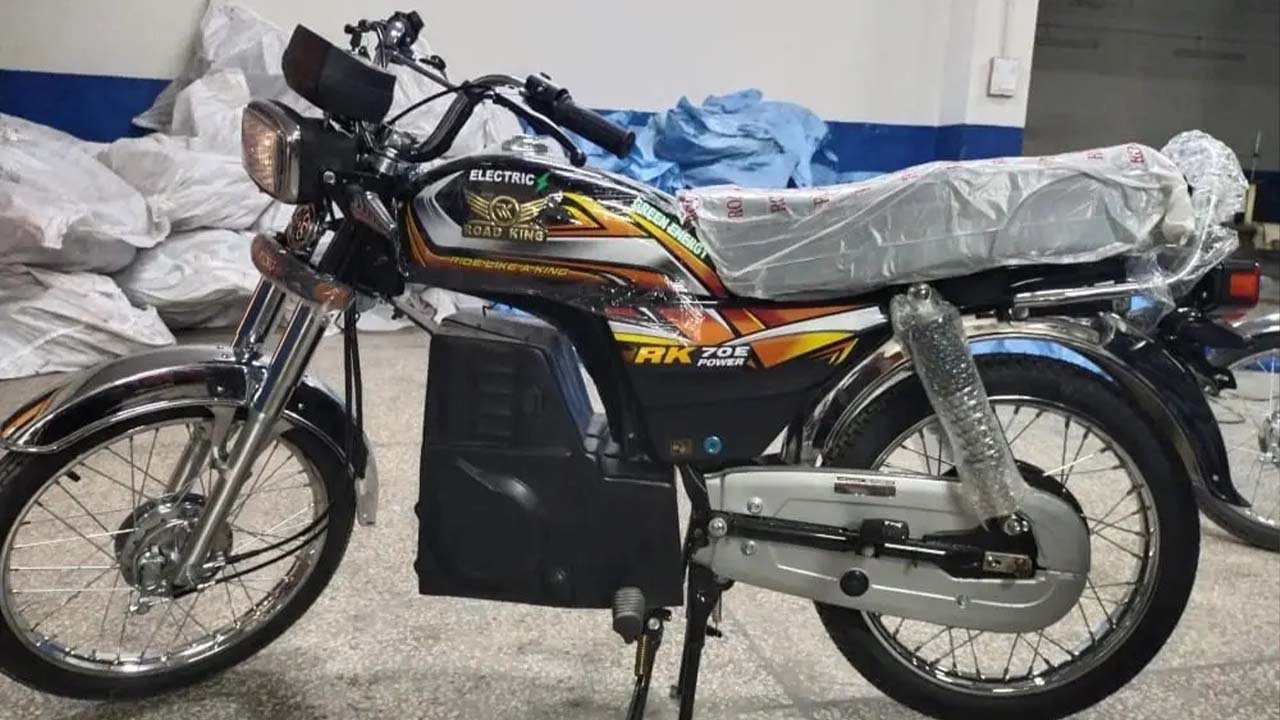
    On Thursday, the Economic Coordination Committee (ECC) of the cabinet approved a loan scheme with 0 per cent markup for environment-friendly electric bikes (e-bikes) and electric rickshaws (e-rikshaws) in a bid to facilitate youth and promote self-sufficiency.

    The approval was given during a meeting chaired by Finance Minister Senator Ishaq Dar, where various financial proposals of ministries and divisions, including the loan scheme, were approved.

    The Ministry of Industries and Production submitted a summary on the financing facility for e-bikes and e-rikshaws, presenting details on viability, demand, and incentives to make them affordable. In order to create a sustainable demand for these vehicles, the ECC approved the Prime Minister’s Youth Business & Agriculture Loan Scheme (PMYB&ALS) model for two and three-wheelers.

    Under this scheme, interest-free loans worth Rs0.5 million will be provided to youth for a period of three years. The Ministry of Industries and Production will work out the modalities of the scheme in coordination with PMYB&ALS.

    During the meeting, the Ministry of National Food Security and Research tabled a summary on the price of sugar during the month of Ramadan and briefed the attendees on the outcome of the Sugar Advisory Board’s meeting with the Pakistan Sugar Mills Association (PSMA) regarding the retail price of sugar.

    The ECC endorsed the decision that PSMA Punjab Zone will provide 20,000 metric tonnes of sugar at a retail price of Rs95 per kg during the holy month of Ramadan for sale to the general public through the government of Punjab at the district level. The ECC also directed to make similar arrangements with other provincial PSMA for the provision of sugar in other provinces/areas.

  • Govt slashes petrol price by Rs3.05,  raises diesel by Rs8.95 per litre

    Govt slashes petrol price by Rs3.05, raises diesel by Rs8.95 per litre

    Due to changes in oil prices on the global market, the government announced a revision in petroleum prices on Sunday.

    According to a statement released by the Finance Division, the cost of petrol has been reduced by Rs3.05 a litre for the first half of August 2022.

    Petrol will now be sold for Rs227.19 per litre as a result of the pricing revisions. Previously, the price of petrolin the country per litre was Rs230.34.

    The price of high-speed diesel has been upped by Rs8.95, the new price per litre is now Rs244.95.

    The depreciation of the rupee against US dollar has raised the cost of purchasing petroleum products, the Ministry of Energy notified the Economic Coordination Committee (ECC) of the cabinet today.