Tag: ECC

  • ECC lifts import ban on goods except CBU vehicles, mobiles and appliances

    ECC lifts import ban on goods except CBU vehicles, mobiles and appliances

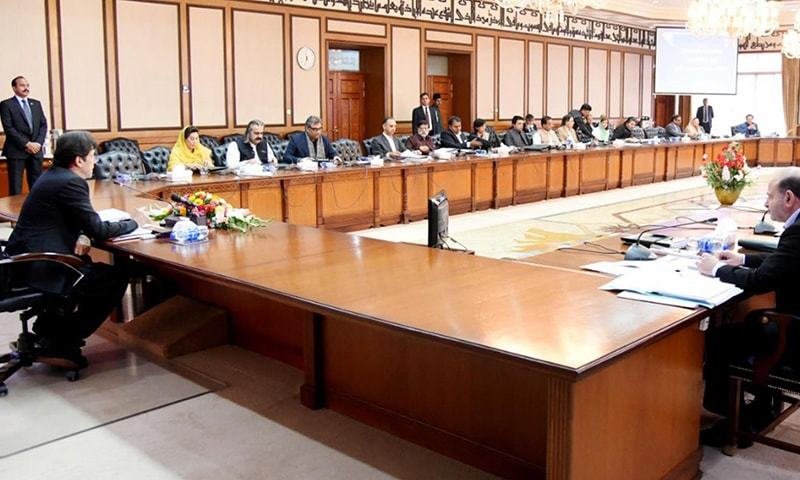
    The Cabinet’s Economic Coordination Committee (ECC) has decided to lift the import ban on all items other than completely built units (CBUs) of automobile, mobile, and home appliances and to permit the import of 200,000 metric tonnes of wheat.

    The increase in petroleum dealers’ margin from Rs4.90 per litre and Rs4.13 per litre, respectively, to Rs7 per litre was also approved at the meeting chaired by Finance Minister Miftah Ismail.

    The Pakistan Petroleum Dealers Association (PPDA), according to sources, has asked the government for an immediate revision of their margins due to inflation, increases in staff salaries and utility costs, etc.

    They have asked that the margins be revised to Rs6.90 per litre including 15 per cent profit (effectively Rs7.94 per litre). The PPDA then used the media to announce a nationwide strike that would begin on July 18, 2022, with the demand that their margins be increased to 6 per cent of the current selling price (effectively, Rs13.81 per litre for MS and Rs4.16 per litre for HSD).

    On the orders of the prime minister, Musadik Malik, the minister of state for petroleum, and Shahid Khaqan Abbasi, the former minister for petroleum, immediately began communication with the PPDA. On July 16 and 17, 2022, several rounds of negotiations took place in Karachi.

    During negotiations, the Secretary of Petroleum and the Chairman of OGRA both remained present. The PPDA changed its position during negotiations and requested that the margins be raised to Rs9.23 and Rs9.46/litre on MS and HSD, respectively, with immediate effect.

    The negotiating team acknowledged that a dealer with daily sales of less than 200,000 litres cannot operate the business profitably on current margins, and that such losses serve as a motivator for dishonest behaviour.

    After lengthy negotiations, the PPDA finally agreed to margins of Rs7 per litre for both MS and HSD. Based on this agreement and the promise that the revised margins will take effect in August 2022, the PPDA cancelled its call for a strike on July 18, 2022.

    The commitment made to the dealers in November 2021 is still less than this agreed-upon margin (4.4 per cent of sales price).

    The 4th international wheat tender for 2022, which was announced and opened on July 25, has prompted the Ministry of National Food Security and Research to ask for urgent advice. The Trading Corporation of Pakistan (TCP) issued its fourth tender on May 19, 2022, in order to secure 200,000 metric tonnes of imported wheat on a CFR basis, it was announced at the meeting.

    The ECC has approved the direct payment of $11.6 million as compensation/goodwill to the company M/s China Gezhouba Group International Engineering Co. Ltd (CGGC) through the Ministry of Foreign Affairs in response to a proposal from the Ministry of Water Resources for a compensation package for the Chinese casualties at the Dasu Hydro Power project.

    The ECC determined that the compensation/goodwill package’s amount, which is US$ 11.6 million, will remain the same as per the ECC’s earlier decision from January 21, 2022.

    it also approved the proposal to switch both the Fatima Fertilizer (Sheikhupura Plant) and Agritech plants to domestic gas on a summary moved by the Ministry of Industries and Production.

    According to the ministry, RLNG is provided to both SNGPL-based plants on a cost-sharing basis, and the gas rate for running these plants is calculated using a variable contribution margin (VCM).

    Both plants have asked the Ministry to revise the VCM and cap the GST at the price paid by the plants due to rising fuel prices and other factors. The proposal to switch both plants to domestic gas was approved by the ECC following discussion in accordance with the Federal Cabinet’s and ECC’s earlier decision.

    The Ministry of Petroleum, Ministry of Finance, Ministry of Food Security, and Ministry of Industries & Production were further instructed by the ECC to determine the gas price/VCM for the fertilisers The ECC also decided that sales tax could be applied to the actual gas cost that the company is paying.

    The Ministry of Commerce also provided a summary stating that the Cabinet approved the ban on the import of approximately 33 classes/categories of goods in order to reduce the current account deficit (CAD), which was on the rise.

    The decision caused an overall decrease in imports of the prohibited goods of over 69 per cent, or from $399.4 million to $123.9 million. Due to serious concerns expressed by significant trading partners regarding the imposition of the ban and taking into account the fact that the ban has had an impact on supply chains and the domestic retail industry, a review meeting was also held to review the ban after two months.

    The government’s ongoing efforts have resulted in a significant decrease in imports, so the ECC decided to lift the ban on imported goods other than auto, mobile, and home appliance CBUs.

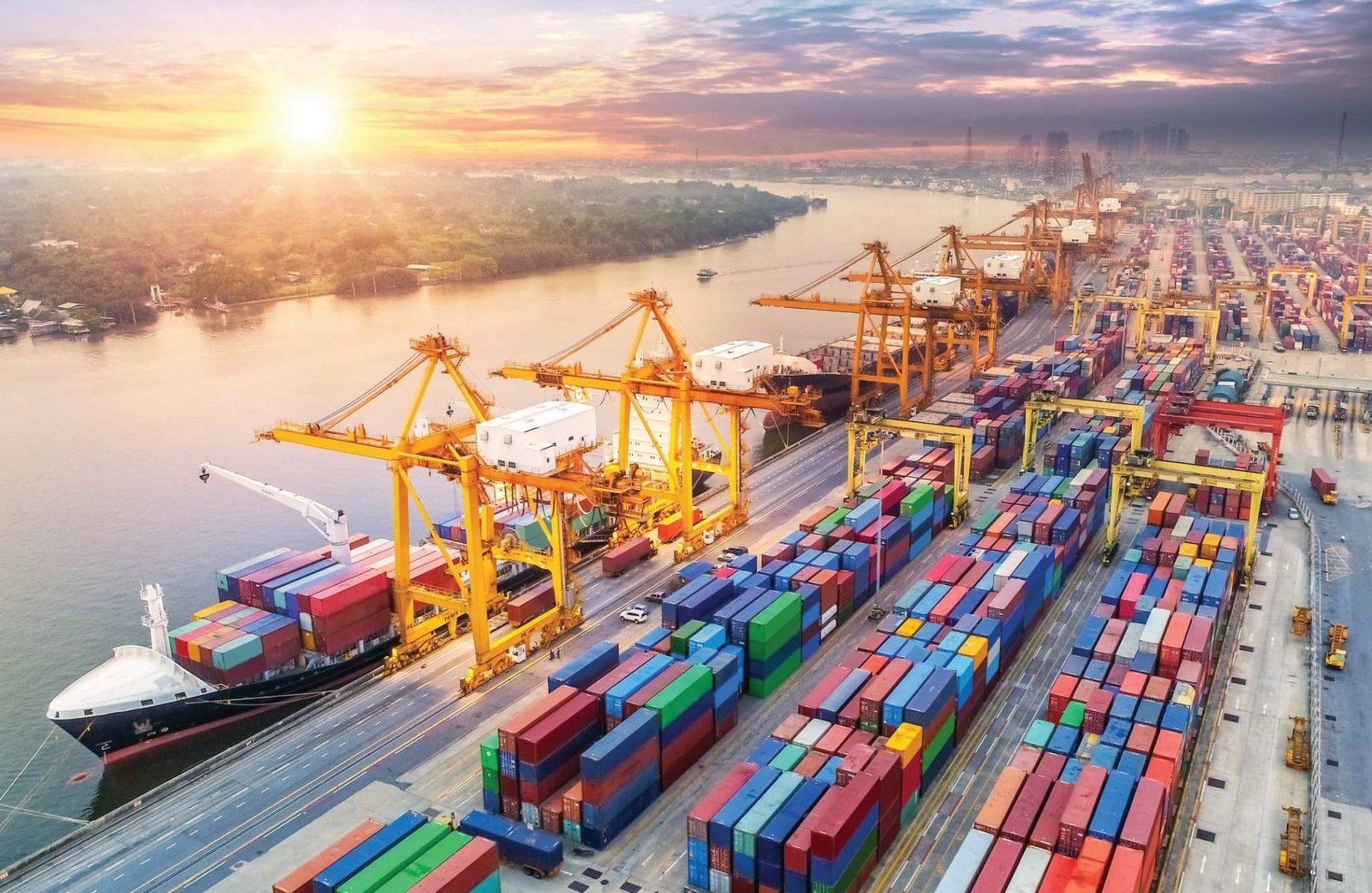
    Additionally, all held-up shipments (aside from those that still fall under the banned category) that arrived at the ports after July 1, 2022, may be cleared with the payment of a 25 per cent surcharge.
  • Teammates defend flip-flop on trade with India; say PM, Commerce Minister Imran ‘wear different hats’

    Teammates defend flip-flop on trade with India; say PM, Commerce Minister Imran ‘wear different hats’

    Teammates of Prime Minister (PM) Imran Khan have defended his move to defer cotton and sugar trade plans with India as the PM after approving the same as the commerce minister earlier.

    Defending the move, National Security Adviser (NSA) Dr Moeed Yusuf said that the premier wear two hats as both the commerce minister and the chief executive of the country.

    When asked if Imran, as the commerce minister, believed the proposal should be forwarded to the Economic Coordination Committee (ECC) for approval, but differed on his own idea as the PM, the NSA didn’t respond.

    “I am not the bureaucrat here to determine the technicalities,” he said, adding that it was just irrelevant.

    Federal Minister Fawad Chaudhry also went for a similar choice of words, saying that the premier “wore two hats”.

    “As the PM chairing the federal cabinet meeting he also has to take into account the recommendations of other stakeholders, including the foreign, defence and interior ministries,” the minister maintained.

    The statements come days after the federal cabinet rubbished plans to resume cotton and white sugar import from India despite Commerce Minister Imran Khan’s proposal approved by ECC headed by Finance Minister Hammad Azhar.

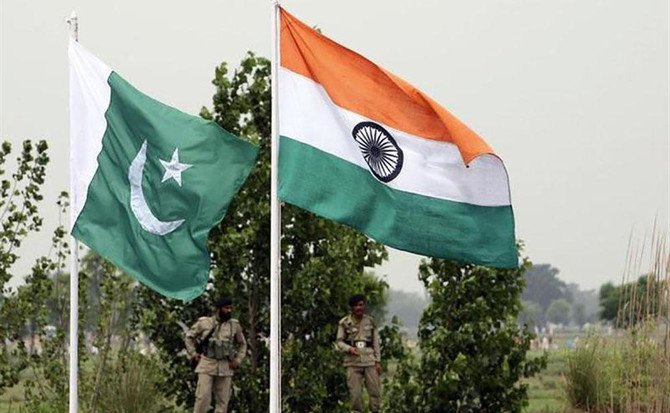
    The federal cabinet chaired by PM Imran deferred the proposal despite improving Pakistan-India ties, saying New Delhi should first restore the autonomous status of the troubled disputed valley of Kashmir.

  • Cabinet rubbishes ECC approval to resume cotton, sugar import from India: report

    Cabinet rubbishes ECC approval to resume cotton, sugar import from India: report

    A meeting of the federal cabinet chaired by Prime Minister (PM) Imran Khan has rejected the Economic Coordination Committee (ECC) approval to import cotton yarn and white sugar from India, reports quoted sources as saying.

    A day earlier, the ECC had approved two summaries of the commerce and textile ministry to lift ban on import of cotton and white sugar from India.

    According to reports, there were 21 items on the agenda of the ECC meeting to be chaired by newly appointed Finance Minister Hammad Azhar. Commerce and Textile divisions had submitted five crucial summaries for approval besides others.

    At the agenda no. 16, the Textile Division summary sought permission from the ECC to lift ban on import of cotton and cotton yarn from India in a bid to bridge raw material shortfall for the value-added textile sector.

    In addition to this, another summary of the commerce ministry at agenda no. 20 also sought permission to allow import of white sugar from India through the Trading Corporation of Pakistan and commercial importers.

    The resumption of import of these goods was expected to lead to partial revival of trade relations. On Aug 9, 2019 Pakistan downgraded trade relations with India in reaction to the latter’s decision to revoke Article 370 of its Constitution that granted occupied Kashmir a special status.

    In May 2020, Pakistan lifted the ban on import of medicines and raw material from India to ensure there is no shortage of essential drugs amid the COVID-19 pandemic. This was the first step of reversing of complete suspension of trade with India.

    However, Indian premier’s letter to Prime Minister (PM) Imran Khan on Pakistan Day was the first step in the right direction amid reports of UAE Royals brokering peace.

    On Tuesday, PM Imran replied to Modi’s letter, saying Pakistan also desired peaceful relations with India.

    “The people of Pakistan also desire peaceful, cooperative relations with all neighbours, including India,” he said in his reply.

    “I thank you for your letter conveying greetings on Pakistan Day.”

  • ECC allows import of cotton, sugar from India

    ECC allows import of cotton, sugar from India

    The Economic Coordination Committee (ECC) of the cabinet has approved two summaries of the commerce and textile ministry to lift ban on import of cotton and white sugar from India.

    According to reports, there were 21 items on the agenda of the ECC meeting to be chaired by newly appointed Finance Minister Hammad Azhar. Commerce and Textile divisions had submitted five crucial summaries for approval besides others.

    At the agenda no. 16, the Textile Division summary sought permission from the ECC to lift ban on import of cotton and cotton yarn from India in a bid to bridge raw material shortfall for the value-added textile sector.

    In addition to this, another summary of the commerce ministry at agenda no. 20 also sought permission to allow import of white sugar from India through the Trading Corporation of Pakistan and commercial importers.

    The resumption of import of these goods will lead to partial revival of trade relations. On Aug 9, 2019 Pakistan downgraded trade relations with India in reaction to the latter’s decision to revoke Article 370 of its Constitution that granted occupied Kashmir a special status.

    In May 2020, Pakistan lifted the ban on import of medicines and raw material from India to ensure there is no shortage of essential drugs amid the COVID-19 pandemic. This was the first step of reversing of complete suspension of trade with India.

    However, Indian premier’s letter to Prime Minister (PM) Imran Khan on Pakistan Day was the first step in the right direction amid reports of UAE Royals brokering peace.

    On Tuesday, PM Imran replied to Modi’s letter, saying Pakistan also desired peaceful relations with India.

    “The people of Pakistan also desire peaceful, cooperative relations with all neighbours, including India,” he said in his reply.

    “I thank you for your letter conveying greetings on Pakistan Day.”

  • Samsung, Oppo to start assembling mobile phones in Pakistan

    Samsung, Oppo to start assembling mobile phones in Pakistan

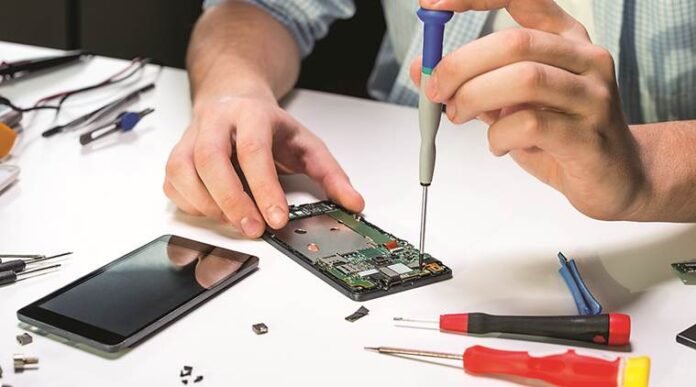
    Smartphone manufacturing companies Samsung and Oppo are likely to start assembling mobile phones in Pakistan soon after the removal of sales tax, worth more than $200 USD, on locally assembled phones.

    According to reports, Samsung and Oppo are keen to enter the local market, but they are waiting for the implementation of a policy that will remove sales tax on locally assembled mobiles.

    The Mobile Device Manufacturing Policy 2020 was approved by the Economic Corridor Committee (ECC) in May 2020. The decision was subsequently approved by the Cabinet on June 2, 2020.

    Companies like Vivo, Airlink Communications, Invovi Telecom are new investors in the Pakistani market, and they have already started local assembly trial productions of mobile phones in February 2021.

    Together, these companies can produce over one million handsets per month. Besides, Karachi-base company Tecno has increased local mobile assembly form 150,000 to 650,000 cellphone units per month due to the increase in demand.

    With experienced companies like G-Five and Q Mobile already operating in the Pakistani market, the entry of new players and capacity enhancement by existing companies will allow Pakistan to meet a major portion of the local demand, which was around 3.6 million per month in 2020.

    In foreseeable future, the mobile production industry will likely become larger than the automotive industry of Pakistan.

    To further boost the electronics sector, work has already been started on preparing the appropriate framework for local assembly of tablets and mobile accessories to make this the fastest growing sector in terms of employment and exports.

  • Samsung wants to establish a mobile assembly plant in Pakistan

    After a detailed meeting with Samsung Pakistan Chief Executive officer (CEO) and Managing Director (MD), Federal Minister for Industries and Production Hammad Azhar tweeted that Samsung is interested to set up its assembly unit in Pakistan.

    According to the minister, “Smartphone production in Pakistan is increasing exponentially, thanks to the implementation of new, more robust, policies.”

    Both Samsung officials appreciated the changes and are actively considering setting up a smartphone assembly unit in Pakistan.

    In May this year, the Economic Coordination Committee (ECC) approved the first-ever mobile device manufacturing policy in Pakistan, according to a summary moved by the Ministry of Industries and Production.

    The Ministry of Industries and Production was tasked to further fine-tune various features and incentives of the policy to promote localisation of research and development (R&D), leading to the export of mobile phones.

    The development comes after PTA’s (Pakistan Telecommunication Authority) implementation of the Device Identification, Registration and Blocking System (DIRBS), and Mobile Policy launched recently.

  • Govt gives ISI Rs1.66 billion for upgradation of agency’s telecom project

    Govt gives ISI Rs1.66 billion for upgradation of agency’s telecom project

    The government’s Economic Coordination Committee (ECC) has approved a “supplementary grant” of Rs1.66 billion for the upgradation of Special Telecom Monitoring Project at the directorate of the Inter-Services Intelligence (ISI).

    According to a press release issued by the Press Information Department (PID), the ECC has also approved a supplementary grant of Rs500 million for the construction of Special Education School at the Defence Complex in Islamabad.

    The proposals for “technical supplementary grants” were moved by the defence division, the press release said.

    The committee has also instructed the ministry of national security and research to ensure procurement of wheat as per 8.25 million tonnes target set for the public sector this year.

    The ISI is the premier intelligence agency of Pakistan, operationally responsible for gathering, processing and analysing national security information from around the world.

    It is currently headed by General Faiz Hameed.