Tag: Economic Analysis

  • Gold rate in local market declines by Rs1,400 to Rs213,800 per tola

    Gold rate in local market declines by Rs1,400 to Rs213,800 per tola

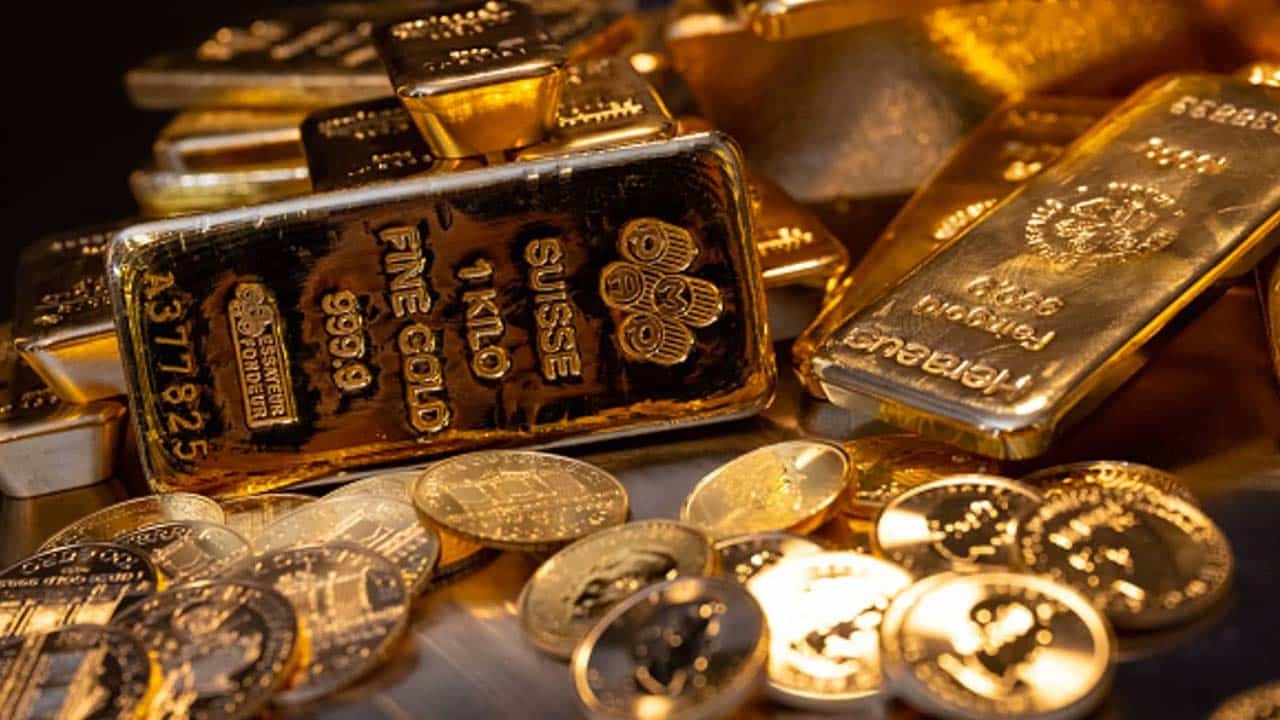
    In a noteworthy development, gold prices in Pakistan experienced a decline on Thursday, with the tola rate of 24 karat gold decreasing by Rs1,400.

    The current per-tola gold price in Pakistan now stands at Rs213,800 in local bullion market.

    According to market insiders, the price for 10 grammes of 24 karat gold witnessed a reduction of Rs1,200, reaching Rs183,300 in the domestic market, as reported by the All Sindh Sarafa Jewellers Association.

    Simultaneously, the prices of both per tola and 10-gramme silver saw a reduction, falling by Rs1200 to Rs183,300.

    Meanwhile, in the international market, the price of gold exhibited a rise of $12, reaching $2035. Gold prices, on the whole, experienced a 0.2 per cent increase to $2,018 per ounce, hitting a session low of $2,013.

    This came after a 0.75 per cent decrease on Wednesday, marking a one-week trough at $2,011, spurred by robust US economic data. The market dynamics are being closely observed for further insights into these fluctuations.

  • Gold price rebounds in Pakistan, registers Rs500 gain

    Gold price rebounds in Pakistan, registers Rs500 gain

    In a notable recovery, the gold price in Pakistan rebounded from yesterday’s losses, marking an upward trend in the market. 

    The latest figures from the Karachi Sarafa Association indicate that 24-karat gold is now fetching Rs215,200 per tola, showcasing a gain of Rs500. 

    Additionally, the 10-gramme 24-karat gold stands at Rs184,500, reflecting a significant increase of Rs429 day-on-day. 

    Meanwhile, the price of 10-gramme 22-karat gold is reported at Rs169,124.

    Contrastingly, silver maintains stability in the domestic market, with 24-karat silver priced at Rs2,600 per tola and Rs2,229.08 per 10-gramme. 

    On the global front, the international spot gold market is currently trading at $2,026.87 [03:24 p.m. PST], marking a gain of $6.29 or 0.31 per cent for the day.

    It’s worth noting that the domestic gold market experienced a substantial setback last week, witnessing a drop of Rs2,150 per tola. 

    Analysts attribute this decline to the overall downturn in international gold prices and the continuous strengthening of the home currency. 

  • IMF analysis reveals AI’s potential to disrupt 40% of jobs globally

    IMF analysis reveals AI’s potential to disrupt 40% of jobs globally

    In a recent comprehensive analysis, the International Monetary Fund (IMF) sheds light on the extensive impact of artificial intelligence (AI), unveiling its potential to disrupt nearly 40 per cent of all jobs worldwide.

    Kristalina Georgieva, the Managing Director of the IMF, expresses deep concerns about the consequences of widespread AI adoption, emphasising the likelihood of exacerbating existing inequalities.

    Georgieva underlines the urgency for policymakers to address this alarming trend, cautioning that unchecked deployment of AI could further widen social disparities and intensify tensions.

    The analysis indicates that the influence of AI on employment is expected to be particularly pronounced in advanced economies, with an estimated impact on approximately 60 per cent of jobs.

    While in about half of these cases, employees are poised to benefit from AI integration by enhancing their productivity and work capabilities, in other instances, AI may assume critical roles traditionally performed by humans.

    This shift in labour dynamics could lead to reduced demand for human workers, potentially affecting wages and, in some cases, resulting in job displacement.

    Contrary to the more significant impact projected for advanced economies, the IMF’s projections suggest that low-income countries may experience a comparatively lower impact, with AI affecting only around 26 per cent of jobs in these regions.

    Ms. Georgieva points out that many of these nations lack the necessary infrastructure or skilled workforces to harness the benefits of AI, raising concerns that the technology could exacerbate inequality among nations over time.

    This analysis aligns with a 2023 report by Goldman Sachs, estimating that AI has the potential to replace the equivalent of 300 million full-time jobs.

    However, the report also highlights the possibility of new job opportunities emerging along with a substantial increase in productivity.

    As the rapid proliferation of AI continues to spark intense debate, the global community faces the critical challenge of balancing the benefits and risks associated with this transformative technology.

  • Cost of living rises in Pakistan: Weekly inflation jumps by 0.81%

    Cost of living rises in Pakistan: Weekly inflation jumps by 0.81%

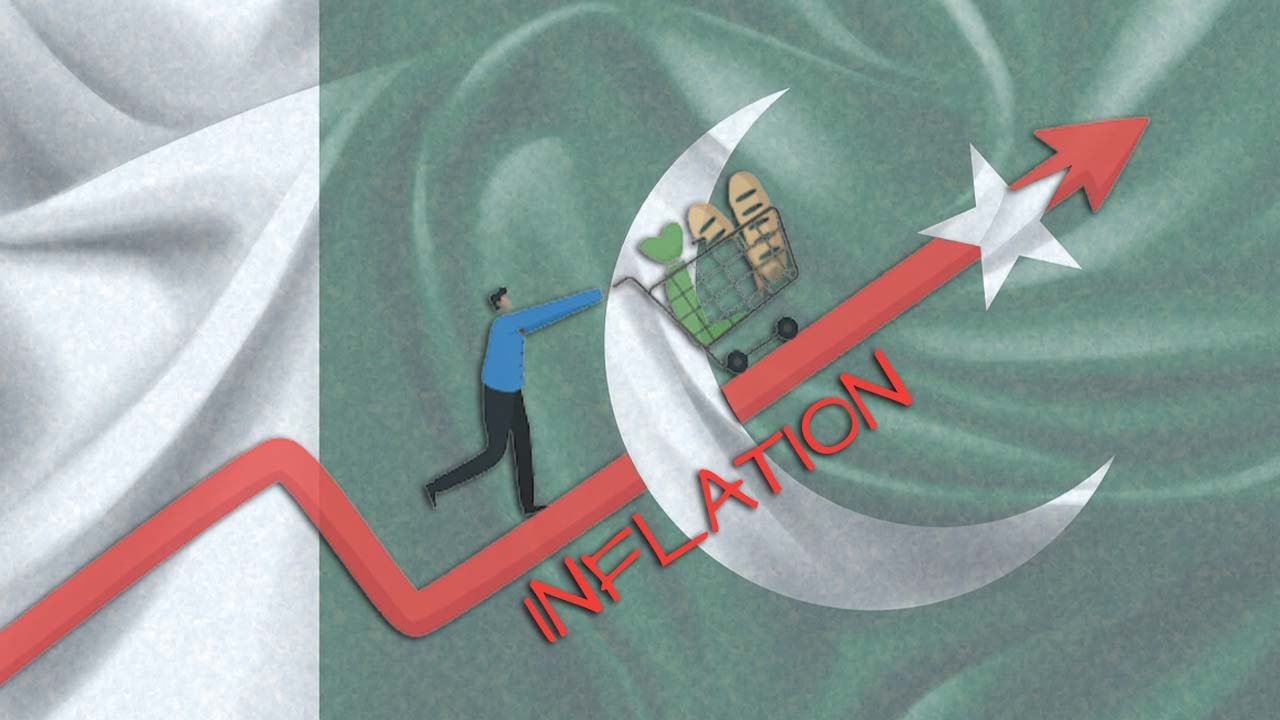
    In a recent report by the Pakistan Bureau of Statistics (PBS), the Weekly Sensitive Price Indicator (SPI) for the Combined Group witnessed a marginal increase of 0.81 per cent Week on Week (WoW), concluding on January 04, 2024.

    The SPI also exhibited a substantial 42.86 per cent Year on Year (YoY) surge when compared to the corresponding period from the previous year.

    The Combined Index, reflecting the overall price movement, stood at 313.66 as of January 04, 2024, compared to 311.14 on December 28, 2023. In contrast, a year ago on January 05, 2023, the index was reported at 219.56.

    Out of the 51 items considered, the average prices of 19 items experienced an increase, 09 items observed a decrease, and 23 items remained stable throughout the week.

    During this period, notable price hikes were observed in tomatoes (16.04 per cent), chicken (13.98 per cent), eggs (3.20 per cent), onions (3.04 per cent), and bananas (2.13 per cent).

    Moreover, significant decreases were noted in the prices of potatoes (8.68 per cent), tea Lipton (1.29 per cent), garlic (0.68 per cent), and cooking oil 5 litre & vegetable ghee 2.5 kg (0.54 per cent) each.

    Analysing the weekly SPI percentage change across income groups revealed a universal increase ranging from 0.79 per cent to 0.84 per cent. The Lowest Income Group experienced a rise of 0.81 per cent, while the highest income group recorded a slightly lower increase of 0.8 per cent.

    On a yearly basis, the SPI change across different income segments exhibited a general increase ranging from 35.33 per cent to 46.38 per cent. The Lowest Income Group saw a yearly rise of 35.33 per cent, while the highest income group recorded an increase of 41.35 per cent.

    Noteworthy price points in the market included Sona urea, with an average price of Rs4,618 per 50 kg bag, marking a 0.02 per cent increase from the previous week and a substantial 72.45 per cent surge compared to the previous year.

    In contrast, the average Cement price recorded at Rs1,226 per 50 kg bag showed a 0.47 per cent decrease from the previous week but stood 17.43 per cent higher than prices observed last year.

    These fluctuations in the SPI underscore the dynamic nature of the market, reflecting both short-term variations and longer-term economic trends.

    As consumers and businesses navigate these changes, analysts are closely monitoring the SPI for insights into broader economic patterns.

  • Gold prices in Pakistan follow global trend, decline by Rs1,300 per tola

    Gold prices in Pakistan follow global trend, decline by Rs1,300 per tola

    On Wednesday, gold prices in Pakistan experienced a reduction, mirroring the global downward trend. 

    The current valuation of the precious metal stands at Rs220,000 per tola, marking a decrease of Rs1,300 throughout the day.

    As reported by the All Pakistan Gems and Jewellers Sarafa Association (APGJSA), the 10-gramme gold rate now stands at Rs188,614, reflecting a decline of Rs1,115.

     In contrast, the previous day witnessed a surge of Rs 1,600 per tola in gold prices.

    The international gold rate, despite a $12 dip in the global market, settled at $2,082 per ounce on Wednesday, with a $20 premium, according to APGJSA.

    In contrast, silver rates remained unchanged at Rs2,680 per tola during this period.

  • December inflation may surpass 30% due to gas price hike

    December inflation may surpass 30% due to gas price hike

    In December, inflation is expected to surpass the 30 per cent threshold, driven by the recent increase in gas prices and the persisting adverse base effect, which continues to impact the consumer price index (CPI).

    The headline inflation for December is projected to settle at approximately 30.11 per cent year-on-year (YoY) and 1.18 per cent month-on-month (MoM), in contrast to the previous month’s figures of 29.2 per cent YoY and 2.7 per cent MoM.

    This monthly inflation rate is significantly lower than the 12-month average of 2.17 per cent MoM.

    Consequently, the average yearly inflation for the first six months of FY24 is estimated to be 28.87 per cent YoY, compared to 25.05 per cent YoY in the same period of FY23.

    The surge in inflation can be attributed to the adverse base effect and the notable increase in gas prices, which were not fully realised in the previous month.

    Conversely, food inflation is expected to exhibit a marginal decrease of 0.29 per cent MoM, driven primarily by the decline in prices of tomatoes, potatoes, chicken, and oil.

    Additionally, the transport index is forecast to undergo a 4 per cent MoM decrease, mainly due to the relief in petrol and high-speed diesel (HSD) prices.

    Post-December, inflation is anticipated to decline at a relatively faster pace, supported by the favorable base effect, the delayed impact of monetary tightening, and other administrative measures.

    The December spike is attributed to the lingering effects of the overdue gas price hike. Notably, unforeseen climate events, volatility in global commodity prices, especially oil, and external account pressures pose significant upside risks to the inflation outlook.

    Global oil prices are on the rise amid challenges in Red Sea shipping, potentially threatening the inflation outlook.

    Moreover, the successful completion of the International Monetary Fund (IMF) review, coupled with additional loan programmes, remains crucial.

    The outstanding amount of $1.8 billion under the stand-by arrangement (SBA) is yet to be released.

    The accompanying chart illustrates the yearly inflation trajectory based on different MoM CPI scenarios. At 0.5 per cent and 1 per cent MoM CPI, yearly inflation is projected to fall below the 22 per cent policy rate by February–March 2024.

    By the end of FY24, with 0.5 per cent and 1 per cent MoM CPI, it is expected to decrease to 15.29 per cent and 19.37 per cent, respectively, a significant change from the previous month’s forecasts of 12.9 per cent and 17.5 per cent.

    Considering the last 12-month average of 2.17 per cent MoM, the real interest rate is anticipated to remain in negative territory by the end of FY24.

  • Gold price surges to Rs218,500 per tola amid global uptick

    Gold price surges to Rs218,500 per tola amid global uptick

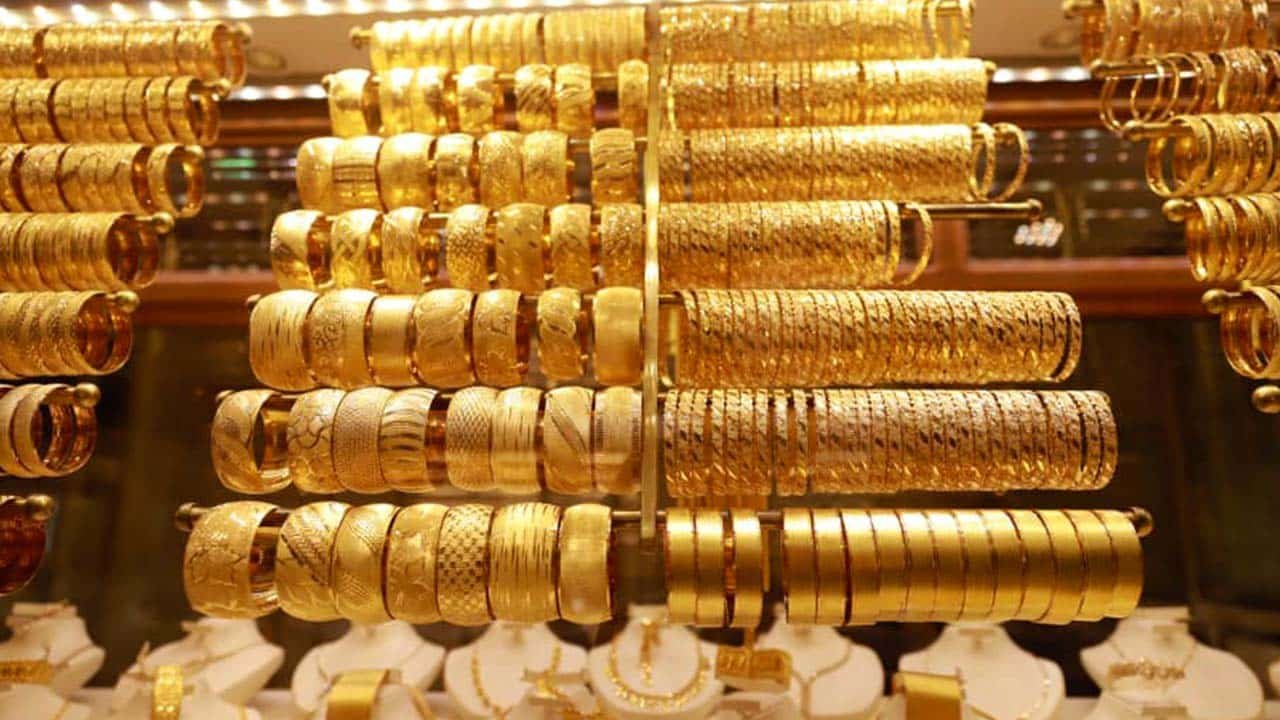
    In the latest update on the precious metals market, the cost of gold in Pakistan has witnessed a consistent upward trend for the third consecutive week, culminating in a settling price of Rs218,500 per tola on Wednesday.

    According to data released by the All-Pakistan Gems and Jewellers Association (APGJA), the rate of 24-karat gold experienced a notable surge, increasing by Rs900 per tola, reaching the current benchmark of Rs218,500.

    Simultaneously, the price for 10 grammes saw a rise of Rs771, now standing at Rs187,328.

    This surge in gold prices is a continuation of the trend observed earlier in the week, when prices increased by Rs400 twice.. This cumulative rise over the week amounts to Rs1,700 per tola, following a similar trend from the previous week when the precious metal’s price escalated by Rs1,200 per tola.

    Internationally, spot gold exhibited a modest 0.1 percent increase, reaching $2,042.10 per ounce as of 0729 GMT.

    Concurrently, US gold futures recorded a 0.2 percent uptick, settling at $2,055.90.

    These global market dynamics further contribute to the evolving landscape of gold prices, adding nuances to the economic outlook both domestically and abroad.

  • Pakistani rupee declines by 48 paisa, closing at Rs280.57 against US dollar

    Pakistani rupee declines by 48 paisa, closing at Rs280.57 against US dollar

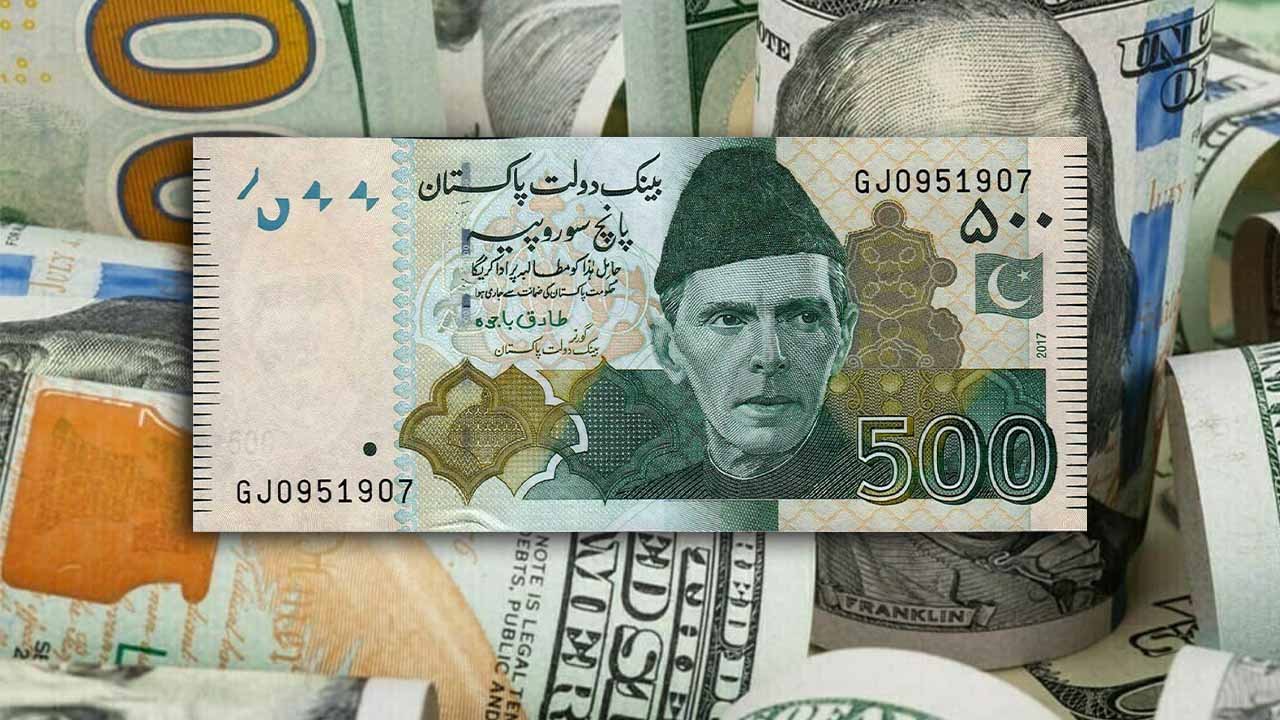
    In the financial markets this week, the Pakistani rupee (PKR) experienced a depreciation of 1.78 rupees against the US dollar (USD), closing the week’s trade at PKR 280.57.

    This marks a significant shift from the previous week’s closing rate of PKR 278.8 per USD.

    During today’s trading session, the local currency saw a decline of 48.1 paisa. The intraday high (bid) was recorded at Rs280.5, while the low (ask) reached Rs280.15 against the US dollar.

    In the open market, exchange companies quoted the US dollar at Rs279.5 for buying and Rs292.8 for selling, indicating a loss of 50 paisa compared to the previous closing rates of Rs279 for buying and Rs282 for selling.

    This decline against the US dollar signifies the second consecutive weekly decrease for the Pakistani rupee. In comparison to other major currencies, the PKR experienced fluctuations as well.

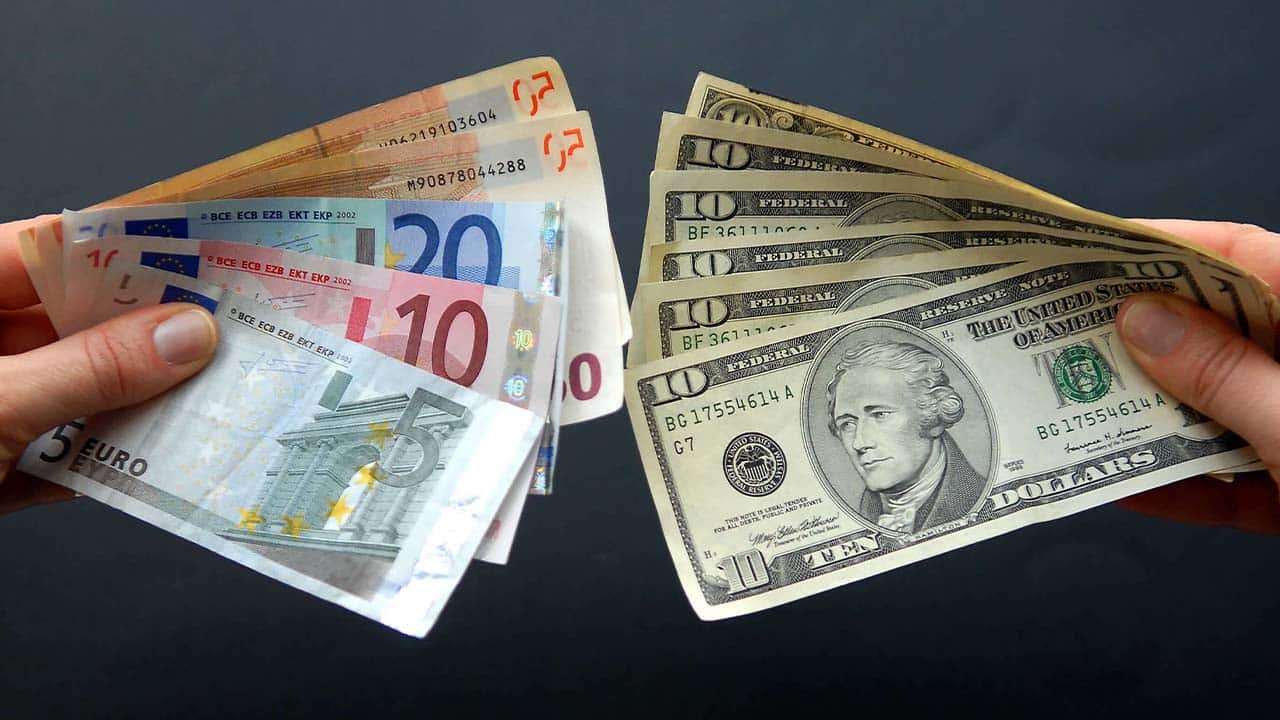
    Against the Euro, the PKR depreciated by 64.78 paisa, closing at Rs296.17 compared to the previous value of Rs295.53.

    The British Pound became more expensive by 1.21 rupees, closing at Rs339.94 in contrast to Rs338.73 from the previous day.

    PKR lost 0.69 paisa against the Japanese yen, closing at Rs1.869 versus Rs1.862 the previous day.

    The UAE dirham also increased in value by 12.89 paisa from Rs76.257 to Rs76.386.

    It’s noteworthy that during the current financial year, the PKR has appreciated against the dollar by Rs5.42, or 1.93 per cent.

    However, in the current calendar year, PKR has depreciated by 54.14 rupees, or 19.3 per cent.

    This dynamic market movement reflects the ongoing economic fluctuations in the country.

  • Remittances to Pakistan decline by 19.3% to $2 billion in first month of fiscal year

    Remittances to Pakistan decline by 19.3% to $2 billion in first month of fiscal year

    Pakistan has experienced a notable decline in remittances during the first month of the current fiscal year, as data released by the central bank reveals a year-on-year drop of 19.3 per cent, amounting to $2 billion. This concerning trend was further accentuated by a month-on-month reduction of 7.3 per cent.

    In the month of July, remittance inflows from Pakistanis residing abroad amounted to $2.2 billion. The distribution of these remittances showed that Saudi Arabia held the top spot with a contribution of $486.7 million, followed by the United Arab Emirates with $315.1 million. The United Kingdom and the United States of America followed closely with $305.7 million and $238.1 million, respectively.

    Economic analysts anticipated this decline in remittances for the month of July, given the post-Eid ul Adha period. The reduction was expected, as Pakistani expatriates tend to increase their cash transfers back home during festive seasons. Interestingly, it seems that some of these remittance inflows have been diverted to the grey market due to more favourable exchange rates for dollars.

    Samiullah Tariq, the head of research at Pak-Kuwait Investment Company, shed light on this shift: “In my view, as this was the month after Eid ul Adha, flows were relatively subdued. Some Pakistanis are opting for unofficial channels to transfer money.” The continuous devaluation of the Pakistani currency is also impacting investment sentiment among overseas Pakistanis, discouraging them from contributing more significantly to the economy.

    The recent release of these remittance statistics coincides with the International Monetary Fund’s (IMF) approval of a $3 billion bailout package for Pakistan. The nation’s economy had been teetering on the edge of default due to mounting debt obligations. Governor Jameel Ahmad of the State Bank of Pakistan (SBP) reassured that the SBP remains committed to upholding its obligations, including maintaining a controlled difference between the interbank and open market exchange rates, as specified in the agreement with the IMF.

    Fahad Rauf, the head of research at Ismail Iqbal Securities, voiced his concern over the decline in remittances: “The extent to which remittances have declined is indeed worrying. Unofficial channels offering higher rates have played a role in this scenario.” He also highlighted the SBP’s efforts to attract more remittances through proposed changes in incentive schemes, including a 50 per cent increase in the reimbursement rate for Saudi Riyal conversions.

    The SBP’s latest monetary policy statement forecasts the current account deficit for fiscal year 2024 to range between 0.5 per cent and 1.5 per cent of the gross domestic product. This projection takes into account both evolving domestic and global economic conditions. The SBP remains optimistic about the prospects of multilateral and bilateral inflows following the IMF’s stand-by arrangement, which is expected to bolster external buffers and address short-term external financing requirements.

    As the nation navigates through these challenges, the market-determined exchange rate will continue to play a pivotal role as the first line of defence against external shocks, further supporting the buildup of reserves. With a cautious eye on global commodity prices and a moderate domestic economic recovery, Pakistan aims to manage its imports and strengthen its economic stability.