
Tag: Economic and business growth

  • Significant drop in freelance work amid COVID-19, but rates remain stable

    Significant drop in freelance work amid COVID-19, but rates remain stable

    The global coronavirus pandemic has not only affected regular jobs but changed the landscape of freelance work as most Pakistani freelancers observe a decrease in demand amid COVID-19.

    Freelancers form more than 100 countries, including Pakistan, have shared insights with a digital payment platform called Payoneer, saying that freelance work has dropped drastically.

    The results of the survey show that businesses and companies have cut freelancing costs and halted new projects and contracts.

    Payoneer’s report titled ‘Freelancing during COVID-19’, showed 64 per cent of Pakistani freelancers, 33 per cent of whom are graphic designers, said that the demand for work had dropped significantly.

    15 per cent of freelancers said that the demand remained usual, while 18 per cent reported that demand for their services had increased.

    Regarding the strength of team , 24 per cent Pakistani freelancers said they would maintain the same team or grow it while 9 per cent said they would cut down on team members.

    In Pakistan, 82 per cent of freelancers said the demand will increase after COVID-19. However, they predict a more competitive landscape.

    According to the survey, freelancers who work with international clients based in North America and Europe saw the highest slowdown in demand. Those with clients in Asia and Australia, saw less of a decrease in demand for freelance projects.

    Globally, the report pointed out, freelancing rates, however, remained stable despite the slowdown.
  • Why do businesses not grow in Pakistan?

    Why do businesses not grow in Pakistan?

    CEO Maple Leaf Capital, Waleed Saigol, has said that businesses grow in Pakistan but at a slow pace, and the problem lies within the policies and mindset of the country’s power groups.

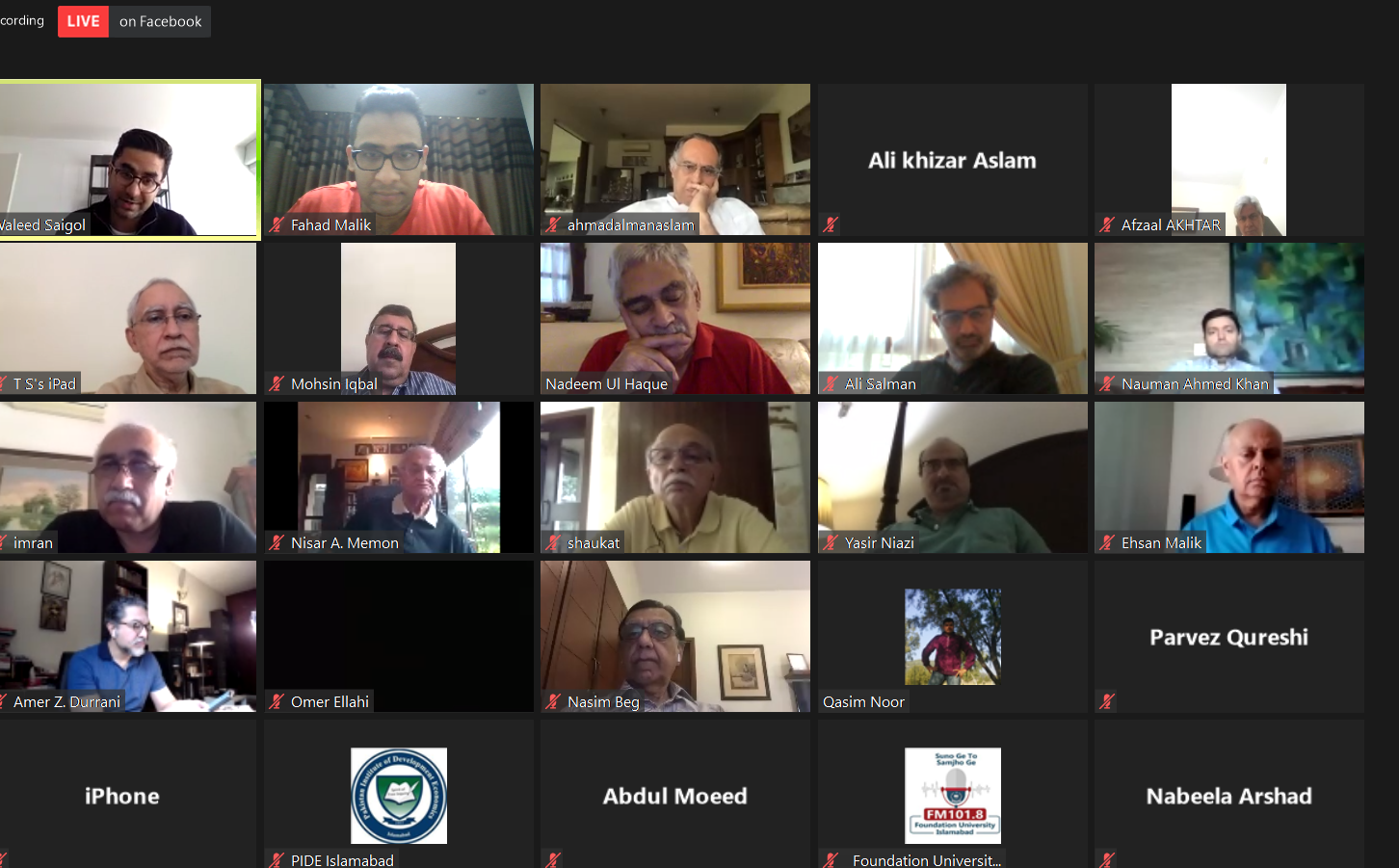
    Speaking at a virtual conference hosted by Pakistan Institute of Development Economics (PIDE) on Thursday, with prominent businessmen, including over a hundred chief executive officers (CEOs) and leaders of the business community, in attendance to discuss “Why Businesses Do Not Grow in Pakistan?”, he said that ironically, Pakistan had developed nuclear bombs under pressure, however, state institutions “didn’t prioritise economic and business growth”.

    “The role of media is also questionable… our news anchors do not bring these issues to the public, besides, we as a nation like to discuss controversies to malign each other. If we want to see business growth in Pakistan, we have to sort out interference by the country’s institutions,” Saigol maintained.

    In response to Saigol, Dr Nadeemul Haq, the vice chancellor of PIDE, said, “Undoubtedly, Pakistan is a talent-repellent state. All our talented people go and serve in big companies around the world rather than working here.”

    While moderating the conference, Dr Haq took the conversation to Alman Aslam, who is a business advisor to local and foreign companies.

    “We need to understand why all this is happening in Pakistan. A businessperson here has to do many things that have nothing to do with business growth, but for the mere survival of his or her company,” Aslam said.

    “Company owners are harassed by corrupt tax collection authorities of Pakistan,” he alleged, adding that it reminded him of centuries-old tax collection practices.

    “The court system is flawed, take a matter to court and you will not get justice in 20 years. Besides, how can private companies excel when the government is intervening in every business? We have authorities like the Lahore Development Authority (LDA) that bully and interfere in the matters of private companies. If you want companies to grow, just allow them to grow.”

    An argument was raised in the discussion that Pakistani businessmen cannot think globally, in response to which Saigol said, “We cannot think globally because we are not allowed to think globally.”

    “The illogical policies of the government don’t let businessmen make viable investments here in Pakistan or anywhere abroad. Similarly, no foreign company will come here to invest. It took Lucky Cement Group two years to send $50 million to Africa to set up their plant,” Saigol added, lamenting that to transfer $1 million, you needed an approval from the State Bank of Pakistan (SBP), and to make a payment of more than $10 million, you needed an approval from the Economic Corridor Committee (ECC).

    “Just imagine the level of regulations here,” he concluded.