Tag: economic assistance

  • Pakistan clears hurdles for IMF review, final agreement expected

    Pakistan clears hurdles for IMF review, final agreement expected

    The newly elected government of Pakistan has indicated its intention to secure a new loan from the International Monetary Fund (IMF).

    In line with this, representatives from the IMF are scheduled to visit Pakistan for the second review of the ongoing Stand-By Arrangement (SBA). The review is set to take place from March 14 to 18 in Islamabad.

    According to a statement released by the finance ministry, Pakistan has successfully met all structural benchmarks, qualitative performance criteria, and indicative targets required for the IMF review.

    This upcoming review marks the final evaluation of the SBA, with a staff-level agreement anticipated upon its completion.

    Once this agreement is reached, the final tranche of $1.1 billion under the SBA will be disbursed, subject to approval from the IMF’s Executive Board.

    Last summer, Islamabad secured a vital rescue package from the IMF, preventing a potential sovereign debt default.

    The successful completion of the final review is expected to unlock approximately $1.1 billion.

    Prime Minister Shehbaz Sharif has instructed his finance team, led by newly appointed Finance Minister Muhammad Aurangzeb, to begin preparations for seeking an Extended Fund Facility (EFF) once the standby arrangement concludes on April 11.

    The IMF has expressed readiness to develop a medium-term programme if Pakistan submits an application for one.

    Notably, the government has not officially disclosed the amount of additional funding it intends to seek through a successor programme from the IMF.
  • IMF reaches $3 billion stand-by arrangement with Pakistan, averting impending default

    IMF reaches $3 billion stand-by arrangement with Pakistan, averting impending default

    The International Monetary Fund (IMF) and Pakistan have reached a staff-level agreement on a stand-by arrangement worth $3 billion, announced the lender. This decision has been eagerly anticipated by Pakistan, a South Asian nation that is on the verge of default.

    The approval of the IMF board, expected in July, is required to finalise the deal. After an eight-month delay, this agreement brings some relief to Pakistan, which is currently grappling with a severe balance of payments crisis and dwindling foreign exchange reserves.

    The funding of $3 billion, which will be disbursed over a period of nine months, surpasses initial expectations. Pakistan had been awaiting the release of the remaining $2.5 billion from a $6.5 billion bailout package that was initially agreed upon in 2019, and which expired on Friday. As a result, the country’s stock and currency markets remained closed on that day.

    According to IMF official Nathan Porter, the new stand-by arrangement builds upon the 2019 programme. Porter acknowledged the significant challenges faced by Pakistan’s economy in recent times, including devastating floods last year and rising commodity prices following the war in Ukraine.

    He stated, “Despite the authorities’ efforts to reduce imports and the trade deficit, reserves have declined to very low levels. Liquidity conditions in the power sector also remain acute.” Porter further emphasised that the new arrangement would serve as a policy anchor and a framework for financial assistance from both multilateral and bilateral partners in the foreseeable future.

    Porter also highlighted the acute liquidity conditions in the power sector, characterised by mounting arrears and frequent power outages. Reforming the energy sector, which has accumulated a debt of nearly 3.6 trillion Pakistani rupees ($12.58 billion), has been a pivotal aspect of the discussions between Pakistan and the IMF.

  • Pakistan likely to receive economic assistance from friendly countries soon, says Minister Ahsan Iqbal

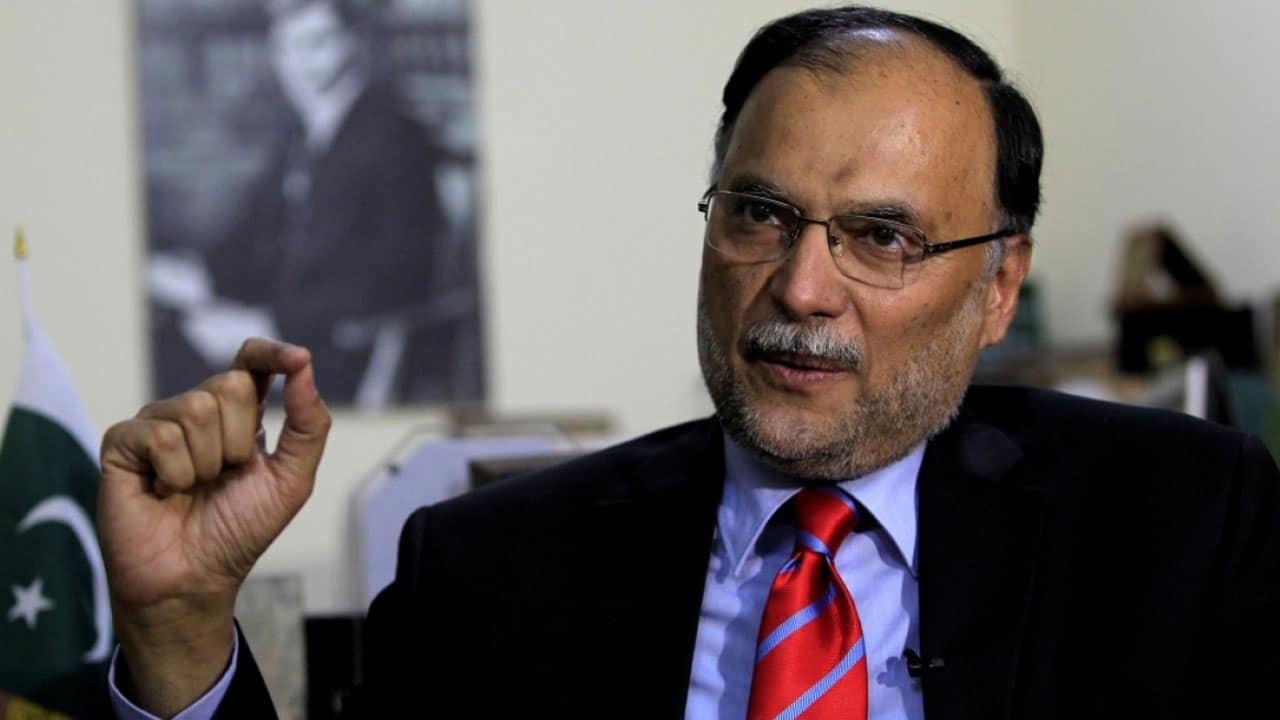
    Pakistan likely to receive economic assistance from friendly countries soon, says Minister Ahsan Iqbal

    On Tuesday, Minister for Planning and Development Ahsan Iqbal announced that Pakistan is likely to receive confirmation of economic assistance from friendly countries in the coming days. This confirmation is the last condition of the International Monetary Fund (IMF) and will be followed by a staff-level deal with the Fund.

    According to Iqbal, Pakistan has fulfilled nearly all conditions previously agreed upon with the IMF by the previous government. Currently, the Fund is requesting confirmation from the friendly countries providing assistance to Pakistan. Once received, the IMF deal will come on track.

    During the US-Pakistan Diaspora and Private Sector for Flood Recovery and Rehabilitation Conference, three Memoranda of Understanding (MoUs) were signed with a Pakistan-based US company and US-Pakistani diaspora entities, mobilizing $78 million. The conference was organized by the US Agency for International Development (USAID).

    When questioned about the IMF’s objection to the fuel subsidy announced by the government for the poor segment of society, Iqbal clarified that this was an internal adjustment within the fuel price and no new subsidy was being announced. He expressed hope that the IMF would have no objection to the government’s move.

    Iqbal urged the US-Pakistan Diaspora to support the government’s efforts in recovering and rehabilitating millions of flood-affected people. He appreciated the United States’ pledge of $200 million for flood relief efforts but emphasized that Pakistan needs much more for the complete rehabilitation of millions of people affected by floods.

    In his remarks, United States Ambassador Donald Blome highlighted the contributions of the US-Pakistani diaspora and private sector in building back better for flood-affected communities in Pakistan. He reaffirmed the US government’s commitment to supporting flood relief and recovery efforts, disaster resilience, and food security.

    The conference continued the momentum built at the previous conferences in Islamabad where USAID signed six MoUs mobilizing $75 million. The discussions held in those conferences led to additional contributions and investments to help populations and areas affected by floods. More than 200 participants attended the Building Back Better Conference, including members of the US-Pakistani diaspora, prominent local business leaders, US business representatives, and Pakistani officials. They discussed ways to help the flood-affected population and communities.

    Ambassador Blome emphasized the longstanding US-Pakistan partnership in advancing Pakistan’s economic growth and social and humanitarian causes. He highlighted the need to strengthen climate resilience through the US-Pakistan “Green Alliance” framework and expressed the United States’ commitment to helping the US-Pakistani diaspora and Pakistan-based private companies find opportunities to pursue energy transformation and foster economic growth and development outcomes.