Tag: economic challenges

  • Pakistan’s poverty rates may remain elevated: World Bank report

    Pakistan’s poverty rates may remain elevated: World Bank report

    The World Bank’s latest Pakistan Development Update has shed light on the country’s ongoing battle with poverty.

    Despite efforts, the poverty headcount rate, measured at the lower-middle-income country poverty line of $3.65/day in 2017 purchasing power parity (PPP), is anticipated to hover around 40 per cent from FY24 to FY26.

    The report highlights several key factors contributing to this stagnation in poverty reduction. Weak economic growth, stagnant real labor incomes, and persistently high inflation are cited as primary culprits.

    Importantly, the continuation of import management measures and potential cuts in public spending on social sectors are expected to exacerbate the situation.

    This could disproportionately affect poorer households, already struggling with depleted savings and reduced incomes.

    The combination of chronic inflation and policy uncertainty poses additional challenges, potentially leading to social unrest and negative welfare impacts.

    To mitigate these risks, increased targeted transfers are identified as crucial to safeguarding the most vulnerable segments of society.

    Moreover, the report warns of potential consequences on education and healthcare. The escalating cost of living, coupled with rising transportation expenses, may result in an increase in out-of-school children and delayed medical treatments, particularly among disadvantaged families.

    Food security remains a pressing issue, particularly in rural areas affected by natural disasters such as the 2022 floods.

    In 43 rural districts across Khyber Pakhtunkhwa, Sindh, and Balochistan, acute food insecurity is projected to rise from 29 per cent to 32 per cent in the second and third quarters of FY24.

    Lastly, the report underscores the persistent challenge of poor air quality and smog during autumn and winter months.

    With 71 per cent of the population affected nationwide, these environmental hazards continue to pose significant public health risks.

  • PM Shehbaz transfers ECC chairmanship to Finance Minister Aurangzeb

    PM Shehbaz transfers ECC chairmanship to Finance Minister Aurangzeb

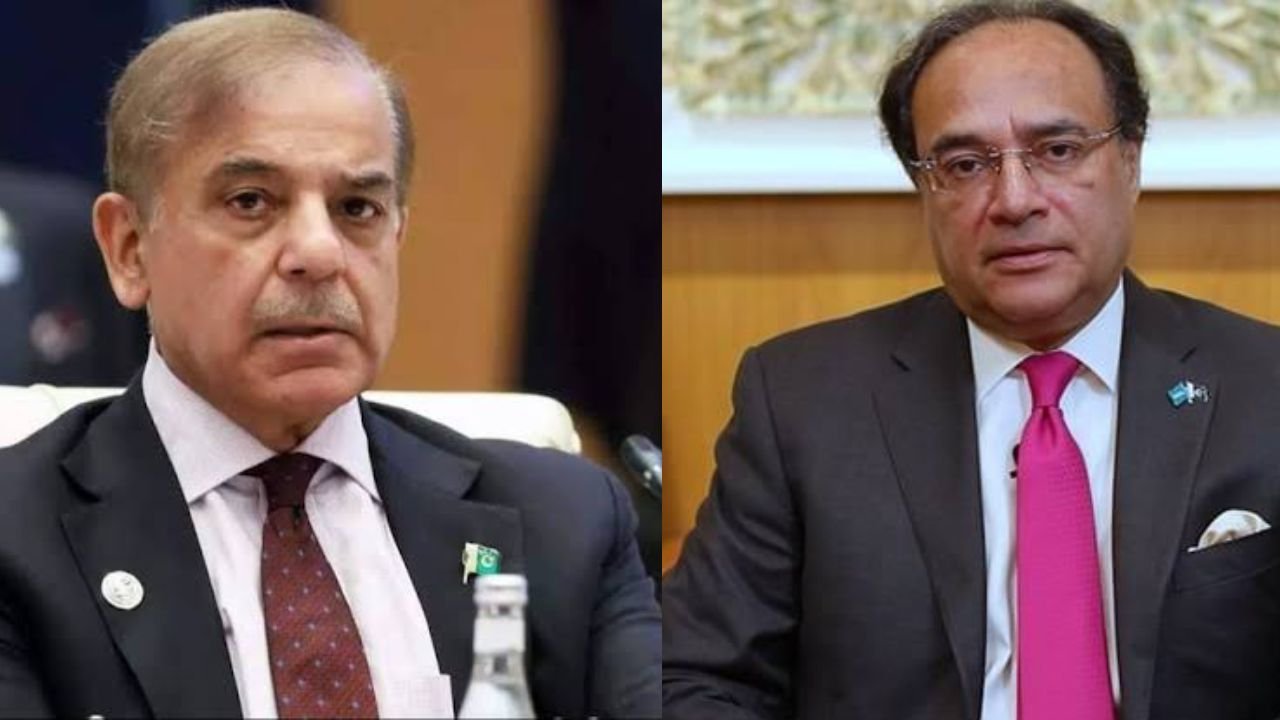
    Prime Minister (PM) Shehbaz Sharif, in a reversal of his earlier decision, has transferred the chairmanship of the Economic Coordination Committee (ECC) to Finance Minister Muhammad Aurangzeb.

    According to a notification, the ECC will now be led by the finance minister, with ministers of economic affairs, planning, commerce, power, and petroleum being integral members of the committee.

    Previously, PM Shehbaz had announced himself as the chair of the ECC when unveiling the composition of seven major committees. This move had drawn criticism for potentially limiting the authority of the new finance minister. 

    Furthermore, the premier had initially chosen to preside over the Cabinet Committee on Energy (CCoE).

    Similarly, the Cabinet Committee on State-Owned Enterprises (CCoSOEs) was formed earlier under the chairmanship of the finance minister. Accordinng to Aaj News, the Minister for Finance will head the CCoSOEs, with ministers of Maritime Affairs, Economic Affairs Division, Science and Technology, and Housing and Works serving as its members.

    In a report by APP, PM Shehbaz emphasised the government’s commitment to implementing tough economic measures to navigate the country out of crisis while ensuring the protection of the underprivileged segments of society. 

    He stressed that the brunt of these measures would primarily be borne by the affluent, with mechanisms in place to safeguard the interests of the poor and vulnerable.

    Speaking at the meeting of the Apex Committee of the Special Investment Facilitation Council (SIFC), the prime minister disclosed that the International Monetary Fund (IMF) had completed the review for the disbursement of the last tranche of US$1.1 billion, expected to be received next month.

  • Car sales increase in Pakistan despite high prices, economic challenges

    Car sales increase in Pakistan despite high prices, economic challenges

    In a surprising turn of events, the soaring prices of cars in Pakistan have not deterred buyers, as car sales experienced a notable uptick in February 2024.

    According to data released by the Pakistan Automotive Manufacturers Association (PAMA), car sales edged up by 1.94 per cent, reaching 7,953 units, compared to 7,802 units recorded in January 2024.

    This positive momentum follows a robust performance in the preceding month, where car sales hit their highest mark since December 2022.

    Analysts attribute this continued growth to the momentum generated by the new year, which has carried over into February.

    Year-on-year comparisons reveal a substantial increase, with car sales spiking by 2.18 times compared to February 2023, when only 3,642 units were sold.

    However, despite this recent surge, cumulative sales for the first eight months of fiscal year 2024 stand at 46,417 units, marking a 40.93 per cent decline from the same period last year.

    Similarly, the production of passenger cars has witnessed a significant downturn, with 8MFY24 recording 48,402 units, reflecting a 40.84 per cent decrease compared to the previous fiscal year.

    In February alone, production plummeted by 16.77 per cent month-on-month, totaling 8,002 units, down from 9,614 units in January 2023.

    Nonetheless, on a year-on-year basis, production saw a remarkable surge of 69.97 per cent, indicating a shift in manufacturing trends.

    Despite these fluctuations, the automotive landscape faces challenges, notably with Pak Suzuki Motor Company announcing two price hikes within a span of ten days in response to increased sales tax.

    The repercussions of these adjustments on sales are anticipated to unfold in the coming weeks, as the market adapts to the new pricing structure.

  • Indus Motor Company invests Rs3 billion to boost local auto production

    Indus Motor Company invests Rs3 billion to boost local auto production

    In a significant move within Pakistan’s automotive sector, Indus Motor Company Limited (INDU) has greenlit an investment of approximately Rs3 billion (around $10.76 million) aimed at bolstering the localisation of production.

    The company, renowned for being the manufacturer of Toyota-brand vehicles in the country, disclosed this pivotal development in a notice submitted to the Pakistan Stock Exchange (PSX) on Thursday.

    The announcement conveyed, “We are pleased to announce that the Board of Directors, in its meeting held on February 21, 2024, has approved an investment of around Rs3 billion to be made by the company for additional localization of parts and components of various existing vehicles.”

    Indus Motor revealed that this investment aligns with the company’s overarching strategy to continually augment the localization of parts and components of vehicles manufactured within the country.

    This move is poised to curtail the outflow of foreign exchange and foster growth within the local auto industry.

    “The announced investment shall be made towards expenditure in plant and machinery, moulds, dies, equipment, and related expenses for localization of parts and components to be manufactured locally for various existing vehicles,” stated Indus Motor.

    The timeline for this substantial investment is set to conclude by the third quarter of the calendar year 2025.

    Indus Motor has previously indicated its commitment to increasing product localization. Notably, the company introduced its Hybrid Electric Vehicle (HEV) Corolla Cross last year, emphasising that 50 per cent of its value was localized.

    CEO Ali Asghar Jamali highlighted that, after accounting for government taxes, over 50 per cent of the Corolla Cross’s value comprises localised parts, distinguishing it among other assembled hybrids in the country.

  • Pakistan grapples with 23% surge in power generation costs amidst economic woes

    Pakistan grapples with 23% surge in power generation costs amidst economic woes

    In a startling development, the cost of power generation in Pakistan has surged by a staggering 23 per cent in January 2024, compared to the same period last year, reports the brokerage house Topline Securities.

    The average cost per kilowatt-hour (KWh) soared to Rs13.8, marking a significant increase from Rs11.20/KWh recorded in January 2023.

    The substantial hike in costs is attributed primarily to elevated expenses in power generation from gas and nuclear sources, which witnessed a spike of 43 per cent and 24 per cent, respectively, on a yearly basis. Moreover, the fuel cost for furnace oil (FO) also surged by 22 per cent year-on-year, according to data from Topline Securities.

    This surge comes as a severe blow to the populace, which is already grappling with high inflation and sluggish economic activity. Rising electricity bills have compounded the financial burden on citizens.

    In terms of power generation, Pakistan witnessed a marginal decline of over 2 per cent in January 2024 compared to the same period last year, with total generation amounting to 8,313 GWh (11,175 MW).

    The decline in power generation was predominantly due to a decrease in coal-based generation, which plummeted by 20 per cent year-on-year. Gas and wind power generation also witnessed declines of 10 per cent and 55 per cent, respectively.

    However, there was a 9 per cent increase in power generation on a monthly basis, indicating some fluctuation in the generation patterns.

    Coal emerged as the primary source of power generation in January 2024, constituting 23.4 per cent of the total generation mix, surpassing nuclear and RLNG (re-gasified liquid natural gas). Nuclear energy accounted for 20.8 per cent of the overall generation, while RLNG contributed 18.2 per cent.

    Renewable sources like wind, bagasse, and solar collectively made up a modest portion of the generation mix, indicating a potential for further development and investment in sustainable energy solutions.

    Overall, the surge in power generation costs coupled with a slight decline in generation highlights the challenges facing Pakistan’s energy sector and underscores the need for strategic measures to ensure an affordable and sustainable power supply in the country.

  • Economic challenges await next govt as Pakistan votes

    Economic challenges await next govt as Pakistan votes

    Pakistan is set to hold its national elections on Thursday, a crucial event for the country grappling with multiple crises.

    As the new government prepares to take charge, it faces daunting challenges in stabilising the economy.

    Last summer, Pakistan narrowly avoided a sovereign default through a last-minute $3 billion bailout from the International Monetary Fund (IMF).

    However, this lifeline is set to end in March, and officials anticipate the need for a new, extended programme.

    Negotiating this program swiftly is imperative for the incoming government, as the economy is burdened by record-high inflation and slow growth resulting from stringent reforms.

    The country’s headline inflation stood at 28.3 per cent year-on-year in January, slightly lower than December’s 29.7 per cent. Despite government expectations, citizens are anxious for the new administration to address the soaring inflation that has significantly impacted their daily lives.

    Moreover, recent increases in gas prices, with a 35.13 per cent hike for Sui Northern Gas Pipelines Limited (SNGPL) and 8.57 per cent for Sui Southern Gas Company Limited (SSGC), add to the economic challenges. The move, effective from January 1, 2024, is the second increase in gas prices this fiscal year.

    In addition to rising gas prices, the cost of petrol and diesel has surged, with a notable increase of Rs13.55 per litre announced on February 1, 2024. This hike is attributed to the ongoing tensions in the Middle East, including Israel’s conflict with Gaza and Houthi attacks in the Red Sea.

    Amid these economic hardships, the National Electric Power Regulatory Authority (NEPRA) has approved an increase in electricity tariffs for distribution companies (Discos) by Rs4.57 per unit for December 2023. This adjustment addresses the escalating fuel costs impacting the power sector.

    The new government is also expected to address the exchange rate concerns as the Pakistani rupee struggles against the US dollar, currently standing at around Rs279.

    The disparity has led to increased prices for essential commodities, further straining the population.

    Adding to the complexity of the upcoming elections is the high political tension, with former prime minister Imran Khan describing a crackdown on him and his party.

    Khan, who has been in jail since August, faces pending cases, including accusations of ordering violent attacks on military installations.

    Despite his imprisonment, Khan maintains substantial popular support, and continued political unrest could jeopardise the stability needed for economic recovery and foreign investment.

    As Pakistan stands at a critical juncture, the incoming government’s ability to navigate these challenges will determine the nation’s economic trajectory in the coming years.

  • Monthly inflation expected to ease in the coming months

    Monthly inflation expected to ease in the coming months

    In January, a discerning shift towards disinflation is anticipated, as headline inflation is poised to soften to 27.2 per cent year-over-year (YoY), attributed to a favourable base effect.

    This decline from the previous month’s 29.7 per cent is primarily influenced by a higher base in the preceding year, while monthly pressures on consumer prices are expected to persist.

    Despite the overall yearly decrease, monthly inflation is projected to rise by 0.93 per cent month-over-month (MoM), contrasting with the 12-month average of 2.2 per cent MoM. 

    Consequently, the average yearly inflation for the first seven months of fiscal year 2024 is estimated at 28.57 per cent YoY, up from 25.40 per cent YoY in the same period last fiscal year.

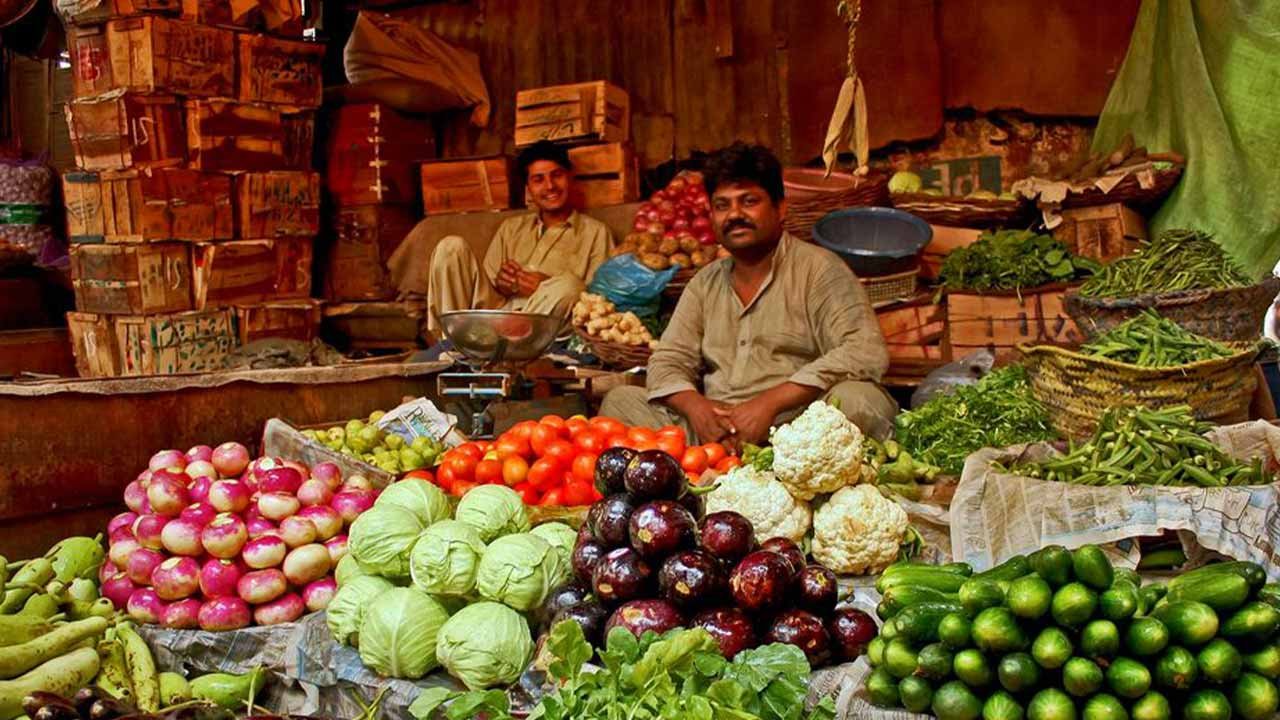
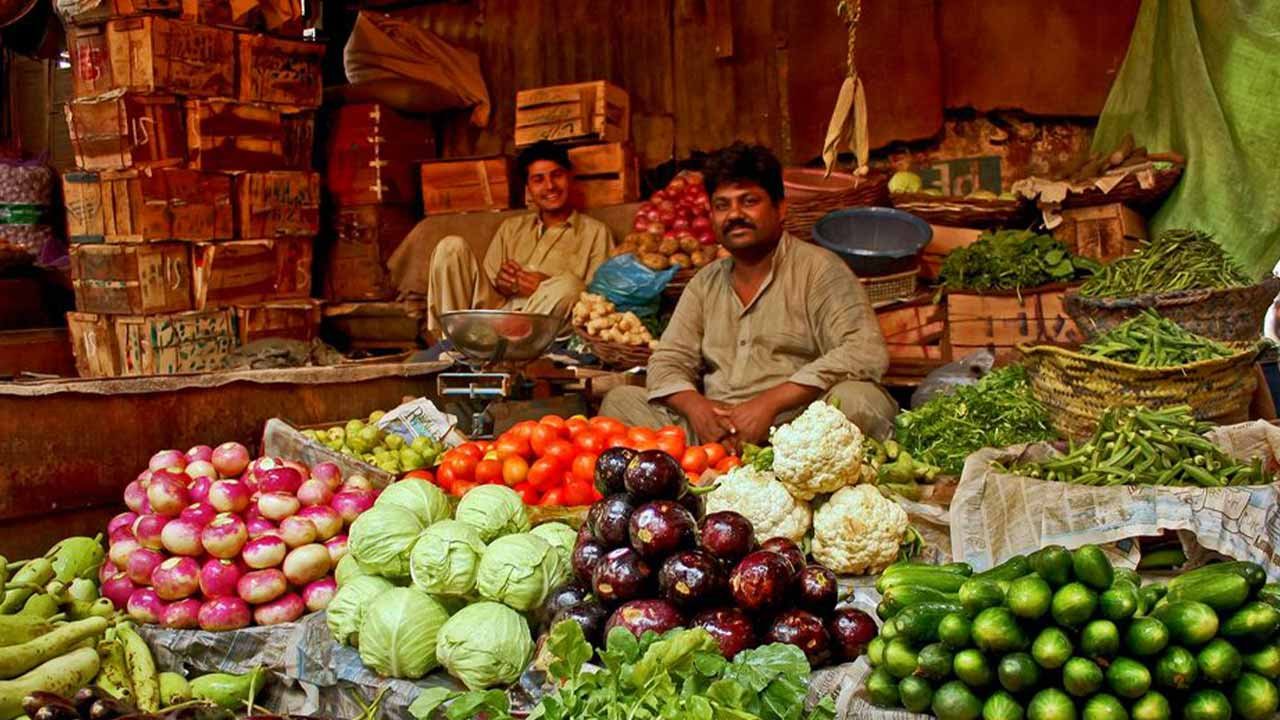
    The surge in monthly inflation is predominantly fueled by a rise in the food and housing index. Food inflation is expected to increase by 1.76 per cent MoM, driven by inflated prices of essential commodities such as onions, chicken, tomatoes, eggs, and pulses. 

    Meanwhile, the housing index is projected to experience a 1.54 per cent MoM increase, primarily due to quarterly rent adjustments. In contrast, the transport index is anticipated to decrease by 2.69 per cent MoM, attributed to relief in fuel prices.

    Looking ahead, a 0.5 per cent MoM inflation rate in February could result in an annual headline inflation of around 22 per cent, with a gradual decline below 16 per cent by June 2024.

    Even a 1 per cent MoM inflation rate, significantly lower than the 12-month average, is expected to maintain real interest rates from turning positive until March 2024, as illustrated in the accompanying chart depicting various monthly inflation scenarios.

    Starting in January, the disinflationary trend is expected to accelerate due to the favourable base effect, the lagged impact of monetary tightening, and other administrative measures.

    However, potential risks include unforeseen climate events, volatility in global commodity prices—especially oil—and external account pressures.

    Rising global oil prices amid geopolitical tensions pose a threat to the inflation outlook, and an additional gas price adjustment, as suggested by the International Monetary Fund (IMF), may further intensify pressure on consumer prices.

  • Price Monitoring Committee responds to alarming spike in food prices

    Price Monitoring Committee responds to alarming spike in food prices

    In response to the surge in food prices, the Food and Industries Departments of Punjab, Sindh, and KP have jointly implemented robust monitoring measures, including heavy fines, surprise raids, and the sealing of establishments engaging in price gouging.

    The Caretaker Minister for Planning, Development, and Special Initiatives, Muhammad Sami Saeed, led a crucial meeting of the National Price Monitoring Committee (NPMC) on Tuesday.

    The committee convened to assess the prices of essential commodities amid the current economic challenges.

    As of the week ending on January 11, 2024, the Chief Statistician, PBS, presented a comprehensive overview of the country’s price situation.

    The report revealed a 1.4 per cent increase in the SPI over the previous week (WoW) and a significant 44.2 per cent surge over the corresponding week of the previous year.

    The spike in SPI was primarily attributed to the increased prices of perishable items such as tomatoes and onions, as well as poultry products like chicken and eggs.

    Out of the 21 monitored items, prices for 21 increased, 8 decreased, and 22 remained stable. Noteworthy declines were observed in the prices of potatoes, vegetable ghee, and sugar.

    During the meeting, the minister inquired about the measures taken by provincial governments and ICT to bridge the gap between wholesale and retail prices.

    Representatives from the provincial Food and Industries Departments of Punjab, Sindh, and KP assured strict monitoring through the imposition of heavy fines, surprise raids, and the sealing of shops involved in overcharging.

    Despite challenges in the supply of perishable items due to extreme weather conditions, the meeting underscored the importance of addressing climate change.

    The administration of Punjab is actively working on controlling prices by sensitising Deputy Commissioners across the province.

  • IMF greenlights $700 million for Pakistan’s economic stabilisation programme

    IMF greenlights $700 million for Pakistan’s economic stabilisation programme

    In a significant development, the International Monetary Fund (IMF) successfully concluded its first review of Pakistan’s economic reform programme on Thursday.

    This programme, backed by a $3 billion and-by a arrangement (SBA), has now received a boost with the immediate approval and disbursement of $700 million, as confirmed by the finance ministry.

    According to an official statement from the ministry, the completion of the first review by the IMF’s Executive Board, coupled with the payment of $528 million in special drawing rights, has elevated the total disbursements under the SBA to $1.9 billion.

    The infusion of funds from the IMF, combined with recent inflows from multilateral lenders, is anticipated to contribute to the stability of the Pakistani rupee, which has demonstrated relative steadiness over the past few months.

    The finance ministry highlighted that this fresh tranche would play a crucial role in facilitating rollovers from allied countries, including the United Arab Emirates, China, and Saudi Arabia.

    Additionally, it is expected to alleviate external debt repayment pressures faced by Pakistan.

    This positive development traces back to June 2023, when the IMF Executive Board granted approval for a much-needed nine-month arrangement with Pakistan to support its economic stabilisation program.

    The initial disbursement of $1.2 billion was promptly released in July, with the remainder subject to two quarterly reviews over the programme’s duration.

    The current IMF programme is slated to conclude in the second week of April, with the recent disbursement marking a significant step towards its successful execution.

    Notably, a staff-level agreement was reached in November 2023 between the IMF staff and Pakistani authorities, paving the way for the first review under Pakistan’s SBA.

    This agreement was contingent upon subsequent approval by the IMF’s Executive Board.

    Looking ahead, Pakistan is poised to receive the remaining amount in March under the $3 billion SBA.

    Despite facing challenging conditions, particularly persistently high inflation, which rose to 29.7 per cent in December from 29.2 per cent in the preceding month, Pakistan remains committed to navigating through these economic challenges with the assistance of international financial institutions.

  • Pakistan grapples with massive Rs63.4 trillion debt

    Pakistan grapples with massive Rs63.4 trillion debt

    In November 2023, Pakistan’s total debt soared to an alarming Rs63.399 trillion, marking a significant increase from Rs50.959 trillion in the same month of the previous year. 

    According to details, this surge comprises Rs40.956 trillion in domestic loans and Rs22.434 trillion in international loans.

    The recent development follows Pakistan’s commitment to the International Monetary Fund (IMF) for a new loan programme. 

    As outlined in the Memorandum of Economic and Financial Table, Pakistan has pledged to boost foreign reserves to $13.6 billion in FY2024–25, facilitating access to the IMF’s financial assistance.

    To support its financial strategy, Pakistan is planning to roll over a $6.34 billion loan in the upcoming fiscal year, coupled with a targeted increase of $1.31 billion in foreign investments, as highlighted by the MEFPT. 

    These measures aim to navigate the country through its evolving economic landscape.