Tag: economic challenges

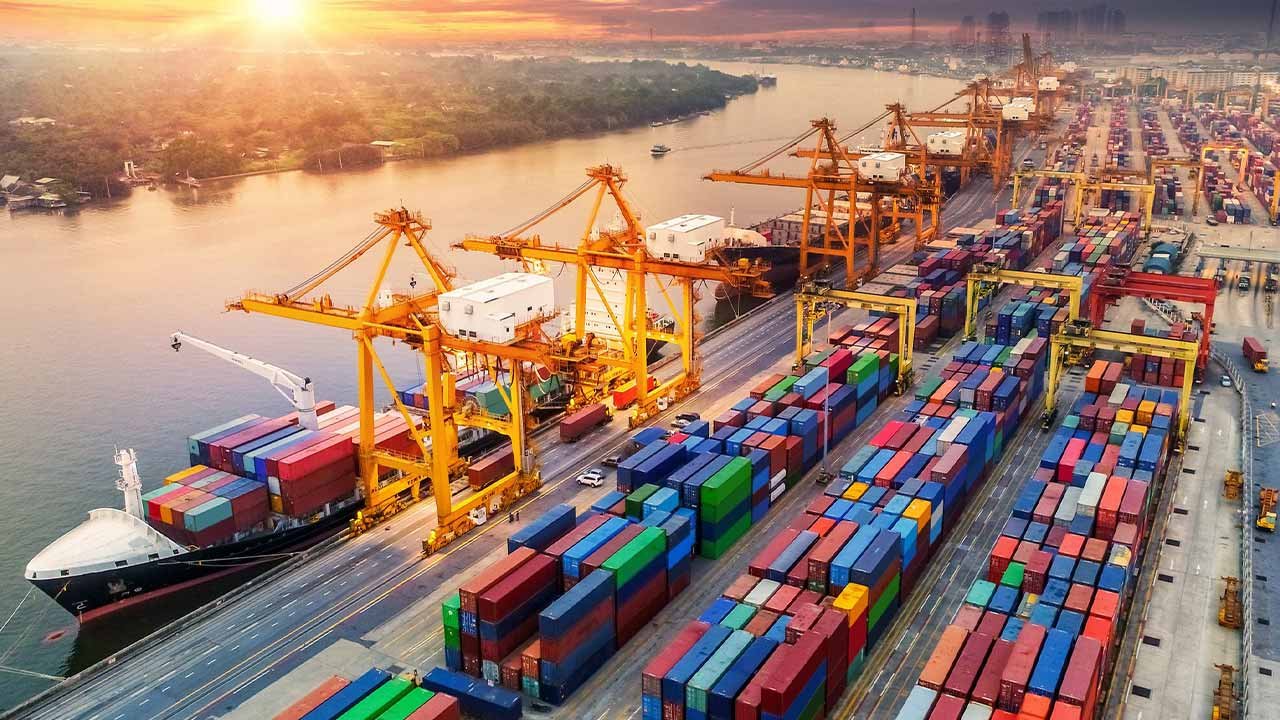
  • More imports, less exports: Pakistan’s trade gap grows in October

    More imports, less exports: Pakistan’s trade gap grows in October

    Recent trade data for Pakistan reveals a monthly trade deficit increase of $0.6 billion, primarily driven by an $0.8 billion surge in imports.

    However, on an annual basis, the trade deficit is gradually shrinking at a modest rate of 4 per cent.

    This is not necessarily negative news, as import restrictions have been lifted as part of the İnternational Monetary Fund (IMF) programme while the economy is experiencing an uptick in demand.

    The encouraging aspect lies in the positive signs displayed by the export sector. The Pakistani rupee (PKR) has depreciated by approximately 35 per cent year-on-year, falling from PKR 220/USD to PKR 280/USD.

    Last year, exporters faced challenges in importing raw materials, machinery, and intermediate goods.

    Consequently, the 14 per cent year-on-year growth in exports, rising from $2.4 billion to $2.7 billion, is a heartening development, provided this trajectory continues.

    Recent measures by the State Bank of Pakistan (SBP) aimed at promoting exports, including competitive gas rates for exporters, reflect a positive intent.

    While industries reliant on gas may require more regionally competitive energy rates, the direction is favorable.

    Moreover, the alignment of open market and interbank exchange rates may encourage a shift from official channels.

    To address Pakistan’s economic challenges, two key corrections are imperative, among many others: increasing tax revenues and enhancing value-added exports.

    Depreciation of the currency alone cannot serve as the sole remedy for stimulating growth.

    To achieve a comprehensive economic framework, it is essential to boost the exports-to-GDP ratio beyond the current 8 per cent.

    This should encourage capitalists to prioritise exports and foreign direct investment (FDI) over property, fixed income, currency, and trading, ensuring sustained double-digit growth over the next five years.

  • Shell Pakistan’s domestic operations set for sale to Saudi company 

    Shell Pakistan’s domestic operations set for sale to Saudi company 

    On Wednesday, Shell Pakistan (SHEL.PSX) announced that its parent company’s subsidiary, Shell Petroleum Company, has entered into an agreement with Wafi Energy for the sale of its domestic operations. 

    The international branch of Shell (SHEL.L), known as Shell Petroleum Company, anticipates the completion of this sale by the fourth quarter of 2024, pending regulatory approvals. 

    Back in June, Shell Petroleum Company declared its intention to divest its 77 per cent ownership stake in Pakistan.  

    This decision follows a series of global operational updates by Shell and significant losses incurred by Shell Pakistan (SPL) in 2022.  

    These losses were primarily attributed to fluctuating exchange rates, the devaluation of the Pakistani rupee, delayed receivables, and the backdrop of a financial crisis and economic slowdown in the country. 

    According to Reuters, Wafi Energy, an entirely owned affiliate of Asyad Holding Group, a fuel retailer based in Saudi Arabia, is the acquiring party. 

    Shell Pakistan’s operations encompass more than 600 mobility sites, 10 fuel terminals, a lubricant oil blending plant, and a 26 per cent ownership interest in Pak-Arab Pipeline Company Limited. 

  • World Bank projects only 1.7% growth for Pakistan in FY 2023-24 amid economic challenges

    World Bank projects only 1.7% growth for Pakistan in FY 2023-24 amid economic challenges

    The World Bank has issued a cautious outlook for Pakistan’s economy in the fiscal year 2023–24, projecting a modest growth rate of 1.7 per cent.

    The report, titled “South Asia Development Update Towards faster, cleaner growth,” highlights the fragile economic situation in Pakistan.

    Several factors have contributed to this fragility. The US dollar value of imports decreased by 26 per cent in August 2023 due to low demand and import controls, resulting in input shortages and a 15 per cent decline in industrial production by June 2023.

    Additionally, the economy shrank by 0.6 per cent in the fiscal year 2022–23 due to the impact of 2022 floods, high inflation, and balance of payments challenges.

    Import controls, initially aimed at reducing the trade deficit, hindered the supply of industrial materials and stifled growth.

    While these controls have been removed as part of an IMF lending programme, Pakistan still faces inflationary pressures, tight fiscal policies, and extensive flood damage. Foreign exchange reserves remain low, leaving the country vulnerable to external shocks.

    Pakistan is not alone in its economic struggles. Bangladesh, Pakistan, and Sri Lanka are all facing acute crises with ongoing balance-of-payments issues. These countries have begun implementing IMF-supported policies to address capital outflows and debt sustainability.

    Global factors, such as rising prices due to the end of the pandemic and Russia’s invasion of Ukraine, have exacerbated the challenges faced by these nations, leading to increased current account deficits and currency depreciations. To combat this, import controls have been imposed.

    In Pakistan, consumer price inflation stood at 27 per cent in August, down from a peak of 38 per cent in May, thanks to a stabilised exchange rate and a decline in food prices caused by the previous year’s floods. To address high inflation, the central bank raised its benchmark interest rate to 22 per cent in June.

    Pakistan and Sri Lanka are experiencing severe financial stresses, with low foreign reserve coverage and weak asset quality in both banking and non-banking sectors. The report also highlights the need for investment reforms in several South Asian countries to encourage growth.

    Restrictive import measures in Bangladesh, Pakistan, and Sri Lanka, although aimed at stabilising the external sector, have led to import shortages and economic downturns. Lowering these barriers to trade and capital flows could help boost long-term productivity.

    Lastly, despite adopting debt ceilings and deficit targets, many South Asian countries have high government debt-to-GDP ratios, with Pakistan experiencing fluctuations in government spending during election years.

    In summary, the World Bank’s report paints a cautious picture of Pakistan’s economic prospects, emphasising the need for sustained reforms and addressing various challenges to achieve stable and sustainable growth.

  • IMF’s $700 million tranche approval crucial for Pakistani rupee’s recovery

    IMF’s $700 million tranche approval crucial for Pakistani rupee’s recovery

    The Pakistani Rupee (PKR) is expected to rebound against the US dollar this week, with this revival contingent on the approval of the next tranche by the International Monetary Fund (IMF).

    Last week, the PKR weakened by 1.78 rupees (0.6 per cent), closing at Rs280.57 against the US dollar, marking a second consecutive week of decline. On the last trading day, it reached a high of Rs280.5 and a low of Rs280.15 against the greenback.

    In the open market, the rupee depreciated by 50 paisa, closing at Rs279.5 for buying and Rs292.8 for selling, compared to Rs279 and Rs282 a week ago.

    The rupee’s decline is attributed to expectations of the IMF’s approval for the next $700 million tranche of its $3 billion loan. Geopolitical tensions in the Middle East and decreased export receipts have also played a role.

    Despite hopes for recovery post-IMF approval, concerns linger about its long-term stability, with Goldman Sachs predicting a short-lived strong performance.

    The rupee’s fate remains tied to the 280 level until the IMF’s decision. The upcoming weeks and months hold uncertainty amid global economic challenges and geopolitical issues.

    Economists and financial experts are closely watching events, especially the IMF’s decision, which will significantly impact Pakistan’s economic stability as it strives to restore economic health and growth.

  • Pakistan’s forex reserves decline by $59 million to $7.64 billion due to debt payments

    Pakistan’s forex reserves decline by $59 million to $7.64 billion due to debt payments

    The State Bank of Pakistan (SBP) reported a weekly decrease in foreign exchange reserves, with a decline of $59 million, bringing the total to $7.64 billion as of September 22, according to data released on Thursday.

    The overall liquid foreign reserves of the country amounted to $13.16 billion, with commercial banks holding net foreign reserves of $5.52 billion.

    The central bank attributed this reduction in reserves to debt repayments, stating, “During the week ending on September 22, 2023, SBP’s reserves decreased by $59 million to $7,636.7 million due to debt repayments.”

    Notably, Pakistan’s central bank reserves had increased by $56 million the previous week, following four consecutive weeks of decline, during which SBP reserves had dwindled by a cumulative total of $416 million.

    In July, SBP’s reserves received a boost when Pakistan received approximately $1.2 billion as the first tranche from the International Monetary Fund (IMF), following approval of a new $3-billion stand-by arrangement. Additionally, inflows from Saudi Arabia and the UAE contributed to the increase.

    Despite these positive developments, the central bank’s reserves have come under pressure due to ongoing debt repayments, increased import payments following the easing of restrictions, and a lack of fresh inflows.

  • Afghani emerges as top-performing currency against US dollar 

    Afghani emerges as top-performing currency against US dollar 

    In the third quarter of 2023, the Afghani, the official currency of Afghanistan, has exhibited exceptional performance, marking itself as the standout currency in the global financial landscape. Its remarkable ascent against the US dollar, with a substantial 9 per cent surge since the commencement of July, stands as a testament to its resilience and strength. 

    This impressive trajectory positions the Afghani as the third-strongest performer among global currencies in 2023, trailing only behind the Colombian peso and the Sri Lankan rupee. This distinction underscores the Afghani’s resilience amid challenging economic circumstances. 

    In Afghanistan, the pivotal role of facilitating foreign currency transactions falls upon the numerous money exchange establishments known as “sarrafs.” These sarrafs are ubiquitous, dotting the landscapes of both urban centres and rural villages alike, serving as the lifeblood of currency exchange activities. 

    Among these financial hubs, the Sarai Shahzada market in Kabul takes centre stage as Afghanistan’s premier financial epicenter. It serves as a bustling hub where substantial sums of currency are traded daily, exemplifying the nation’s financial vitality. Remarkably, the central bank places no restrictions on these exchange transactions. 

    Due to stringent financial sanctions, a significant portion of funds flowing into Afghanistan from foreign nations now traverse through the age-old money transfer system known as Hawala. This venerable system plays a pivotal role in the operations of sarrafs, further cementing their significance in Afghanistan’s financial ecosystem. 

    It is noteworthy that the United Nations (UN) has identified Afghanistan’s dire need for approximately $3.2 billion in aid for the current year, with roughly $1.1 billion already disbursed. This underscores the critical importance of international assistance in alleviating the nation’s pressing humanitarian challenges. 

    A sombre backdrop to these financial dynamics is the fact that, just last year, the UN disbursed nearly $4 billion in aid as Afghanistan grappled with a dire famine that affected half of its 41 million citizens. This staggering statistic underscores the profound challenges faced by the Afghan population. 

    Since the Taliban’s resurgence in Kabul in August 2021, stringent currency controls have been imposed, disallowing the use of the US dollar and Pakistani rupee by locals and restricting online trading activities. While these measures have seemingly contributed to Afghanistan’s stability, the broader Afghan economy has suffered, with soaring unemployment rates exacerbating the nation’s humanitarian crisis. 

    Regrettably, a staggering 79 per cent of the population now languishes in poverty, with a distressing 44 per cent of the people unable to secure adequate nourishment. The plight of Afghanistan’s populace remains a pressing global concern, necessitating concerted efforts to address both immediate humanitarian needs and long-term economic stability. 

  • Pakistan’s textile exports dip 6% in August 2023, posing economic challenges

    Pakistan’s textile exports dip 6% in August 2023, posing economic challenges

    Pakistan’s textile sector has experienced a continued decline in exports, with provisional data released by the All Pakistan Textile Mills Association (APTMA) indicating that in August, exports reached $1.48 billion, down by 6 per cent compared to the same month in the previous year when they stood at $1.58 billion.

    Moreover, the data reveals that Pakistan’s textile exports for the first eight months of the calendar year 2023 have seen a significant drop of 19 per cent, totaling $10.58 billion, as opposed to the $13 billion recorded during the equivalent period in 2022. This year-on-year decline raises concerns for Pakistan’s economy, especially in light of its foreign exchange shortage, which has already led to a depreciation of the rupee by more than 25 per cent in the inter-bank market since the beginning of 2023.

    However, there is a glimmer of optimism as monthly figures indicate a 13 per cent improvement in textile exports, rising to $1.48 billion in August compared to $1.31 billion recorded in July.

  • IMF approves relief plan for 4 million consumers with monthly power usage below 200 units

    IMF approves relief plan for 4 million consumers with monthly power usage below 200 units

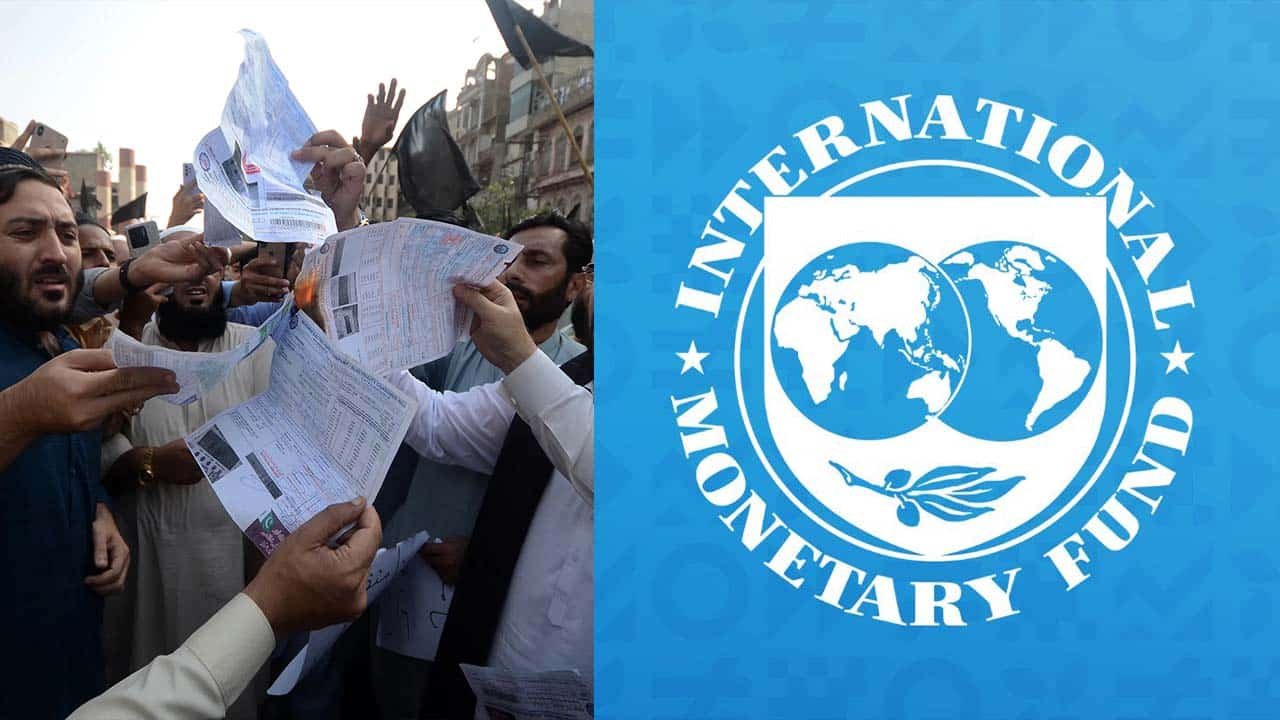
    After extensive negotiations prompted by widespread protests against soaring electricity bills, the International Monetary Fund (IMF) has reportedly granted approval to a relief proposal targeting consumers with monthly electricity consumption of up to 200 units, allowing authorities to implement an installment-based billing system, according to sources cited by Geo News.

    Sources indicated that the final authorisation for implementing the installment billing system will require approval from the federal cabinet. 

    Approximately 4 million electricity consumers are expected to benefit temporarily from this initiative.

    Regrettably, the interim government’s proposal to extend relief to consumers using up to 400 units of electricity per month was rejected by the IMF. This decision means that approximately 32 million consumers would have benefited if the proposal had been accepted.

    Additionally, sources disclosed that the IMF stressed the importance of combating electricity and gas theft while also focusing on improving revenue collection.

    Furthermore, the sources revealed that the IMF had requested an increase of 45 to 50 per cent in gas tariffs, effective from July 1. However, the approval of this tariff hike remains contingent upon federal cabinet approval.

    In response to persistent protests by citizens and traders who have taken to the streets to denounce the steep increases in power bills and additional taxes, the caretaker government led by Prime Minister Anwaar ul Haq Kakar in Islamabad has been actively engaging with the IMF to secure immediate relief for electricity consumers in the economically challenged nation, where the populace is grappling with soaring inflation.

    It is crucial to note that Pakistan is currently operating under an IMF programme, making any relief or subsidy subject to IMF approval.

  • Rising debt levels: Pakistan’s national debt surpasses Rs61 trillion

    Rising debt levels: Pakistan’s national debt surpasses Rs61 trillion

    The federal government has witnessed a substantial increase in its total debt, which has surged to nearly Rs62 trillion. This significant escalation is primarily attributed to the government’s strategic borrowing from both domestic and foreign sources, a measure aimed at covering the fiscal deficit.

    According to The News, data from the State Bank of Pakistan (SBP) reveals that as of July 2023, the total debt of the government stands at Rs61.75 trillion. This figure reflects a substantial year-on-year increase of 22.11 per cent, compared to Rs50.57 trillion recorded in July 2022. Furthermore, on a month-on-month basis, the government’s debt exhibited a 1.49 per cent increase from Rs60.84 trillion in June 2023.

    The surge in the debt burden can be predominantly attributed to the government’s reliance on domestic and foreign borrowing mechanisms to address fiscal deficits.

    Breaking down the composition of the debt, data from the central bank highlights that a significant portion of Rs39.02 trillion is domestically sourced, representing a notable year-on-year growth of 24.08 per cent. This domestic debt comprises Rs29.59 trillion in long-term debt and Rs9.29 trillion in short-term debt. The remaining Rs22.73 trillion is external in nature.

    By the close of July 2023, the government’s long-term debt had escalated by 24.44 per cent year-on-year to Rs29.59 trillion when compared to the figure of Rs23.78 trillion recorded in the same period a year earlier. In parallel, short-term debt exhibited a substantial year-on-year increase of 27.14 per cent as opposed to Rs7.31 trillion in July 2022.

  • Sugar prices soar to record highs, adding to woes of inflation-hit masses in Pakistan

    Sugar prices soar to record highs, adding to woes of inflation-hit masses in Pakistan

    Sugar prices across Pakistan have hit an all-time high, casting a cloud of concern and inconvenience among its populace. In a dramatic turn of events, the sugar market landscape underwent significant fluctuations, causing consumers to feel the pinch while traders and policymakers raced to decipher the root cause. 

    Reports from various regions of the country reveal staggering price disparities. In the southwestern province of Balochistan, the town of Chaman witnessed the highest sugar prices, with the sweet commodity soaring to an astonishing PKR 230 per kilogramme. Meanwhile, in the central Punjab town of Arifwala, the price of sugar reached PKR 185 per kilogramme, perplexing both buyers and sellers alike. 

    However, amidst this tumultuous surge in sugar prices, Karachi experienced a minor respite as wholesale prices dropped by PKR 2 to settle at PKR 176 per kilogram. Yet, the relief was not fully passed on to consumers, with the retail price stubbornly clinging to PKR 190 per kilogramme, as reported by the PPI news agency via Dawn. 

    The question on everyone’s mind: What led to this unprecedented rise in sugar prices? 

    The shocking escalation in sugar prices came on the heels of growing concerns expressed by Pakistan’s caretaker government regarding depleting sugar stocks. Dawn’s report identifies rising sugarcane prices and court orders as the primary contributors to the spiralling sugar prices. 

    Furthermore, dealers have attributed the surge to a logistical nightmare, where the supply of sugar was severely disrupted due to vehicles getting stranded on national highways following the suspension of permits.

    Senator Taj Haider added another layer of complexity to the issue, alleging that former minister Rana Sanaullah allowed a massive 1.4 million tonnes of sugar to be smuggled, thus exacerbating the crisis.

    In this blame game, Haider emphasised that Naveed Qamar, Pakistan’s former Commerce Minister, had officially authorised the export of approximately 250,000 metric tonnes of sugar to bolster foreign exchange reserves. He vehemently defended his party colleague, rejecting any implication that Qamar was responsible for the ongoing sugar shortage. 

    Read more: Saudi Arabia to invest $25 billion in Pakistan over five years

    The repercussions of the sudden sugar price surge have further deepened the financial woes of the Pakistani people, who are already grappling with the burdensome weight of inflation. The situation has prompted policymakers, traders, and citizens alike to closely monitor the ever-changing dynamics of the sugar market. 

    As Pakistan grapples with the sugar crisis, the nation remains hopeful for a sweet resolution that can alleviate the hardships faced by its people in these challenging times.