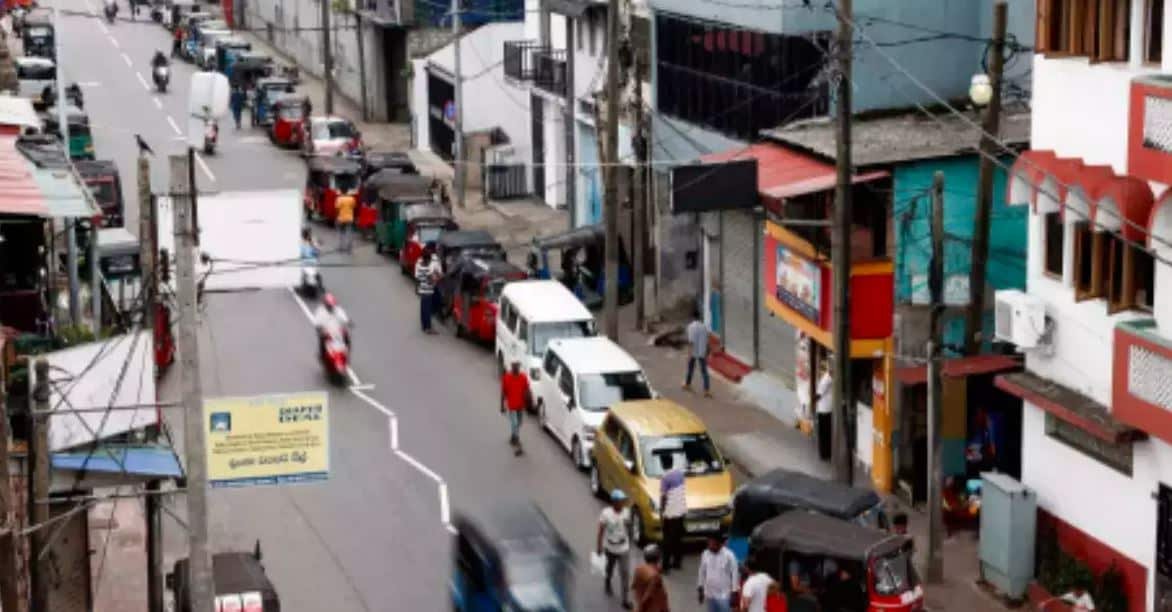
Due to a fuel shortage, the Sri Lankan authorities on Friday announced a two-week shutdown of government offices and schools.
“Taking into consideration the severe limits on fuel supply, the weak public transport system, and the difficulty in using private vehicles, this circular allows minimal staff to report to work from Monday,” said Sri Lankan Public Administration Ministry.
However, essential employees will continue working.
Meanwhile, the Sri Lanka Education Ministry said on Thursday that schools will be closed for two weeks due to persistent power outages. However, the ministry said the schools should conduct online classes, if possible.
Sri Lanka has been experiencing roughly 12- to 13-hour-long blackouts for months.
Sri Lanka went into default on its $51 billion foreign debt in April and is currently negotiating a bailout with the International Monetary Fund (IMF).
Finance Minister Miftah Ismail along with his team left for Doha on Tuesday to hold talks with the International Monetary Fund (IMF).
The ministry said that talks with the IMF mission started today (May 18).
Talks with the IMF Mission started today. Finance Minister Mr. Miftah Ismail, MoS Dr. Aisha Ghous Pasha, Finance Secretary Hamed Yaqoob Shaikh, Acting Governor SBP Dr. Murtaza Syed, Chairman FBR Mr. Asim Ahmad and senior officers from Finance Div joined vitually.@MiftahIsmail
— Ministry of Finance, Government of Pakistan (@Financegovpk) May 18, 2022
The review talks are expected to continue for a week and will focus on striking a staff-level agreement for the release of a $1 billion tranche under the Extended Fund Facility (EFF).
It has been reported that Pakistan will have to convince the IMF to revive the stalled $6 billion programme at a time when the government had not started eliminating the unfunded fuel subsidy after making a commitment with the forum.
The dollar rate is at its peak in the country. Currently, the rupee touched 200 against the US dollar in the open market. This spell of the dollar’s persistent rise against the rupee began last week.
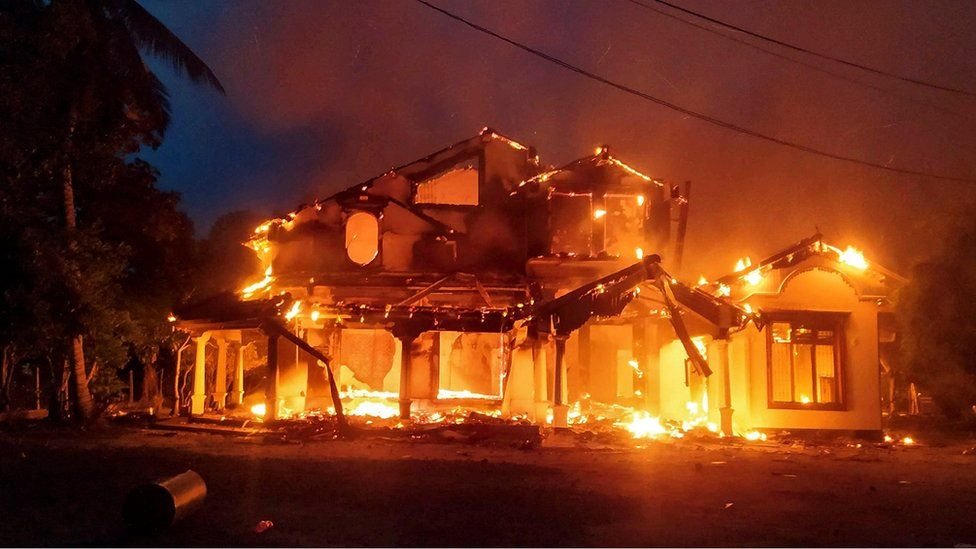
The ancestral home of Former Sri Lankan Prime Minister (PM) Mahinda Rajapaksa in the southern district of Hambantota, was set on fire after his resignation on Monday.
Video footage showed the entire house burning. Later, the police were forced to use tear gas to disperse protesters. Not only this, the protestors also attacked the homes of at least 31 politicians.
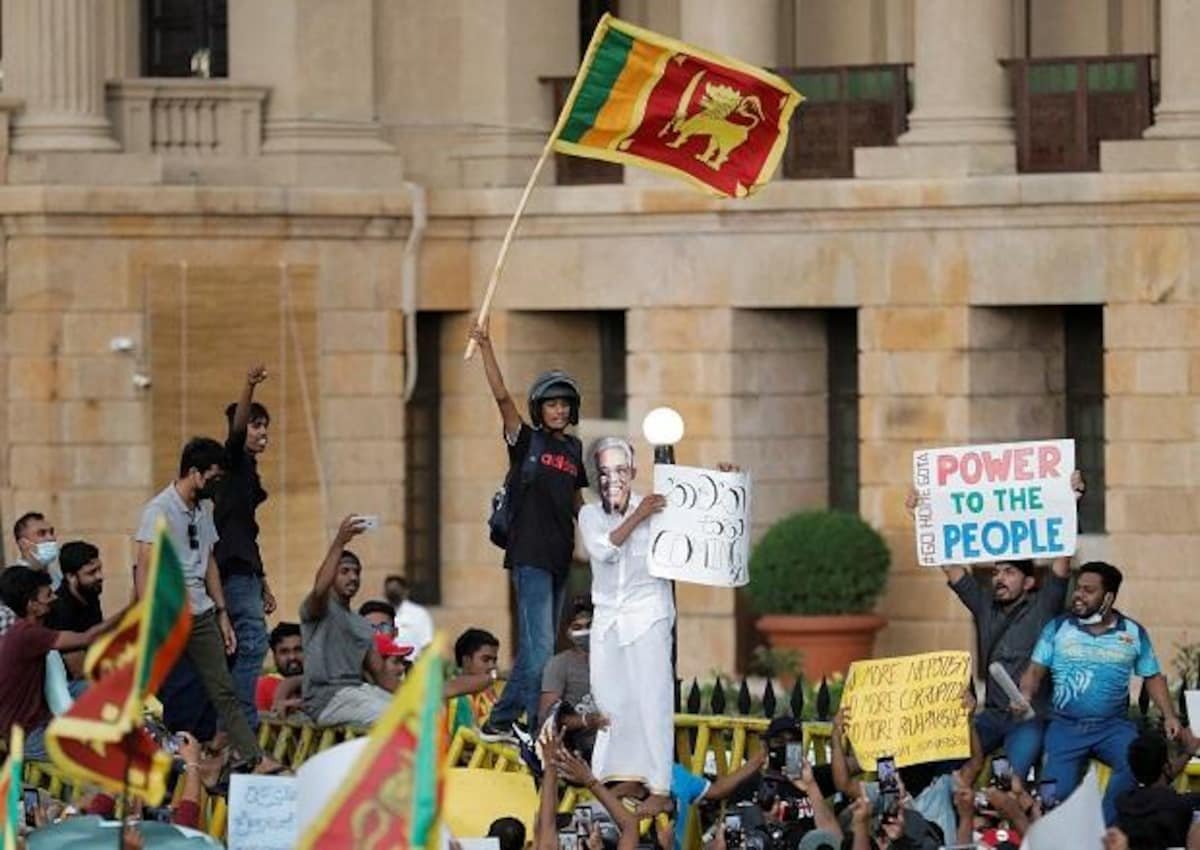
The country is facing months of street protests because of inflation and mismanagement of government finances which has left the nation with as little as $50 million of useable foreign reserves.
On Monday, Rajapaksa resigned amid mass protests because of the economic crisis in Sri Lanka.
Sri Lanka gave emergency powers to its military and police to detain people without warrants. A recent clash in the country resulted in the killing of eight people and injured more than 200. Ruling party parliamentarian Amarakeerthi Athukorala died after a standoff with anti-government protesters in the town of Nittambuwa near Colombo.
Sri Lanka announced a default on its $51 billion foreign debt on Tuesday as the island nation grapples with its worst economic crisis in memory and escalating protests demanding the government’s resignation.
Acute food and fuel shortages, as well as long daily electricity blackouts, have brought widespread suffering to the country’s 22 million people in its most painful downturn since independence in 1948.
The government has struggled to service foreign loans and Tuesday’s decision comes ahead of negotiations for an International Monetary Fund bailout aimed at preventing a more catastrophic hard default that would see Sri Lanka completely repudiate its debts.
“We have lost the ability to repay foreign debt,” Sri Lanka’s Central Bank governor Nandalal Weerasinghe told reporters in Colombo.
“This is a pre-emptive negotiated default. We have announced (it) to the creditors.” Officials say the move will free up foreign currency to finance desperately needed food, fuel and medicine imports after months of scarce supplies.
Just under half of Sri Lanka’s debt is market borrowings through international sovereign bonds, including one worth $1 billion that was maturing on July 25.
China is Sri Lanka’s largest bilateral lender and owns about 10 per cent of the island’s foreign debt, followed by Japan and India.
The government has borrowed heavily from Beijing since 2005 for infrastructure projects, many of which became white elephants.
Sri Lanka also leased its strategic Hambantota port to a Chinese company in 2017 after it became unable to service the $1.4 billion debt from Beijing used to build it.
This sparked concerns from Western countries and neighbour India that the strategically located South Asian nation was falling victim to a debt trap.
Chinese foreign ministry spokesman Zhao Lijian said the Tuesday’s default would not stop Beijing from lending support to Sri Lanka’s beleaguered economy.
“China has always done its best in providing assistance to Sri Lanka’s economic and social development. We will continue to do so in the future,” he said.
Sri Lanka’s snowballing economic crisis began to be felt after the coronavirus pandemic torpedoed vital revenue from tourism and remittances.
The government imposed a wide import ban to conserve dwindling foreign currency reserves and use them to service the debts it has now defaulted on.
But the resulting shortages have stoked public anger. At least eight people have died while waiting in fuel queues since March 20, with two of the deaths reported on Monday.
The embattled Sri Lankan president lost majority in parliamentary as former allies have urged his resignation in the wake of raging street protests over the island nation’s crippling economic crisis.
Unprecedented shortages of food and fuel along with record inflation and blackouts have inflicted widespread misery in the country’s most painful downturn since independence from Britain in 1948.
Once-powerful ruling coalition of President Gotabaya Rajapaksa is in turmoil after a string of defections and the new finance minister’s resignation just one day after taking office.
On the other hand, anti-Rajapaksa demonstrations continued for a fifth straight day and the government warned of retaliation if rallies turned violent.
“Security forces will not hesitate to enforce the law against those involved in violence,” defence ministry secretary Kamal Gunaratne said in a statement.
More than 60 people had been arrested in connection with unrest since Friday and many have said they were tortured in police custody.
The UN Human Rights Council said it was closely watching the deteriorating situation in Sri Lanka, which is already facing international censure over its human rights record.
“The drift towards militarisation and the weakening of institutional checks and balances in Sri Lanka have affected the state’s ability to effectively tackle the economic crisis,” the UNHRC said.
According to the quarterly survey by Pulse Consultants, almost six out of 10 people have no confidence in Prime Minister (PM) Imran Khan’s claim of coming out of the economic crisis, reports The News.
The survey is based on 1,809 respondents’ opinions who were interviewed from October 04, 2021 to October 10, 2021. It covered 60+ cities from all provinces of Pakistan.
According to the survey, the number of people losing faith in PM’s economic policies is around 57 per cent coupled with a drop in those who were confident that the prime minister will be able to turn the tide.
In July, 17 per cent respondents expressed confidence in PM’s policies, which in the current survey has dropped to seven percent. Regarding questions about the direction of the economic policies, 56 per cent respondents in July found them to be in the wrong direction, but three months later it has risen by 19 per cent to 77 per cent. On the contrary, those perceiving them to be on the right track have dropped to 24 per cent from 43 per cent in July.
Anxiety about the wrong direction is high is in the main political battleground provinces Punjab (79 percent) and Sindh (73 percent), as per the survey.
Since November 19, 2018 more than 95 per cent believe that inflation has increased after every three months.
Furthermore, the survey states that 68 per cent of people do not have savings and most of them have reduced their expenditures to make ends meet.
When the respondents were asked about the country’s major concern, 77 per cent complained about inflation whereas 35 per cent found corruption, 25 per cent unemployment, 11 per cent load shedding, while 10 per cent termed inability to meet expenses as their biggest problem.
The Pulse Consultant also asked the respondents about the performance of PM’s Adviser on Finance and Revenues, Shaukat Tarin, which showed that 53 per cent were dissatisfied with him.
The survey was conducted through CATI (Computer assisted telephonic interviews), a state-of-the-art technology where all calls are recorded.
The country is Heading Towards Wrong Economical Direction
Three amongst four Pakistanis believe that country is heading towards a wrong economic direction
In July 2021 there were 56% have that opinion but in October 2021 with an increase of 19%, 75% have that opinion
Anxiety about the wrong direction is high in Punjab (79%) & Sindh (73%) – the main political battleground followed by KP – PTI’s hometown (67%)
PM Claim About Restoration of Country Economic Outlook
In July 2021, 6 out of 10 respondents (62%) had overall belief on PM IK’s claim that “country is out of economic crisis”
Now in October 2021, wave condition is vice versa – almost 6 out of 10 (57%) have opposite opinion and have no belief in PM IK’s narrative (In July 38% had no believe now by the increase of 19% -57% have no belief)
Satisfaction with Shaukat Tarin
Dissatisfaction increased 15% (from 38% to 53%)
Satisfaction decreased 22% (from 35% to just 13%)
Inflation Trend
Almost every Pakistani hit by inflation and 98% are reporting that ‘Inflation increased in past three months’
Price Hike – Major Cause of Dissatisfaction
Like previous wave, in July Y2021 ‘Inflation’ is once again ranked as the gravest issue by (with the increase of 5%) 77% of the respondents.
If we read it with the answer “Expenses Not Meet” (اخراجات پورے نہیں ہوتے),of 10% – then it will reach to 87% – Ever highest in past three years
This is followed by & ‘Corruption’ (35%) & ‘Unemployment’ (25%), in this wave ‘Corruption’ – overtake the ‘Unemployment’
Expenses
We asked the same questions about “Monthly Expenses Management” back in July 2020, in July 2020, 41% had the opinion that – their monthly expenses are according to their income – but with the decline of 9% , now 32% have the same opinion
Jul-20 Oct-21Monthly Expenses Meet 41% 32%
Monthly Expenses Not Meet 59% 68%
Punjab & KPK – where #PTI is holding the provincial Govt. unrest increase significantly – specially in KP
If we compare the results of July 2020 & October 2021 (after 13 months) – Upper Socio Economic Class is also complaining that their monthly expenses are not meeting
Those who claimed that – their monthly income meet expenses – 31% amongst them claimed that they save any money
On the other hand – those who complained that their household expenses are not meet – 37% amongst them reduced their expenses, 30% borrow money and 30% do some extra job/work other than regular