Tag: economic decline

  • Pakistan sees 18th straight month of decline in auto financing

    Pakistan sees 18th straight month of decline in auto financing

    In December 2023, automobile financing in Pakistan recorded a significant decline, reaching Rs251.25 billion, marking a 25.55 per cent year-on-year drop and a 2.26 per cent month-on-month decrease. 

    This contrasts with Rs333.747 billion in December 2022 and Rs257.06 billion in November 2023, as revealed by the latest central bank data.

    Notably, this marks the eighteenth consecutive monthly decrease in automobile financing, attributed to factors such as elevated interest rates, a surge in car prices, regulatory constraints on loan acquisition, and increased taxes on automobile imports and components.

    According to data from the State Bank of Pakistan (SBP), consumer financing for house building reached Rs208.15 billion by the end of December 2023, reflecting a 3.17 per cent year-on-year decrease. 

    On a monthly basis, house building financing showed a marginal increase compared to the previous month’s Rs206.92 billion.

    Simultaneously, financing for personal use amounted to Rs244.41 billion, experiencing a 3.84 per cent year-on-year decline and a 0.64 per cent month-on-month decrease, indicating a challenging trend in the lending landscape for various purposes.

  • Remittances to Pakistan decline by 19.3% to $2 billion in first month of fiscal year

    Remittances to Pakistan decline by 19.3% to $2 billion in first month of fiscal year

    Pakistan has experienced a notable decline in remittances during the first month of the current fiscal year, as data released by the central bank reveals a year-on-year drop of 19.3 per cent, amounting to $2 billion. This concerning trend was further accentuated by a month-on-month reduction of 7.3 per cent.

    In the month of July, remittance inflows from Pakistanis residing abroad amounted to $2.2 billion. The distribution of these remittances showed that Saudi Arabia held the top spot with a contribution of $486.7 million, followed by the United Arab Emirates with $315.1 million. The United Kingdom and the United States of America followed closely with $305.7 million and $238.1 million, respectively.

    Economic analysts anticipated this decline in remittances for the month of July, given the post-Eid ul Adha period. The reduction was expected, as Pakistani expatriates tend to increase their cash transfers back home during festive seasons. Interestingly, it seems that some of these remittance inflows have been diverted to the grey market due to more favourable exchange rates for dollars.

    Samiullah Tariq, the head of research at Pak-Kuwait Investment Company, shed light on this shift: “In my view, as this was the month after Eid ul Adha, flows were relatively subdued. Some Pakistanis are opting for unofficial channels to transfer money.” The continuous devaluation of the Pakistani currency is also impacting investment sentiment among overseas Pakistanis, discouraging them from contributing more significantly to the economy.

    The recent release of these remittance statistics coincides with the International Monetary Fund’s (IMF) approval of a $3 billion bailout package for Pakistan. The nation’s economy had been teetering on the edge of default due to mounting debt obligations. Governor Jameel Ahmad of the State Bank of Pakistan (SBP) reassured that the SBP remains committed to upholding its obligations, including maintaining a controlled difference between the interbank and open market exchange rates, as specified in the agreement with the IMF.

    Fahad Rauf, the head of research at Ismail Iqbal Securities, voiced his concern over the decline in remittances: “The extent to which remittances have declined is indeed worrying. Unofficial channels offering higher rates have played a role in this scenario.” He also highlighted the SBP’s efforts to attract more remittances through proposed changes in incentive schemes, including a 50 per cent increase in the reimbursement rate for Saudi Riyal conversions.

    The SBP’s latest monetary policy statement forecasts the current account deficit for fiscal year 2024 to range between 0.5 per cent and 1.5 per cent of the gross domestic product. This projection takes into account both evolving domestic and global economic conditions. The SBP remains optimistic about the prospects of multilateral and bilateral inflows following the IMF’s stand-by arrangement, which is expected to bolster external buffers and address short-term external financing requirements.

    As the nation navigates through these challenges, the market-determined exchange rate will continue to play a pivotal role as the first line of defence against external shocks, further supporting the buildup of reserves. With a cautious eye on global commodity prices and a moderate domestic economic recovery, Pakistan aims to manage its imports and strengthen its economic stability.

  • Pakistan’s major industrial production drops by 14.37% in May, marking ninth consecutive decline

    Pakistan’s major industrial production drops by 14.37% in May, marking ninth consecutive decline

    Pakistan’s Large-Scale Manufacturing (LSM) sector suffered a substantial year-on-year decline of 14.37 per cent in May, according to data released by the Pakistan Bureau of Statistics.

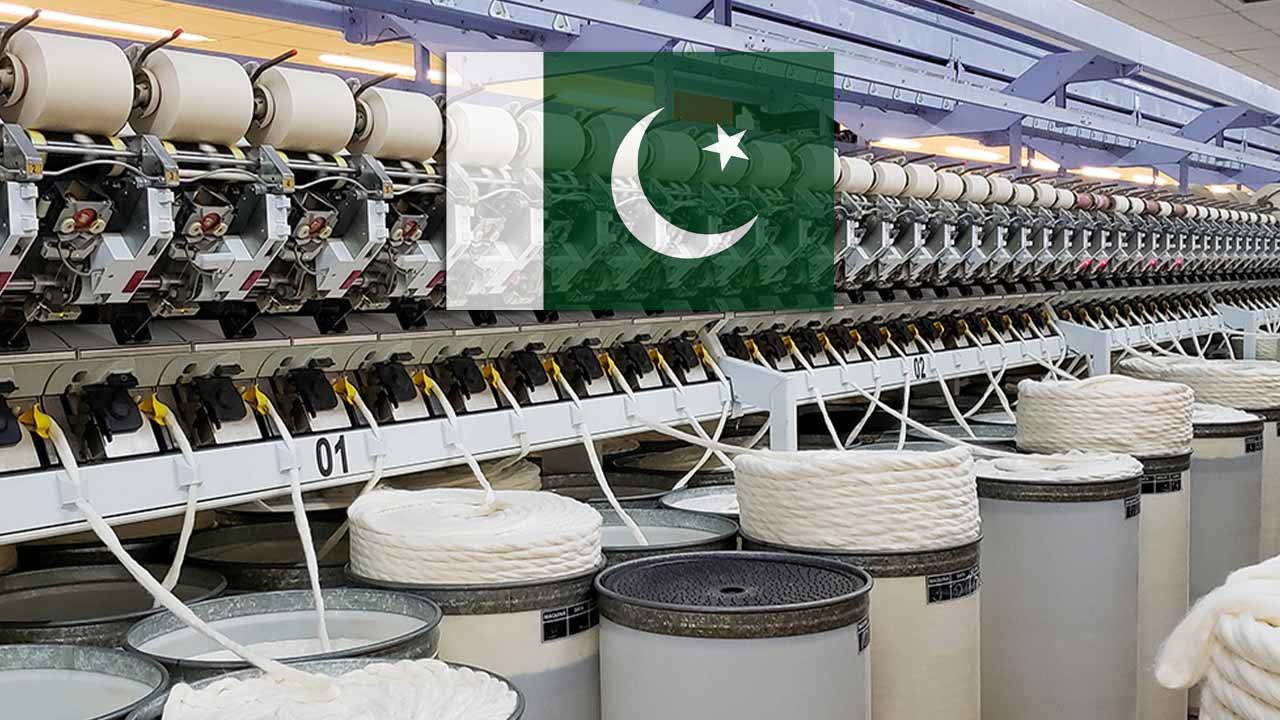
    This contraction represents the ninth consecutive month of contraction for the country’s major industries during the outgoing fiscal year FY23. The primary cause behind this downturn can be attributed to a slowdown in the production of export-oriented textile and clothing sectors.

    The consequences of this decline in large industries are evident in the form of a significant number of job losses. The reduction in production capacity has unfortunately resulted in numerous individuals becoming unemployed.

    These statistics shed light on the challenges faced by Pakistan’s manufacturing sector and raise concerns about the overall economic performance of the country in the coming months.

    In May, the growth of LSM experienced a decline compared to the same month last year. The decline in April was 21 per cent, which is lower than the decline of 25 per cent in March, 11.6 per cent in February, and 7.9 per cent in January. In December 2022, there was a slight decrease of 3.51 per cent.

    In November 2022, there was a negative growth of 5.49 per cent, while in October 2022, it declined by 7.7 per cent. In September 2022, there was a decrease of 2.27 per cent compared to the same month last year. In August, there was a slight increase of 0.30 per cent after a decline of 1.67 per cent in July, which marked the first month of the current fiscal year.

    Between July and May, LSM also recorded a negative growth of 9.87 per cent on a year-on-year basis.

    In FY22, the LSM expanded by 11.7 per cent year-on-year. The production estimate for LSM industries was based on the new base year of 2015-16.

    During May, the production of 16 sectors shrank, while only four sectors experienced a marginal increase. The textile sector’s production decreased by 25.97 per cent compared to the previous year. The major negative growth was observed in yarn (29.89 per cent) and cloth (17.49 per cent), while nominal growth was reported in the production of other textile products.

    On the positive side, the production of garments grew by 12.86 per cent in May. Its performance remained positive in the first 10 months, except for February when it experienced a decline.

    In the food group, wheat and rice production decreased by 0.36 per cent and starch and its products by 2.15 per cent. However, there was an increase of 39.99 per cent in the production of blended tea, 24.45 per cent in cooking oil, and 23.80 per cent in vegetable ghee.

    In May, petroleum products witnessed a negative growth of 21.85 per cent, primarily due to a decline in the production of petrol and high-speed diesel. Almost all other petroleum products experienced a slowdown, except for jet fuel, kerosene, jute, and batching oil. The auto sector also suffered a 68.60 per cent slump in May, as the production of almost all types of vehicles declined.

    The production of iron and steel decreased by 5.83 per cent in May, mainly due to a decline of 15.09 per cent in billets/ingots, while non-metallic mineral products saw a marginal growth of 0.53 per cent. However, chemical products experienced a negative growth of 15.44 per cent in May compared to the previous year.

    In May, the production of pharmaceutical products decreased by 38.61 per cent, rubber products by 5.81 per cent, and fertilisers by 13.31 per cent compared to the previous year.