Tag: economic growth

  • UK introduces new trade plan, offering duty-free access to 94% Pakistani products

    UK introduces new trade plan, offering duty-free access to 94% Pakistani products

    The United Kingdom has taken a momentous step in strengthening commercial ties with 64 nations, including Pakistan, by launching a new trading plan that offers duty-free access to goods.

    This move is expected to have a significant impact on Pakistani exports, allowing a staggering 94 per cent of goods to enter the British market without any duties, resulting in substantial savings of £120 million for the country.

    With the replacement of the Generalised System of Preferences (GSP), the UK’s new trade system opens up new avenues for trade and promises further tariff reductions for an additional 156 items.

    The implementation of the new trade system marks a significant development for Pakistani exports to the United Kingdom. By providing duty-free access to a vast majority of Pakistani goods, the UK aims to foster a mutually beneficial trade relationship. This move is expected to boost the trading possibilities between the two nations and facilitate an expansion of bilateral trade.

    According to the British High Commission, the current annual trade volume between Pakistan and the UK stands at £4.4 billion, and these figures are expected to rise in the future.

    The new trading plan aims to extend opportunities for free and fair trade to 65 nations, including Pakistan. By facilitating necessary changes and improvements, the UK seeks to enhance the quality of trade and enable these countries to actively participate in the global trading system. The British Trade Centre will play a crucial role in supporting and assisting these nations in their trade endeavors.

    Notably, this new plan also benefits 26 Asian nations and 37 African nations, collectively amounting to an export volume of £21 billion to the UK.

    The new trade system also promises further tariff reductions and increased trading possibilities for participating nations. With this plan in place, the UK aims to promote free and fair trade, strengthen global trading systems, and foster economic growth for all involved parties.
  • IMF’s disapproval of budget raises odds of default and economic fallout for Pakistan

    IMF’s disapproval of budget raises odds of default and economic fallout for Pakistan

    In a recent report, the International Monetary Fund (IMF) expressed criticism of Pakistan’s latest budget, increasing the likelihood that the lender may withhold the much-needed aid before the bailout programme concludes at the end of June.

    According to Bloomberg, this development could lead to a severe dollar shortage in the first half of the upcoming fiscal year, potentially resulting in a higher chance of default, lower growth, and increased inflation and interest rates.

    The IMF’s critique of the budget stems from its belief that it does not adequately address the need to broaden the tax base and includes a tax amnesty. The current foreign currency reserves of Pakistan stand at $4 billion. However, with approximately $900 million in debt repayment due this month, the reserves will deplete by the end of June unless the expected IMF aid materialises.

    The country faces the challenge of repaying an additional $4 billion between July and December, which cannot be rolled over. Given the projected reserves falling below $4 billion at the start of fiscal year 2024, default seems highly probable, according to the report titled “Pakistan Insight.”

    The absence of an IMF programme would significantly limit the options for obtaining fresh external funding. The report suggests that negotiations for a new bailout agreement with the IMF are unlikely to commence until after the elections in October. Furthermore, even if an agreement is reached, actual aid disbursement under a new programme would not occur until December.

    In the meantime, Pakistan must focus on conserving dollars by restricting import purchases and maintaining a surplus in its current account balance to fulfill its obligations. To avert default in the first half of fiscal year 2024, the country will also need to seek assistance from friendly nations.

    The report warns of severe consequences for Pakistan’s economy if the anticipated IMF aid is not received by the end of June. Import restrictions will need to remain in place, and the State Bank of Pakistan is expected to raise interest rates above the current level of 21 per cent to further reduce demand for imports and preserve foreign exchange reserves.

    The report’s base case assumes that the State Bank of Pakistan will maintain its current policy stance until December, but that prediction relies on the assumption of IMF aid arriving by the end of June.

    Continued import restrictions and a weaker Pakistani rupee are likely to contribute to higher inflation in fiscal year 2024 compared to current forecasts. It is projected that inflation will average around 22 per cent, while increased borrowing costs and limitations on importing raw materials will further hamper production and dampen consumption.

    In addition, if the expected IMF aid does not materialise this month, the report predicts that Pakistan’s growth in fiscal year 2024 will be much weaker than the current forecast of 2.5 per cent.

    Furthermore, the higher interest rates resulting from the aid shortfall will lead to increased debt servicing costs for the government. The report reveals that approximately half of the fiscal year 2024 budget is allocated to debt servicing, exacerbating the country’s fiscal challenges.

    With the IMF aid hanging in the balance, Pakistan faces a critical period in its economic trajectory, where strategic financial decisions, reliance on friendly nations, and stringent economic measures will be essential to avoid further complications and ensure stability in the future.

  • First-ever discounted Russian crude oil cargo arrives in Karachi

    First-ever discounted Russian crude oil cargo arrives in Karachi

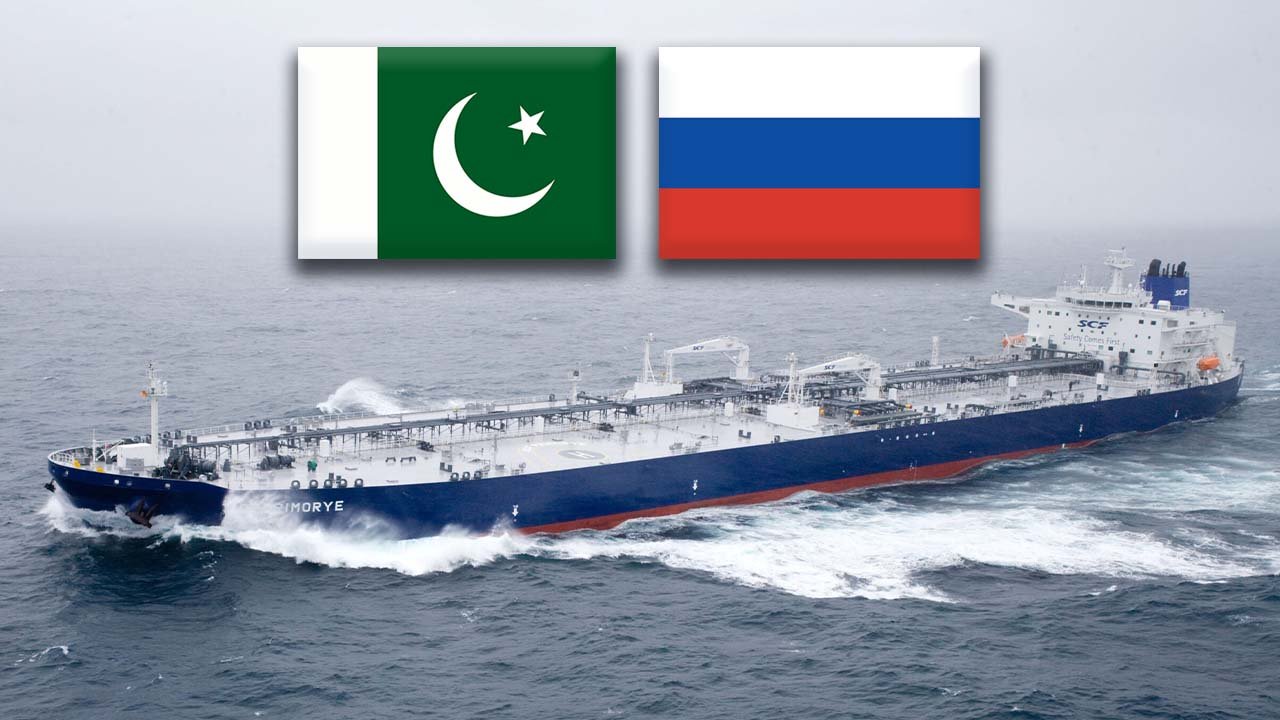
    Under a newly established agreement between Islamabad and Moscow, the inaugural shipment of discounted Russian crude oil arrived in Karachi on Sunday, marking the beginning of enhanced trade relations between the two nations.

    Departing from Russia over a month ago, the oil cargo reached Pakistan via Oman. Officials announced that the unloading process would commence on Monday, with the oil undergoing processing at the Pakistan Refinery Limited (PRL).

    During its lengthy voyage, the 100,000 metric ton oil shipment was divided into two parts in Oman due to the Karachi port’s limited capacity to accommodate larger vessels. Subsequently, two smaller ships, each carrying 50,000 metric tons of oil, embarked on their journey to Karachi.

    Upon the cargo’s arrival, Prime Minister Shehbaz Sharif expressed his enthusiasm on Twitter, describing Sunday as a “transformative day” and affirming the fulfillment of his commitment to the nation.

    He expressed the belief that these developments would contribute incrementally to prosperity, economic growth, energy security, and affordability. The Prime Minister further recognised and commended all those involved in this national endeavor who helped turn the promise of Russian oil imports into reality.

    Sources indicate that this Russian oil shipment will not be subject to the existing domestic oil pricing mechanism in the country. Consequently, the PRL will assume the benefits or losses associated with the Russian oil. Additionally, the sources stated that this shipment serves as a test case to evaluate the quality of the crude oil and the ratio of refined products. A report will be submitted to the federal government to inform future decisions regarding long-term commercial oil agreements.

    Pakistan had secured its order for the initial cargo of Russian crude oil at a discounted rate of up to $18 per barrel. Following the Platts crude oil prices, Islamabad applied a discount ranging from $16 to $18 per barrel, according to insider information.

  • Budget 2023-24: How much tax will you pay on your salary?

    Budget 2023-24: How much tax will you pay on your salary?

    Finance Minister Ishaq Dar presented a comprehensive budget proposal of Rs14.46 trillion for the fiscal year 2023-24, emphasising an expansionary approach. One of the key highlights of the proposal was a substantial increase in the salaries of government employees, aimed at providing much-needed relief.

    In order to ensure that the burden on the salaried class remained unchanged, the coalition government decided not to make any alterations to the existing tax slabs, which were approved in the previous year’s Finance Bill of 2022.

    Outlined below are the tax slabs for different income brackets:

    1. Income below Rs600,000 per year (Rs50,000 per month):

       – No tax will be deducted.

    2. Income between Rs600,000 to Rs1.2 million per year (Rs50,000 to Rs100,000 per month):

       – Tax will be levied at a rate of 2.5 per cent on the amount exceeding Rs600,000.

    3. Income between Rs1.2 million to Rs2.4 million per year (Rs100,000 to Rs200,000 per month):

       – Tax will be levied at a rate of Rs15,000 plus 12.5 per cent on the amount exceeding Rs1.2 million.

    4. Income between Rs2.4 million to Rs3.6 million per year (Rs200,000 to Rs300,000 per month):

       – Tax will be levied at a rate of Rs165,000 plus 20 per cent on the amount exceeding Rs2.4 million.

    5. Income between Rs3.6 million to Rs6 million per year (Rs300,000 to Rs500,000 per month):

       – Tax will be levied at a rate of Rs405,000 plus 25 per cent on the amount exceeding Rs3.6 million.

    6. Income between Rs6 million to Rs12 million per year (Rs500,000 to 1,000,000 per month):

       – Tax will be levied at a rate of Rs1.005 million plus 32.5 per cent on the amount exceeding Rs6 million.

    7. Income exceeding Rs12 million per year (exceeding Rs1,000,000 per month):

       – Tax will be levied at a rate of Rs2.955 million plus 35 per cent on the amount exceeding Rs12 million.

    These tax slabs have been carefully designed to ensure a fair and balanced approach to income taxation, considering various income brackets. By maintaining consistency with the previous year’s tax slabs, the government aims to alleviate the burden on the salaried class while still generating the necessary revenue for public welfare and development initiatives.

    Overall, the budget proposal presented by Finance Minister Ishaq Dar reflects the government’s commitment to supporting government employees and maintaining a progressive tax system that promotes economic growth and fairness.

    Tax slabs Annual income Monthly income Tax rate
    Slab 1 Below Rs600,000 Below Rs50,000 No tax deducted
    Slab 2 Rs600,000 – Rs1.2 million Rs50,000 – Rs100,000 2.5 per cent of the amount exceeding Rs600,000
    Slab 3 Rs1.2 million – Rs2.4 million Rs100,000 – Rs200,000 Rs15,000 + 12.5 per cent of the amount exceeding Rs1.2 million
    Slab 4 Rs2.4 million – Rs3.6 million Rs200,000 – Rs300,000 Rs165,000 + 20 per cent of the amount exceeding Rs2.4 million
    Slab 5 Rs3.6 million – Rs6 million Rs300,000 – Rs500,000 Rs405,000 + 25 per cent of the amount exceeding Rs3.6 million
    Slab 6 Rs6 million – Rs12 million Rs500,000 – Rs1,000,000 Rs1.005 million + 32.5 per cent of the amount exceeding Rs6 million
    Slab 7 Above Rs12 million Above Rs1,000,000 Rs2.955 million + 35 per cent of the amount exceeding Rs12 million
  • Budget 2023-24 prioritises promoting economic growth, says Ishaq Dar

    Budget 2023-24 prioritises promoting economic growth, says Ishaq Dar

    Federal Minister for Finance and Revenue, Ishaq Dar, delivered a comprehensive assessment of the FY2023-24 budget during a post-budget press conference in Islamabad. He highlighted the distinctive nature of this budget compared to previous traditional budgets, emphasising its focus on fostering economic growth.

    Dar shared that the coalition government is committed to addressing the concerns of traders before finalising the federal budget in parliament. In order to accomplish this, he announced the formation of two committees to address business-related issues and technical matters.

    These committees, customary within the Federal Board of Revenue (FBR), will be established by the FBR chairman by Monday. Their purpose is to ensure comprehensive consideration of any overlooked aspects and provide a platform for individuals to voice genuine reservations.

    The finance minister refuted claims of introducing new taxes this year and emphasised the government’s efforts to provide substantial relief. He defended the allocation of Rs950 billion and Rs200 billion from the Public and Private Partnership mode, considering it a notable achievement. Dar reiterated the budget’s departure from traditional approaches, with a strong emphasis on fostering progress and economic growth.

    Dar expressed the government’s determination to rectify past economic losses by promoting employment opportunities, curbing inflation, and generating more jobs. Consequently, he anticipated a decrease in the policy interest rate.

    Read more: Govt allocates only Rs97 billion for education in budget 2023-24

    The minister projected inflation to be around 21 per cent in the upcoming fiscal year (2023-24), while estimating government expenditure at Rs14,040 billion.

    Addressing the power sector, Dar allocated over Rs1900 billion exclusively for its development. He stressed the importance of implementing necessary reforms to improve this sector. He also clarified that no new subsidies would be introduced in the renewable energy sector, despite its prominence in the budget.

    Furthermore, the minister addressed rumors regarding the withdrawal of edible oil, refuting such claims and affirming that no such action had been taken.

  • Budget 2023-24: Finance Minister announces tax relief measures for IT sector and freelancers

    Budget 2023-24: Finance Minister announces tax relief measures for IT sector and freelancers

    In a recent announcement, the federal government has unveiled a series of measures aimed at fostering growth and investment in the freelancing and information technology (IT) sectors. The government has decided to implement a reduction in tax rates for investments in the IT sector, provide tax breaks to freelancers, and establish a favorable environment for investment by normalizing duty-free equipment provisions.

    During the budget presentation for the fiscal year 2023-24, Finance Minister Ishaq Dar highlighted the importance of the IT sector and its immense talent pool within the country. To support the growth of IT exports, the government plans to extend the current 0.25 per cent discounted income tax rate for the next three years.

    Recognizing the significance of banks in facilitating investment in the IT sector, the finance minister proposed a reduced tax rate of 20 per cent for banks involved in lending to this sector. This reduction aims to alleviate the burden on banks, as the existing tax rate for investments stands at 39 per cent.

    Additionally, the government has recommended providing Duty-Free Equipment privileges to incentivize investment in the IT sector. Moreover, the minister has suggested granting the industry the status of Small and Medium Enterprises (SMEs), enabling individuals to avail themselves of special and exclusive discounted income tax rates applicable to this sector.

    In a move to streamline processes for IT and IT-related services exporters, Minister Dar proposed the issuance of Automated Exemption Certificates to non-residents within 30 days. Furthermore, the government plans to reduce the Goods and Services Tax (GST) from 15 per cent to 5 per cent specifically for IT and ITeS services in the Islamabad Capital Territory (ICT).

    To support the freelancing community, Minister Dar recommended exempting individuals from the obligation of filing a sales tax return in order to benefit from the concessional rate of 0.25 per cent. Emphasizing the vital contribution of freelancers to the country’s foreign exchange earnings, the minister suggested that those whose IT and IT-enabled services exports were less than $24,000 in the previous fiscal year should be exempted from sales tax registration and allowed to file a simplified single-page income tax return.

    These measures underscore the government’s commitment to fostering a conducive business environment and encouraging investment in the freelancing and IT sectors, thereby facilitating economic growth and job creation.

  • Pakistan’s merchandise exports dive for ninth consecutive month, drop by 16.69% in May

    Pakistan’s merchandise exports continue to decline for the ninth consecutive month, plunging by 16.69 per cent year-on-year to $2.18 billion in May, according to data released by the Pakistan Bureau of Statistics.

    The downward trend has persisted throughout the first 11 months (July to May) of the 2022-23 fiscal year, with exports experiencing a dip of 12.14 per cent to $25.36 billion compared to $28.87 billion during the same period the previous year.

    The decline in export proceeds can be attributed to a combination of internal and external factors, raising concerns about the potential closure of industrial units, particularly within the textile and clothing sector.

    In line with this, imports also experienced a significant decrease of 36.76 per cent to $4.27 billion in May compared to $6.76 billion in the corresponding month last year. From July to May, imports fell by 29.22 per cent to $51.15 billion, down from $72.28 billion during the same period last year.

    The government has implemented restrictions on luxury and non-essential goods while promoting imports of raw materials, semi-finished products, pharmaceuticals, food, and energy products. This policy shift has resulted in a substantial decline in the import bill over the past 11 months.

    As a result of these developments, the trade deficit has narrowed by over 40 per cent, reaching $25.79 billion between July and May of the fiscal year 2022-23, compared to $43.40 billion during the corresponding months of the previous year. In May, the trade deficit saw a year-on-year decline of 49.49 per cent to $2.08 billion.

    According to Dawn, the textile and clothing sector, which constitutes over 60 per cent of total exports, has been severely affected, making it challenging for the government to achieve its export target for the current fiscal year. Exporters have pointed out that the federal government lacks a clear strategy and effective prioritization, leading to a decline in textile exports.

    Exporters have also highlighted several root causes contributing to the export decline. These include shortages in working capital and liquidity, delayed refunds of taxes and levies, technology upgradation fund, and duty drawbacks.

    The promised faster refund system has not functioned as intended, resulting in refund processing times of 3-5 months instead of the expected 72 hours. The sector is also grappling with increased financial and energy costs.

    In addition, exporters are facing challenges in procuring raw materials and other inputs, both domestically and through imports. The State Bank of Pakistan’s hurdles in opening letters of credit have further contributed to the decline in exports.

    The negative growth in exports, except for a slight increase in August due to backlog clearance, poses a significant concern as it threatens the balance of the country’s external account.

    The government needs to address these issues promptly and formulate effective policies to revive the export sector and stimulate economic growth.

  • Shipment of discounted Russian oil en route to Pakistan: 100,000 tons set to arrive next month

    Shipment of discounted Russian oil en route to Pakistan: 100,000 tons set to arrive next month

    The government’s energy security plan will soon see the arrival of vessels carrying 100,000 tons of discounted Russian oil at Pakistan ports in early June.

    Musadik Malik, the State Minister for Energy, made this announcement during a private meeting with members of the media, where he discussed the new refinery policy. The policy aims to encourage investments in new refineries for shallow, deep conversion, and ultra-deep conversion projects, with incentives lasting up to 20 years.

    Minister Malik revealed that the Russian cargo, consisting of 100,000 tons of Urals oil, would arrive at the Oman port on May 26-27. From there, the oil will be transported to Pakistan in smaller vessels, a journey expected to take between seven to ten days. Although the transportation cost will increase slightly, the minister assured that the impact would be minimal.

    While he did not disclose the discounted price or the payment method for the Russian oil, Minister Malik hinted that the payment was made through the banking channel. The heavy Urals oil will then undergo refining at Parco, where it will be mixed with light Arabian oil to lower the overall price.

    Highlighting the significance of the new refinery policy, Minister Malik emphasised that energy sector growth is crucial for economic development. He explained that a one per cent increase in the country’s GDP requires a corresponding growth rate of 1.5 to two per cent in the energy sector. Similarly, achieving a five per cent GDP growth necessitates a seven to ten per cent growth in the energy sector. Such growth is only possible with investments in refineries, as well as oil and gas exploration and production.

    Under the new refinery policy, refineries with a capacity of 300,000 tons or more will receive incentives for 20 years, while those below 300,000 tons will receive incentives for 10 years. However, it will be mandatory for these refineries to achieve financial closure within five years.

    Additionally, import duty on equipment used in the larger refineries will be set at 7.5 per cent for both petrol and diesel for the duration of 20 years. The same incentives will apply for 10 years to refineries below the 300,000-ton capacity. These refineries will also benefit from special economic zone (SEZ) laws.

    Minister Malik projected that by 2030, the country’s petrol and diesel consumption would increase from 20 million to 33 million. Currently, local refineries produce around 10 to 11 million, with the rest being imported. He noted that the global premium on diesel is approximately $18 due to high demand.

    The new refinery policy has garnered interest from multiple foreign countries and private companies, with a positive response received during a road show conducted in the United States to promote greenfield investment.

    The minister reiterated the government’s commitment to implementing a comprehensive plan for the country’s energy security before the end of its constitutional tenure. Negotiations for the Turkmenistan-Afghanistan-Pakistan-India (TAPI) pipeline project have resumed, while the Iran-Pakistan (IP) project has been delayed due to US sanctions. The LPG Air Mix policy and the brownfield policy are expected to be approved soon.

  • Strengthening economic ties: Pakistan expects substantial benefits from trade agreement with Russia

    Strengthening economic ties: Pakistan expects substantial benefits from trade agreement with Russia

    Pakistan and Russia have successfully concluded a bilateral trade agreement during a three-day economic conference in Kazan, Russia. The deal aims to streamline trade operations and reduce costs between the two nations, strengthening economic ties.

    The agreement includes provisions that benefit Pakistan’s economy. It facilitates the smooth movement of goods and offers Pakistani products a customs duty discount upon entering the Russian market. This tariff reduction presents an opportunity for Pakistani exporters to enhance their competitiveness and expand their presence in Russia.

    The protocol also establishes administrative cooperation and information exchange within the framework of the unified Tariff Preferences of the Eurasian Economic Union. This approach will promote efficient customs procedures and create a conducive business environment, bolstering trade relations between Pakistan and Russia.

    Pakistan’s Commerce Minister, Naveed Qamar, represented the country at the conference and engaged in discussions and negotiations. He met with Rustam Minnikhanov, the leader of Tatarstan, Russia, to strategize measures for enhancing trade and economic relations. The minister also networked with influential business figures, strengthening Pakistan’s outreach in the global business community.

    According to Dawn, the signing of this landmark protocol signifies a vital step forward in establishing the necessary legal framework for commercial relations between Pakistan and Russia. Minister Qamar expressed satisfaction with the improvement in trade and political relations between the two nations. Both countries have made substantial strides in enhancing their trade and political ties, particularly in the oil and gas trade sector.

    With the bilateral trade agreement in place, Pakistan stands to reap substantial economic benefits. The provisions, including customs duty discounts and streamlined procedures, offer new opportunities for Pakistani businesses to expand their market presence and capitalize on the growing demand in Russia. This agreement also paves the way for stronger political and diplomatic ties between Pakistan and Russia, fostering long-term economic growth and cooperation.

  • Pakistan moves forward with budget planning despite delayed IMF programme

    Pakistan moves forward with budget planning despite delayed IMF programme

    The government is expected to present an overall budget deficit of 5.1 per cent of the GDP for the fiscal year 2023-24, as stated in the delayed Budget Strategy Paper (BSP) to be presented before the federal cabinet. A recent report by The News highlighted that the paper will be tabled amid the government’s failure to revive the stalled International Monetary Fund (IMF) programme.

    The budget-making process has already been affected by uncertainty on both the IMF and political fronts. Nonetheless, the government has decided to present the next budget on June 9. Despite failing to reach a staff-level agreement with the IMF, the government will present the BSP for a medium-term period of three years. The proposed federal government budget deficit stands at 6.4 per cent of the GDP, while the overall deficit of the country is estimated to be lowered to 5.1 per cent of the GDP for the next financial year.

    In addition, the BSP for the upcoming fiscal year has proposed an allocation of Rs1.7 trillion for the defence budget compared to Rs1.56 trillion in the outgoing fiscal year. The overall primary surplus of budget deficit is estimated to be 0.3 per cent of the GDP for the next fiscal year, up from the previous projection of 0.2 per cent for the outgoing year.

    The Federal Board of Revenue (FBR) has been set a target of Rs9.2 trillion for the next budget, and the finance ministry suggests this is on the higher side. The FBR estimates that it could collect Rs7.2 trillion in the outgoing fiscal year against the targeted Rs7.64 trillion. In the next budget, the FBR could collect up to Rs8.6 trillion, subject to import restrictions being lifted, which could boost revenue collection. The government is projecting a GDP growth rate of 3.4 per cent for the next fiscal year, while inflation is expected to hover around 21 per cent.

    According to the IMF’s latest press briefing, the country may experience stagflation, which means low growth and higher inflation rates. If stagflation continues, it could lead to rising poverty and unemployment in Pakistan. The current account deficit is estimated to be approximately $8 billion for the next budget, and there is hope that import restrictions will be gradually lifted during the next financial year.

    The BSP has to be approved by the federal government under the Public Finance Management Act, which states that the paper must contain quantified macroeconomic and fiscal projections for the medium-term, be approved by April 15 of each year, and published on the Finance Division’s official website. Upon approval, the Finance Division will issue indicative budget ceilings to ministries and divisions.

    The minister for finance will also discuss the budget strategy paper with the Standing Committees for Finance and Revenue in the Senate and the National Assembly. The government may extend the deadline mentioned in Sub-section (1) of the PFM Act in case of an extreme requirement.