The Asia Internet Coalition (AIC), an industry association of major internet and technology companies, has released a statement urging the Pakistani government to consider the serious consequences of their recent actions on the people and economy of the country.
The AIC has called for the immediate restoration of internet access in Pakistan. Jeff Paine, the Managing Director of the AIC, has expressed concern that the government’s actions will damage the country’s reputation as an investment destination, and has urged the government to focus on the opportunities presented by the digital economy to promote overall economic growth.
More than one hundred prominent members of the Pakistani business community, tech entrepreneurs, and civil society have condemned the government’s use of partial and complete internet shutdowns, as well as targeted content and app blocking.
These actions have been taken in response to recent nationwide protests. Tens of millions of Pakistanis rely on internet-dependent services for essential business activities, and by blocking or shutting down these services, the government is limiting civic space, creating economic uncertainty, and disrupting access to healthcare, emergency services, and financial services.
The government’s decision to shut down mobile internet services across the country has resulted in significant revenue losses for mobile phone companies and online taxi and bike services. This decision was made in response to the arrest of former Prime Minister Imran Khan, which led to nationwide protests.
As a result of the internet shutdown, online taxi and bike services have been unavailable for the past two days, causing inconvenience to commuters who depend on these services for transportation.
According to sources in the Pakistan Telecommunication Authority, there are no plans to restore internet access in the country today.
As the economic crisis in Pakistan persists and the International Monetary Fund (IMF) programme remains in limbo, the price of gold has surged to new heights. The All Pakistan Sarafa Gems and Jewellers Association (APSGJA) reports that the rate of gold (24 carats) has increased by Rs800 per tola and Rs686 per 10 grams, reaching a settlement of Rs219,500 and Rs188,186, respectively. Similarly, the international market witnessed a $6 increase in the price of gold, bringing it to $1,990 per ounce.
This steady uptrend in gold prices can be attributed to the weakening of economic fundamentals, the depreciation of the rupee, and the record-high inflation rates. During times of economic uncertainty, individuals often turn to precious metals like gold to protect themselves against inflation and currency depreciation.
The delay in the IMF agreement has further exacerbated the economic crisis, leading to a negative impact on the currency market and increased demand for gold. Without a much-needed economic bailout, the country risks defaulting, adding to the already tense economic situation.
While the price of silver remains stable at Rs2,600 per tola and Rs2,229.08 per 10 grams, the rise in gold prices highlights the growing economic concerns in Pakistan.
As the country tries to find ways to secure external financing and keep itself afloat, the State Bank of Pakistan (SBP)-held foreign exchange reserves recorded a meagre rise. The SBP, in its weekly bulletin, mentioned its reserves have jumped by $30 million to $4.46 billion as of April 20, which will provide an import cover of less than a month — a position that has been the same for several months now.
The net foreign reserves held by commercial banks stand at $5.56 billion, $1.1 billion more than the SBP, taking the total liquid foreign reserves to $10.02 billion. Although the central bank did not specify the reason behind the increase, there was a $300 million rise in the reserves last week — which was due to the loan provided by the Industrial and Commercial Bank of China.
The $350 billion economy is in turmoil amid financial woes and the delay in an agreement with the International Monetary Fund (IMF) that would release much-needed funding crucial to avoid the risk of default.
The government has been in talks with the Washington-based lender since end-January to resume the $1.1 billion loan tranche that has been on hold since November, part of a $6.5 billion Extended Fund Facility (EFF) agreed upon in 2019. A deal with the IMF will also unlock other bilateral and multilateral financing avenues for Pakistan to shore up its foreign exchange reserves.
Finance Minister Ishaq Dar said earlier this week that Pakistan has “fulfilled all the conditions” of the IMF and hoped that the Fund would soon sign the staff-level agreement. Speaking to Geo News, Dar said both Saudi Arabia and the United Arab Emirates (UAE) have informed the IMF about their commitments to provide $3 billion to Pakistan.
Riyadh will provide $2 billion while Abu Dhabi has promised $1 billion to Pakistan, Dar said, adding that the Washington-based lender has also been informed in this regard.
The finance minister said all the conditions for the staff-level agreement between Pakistan and IMF have been fulfilled. “Pakistan is hopeful that IMF will soon sign the SLA and get it approved by its Executive Board,” Ishaq Dar added.
The manufacturing industry in Pakistan, which is responsible for about 20 per cent of the country’s economic growth, has experienced its eighth consecutive month of decline. This is a major cause for concern as it could have negative impacts on the overall economy.
In February, the rate of decline was particularly severe, with a contraction of 11.59 per cent compared to the same period in the previous year, according to data from the Pakistan Bureau of Statistics.
This decline will impact Pakistan’s overall economic growth, with the gross domestic product (GDP) also expected to suffer a significant blow this fiscal year.
The negative growth of the sector is due to both domestic and global factors, including high energy costs, rupee devaluation, and the government’s tightening of monetary and fiscal policies. Industrial output fell by 5.56 per cent in the first eight months (July-February) of the ongoing fiscal year, compared to the same period last year.
The global economic slowdown has further worsened the situation, with many businesses scaling back operations or reducing operating hours, while others have shut down their plants. The LSM sector has witnessed a decline in production from August 2022 to February 2023.
All major and small sectors’ output contracted in February, including textile, food, coke and petroleum products, chemicals, automobile, pharmaceuticals, cement, fertilisers, iron and steel, furniture, leather products, electrical equipment, and non-metallic mineral products.
To combat soaring inflation, the State Bank of Pakistan (SBP) also raised the discount rate to 21 per cent, hindering industrial activities by making bank financing more expensive.
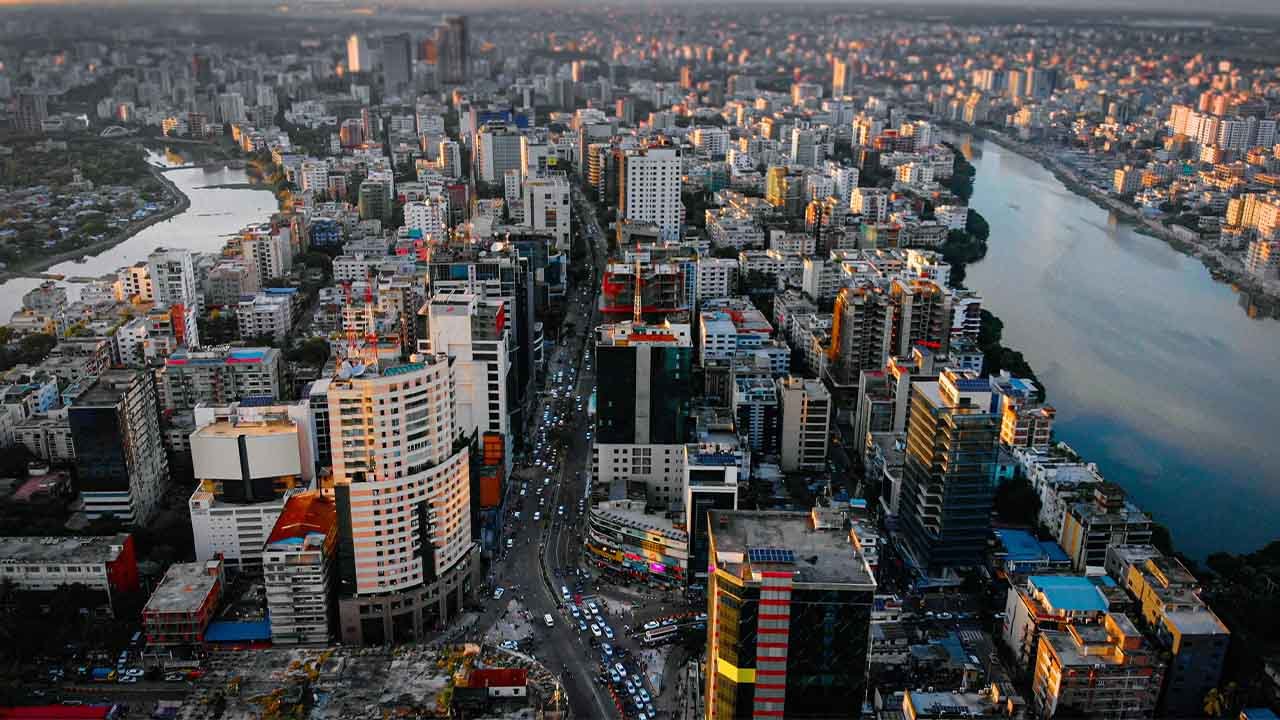
Bangladesh is on track to have a $1 trillion economy by 2040, owing to consumer confidence, innovation in growing economic sectors, and a young, energetic workforce.
According to a Boston Consulting Group (BCG) analysis released on Friday, the South Asian country has beaten rivals including India, Indonesia, Vietnam, Philippines, and Thailand with average annual growth of 6.4 per cent between 2016 and 2021.
The domestic consumer market in Bangladesh is expected to expand to be the ninth-largest in the world. The survey also noted that between 2020 and 2025, a quickly growing middle class and wealthy class are expected to increase significantly, with a thriving gig economy supporting a workforce where the average age is only 28, according to Bloomberg.
“The country could have easily been overshadowed by its neighbor to the northeast — China — or its continental cousin to the west — India — but in this region of economic powerhouses, Bangladesh stands tall,” BCG wrote.
In 2015, Bangladesh moved up the income scale from poor to lower-middle income. Bangladesh’s GDP per capita is already larger than its neighbour, even though it is five years later than India. By 2031, the country hopes to reach upper middle income status.
Some obstacles still exist. According to BCG, recent liquidity problems, as well as pressures from foreign exchange and inflation, could shorten growth. However, Bangladesh has made steps to prepare its $416 billion economy for a prosperous few decades, provided it keeps its average growth rate around 5 per cent.
According to a BCG survey study, 57 per cent of respondents “continue to feel that, especially as the nation shifts to a skill-based economy, the next generation would have better lifestyles than themselves.”
“Though the economy faces some near-term volatility, we are confident that this highly resilient economy will continue to demonstrate robust growth in the long term,” the report said.
In FY2023, Pakistan’s Gross Domestic Product (GDP) growth is expected to modestly improve due to structural changes, according to the Asian Development Bank (ADB).
According to the bank’s most recent Asian Development Outlook Supplement, Pakistan’s GDP growth is predicted to decrease in FY22 (which ends on June 30, 2022), as a result of fiscal tightening measures taken to control rising demand pressures and contain external and fiscal imbalances.
As the country’s inflation surged from 12.3 per cent in December 2021 to 21.3 per cent in June 2022, the bank slightly lowered Pakistan’s inflation for FY22 and dramatically for FY23.
“In addition to the effects of elevated global energy and food prices, the government’s efforts to revive the stalled International Monetary Fund (IMF) programme has meant raising power tariffs and withdrawing subsidies in the oil and power sectors,” said ADB.
In comparison to Sri Lanka, which boosted its policy rate by 950 basis points over the previous six months, the State Bank of Pakistan (SBP) has upped interest rates by 525 basis points since January 1. This also makes it one of the most active central banks in the region.
The ADB also reduced its 2022 growth prediction for Asia and issued a warning that things could become worse as a result of the conflict in Ukraine and supply chain disruptions that are expected to drive up costs.
Although Covid-19’s effects had subsided, the region was now dealing with the consequences of Russia’s invasion of Ukraine, lockdowns in China, and aggressively raised interest rates, according to the Manila-based lender.
The bank reduced its 2022 growth prediction to 4.6 per cent to reflect the decline in developing Asia, which runs from Kazakhstan in Central Asia to the Cook Islands in the Pacific.
South Asia’s economy is anticipated to grow less than the projected rate of growth in the Asian Development Outlook 2022.
On June 10, 2022, Pakistan will present its federal budget for 2022-2023. A number of new taxes measures are expected to be announced in the budget to raise additional income.
It has been learned that a number of withholding taxes would be removed or lowered in the coming budget.
The Federal Board of Revenue (FBR) will choose those withholding taxes that have lower revenue implications without jeopardising the goal of documenting as part of the budget planning process.
According to Brecorder, to document future withholding transactions, a new Directorate-General for Synchronized Withholding Agents System would be developed.
Withholding taxes cause inconsistencies will be reduced by the FBR, as all withholding taxes will be examined to see whether there are any distortions produced by income tax withholding, and adjustments will be made to correct them.
This will be accomplished by making modifications to guarantee that all withholding tax received is either claimed or reimbursed in the return filed in response to the tax demand.
Elimination of Taxes in budget 21-22
The government had eliminated multiple withholding taxes, including the tax on royalty payments to residents during budget 21-22 such as cash withdrawals, banking tools, money transfers other than cash, tax collection from persons remitting funds abroad via credit, debit, or prepaid cards, tax collection on domestic and international air travel, mineral extraction, tax collection by a stock exchange registered in Pakistan, tax collection on marginal financing by NCCPL, CNG stations, and tax collection on certain petroleum products.
Income Tax Ordinance
The Income Tax Ordinance of 2001 contained 38 withholding tax measures. This large number of requirements adds to the complexity and places an excessive strain on different withholding agents to comply. It also has an impact on a country’s ease of doing business rating. In the last budget, 12 withholding taxes were eliminated in an effort to improve company ease and simplify tax rules.
The Overseas Investors Chamber of Commerce and Industry (OICCI) advocated that the withholding tax (WHT) structure be overhauled and reduced from its current twenty-six rates to just five for filers.
Only inactive taxpayers should be subject to this tax. Alternatively, the 8% WHT rate on services is a minimum tax that applies regardless of the service provider’s actual taxable revenue. This tax effectively becomes an indirect tax, raising the cost of doing business for service providers; as a result, service tax should be flexible.
Withholding Tax Regime
The Withholding Tax Regime (WHT) is a worldwide phenomena, and it is the primary source of federal revenue received at the national level in Pakistan. The collection of withholding taxes, as well as the reliance on them, has increased throughout time. Various Withholding Taxes, which are distinguished by their adjustable and presumptive nature, collected Rs422(b) out of total Direct Taxes collection of Rs740(b) for the financial year 2012, accounting for 57 per cent of total Direct Taxes collection.
Since the imposition of direct taxes by governments and taxpayers on two counts, the withholding tax regime has been a feature of the tax system in some form or another:
The government receives revenue on a consistent basis throughout the year to fund its expenditures and operations.
Provides taxpayers with the opportunity to pay down their debts in affordable installments.
Many countries have been obliged to change their economies in recent years as a result of globalisation, in order to unify tax laws and align them with new trade and investment policies represented in free trade agreements. “Hang Together” is more relevant today than it has ever been. Neither countries’ borders nor their economies can be closed. Tax policies are also inextricably linked to foreign economies.
Due to the requirement for an entity to oversee and manage the Withholding Tax Regime in such a competitive climate, the Directorate General of Withholding Taxes was established by the Finance Act of 2008 under section 230A of the Income Tax Ordinance 2001.
Prime Minister (PM) Shehbaz Sharif emphasised the importance of drafting an economic strategy during the day-long Pre-Budget Business Conference on Tuesday, stating that all stakeholders should work together to develop a framework for attaining economic growth.
During his speech, the PM stressed the importance of financial management in order to boost exports and agricultural yields. The meeting was attended by senior economists, industrialists and was organised by the government to explore avenues of consensus-based economic initiatives, according to APP.
“All of us will have to move collectively. The government will need guidance from stakeholders and experts. The government will form a taskforce on agriculture and exports for formulating comprehensive plans,” he said.
PM Shehbaz stated that his government had about 15 months to implement short and medium-term economic initiatives.
He was disappointed that Pakistan was lagging behind other countries, despite the fact that the rest of the world had excelled by following their development plans. He claimed that Pakistan was endowed with talented individuals capable of replicating India’s success in the IT sector.
PM Shehbaz announced that he had assigned Minister of Information Technology Aminul Haque the objective of increasing IT exports to $15 billion in the next two years. “We cannot progress until we set ambitious targets,” he stressed.
Syed Amin Ul Haque pledged on Tuesday to increase information technology exports to $5 billion by the end of 2023.
For the coming fiscal year, several IT and telecommunications programmes have been proposed in this regard.
According to sources, these projects include 31 existing and two new ones, for which the Pakistani government would give Rs4,438.696 million and foreign aid will provide Rs1,042 million.
Budget allocation for IT sector
Reportedly, an amount of Rs100 million is proposed for IT professional certification through the Pakistan Software Export Board, while Rs80 million is planned for Crime Analytics and Smart Policing. In Azad Jammu and Kashmir and Gilgit-Baltistan, Rs50 million has been suggested for demand-driven industry, while Rs179 million has been earmarked for the building of a data centre to provide cloud-based services.
PM Shehbaz warned that development plans could not be implemented unless political stability was achieved. The premier also stressed the importance of concentrating on exports and developing the agricultural sector.
He went on to claim that he was aiming to ‘fix’ friendly country relations that had deteriorated during the previous administration’s tenure. “I have invited China, Japan, Turkey, and other countries to invest in Pakistan,” he said. He invited the corporate community to join him in this endeavour.
Meanwhile, Finance Minister Miftah Ismail stated that the government will require $41 billion in the next 12 months and that he is ‘confident’ that this can be achieved.
The Shehbaz Sharif government, he added, has re-engaged with the International Monetary Fund (IMF). “We spoke with them and are extremely optimistic that we will reach an agreement with the IMF soon. That is something we are extremely certain about”.
Moreover, he explained that the present coalition administration had made difficult measures to help the economy stabilise. “It is difficult for any prime minister to authorise a fuel price hike of twice the amount we have, but we were losing Rs84 per litre on diesel and Rs69 per litre on petrol”.
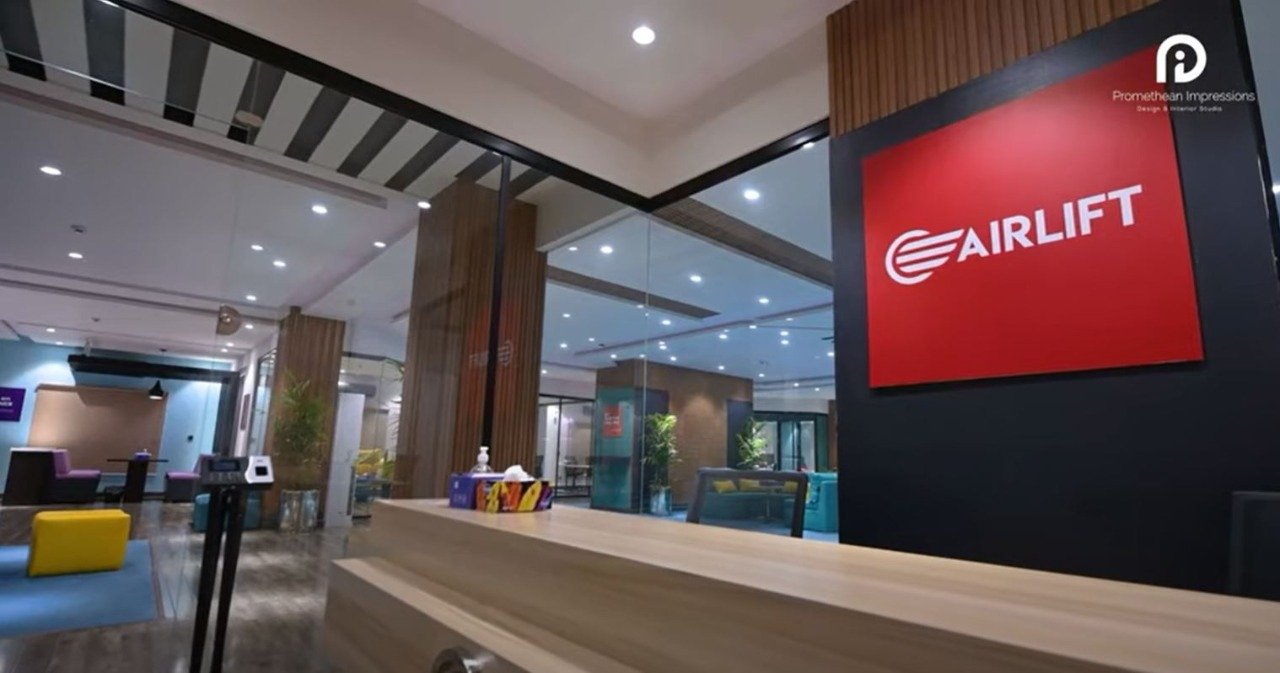
Airlift Technologies, a national grocery delivery service, has laid off 31 per cent of its workforce.
The company posted a statement on its official LinkedIn account confirming the layoff of its workforce; “In the light of the significant downturn in global capital markets, Airlift is undertaking a strategic realignment to reduce the surface area of operations and to increase focus in key areas that drive sustainability and profitability.”
“The decision to part ways with talented teammates has been incredibly challenging for the company. For impacted teammates, Airlift stands committed to providing financial and placement support to help find new roles,” the statement read.
Quick commerce startup Airlift closes down all cities apart from Karachi, Lahore and Islamabad, lays off 31% staff. pic.twitter.com/hSM8Cz3kYE
Usman Gul, the 33-year-old co-founder, and CEO commented on the company’s decision to permanently shut down, saying, “I think if the lens of change is ‘Did Airlift offer great returns to investors?’ then yes, regrettably, it was unsuccessful. If you’re talking about bringing Pakistan into a new reality or altering the entire ecology, then by that yardstick of success, we’ve come a long way,” Gul told Rest of World.
“In many ways, Airlift raised the bar of ambition for Pakistani startups in a big way. Our teams at Airlift redefined the standard of execution, strategy, building a world-class culture, developing a cutting-edge product, raising sizable fundraising rounds,” Gul continued.
What is the point of raising the greatest series B in the nation if the business fails 11 months later? Gul believed that these were improper inquiries when questioned about the $85 million that Airlift blew through in less than one year. He said that the appropriate questions to ask were: “What enabled Airlift to raise $100 million-plus in three years? That’s never happened in Pakistan before. What did this team do differently?”
Airlift was started in 2019 by Usman Gul, Ahmed Ayub, Awaab Khaakwany, Meher Farrukh, Muhammad Owais, and Zohaib Ali as a mass-transit option that connected consumers with buses at reduced costs. Due to the pandemic, Airlift’s transportation operations were halted in March 2020. During the covid pandemic, the company then pivoted its business plan and launched Airlift Express, a grocery delivery service with $10 million in investment. Airlift, last year in August, secured a mega-round of funding of $85 million dollars.
A former Airlift employee described the layoff as “shocking, unexpected, and heartbreaking.”
WHAT FINANCIAL EXPERTS THINK HAPPENED AT AIRLIFT
Ariba Shahid, Financial Journalist at Profit Magazine and DealStreetAsia, while talking to The Current about the layoffs at Airlift, said, “While downsizing is sad considering people lose their livelihoods, sometimes young startups need to scale back operations, recalibrate and start differently or fresh,” adding “In order to do so, they sometimes downsize. There is nothing wrong in doing so. I don’t think any business downsizes unless it’s absolutely necessary.”
Taking about the reason behind the layoffs Ariba added, “There are a number of ways to look at it. One likelihood is that Airlift’s funding was contingent on it attaining milestones. So maybe, they did not get the entire $85 million.”
“The other scenario is that they burned through approximately $10 million a month in customer acquisition costs and expansion. It is difficult for consumers to change their consumption pattern and move onto quick commerce. It also costs a lot to expand and grow, especially internationally, like Airlift did in South Africa. The macroeconomic environment with rising inflation and diminishing purchasing power makes it even more difficult.”
“Airlift was one of the bigger names in the ecosystem. The same way Airlift was used as an example while raising funds, it may be seen as a warning sign. However, the global liquidity crunch plays a bigger role at this point in time, in addition to Pakistan’s weakening macroeconomic sentiments.”
“There is no right or wrong way to run a startup at this point because the ecosystem is very nascent. There are no examples locally to follow. However in order to succeed startups need to ensure they are clean, transparent, do not fudge numbers, accept realistic valuations, stop obsessing over large rounds, and know when to stop blitz-scaling,” she added, talking about Pakistani startups.
While answering a question about the situation of Pakistan’s job market Ariba said, “Too soon to say that but yes, one can expect more layoffs across industries considering working capital will be more expensive, political instability, low investment inflows.”
Aitlift’s Lahore office
Dr Aqdas Afzal, Program Director and Assistant Professor of Economics, Habib University while talking to The Current about the possible reason behind the layoffs said, “The reason is not related to the Pakistani market, there is an economic downturn in the entire world. The inflation in UK and US is highest in last 40 years.”
He continued by adding that, “the main input of Airlift’s delivery is fuel and as considering the fuel inflation, they have withdrawn their services from those markets and cities from where they don’t get much sales and find it difficult to drive “sustainability and profitability.”
“I don’t think Pakistani startups are doing anything wrong, as we have seen they have been able to get get a lot of seed money.”
He further said, “In the coming days you will see a lot more startups booming in Pakistan.”
“The government needs to provide reliable, fast speed and affordable internet, because it is slowly becoming the weakest link for Pakistani startups.”
“I don’t think that Pakistan’s job market is collapsing,” said Afzal while answering a question about Pakistan’s job market.
He added, “We are in low value-added end of the spectrum in terms of freelancing skills and we should see if our educational institutions are teaching the level of coding that freelancers around the world are doing.”
Aitlift’s Lahore office
WHAT LAID-OFF EMPLOYEES HAVE TO SAY
Airlift released a database of the names of113 staffers who were abruptly terminated from their positions and were then ‘open to work.’ The employees listed in the database served in various departments of the cash-strapped venture, including operations, human resources, customer service, rider support specialists, and several software engineers, that were based in Pakistani cities including Karachi, Lahore, Islamabad, Gujranwala, Faisalabad, Hyderabad, and Peshawar, with the remainder in South Africa.
“The layoff news shocked the entire workforce as we had no idea the company would announce a massive layoff along with closing key warehouses in different cities,” an employee at Airlift Head Office Lahore, told The Current, “I was aware that the stock market was collapsing dramatically, with some well-known corporations laying off a large number of staff, but I had no idea that the capital market’s volatility would have such an immediate impact on Airlift.”
According to another insider, the company was unable to generate sufficient profit to entice international investors, which is why layoffs had to be done.
Khan revealed that he is looking for work and has undergone three job interviews so far. “After the news of the Airlift went viral on social media, I was approached by a couple of companies and individuals, although I have yet to receive job confirmation,” he claimed.
“I have had a wonderful time at the Airlift. The management took good care of the overall staff. The payouts were never delayed,” Husnain Raza, who was employed as a Rider Operations Specialist at Airlift barely a year ago, told The Current. “The company had to take this horrendous step or it could’ve been dissolved.”
Ex-Operations Lead at Airlift Faisalabad, stated that he is not concerned since the company has offered to compensate the employees who were laid off without notice with 1-2 months of salary. “I assume I’ll find another job until then,” he asserted.
The Current has reached out to the founders of Airlift for a comment on why the layoffs took place and about the future of the company. We are still waiting for a comment and until we get one, here is the statement issued by the company on the dismissal of their staff.
GLOBAL IMPACTOF THE ECONOMIC DOWNTURN
The impact of the global economy is not just being seen at Airlift or in Pakistan.
Cutbacks, contract terminations, and layoffs have impacted at least 5,600 startup employees since the beginning of 2022 at a number of unicorns, global tech companies in India, and growth-stage startups.
Startups like Unacademy, Furlenco, and many others have cut back and downsized in order to improve profitability. Better.com, a mortgage technology company based in the United States, has also asked employees to sign voluntary separation agreements. These layoffs occurred at Better.com’s India operations, where another 920 employees were let go earlier this month, following a total of over 3,000 laid off by April.
Unacademy, the edtech unicorn, laid off over 1,000 employees and shut down its online education platform, PrepLadder, in April 2022. More than 800 employees at BYJU’s-owned WhiteHat Jr were told to resign because they refused to work from the office.
Furthermore, Cars24, a marketplace, laid off workers in order to cut costs and move toward automation. In this downsizing, the unicorn may lay off up to 600 employees soon.
Alongside startups, some big names, such as Netflix, have cut staff this year, with some blaming the COVID-19 pandemic and others faulting ‘overhiring’ during periods of speedy growth. In 2022, Robinhood, Glossier, and Better are just a few of the technology firms that have significantly reduced their staff numbers.
The capital markets have taken a beating in 2022, and this has filtered down to the private sector. Fears about inflation, rising interest rates, and geopolitical issues have all contributed to a volatile financial market.
Startups, particularly those that profited from a pandemic growth that is now slowing, are beginning to feel the strain as well. Valuations have begun to fall, especially at the later phase, and entrepreneurs say it is far more challenging to raise new funding in such a situation.
A multitude of companies that experienced pandemic-related surges are experiencing a correction as a result of a variety of factors, including rising inflation, economic distress, war, and shifting consumer taste buds. Companies such as Meta and Twitter have publicly announced hiring freezes, and Snap confirmed this week that it is slowing hiring as revenue targets are missed.
If a company is bleeding money, it will most likely begin to lay off employees, preserving only those who are required to work to retain the business’s level of operations. If the company dissolves, the remaining workers may be laid off as well.
Among the most likely causes for layoffs is that the company is trying to cut costs in some way. This could be because the company needs to pay off debts, fewer sales or the company no longer has the financial backing of investors like Airlift.
As technological advancements and automation grow common in businesses, employers sometimes lay off employees in order to cut costs and reduce position redundancy. Moreover, if the employee satisfies certain requirements and is prepared to make the change, the organisation may commit to finding another role for them and transferring them to the position.
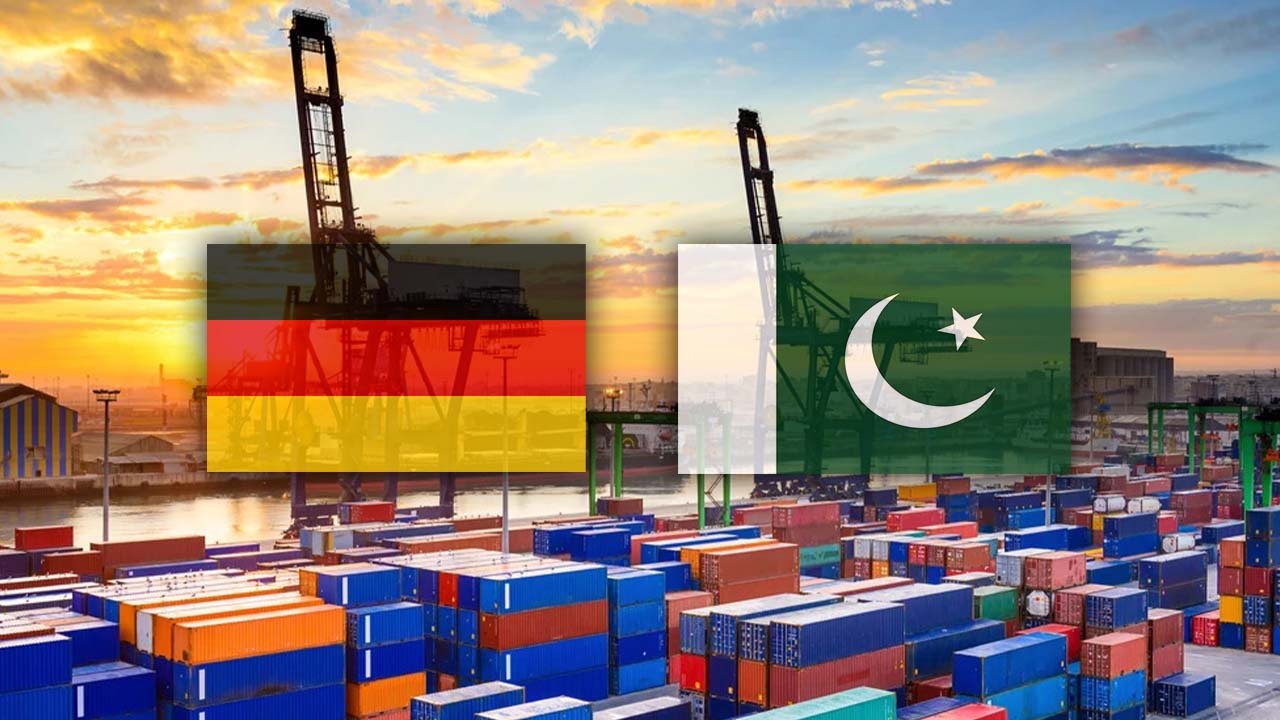
In a recent meeting with Federal Minister of Commerce and Investment Syed Naveed Qamar, German Minister of State for Foreign Affairs Dr Tobias Lindner expressed his hope that Germany and Pakistan would further strengthen and expand bilateral relations, particularly in trade and investment.
Both countries discussed multiple aspects of bilateral ties, along a great emphasis on improving trade and financial collaboration to sustain economic growth in a post-Covid pandemic world. The duo agreed to exchange business envoys to look into the prospect of B2B cooperation in renewable power, farming, food security, autos, and technical assistance.
The Commerce Minister praised Germany for its constant support for Pakistan’s GSP Plus scheme. He emphasized the importance of GSP Plus in widening bilateral trade and offering Pakistan a level playing field in the European segment.
He also clarified that the scheme has served as a precursor for essential progressive social changes, particularly those relating to women’s empowerment. The German Minister convinced his nation’s continued and forthcoming assistance for the GSP Plus Scheme.