Tag: economic growth

  • ‘Nation stands with PM Khan, Opposition can’t harm him’, claims Asad Umar

    ‘Nation stands with PM Khan, Opposition can’t harm him’, claims Asad Umar

    Federal Minister for Planning, Development and Special Initiatives Asad Umar dismissed the news of factionalism within the Pakistan Tehreek-e-Insaf (PTI) and said no one could be Prime Minister (PM) Imran Khan’s substitute within the party.

    While talking to Geo News’  programme “Naya Pakistan”, Umar stated that 99 per cent of the PTI’s vote bank belongs to PM Khan.

    “I reiterate that the nation stands with Imran Khan and this is the only reason that the Opposition has been unable to harm him,” he said while referring to Opposition claims that allied parties are not with the government.

    The federal minister also seconded his party fellow Fawad Chaudhry’s statement about Pakistan Muslim League-Nawaz (PML-N) members being “hell-bent on removing Nawaz Sharif from their party”.

    Despite inflation and new taxes that have been imposed, Asad Umar claimed that the country’s economy is progressing.

  • Russian President Vladimir Putin calls PM Imran Khan

    Russian President Vladimir Putin calls PM Imran Khan

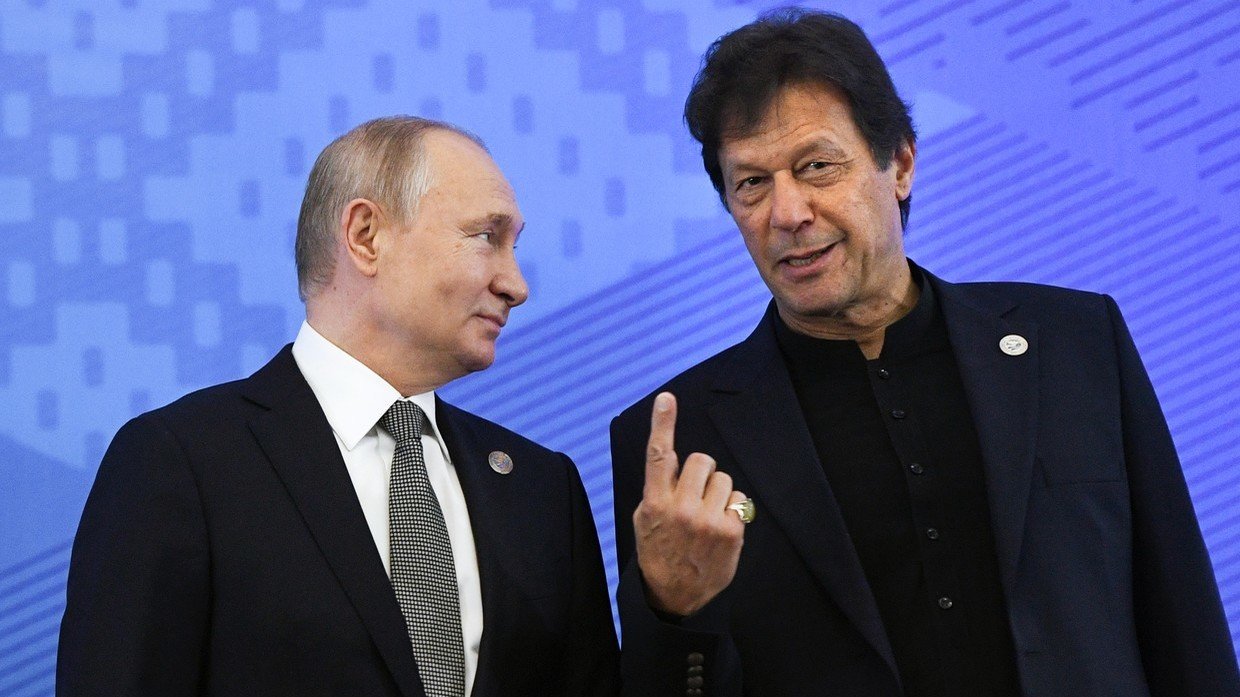
    Prime Minister Imran Khan received a telephone call from Russian Federation President Vladimir Putin on Wednesday (August 25).

    The two leaders exchanged views on the evolving situation in Afghanistan and bilateral relations.

    PM Khan stressed that a peaceful, secure, and stable Afghanistan was vitally important for Pakistan and regional stability. Besides ensuring safety, security, and protection of rights of Afghans, an inclusive political settlement was the best way forward.

    PM Khan also underscored that the international community must stay positively engaged in support of the people of Afghanistan, to help address humanitarian needs and ensure economic sustenance.

    PM Khan said highlighted the importance of coordinated approaches in addressing the evolving situation and noted that Pakistan attached high importance to the role of the Troika Plus format.

    PM Khan expressed satisfaction at the upward trajectory of Pakistan-Russia relations, with increased high-level exchanges and growing cooperation in diverse fields.

    He reiterated Pakistan’s resolve to strengthen trade relations as well as bilateral collaboration in the energy sector, including the early realisation of the Pakistan Stream Gas Pipeline Project.

    The two leaders agreed to closely cooperate within the Shanghai Cooperation Organisation (SCO) for promoting regional peace and security.

    PM Khan reiterated his invitation to President Putin to visit Pakistan.

  • ‘Pakistan can be partners in peace with US but never in conflict’: PM Imran Khan

    ‘Pakistan can be partners in peace with US but never in conflict’: PM Imran Khan

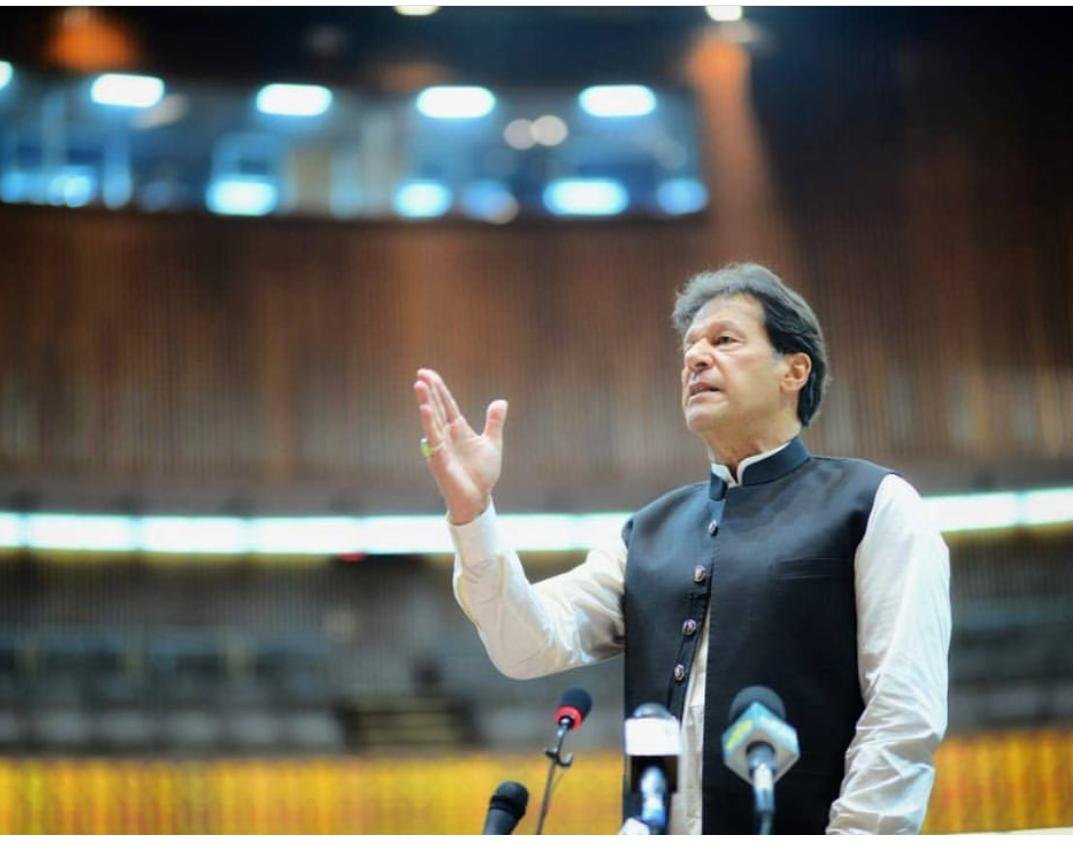
    Speaking at the budget session of the National Assembly (NA), Prime Minister Imran Khan once again reiterated, “Pakistan could be partners with the United States in peace but never in conflict.”

    PM gave his speech the day after the government smoothly passed Finance Bill 2021-22.

    The premier further added, “When we gave so many services, did they (US) praise us or acknowledge our sacrifices? Instead, they called us a hypocrite and blamed us. Instead of appreciating us, Pakistan was bad-mouthed.”

    “I have never felt more insulted than when Pakistan decided to join the US war on terror. We decided to become a frontline state for the American war on terror. I questioned repeatedly: what did we have to do with the war?”

    “Does any country get involved in another’s [war] and lose 70,000 lives?” he asked. “What they (US) said, we kept doing. Musharraf said in his book that he took the money [from the US] and sent people to Guantanamo.”

    The premier termed it as the “darkest period of our history” when Pakistan did not know which was a friendly country and which was not. “Have you heard of a friendly country carrying out attacks and drone strikes in your country?”

    In an apparent reference to Muttahida Qaumi Movement (MQM) founder Altaf Hussain, PM asked: “A terrorist is sitting in London for 30 years. Will they give us permission to attack him? If they will not give permission then why did we? Are we subhuman or half-human or do our lives not have enough value?”

    The prime minister said that in a meeting of the US Senate, an American commander had claimed that the Pakistan government did “not tell the truth” to its citizens. “We disrespected ourselves, the world did not disrespect us.”

    He said that overseas Pakistanis had to hide their faces after the raid by US Navy Seals in Abbottabad in which Osama Bin Laden was killed because “our ally did not trust us enough to carry out the attack”.

    The premier warned that a “very tough time” was coming for Pakistan in view of the situation in Afghanistan. He said he was thankful that the US had recognised there was no military solution to the conflict in the neighbouring country but it should have done so earlier.

    “Afghanistan has never accepted interference from outside. If we were proactive and a self-respecting government, stood up and said [the US] is wrong, then we would have protected them (Afghans).”

    The premier clarified that Pakistan did not want to have favourites or choose sides, insisting “whoever Afghan people choose, we are with them”.

    PM Khan invited the Opposition to work with the government on election reforms. “After 1970, all elections have been controversial,” he said.

    PM Khan said the recently held by-polls and Senate elections were made controversial as well.

    He said the government had been considering ways to make the elections acceptable to all the parties, and reminded the Opposition that election reforms would benefit democracy.

    “The time has come to make the country’s elections acceptable to everyone,” he said.

    He recalled that when he wanted to give a speech in parliament after being elected prime minister, the Opposition refused to allow him to speak claiming that the election had been rigged. “When Trump claimed the same, the media asked him to give proof.”

    “We did the same in 2013. We had asked the then government to hold recounting in four constituencies. We had to approach the court and as a result in all four constituencies, rigging was proved.”

    “After trying our best, we came to the conclusion that EVMs (electronic voting machines) are the only solution,” he said.

    The premier said his government was “ready to listen” if the Opposition had any other “advice” regarding the electoral reforms.

    The premier said if the country steps back from this aim, then there would be “no justification for Pakistan’s existence”.

    PM Imran Khan said that the budget reflected the PTI’s three core principles — justice, humanity, and self-sufficiency and praised his financial team for ensuring the budget embodies all three.

    He said that when the PTI government came to power, the country’s biggest problem was the current account deficit. “[Pakistan] had the biggest deficit in history, which means our currency was in danger. Our team was new and we had no experience … We took many difficult steps to stabilise our economy which were painful.”

    The premier thanked countries like the UAE, Saudia Arabia, and China for “protecting us from defaulting”.

    The premier lauded National Command and Operations Centre (NCOC) chief Asad Umar and Special Assistant to Prime Minister on Health Dr Faisal Sultan, the Pakistan Army, and others involved in curbing the spread of coronavirus.

    “The Opposition attacked us, we were criticised for two months for no lockdowns,” he recalled.

    PM Imran Khan said Pakistan’s coronavirus situation was better as compared to countries in the region and it was “due to Allah’s blessings and the poor people’s prayers”.

    He cited the government’s “protection” of agriculture as well as record crop production for the 3.9 per cent economic growth rate in fiscal year (FY)22.

    “We incentivised export industry and it grew 17 per cent in one year. Our exports in June were $2.7 billion, which is an all-time record for the month in Pakistan,” added PM Khan.

    “We held negotiations with the construction industry and tried to give them incentives because when [that industry] starts running, then 30 related industries also start running,” he added.

    Pakistan was moving towards becoming an Islamic welfare state for the first time, said PM Khan.

    “By next month, we will have data on all income levels of families and according to that, the lowest 40-50pc families will be brought under the [government’s social welfare] programme. We have dedicated Rs500bn for them,” he said, disclosing that it would include interest-free loans, health cards, technical education, low-cost housing, and scholarships.

    A day earlier, the National Assembly had passed the budget for the fiscal year 2021-2022, with a majority vote amid a dismal showing by the Opposition.

    PM gave his speech the day after the government smoothly passed Finance Bill 2021-22.

    The premier further added, “When we gave so many services, did they (US) praise us or acknowledge our sacrifices? Instead, they called us a hypocrite and blamed us. Instead of appreciating us, Pakistan was bad-mouthed.”

    “I have never felt more insulted than when Pakistan decided to join the United States war on terror. “We decided to become a front line state for the American war on terror. I questioned repeatedly, what did we have to do with the war?” said PM Khan.

    “Does any country get involved in another’s [war] and lose 70,000 lives?” he asked. “What they (US) said, we kept doing. [Former president Pervez] Musharraf said in his book that he took money and sent people to Guantanamo [Bay jail].

    The premier termed it as the “darkest period of our history” when Pakistan did not know which was a friendly country and which was not. “Have you heard a friendly country doing attacks and drone strikes in your country?” he asked.

    “A terrorist is sitting in London since 30 years. Will they give us permission to attack him?” he questioned in an apparent reference to Muttahida Qaumi Movement (MQM) founder Altaf Hussain.

    “If they will not give permission then why did we? Are we subhuman or half human or do our lives not have enough value?” he said angrily.

    The prime minister said that in a meeting of the US Senate, an American commander had claimed that the Pakistan government did “not tell the truth” to its citizens. “We disrespected ourselves, the world did not disrespect us.”

    He said that overseas Pakistanis hid their faces after the raid by US Navy Seals in Abbottabad in which Osama Bin Laden was killed because “our ally did not trust us enough to carry out the attack.”

    The premier warned that a “very tough time” was coming for Pakistan in view of the situation in Afghanistan. He said he was thankful that the US had recognised there was no military solution to the conflict in the neighbouring country but it should have done so earlier.

    “Afghanistan has never accepted interference from outside. If we were proactive and a self-respecting government stood up and said [the US] is wrong, then we would have protected them (Afghans).”

    The premier clarified that Pakistan did not want to have favourites or choose sides, insisting “whoever Afghan people choose, we are with them.”

    PM Khan invited the Opposition to work with the government on election reforms. “After 1970, all elections have been controversial,” he said.

    PM Khan said the recently held by-polls and Senate elections were made controversial as well.

    He said the government had been considering ways to make the elections acceptable to all the parties, and reminded the Opposition that election reforms would benefit democracy.

    “The time has come to make the country’s elections acceptable to everyone,” he said.

    He recalled that when he wanted to give a speech in parliament after being elected prime minister, the opposition refused to allow him to speak claiming that the election had been rigged, adding, “When [former United States president Donald] Trump claimed the same, the media asked him to give proof.”

    “We did the same in 2013. We had asked the then government to hold recounting in four constituencies,we had to approach the court and as a result in all four, rigging was proved.

    “After trying our best, we came to the conclusion that EVMs (electronic voting machines) are the only solution,” he said.

    The premier said his government was “ready to listen” if the opposition had any other “advice” regarding the reforms.

    The premier said if the country steps back from this aim, then there would be “no justification for Pakistan’s existence”.

    PM Imran Khan said that the budget reflected the PTI’s three core principles — justice, humanity, and self-sufficiency and praised his financial team for ensuring the budget embodies all three.

    He said that when the PTI government came to power, the country’s biggest problem was the current account deficit. “[Pakistan] had the biggest deficit in history which means our currency was in danger. Our team was new and we had no experience … We took many difficult steps to stabilise our economy which were painful.”

    The premier thanked countries like UAE, Saudia Arabia and China for “protecting us from defaulting”.

     The premier lauded National Command and Operations Centre (NCOC) chief Asad Umar and Special Assistant to Prime Minister on Health Dr Faisal Sultan, the Pakistan Army, and others involved in curbing the spread of coronavirus.

    “The opposition attacked us, we were criticised for two months for no lock downs,” he recalled.

    PM Imran Khan said Pakistan’s coronavirus situation was better as compared to countries in the region and it was “due to Allah’s blessings and the poor people’s prayers”.

    He cited the government’s “protection” of agriculture as well as record crop production for the 3.9 per cent economic growth rate in fiscal year (FY)22.

    “We incentivised export industry and it grew 17 per cent in one year. Our exports in June were $2.7 billion which is an all time record for the month in Pakistan,” added PM Khan.

    “We held negotiations with the construction industry and tried to give them incentives because when [that industry] starts running, then 30 related industries also start,” he added.

    Pakistan was moving towards becoming an Islamic welfare state for the first time, said PM Khan.

    “By next month, we will have data on all income levels of families and according to that, the lowest 40-50pc families will be brought under the [government’s social welfare] programme. We have dedicated Rs500bn for them,” he said, disclosing that it would include interest-free loans, health cards, technical education, low-cost housing and scholarships.

    A day earlier, the National Assembly had passed the budget for the fiscal year 2021-2022, with majority vote amid a dismal showing by the Opposition.
  • ‘No increase in tax rate of mobile phone calls, SMS, internet’: Shaukat Tarin

    ‘No increase in tax rate of mobile phone calls, SMS, internet’: Shaukat Tarin

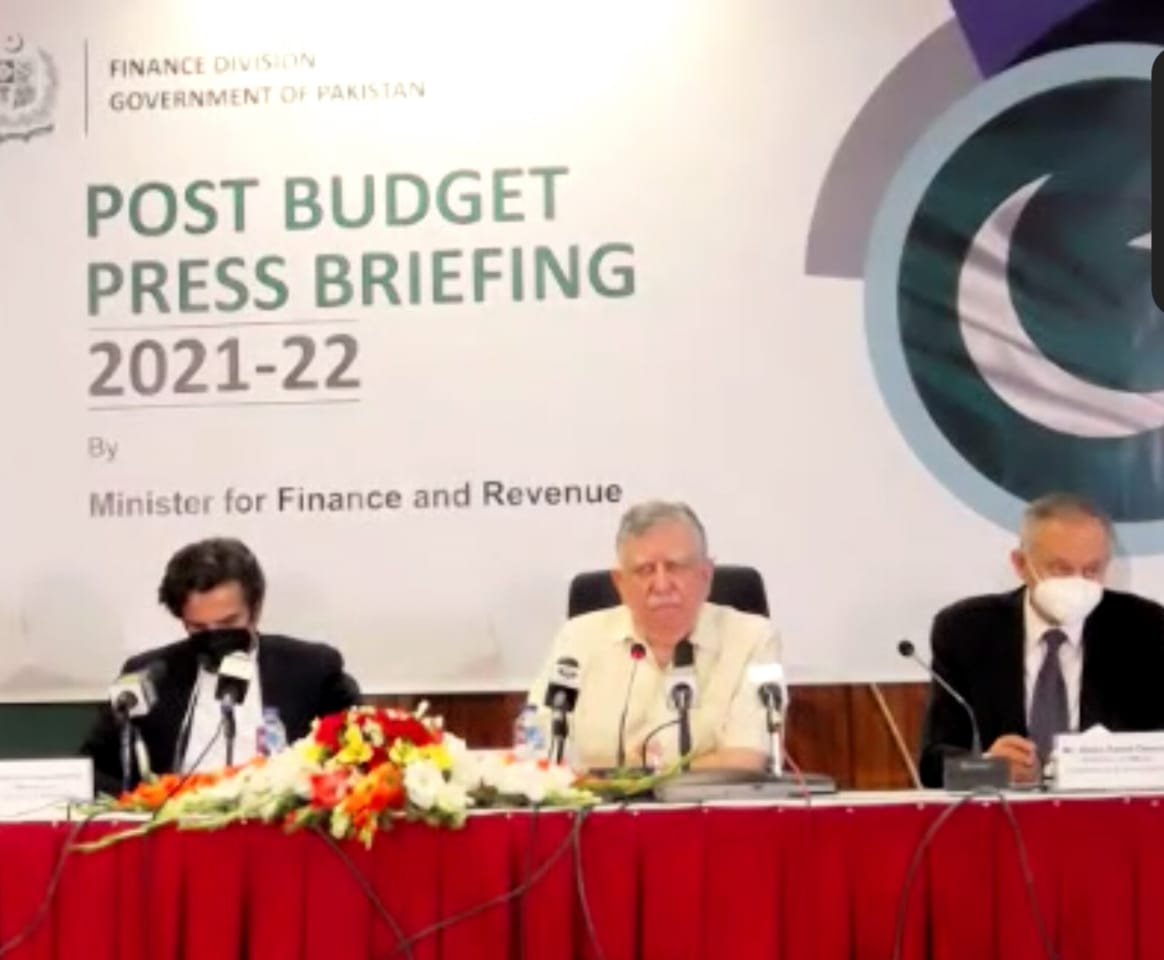
    Addressing a post-budget press conference in Islamabad, Finance Minister Shaukat Tarin said that ” Prime Minister Imran Khan and the cabinet opposed the imposition of tax on mobile phone calls, internet data, and SMS. “Now there will be no increase in the tax rate for all these services.”

    The original decision, if it had been implemented, would have affected over 98 million people.

    Tarin said the government has presented a total growth budget and their challenge is to stabilise growth.

    Tarin said that additional tax of Rs500 billion will be collected in the next financial year. “We have to earn dollars by increasing exports and add an additional tax of Rs500 billion in the next financial year.”

    The finance minister said that Pakistan had to go to the International Monetary Fund (IMF) for help when its position is weak.

    “We need 20 per cent growth in exports. Our savings rate is 15 per cent and our investment rate is up to 16 per cent. If we do not have revenue, how will we achieve growth?”

    Tarin said that the poor in the country have not received loans and training for the last 70 years. Loans up to Rs 2 million will be given to build a roof and loans to poor farmers will go up to Rs 500,000. Pakistan has become a food deficient country and we are now importing what we used to export, Tarin said, adding that the country is importing pulses, wheat, and sugar.

    “We did not pay attention to our crops, but now we will pay attention to it,” he assured.

    “We should not play politics with the poor,” he added.

    Tarin unveiled the Budget 2021-22 yesterday. The total expenditure of the budget had been kept at Rs 8,478 billion and had set the tax collection target at Rs 5,829 billion. 

  • PTI fudging economic figures, claims PML-N

    A pre-budget seminar was organised by the Pakistan Muslim League-Nawaz (PML-N) on June 3 in Islamabad.

    The seminar was organised by the Economic Advisory Council of the PML-N on the direction of party president Shehbaz Sharif.

    Titled ‘Economy sinking under Imran Khan’s government’, the seminar discussed all the economic issues before the upcoming budget. The main focus was on the economic policies of the Pakistan Tehreek-i-Insaf (PTI) government.

    Graphs shown during the seminar entailed that Pakistan’s gross domestic product (GDP) grew by 5.8 per cent in PML-N’s last year, the highest in 16 years. In addition, GDP growth consistently remained above 4 per cent in each of PML-N’s 5 years. GDP growth has significantly declined during PTI’s tenure with 2.1 per cent growth in 2019.

    PTI is claiming 3.9 per cent growth now in 2021, but this claim is being challenged by independent economists. Whereas, GDP has significantly declined during PTI’s tenure with 2.1 per cent growth in 2019.

    Shehbaz Sharif claimed that the government was pushing out wrong statistics and misinforming the public since the start of the its tenure.

    “The government’s statistics [regarding the budget] have already become a subject of debate,” Shehbaz said while addressing the seminar virtually.

    “Their past is evident and they have been putting forth forged figures,” he said. “This comes on top of the government’s worst performance and major failures.”

    Last week, on Sunday, while addressing the nation live, Prime Minister Imran Khan said the Opposition parties were complaining about the government misleading the nation on the economy as they had not expected it to achieve a growth rate of nearly 4 per cent.

    “The economic growth rate has baffled political opponents who wanted the government to fail in meeting these challenges left behind by our predecessors,” added Khan.

  • PM ‘worried’ about the Opposition

    PM ‘worried’ about the Opposition

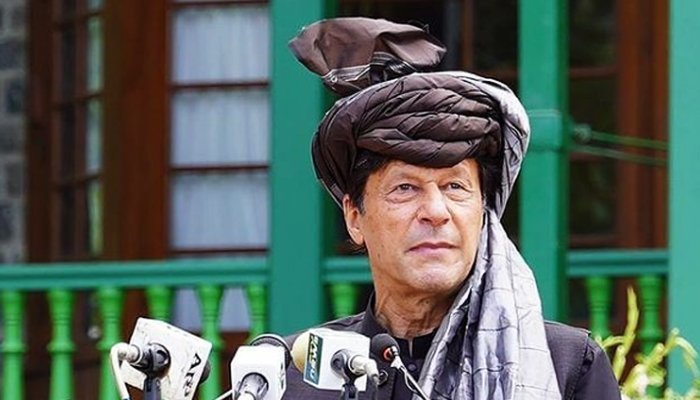
    Prime Minister Imran Khan on Tuesday, while speaking at a ceremony in Ziarat said, “I am worried, whether they [Opposition] will remain as an alliance or not.”

    Khan took a jibe at the Pakistan Democratic Movement (PDM), which faced a setback after the Pakistan People’s Party (PPP) and the Awami National Party (ANP) left it.

    The premier said the country was “getting out of a very difficult time”, adding that the Opposition parties had been “making noise” that his government would fail ever since it came to power.

    “Our opponents have created hue and cry. Even when Pakistan Tehreek-i-Insaf (PTI) had formed the government in 2018, our opponents said that we were bound to fail,” said Khan.

    The Opposition kept reiterating that the country’s economy would suffer, but now, when the growth rate’s statistics were made public, they rejected them, he said.

    “Our opponents want us to fail,” he said, as he stressed the government was doing everything in its power to uplift the economy.

    The premier, shedding light on how his government achieved growth in Khyber Pakhtunkhwa, said the PTI-led government promoted tourism, launched health cards for nearly half of the population.

    Moreover, till this year’s end, Punjab’s population will have a health card and soon enough, all of Pakistan will have this facility. “Even in Balochistan, every family will have a health card.”

    Prime Minister said his government “considers Balochistan ours” in a way that previous governments did not. Previous governments had not spent money on the province’s development, he said, adding that his government would “use all of our resources in this difficult time” to ensure progress.

    The premier said there was a gas issue in Ziarat, and a member of the provincial assembly (MPA) had told the premier that a gas line would be installed to overcome this problem.

    Installing an LPG plant is more feasible in Ziarat, he said, adding in the next fiscal year, he would try his best to get an LPG plant installed in the city.

    “Balochistan is a large province, so developing streets here is quite expensive …. Pakistan’s development will actually take place when the entire country develops,” he said.

    The premier said despite reservations from Punjab and KP that he was being “too generous with Balochistan”, it was the government’s “responsibility to make full efforts” because the province had been ignored in the past.

    “Pakistan’s development will only be in real terms when it is inclusive [and] when the whole country develops,” he reiterated.

    “I will keep coming here and checking the progress. We are giving another package for roads. We will give funds wherever there is room,” the premier concluded.

  • GDP growth in 2021: Pakistan likely at par with Nigeria at 1.5%; India at 11.5%, China at 8.1%

    GDP growth in 2021: Pakistan likely at par with Nigeria at 1.5%; India at 11.5%, China at 8.1%

    The International Monetary Fund (IMF) has raised its forecast for global economic growth in 2021 but warned that there was still “extraordinary uncertainty” about the outlook.

    According to the latest World Economic Outlook forecast, the IMF projects global growth at 5.5%, which is higher than their previous forecast in October. Global growth will moderate to 4.2% growth in 2022, the IMF said.

    As per the forecast, Pakistan’s gross domestic product (GDP) growth in the ongoing year will stand at 1.5% that it shares with Nigeria, while neighbouring India and China are likely to stand at staggering 11.5% and 8.1%, respectively.

    GDP is the total monetary or market value of all the finished goods and services produced within a country’s borders in a specific time period. As a broad measure of overall domestic production, it functions as a comprehensive scorecard of a given country’s economic health.

    Malaysia’s growth is likely to stand at 7%, Turkey: 6%, Spain: 5.9%, France: 5.5%, the United States (US) 5.1%, Indonesia: 4.8%, the United Kingdom (UK): 4.5%, Mexico: 4.3%, Brazil: 3.6%, Canada: 3.6%, Germany: 3.5%, Japan: 3.1%, Russia: 3%, Italy: 3%, while the GDP growth of Saudi Arabia has been predicted to stand at 2.6%.

    The upgrade for this year reflects the positive effects from the start to vaccinations in some countries, additional fiscal support in the US and Japan, and at least a partial return to business and consumer normality as the health crisis wanes.

    “Much now depends on the outcome of this race between a mutating virus and vaccines to end the pandemic, and on the ability of policies to provide effective support until that happens,” said IMF chief economist Gita Gopinath in a blog post accompanying the updated forecast.

    The global economy contracted by 3.5% in 2020, the worst peacetime contraction since the Great Depression of the 1930s, the agency said.

    Close to 90 million people are expected to enter extreme poverty in 2020 and 2021, reversing the trends of the past two decades, the IMF said.

    Altogether, the COVID-19 pandemic will cost the global economy $22 trillion over 2020-2025 relative to pre-pandemic projected levels.

  • ‘Good news for market’: IMF programme to restart soon, says SBP chief

    Pakistan is in talks with the International Monetary Fund (IMF) to put the fiscal support programme back on track, State Bank of Pakistan Governor Dr Reza Baqir said on Monday.

    Baqir said he was optimistic about the economic outlook despite the fallout from the coronavirus pandemic and the central bank was eyeing 1.5pc to 2.5pc GDP growth in the current fiscal year.

    With dwindling foreign exchange reserves and a struggling economy, Pakistan entered a three-year $6 billion IMF bailout programme in 2019, but is yet to have its second review approved, which has been pending since early last year.

    “We hope to have good news for the market and the world that we are putting the programme back on track,” Baqir said in an interview on Monday at the Reuters Next conference.

    Last year, staff from the IMF and Pakistani authorities reached an agreement to pave the way for a disbursement of $450 million in IMF funds pending approval from the global lender’s executive board, which is yet to take place.

    Baqir said there was no disagreement on the end goal between the two sides, and that Pakistan needs to increase its low tax-to-GDP ratio.

    Pakistan and the IMF have been working to implement IMF-supported economic reforms, in particular tax collection, aimed at stabilising the economy and shoring up a yawning fiscal deficit.

    Though the bailout programme is still pending, Pakistan received $1.4 billion in emergency financing from the IMF to allow it to fund targeted and temporary spending increases aimed at containing the pandemic and mitigating its economic impact.

    Authorities are counting on the IMF bailout package to bolster Pakistan’s fiscal position and increase global confidence in its economy.

    “Pakistani authorities and the IMF team remain closely engaged, discussions are going on, both teams are working very hard and non-stop to bring the programme review to positive conclusion,” IMF’s Resident Representative to Pakistan, Teresa Dabn Sanchez, told Reuters.

    Baqir also said he is more optimistic about the outlook even as Pakistan battles a second wave of the coronavirus outbreak.

    “We are prepared for the challenges that may come about. We are already in the middle of Covid without any vaccine and once the vaccine comes, it will only makes this better,” he said.

    Baqir added that an economic recovery is underway and the bank’s job is to support the rebound until a vaccine is available.

    1.5 to 2.5% GDP GROWTH:

    Pakistan is aiming to achieve 1.5pc to 2.5pc GDP growth in the current fiscal year, Baqir said. “I think the next two or three years should bring some good news on the economic front.”

    Pakistan’s economy contracted 0.4% in the last fiscal year ended June 30, 2020, as the pandemic hit. Baqir added that an economic recovery was under way and the bank’s job was to support the rebound until a vaccine was available.

    “I think the next two or three years should bring some good news on the economic front,” he said.

    Baqir said Pakistan’s growth in its foreign exchange reserves from $7 billion to $13 billion in recent months was not due to borrowing.

    He said Pakistan needed “a rollover of the support” of friendly countries that had parked money in the bank to shore up reserves, but did not need new loans.

    Among those countries is Saudi Arabia, which recently asked Pakistan to repay $2 billion of its loan. Islamabad returned $1 billion to Riyadh in December last year and was to pay another $1 billion this month.

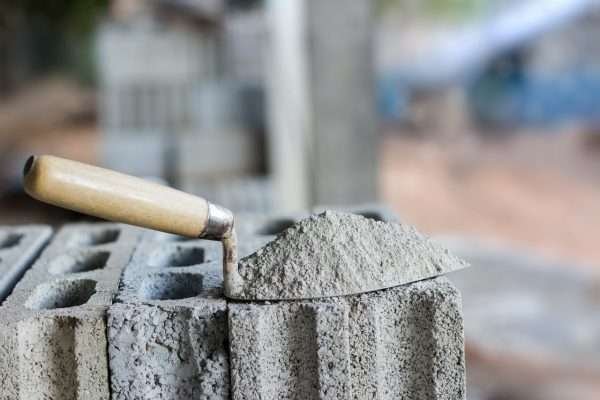
  • Pakistan exports record 5.7 million tons of cement

    Pakistan exports record 5.7 million tons of cement

    The cement sector in Pakistan has reported the highest ever monthly sales in October 2020.

    According to the data released by All Pakistan Cement Manufacturers Association (APCMA), 5.735 million tons of cement was exported in October.

    The domestic sales of cement in October 2020 increased by 15.83 per cent to 4.859 million tons from 4.195 million tons in October 2019, while exports registered an increase of 11.58 per cent, increasing to 875,266 tons from 784,433 tons in the same month last year.

    In the north region, domestic cement despatches increased by 15.53 per cent to 4.165 million tons during October 2020 from 3.605 million tons in October 2019. Exports from the north increased by 8.54 per cent to 0.283 million tons in October 2020 from 0.261 million tons in October 2019.

    There has been positive growth in the southern region as well where the domestic cement despatches increased by 17.70 per cent to 695,221 tons from 590,690 tons in October 2019. Exports from the South continued to grow and increased by 13.09 per cent to 591,877 tons in October this year from 523,353 tons in October 2019.

    In the first four months of this fiscal year, 19.321 million tons of cement was despatched, which is 19.89 per cent higher than the first four months of the last fiscal year.

    Total cement dispatches during the first four months of the current fiscal year increased by 19.89 per cent to 19.321 million tons from 16.116 million tons in July-Oct 2019. Domestic despatches registered a healthy increase of 17.94 per cent, increasing from 13.315 million tons to 15.704 million tons.

    Exports also showed encouraging growth increasing by 29.15 per cent from 2.8 million tons to 3.617 million tons.

    In the South (Sindh-Balochistan) the domestic growth remained healthy at 12.08 per cent as consumption in the first four months increased from 1.860 million tons to 2.085 million tons this year.

    The exports from the south posted a growth of 46.56 per cent in the first four months of this fiscal which increased to 2.712 million tons from 1.85 million tons during Jul-Oct 19.