Tag: economic impact

  • OGRA announces ‘reduction’ of Rs0.81 per kg in LPG price

    OGRA announces ‘reduction’ of Rs0.81 per kg in LPG price

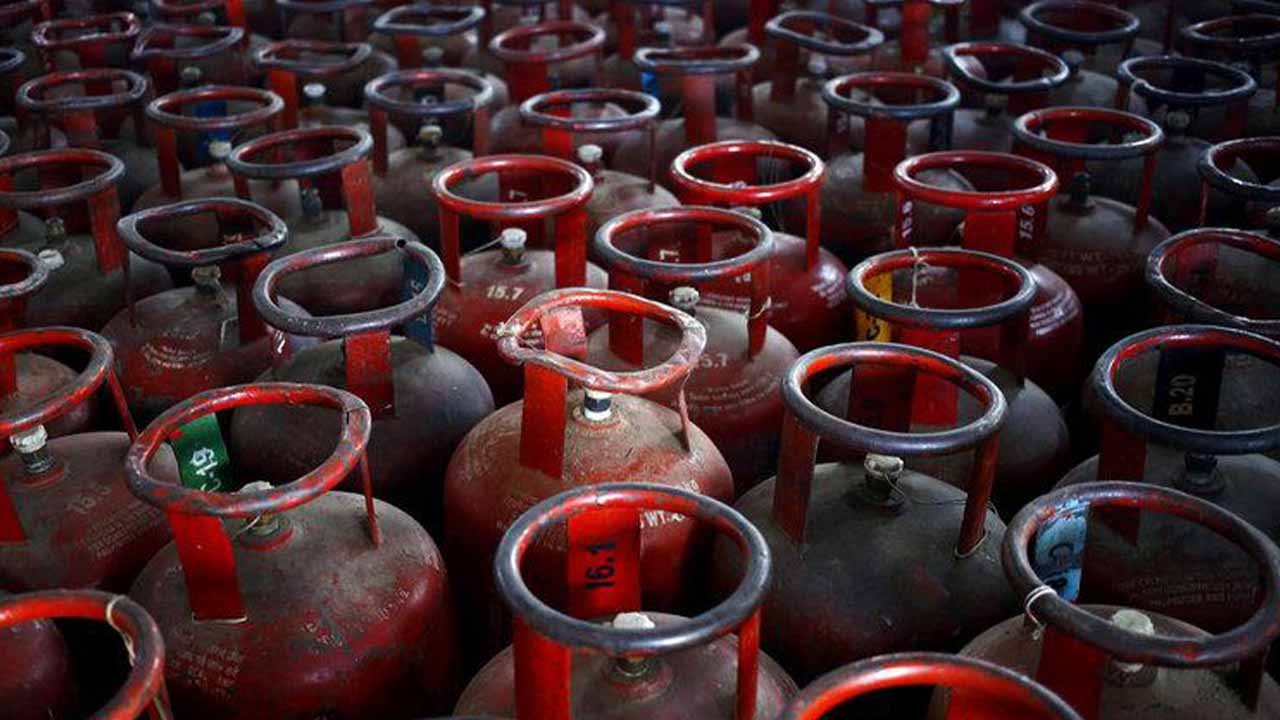
    The Oil and Gas Regulatory Authority (OGRA) has implemented a modest reduction in the price of Liquefied Petroleum Gas (LPG) by Rs0.81 per kg, effective from March 01, 2024.

    The previous consumer price for LPG stood at approximately Rs257.59 per kg. With the latest adjustment, consumers can now avail themselves of LPG at the revised rate of Rs216.79 per kg, indicating a notable decrease.

    For consumers relying on an 11.8 kg LPG cylinder, the cost has been adjusted to Rs3,030.12. This represents a decrease of Rs9.51 per cylinder from the previous price of Rs3,039.63, providing some relief to households and businesses alike.

    The move by OGRA to reduce LPG prices aims to alleviate the financial burden on consumers amid fluctuating economic conditions.

    This adjustment reflects the Authority’s commitment to ensuring fair pricing and accessibility of essential commodities for the public.

    Consumers are encouraged to verify and adopt the new rates, as OGRA continues its efforts to maintain transparency and affordability in the energy sector.

  • Inflation edges higher as weekly SPI indicates increase in prices

    Inflation edges higher as weekly SPI indicates increase in prices

    According to the Weekly Sensitive Price Indicator (SPI) released by the Pakistan Bureau of Statistics (PBS), the Combined Group’s SPI increased by 0.04 per cent during the week ending February 22, 2024.

    Additionally, the SPI surged by 30.68 per cent YoY compared to the same period last year.

    As of February 22, 2024, the Combined Index stood at 315.31, a slight uptick from 315.18 on February 15, 2024. A year ago, on February 23, 2023, the index was significantly lower at 241.29.

    Analysing the data for 51 items, it was found that the average prices of 23 items increased, 8 items decreased, and 20 items remained stable.

    Notable increases during the week were observed in the prices of tomatoes (22.71 per cent), bananas (7.40 per cent), diesel (3.02 per cent), chicken (1.22 per cent), and petrol (1.00 per cent).

    Conversely, onions (14.42 per cent), eggs (11.19 per cent), LPG (1.82 per cent), cooking oil (5 litres) (0.75 per cent), and wheat flour (0.36 per cent) experienced significant decreases.

    Breaking down the SPI percentage change by income groups, it was noted that SPI decreased across all 3 quantiles while increasing across 2 quantiles. The lowest-income group saw a weekly decline of -0.08 per cent, while the highest-income group recorded a rise of 0.09 per cent.

    On a yearly basis, the SPI change across different income segments revealed an increase ranging between 25.53 per cent and 35.39 per cent. The lowest-income group witnessed a 25.53 per cent increase, while the highest-income group recorded a 28.22 per cent rise.

    Specifically, the average price of Sona urea reached Rs4,928 per 50 kg bag, reflecting a 9.19 per cent increase from the previous week and a substantial 69.14 per cent surge compared to the same period last year.

    The surge in prices, especially for essential items, poses a challenge for the general populace, particularly those in lower-income groups.

    Authorities and policymakers are likely to face increasing pressure to address and mitigate the impact of inflation on the economy and the daily lives of people.

  • Pakistan’s inflation eases slightly to 28.3% in January 2024

    Pakistan’s inflation eases slightly to 28.3% in January 2024

    The Pakistan Bureau of Statistics (PBS) reported that the country’s headline inflation for January stood at 28.3 per cent on a year-on-year basis, marking a slight decrease from the December figure of 29.7 per cent. The month-on-month reading recorded a 1.8 per cent increase.

    This latest data brings the average inflation for the period of July to January to 28.73 per cent, up from 25.40 per cent in the corresponding period of the previous year. Despite this surge, the inflation rate aligns with the government’s expectations.

    The Ministry of Finance, in its ‘Monthly Economic Update and Outlook’ report released on Wednesday, projected a CPI-based inflation rate of 27.5-28.5 per cent for January 2024. The report attributed the inflationary pressure to elevated prices of perishables and vegetables, along with increased utility costs for electricity and gas.

    A contributing factor to the rising prices has been a surge in onion export orders following the Indian ban, straining local supply and causing domestic prices to escalate.

    Severe weather disruptions led to supply shortages of tomatoes, resulting in price hikes, while reduced chicken supply, especially from controlled sheds facing higher input costs, contributed to increased chicken prices.

    JS Global, in a report from last week, anticipated that inflation would remain elevated, particularly in the food segment. The report predicted a 1.8 per cent month-on-month uptick in food prices, resulting in an overall January 2024 YoY CPI estimate of 27.9 per cent.

    The brokerage house noted that the CPI inflation in the coming months is expected to remain on the lower side amid the decline in local fuel prices and the high base effect of last year.

    Breaking down the inflation figures, urban areas recorded a year-on-year CPI inflation of 30.2 per cent in January 2024, slightly lower than the previous month’s 30.9 per cent and higher than January 2023’s 24.4 per cent. On a month-on-month basis, urban inflation increased by 1.8 per cent in January 2024.

    In rural areas, year-on-year CPI inflation for January 2024 was 25.7 per cent, down from the previous month’s 27.9 per cent but higher than January 2023’s 32.3 per cent. On a month-on-month basis, rural inflation increased by 1.9 per cent in January 2024.

    The PBS data indicates a nuanced inflationary landscape in Pakistan, with both urban and rural areas experiencing fluctuations in prices across various commodities. The government’s focus on addressing these challenges remains critical as it navigates the economic impact of inflation on citizens and businesses.

  • State Bank of Pakistan unveils plans for new currency notes with international security features

    State Bank of Pakistan unveils plans for new currency notes with international security features

    The State Bank of Pakistan (SBP) on Monday announced plans to issue new currency notes featuring international security features. 

    The central bank assured a seamless transition, avoiding disruptions akin to India’s 2016 demonetisation. 

    Governor Jameel Ahmad stated that the new notes would have updated serial numbers, designs, and heightened security features. The design framework is expected to be finalised by March.

    The decision, prompted by concerns over counterfeit currency, was cautiously welcomed by financial experts. 

    CEO Khurram Schehzad acknowledged the move as a “positive development” but cautioned against premature assessment. 

    He emphasised the need to address higher-denomination notes and questioned their effectiveness, citing challenges faced by countries like India after demonetisation.

    Schehzad underscored the importance of evaluating the impact on black money, highlighting the public’s inclination to convert cash into alternative assets amidst inflation. 

    He urged the SBP to consider reducing the number of higher-denomination notes in circulation to address economic concerns, emphasising the role of controlled currency printing in curbing inflation.

  • Govt reduces petrol price by Rs8 to Rs259.34 per litre for next fortnight

    Govt reduces petrol price by Rs8 to Rs259.34 per litre for next fortnight

    In a significant move, the caretaker government announced a substantial reduction in the price of petrol by Rs8 per litre for the upcoming fortnight, effective January 16.

    This decision, as conveyed in a notification issued today by the Finance Division, aligns with the recommendations put forth by the Oil and Gas Regulatory Authority (OGRA).

    The adjusted ex-depot price of petrol now stands at Rs259.34 per litre, reflecting a notable decrease from the previous rate of Rs267.34 per litre.

    However, it is important to note that there have been no alterations in the prices of high-speed diesel, light-diesel oil, or kerosene oil.

    The government has already reached the maximum permissible limit under the law, with a Rs60 per litre petroleum levy imposed on both petrol and high-speed diesel (HSD).

    This levy is in line with the commitments made to the International Monetary Fund (IMF), aiming to collect Rs869 billion during the current fiscal year.

    Optimistically, the government anticipates surpassing this target, with the collection expected to exceed Rs950 billion by the end of June.

    Petroleum and electricity prices have been identified as key contributors to inflation, which surged to 29.7 per cent in December, as indicated by the Consumer Price Index.

    Presently, the government imposes a tax of approximately Rs82 per litre on both petrol and HSD.

    This adjustment in petrol prices not only provides relief to consumers but also marks a strategic step by the caretaker government to manage fiscal targets while considering the economic impact on the general population.

    The move is anticipated to have ripple effects on inflation rates, offering a temporary respite from the cost of living for the common citizen.

  • Local gold market sees surge: Prices hit Rs217,900 per tola

    Local gold market sees surge: Prices hit Rs217,900 per tola

    On Monday, gold rates in Pakistan experienced a notable surge, mirroring an upward trend in the global market.

    The price of the precious metal reached Rs217,900 per tola in the local market, marking a gain of Rs450 within the day.

    According to data provided by the All Pakistan Gems and Jewellers Sarafa Association (APGJSA), the 10-gramme gold was traded at Rs186,814, reflecting an increase of Rs386.

    This upward trajectory follows a noteworthy rise of Rs950 per tola in gold prices on the preceding Saturday.

    The international gold rate exhibited a similar positive movement, reaching $2,075 per ounce on Monday with a $20 premium.

    This uptick of $7 in the global market was reported by APGJSA. Meanwhile, silver rates remained unchanged at Rs2,650 per tola.

    These fluctuations in precious metal prices highlight the dynamic nature of the market, influenced by both domestic and international factors.

    Investors and stakeholders continue to monitor these developments for their implications on the broader economic landscape.

  • December inflation may surpass 30% due to gas price hike

    December inflation may surpass 30% due to gas price hike

    In December, inflation is expected to surpass the 30 per cent threshold, driven by the recent increase in gas prices and the persisting adverse base effect, which continues to impact the consumer price index (CPI).

    The headline inflation for December is projected to settle at approximately 30.11 per cent year-on-year (YoY) and 1.18 per cent month-on-month (MoM), in contrast to the previous month’s figures of 29.2 per cent YoY and 2.7 per cent MoM.

    This monthly inflation rate is significantly lower than the 12-month average of 2.17 per cent MoM.

    Consequently, the average yearly inflation for the first six months of FY24 is estimated to be 28.87 per cent YoY, compared to 25.05 per cent YoY in the same period of FY23.

    The surge in inflation can be attributed to the adverse base effect and the notable increase in gas prices, which were not fully realised in the previous month.

    Conversely, food inflation is expected to exhibit a marginal decrease of 0.29 per cent MoM, driven primarily by the decline in prices of tomatoes, potatoes, chicken, and oil.

    Additionally, the transport index is forecast to undergo a 4 per cent MoM decrease, mainly due to the relief in petrol and high-speed diesel (HSD) prices.

    Post-December, inflation is anticipated to decline at a relatively faster pace, supported by the favorable base effect, the delayed impact of monetary tightening, and other administrative measures.

    The December spike is attributed to the lingering effects of the overdue gas price hike. Notably, unforeseen climate events, volatility in global commodity prices, especially oil, and external account pressures pose significant upside risks to the inflation outlook.

    Global oil prices are on the rise amid challenges in Red Sea shipping, potentially threatening the inflation outlook.

    Moreover, the successful completion of the International Monetary Fund (IMF) review, coupled with additional loan programmes, remains crucial.

    The outstanding amount of $1.8 billion under the stand-by arrangement (SBA) is yet to be released.

    The accompanying chart illustrates the yearly inflation trajectory based on different MoM CPI scenarios. At 0.5 per cent and 1 per cent MoM CPI, yearly inflation is projected to fall below the 22 per cent policy rate by February–March 2024.

    By the end of FY24, with 0.5 per cent and 1 per cent MoM CPI, it is expected to decrease to 15.29 per cent and 19.37 per cent, respectively, a significant change from the previous month’s forecasts of 12.9 per cent and 17.5 per cent.

    Considering the last 12-month average of 2.17 per cent MoM, the real interest rate is anticipated to remain in negative territory by the end of FY24.
  • Transgender persons set to contest elections 2024

    Transgender persons set to contest elections 2024

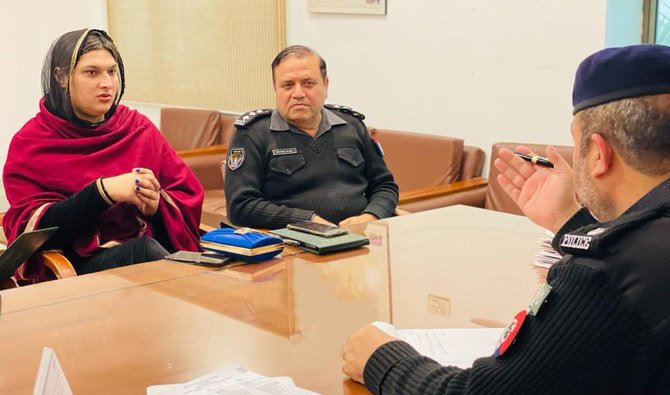
    Nayyab Ali, a transgender person from the federal capital city of Islamabad, and Sobia Khan, a transgender individual from Peshawar, are all set to contest in the upcoming general elections.

    Nayyab Ali, a resident of the federal capital city of Islamabad, has submitted nomination papers to the Election Commission of Pakistan (ECP) to contest the upcoming general elections from National Assembly Constituency 47. Nayab is the second transgender individual to submit nomination papers for the 2024 elections so far.

    Nayyab took to X (former Twitter) and worte, “Just arrived at the returning office to submit my nomination papers for NA46 & NA47 as a candidate for the National Assembly. Proud to represent the trans community as the sole candidate thus far. Grateful for the warm welcome from the community!”

    Her supporter were chnting, “Aap ka na Janaab Ka, Vote Hai Nayyab ka.”

    Peshawar native Sobia Khan, has filed nomination papers for a provincial assembly seat in constituency PK-81. The upcoming polls are scheduled to be held on February 8 next year.

    Sobia Khan was also the first transgender person to be elected as a jirga member of the Dispute Resolution Council (DRC) in March 2021.

    Running as an independent candidate, Sobia Khan aims to be a voice for the transgender community, women, and children, advocating for their rights if she secures victory in the elections. With a Bachelor’s degree to her name, Sobia holds the distinction of being the first transgender radio jockey in the province.

    She said that not only her family but also the people of the area are supporting her. Sobia said that she would request NGOs and social welfare to support her election campaign.

    She will also ask the district administration to provide security to her during this time as it has happened for the first time that a transgender is directly participating in the elections.

    Sobia Khan said that she will conduct a door-to-door election campaign in the area and will also meet the women of the area to support her. She also praised Assistant Commissioner Syed Ahsan Ali Shah who encouraged her a lot while submitting nomination papers.

    Sobia Khan said that because there was no separate seat for transgenders, she submitted the papers for the general seat. It should be remembered that Sobia Khan belongs to Peshawar district. She holds a BA and also holds the distinction of being the first transgender broadcaster of Khyber Pakhtunkhwa.

    The general elections are set for February 8 next year across the country, following the Supreme Court’s directives.

    It is pertinent to mention that in the 2018 elections, Maria, the lone transgender candidate from KP, secured 536 votes as an independent candidate, surpassing the votes of many women candidates.

  • Petrol price slashed by Rs14 per litre, providing relief amidst inflation

    Petrol price slashed by Rs14 per litre, providing relief amidst inflation

    As announced in an official notification by the Finance Division, the revised prices for petroleum products, applicable from December 16 to December 31, have been endorsed by the Oil and Gas Regulatory Authority (OGRA).

    The recalibrated rates indicate a decline in petrol prices to Rs267.34 per litre, while the diesel rate has seen a reduction of Rs13.50 per litre, now standing at Rs276.21 per litre, according to the Finance Division’s official statement.

    Furthermore, the cost of kerosene oil has been curtailed by Rs10.14 per litre, settling at Rs191.02, and light diesel oil is now priced at Rs164.64 per litre following a reduction of Rs11.29.

    This adjustment comes in response to the notable decrease in global oil prices over the past two weeks, a factor contributing to the anticipation of a downward trend in fuel prices during the fortnightly review.

    It’s imperative to note that the government undertakes a bi-weekly reassessment of petroleum product prices, aligning them with international market dynamics and the exchange rate of the rupee. This latest revision reflects a proactive approach by the authorities to mitigate the economic impact on the general populace.

  • Govt may cut petrol price by more than Rs10 per litre

    Govt may cut petrol price by more than Rs10 per litre

    The government is poised to provide significant relief by potentially reducing petrol and diesel prices by Rs13 and Rs15 per litre, respectively, in the upcoming fortnightly pricing update.

    This anticipated reduction is attributed to a noteworthy downturn in international petroleum and diesel prices over the past fortnight.

    The stability of the local currency at a weighted average of approximately PKR 284.33 per USD further contributes to this potential relief. 

    Current estimates as of December 2008 reveal a global decline in petrol and diesel prices by 5.44 per cent and 5.6 per cent, reaching $94.95 and $100.05 per barrel, respectively.

    As the next pricing update is still a week away, the future trajectory of these prices hinges on global market movements and exchange rate fluctuations. 

    Notably, in the preceding fortnight, the government maintained the petrol price at Rs281.34 while reducing the HSD price by Rs7 to Rs289.71 per litre.