Tag: economic impact

  • Pak Suzuki halts motorcycle production amidst raw material shortage

    In response to an acute shortage of raw materials, Pak Suzuki Motor Company (PSMC) has once again announced the suspension of its motorcycle production. This marks the third production halt in the current fiscal year, underscoring the challenges faced by Pakistan’s automotive industry.

    According to a report by The News, the automobile manufacturer formally communicated its decision through a notice to the Pakistan Stock Exchange (PSX). The production halt will extend for 12 days, commencing on September 1 and concluding on September 12, 2023. This move follows previous shutdowns from August 18 to 31 and from July 31 to August 15, 2023, due to inventory constraints, as reported by the company’s secretary.

    It’s worth noting that while production may be on hold, regular operations will persist at the vehicle manufacturing plant, as clarified in the bourse filing.

    Pak Suzuki’s ongoing struggle with raw material shortages can be traced back to July of the preceding year, primarily resulting from challenges in importing essential components. The nation’s dwindling foreign exchange reserves have further exacerbated these import disruptions.

    Sunny Kumar, an analyst at Topline Securities, provided insight into the impact of these disruptions: “PSMC produced 19,293 units with capacity utilisation of 26% in 1H2023 compared to 76,325 units produced with capacity utilisation of 102% in 1H2022.”

    In a glimmer of hope, the company’s management anticipates an economic rebound in FY24, driven by an upturn in agriculture output and eased import restrictions, with expected improvements in manufacturing and construction activities.

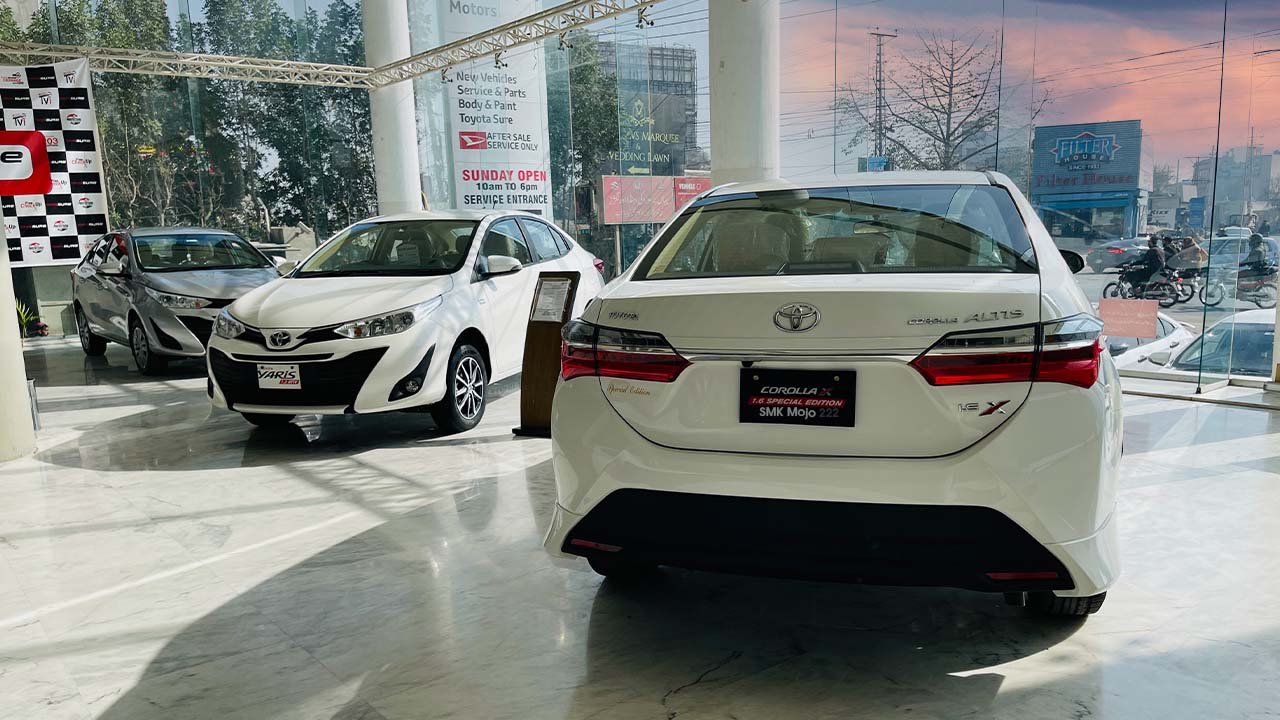
    Pak Suzuki’s predicament is not unique, as other prominent automakers such as Honda Atlas and Indus Motor Company, the local manufacturer of Toyota vehicles, have also faced repeated production stoppages due to raw material shortages. This scarcity has had a cascading effect, impacting the automobile parts industry and causing intermittent production halts.

    In a related development, Agriauto Industries Limited, a prominent automotive parts manufacturer, has announced a partial plant closure in September due to decreased production. Furthermore, Agriauto Stamping Company Pvt. Ltd., a wholly-owned subsidiary of the company, will also undergo a partial shutdown during the same period, as confirmed by the company secretary.

    The announcement of Pak Suzuki’s latest production halt has raised concerns among employees, stakeholders, and the general public. The motorcycle plant, a significant division within the company, plays a pivotal role in employment generation in the country.

    This situation has far-reaching implications, as experts anticipate that the closure will not only impact the company’s workforce but also reverberate through the broader economy. An industry observer emphasised the need for coordinated efforts between stakeholders and government bodies to address the root causes of raw material shortages and prevent further disruptions in Pakistan’s automotive sector.
  • High interest rates and taxes lead to 20.90% drop in car financing in Pakistan

    High interest rates and taxes lead to 20.90% drop in car financing in Pakistan

    In a notable shift, the landscape of automobile financing in Pakistan has undergone a substantial transformation, with figures from the State Bank of Pakistan (SBP) indicating a significant decline. The data, released by SBP, unveils a marked decrease in car financing, plummeting to Rs285.19 billion in July 2023. This represents a notable 20.90 per cent year-on-year (YoY) decrease and a 2.91 per cent month-on-month (MoM) decrease when compared to the figures from July 2022, which stood at Rs360.55 billion, and June 2023, which registered at Rs293.73 billion.

    The primary contributors to this downward trajectory are multi-faceted. Firstly, the imposition of higher interest rates has played a pivotal role in reshaping the car financing landscape. Additionally, the surge in car prices has also contributed significantly to this downturn. Moreover, regulatory restrictions governing the acquisition of loans have created a notable barrier, further impacting the market. Furthermore, the imposition of elevated taxes on the import of automobiles and their integral parts has compounded the challenges faced by the automobile financing sector.

    Contrastingly, in a separate but related sphere, consumer financing for house building displayed a contrasting narrative. SBP’s data reveals that by the conclusion of July 2023, consumer financing for house building registered at Rs211.11 billion, marking a commendable 4.82 per cent YoY increase. According to Mettis Global, this uptick can largely be attributed to SBP’s proactive measures to stimulate the housing and construction sector within the nation. However, in terms of monthly changes, the figures remained relatively static, with a minor decline of 0.57 per cent.

    Meanwhile, financing for personal use, amounting to Rs250.24 billion, experienced a marginal 0.09 per cent YoY decrease. Similarly, on a monthly basis, financing within this category saw a slight downturn of 0.95 per cent. Consequently, the cumulative credit extended to consumers in various segments reached Rs851.22 billion during the assessment month. This overall credit value reflected a notable 4.70 per cent YoY decline and a 0.99 per cent MoM reduction.

    Furthermore, the credit scenario within the private sector depicted a nuanced picture. Outstanding credit to the private sector encountered a minor 0.06 per cent YoY decrease and a slightly more pronounced 1.12 per cent MoM reduction, resting at Rs8.19 trillion in July 2023. In contrast, loans granted to the manufacturing sector exhibited an encouraging 1.12 per cent YoY increase, amounting to Rs4.48 trillion during the review period. However, on a monthly scale, the loans within the manufacturing sector dipped by 1.44 per cent MoM.

    In summation, the marked decline in car financing, as evidenced by SBP’s recent data, underscores the multifaceted challenges that the automobile financing sector in Pakistan is currently grappling with. While interest rates, car prices, and regulatory curbs have contributed to this downward trend, other sectors such as house building and manufacturing loans have demonstrated distinct trajectories. As the nation navigates through these financial dynamics, stakeholders remain vigilant in monitoring and adapting to these evolving circumstances.

  • Sindh industries to face two-day gas supply suspension due to shortage

    Sindh industries to face two-day gas supply suspension due to shortage

    Gas supply to industries and power plants in Sindh will be stopped for 48 hours starting Saturday, as informed by the Sui Southern Gas Company (SSGC).

    The reason for this interruption is the low gas pressure in the system. There’s been a drop in pressure in the gas lines, leading to reduced supply.

    According to The News, the SSGC stated that due to insufficient gas supply, the available gas has decreased, causing low pressure in the system.

    As per the Gas Supply Agreement (GSA) guidelines for industrial customers approved by the Oil and Gas Regulatory Authority (OGRA) and authorised by the Economic Coordination Committee (ECC) of the cabinet, all industries, including power generation units, will remain closed during this time:

    Starting from 8 AM on Saturday, August 26, 2023, to 8 AM on Monday, August 28, 2023.

    The gas will be supplied according to the established priority order. The company issued a stern warning that strict action would be taken if anyone was found violating these rules during the gas supply suspension.

    The statement also mentioned that if any violations are noted during this gas holiday period, the company will take significant measures, which might even involve the suspension of gas supplies for a minimum of 7 days.

    The company’s strict stance against any breaches during this gas supply suspension underscores the importance of adherence to these measures, with the possibility of severe consequences, including a minimum seven-day disconnection of gas supplies.

  • Economists predict ‘Barbenheimer,’ Taylor Swift, and Beyoncé will inject billions into US economy

    Economists predict ‘Barbenheimer,’ Taylor Swift, and Beyoncé will inject billions into US economy

    Taylor Swift, Beyoncé, and the “Barbenheimer” fever are making a substantial positive impact on the United States economy. According to Bloomberg Economics, the tours of these mega stars and the success of their blockbuster films are projected to contribute a significant sum of $8.5 billion (S$11.5 billion) to the US economy in the third quarter.

    The concerts alone, with nearly 50 shows scheduled, could boost the US gross domestic product (GDP) by $5.4 billion. Additionally, the films “Barbie” and “Oppenheimer” are anticipated to result in approximately $3.1 billion in consumer spending and export revenue from international ticket sales.

    This combined effect is expected to lead to a 0.7 per cent increase in annualized real personal consumption expenditures and a 0.5 per cent rise in GDP during the July-through-September period. Economists Anna Wong and Eliza Winger have revised their growth forecasts for this period, attributing the adjustment in part to these notable gains. This economic outlook further reinforces the ongoing strengthening of the American economy, which has been evident in recent months.

    The current economic landscape shows signs of easing inflation and a stable labor market, which are propelling consumer spending. This positive scenario is causing some economists to postpone their predictions of an impending recession, while others are reconsidering their projections altogether.

    Nonetheless, the analysts at Bloomberg argue that the benefits generated by the movies and tours are temporary in nature. They highlight the absence of Beyoncé and Swift performances in the US during the last quarter of the year and describe the Barbenheimer event as a rare occurrence. Moreover, the US economy remains vulnerable to a drop in demand, and challenges persist in the housing market due to low supply and rising mortgage rates.

    The Bloomberg economists emphasise that a significant portion of the current economic vigor is linked to short-term factors. In their assessment, These factors create a facade of robust consumption, when in reality, it is losing momentum. Importantly, their evaluation only accounts for ticket sales for “Barbie” and “Oppenheimer” up until Wednesday, and they do not include the net-export effects of the four concerts Swift is performing in Mexico City this week.

  • Govt collects Rs75 billion from consumers in one month through petroleum levy

    The Pakistani government collected a significant sum of Rs75 billion in revenue from the petroleum levy (PL) in July 2023. This levy is a crucial income source because it’s not part of the divisible pool. The increase in the petrol levy to Rs55 per litre has driven this boost in revenue.

    If this pattern continues for the remaining 11 months of the fiscal year, the government could surpass its ambitious budget target for the petroleum levy. The target of Rs869 billion might be exceeded by a notable Rs31 billion.

    In July, the first month of the fiscal year, petroleum consumption decreased by 6 per cent compared to the same month in the previous fiscal year. However, when we look at the month-to-month basis, petroleum product consumption remained constant in July 2023 compared to the previous month.

    An anonymous source from the Petroleum Division, speaking to Brecorder, expressed the government’s concern about the potential decline in consumption. Such a decline could jeopardise meeting the budget goals. However, the government has a plan in place. If needed, the petroleum levy could be increased to Rs60 per litre, which is the maximum limit according to an agreement with the IMF under the Stand-By Arrangement (SBA) and the Finance Act 2023–24.

    Predictions for the current month point to a collection of Rs70 billion from the petroleum levy due to recent price increases of Rs17.50 per litre for petrol and Rs20 per litre for high-speed diesel (HSD).

    The government has committed, under the ongoing IMF SBA, to gradually raising the levy rate to an average of Rs55 per litre over the fiscal year. This strategic move is estimated to bring in an additional Rs79 billion. Currently, the government enforces a petroleum levy of Rs55 per litre on petrol and Rs50 per litre on HSD.

    Keep in mind that any rise in the petroleum levy on fuel products could lead to inflation, increasing transportation costs for goods and people as well as input expenses for various sectors.

    Oil industry experts speculate that gasoline prices might increase further by the end of the month. This projected increase is mainly due to the ongoing depreciation of the Pakistani rupee against the US dollar, which is likely to reduce gasoline consumption.

    In the last fiscal year, the government collected Rs580 billion from the petroleum levy, falling short of the Rs855 billion target by Rs275 billion.

    During the first quarter of the fiscal year 2022–23 (July–September 2022), the collection of the petroleum levy was Rs47.476 billion. This lower amount was due to the lower levy rates of Rs10 on petrol and Rs5 on HSD. Subsequently, collections increased significantly to Rs177.805 billion in the first two quarters (July–December) and further to Rs362.480 billion in the first three quarters (July–March 2023) of the previous fiscal year.

    It’s noteworthy that total consumption of petroleum products dropped by 27 per cent year-on-year in the fiscal year ending on June 30, 2023. Consumption decreased from 22.6 million metric tonnes in the fiscal year 2021–22 to 16.61 million metric tonnes in 2022–23 (July–June).

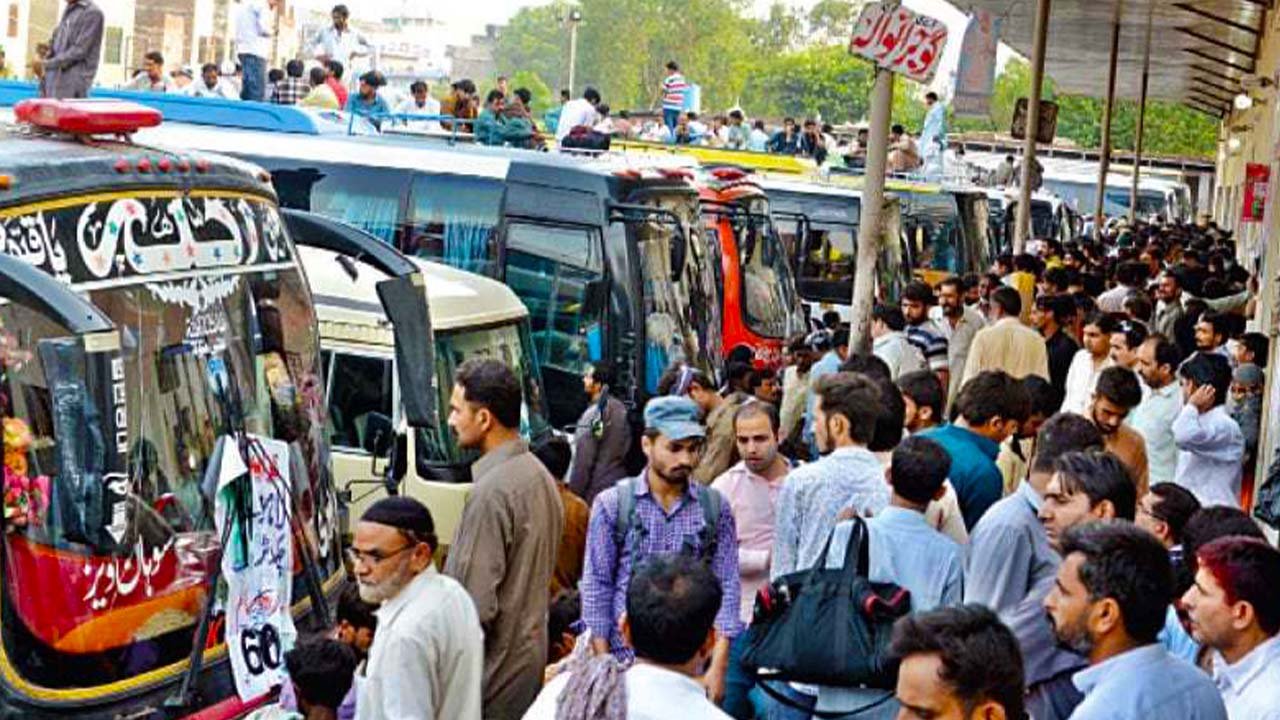
  • Goods transporters implement 20% fare hike in response to soaring diesel prices

    Goods transporters implement 20% fare hike in response to soaring diesel prices

    Goods transporters raised their fares by 20 per cent in response to a recent surge in diesel prices on Thursday. The announcement came as the goods transporters association revealed their decision to implement a fare increase of 20 per cent, citing a substantial rise in diesel prices of up to Rs40 per litre over the span of 15 days.

    Rana Shoaib, the General Secretary of the Goods Transporters Association, conveyed in an official statement that their operational expenses had been significantly impacted by the substantial surge in diesel prices.

    He further elaborated that the provision of goods transportation services between major cities such as Karachi, Multan, Lahore, Faisalabad, Islamabad, and Peshawar has been sustained. However, the transporters are finding it increasingly challenging to bear the escalating financial burdens associated with fuel costs and spare parts.

    According to ARY News, Shoaib said that the decision to raise fares was a necessary step due to the considerable escalation in government-imposed fuel prices. Notably, earlier in the same month, local transporters independently elevated fares by as much as 20 per cent in response to a previous hike in fuel prices without any intervention or oversight from relevant authorities.

    Details indicate that local transporters unilaterally implemented fare increases ranging from Rs15 to Rs20 for stop-to-stop journeys, despite the absence of formal notifications regarding fare adjustments by the district administration.

    Furthermore, the fare hikes extended to transportation services between Karachi and other destinations like Hyderabad, Larkana, and Sukkur. This trend of fare increases also extended to buses and coaches operating within the city limits.