Tag: Economic Indicators

  • Analysts expect further 150 basis points cut in interest rate by SBP next week

    Analysts expect further 150 basis points cut in interest rate by SBP next week

    Analysts predict that the State Bank of Pakistan (SBP) is likely to maintain its dovish stance, potentially implementing a third consecutive reduction in its key policy rate, supported by slowing inflation and improved macroeconomic indicators.

    The SBP is set to announce its key policy rate on Thursday, September 12. In its previous two meetings, the central bank has cumulatively reduced the rate by 250 basis points.

    Brokerage firm Arif Habib Limited (AHL) anticipates a 150 basis point cut, which would lower the policy rate to 18 per cent, a level last observed in February 2023 when the rate fell to 17 per cent.

    According to Business Recorder, AHL’s report, based on a recent poll, reveals that 93 per cent of respondents expect a rate reduction, while 7 per cent foresee no change.

    In July, the central bank’s Monetary Policy Committee (MPC) had already cut the key policy rate by 100 basis points to 19.5 per cent. At that time, SBP Governor Jameel Ahmad noted a downward trend in inflation.

    August 2024 saw Pakistan’s headline inflation decrease to 9.6 per cent year-on-year, down from 11.1 per cent in July, according to data from the Pakistan Bureau of Statistics (PBS).

    This return to single-digit inflation for the first time in three years has resulted in a real interest rate of approximately 1,000 basis points, providing further room for a rate cut, AHL suggests.

    JS Global echoes this sentiment, predicting that the easing inflation supports the MPC’s case for another reduction in September, with a projected cut of 150 basis points, bringing the policy rate to 18 per cent.

    Topline Securities’ CEO, Mohammed Sohail, expects a rate cut between 100 and 200 basis points, while Abdullah Farhan, Head of Research at IGI Securities, foresees a reduction of 150 to 200 basis points, driven by the recent decline in inflation.

    Farhan also projects that inflation could rise to 13-14 per cent by year-end due to base effects, with the policy rate potentially declining to 16 per cent by December.

    Ismail Iqbal Securities also supports the view that real rates remain significantly positive, indicating potential for a further rate cut. The firm anticipates a 100 basis point reduction in the upcoming MPC meeting.

    Alongside the downward inflation trend, analysts note improvements in external indicators. The trade deficit narrowed slightly to $3.6 billion in the first two months of FY25. The current account deficit has significantly decreased to $162 million in July, largely due to a 48 per cent year-on-year increase in remittances, which has helped stabilise the Pakistani rupee against the US dollar.

  • SBP-held forex reserves surge by $18.6 million to $9.42 billion

    SBP-held forex reserves surge by $18.6 million to $9.42 billion

    The latest figures from the State Bank of Pakistan (SBP) reveal a slight increase in the country’s foreign exchange reserves. During the week ending July 12, 2024, SBP’s reserves grew by $18.6 million, marking a 0.20 per cent rise to reach $9.42 billion.

    In parallel, Pakistan’s overall foreign reserves, including both SBP and commercial banks, increased by $58.8 million, or 0.40 per cent, totaling $14.7 billion.

    Commercial banks in Pakistan also saw a rise in their reserves, which grew by $40.2 million, or 0.77 per cent, reaching $5.28 billion.

    Since the start of the fiscal year, SBP’s reserves have grown by $34.2 million, reflecting a 0.36 per cent increase. Notably, in the current calendar year alone, reserves have surged by $1.2 billion, representing a notable 14.63 per cent rise.

    These developments signify positive momentum in Pakistan’s foreign exchange reserves, contributing to a more stable economic outlook for the nation.

  • PSX surges to record high as KSE-100 closes above 73,000 points

    PSX surges to record high as KSE-100 closes above 73,000 points

    After a series of subdued sessions, the Pakistan Stock Exchange (PSX) saw a resurgence of buying on Friday, propelling its benchmark KSE-100 index above the 73,000 mark for the first time in history.

    The positive momentum reflected renewed investor confidence amid signs of economic stability.

    The KSE-100 index opened on a bullish note, reaching an intra-day high of 73,449.37 before settling at 73,085.50, a gain of 427.45 points or 0.59 per cent by the close of trading.

    Despite some sporadic selling during the day, the bulls largely controlled the market, resulting in a robust session.

    Industries driving the surge

    Key sectors that drove the surge included cement, chemical, oil and gas exploration companies, and oil marketing companies (OMCs). Index-heavy stocks such as Lucky Cement (LUCK), Oil and Gas Development Company (OGDC), Pakistan Petroleum Limited (PPL), Pakistan State Oil (PSO), Sui Northern Gas Pipelines Limited (SNGPL), and Sui Southern Gas Company (SSGC) closed in the green, contributing significantly to the overall upward trend.

    Market experts attribute the surge to a combination of improved economic indicators and investor expectations.

    Pakistan’s foreign exchange reserves and remittances have shown positive growth, suggesting a stabilising economy.

    Additionally, there is anticipation of a potential policy rate cut in the upcoming Monetary Policy Committee (MPC) meeting on June 10, following a recent decline in the inflation rate.

    On Thursday, the KSE-100 index had a marginal increase in a largely range-bound session, closing at 72,658.05, a gain of 56.24 points, or 0.08 per cent.

    The strong close on Friday underscores a more optimistic outlook for the market as investors continue to monitor key economic developments and policy changes.

  • Overseas workers’ remittances surge to $3 billion in March

    Overseas workers’ remittances surge to $3 billion in March

    In March 2024, Pakistan witnessed a significant surge in the influx of overseas workers’ remittances, reaching a notable milestone of $3 billion.

    This remarkable figure reflects a remarkable 31.3 per cent increase on a month-on-month basis compared to February 2024, when the remittances stood at $2.25 billion.

    The latest data released by the State Bank of Pakistan (SBP) unveiled this positive trend, highlighting the pivotal role remittances play in Pakistan’s economic landscape.

    Year-on-year comparisons also underscored the upward trajectory, with a 16.4 per cent increase noted in March 2024 compared to the same month in the previous year, when remittances amounted to $2.54 billion.

    Such consistent growth in remittances holds significance beyond mere monetary figures, as these funds contribute substantially to bolstering the country’s external account and fueling economic activity.

    Moreover, they serve as a crucial supplement to the disposable incomes of remittance-dependent households, enhancing their financial resilience.

    In a broader fiscal context, the first nine months of Fiscal Year 2024 witnessed a steady rise in workers’ remittances, totaling $21.0 billion.

    This marks a modest 0.9 per cent increase compared to the corresponding period in the previous fiscal year, where remittances amounted to $20.8 billion.

    Such stability and growth in remittances underscore the resilience of Pakistan’s overseas workforce and their commitment to supporting their families and homeland.

    Breaking down the sources of these remittances, Overseas Pakistanis in Saudi Arabia emerged as leading contributors, with remittances totaling $703.1 million in March 2024.

    This represents a substantial 30 per cent increase compared to the previous month and a noteworthy 24 per cent increase year-on-year.

    Similarly, remittances from the United Arab Emirates (UAE) witnessed a remarkable surge, jumping by 43 per cent on a monthly basis to reach $548 million in March, reflecting a 34 per cent increase compared to the same period last year.

    The United Kingdom also played a significant role in this surge, with remittances soaring to $462 million in March 2024, marking a notable 33 per cent increase compared to February 2024.

    Meanwhile, remittances from the European Union exhibited a robust 19 per cent monthly growth and a 6 per cent year-on-year improvement, amounting to $315 million in March 2024.

    Overseas Pakistanis in the United States also contributed significantly, send`ing $373 million in March 2024, reflecting an 18 per cent increase compared to the previous year and a substantial 30 per cent increase month-on-month.

  • PSX hits new high amid optimistic economic trends

    PSX hits new high amid optimistic economic trends

    The Pakistan Stock Exchange (PSX) soared to yet another record high on Wednesday, buoyed by positive economic indicators.

    A decrease in inflation sparked expectations of monetary easing, seen as a significant boost to commercial activity and, consequently, corporate earnings.

    Closing at 67,756.03 points, the benchmark KSE-100 index surged by a substantial 869.77 points or 1.30 per cent.

    Investors were particularly drawn to the cyclical sector, with significant investments flowing into cement and steel companies.

    This interest was largely fueled by reports indicating a rise in both local and international cement dispatches for March.

    However, sectors such as transport, technology, communication, and commercial banking also garnered attention from investors.

    Additionally, the government’s privatisation initiatives, particularly the proposed sale of State-Owned Enterprises (SOEs), injected optimism into the market.

    There’s a prevailing belief that these companies could experience improved profitability and efficiency under private ownership.

    Notably, on Tuesday, the Privatisation Commission initiated the process of selling off Pakistan International Airlines (PIA), inviting expressions of interest (EOIs) from potential buyers.

  • Pakistanis catch a break as weekly inflation hits 18-week low

    Pakistanis catch a break as weekly inflation hits 18-week low

    Short-term inflation in Pakistan dipped to 29.06 per cent year-on-year by the week ending March 21, stepping down from its prolonged stint above 30 per cent for the past 18 weeks, as per recent official data.

    The pullback in weekly inflation, tracked by the Sensitive Price Index (SPI), was primarily attributed to a drop in the prices of key staples like tomatoes, onions, and potatoes. The SPI noted a 1.13 per cent week-on-week decrease as of March 21, down from 32.89 per cent recorded in the previous week.

    This follows an unbroken 11-week stretch of inflation topping 40 per cent, starting from 29 per cent noted on November 8, 2023. The surge was largely fueled by upticks in gas prices, electricity tariffs, and essential kitchen item costs.

    Weekly inflation peaked at a record 48.35 per cent year-on-year in early May 2023, before cooling off to as low as 24.4 per cent in late August 2023, only to surge past 40 per cent again by the week ending November 16, 2023.

    Among the notable declines in prices on a week-on-week basis were tomatoes (36.73 per cent), onions (19.58 per cent), potatoes (4.02 per cent), garlic (2.87 per cent), pulse mash (1.25 per cent), wheat flour (1.02 per cent), sugar (0.95 per cent), pulse masoor (0.86 per cent), and diesel (0.60 per cent).

    Conversely, significant increases were seen in the prices of LPG (1.49 per cent), shirting (0.74 per cent), beef (0.53 per cent), rice basmati broken (0.48 per cent), mutton (0.42 per cent), mustard oil (0.40 per cent), rice irri 6/9 (0.25 per cent), powdered milk (0.14 per cent), and georgette (0.03 per cent) compared to the previous week.

    On an annual basis, notable price hikes were observed in gas charges for Q1 (570 per cent), chilli powder (86.05 per cent), gents sponge chappal (58.05 per cent), garlic (57.41 per cent), onions (54.65 per cent), gents sandal (53.37 per cent), gur (39.86 per cent), sugar (35.01 per cent), salt powder (33.29 per cent), energy saver (29.83 per cent), and pulse mash (27.31 per cent).

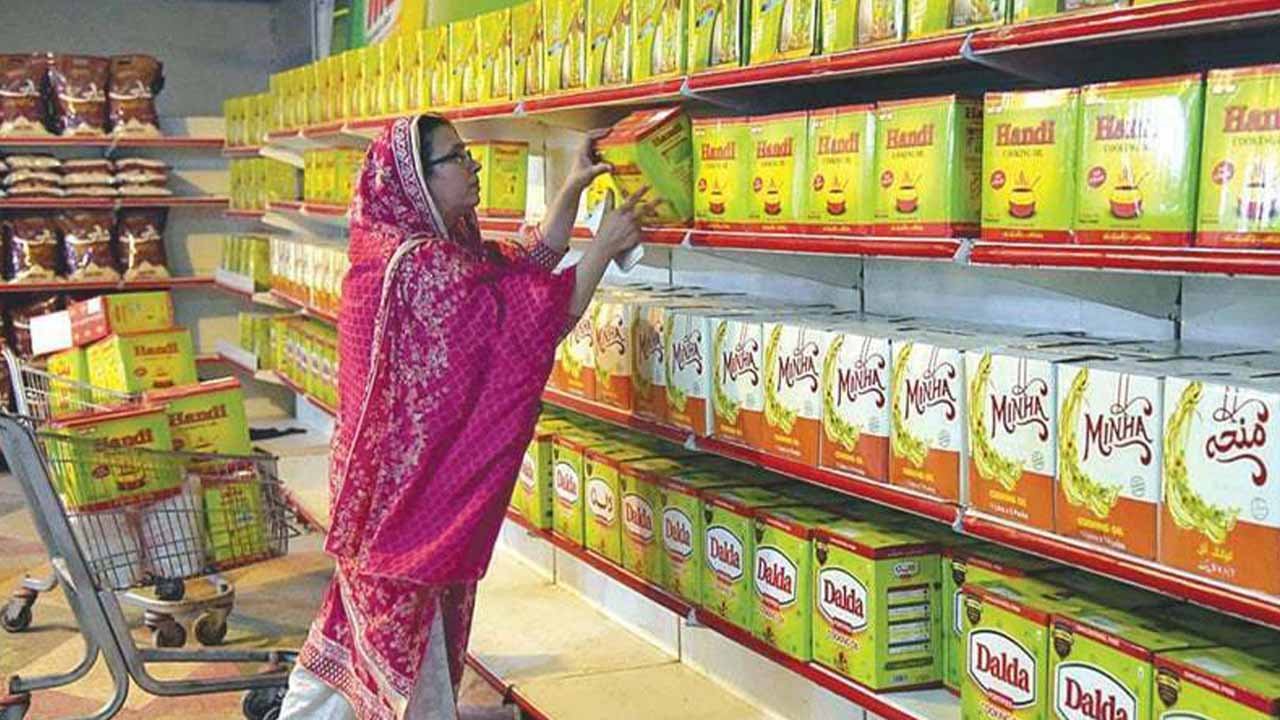
    In contrast, certain items witnessed declines, with cooking oil 5-litre dropping by 21.35 per cent, followed by vegetable ghee 2.5 kg (18.48 per cent), vegetable ghee 1 kg (18.44 per cent), mustard oil (13.90 per cent), bananas (13.52 per cent), diesel (2.47 per cent), and cigarettes (0.06 per cent).

    The short-term inflation, gauged through the SPI, stood at 323.50, compared to 327.21 in the preceding week and 250.66 a year ago. Comprising 51 items collected from 50 markets in 17 cities, the SPI is calculated weekly to monitor the prices of essential commodities and services at shorter intervals. Data indicates that prices of nine items increased, 17 items decreased, and 25 items remained stable compared to the previous week.

  • SBP sees surge of over $17 million in forex reserves

    SBP sees surge of over $17 million in forex reserves

    The latest data released by the State Bank of Pakistan (SBP) revealed a notable rise in the country’s foreign exchange reserves. During the week ending March 8, 2024, SBP’s reserves increased by $17.2 million, marking a 0.22 per cent growth, reaching a total of $7.91 billion.

    Additionally, Pakistan’s overall reserves experienced a surge, ascending by $131.3 million, or 1.01 per cent, week-on-week (WoW), to a sum of $13.15 billion. This increase was further complemented by a rise in reserves held by commercial banks, which climbed by $114.1 million, or 2.23 per cent, to reach $5.24 billion.

    In a significant development, the second review of the stand-by arrangement (SBA) with the International Monetary Fund (IMF) is slated to take place from March 14 to 18, 2024. This review holds particular importance as it marks the final assessment under the SBA. Upon reaching a staff-level agreement, the final tranche of $1.1 billion will be disbursed, subject to approval by the Executive Board of the IMF.

    It is noteworthy that in the current fiscal year, Pakistan has witnessed a substantial increase in its total liquid foreign reserves, amounting to $3.99 billion, or 43.57 per cent. Similarly, the ongoing calendar year has seen a rise of $0.48 billion, or 3.77 per cent.

  • SBP reports marginal dip in bank deposits

    SBP reports marginal dip in bank deposits

    In January 2024, the total deposits held by scheduled banks in Pakistan experienced a robust year-on-year growth of 21.03 per cent, reaching Rs27.54 trillion.

    This marks a substantial increase from Rs22.75 trillion recorded in January 2023, as revealed by data released by the State Bank of Pakistan (SBP).

    However, on a month-on-month basis, there was a slight dip of 1.08 per cent in bank deposits compared to December 2024, where the total stood at Rs27.84 trillion.

    The data further highlights a positive trend in total advances, which saw a year-on-year increase of 3.74 per cent, reaching Rs12.09 trillion compared to Rs11.66 trillion in the same period last year.

     Conversely, on a monthly basis, advances experienced a marginal decline of 2.08 per cent from their December 2024 value of Rs12.35 trillion.

    The Advances to Deposit Ratio (ADR) exhibited a decrease, standing at 43.92 per cent, indicating a 732 basis points decline on a yearly basis and a 45 basis points decrease on a monthly basis.

    In terms of investments, scheduled banks in Pakistan reported total investments of Rs25.6 trillion in January 2024, reflecting a substantial year-on-year increase of 32.71 per cent from Rs19.29 trillion in January 2023.

    Additionally, there was a month-on-month increase of 1.28 per cent from the Rs25.28 trillion recorded in December 2024.

    The Investment to Deposit Ratio (IDR) witnessed a notable rise of 818 basis points, reaching 92.97 per cent, compared to the figures from January 2023. On a monthly basis, IDR increased by 216 basis points.

    These statistics indicate a significant positive shift in the financial landscape of Pakistan’s banking sector, with notable expansions in both deposits and investments.

  • 24 karat gold price surges by Rs800 per tola, silver takes a dip

    24 karat gold price surges by Rs800 per tola, silver takes a dip

    In a notable shift in the precious metals market, the per-tola price of 24 karat gold in Pakistan witnessed an increase of Rs800, reaching Rs213,200 on Saturday. This rise is compared to its previous sale at Rs212,400 on the last trading day.

    Similarly, the price of 10 grammes of 24 karat gold experienced an uptick, climbing by Rs686 to Rs182,785 from Rs182,099.  The All Sindh Sarafa Jewellers Association reported that the prices of 10 grammes of 22 karat gold also saw an increase, reaching Rs167,553 from Rs166,924.

    On the other hand, the price of per tola silver exhibited a decrease of Rs30, settling at Rs2,550. Simultaneously, the price of ten grammes of silver witnessed a decline of Rs25.72, reaching Rs2,186.21.

    Internationally, the price of gold ascended by $9, reaching $2,034 from $2,025, as reported by the Association. These fluctuations in the precious metals market reflect the dynamic nature of global economic conditions, influencing prices both domestically and internationally.