Tag: economic outlook

  • Pakistan’s inflation expected to drop to as low as 9% by September 2024: Finance Ministry

    Pakistan’s inflation expected to drop to as low as 9% by September 2024: Finance Ministry

    Pakistan’s headline inflation is expected to ease further in August 2024, settling between 9.5 per cent and 10.5 per cent, with a continued downward trend anticipated in the coming months, according to the Finance Division’s statement on Friday.

    The Ministry of Finance, in its ‘Monthly Economic Update and Outlook’, highlighted that the inflation rate could drop even further to between 9 per cent and 10 per cent by September 2024, attributed to the stabilisation of key economic indicators.

    July 2024 saw headline inflation at 11.1 per cent year-on-year, a decrease from 12.6 per cent in June 2024. This marks the lowest Consumer Price Index (CPI) figure since November 2021, when inflation was recorded at 11.5 per cent, as per data from the Pakistan Bureau of Statistics (PBS).

    The Finance Ministry’s report also pointed to positive trends in external indicators such as exports, imports, and workers’ remittances, which are on an upward trajectory.

    A brokerage house noted that August’s inflation figure is expected to dip into single digits for the first time in nearly three years.

    Read more: Exchange rates: PKR up by over 10 paisa against dollar

    Looking ahead, the report projects that exports will range between $2.5 billion and $3.2 billion, imports between $4.5 billion and $5 billion, and remittances between $2.6 billion and $3.3 billion in August 2024.

    The stable outlook for the external sector is contingent upon factors including a stable exchange rate, revived domestic economic activities, improved agricultural output, lower domestic and global commodity prices, and increased foreign demand.

    In the industrial sector, the Ministry of Finance anticipates that the Large Scale Manufacturing (LSM) sector will maintain its positive growth trajectory in FY2025, driven by improved external demand, a stable exchange rate, declining inflation, and a more accommodating monetary policy.
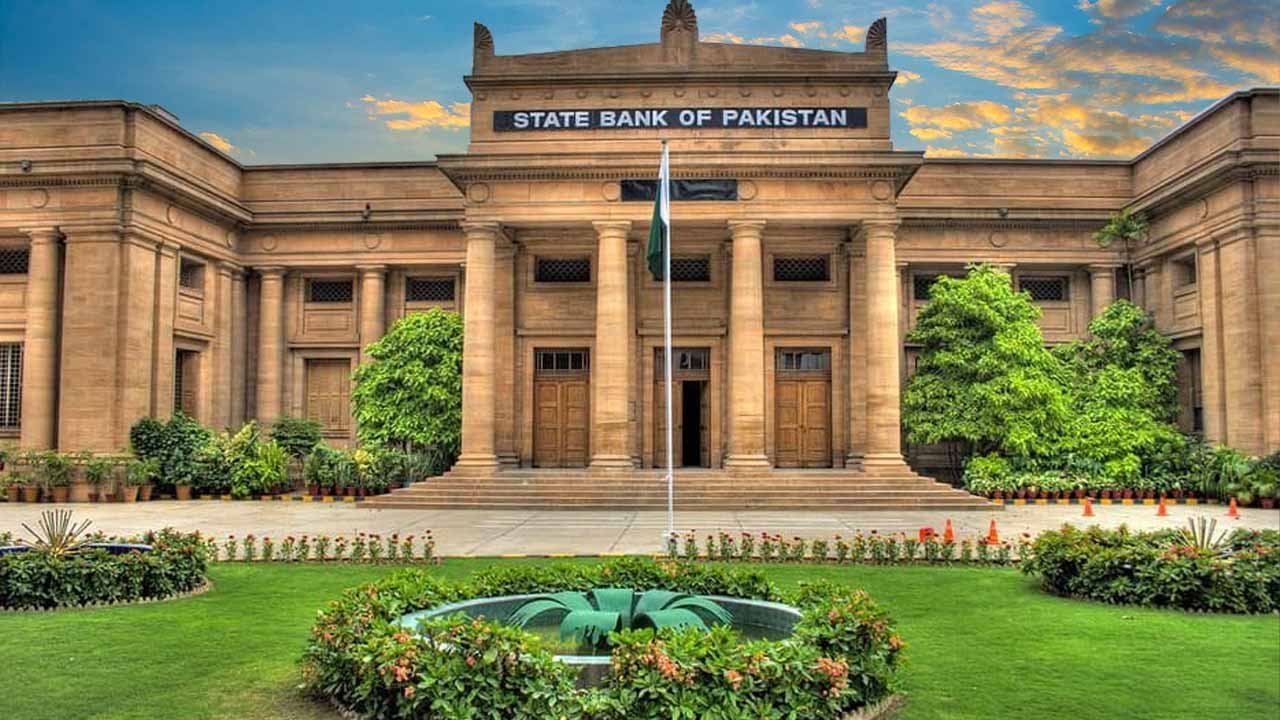
  • SBP’s foreign exchange reserves rise by $13 million

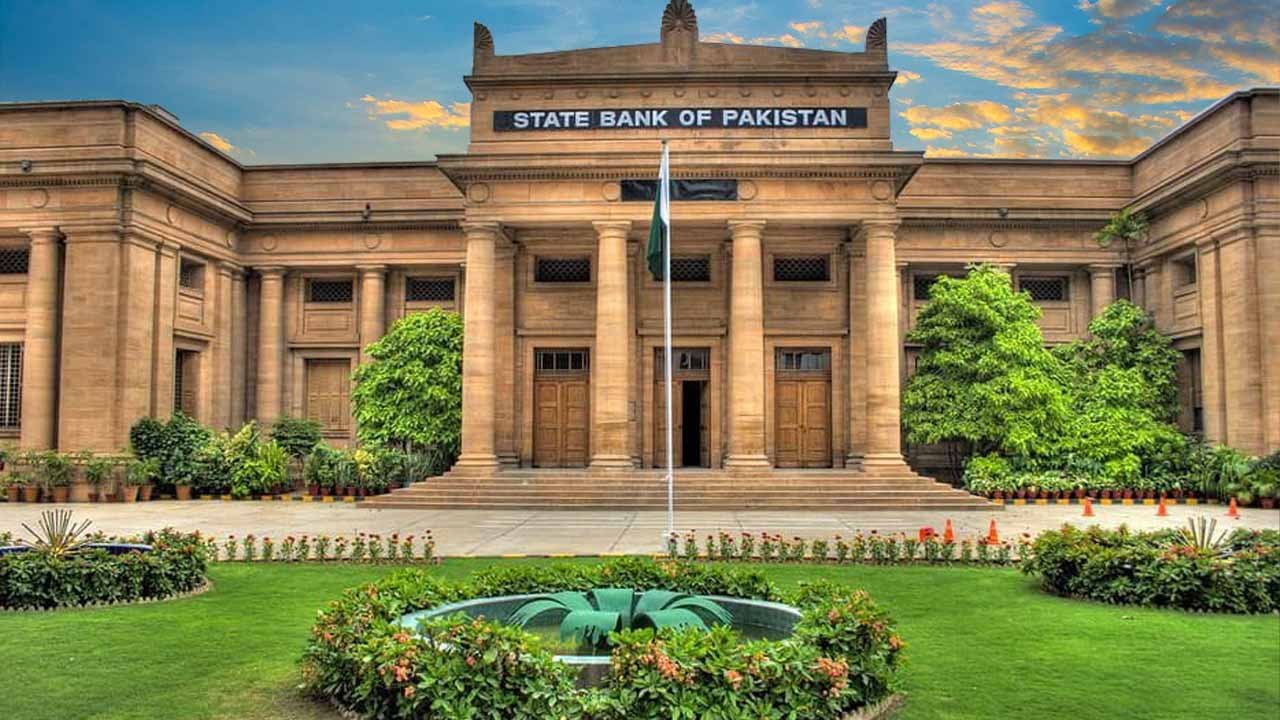
    SBP’s foreign exchange reserves rise by $13 million

    In a positive development for Pakistan’s economic landscape, the State Bank of Pakistan (SBP) reported a weekly increase of $13 million in its foreign exchange reserves, reaching a total of $8.05 billion as of February 9, according to data released on Thursday.

    The country’s overall liquid foreign reserves now stand at $13.15 billion, with commercial banks holding a significant share of $5.1 billion in net foreign reserves.

    The central bank, however, did not provide specific details or reasons for the notable upswing in reserves during the mentioned week.

    In a statement, the SBP stated, “During the week ended on February 9, 2024, the SBP’s reserves increased by US$ 13 million to US$ 8,056.5 million.”

    This positive development comes on the heels of last week’s decrease in Pakistan’s central bank reserves, which experienced a dip of $173 million.

    The recent rebound signals resilience and stability in the nation’s economic standing, and financial analysts are likely to scrutinise the factors contributing to this uptick in the coming days.

    As the global economic landscape continues to evolve, Pakistan’s foreign exchange reserves play a crucial role in navigating economic challenges, and the recent increase reflects ongoing efforts to bolster the country’s fiscal strength.

    Experts anticipate that a robust foreign reserve position will provide a buffer against external shocks and instill confidence in the financial markets.

  • SBP receives second IMF installment, total disbursements reach $1.9 billion

    SBP receives second IMF installment, total disbursements reach $1.9 billion

    The State Bank of Pakistan (SBP) announced today that it has successfully received the second installment of SDR 528 million, equivalent to $705.6 million, from the International Monetary Fund (IMF).

    This disbursement, slated to be reflected in SBP reserves for the week ending on January 19, 2024, marks a significant step in the ongoing financial collaboration between Pakistan and the IMF.

    The latest disbursement brings the total disbursements under the stand-by arrangement (SBA) to a substantial $1.9 billion.

    It is noteworthy that the remaining $1.1 billion is expected to be received after another comprehensive review scheduled for February 2024.

    As of January 5, 2024, the State Bank of Pakistan’s total reserves stand at $8.15 billion, showcasing the positive impact of the financial support received through the IMF programme.

    To recall, Pakistan secured a $3 billion SBA from the IMF towards the end of FY23, crucially preventing the nation from defaulting on its sovereign debt.

    The disbursement of the IMF funds has been phased out over two installments, subject to meticulous reviews.

    On January 11, 2024, Pakistan successfully completed the first review of the economic reform programme, a significant milestone in ensuring the country’s financial stability.

    Following the board’s approval, the IMF highlighted that economic activity has stabilised, though acknowledging that the outlook remains challenging and is contingent on the implementation of sound policies.

    Pakistan’s 9-month SBA aims to provide a robust policy anchor for addressing both domestic and external balances, serving as a framework for continued financial support from multilateral and bilateral partners.

    This financial collaboration with the IMF is instrumental in navigating Pakistan through economic challenges, providing a solid foundation for sustained growth and stability in the region.

    The country remains committed to implementing prudent economic policies as outlined in the reform programme, with the ongoing support of international partners.

  • Govt’s bank borrowings jump 3.15x in six months

    Govt’s bank borrowings jump 3.15x in six months

    The government’s reliance on bank borrowings has displayed a concerning upward trajectory, intensifying the nation’s debt burden and raising doubts about its optimistic economic outlook. 

    Recent data for the six months ending December 2023 reveals a substantial increase in borrowing through banks, soaring to Rs3.214 trillion compared to Rs1.019 trillion during the same period last year—an alarming surge of 3.15 times.

    Notably, this surge occurs amid a caretaker government’s administration, signalling that within six months, the government has amassed a level of debt equivalent to the entire fiscal year 2023. 

    While governments commonly borrow from banks to address financial gaps, refinance debts, and fund public projects, the scale of the borrowing indicates a matter of heightened concern.

    Despite the Federal Board of Revenue’s commendable performance in tax collections, with historic achievements of over Rs1 trillion in December and Rs4.468 trillion in 6MFY24, these impressive figures clash with the substantial reliance on bank borrowings.

     Economic apprehensions grow as these borrowing patterns contradict the government’s objective of optimising the allocation and expenditure of public funds.

    The caretaker government’s limited authorisation of Rs300.904 billion for development funds, out of a total allocation of Rs950 billion for ongoing and new social sector uplift projects, contrasts starkly with the escalating borrowing figures, hinting at the possibility of an expanding Public Sector Development Programme (PSDP).

    Furthermore, this escalating trend in government borrowings raises concerns among economists and financial experts who emphasise the importance of fiscal discipline. 

    The growing debt levels may not only impact the country’s creditworthiness but also strain future budgetary allocations, potentially limiting the government’s capacity to respond to unforeseen economic challenges. 

    As stakeholders closely monitor these developments, there is a pressing need for transparent fiscal policies and strategic measures to ensure a sustainable and resilient economic future for the nation.

  • Gold prices in Pakistan wrap up first week of 2024 on a decline

    Gold prices in Pakistan wrap up first week of 2024 on a decline

    The gold prices in Pakistan concluded the initial week of 2024 on a downward trajectory, witnessing a notable drop in the value of 24-karat gold.

    According to reports from the Karachi Sarafa Association, the price of 24-karat gold plummeted by Rs2,000 per tola, settling at Rs218,000.

    Contrary to this trend, the association noted that 24-karat gold experienced a gain of Rs1,000 per tola in today’s trading session, offering a glimmer of positivity in an otherwise challenging week.

    The closing figures for the last trading session revealed that 10-gramme 24-karat gold reached Rs186,900, showcasing an increase of Rs857.

    Similarly, the price of 10-gramme 22-karat gold stood at Rs171,325, marking a rise of Rs786.

    Investors in the domestic bullion market enjoyed substantial returns in 2023, with the yellow metal delivering an impressive 19.63% yield for the year.

    The concluding price of 24-karat gold in 2023 stood at Rs220,000 per tola, a notable surge compared to Rs183,900 per tola in the same period last year (SPLY).

    Adding to the dynamics of the market, the Pakistani Rupee (PKR) extended its winning streak, appreciating by an additional 46 paisa against the US dollar.

     This marks the eighth consecutive appreciation for the Pakistani rupee, driven by positive market sentiments.

    Analysts attribute this positive trend to the anticipation of the approval of the second loan tranche worth $700 million by the International Monetary Fund (IMF).

    Pakistan’s inclusion in the IMF’s meeting agenda for January 11, 2024, has heightened expectations of economic support.

    It’s essential to recognise the intricate relationship between domestic gold prices and the local currency.

    As gold is denominated in US dollars, any appreciation of the Pakistani rupee against the greenback tends to result in a decline in the value of gold.

    In conclusion, the first week of 2024 has been a mixed bag for the gold market in Pakistan, with fluctuating prices and external factors influencing the dynamics.

    Investors are likely to keep a close eye on both international economic developments and local market conditions as they navigate the complexities of the gold trade.

  • Inflation may drop to 20-22% in the coming year: SBP report

    Inflation may drop to 20-22% in the coming year: SBP report

    In the Governor’s Annual Report 2022–23, released ahead of the upcoming national election, the Chief of the State Bank of Pakistan (SBP) conveyed that the country’s inflation is expected to decrease to approximately 20–22 per cent in fiscal year 2024.

    The SBP remains committed to making decisions aimed at preventing persistently high inflation. Notably, Pakistan’s economy fell significantly short of its fiscal and primary surplus targets in FY23, resulting in a contraction of the real GDP to 0.2 per cent.

    During FY23, Pakistan, with a population of 241 million, witnessed its highest-ever inflation, leading to historic lows in its currency value. The situation was mitigated by a $3 billion IMF bailout in July, preventing an imminent sovereign default.

    Governor Jameel Ahmed highlighted in the report that the Consumer Price Index (CPI) surged to 29.2 per cent in FY23, aligning with the upper bound of the bank’s revised projections.

    The SBP remains committed to anchoring inflation expectations to achieve its medium-term target of 5-7 per cent by the end of FY25.

    Fiscal and policy measures implemented before and after the bailout are contributing to stabilising Pakistan’s $350 billion economy as the country approaches the national election scheduled for February 8.

    Despite missing fiscal and primary surplus targets by a considerable margin, the SBP emphasises its dedication to curbing inflation.

    Simultaneously, the finance ministry anticipates a moderate inflation outlook for the remaining months of FY24, even with the upward revision of administered prices, particularly gas prices.

    According to the ministry’s monthly economic report, Consumer Price Index (CPI)-based inflation in Pakistan for December is projected to be in the range of 27.5-28.5 per cent.

    Looking ahead, the ministry foresees a further easing of inflation to 24–25 per cent in January 2024.

  • Pakistan repays $5.4 billion of $24.6 billion external debt

    Pakistan repays $5.4 billion of $24.6 billion external debt

    The State Bank of Pakistan (SBP) governor revealed that Pakistan’s external debt obligations for Fiscal Year 2024 are $24.6 billion, as stated during the post-Monetary Policy Committee (MPC) meeting on Tuesday.

    Breaking down the figures, the principal amount is $20.7 billion, with an additional $3.9 billion accounting for interest.

    Notably, a total of $5.4 billion has already been repaid, encompassing a $4 billion principal payment and a $1.4 billion interest payment.

    As a result, the outstanding debt now stands at $19.2 billion, with plans to rollover $12.4 billion (with $9.3 billion already confirmed), according to the governor.

    This leaves a net remaining amount of $6.8 billion for the remaining seven months of the fiscal year. This comprises a $4.3 billion principal and a $2.5 billion interest payment.

    It’s crucial to note that the current foreign exchange reserves are relatively limited, standing at approximately $7 billion.

  • Pakistan’s credit rating maintained by Fitch at ‘CCC’ amidst financing challenges

    Pakistan’s credit rating maintained by Fitch at ‘CCC’ amidst financing challenges

    Fitch Ratings, a US-based credit rating agency, has maintained Pakistan’s Long-Term Foreign-Currency Issuer Default Rating (IDR) at ‘CCC,’ according to a statement released on Wednesday.

    The ‘CCC’ rating indicates significant external funding risks due to elevated medium-term financing requirements, notwithstanding some stabilisation and Pakistan’s commendable performance on its current standby arrangement (SBA) with the International Monetary Fund (IMF), as explained by Fitch.

    While anticipating scheduled elections in February and prompt negotiation for a subsequent IMF programme after the SBA concludes in March 2024, Fitch cautioned about potential delays and uncertainties regarding Pakistan’s ability to achieve this.

    Fitch emphasised the potential vulnerability of recent reforms and the prospect of renewed political volatility in the wake of the upcoming elections. Regarding the ongoing IMF programme, Fitch expressed confidence in the unproblematic approval of the recent staff-level agreement (SLA) by the IMF board.

    Fitch’s assessment highlighted the positive outcomes of the programme review, including sustained fiscal consolidation, energy price reforms despite public backlash, and strides towards adopting a more market-driven exchange rate regime.

    However, Fitch also pointed out risks associated with policy implementation, citing a historical pattern of parties across the political spectrum in Pakistan failing to implement or reversing reforms agreed upon with the IMF.

  • Pakistan’s inflation soars to 29.2% in November, exceeding October figures

    Pakistan’s inflation soars to 29.2% in November, exceeding October figures

    In November, Pakistan’s headline inflation surged to 29.2 per cent year-on-year, as reported by the Pakistan Bureau of Statistics, surpassing the October figure of 26.9 per cent. 

    On a monthly basis, there was a 2.7 per cent increase. The average inflation for July-November reached 28.62 per cent, up from 25.14 per cent in the same period the previous year.

    CPI inflation in urban areas rose to 30.44 per cent in November 2023, compared to 25.5 per cent in the previous month and 21.6 per cent in November 2022. On a monthly basis, it increased to 4.34 per cent, reflecting a substantial jump from the previous month and November 2022.

    Conversely, rural CPI inflation stood at 27.53 per cent year-on-year in November 2023, showing a slight decrease from the previous month but an increase from November 2022.

    Anticipated by several brokerage houses, the November inflation spike, driven partly by a rise in gas tariffs, aligns with predictions. 

    JS Global and Arif Habib Limited had forecasted CPI-based inflation to be around 28.26 per cent and 28.2 per cent, respectively.

    Beyond inflation, Pakistan faces economic challenges. A recent staff-level agreement with the IMF, subject to board approval in December, will provide access to SDR 528 million. The International Monetary Fund (IMF) expects inflation to decrease in the coming months due to improved supply conditions.

    Despite maintaining a key policy rate of 22 per cent, the State Bank of Pakistan projects a downward trajectory for inflation, citing fiscal consolidation, commodity availability, and exchange rate alignment as offsetting factors against risks like global oil price volatility and increased gas tariffs.

    Caretaker Finance Minister Dr Shamshad Akhtar expressed optimism about gradual inflation reduction, attributing it to improved financial management. The government believes effective policies will contribute to an overall improvement in economic conditions.

  • IMF review puts pressure on rupee as Pakistan negotiates loan tranche 

    IMF review puts pressure on rupee as Pakistan negotiates loan tranche 

    The Pakistani rupee is anticipated to face continued depreciation against the US dollar in the upcoming week due to heightened demand from importers outweighing the supply from exporters, according to analysts.

    The situation is further complicated by the visit of the International Monetary Fund (IMF) delegation to Pakistan for a review mission, which typically results in increased volatility for the local currency.  

    The IMF’s review discussions with Pakistani authorities are expected to conclude on November 15, potentially leading to the disbursement of a second loan tranche of approximately $700 million from the IMF. 

    In the past week, the rupee experienced a 1.19 per cent decline against the US dollar in the interbank market, closing at 284.31 on Friday, compared to 280.95 at the beginning of the week. Export proceeds have slowed down, impacting the availability of dollars.  

    Additionally, new regulations in the forex market have limited banks’ ability to fund their nostros through buy-sell swaps, leading to higher forward premiums and challenges for importers in processing payments. 

    According to The News, the rupee is expected to stabilise around 285 for the coming week, with occasional fluctuations to 288 per US dollar. A potential recovery is also anticipated once the IMF completes its review. 

    Notably, there have been positive developments, such as a boost in exports to $2.7 billion in October and a decrease in consumer price index inflation from 31.4 per cent to 26.9 per cent.  

    These developments, along with a decrease in the Karachi interbank offered rate, suggest that interest rates have likely peaked in the short to medium term, which has positively impacted equity markets, with the KSE Index reaching an all-time high. 

    Equity traders are also optimistic about the IMF’s discussions with government stakeholders and the announcement of election dates. They are hoping for a resolution on circular debt, which has constrained many profitable companies in the index.