Tag: economic policies

  • Govt implements measures to control onion prices amidst rising inflation

    The interim federal government has reportedly chosen to implement restrictions on onion exports due to the persistent surge in prices, as revealed by sources on Sunday. 

    According to detailed information, the government has introduced advance payments to discourage onion exports and has established a minimum export price. 

    These measures are aimed at preventing an anticipated shortage of onions and curbing further increases in prices.

    In light of escalating inflation, Pakistan witnessed a short-term inflation spike of 43.16 per cent in the week ending December 14, primarily driven by increased costs of pulses, rice, and vegetables. 

    The weekly inflation has now surpassed 41 per cent for the fifth consecutive week, influenced by elevated gas prices and electricity tariffs compared to the previous year.

  • Finance Minister envisions Pakistan’s economy soaring to $2 trillion by 2047 

    Finance Minister envisions Pakistan’s economy soaring to $2 trillion by 2047 

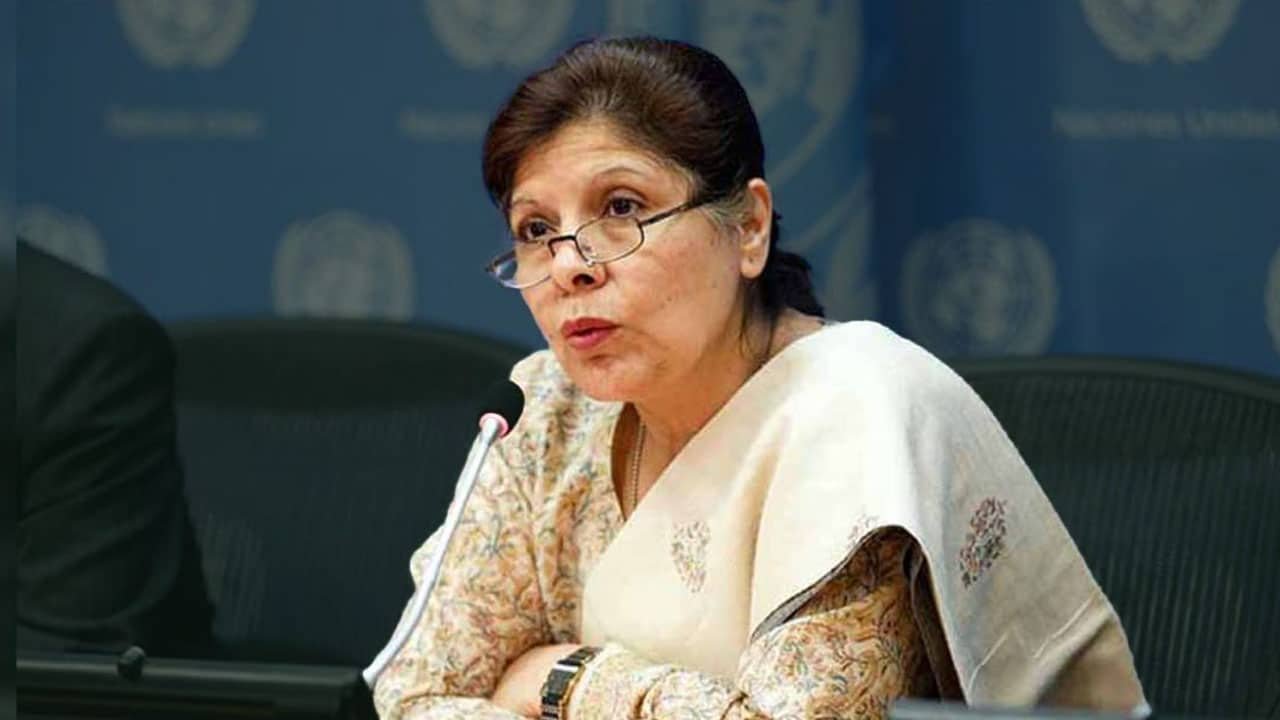
    Dr Shamshad Akhtar, the Caretaker Finance Minister, emphasised Pakistan’s significant economic potential, stating that the country could achieve a $2 trillion economy by 2047, as per a World Bank report.  

    Addressing the Future Summit in Karachi, she underscored the importance of adopting robust economic and sector-specific policies, coupled with a resolute commitment to implementing challenging structural reforms. 

    Dr Akhtar highlighted the need for increased innovation and diversification within the economic framework to ensure sustainable growth.  

    Emphasising the role of Development Finance Institutions (DFIs), she noted that institutions with expertise, efficiency, and flexibility could serve as crucial drivers for the growth and development of the capital market. 

    In a recent meeting with the Chairman of the Securities and Exchange Commission of Pakistan (SECP) and heads of DFIs, Dr Akhtar discussed the progress of establishing a private equity and venture capital (PE and VC) fund.  

    While the DFIs reaffirmed their commitment, they also provided insights into the progress made and challenges encountered in the process. 

    Notably, Pakistan, currently under a caretaker government, successfully reached a staff-level agreement with the International Monetary Fund on the first review of a short-term bailout program.  

    This agreement clears the path for unlocking $700 million, a crucial step in mitigating the looming economic crisis.  

    The caretaker government has implemented various fiscal measures, including an increase in the petrol levy, additional taxes, and significant reforms in the power sector, to address the economic challenges effectively. 

  • Finance Ministry hits out at Atif Mian’s ‘nonsensical’ label for Pakistan’s economic policies

    Finance Ministry hits out at Atif Mian’s ‘nonsensical’ label for Pakistan’s economic policies

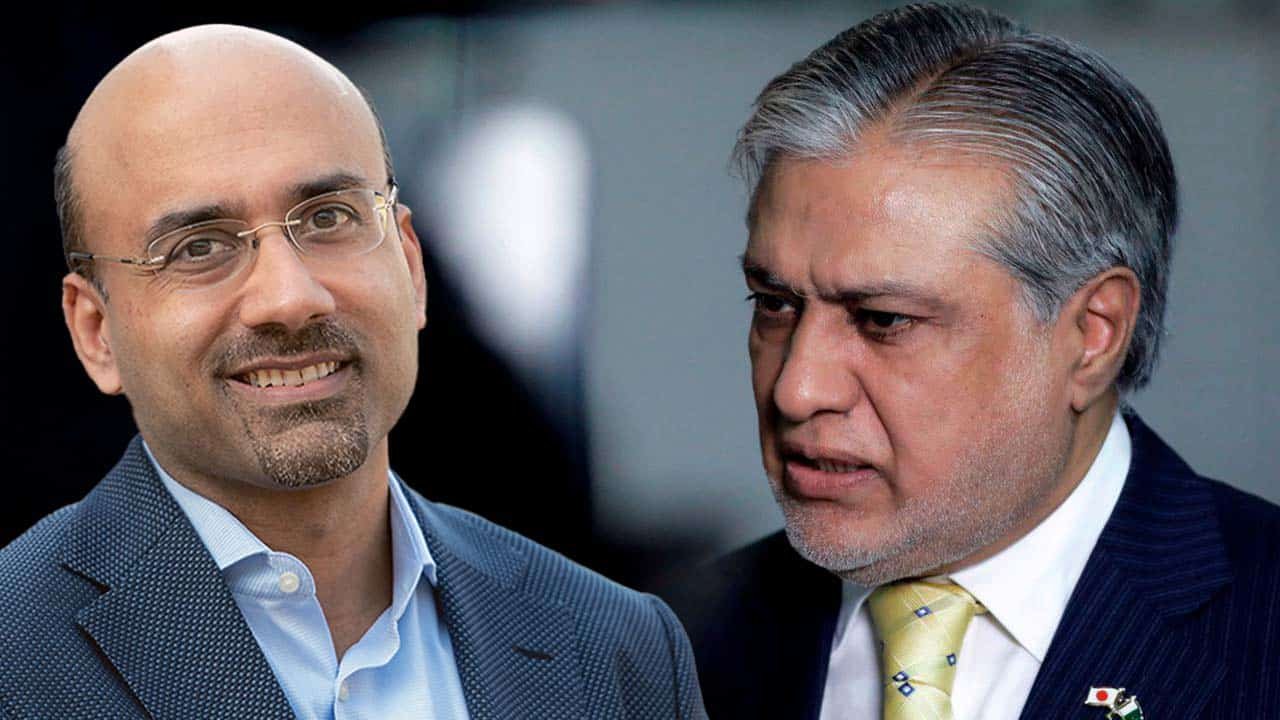
    The Ministry of Finance strongly responded on Saturday to recent remarks made by Pakistani-American economist Atif Mian, criticising his lack of practical understanding of economics.

    Mian had labelled the government’s economic policies as ‘nonsensical’ and suggested that Pakistan should take decisive actions to restructure its economy, citing Ghana and Sri Lanka as examples. In response, the Ministry of Finance dismissed Mian’s comments as a veiled suggestion of default and argued that his critique was purely theoretical, lacking practical insight into economics.

    The ministry refuted Mian’s comparison of Ghana and Sri Lanka, pointing out that Pakistan’s economy and population are significantly larger, making the analogy misplaced.

    Regarding Pakistan’s debt structure, the ministry clarified that less than 10 per cent of the debt consists of commercial bonds/sukuks, with the next maturity due in April 2024. The majority of the debt is owed to multilateral and bilateral creditors, who have not indicated any risk of default.

    The ministry expressed disappointment that Mian overlooked the significant reforms undertaken by Pakistan in the past nine months. These reforms included market exchange rate adjustments, interest rate modifications, mid-year taxation to improve the fiscal position, levies on petroleum products, and non-monetisation of the fiscal deficit. These actions were implemented under an unprecedented IMF programme.

    Despite the delay in reaching a staff level agreement with the IMF, the ministry assured that Pakistan’s economy would continue on the path of reform towards stability and sustainable growth.

    The ministry dismissed Mian’s unwarranted comments on nominal exchange rates, stating that Pakistan’s real exchange rate is estimated to be 15 per cent undervalued, reflecting improving fundamentals.

    In terms of petroleum prices, the ministry highlighted that historically, Pakistan has sold petroleum products at significantly lower prices compared to regional countries. Imposing additional taxes on consumers, especially given the recent price hikes and rising inflation, would be unwise.

    The ministry attributed Pakistan’s current economic crisis to international shocks, including the COVID-19 pandemic, the Ukraine war, and devastating floods. It emphasised that the present government has successfully overcome the challenges inherited from an overheated economy and breached IMF conditionality. The current account deficit has been significantly reduced, indicating progress in balancing payments.

    Lastly, the ministry pointed out that Mian failed to consider the unprecedented political challenges faced by Pakistan. It concluded by expressing optimism that with the likelihood of political stability emerging soon, a major economic turnaround is expected.

    Overall, the Ministry of Finance strongly rebutted Mian’s criticism, emphasising the government’s commitment to reforms and the resilience of Pakistan’s economy.
  • Intraday update: Pakistani rupee plunges to historic low of Rs290 against dollar amid political turmoil

    Intraday update: Pakistani rupee plunges to historic low of Rs290 against dollar amid political turmoil

    On Wednesday, the Pakistani rupee (PKR) reached a historic low against the US dollar, falling to Rs290 during intraday trading at the interbank foreign exchange market. This decline is a major setback to Pakistan’s economy, as the rupee lost Rs5.16 in a single day compared to the previous day’s closing rate of Rs284.84.

    The previous record low of Rs288.43 was set in April. The sharp decline in the Pakistani rupee raises concerns about the country’s financial stability, and several factors have contributed to this depreciation.

    The arrest of former Prime Minister Imran Khan on corruption charges has led to increased uncertainty and added pressure on the Pakistani rupee. This political turmoil has negatively impacted investor confidence and the value of the local currency.

    Furthermore, the uncertain status of the International Monetary Fund (IMF) loan programme has further exacerbated the decline of the Pakistani rupee. Although the government had anticipated an installment of $1.2 billion under the Extended Fund Facility (EFF) program, delays in loan disbursement and recent developments in negotiations have raised concerns about Pakistan’s ability to meet its financial obligations. These doubts have put additional strain on the rupee’s value.

    Currency experts are closely monitoring these developments and expressing caution about the future outlook of the Pakistani rupee. The government must take decisive measures to stabilize the currency and restore investor confidence. This may involve implementing effective economic policies, addressing corruption concerns, and ensuring a more transparent and predictable investment environment.

    It is crucial for the Pakistani government to engage in constructive dialogue with the IMF to secure the much-needed loan program. Demonstrating a commitment to fiscal discipline, structural reforms, and good governance can potentially alleviate concerns surrounding the economy and enhance the rupee’s value in the international market.

    While the situation appears challenging, it is important to note that currency fluctuations are not unique to Pakistan. Several emerging economies have faced similar issues in recent years. The government’s response and its ability to address the underlying causes of the rupee’s depreciation will be critical.

  • Japanese car companies consider establishing hybrid vehicle plants in Pakistan

    Japanese car companies consider establishing hybrid vehicle plants in Pakistan

    Japan has urged Pakistan to allow the import of manufacturing equipment for vehicles due to the shortage of dollars, which has affected the issuance of letters of credit to Japanese companies operating in the country.

    Japanese firms are considering the establishment of hybrid vehicle plants in Pakistan, with plans to export the vehicles from the country in the future.

    During a meeting between Ambassador Wada Mitsuhiro and Finance Minister Senator Ishaq Dar at the Finance Division, the Ministry of Finance issued an official statement. The Vice Chairman of Toyota, Shinji Yanagi, SAPM on Finance Tariq Bajwa, finance secretary, and senior officers were also in attendance.

    The finance minister briefed the envoy on the economic challenges and priorities of the government and emphasized that Japan is one of its major development partners. The cooperation between the two countries will strengthen in multiple fields for mutual benefit. The finance minister also welcomed the investment plans of Japanese companies in Pakistan.

    Ambassador Mitsuhiro praised the government’s pragmatic policies and actions and expressed confidence in the country’s economic policies. Meanwhile, a World Bank delegation led by Mamta Murthi, Vice President of the World Bank for Human Development, met with Dar at the Finance Division.

    Murthi emphasized the importance of investing in human capital, particularly in education, health and nutrition, social protection, population control, and women’s development. She also highlighted the importance of local ownership and community participation in implementing development projects.

    The finance minister briefed Murthi on the government’s policies and programs related to key areas of human development to uplift the masses and eliminate poverty in the country. He expressed the government’s commitment to work with the World Bank to achieve their shared goals of sustainable development in Pakistan.

  • Pakistan’s nuclear program not linked to loan negotiations, says IMF representative

    Pakistan’s nuclear program not linked to loan negotiations, says IMF representative

    The International Monetary Fund (IMF) has refuted allegations that it imposed any conditions on the revival of a loan program that had been suspended for several months despite ongoing discussions between the two parties.

    Pakistan has been in discussions with the IMF since early February to negotiate the terms of the deal, which includes the adoption of policies aimed at addressing its fiscal deficit ahead of the annual budget in June. The funds are part of a $6.5 billion bailout package that the IMF approved in 2019, and which experts believe is critical for Pakistan to avoid defaulting on its external debt obligations.

    The delay in reaching a staff-level agreement with the IMF had prompted veteran politicians, Senator Raza Rabbani and former foreign minister Shah Mahmood Qureshi, to express concerns about whether the delay was due to the country’s strategic assets, including its nuclear and missile programs. They have called on the government to clarify this issue.

    In response, IMF resident representative in Islamabad, Esther Perez Ruiz, released a statement on Sunday denying any involvement in Pakistan’s nuclear program, stating that there was “absolutely no truth” to the rumors that program discussions with the authorities may have covered the issue.

    Ruiz further clarified that the discussions had focused exclusively on economic policies aimed at resolving Pakistan’s economic and balance of payments problems, in line with the Fund’s mandate for promoting macroeconomic and financial stability.

  • Pakistan reaches out to US for assistance in obtaining IMF deal

    Pakistan reaches out to US for assistance in obtaining IMF deal

    Pakistan has requested assistance from the United States to obtain “lenient treatment” from the International Monetary Fund (IMF) due to a delay in signing the staff-level agreement (SLA).

    The international lender has asked Pakistan to confirm external financing needs of $6 to $7 billion from Saudi Arabia, the United Arab Emirates, Qatar, and multilateral creditors until the end of June 2023.

    However, Pakistan has been unable to persuade the lender to sign the agreement and has requested assistance from Washington and its western allies.

    According to The News, Minister for Finance Ishaq Dar has contacted the US diplomatic corps based in Islamabad for help in ending the stalemate.

    The IMF considers that the loan facility’s “sustainability” could not be guaranteed without full assurance of external financing.

    Furthermore, the IMF has demanded a permanent abolition of power sector subsidies, which the government had only committed to until the end of the next financial year 2023-24.

    The IMF demanded changes in the wording of the Memorandum of Economic and Financial Policies (MEFP) during the last meeting held in the previous week.

    The IMF and Pakistani sides are yet to decide on further proceedings, with each side holding the other responsible for the delay in signing the SLA.