Tag: Economic Policy

  • PM Kakar pushes for speedy privatisation of financially troubled state-owned enterprises

    Caretaker Prime Minister (PM) Anwaar-ul-Haq Kakar, in a meeting held on Monday, directed the relevant authorities to expedite the privatisation process of state-owned enterprises (SOEs) that are experiencing financial losses.

    Stressing the importance of this privatisation effort, the Prime Minister emphasised its role in safeguarding the national treasury from further deficits.

    During this meeting, Minister for Privatisation Fawad Hasan Fawad provided a detailed update on the progress made in the privatisation of these enterprises.

    PM Kakar also commended the Special Investment Facilitation Council (SIFC) for its commendable contributions to this endeavor. 

    It’s worth noting that the caretaker Premier had previously issued similar directives to accelerate the privatisation process of Pakistan International Airlines (PIA), a loss-making entity.

    This development comes in response to reports suggesting that unless emergency funding is secured, PIA’s flight operations could face suspension.

    A senior PIA director revealed that the operational fleet had been reduced from 23 to 16 aircraft, resulting in the cancellation of numerous flights.

  • IMF declines request for tariff adjustment and subsidy on high electricity bills 

    IMF declines request for tariff adjustment and subsidy on high electricity bills 

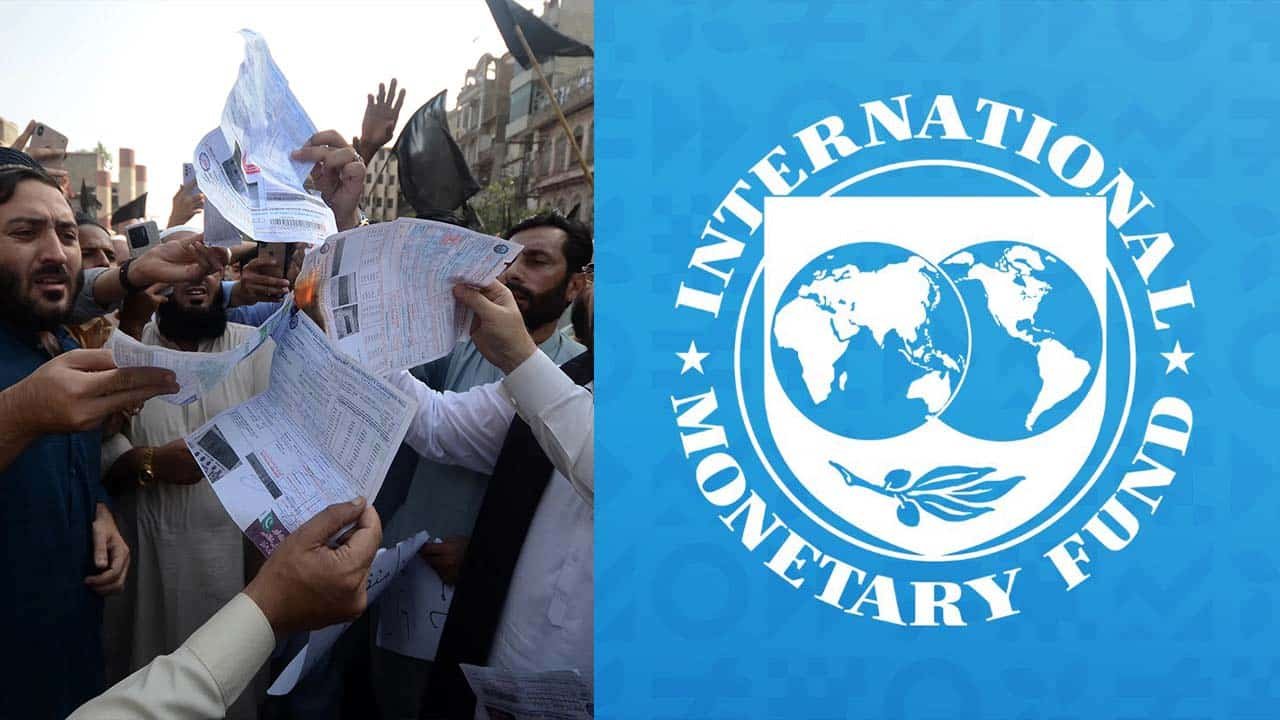
    In light of the government’s comprehensive deliberation on strategies to alleviate the burden of electricity bills, the International Monetary Fund (IMF) has declined the proposal for tariff adjustments or additional subsidies. This decision was made despite the government’s assertion that its bill collections for August had nearly met expectations, as reported by The News on Tuesday. 

    The IMF has expressed strong reservations regarding the government’s initiative to provide relief to economically disadvantaged individuals facing high power bills. Pakistan has consequently approached the global lender, requesting permission to phase in upcoming quarterly tariff adjustments (QTAs) and Fuel Price Adjustments (FPAs) amounting to Rs7.50 per unit over the next four to six months. 

    An authoritative source confirmed this request, stating, “Pakistan has sought the IMF’s approval for a gradual implementation of QTAs and FPAs over a four to six-month period, potentially incurring additional costs that will require mutual agreement.” 

    According to sources, the power sector continues to grapple with challenges, given the necessity of increasing tariffs by approximately Rs5 per unit in the current month and incorporating FPAs amounting to Rs2.72 per unit. Consequently, a cumulative tariff increase exceeding Rs7 per unit is anticipated.  

    The computation of QTAs will be based on losses incurred during the April-June period, reflecting reduced unit usage, increased interest payments, and fluctuations in exchange rates. Meanwhile, the FPA is calculated to address the rising prices of imported fuel, resulting in a potential hike of Rs7.50 per unit in September bills, subject to regulatory approval.  

    Simultaneously, the Ministry of Power asserts that its bill collection performance for August 2023 has improved and is nearing expectations. They contend that to mitigate the impact of inflated bills, they must seek the IMF’s approval for the staggered implementation of QTAs and FPAs.  

    According to calculations by the Ministry of Power for various consumer categories, those utilising 400 units can anticipate a reduction in power charges from Rs21,000 in August 2023 to Rs16,963 in September and further to Rs11,356 in October, factoring in QTAs and FPAs. Similarly, charges for consumers using 300 units are projected to decrease from Rs13,000 in August to Rs10,000 in September and Rs8,000 in October 2023. 

    With the onset of winter in October, it is anticipated that the issue of escalated bills will gradually subside. Additionally, officials are planning to approach the National Electric Power Regulatory Authority (Nepra) to determine the next tariff adjustments, considering seasonal usage trends. Given the peak usage during the summer months followed by a decline in winter, tariff adjustments will be tailored to accommodate these seasonal fluctuations. 

    The Prime Minister has instructed the Ministry of Finance to develop a strategy for economic stability in Pakistan. During a meeting with Interim Finance Minister Shamshad Akhtar, the current economic situation was discussed. 

    The government aims to find innovative solutions to ease the burden on electricity consumers, addressing issues like circular debt, power theft, and taxes with short-term measures. 

    The caretaker government’s primary goal is to facilitate early general elections while upholding constitutional obligations such as constituency delimitation following the population census. The focus is on restructuring fiscal and monetary policies for economic revitalization. 
  • Utility Stores hike sugar, ghee, and flour prices following subsidy withdrawal

    In a surprising move, the Utility Stores Corporation (USC) has raised the prices of crucial commodities such as sugar, ghee, and flour, affecting consumers across the board, including those enrolled in the Benazir Income Support Programme (BISP). This price increase comes in the wake of the outgoing government’s decision to eliminate subsidies on these essential items.

    Among the notable price hikes, a 10-kg bag of flour has witnessed a substantial increase of Rs200; sugar prices have surged by Rs30; and ghee prices have risen by Rs53 per kilogramme. This unforeseen surge in prices has left many consumers bewildered, especially considering that the government recently augmented the subsidy allocation for the USC from Rs30 billion to Rs35 billion in the ongoing fiscal year’s budget.

    In a bid to alleviate the burden on consumers, the Prime Minister’s Azadi package for BISP beneficiaries is set to launch on August 11. This relief package aims to cushion the impact of the price hikes by offering a 10-kg bag of flour at a reduced price of Rs648. Additionally, a discount of Rs25 per kilogramme will be applied to rice and pulses for eligible beneficiaries.

    However, the plight of consumers has been compounded by widespread shortages of essential goods at utility stores. Frustration among citizens has mounted as they endure long lines for houRsin the hope of purchasing subsidised items, only to be met with empty shelves and disappointment. The lack of availability has further exacerbated the challenges posed by the recent price increases.

    Curiously, authorities at the utility stores have refrained from commenting on the escalating situation. This silence has left consumers and observers alike wondering about the root causes of these unexpected developments and the potential implications for the broader economic landscape.

  • FBR imposes 400% tax increase on payments to non-residents via debit and credit cards

    The Federal Board of Revenue (FBR) has taken a significant step to discourage the outflow of foreign exchange reserves by raising the withholding tax (WHT) on payments to non-resident individuals through debit and credit cards. The move aims to curtail the substantial impact of such payments on the country’s foreign exchange reserves.

    The FBR recently issued Circular Number 2 of 2023, which outlines the amendments to the Finance Act 2023. As per the circular, the Finance Act 2022 had introduced section 236Y, subjecting payments to non-residents through debit/credit cards to a 1 per cent withholding tax rate for Active Taxpayer List (ATL) persons and 2 per cent for Non-ATL persons.

    However, considering the considerable foreign exchange outflows resulting from these transactions, the FBR has implemented a drastic increase in withholding tax rates through the Finance Act 2023. According to The News, for ATL persons, the withholding tax rate has been elevated from 1 per cent to 5 per cent, and for Non-ATL persons, it has been raised from 2 per cent to 10 per cent. This means a fourfold increase in tax rates for both categories of taxpayers as well as non-filers.

    According to estimates shared by the State Bank of Pakistan (SBP) with parliamentarians before the 2023-24 budget, monthly payments made through credit cards or debit cards amounted to approximately $70 to $100 million, resulting in an annual outflow of around $1 billion.

    In line with the Finance Bill, the FBR has been granted powers under Section 236Y to levy advance tax on individuals remitting amounts abroad through credit, debit, or prepaid cards. As per the Finance Bill 2022, the proposed advance tax rate on such remittances was set at 1 per cent of the gross amount remitted abroad.

    The implementation of the increased withholding tax is expected to have a considerable impact on curbing unnecessary foreign exchange outflows and strengthening the country’s forex reserves. It also serves as a measure to encourage individuals to transact responsibly and ensure the stability of the country’s economic landscape.

    As the FBR takes these steps to address forex challenges, stakeholders and taxpayers await the outcomes and potential adjustments in the overall economic landscape. The move also highlights the government’s efforts to strike a balance between promoting foreign investments and managing capital outflows to ensure sustainable economic growth in the country.

  • Relief for workers as Punjab govt raises minimum wage to Rs32,000 per month

    Relief for workers as Punjab govt raises minimum wage to Rs32,000 per month

    The Punjab government has announced an increase in the minimum wage for unskilled workers from Rs25,000 to Rs32,000 per month, providing some relief to workers during a period of skyrocketing inflation.

    This increase of Rs7,000 was made official through a notification issued by the interim government on Thursday. It is worth noting that in April of last year, Prime Minister (PM) Shehbaz Sharif announced a minimum wage increase for government employees to Rs25,000 and a 10 per cent increase in civil and military pensions for retired employees.

    Following this announcement, the Punjab government set the minimum wage at Rs25,000. On January 31, 2023, Asif Ali Zardari, the former president and Pakistan Peoples Party (PPP) Co-chairperson, proposed to the coalition government that the minimum wage should be raised to Rs35,000.

    Zardari emphasised that the government should take responsibility for providing relief to workers and take far-reaching measures to address the problems faced by the masses.