Tag: Economic Recovery

  • Pakistan stock market posts largest annual gain since 2003

    Pakistan stock market posts largest annual gain since 2003

    The Pakistan Stock Exchange (PSX) has reported its most impressive annual return in over twenty years, driven by optimism over improved economic conditions, attractive valuations, and a shift to monetary easing by the central bank.

    The KSE-100 Index surged by 89.2 per cent, adding 36,992 points to reach 78,444.9 in the fiscal year ending June 2024. This represents the largest yearly gain since FY 2003. In USD terms, the index rose by 94.4 per cent, the highest increase since FY 2003.

    According to Mettis Global, this historic bull run commenced when Pakistan narrowly avoided a sovereign debt default, thanks to a rescue package from the International Monetary Fund (IMF) towards the end of the last fiscal year.

    The IMF’s $3 billion loan programme also facilitated additional multilateral and bilateral funding, boosting the country’s foreign exchange reserves by 99 per cent to $8.9 billion.

    The benchmark index reached its first record high in seven years in November 2023 and continued to set new highs throughout the year without significant pullbacks.

    Market participation remained robust in FY24, with the average traded volume on the PSX surging by 140 per cent to 272.5 million shares.

    Traded value in PKR terms increased by 154 per cent to 15.6 billion. In USD terms, the volume was recorded at $55.2 million, a gain of 118 per cent compared to the previous year.

    The strong performance of the PSX reflects investor confidence in Pakistan’s economic recovery and the positive impact of the IMF’s support programme.

  • Budget 2024-25: Pakistan Stock Exchange proposes tax reforms for economic growth

    Budget 2024-25: Pakistan Stock Exchange proposes tax reforms for economic growth

    Pakistan Stock Exchange (PSX) has forwarded a series of significant tax proposals to both the Ministry of Finance (MoF) and the Federal Board of Revenue (FBR) for potential inclusion in the upcoming federal budget for the fiscal year 2024-25.

    These proposed measures are designed to not only bolster revenue but also to incentivise the allocation of resources towards sectors of the economy that are both productive and officially documented. This move is deemed critical for fostering economic growth and generating employment opportunities across Pakistan.

    Notably, PSX has experienced a marked upswing in its performance, largely attributed to recent stability measures implemented within the broader macroeconomic landscape. In the outgoing year alone, the market capitalisation has surged by nearly Rs4 trillion, signifying a substantial boost to economic prosperity.

    Furthermore, foreign investments totaling approximately $132 million have flowed into the country through the stock market since July 2023, underscoring the significance of the stock market in attracting foreign capital.

    It is imperative that both the Ministry of Finance and the FBR carefully evaluate the proposals put forth by PSX to ensure that the stock market remains a vital contributor to economic growth, tax revenues, foreign investment inflows, and the formalisation of the economy. This strategic move is crucial for sustaining the positive momentum witnessed in both the capital market and broader economic recovery efforts.

    PSX stresses the importance of prioritising comprehensive documentation of all economic activities, with capital markets representing one of the most meticulously documented sectors within the economy. A robust capital market ecosystem not only aligns with key economic and social objectives but also serves as a catalyst for expanding the taxpayer base, augmenting savings and investment rates, and mitigating wealth disparities.

    To realise these overarching objectives, investors necessitate a conducive and predictable tax regime. As such, Pakistan Stock Exchange has articulated a range of proposals to the Ministry of Finance and the Federal Board of Revenue, all aimed at fostering a favorable environment for investment and economic growth in the fiscal year 2024-25.

  • Pakistan anticipates final IMF tranche approval in late April

    Pakistan anticipates final IMF tranche approval in late April

    The International Monetary Fund (IMF) announced that its Executive Board meeting, anticipated for late April, is crucial for approving Pakistan’s final tranche of approximately $1.1 billion (SDR 828 million). 

    This sum represents the last portion of the $3-billion Stand-By Arrangement (SBA) initiated in June of the previous year.

    Julie Kozack, IMF Communication Director, revealed this information during a media briefing, highlighting the significance of the staff-level agreement reached on March 19 between IMF staff and Pakistani authorities. 

    This agreement, subject to approval by the IMF’s Executive Board, acknowledges Pakistan’s strong program implementation by the State Bank of Pakistan (SBP) and the interim government, as well as the new government’s commitment to ongoing policy and reform endeavors aimed at transitioning Pakistan from stabilisation to robust, sustainable recovery.

    Kozack emphasised the improvement in Pakistan’s economic and financial position since the completion of the first review, with growth and confidence steadily rebounding. 

    Looking ahead, she mentioned the possibility of a successor IMF-supported program to address Pakistan’s fiscal and external stability challenges and foster inclusive growth, indicating the IMF’s readiness to engage in discussions with Pakistani authorities.

    Meanwhile, Pakistan’s foreign exchange reserves witnessed a modest increase, reaching $8.04 billion as of March 29, although still considered low for an import-dependent economy, raising concerns about potential future pressure. 

    Finance Minister Muhammad Aurganzeb has acknowledged the need for another IMF bailout, with discussions slated for the upcoming Spring meetings of the Board of Governors of the World Bank Group and IMF scheduled for April 15-20, 2024, in Washington DC, where Aurangzeb is expected to lead Pakistan’s delegation.

  • Pakistan clears hurdles for IMF review, final agreement expected

    Pakistan clears hurdles for IMF review, final agreement expected

    The newly elected government of Pakistan has indicated its intention to secure a new loan from the International Monetary Fund (IMF).

    In line with this, representatives from the IMF are scheduled to visit Pakistan for the second review of the ongoing Stand-By Arrangement (SBA). The review is set to take place from March 14 to 18 in Islamabad.

    According to a statement released by the finance ministry, Pakistan has successfully met all structural benchmarks, qualitative performance criteria, and indicative targets required for the IMF review.

    This upcoming review marks the final evaluation of the SBA, with a staff-level agreement anticipated upon its completion.

    Once this agreement is reached, the final tranche of $1.1 billion under the SBA will be disbursed, subject to approval from the IMF’s Executive Board.

    Last summer, Islamabad secured a vital rescue package from the IMF, preventing a potential sovereign debt default.

    The successful completion of the final review is expected to unlock approximately $1.1 billion.

    Prime Minister Shehbaz Sharif has instructed his finance team, led by newly appointed Finance Minister Muhammad Aurangzeb, to begin preparations for seeking an Extended Fund Facility (EFF) once the standby arrangement concludes on April 11.

    The IMF has expressed readiness to develop a medium-term programme if Pakistan submits an application for one.

    Notably, the government has not officially disclosed the amount of additional funding it intends to seek through a successor programme from the IMF.

  • Survey: Imran Khan emerges as top choice for financial experts to revive Pakistan’s economy

    Survey: Imran Khan emerges as top choice for financial experts to revive Pakistan’s economy

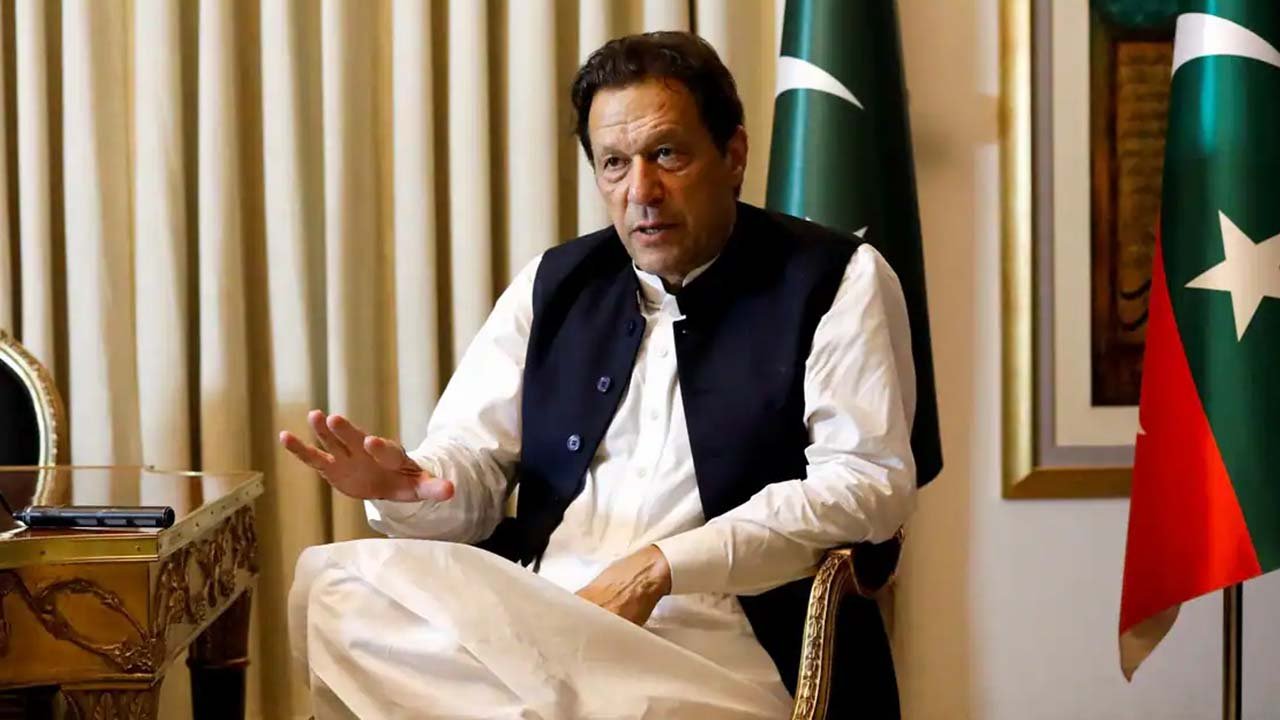
    In a recent Bloomberg survey conducted among Pakistani finance professionals, incarcerated former Prime Minister Imran Khan emerged as the leading choice to oversee the country’s economic recovery.

    Despite being barred from contesting the upcoming February 8 election, Khan’s enduring popularity was cited as a crucial factor by respondents, who believe he could implement market-focused reforms in the long term.

    The survey, which included 12 traders, economists, and analysts from major brokerages, placed three-time former premier Nawaz Sharif in the second position. Respondents acknowledged Sharif’s experience in government and speculated that his alignment with the powerful military contributed to his standing.

    Bilawal Bhutto Zardari, a member of the influential Bhutto clan, secured a distant third place, with some survey participants expressing reservations about dynastic politics.

    Bloomberg Economics conducted an analysis of Pakistan’s misery index, combining inflation and unemployment rates, revealing that Sharif’s party had a better track record in managing the economy over the past three decades compared to rivals, including Khan.

    Despite Khan’s three court convictions and election disqualification, questions about the legitimacy of the upcoming polls are surfacing among independent observers and voters.

    With almost 129 million eligible voters set to cast their ballots, concerns are growing about the electoral system’s integrity in the absence of the country’s most popular politician.

    Pakistan’s National Assembly has completed a full term only three times in its 76-year history, and political observers note rising discontent with the electoral system in Khan’s absence.

    Khan, convicted of graft in August, received another jail sentence on Tuesday for his involvement in publicising a classified diplomatic cable. On Wednesday, he and his wife, Bushra Bibi, were sentenced to 14 years in jail for a case related to the illegal selling of state gifts.

    As Khan faces legal challenges, Sharif and his Pakistan Muslim League-Nawaz are gaining support from voters. Sharif’s return from exile last year, widely seen as a deal with the military, has boosted his popularity, particularly in Punjab, Pakistan’s most populous province.

    The respondents to the Bloomberg survey unanimously agreed that Pakistan’s economic survival hinges on a new International Monetary Fund (IMF) loan. Half of them believe the country can withstand six months without a bailout, while the ongoing nine-month IMF programme is set to conclude in March, with about $1 billion in dollar-denominated debt due in April.

    Key findings from the January survey include expectations of 2.65 per cent economic growth in the fiscal year starting July, the government’s estimate of 2 per cent to 2.5 per cent expansion in the current fiscal year, a forecasted moderation of inflation to 25.05 per cent by the fiscal year ending June (currently at about 30 per cent), and a consensus that Pakistan cannot survive for more than a year without an IMF bailout.

  • PKR sustains positive momentum, gains 0.04% against US dollar in ninth consecutive session

    PKR sustains positive momentum, gains 0.04% against US dollar in ninth consecutive session

    In the inter-bank market, the Pakistani rupee continued its positive trend against the US dollar for the ninth consecutive session on Monday, appreciating by 0.04 per cent to settle at Rs280.24, reflecting a gain of Re0.12, according to the State Bank of Pakistan (SBP).

    During the preceding week, the Pakistani rupee sustained its upward movement, appreciating by Rs1.04 or 0.37 per cent against the US dollar, settling at 280.36 in the inter-bank market.

    This surge in value is attributed to the recent announcement of a staff-level agreement (SLA) between Pakistan and the International Monetary Fund (IMF) on the first review of the $3 billion Stand-by Arrangement (SBA). Consequently, the approval of the second tranche of the package ensued.

    The IMF Executive Board completed the first review of the SBA last week, facilitating an immediate disbursement of $700 million.

    As of January 5, the foreign exchange reserves held by the State Bank of Pakistan amount to $8.15 billion, with expectations of further augmentation through IMF inflows.

    On the global front, the US dollar experienced a decline on Monday amid renewed anticipations of a Federal Reserve rate cut in March.

    Simultaneously, the Chinese yuan faced challenges, hovering near a one-month low ahead of forthcoming economic data releases.

    The likelihood of a Fed cut in March gained traction following unexpected December data indicating a decline in US producer prices, prompting a slide in US Treasury yields. The US dollar index remained stable at 102.50, exhibiting minimal fluctuations in recent sessions.

    In the realm of oil prices, a significant indicator of currency parity, a slight uptick was observed on Monday. This movement was influenced by concerns over potential supply disruptions in the Middle East, following strikes by US and British forces aimed at preventing Houthi militia in Yemen from attacking ships in the Red Sea.

  • Pakistan navigates economic turbulence in 2023: A year of challenges and resilience 

    Pakistan navigates economic turbulence in 2023: A year of challenges and resilience 

    2023 posed significant challenges for Pakistan’s economy, characterised by a sharp slowdown, escalating inflation, and a near-default situation. However, amidst the turbulence, glimpses of progress emerged, suggesting a potential path towards recovery. 

    To meet International Monetary Fund (IMF) conditions, the government undertook stringent fiscal reforms, such as raising taxes and cutting subsidies. Despite being unpopular, these measures were deemed necessary to control the budget deficit and rein in inflation. 

    The latter part of the year witnessed positive indicators. Inflation, though still elevated, began to exhibit a downward trend. The agricultural sector experienced a robust comeback, particularly in cotton and rice production, while large-scale manufacturing showed a modest improvement. 

    Despite these positive developments, Pakistan’s economic recovery remains precarious. The global economic slowdown and geopolitical tensions continue to pose external challenges. Internal factors, such as political uncertainty and ongoing security issues, further contribute to the risks. 

    Throughout 2023, Pakistan consistently made headlines, grappling with economic crises, food shortages, mass protests, political arrests, and election-related upheavals. Here’s a recap of the key events in Pakistan during the year: 

    In 2023, Pakistan faced new lows, with the Pakistani rupee hitting an all-time low, surpassing the PKR 300 mark against the US dollar in August. Foreign reserves with the State Bank of Pakistan (SBP) dwindled to a concerning $3.1 billion in January 2023. 

    The country struggled to secure funding from the IMF, leading the SBP to raise interest rates by 300 basis points to 20 per cent, the highest since October 1996. Additional taxes were introduced, accompanied by increases in gas and electricity prices. Despite occasional reductions, petrol prices remained above Rs250 per litre. 

    The Consumer Price Index (CPI) reached an unprecedented 38.0 per cent YoY in May 2023, as per the CEIC database. Although it moderated to 26.9 per cent YoY in October, essential items like milk and onions became prohibitively expensive. 

    To combat inflation, Pakistan launched a free flour scheme, particularly in Punjab, under the Ramzan package. However, a tragic stampede in Karachi in April-March resulted in over 10 casualties at a free food distribution centre. 

    In a significant development, Pakistan secured a staff-level agreement with the IMF for a $3 billion, nine-month standby arrangement (SBA). The IMF executive board is set to convene on January 11, 2024, to consider final approval for the next $700 million tranche. 

    Summing up 2023 for Pakistan, the year was marked by elevated bank credit costs, volatile energy supplies, import restrictions, political instability, and weakened law and order. While some sectors, such as sugar, fertilisers, cement, and IT services, performed relatively well, others, like textiles, automotive, and pharmaceuticals, faced considerable distress. 

    Entrepreneurs faced unprecedented challenges, with a myriad of crises affecting the business landscape. Experts described the first six months as particularly challenging, citing uncertainty, a balance of payments crisis, and a shortage of foreign exchange. 

    The latter half of the year saw some alignment of factors, but challenges persisted, including inflation, unemployment, and continued monetary policy tightening. Despite these, there was improvement in donor relationships, credit rollovers, and foreign exchange inflows. 

    The automotive industry faced an extremely challenging year with import restrictions and demand suppression contracting the market. Despite absorbing the impact, optimism prevails for long-term gains from the envisioned economic restructuring. 

    For sustainable economic growth, Pakistan must commit to fiscal prudence, structural reforms, and export diversification. Investments in human capital, especially in education and healthcare, are crucial for long-term success. 

    In the backdrop of Pakistan’s economic challenges, its relations with neighbouring countries, particularly Afghanistan and India, continue to play a pivotal role in shaping the economic landscape.

    Islamabad’s interactions with Kabul and New Delhi remain tense, adding another layer of complexity to the existing economic challenges.

    Pakistan faces persistent challenges in its relationship with Afghanistan, characterized by sporadic skirmishes along the Afghanistan-Pakistan border.

    These clashes, involving Pakistani and Taliban forces, result in temporary cross-border closures and gunfire exchanges.

    In September 2023, a key closure led to an estimated $1 million loss over one week. Diplomatic efforts to curb cross-border attacks and pressure the Taliban demonstrate the evolving nature of these regional ties.

    Furthermore, Pakistan’s implementation of the Illegal Foreigners Repatriation Plan in late 2023 triggered widespread public unrest, particularly impacting nearly 2 million undocumented Afghan refugees.

    The policy raised concerns about its implications for cross-border trade and travel, leading to protest campaigns along the Chaman-Spin Boldak border.

    Unlike the Russia-Ukraine war, the ongoing Israel-Palestine conflict has had a limited economic impact on Pakistan. The main consequence is an increased cost, which, fortunately, has remained around six per cent thus far.

    Officials in the planning ministry and the State Bank closely monitor Middle East developments, formulating strategies to mitigate potential adverse impacts on the economy.

    While the likelihood of an Arab oil embargo is low, vigilance is crucial, especially for a country with a fragile economy. Contingency plans should be in place to address various possible scenarios, considering the potential for disruptions in global markets and supply chains.

    Global conflicts and economic stability

    Conflicts worldwide, including the Russia-Ukraine war, have demonstrated the potential for disruptions in fuel and food prices. Middle East nations, as key global oil suppliers, significantly influence Pakistan’s economy.

    The intensifying Middle East conflict poses challenges, impacting oil prices, currency fragility, and potential cost escalations in goods and services.

    Given Pakistan’s historical ties with Western countries, including FDI, the conflict raises concerns about the stability of the economy. The textile industry emphasises the necessity for early elections and a stable elected government to effectively address challenges arising from the conflict.

    Business organisations, such as the Federation of Pakistan Chamber of Commerce and Industry (FPCCI), view the situation as evolving and refrain from taking a stance at this point.

    The president of Pakistan’s textile industry advocates for early elections and a stable government to address challenges effectively.

    Economists highlight Pakistan’s susceptibility to oil price fluctuations and the potential impact of the Gulf crisis on remittance inflows.

    While some businesses anticipate no major shift in consumer preferences regarding Western brands, concerns linger about negative sentiments affecting certain brands. Calls to boycott Western brands may arise, although consistent follow-through remains uncertain.

    In the midst of these regional and global challenges, Pakistan’s economic resilience is being tested. Successful navigation through these complexities requires strategic planning, continued reforms, and a steadfast commitment to stability and prosperity.


  • Pakistan’s trade deficit shrinks by over 30% in November

    Pakistan’s trade deficit shrinks by over 30% in November

    In the initial five months of the fiscal year 2024, Pakistan’s trade performance has witnessed notable enhancements, marking a positive stride towards economic stability, as articulated by Dr Gohar Ejaz, the Federal Minister for Commerce and Industries, in a communication on X (formerly Twitter).

    The minister conveyed his unwavering confidence in Pakistan’s trajectory towards economic recovery, emphasising the commitment to diligent efforts aimed at job creation, economic growth, and the overall betterment of citizens’ lives.

    It is noteworthy that Pakistan’s exports experienced a year-on-year increase of 1.93 per cent, reaching $12.17 billion in the aforementioned five-month period, while imports exhibited a substantial decrease of 17.32 per cent to $21.55 billion.

    Consequently, the trade deficit contracted to $9.38 billion, registering a noteworthy decline of 33.59 per cent compared to the corresponding period in the preceding year.

    Zooming in on November’s performance, Pakistan’s exports demonstrated a robust year-on-year growth of 7.66 per cent, totaling $2.57 billion, whereas imports saw a decline of 13.47 per cent to $4.46 billion.

    This translated into a trade deficit of $1.89 billion for November, marking a notable reduction of 31.72 per cent compared to November 2022.

  • Pakistan’s economy picks up pace: GDP growth hits 2.13%

    Pakistan’s economy picks up pace: GDP growth hits 2.13%

    In the first quarter of the fiscal year 2023-24, Pakistan’s economy exhibited signs of recovery with a Gross Domestic Product (GDP) growth rate of 2.13 per cent, marking a significant improvement from the 0.96 per cent recorded in the same period of the previous fiscal year, according to estimates released by the Pakistan Bureau of Statistics (PBS) on Tuesday. 

    These estimates gained approval during the 107th National Accounts Committee (NAC) meeting convened on the same day.  

    To align with the structural benchmarks outlined in the IMF-SBA program, PBS engaged in consultations with stakeholders and data providers. They presented revised GDP figures for both the fiscal year 2022-23 and the first quarter of 2023-24 to the NAC. 

    In a noteworthy development, the NAC also sanctioned the incorporation of quarterly national accounts into the country’s statistical system. 

    Revisiting the GDP figures for the fiscal year 2022-23, the growth rate has been revised to -0.17 per cent, a departure from the provisional report of 0.29 per cent. 

    Breaking down the growth by industry, the 107th NAC greenlit a sector-specific methodology for compiling quarterly GDP. This includes a series of quarterly growth rates for various industries spanning from the first quarter of 2016-17 to the first quarter of 2023, with 2015-16 serving as the base year. 

    For the first quarter of 2023-24, the agricultural sector exhibited growth of 5.06 per cent, the industrial sector 2.48 per cent, and services 0.82 per cent. 

    In agriculture, crops recorded a robust growth of 6.13 per cent, with a notable 11.16 per cent increase in important crops.  

    The expansion is attributed to a rise in the sowing area, particularly for rice, cotton, and maize, with increases of 21 per cent, 11 per cent, and 5 per cent, respectively. Sugarcane saw an 11 per cent decline, but this was offset by growth in other major crops. 

    The industrial sector, which experienced a continuous decline in the preceding fiscal year except for a modest growth in the second quarter, reversed its trend in the first quarter of 2023-24, registering a growth of 2.48 per cent. Mining and quarrying posted a positive growth of 2.15 per cent, based on quarterly production in the mining sector.  

    Large-Scale Manufacturing (LSM) demonstrated growth of 0.93 per cent according to the Quantum Index of Manufacturing (QIM). Construction industry growth was estimated at 1.73 per cent, with a notable 15.38 per cent increase in cement production. 

    In services, the overall growth was 0.82 per cent. Wholesale and retail trade, reliant on the output of agriculture, manufacturing, and imports, was estimated at 3.05 per cent due to positive growth in agriculture and industry.  

    Transport grew by 1.7 per cent, based on quarterly data. Information & Communication, previously negative, showed a growth of 2.4 per cent, primarily due to a low base and quarterly information received from sources. 

    The finance and insurance industry reported a growth of -12.79 per cent, driven by a decline in the output of insurance companies and brokers, along with high growth in the deflator.  

    Public administration reported -16.65 per cent growth in the quarter, with high deflators contributing to a decline in constant prices.  

    Negative growth in education and human health and social work activities was largely influenced by a decrease in government budget data along with a high deflator.