Tag: economic reforms

  • Finance Minister Aurangzeb promises economic reforms in meeting with ADB

    Finance Minister Aurangzeb promises economic reforms in meeting with ADB

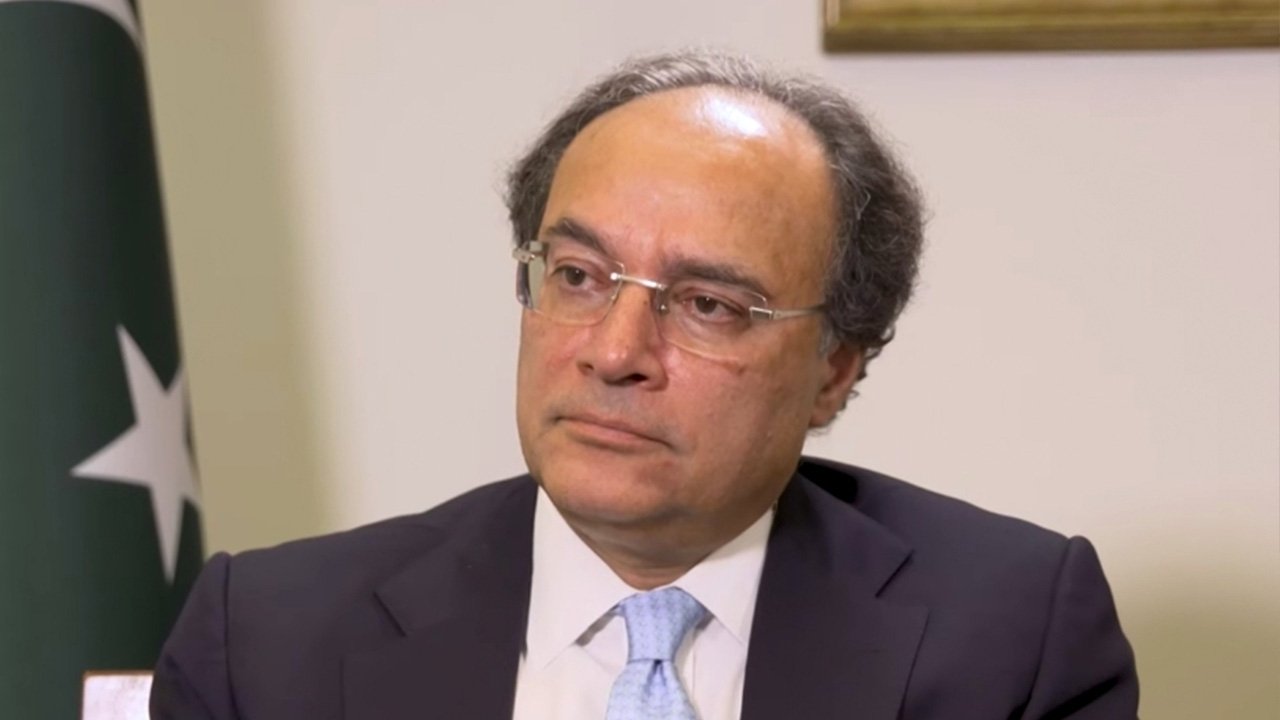
    Federal Minister for Finance and Revenue Senator Muhammad Aurangzeb has reaffirmed the government’s commitment to implementing its reform agenda and meeting structural benchmarks to lend permanence to macroeconomic stability, promote inclusive, sustainable growth and end Pakistan’s reliance on external borrowing.

    He made it clear that the only way this goal could be successfully achieved was by changing the “DNA of the economy” by moving it from away its usual boom-and-bust cycles and leading it to a sustained export-led growth encouraging investment and FDI flows into export-oriented sectors and getting access back to the international capital market.

    He made this observation during a meeting with a high-level delegation from the Asian Development Bank that called on the Minister at Finance Division today.

    The visiting delegation was led by Donald Bobiash, Executive Director of Asian Development Bank and Mr Shigeo Shimizu, Executive Director Asian Development Bank while Yong Ye, Country Director Asian Development Bank and other senior officers from the ADB and Finance Division were also present.

    Senator Muhammad Auragzeb welcomed the delegation and shared with them a roundup of ongoing structural reforms and the resultant growth trajectory and improvement in key economic indicators.

    He particularly highlighted an efficient management of twin deficits backed by buoyant remittances and healthy exports, a steep fall in inflation from a 38 per cent high of last year to a 44-month low of 6.9 per cent in September last, and reduction in the policy rate by 450 bps with expectations of more cuts in coming months.

  • PM Shehbaz hails Moody’s rating upgrade amid cooling inflation

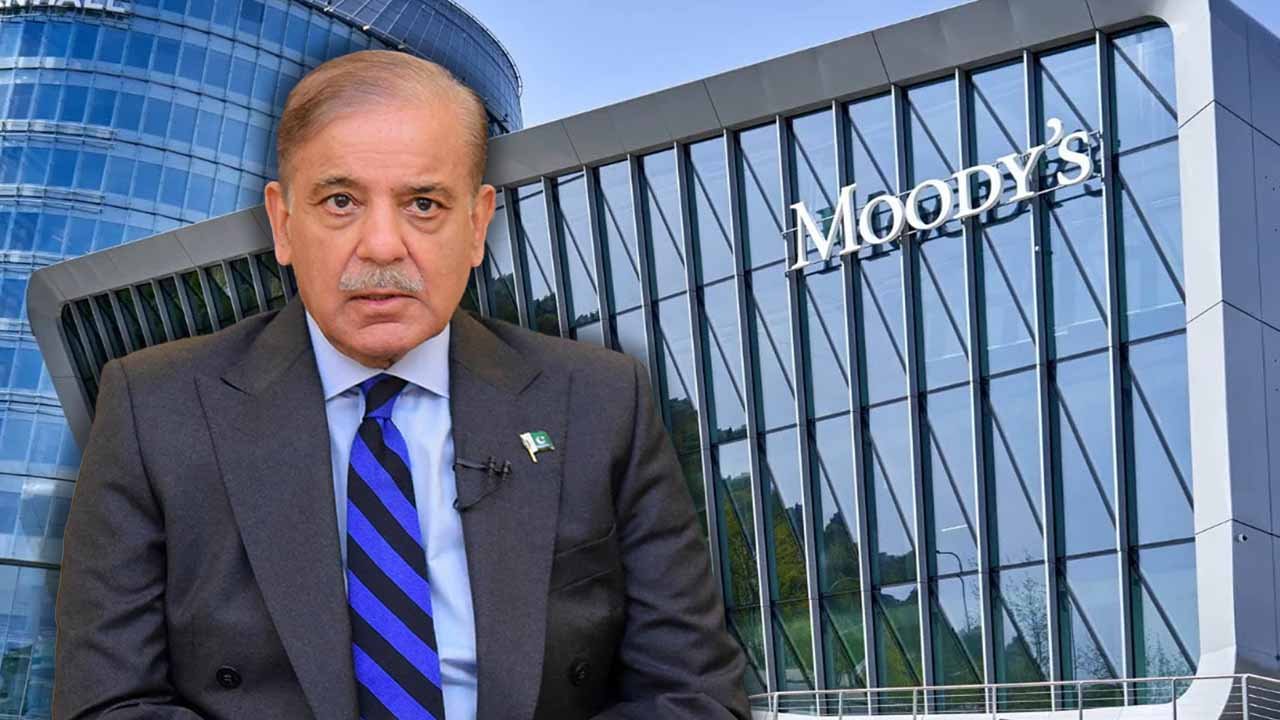
    PM Shehbaz hails Moody’s rating upgrade amid cooling inflation

    Prime Minister Shehbaz Sharif on Sunday expressed his satisfaction with the recent ease in the inflation rate, noting that the government’s ongoing economic reforms are yielding positive results.

    In a recent statement, PM Shehbaz highlighted that the recent upgrade in Pakistan’s credit rating by Moody’s was a clear acknowledgment of the country’s improving economic indicators. He said that international institutions are recognising the progress Pakistan is making.

    Moody’s Ratings recently upgraded Pakistan’s local and foreign currency issuer and senior unsecured debt ratings from Caa3 to Caa2. This upgrade reflects slightly better macroeconomic conditions, alongside improved government liquidity and external positions, which, although still weak, have shown improvement. According to Moody’s, Pakistan’s default risk has now decreased.

    Read more: Govt notifies Rs1.86 per litre ‘reduction’ in petrol price for next fortnight

    This development follows another upgrade in July when Fitch Ratings pushed Pakistan’s Long-Term Foreign-Currency Issuer Default Rating (IDR) from ‘CCC’ to ‘CCC+’.

    The Prime Minister expressed satisfaction with the Consumer Price Index (CPI) easing to 11 per cent in July, and he anticipates that it will decline further in August. He reiterated the government’s commitment to pursuing economic reforms, including a right-sizing policy, which he is personally overseeing to ensure rapid implementation.

    PM Shehbaz expressed confidence that the reforms would soon have a noticeable positive impact on the country’s economy. He reassured the public that the government is fully aware of the challenges faced by the people and is working to address them.

  • IMF wants FBR to bring over 20 million Pakistanis into tax net in five years

    IMF wants FBR to bring over 20 million Pakistanis into tax net in five years

    To broaden the tax base, the Federal Board of Revenue (FBR) has outlined its five-year objectives to the International Monetary Fund (IMF), sources reveal.

    The FBR aims to include over 20 million individuals in the tax net over the next five years, as per the IMF’s requirements.

    To meet this goal, the FBR plans to register 3.72 million people and 23,500 associations of persons within the current year. Additionally, more than 9,500 companies will be incorporated into the tax system during this financial year.

    For the following fiscal year, the FBR’s target is to add 3.91 million individuals, associations, and companies to its records. By FY27, the board aims to enrol 4.1 million non-filers, with a further increase to 4.31 million individuals by FY28.

    The goal for the 2028-29 financial year is to incorporate 4.525 million people into the tax net.

    Sources indicate that the IMF has insisted on the strict implementation of this plan, starting from the current financial year.

  • Reducing financial burden on low-income groups remains top priority for govt: Aurangzeb

    Reducing financial burden on low-income groups remains top priority for govt: Aurangzeb

    Finance Minister Muhammad Aurangzeb said Sunday that the government is taking robust measures to improve the country’s economy.

    Addressing a press conference in Islamabad, he said reforms are being done in the Federal Board of Revenue (FBR) to increase revenue collection.

    He said weekly meetings are being held under the chair of Prime Minister Shehbaz Sharif. He said that putting less burden on the lower-income class is the government’s top priority.

    Expressing gratitude to the Chief Ministers of all four provinces for supporting the government’s tax reforms agenda, he expressed hope that they will introduce tax legislation for the inclusion of the Agricultural sector in the taxation regime.

    He said without including the untaxed and under-taxed community in the tax regime, we cannot achieve certainty and ease of collection which is vital for economic stability.

    Regarding facilitation to the business community, Aurangzeb said claims worth 68 billion rupees have so far been now refunded.

    The Minister said notices will be sent through a centralized system, while field formations will be authorized to collect taxes accordingly.

    Mentioning the details of tax evasions and frauds, he said we have identified a tax potential worth 600 billion rupees that was not collected, out of which one billion rupees has been recovered so far.

    In customs, through misclassification, tax worth around 50 to 200 billion rupees has been identified.

    He urged the media to start a campaign against the under-tax and un-taxed community.

    The Minister said the government is also working on the simplification of the tax processes to facilitate the business and salaried persons.

    Through this simplified process, they will be able to respond to our system in a very simple and easy manner without the involvement of any tax consultant.

    Stressing the importance of rightsizing, the Minister said five ministries, including Kashmir and Gilgit Baltistan, SAFRON, Industries and Production, IT and Telecom, and Health have been short-listed in this regard.

    He said Prime Minister Shehbaz Sharif will take the final decision to this effect, he said.

  • IMF deal to improve Pakistan’s financial outlook, but continuous reforms are essential: Moody’s

    IMF deal to improve Pakistan’s financial outlook, but continuous reforms are essential: Moody’s

    Moody’s Investors Service has stated that Pakistan’s recent staff-level agreement with the International Monetary Fund (IMF) enhances the nation’s funding prospects.

    However, the global rating agency stressed the necessity of sustained reforms to mitigate liquidity risks.

    On 12 July, Pakistani authorities and the IMF reached a staff-level agreement on a 37-month Extended Fund Facility (EFF) worth approximately $7 billion. This agreement still awaits approval from the IMF Executive Board, with no specific date set for the vote.

    Moody’s commented that once the loan deal is approved, which is highly anticipated, it will significantly boost Pakistan’s funding prospects. The new IMF program is expected to provide reliable financing from the IMF and attract additional funding from other bilateral and multilateral partners, addressing Pakistan’s external financing needs.

    Nonetheless, Moody’s cautioned that the government’s ability to consistently implement reforms will be crucial to maintaining continuous financial support throughout the IMF program, ultimately reducing liquidity risks.

    The new IMF EFF requires Pakistan to undertake extensive reforms, including broadening the tax base, eliminating exemptions, timely managing and privatising energy enterprises, phasing out agricultural support prices and related subsidies, advancing anti-corruption measures, enhancing governance and transparency, and gradually liberalising trade policy.

    Moody’s also warned that rising social tensions, driven by the high cost of living—which could be exacerbated by increased taxes and future energy tariff adjustments—might hinder reform implementation. Furthermore, the coalition government may struggle to maintain sufficient electoral support to implement these challenging reforms consistently.

    An IMF report published in May highlighted Pakistan’s external financing needs, estimated at $21 billion for fiscal year 2025 (ending June 2025) and approximately $23 billion for fiscal years 2026-2027.

    Moody’s noted that Pakistan’s external position remains precarious, with substantial external financing requirements over the next three to five years.

    The country remains vulnerable to policy slippages, weak governance, and high social tensions, which could impair the government’s ability to advance reforms, complete IMF program reviews, and secure external financing.

  • Pakistan to retain stake in PIA amid privatisation efforts

    Pakistan to retain stake in PIA amid privatisation efforts

    Pakistan intends to retain a stake in the state-owned Pakistan International Airlines (PIA) to capitalise on its potential value increase following the airline’s sale, according to a report by Bloomberg.

    Usman Bajwa, Secretary at the Privatisation Commission, announced during a news briefing that the nation aims to finalise the bidding process within the next ten days. The privatisation agency plans to offer a minimum of 51 per cent of PIA’s shares to six pre-selected groups.

    PIA has struggled financially, failing to generate a profit for nearly two decades. This sale marks a significant step in the government’s broader strategy to implement economic reforms, which are part of the conditions set by the International Monetary Fund (IMF) for a bailout. Previous attempts to privatise the airline have been unsuccessful.

    In addition to PIA, Pakistan plans to divest from ten other state-owned entities, including power distribution companies, within the next year, as per the privatisation ministry.

    The government is also soliciting initial bids for the Roosevelt Hotel in New York, considering options such as an outright sale, joint venture, or long-term lease.

    Last month, Pakistan shortlisted six groups to bid for PIA, featuring prominent figures and conglomerates. These include tycoon Arif Habib and a consortium led by the Yunus Brothers Group. Pak Ethanol Pvt.’s consortium comprises Switzerland’s Swiss Aviation Group AG, Austria’s Airport Competence GmbH, and Australia’s Pearl Asset Management.

    This privatisation drive reflects Pakistan’s commitment to economic reform and stabilisation, aiming to attract investment and improve the financial health of its state-owned enterprises.

  • Pakistan’s ambitious FY25 Budget could secure IMF deal, says Fitch

    Pakistan’s ambitious FY25 Budget could secure IMF deal, says Fitch

    On Tuesday, Fitch Ratings characterised Pakistan’s budget for the fiscal year 2024-25 as “ambitious,” noting that it enhances the likelihood of securing a deal with the International Monetary Fund (IMF).

    While Fitch acknowledged the uncertainty in meeting the fiscal targets, it highlighted that even partial implementation of the budget would likely narrow the fiscal deficit, thereby reducing external pressures, albeit at a potential cost to economic growth.

    “The FY25 budget draft, released on June 13, is the first presented by Prime Minister Shehbaz Sharif’s coalition government. It projects a headline deficit of 5.9 per cent of GDP and a 2.0 per cent primary surplus, compared to the FY24 estimates of 7.4 per cent and 0.4 per cent respectively, through wide-ranging tax increases and significant fiscal efforts at the provincial level. The budget includes a notable increase in developmental spending and forecasts growth to accelerate to 3.6 per cent in FY25, up from 2.4 per cent in FY24,” Fitch stated in its commentary.

    Pakistan’s Finance Minister Muhammad Aurangzeb unveiled the budget last week, targeting a modest 3.6 per cent growth for the upcoming fiscal year. The budget, with a total outlay of Rs18.9 trillion, represents a 30 per cent increase compared to the FY24 budget. Gross revenue receipts are expected to be Rs17.8 trillion, with the Federal Board of Revenue (FBR) taxes projected at Rs12.97 trillion, nearly 38 per cent higher than the previous fiscal year.

    With this ambitious tax target, Islamabad aims to secure the IMF’s approval for a larger and longer-term bailout.

    Fitch Ratings warned that these plans could face significant resistance within parliament from both coalition partners and opposition parties, as well as from broader society. This follows the close outcome of the February elections, which resulted in a weaker-than-expected mandate for the Pakistan Muslim League-Nawaz (PML-N).

    “Our updated fiscal forecasts assume partial implementation and project a primary surplus of 0.8 per cent, factoring in shortfalls in revenue generation and an overshoot in current spending, partly offset by under-execution in development spending,” Fitch added.

    “We believe tight policy settings may depress growth more than the government expects, reducing our growth forecast to 3.0 per cent for FY25, from 3.5 per cent, despite some improvements in short-term economic indicators. Nonetheless, the FY24 primary deficit is in line with the target, and the authorities have implemented unpopular subsidy reforms over the past year, supporting fiscal credibility.”

    Fitch noted Pakistan’s historically poor track record in sustaining reforms, but acknowledged that the lack of viable alternatives has bolstered support for tough policy decisions in the near term.

    Pakistan completed its nine-month IMF Stand-By Arrangement in April, and in May, the IMF reported “significant progress” towards agreeing on a new Extended Fund Facility (EFF).

    “Government debt is expected to decline to 68 per cent of GDP by the end of FY24 due to high inflation and deflator effects, which offset soaring domestic interest costs. We anticipate inflation and interest costs to decline in tandem, with economic growth and primary surpluses gradually reducing the government debt-to-GDP ratio. The State Bank of Pakistan cut policy rates for the first time in five years on June 10 by 150 basis points to 20.5 per cent. We now forecast FY25 inflation at 12 per cent, and the end-of-year policy rate at 16 per cent,” Fitch detailed.

    Despite stable debt dynamics, Fitch identified external liquidity and funding as Pakistan’s primary credit challenges.

    “We believe a new IMF deal will be agreed upon, underpinning other external funding. However, maintaining the stringent policy settings necessary to keep external financing needs in check and comply with a new EFF could become increasingly challenging,” Fitch stated.

    Pakistan’s external position has improved since February’s election, with the current account deficit on track to narrow to 0.3 per cent of GDP (just USD1 billion) in FY24, down from 1.0 per cent in FY23. This improvement is attributed to subdued domestic demand compressing imports, exchange rate reforms attracting remittance inflows back to the official banking system, and strong agricultural exports.

    Gross reserves, including gold, now stand at USD15.1 billion, covering over two months of external payments, up from USD9.6 billion at the end of FY23.

    “However, Pakistan’s projected funding needs still exceed reserves, at approximately USD20 billion per year in FY24–FY25, including maturing bilateral debt that we expect will continue to be rolled over. This leaves Pakistan vulnerable to external funding conditions and policy missteps,” Fitch concluded.

    Pakistan’s ‘CCC’ rating, reaffirmed in December 2023, reflects the high external funding risks amid substantial medium-term financing requirements.
  • Pakistan gears up for crucial IMF talks on $3 billion SBA programme

    Pakistan gears up for crucial IMF talks on $3 billion SBA programme

    Pakistan is set to commence vital discussions with the International Monetary Fund (IMF) concerning the completion of the second review under the $3 billion Standby Arrangement (SBA) programme.

    The formal invitation to the Washington-based lender is expected to be dispatched shortly after the formation and oath-taking of the federal cabinet, with negotiations anticipated to commence in the coming week.

    Simultaneously, Pakistan plans to request a new deal under the 36-month Extended Fund Facility (EFF).

    Sources have indicated that the size of the upcoming EFF programme is yet to be finalized, but Islamabad aims to explore the inclusion of climate finance to potentially increase the programme’s magnitude from $6 billion to $8 billion.

    A significant challenge facing the incoming finance minister is the pursuit of the Federal Board of Revenue’s (FBR) tax collection target of Rs890 billion for March 2024. Failure to meet this quarterly (Jan-March) target with the IMF may prompt additional taxation measures for the remaining fiscal year.

    Prime Minister Shehbaz Sharif chaired a high-level meeting on Tuesday to receive a comprehensive briefing from the FBR team on the future strategy for revamping the taxation system.

    The FBR has, to date, collected Rs5.82 trillion in the first eight months of the current fiscal year, experiencing a shortfall of Rs33 billion in achieving the February 2024 monthly target.

    To meet the targeted Rs9.415 trillion by June 30, 2024, the FBR must collect Rs3.58 trillion in the remaining four months (March-June) period.

    March 2024 holds particular significance, with the monthly target of Rs890 billion crucial for fulfilling the agreed third-quarter (Jan-March) period with the IMF.

    PM Shehbaz emphasized the immediate commencement of automation and digitization of the FBR, personally committing to monitor the entire process.

    According to The News, he urged the adoption of international best practices to enhance transparency, increase tax collection, and eradicate tax evasion, corruption, and smuggling.

    Expressing dissatisfaction with the current progress, PM Shehbaz directed the FBR to start the automation and digitization process immediately, urging the acquisition of services from international firms. He stressed the appointment of officers based on merit in the Track and Trace system.

    During the meeting, FBR Chairman Malik Amjad Tiwana briefed the prime minister on measures taken towards automation, tax net expansion, refund payments to exporters, and anti-smuggling efforts.

    PM Shehbaz, however, insisted on immediate progress, highlighting the collaboration with the Ministry of Interior and the Pakistan Army to combat smuggling effectively.

    As the meeting concluded, PM Shehbaz praised the efforts of caretaker finance minister Dr. Shamshad Akhtar and her team, commending their adherence to the policies laid by the previous government to avert default.

    The prime minister expressed confidence in achieving progress and prosperity through diligent efforts and adherence to the right direction.

    The meeting, attended by key officials, emphasized the urgency of digitalized invoicing and the inclusion of 1.5 million more individuals into the tax net, underlining the government’s commitment to fostering economic stability and growth.

  • Oil prices drop again on concerns over China’s economic changes

    Oil prices drop again on concerns over China’s economic changes

    In the wake of growing apprehensions over reduced oil consumption in China, a key player in the global oil market, oil prices witnessed a consecutive decline for the second day.

    The current market scenario reveals Brent crude trading at $82.16 per barrel, marking a 0.52 per cent decrease, while West Texas Intermediate crude (WTI) is trading at $77.9 per barrel, down by 0.6 per cent from the previous close.

    China, a significant oil consumer, declared its commitment to overhaul its economic development model and address industrial overcapacity concerns.

    Alongside these initiatives, China set its economic growth target for 2024 at approximately 5 per cent, a figure consistent with last year’s goal and in alignment with analysts’ predictions, according to Reuters.

    However, achieving this growth target may prove challenging this year, as analysts point out that China’s favourable base effect in 2023, resulting from the pandemic-affected 2022, may not be replicable. This potential hurdle has raised concerns and could impact investor sentiment.

    China, being the world’s largest crude importer, also announced intentions to intensify the exploration and development of oil and natural gas resources.

    Simultaneously, there is a commitment to tighten control over fossil fuel consumption, reflecting the nation’s dual focus on energy development and environmental responsibility.

    While anxieties regarding China’s demand outlook contributed to the downward pressure on oil prices, other factors provided support.

    Major oil producers’ decisions to reduce output and geopolitical tensions arising from the Israel-Gaza conflict played a role in sustaining crude prices.

    Over the weekend, the Organisation of the Petroleum Exporting Countries and its allies (OPEC+) extended their voluntary oil output cuts of 2.2 million barrels per day (bpd) into the second quarter.

    This decision aimed to bolster prices amidst global growth concerns and increased production outside the OPEC+ alliance.

  • IMF greenlights $700 million for Pakistan’s economic stabilisation programme

    IMF greenlights $700 million for Pakistan’s economic stabilisation programme

    In a significant development, the International Monetary Fund (IMF) successfully concluded its first review of Pakistan’s economic reform programme on Thursday.

    This programme, backed by a $3 billion and-by a arrangement (SBA), has now received a boost with the immediate approval and disbursement of $700 million, as confirmed by the finance ministry.

    According to an official statement from the ministry, the completion of the first review by the IMF’s Executive Board, coupled with the payment of $528 million in special drawing rights, has elevated the total disbursements under the SBA to $1.9 billion.

    The infusion of funds from the IMF, combined with recent inflows from multilateral lenders, is anticipated to contribute to the stability of the Pakistani rupee, which has demonstrated relative steadiness over the past few months.

    The finance ministry highlighted that this fresh tranche would play a crucial role in facilitating rollovers from allied countries, including the United Arab Emirates, China, and Saudi Arabia.

    Additionally, it is expected to alleviate external debt repayment pressures faced by Pakistan.

    This positive development traces back to June 2023, when the IMF Executive Board granted approval for a much-needed nine-month arrangement with Pakistan to support its economic stabilisation program.

    The initial disbursement of $1.2 billion was promptly released in July, with the remainder subject to two quarterly reviews over the programme’s duration.

    The current IMF programme is slated to conclude in the second week of April, with the recent disbursement marking a significant step towards its successful execution.

    Notably, a staff-level agreement was reached in November 2023 between the IMF staff and Pakistani authorities, paving the way for the first review under Pakistan’s SBA.

    This agreement was contingent upon subsequent approval by the IMF’s Executive Board.

    Looking ahead, Pakistan is poised to receive the remaining amount in March under the $3 billion SBA.

    Despite facing challenging conditions, particularly persistently high inflation, which rose to 29.7 per cent in December from 29.2 per cent in the preceding month, Pakistan remains committed to navigating through these economic challenges with the assistance of international financial institutions.