Tag: Economic Revival

  • Business community seeks budgetary reforms to promote industry growth

    Business community seeks budgetary reforms to promote industry growth

    The business community has called for comprehensive reforms and increased facilities in the upcoming 2024-25 budget to promote industry growth by broadening the tax base.

    According to APP, Ahsan Zafar Bakhtawri, President of the Islamabad Chamber of Commerce and Industry (ICCI), revealed that consultations with the business community have concluded, and their budget proposals have been submitted to the relevant ministry.

    Bakhtawri emphasised the importance of incorporating these proposals into the Federal Budget 2024-25, stating that their implementation would address critical trade and industry issues, enhance business growth, improve government tax revenue, and aid in economic revival.

    He noted that, as in previous years, the ICCI had forwarded its budget recommendations to the Finance Ministry with the expectation of their acceptance.

    He urged the government to engage with the business community and form joint committees at the district level to expand the tax net.

    He also stressed the necessity of enforcing penalties against tax evaders. Furthermore, Bakhtawri suggested that the National Tax Number (NTN) should be mandatory for opening bank accounts and for property and vehicle transactions.

    In a related statement, Karim Aziz, Chairman of the FPCCI Capital Office, echoed these sentiments. Aziz indicated that the chamber had proposed tax reforms to broaden the tax base, aiming to rejuvenate the country’s businesses. He urged the government to consult with all stakeholders in preparing the federal budget.

    Aziz confirmed that the FPCCI had finalised its budget proposals and submitted them to the relevant ministries, advocating for their inclusion in the Federal Budget 2024-25. He reiterated that implementing these proposals would address key trade and industry challenges, facilitate business growth, boost tax revenue, and support economic revival.

    He called for a reformed and simplified taxation system developed in consultation with genuine stakeholders. Aziz also highlighted the need for the upcoming budget to focus on ease of doing business, which would attract much-needed investment and stimulate economic growth.

    Additionally, Aziz stressed the need to enhance exports, reduce imports, and incentivise expatriates to invest in Pakistan.

    The business community’s recommendations reflect a concerted effort to foster an environment conducive to industrial and economic growth, urging the government to consider these proposals seriously in the upcoming budget.

  • Govt hints at major taxation system overhaul in economic revival drive

    Govt hints at major taxation system overhaul in economic revival drive

    The federal government is contemplating significant changes to the tax structure in its economic revitalisation plan, with a particular focus on sectors like retail, agriculture, and real estate. Additionally, the plan includes the introduction of a wealth tax on movable assets. These proposed revisions were outlined in the Ministry of Finance’s September 2023 Economic Update and Outlook report. 

    Underpinning the economic recovery efforts are strategies aimed at enhancing revenue, which include not only tax adjustments but also the restriction of tax exemptions to essential sectors such as food and medicine. To streamline government expenses, the plan also incorporates austerity measures and a review of subsidies and grants. 

    Furthermore, the government is set to scrutinise the development plan and promote public-private partnership (PPP) initiatives. Compliance with quarterly budget targets and agreements with the International Monetary Fund (IMF), encompassing aspects like tax collection and debt management, will be a priority. 

    The plan adopts a 5Es framework—exports, equity, empowerment, environment, and energy—to address socio-economic challenges and stimulate export growth and business facilitation. The digitization of the economy and an expanded tax base through information technology are also on the agenda. 

    According to Business Recorder, state-owned enterprise (SOE) reforms, including the enactment of an SOE policy, are part of the plan. It involves the establishment of a Central Monitoring Unit (CMU) and the preparation of SOE performance reports. The implementation of a Treasury single account (TSA), remittance incentives, energy conservation, and price controls are among the planned actions. 

    Additionally, the Privatisation Commission aims to privatise select public sector enterprises through various methods, including assessing privatisation options for distribution companies (DISCOs) and restructuring options for PIA-CL while conducting unbundling studies for SNGPL and SNGPL. 

    To bolster non-bank finance and promote the capital market, corporate taxes will be reduced. Short-term measures for export enhancement include the implementation of the Weighted Average Cost of Gas (WACOG), the operationalization of the EXIM bank, and expedited sales tax refund processes. 

    Business facilitation and investment promotion will be addressed by the Board of Investment, with initiatives like the Asaan Karobar plan, which involves the establishment of a central e-registry and the development of the Pakistan Business Portal. 

    The plan also outlines measures to boost IT exports, stimulate telecommunications growth with a focus on 5G technology, and revitalise the maritime, railway, and highway sectors. Price reforms, attracting foreign investment, and combating theft are key objectives in the energy sector. 

    Recent administrative actions have already begun to yield positive results in curbing illegal activities in the foreign exchange market and improving the availability of essential food items. The outlook for inflation has improved, albeit with ongoing concerns related to international oil prices and energy costs. 

    On the fiscal front, the fiscal deficit has remained stable, while the primary balance surplus has improved. Notably, federal revenues have seen significant growth, driven by higher non-tax collections and import-related taxes. Reductions in non-markup spending have contributed to this positive fiscal development. 

    The current account deficit has narrowed, primarily due to improvements in the trade balance. Overall, the government’s strategic measures, coupled with prudent economic policies, are expected to attract new investments and stimulate economic growth for fiscal year 2024 and beyond, following the initial steps towards recovery at the beginning of FY2024. 

  • Business community finds hope as COAS Munir vows to tackle corruption and boost investment 

    Business community finds hope as COAS Munir vows to tackle corruption and boost investment 

     
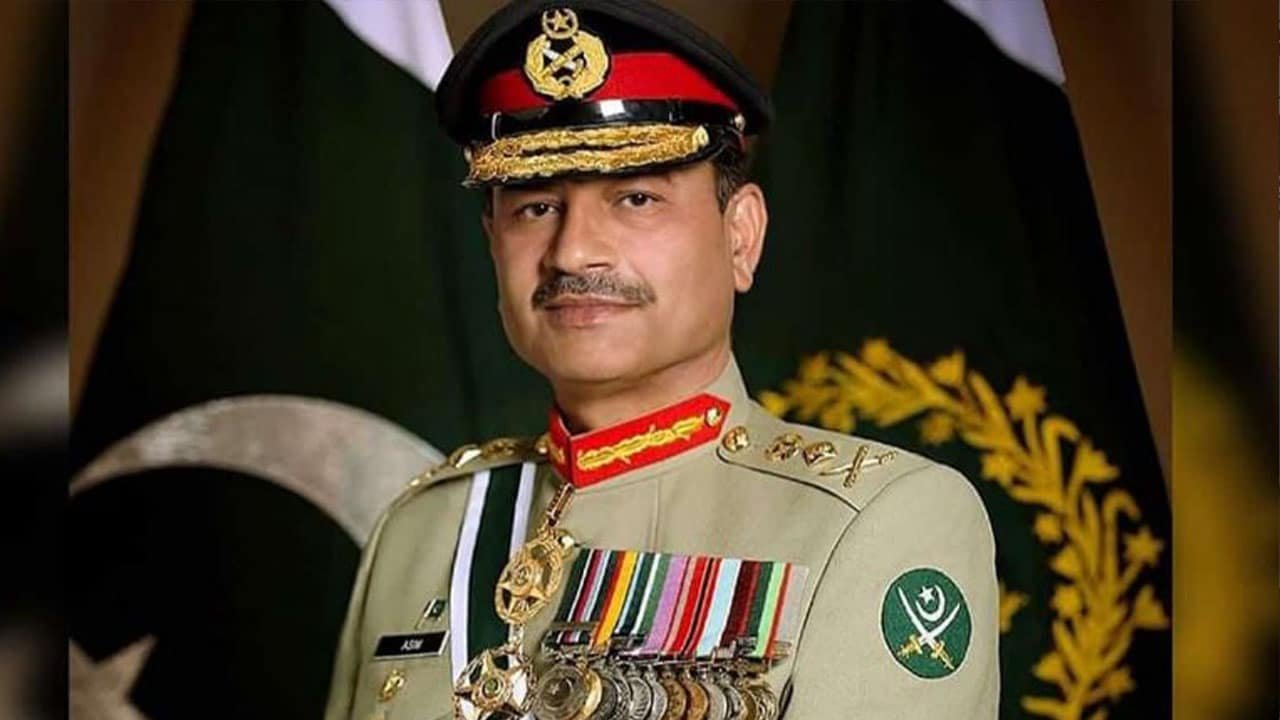
    In response to the pressing economic crisis facing the country, Chief of Army Staff (COAS) General Syed Asim Munir has pledged unwavering efforts to attract foreign investment and rejuvenate the economy, as reported by The News on Tuesday. General Munir made these assurances during a recent extensive meeting with members of the business community, where he engaged openly and candidly with them. 

    During an appearance on Geo News‘ “Aaj Shahzeb Khanzada Kay Sath” programme on Monday, President of the Federation of Pakistan Chambers of Commerce & Industry (FPCCI), Irfan Iqbal Sheikh, expressed optimism following their meeting with the army chief. He revealed that General Munir had conveyed discussions of a potential $25 billion investment from Saudi Arabia, encompassing sectors such as IT, minerals, agriculture, and defence. 

    Highlighting a pivotal development, General Munir disclosed that Saudi Crown Prince Mohammad Bin Salman had committed to depositing $10 billion of this investment in the State Bank of Pakistan (SBP), to be reimbursed in Pakistani rupees or goods, thereby bolstering foreign exchange reserves. 

    General Munir also acknowledged the bureaucratic obstacles hindering investment and emphasised the establishment of a Special Investment Facilitation Council (SIFC) to streamline processes and eliminate bureaucratic impediments. He assured that this initiative would protect investors from interference, bureaucratic hurdles, or legal complications. 

    Irfan Iqbal Sheikh further mentioned that Saudi Arabia and the United Arab Emirates (UAE) had both pledged $25 billion in investments, with Qatar and Kuwait following suit with similar commitments. 

    General Munir expressed determination to combat corruption, particularly by curbing land-grabbing and extortion mafias. To this end, he announced the formation of four task forces to address issues related to the Federal Board of Revenue of Pakistan (FBR), border control, smuggling, and social media, aiming to improve the overall situation. 

    Sheikh stressed that the business community had grown disillusioned but found renewed courage and hope through the army chief’s commitments. 

    Meanwhile, Business Group Chairman Zubair Motiwala noted the distinct approach of General Munir in engaging with traders compared to his predecessors. He highlighted the COAS’s efforts to revive the economy through engagements in Saudi Arabia, the UAE, and upcoming visits to Qatar and Kuwait. 

    Motiwala reported that General Munir had instructed the corps commander to prevent the influx of Iranian diesel into Karachi and issued directives to address land encroachments, corruption, and law enforcement issues. 

    General Munir also emphasised that only registered Afghan refugees would be allowed to stay in Pakistan, while the rest would need to return to their home country. He conveyed Saudi Crown Prince Mohammad Bin Salman’s concerns regarding corruption and bureaucracy in Pakistan. 

    Motiwala further disclosed discussions about the charter of the economy with General Munir, expressing hope that such substantial investments would significantly improve the economic conditions in the country. 

    He also pointed out that state-owned enterprises were incurring significant losses, amounting to Rs1,300 billion, and stressed the need for action, noting that political governments might not fully embrace privatisation but would seek to relieve this burden. General Munir expressed his understanding of the government’s approach to this issue and its commitment to addressing it comprehensively. 

  • Pakistan Army commits full support to govt’s economic revival drive

    Pakistan Army commits full support to govt’s economic revival drive

    In a strong show of solidarity, the Pakistan Army has pledged unwavering support to the government’s ambitious plans for the economic revival of the country. This commitment was reiterated by Chief of Army Staff (COAS) General Asim Munir during the 258th Corps Commanders’ Conference held at the General Headquarters (GHQ).

    The Inter-Services Public Relations (ISPR), the media wing of the Pakistan Army, reported that the conference paid tribute to the brave soldiers who have made supreme sacrifices in defending their homeland against the persistent threat of terrorism. The participants were extensively briefed on the prevailing internal security situation, with special emphasis on the sanctuaries and freedom of action enjoyed by terrorists affiliated with proscribed organisations such as the Tehrik-i-Taliban Pakistan (TTP) in a neighboring country. The availability of sophisticated weaponry to these terrorists was highlighted as a major factor impacting Pakistan’s security.

    Operational preparedness and training aspects of the army were also thoroughly discussed during the Corps Commanders’ Conference. COAS Asim Munir emphasised the significance of objective training as a cornerstone of professionalism, emphasising the need for remaining vigilant against any potential threats to national security.

    Moreover, the conference shed light on the government’s economic revival plan and the Pakistan Army’s role in uplifting various sectors, including agriculture, information technology, mining and minerals, and defense production. The plan falls under the jurisdiction of the recently established Special Investment Facilitation Council (SIFC), aimed at promoting economic growth and revitalisation.

    It is worth mentioning that the Special Investment Facilitation Council was formed following a high-level meeting chaired by Prime Minister Shehbaz Sharif. The meeting was attended by Chief of Army Staff (COAS) General Asim Munir, Chief Ministers, federal and provincial ministers, and other senior government officials. The economic revival plan was unveiled during this meeting, with the objective of bringing about socio-economic prosperity for the people of Pakistan and restoring the country’s rightful position among the international community.

    During the meeting, COAS General Asim Munir expressed the Pakistan Army’s full commitment to support the government’s Economic Revival Plan. The collaboration between the army and the government is seen as crucial in achieving sustainable economic growth and securing a prosperous future for all Pakistanis.

    With the Pakistan Army’s unwavering support and the collective efforts of the government, it is hoped that the Economic Revival Plan will pave the way for a brighter future, enabling Pakistan to reclaim its rightful stature among the comity of nations.