Tag: Economic stability

  • Moody’s upgrades Pakistan’s credit rating to Caa2, citing improved economic stability

    Moody’s upgrades Pakistan’s credit rating to Caa2, citing improved economic stability

    Moody’s Investors Service has upgraded Pakistan’s long-term issuer rating from “Caa3” to “Caa2” with a stable outlook, reflecting a moderate improvement in the country’s macroeconomic conditions and external financial position.

    This decision follows a similar move by Fitch Ratings in July, which upgraded Pakistan’s credit rating from “CCC” to “CCC+.”

    Moody’s stated that the upgrade is a result of reduced default risks, which are now more consistent with a Caa2 rating.

    This improvement is partly due to greater certainty in Pakistan’s external financing, bolstered by the sovereign’s staff-level agreement with the International Monetary Fund (IMF) on 12 July 2024, for a 37-month Extended Fund Facility (EFF) worth $7 billion. The IMF Board is expected to approve the EFF in the coming weeks.

    Pakistan’s foreign exchange reserves have nearly doubled since June 2023, although they remain below the levels required to meet its external financing needs. The country continues to rely on timely support from official partners to fully meet its external debt obligations.

    Despite the upgrade, Pakistan’s Caa2 rating still reflects very weak debt affordability, which poses a significant risk to debt sustainability. Moody’s expects interest payments to consume about half of the government’s revenue over the next two to three years. The rating also takes into account the country’s weak governance and high political uncertainty.

    The stable outlook indicates a balance of risks, with potential for further improvement if the government can reduce its liquidity and external vulnerability risks and achieve better fiscal outcomes, supported by the IMF programme.

    Sustained implementation of reforms, particularly those aimed at increasing government revenue, could enhance debt affordability. Timely completion of IMF reviews would enable Pakistan to secure continued financing from official partners, essential for meeting external debt obligations and rebuilding foreign exchange reserves.

    The upgrade to Caa2 from Caa3 also applies to the backed foreign currency senior unsecured ratings for The Pakistan Global Sukuk Programme Co Ltd, which Moody’s views as direct obligations of the Government of Pakistan. The outlook for The Pakistan Global Sukuk Programme Co Ltd is positive.

    Additionally, Moody’s has raised Pakistan’s local and foreign currency country ceilings to B3 and Caa2 from B3 and Caa1, respectively.

    The two-notch gap between the local currency ceiling and the sovereign rating is due to the government’s significant role in the economy, weak institutions, and high political and external vulnerability risks.

    The two-notch gap between the foreign currency ceiling and the local currency ceiling reflects limited capital account convertibility and relatively weak policy effectiveness.
  • Uncertainty surrounds Pakistan’s $7 billion IMF bailout as approval date still not confirmed

    Uncertainty surrounds Pakistan’s $7 billion IMF bailout as approval date still not confirmed

    Pakistan’s much-anticipated $7 billion bailout package has not yet been scheduled for review by the International Monetary Fund (IMF) executive board, with the agenda extending only until August 30, according to the IMF’s recently released calendar.

    In July, Pakistani authorities and the IMF reached a staff-level agreement, potentially paving the way for a 37-month Extended Fund Facility (EFF) valued at SDR 5,320 million (approximately $7 billion).

    However, this agreement hinges on the approval of the IMF Executive Board, which is contingent upon Pakistan securing necessary financing assurances from its development and bilateral partners.

    The proposed programme is designed to build on the hard-won macroeconomic stability achieved in the past year. It aims to strengthen public finances, reduce inflation, rebuild external reserves, and eliminate economic distortions to foster private sector-led growth.

    Despite five weeks having passed since the staff-level agreement, Pakistan has yet to bridge an external financing gap of up to $5 billion.

    This delay has prevented the country from signing the Letter of Intent (LoI) required to formally request the IMF executive board’s approval of the $7 billion package under the EFF programme.

    The LoI is a critical step in requesting the IMF’s endorsement of the 37-month, $7 billion EFF programme. Without this approval, Pakistan cannot proceed with the much-needed financial support.

  • SBP governor says debt rollovers will ease Pakistan’s FY25 financial burden

    SBP governor says debt rollovers will ease Pakistan’s FY25 financial burden

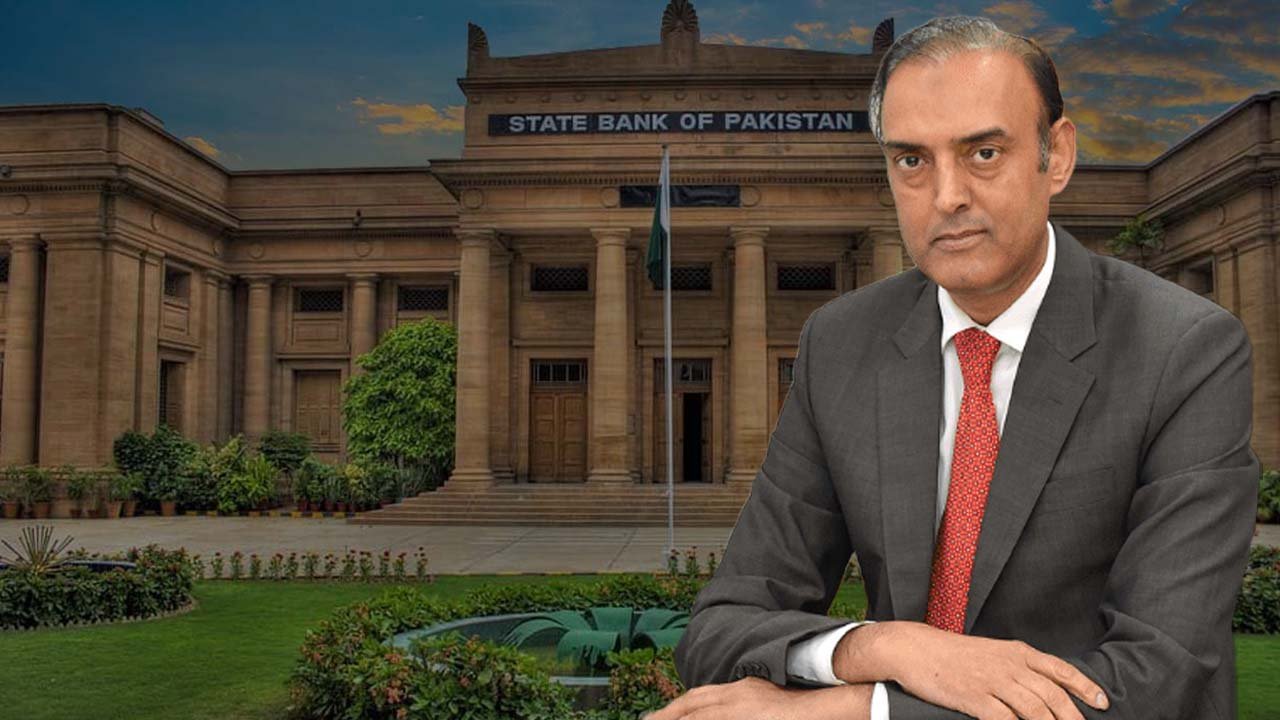
    State Bank of Pakistan (SBP) Governor Jameel Ahmad assured the public on Wednesday that friendly nations will roll over nearly $16 billion of the country’s outstanding debt for the fiscal year 2025.

    This crucial support is expected to provide the government with significant breathing room amid ongoing financial challenges.

    In his testimony before the National Assembly Standing Committee on Finance and Revenue, chaired by MNA Naveed Qamar, Ahmad revealed that Pakistan’s total debt obligations for FY25 amount to $26.2 billion. Following the planned rollovers, the remaining debt to be settled by June next year will be reduced to $10 billion.

    Ahmad also highlighted that the central bank has already repaid $1.5 billion in debt last month, leaving an outstanding amount of $8.5 billion for the rest of the fiscal year.

    Secretary of Finance Imdad Ullah Bosal added that Pakistan is set to receive its first tranche from the International Monetary Fund (IMF) following the rollover of approximately $4 billion in Chinese commercial loans. Additionally, $4.4 billion is expected from the Asian Development Bank and the World Bank.

    The SBP Governor further stated that there is no immediate pressure on external payments, which should contribute to the stability of the Pakistani rupee. He projected that foreign exchange reserves could reach $13 billion by the end of the fiscal year.

    With improved economic conditions, further reductions in the policy rate are anticipated. However, he warned that inflation might rise to 13.5 per cent this fiscal year due to budgetary policies and energy price fluctuations.

    In his presentation, Ahmad outlined a comprehensive five-year plan to the Finance Committee. The plan focuses on restoring price stability, managing the current account deficit, ensuring that foreign exchange reserves cover three months of import needs, and achieving greater financial stability and transparency.

    He noted that GDP growth has been constrained to 3.5 per cent over the past decade and emphasised the need to boost exports by 10 to 15 per cent. Ahmad also assured that there are no restrictions on imports, aiming to foster a more balanced economic growth.

  • Pakistan’s stock market surges to record high following IMF deal

    Pakistan’s stock market surges to record high following IMF deal

    On Monday, Pakistan’s stock market experienced a significant boost after the country secured a $7 billion loan agreement with the International Monetary Fund (IMF) over the weekend.

    The benchmark KSE-100 Index soared by 1,211.51 points, or 1.52 per cent, closing at an all-time high of 81,155.60. This surge reflects investor confidence in the economic stability promised by the new IMF programme.

    According to the IMF, the programme aims to build on the macroeconomic stability achieved over the past year. The successful staff-level agreement is expected to create a conducive environment for financial inflows from other multilateral institutions, bilateral partners, and friendly countries. These inflows are anticipated to bolster Pakistan’s foreign exchange reserves and alleviate external pressures.

    Additionally, the programme will provide much-needed clarity and certainty regarding the economic roadmap, alongside structural reforms over the next three years.

    During the trading session, the index fluctuated within a range of 684.97 points, hitting an intraday high of 81,428.43 points and a low of 80,743.46 points. The total trading volume for the KSE-100 Index was 219.58 million shares.

    Of the 100 companies listed on the index, 65 closed higher, 30 fell, and 5 remained unchanged. The sectors driving the index upwards included Commercial Banks (+295.96 points), Fertilizer (+203.92 points), Oil & Gas Exploration Companies (+193.68 points), Technology & Communication (+165.01 points), and Cement (+124.38 points).

    Conversely, sectors that negatively impacted the index included Tobacco (-20.20 points), Refinery (-4.40 points), Paper, Board & Packaging (-2.88 points), Transport (-2.30 points), and Textile Spinning (-1.42 points).

  • IMF and Pakistan reach agreement on $7 billion extended fund arrangement

    IMF and Pakistan reach agreement on $7 billion extended fund arrangement

    In a significant development, Pakistani authorities and the International Monetary Fund (IMF) team have reached a staff-level agreement on a 37-month Extended Fund Arrangement (EFF) worth SDR 5,320 million or $7 billion, as per a statement issued by the IMF.

    This agreement is contingent upon approval by the IMF’s Executive Board and the timely confirmation of necessary financing assurances from Pakistan’s development and bilateral partners.

    The programme aims to build on the macroeconomic stability achieved over the past year by further strengthening public finances, reducing inflation, rebuilding external buffers, and removing economic distortions to promote private sector-led growth.

    In response to a request from Pakistani authorities, an IMF team led by Nathan Porter, IMF’s Mission Chief to Pakistan, held discussions from May 13-23, 2024, in Islamabad and virtually thereafter on IMF support for Pakistan’s medium-term policy and reform plans.

    The key policy goals of the programme include:

    1. Sustainable public finances: This will be achieved through gradual fiscal consolidation by broadening the tax base and removing exemptions, while increasing resources for critical development and social spending. The authorities plan to increase tax revenues by 1.5% of GDP in FY25 and 3% of GDP over the programme duration. The FY25 budget targets an underlying general government primary surplus of 1% of GDP (2% in headline terms). Revenue collection will be enhanced through simpler and fairer direct and indirect taxation, including properly taxing net income from the retail, export, and agriculture sectors.

    2. Fiscal balance between federal and provincial governments: A National Fiscal Pact has been signed to rebalance spending in line with the 18th constitutional amendment. This will see provincial governments taking on higher spending responsibilities for education, health, social protection, and regional public infrastructure. Provinces will also increase their tax collection efforts, particularly sales tax on services and agricultural income tax. From January 1, 2025, all provinces will harmonise their Agriculture Income Tax regimes with federal tax regimes.

    3. Reducing inflation and building external buffers: Monetary policy will focus on supporting disinflation to protect real incomes, especially for the vulnerable. The State Bank of Pakistan (SBP) will maintain a flexible exchange rate and improve the functioning and transparency of the foreign exchange market to build reserves and buffer against shocks. Financial stability will be enhanced by deepening access to financing, strengthening financial institutions, addressing undercapitalised banks, and upgrading the crisis management framework.

    4. Energy sector reforms: The authorities aim to restore energy sector viability and minimise fiscal risks through timely adjustment of energy tariffs, decisive cost-reducing reforms, and avoiding unnecessary expansion of generation capacity. Targeted subsidy reforms will replace cross-subsidies to households with direct BISP support.

    5. Private sector and export dynamism: Efforts will be made to improve the business environment, create a level playing field for businesses, and remove state distortions. This includes improving the operations and management of State-Owned Enterprises (SOEs), prioritising profitable SOEs for privatisation, and enhancing transparency and governance of the Pakistan Sovereign Wealth Fund.

    Additionally, incentives for Special Economic Zones will be phased out, agricultural support prices and subsidies will be reduced, and no new regulatory or tax-based incentives will be introduced that could distort the investment landscape.

    6. Anti-corruption and governance reforms: The authorities have committed to advancing anti-corruption measures, governance, and transparency reforms, and gradually liberalising trade policy.

    “The IMF team is grateful to the Pakistani authorities, private sector, and development partners for their hospitality during the visit to Islamabad and for the fruitful discussions,” the statement reads.

  • Economic stability in Pakistan has revived trust of international bodies: Finance Minister

    Economic stability in Pakistan has revived trust of international bodies: Finance Minister

    Finance Minister Muhammad Aurangzeb has stated that Pakistan’s economic stability has restored the trust of international institutions.

    Speaking at a press conference in Islamabad, Aurangzeb highlighted the significant improvement in the country’s economy, attributing this success to the government’s prudent economic policies.

    He emphasised that these policies would lead to sustainable economic stability.

    Aurangzeb reaffirmed the government’s commitment to digitising the Federal Board of Revenue (FBR) to enhance transparency and eliminate corruption. He stressed the importance of minimising human intervention to make the FBR system free from malpractices.

    The minister noted that efforts are underway to bring retailers into the tax net, with 42,000 retailers already registered. He pledged to raise the tax-to-GDP ratio to 13 per cent within the next three years through pragmatic reforms across various sectors of the economy.

    Aurangzeb’s remarks came shortly after the government passed the Federal Budget 2024-25 in the National Assembly, ahead of critical discussions with the International Monetary Fund (IMF).

    The budget, which included specific amendments, further increased taxes without offering relief to taxpayers.

  • Economic Survey FY24: Pakistan sees economic progress with reduced deficit, stable rupee

    Economic Survey FY24: Pakistan sees economic progress with reduced deficit, stable rupee

    Federal Minister for Finance and Revenue, Senator Muhammad Aurangzeb, announced significant strides in Pakistan’s economic landscape despite numerous challenges.

    Addressing a press conference at the launch of the Economic Survey of Pakistan 2023-24, the minister highlighted a 30 per cent increase in revenue collection, a reduced current account deficit, lower inflation rates, and a stabilised currency.

    Senator Aurangzeb emphasised the remarkable economic turnaround from a previously precarious situation marked by a 0.2 per cent GDP contraction, a 29 per cent rupee depreciation, and dwindling foreign exchange reserves that had dropped to merely two weeks’ worth of import cover.

    He acknowledged the difficulties faced by the large-scale manufacturing sector, primarily due to high-interest rates and energy issues, but noted that the agriculture sector had provided a much-needed boost with bumper crops.

    “The agriculture, dairy, and livestock sectors are poised to remain key drivers of growth in the coming years,” Aurangzeb stated.

    Reflecting on the economic journey of the current fiscal year, Aurangzeb credited Prime Minister Shehbaz Sharif’s leadership and the pivotal decision to engage with the International Monetary Fund (IMF). The signing of a nine-month Standby Agreement with the IMF, he said, was crucial for the country’s progress and economic stability.

    “The decision to approach the IMF has been fruitful, restoring confidence in Pakistan’s economy,” Aurangzeb noted. He underscored the successful conclusion of the IMF’s Stand-By Arrangement (SBA) as evidence of Pakistan’s commitment to economic discipline, which had been acknowledged by the IMF.

    Looking ahead, Aurangzeb mentioned ongoing productive and constructive dialogues with the IMF, focusing on Pakistan’s reform agenda. “This is Pakistan’s program, supported and funded by the IMF,” he said, detailing areas such as tax revenue enhancement, energy sector improvements, power sector reforms, and the privatisation of state-owned enterprises.

    The minister highlighted the dramatic reduction in the Current Account Deficit (CAD) from an estimated $6 billion to just $200 million. He also noted that Pakistan had experienced a current account surplus for three consecutive months, with remittances reaching $3.2 billion in May.

    He attributed the currency’s stabilisation and the decrease in inflation to a series of administrative measures by the caretaker government, including crackdowns on illegal financial activities like Hundi-Hawala, smuggling, and regulating transit trade to Afghanistan.

    Additionally, interventions by the State Bank of Pakistan had curbed market speculation, further contributing to the currency’s stability.

    Senator Aurangzeb concluded on an optimistic note, expressing confidence in the ongoing positive dialogue with the IMF and reaffirming the government’s commitment to achieving Pakistan’s economic goals.

  • Pakistan’s forex reserves decline by $63.3 million to $9.09 billion

    Pakistan’s forex reserves decline by $63.3 million to $9.09 billion

    The State Bank of Pakistan (SBP) has reported a marginal decline in the nation’s foreign exchange reserves, indicating a decrease of $63.3 million or 0.69 per cent week over week (WoW) to $9.09 billion, according to data released on Thursday.

    The central bank attributed this downturn primarily to debt repayments. In a statement issued by the SBP, it was highlighted that during the week ending May 24, 2024, SBP reserves experienced a $63 million decrease to reach $9.09 billion, primarily due to external debt repayments.

    Similarly, Pakistan’s overall reserves witnessed a decrease of $270 million or 1.85 per cent WoW, amounting to $14.32 billion. Furthermore, commercial banks saw a decline in reserves by $206.7 million or 3.81 per cent WoW, totaling $5.22 billion.

    Despite these fluctuations, the current fiscal year has seen a remarkable increase in SBP-held reserves, amounting to $4.63 billion or 103.6 per cent.

    This surge follows Pakistan’s attainment of the International Monetary Fund’s (IMF) Stand-By Arrangement (SBA) of approximately $3 billion by the end of June last year.

    This arrangement not only bolstered the nation’s reserves but also facilitated access to additional multilateral and bilateral funding.

    Furthermore, the ongoing calendar year has witnessed a notable increase of $872.5 million or 10.61 per cent in reserves, reflecting continued efforts to stabilise and strengthen Pakistan’s economic position.

  • IMF urges gas sector reforms to curb circular debt

    IMF urges gas sector reforms to curb circular debt

    The International Monetary Fund (IMF) highlighted the significance of prompt gas tariff determinations and notifications, crucial in curbing the escalating gas circular debt, while safeguarding vulnerable households.

    Stressing the necessity of adhering to the mandated 40-day window, the IMF underscored the urgency to initiate these measures commencing with the June 2024 semiannual adjustment.

    In its latest report, the IMF conducted its second and final review within the stand-by arrangement framework, released on Friday.

    It noted a slight decrease in natural gas circular debt to Rs2,083 billion (equivalent to 2.0 per cent of GDP) as of January 2024, attributing this decline to the resumption of gas tariff adjustments, albeit with some delay, aligned with cost recovery objectives.

    The Fund recommended a continued trajectory towards eliminating captive power usage, advocating for the prioritization of cheaper natural gas for the most efficient power plants.

    Additionally, it proposed efforts to standardize gas prices for all fertilizer companies, aligning with plans to implement a weighted average cost of gas (WACOG) across Pakistan, ensuring uniformity while facilitating cost recovery.

    Acknowledging Pakistan’s recent 24 per cent gas tariff increase on February 15, the report highlighted its progressive rate structure protecting residential consumers, while enhancing and equalizing prices for fertilizer companies.

    Furthermore, it recognized Pakistan’s adherence to the Structural Benchmarks (SBs) concerning the notification of the semiannual gas tariff adjustment.

    The report also shed light on the increasing prominence of Regasified Liquefied Natural Gas (RLNG) within Pakistan’s gas mix, driven by dwindling natural gas supplies exacerbated by years of under-pricing.

    Consequently, RLNG has been diverted to domestic users at subsidized rates, underscoring the complexity of the gas sector dynamics.

  • Study reveals foreign aid to Pakistan fails to drive economic growth

    Study reveals foreign aid to Pakistan fails to drive economic growth

    A report by the Pakistan Institute of Development Economics (PIDE) reveals that foreign aid to Pakistan, despite commitments exceeding $200 billion, has failed to deliver sustainable economic growth.

    The report, titled “Foreign Aid Donors and Consultants Analysing Pakistan’s Foreign Aid Inflows and Their Outcomes,” highlights that while about $155 billion has been disbursed from the committed amount, there’s little evidence that these funds have significantly improved Pakistan’s economy.

    PIDE finds that the aid has not met key criteria for effective foreign aid, as outlined in the influential Millikan-Rostow report.

    These criteria include the ability to transfer resources without creating future liabilities, avoiding source-tied aid, promoting sustainable economic development, increasing the marginal savings rate to drive capital formation, and supporting development programmes that enable productive use of additional capital.

    The PIDE report notes that Pakistan’s aid programmes fail to meet these benchmarks.

    According to Mettis Global, the research acknowledges some positive outcomes in specific sectors, such as the United Nations-led vaccination efforts, which have improved public health.

    However, it also points out that this success has led to greater dependency on external sources for vaccines, raising questions about the long-term sustainability of such programmes.

    Overall, the report suggests that despite the significant amount of foreign aid received, Pakistan’s economy has not experienced the desired transformation.

    Even when examining Official Development Assistance (ODA) by sector, the improvements are marginal and do not lead to substantial aggregate economic growth.

    This finding raises concerns about Pakistan’s reliance on foreign aid and underscores the need for more effective and sustainable economic policies.