Tag: economic survey

  • UN survey forecasts modest growth for Pakistan’s GDP amid inflation projections

    UN survey forecasts modest growth for Pakistan’s GDP amid inflation projections

    Pakistan is projected to experience a real GDP growth rate of 2 per cent in 2024, with a slight increase to 2.3 per cent expected in 2025, according to a United Nations economic survey.

    The survey, titled ‘Economic and Social Survey of Asia and the Pacific 2024: Boosting Affordable and Longer-term Financing for Governments,’ released on Thursday, also forecasts a decrease in the inflation rate from 26 per cent to 12.2 per cent in the same period.

    The report highlights the challenges faced by Pakistan’s economy in 2023, citing political unrest and a significant flood that disrupted agricultural production.

    To address fiscal pressures, Pakistan, along with Sri Lanka, sought external assistance from the International Monetary Fund (IMF), with additional support from bilateral partners such as China, Saudi Arabia, and the United Arab Emirates.

    Both countries are implementing fiscal adjustments, including debt restructuring in Sri Lanka and subsidy removal in Pakistan’s power sector.

    Despite moderate tax gaps in Bangladesh, Pakistan, and Sri Lanka, the report suggests that improving tax policies and administration alone may not suffice to bridge development financing gaps, emphasising the need for broader improvements in socioeconomic development and public governance.

    The macroeconomic conditions in the developing Asia-Pacific region remain challenging, with a disparity in economic growth among different economies.

    While some larger economies experienced a rebound in economic growth, others saw only moderate growth in 2023. Pakistan’s GDP growth rate for the second quarter of fiscal year 2023–24 stood at a modest 1 per cent, below earlier projections ranging from 2–3 per cent.

  • Finance Minister rejects idea of coalition govt entering fresh IMF programme

    Finance Minister rejects idea of coalition govt entering fresh IMF programme

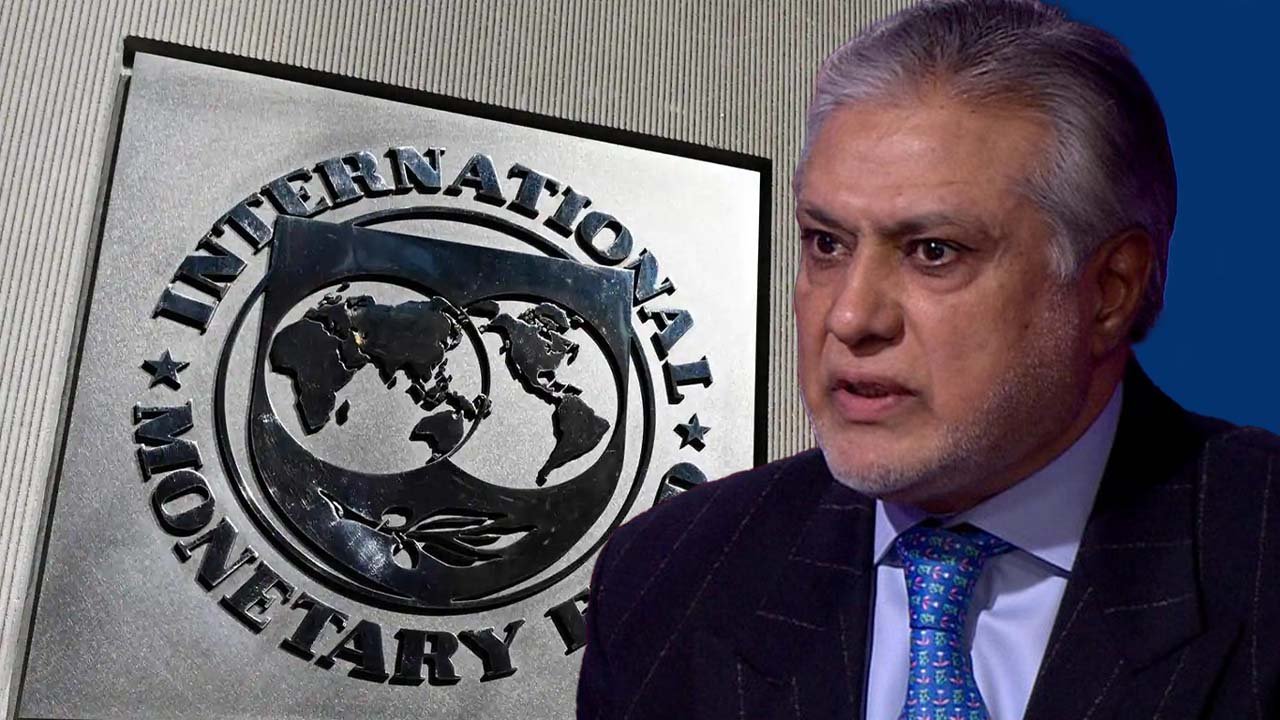
    Pakistan’s Finance Minister, Ishaq Dar, has voiced his opposition to the idea of entering into a new International Monetary Fund (IMF) bailout programme without the consent of the incoming government.

    Speaking at a press conference, Dar emphasised the need for democratic fairness and stated that any future IMF agreement should be the prerogative of the government elected after the ongoing programme concludes on June 30.

    The minister also highlighted Pakistan’s efforts in meeting IMF requirements and expressed hope for the successful completion of the ninth review before the programme’s conclusion.

    Government’s efforts and budget transparency

    During the press conference, Minister Dar reassured journalists that the coalition government had provided the IMF with budgetary information and expressed confidence that the budget numbers shared were without objection.

    He revealed that Prime Minister Shehbaz Sharif had agreed to share the numbers, and there were no issues concerning the figures presented. This transparency is a crucial step in unlocking the ninth review and securing the remaining funds from the IMF’s Extended Fund Facility.

    IMF’s conditions and economic challenges

    Under the current IMF programme, Pakistan has been required to implement several challenging measures, including the removal of energy subsidies, allowing the rupee to float against the US dollar, raising taxes and duties, and restricting imports.

    These measures aim to address Pakistan’s balance-of-payments crisis and reduce its external debt burden. However, the country’s economic challenges, combined with political uncertainty and a decline in foreign investment, have made the task more difficult.

    Esther Perez Ruiz, the IMF’s resident representative for Pakistan, stated that there is only enough time for one final board review before the scheduled end of the $6.5 billion Extended Fund Facility.

    Ruiz emphasised the need for Pakistan to restore the proper functioning of the foreign exchange market, present a budget for FY24 aligned with programme objectives, and secure credible financing commitments to close the $6 billion funding gap. These actions will pave the way for the final review and release of remaining funds.

    The call for ‘democratic’ decision-making

    Finance Minister Ishaq Dar emphasised the importance of democratic principles in determining Pakistan’s involvement in any future IMF programmes. He stressed that the decision to enter into a new programme should rest with the government elected after the ongoing programme concludes, rather than being imposed on a new administration.

    Dar’s stance reflects the need to ensure that any commitments made align with the vision and policies of the elected government, fostering a fair and democratic approach.

    Pakistan’s Finance Minister Ishaq Dar has voiced his opposition to the undemocratic imposition of a new IMF bailout programme. He said that any future agreement should be the prerogative of the incoming government, allowing them to shape policies and commitments in alignment with their mandate.

    As Pakistan works towards meeting the IMF’s requirements and unlocking the remaining funds, it is crucial to balance economic stability with democratic decision-making to ensure sustainable growth and development.

  • World Bank cuts Pakistan’s GDP growth forecast from 4% to 2%

    World Bank cuts Pakistan’s GDP growth forecast from 4% to 2%

    Due to the unstable economy and floods, the World Bank predicted that Pakistan’s economic growth would drop by half, falling by 4 per cent to 2 per cent, during the current fiscal year.

    According to the Bank’s latest report, “Global Economic Prospects,” Pakistan is experiencing growing economic woes, especially those caused by the recent flooding as well as ongoing policy and political uncertainties.

    “Pakistan faces mounting economic difficulties and Sri Lanka remains in crisis. In all regions, improvements in living standards over the half-decade to 2024 are expected to be slower than from 2010-19,” the World Bank stated in Global Economic Prospects released on Tuesday.

    Pakistan’s currency declined by 14 per cent between June and December, and its national risk premium climbed by 15 per cent over this same time frame due to the nation’s low foreign exchange reserves and rising sovereign risk.

    It went on to say that growth is anticipated to pick up to 3.2 per cent in the fiscal year 2023–24 (FY24), still under previous forecasts, as the country implements policy measures to stabilise macroeconomic conditions, inflationary pressures subside, and reconstruction after the floods gets underway.

    According to the analysis, Pakistan’s recent floods are thought to have cost the country damage equal to 4.8 per cent of GDP.

  • Pakistan’s textile sector witnesses a significant downturn in growth

    Pakistan’s textile sector witnesses a significant downturn in growth

    Pakistan’s Economic Survey 2021-22 reveals that the textile industry expanded by 3.2 per cent during July-March in fiscal year 2021-22, compared to 8 per cent in the same period last year, demonstrating a considerable setback in progress.

    The poundage of the textile sector has declined from 20.9 to 18.16 per cent in QIM 2015-16, but it remains the highest among all LSM sectors, according to Brecorder.

    Woolen segment production grew the most, with a 38.9 per cent increase in blankets, a 27.9 per cent increase in woollen and carpet yarn, and a 19.1 per cent increase in woollen worsted cloth. Yarn and cloth production increased by 0.7 per cent and 0.3 per cent, respectively.

    Congruent production units, invariant capacity and elevated cotton prices owing to demand and supply gap disruptions have moderated the growth momentum of the cotton sector, stated the Economic Survey 2021-22 document, unveiled by Finance Minister Miftah Ismail.

    “Depreciation of PKR restrained the production of jute, as most of the raw material is imported from Bangladesh. However, surge in imports of textile machinery, rising demand for concessionary financing from textile firms and high exports of this sector showing a sizable improvement in the textile sector,” it added.

    With a weight of 6.08 in the LSM, wearing garments has been detached from the textile sector. It grew by 34 per cent compared to 35.6 per cent compression.

    The sector has been growing traction both locally and internationally, with garment production increasing by 34 per cent during the time frame. Garment exports have also increased by 33.9 per cent in aspects of volume.

    Textile is Pakistan’s most valuable manufacturing sector, with the widest production chain and intrinsic value addition ability at each point of the process, from cotton to ginning, spinning, fabric, dyeing and printing, made-ups and garments.

    This sector accounts for well almost one-fourth of industrial value addition and employs approximately 40 per cent of the industrial workforce. Textile products have maintained an average share of about 61.24 per cent in national exports, excluding seasonal volatility.

    In the meantime, knitwear exports decreased by 4.8 per cent in quantity while increasing by 34.1 per cent in value during the period under review. Towel exports totaled $819.6 million, up from $692.1 million, representing an increase of 18.4 per cent in value and 5.1 per cent in quantity.

    The ready-made garment industry has surfaced as a crucial small-scale industry in Pakistan, and it is a good source of providing employment opportunities to many people with a very low capital investment. Exports increased by 33.9 per cent in quantity and 26.2 per cent in value from 27.8 million dozen to 37.3 million dozen worth $2.8 billion, up from $2.27 billion in the same period last year.

    Meanwhile, Pakistan exported synthetic textile fabrics worth $343.59 million in comparison to $269.20 million in the same period last year, representing a 27.6 per cent increase. In terms of volume, synthetic textile exports fell by 33.6 per cent.

    The ceremony was also attended by Ahsan Iqbal, Minister of Planning, Development, and Special Initiatives, Khurram Dastgir, Federal Minister of Power, and Aisha Ghaus Pasha, Minister of State for Finance and Revenue.

    Furthermore, the survey underscored the key features of the government’s policies aimed at restoring macroeconomic stability and putting the economy on a growth path. Addressing the launch event, Miftah Ismail stated that the government has avoided a default due to the difficult decisions made by the current administration. He said that the country is now on the path of stability.

  • 59% traders consider Pakistan is not ‘moving in right direction’: Gallup Survey

    The ratio of traders who consider that Pakistan is not moving in the right direction has jumped from 37 per cent from the last quarterly report to 59 per cent states Gallup Pakistan’s fourth quarterly report of Business Confidence Index (BCI).

    The survey was conducted from October 13-28 and nearly 580 respondents, belonging to the country’s traders’ community participated in it.

    The report states that responders have expressed great anxiety over the future of business in the country as the ratio of those predicting improvement in future business has dropped from 70 per cent to 61 per cent in the survey, reports Geo News.

    Surprisingly, the given statistics in the report show that in Gallup Pakistan’s second quarterly report, 49 per cent of traders were happy with business activity but now 54 per cent of them expressed their satisfaction.

    While answering the question, “which issues do the respondents want the government to address instantly”, 48 per cent declared inflation as the biggest problem for business, 16 per cent sought relief for the business class, 14 per cent for the stability of the Pakistani currency, 13 per cent for consistency in government policies, 6 per cent for controlling corruption, 6 per cent for the elimination of Covid-19 and ending lockdowns, 3 per cent for ending political instability, 3 per cent for improving export policies and two percent for non-availability of PayPal.

    Among them, seven percent of respondents said they had no issue which could be resolved by the government.

  • 57% Pakistanis losing confidence in PM Khan overcoming economic crisis: Survey

    57% Pakistanis losing confidence in PM Khan overcoming economic crisis: Survey

    According to the quarterly survey by Pulse Consultants, almost six out of 10 people have no confidence in Prime Minister (PM) Imran Khan’s claim of coming out of the economic crisis, reports The News.

    The survey is based on 1,809 respondents’ opinions who were interviewed from October 04, 2021 to October 10, 2021. It covered 60+ cities from all provinces of Pakistan.

    According to the survey, the number of people losing faith in PM’s economic policies is around 57 per cent coupled with a drop in those who were confident that the prime minister will be able to turn the tide.

    In July, 17 per cent respondents expressed confidence in PM’s policies, which in the current survey has dropped to seven percent. Regarding questions about the direction of the economic policies, 56 per cent respondents in July found them to be in the wrong direction, but three months later it has risen by 19 per cent to 77 per cent. On the contrary, those perceiving them to be on the right track have dropped to 24 per cent from 43 per cent in July.

    Anxiety about the wrong direction is high is in the main political battleground provinces Punjab (79 percent) and Sindh (73 percent), as per the survey.

    Since November 19, 2018 more than 95 per cent believe that inflation has increased after every three months.

    Furthermore, the survey states that 68 per cent of people do not have savings and most of them have reduced their expenditures to make ends meet.

    When the respondents were asked about the country’s major concern, 77 per cent complained about inflation whereas 35 per cent found corruption, 25 per cent unemployment, 11 per cent load shedding, while 10 per cent termed inability to meet expenses as their biggest problem.

    The Pulse Consultant also asked the respondents about the performance of PM’s Adviser on Finance and Revenues, Shaukat Tarin, which showed that 53 per cent were dissatisfied with him.

    The survey was conducted through CATI (Computer assisted telephonic interviews), a state-of-the-art technology where all calls are recorded.

    The country is Heading Towards Wrong Economical Direction

    • Three amongst four Pakistanis believe that country is heading towards a wrong economic direction
    • In July 2021 there were 56% have that opinion but in October 2021 with an increase of 19%, 75% have that opinion
    • Anxiety about the wrong direction is high in Punjab (79%) & Sindh (73%) – the main political battleground followed by KP – PTI’s hometown (67%)

    PM Claim About Restoration of Country Economic Outlook

    • In July 2021, 6 out of 10 respondents (62%) had overall belief on PM IK’s claim that “country is out of economic crisis”
    • Now in October 2021, wave condition is vice versa – almost 6 out of 10 (57%) have opposite opinion and have no belief in PM IK’s narrative (In July 38% had no believe now by the increase of  19% -57% have no belief)

    Satisfaction with Shaukat Tarin

    • Dissatisfaction increased 15% (from 38% to 53%)
    • Satisfaction decreased 22% (from 35% to just 13%)

    Inflation Trend

    • Almost every Pakistani hit by inflation and 98% are reporting that ‘Inflation increased in past three months’

    Price Hike – Major Cause of Dissatisfaction

    • Like previous wave, in July Y2021 ‘Inflation’ is once again ranked as the gravest issue by (with the increase of 5%) 77% of the respondents.
    • If we read it with the answer “Expenses Not Meet” (اخراجات پورے نہیں ہوتے),of 10% – then it will reach to 87% – Ever highest in past three years
    • This is followed by & ‘Corruption’ (35%) & ‘Unemployment’ (25%), in  this wave ‘Corruption’ – overtake the ‘Unemployment’

    Expenses

    We asked the same questions about “Monthly Expenses Management” back in July 2020, in July 2020, 41% had the opinion that – their monthly expenses are according to their income – but with the decline of 9% , now 32% have the same opinion

    • Jul-20 Oct-21Monthly Expenses Meet 41% 32%
    • Monthly Expenses Not Meet 59% 68%
    • Punjab & KPK – where #PTI is holding the provincial Govt. unrest increase significantly – specially in KP
    • If we compare the results of July 2020 & October 2021 (after 13 months) – Upper Socio Economic Class is also complaining that their monthly expenses are not meeting
    • Those who claimed that – their monthly income meet expenses – 31% amongst them claimed that they save any money
    • On the other hand – those who complained that their household expenses are not meet – 37% amongst them reduced their expenses, 30% borrow money and 30% do some extra job/work other than regular
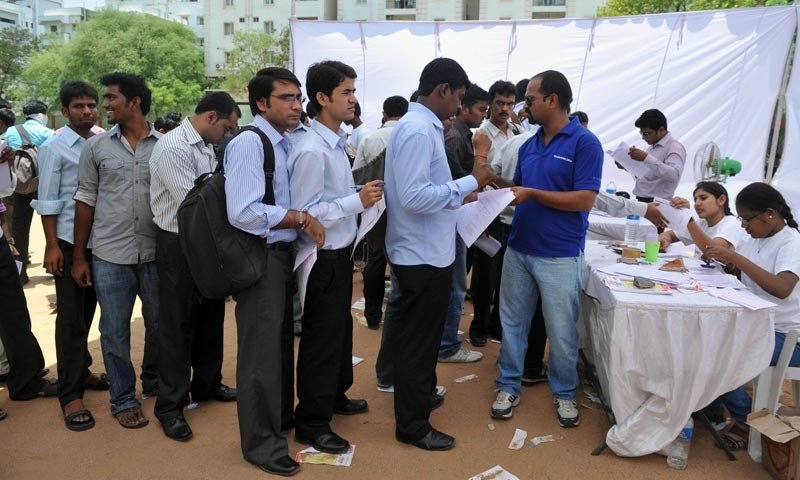
  • 40 per cent educated women are jobless in Pakistan, 1.5 million people applied for peon position

    40 per cent educated women are jobless in Pakistan, 1.5 million people applied for peon position

    The Pakistan Institute of Development Economics (PIDE) informed the Senate Standing Committee on Planning and Development that 40 per cent of educated women across the country are jobless, Nadir Guramani reports for Dawn.

    The PIDE in its briefing, stated that 24 per cent of educated people were jobless, adding that the unemployment rate in the country has reached an alarming figure of 16 per cent contrary to the government’s claim of 6.5 per cent.

    The meeting was chaired by the Deputy Chairman of the Senate, Saleem Mandviwala.

    According to the PIDE, the study was done by a company abroad as no research has been conducted by the government, although several research institutes were operating in the country.

    The study also states that 80 per cent of people get themselves enrolled in M.Phil after failing to get a job and they have not been included in the given statistics.

    The Senate committee was told that at least 1.5 million people applied for a peon’s position in a high court that was recently advertised. “Among those applying for the job included M.Phil degree holders,” PIDE officials stated.

    The officials proposed that laws should be made to grant licenses to hawkers to enable them to get a job, this would create 20 to 30 million employments for the citizens. They also debated that universities in Pakistan were approved through a “flawed” bill by the Higher Education Commission (HEC).

    In June, the Economic Survey 2020-21 revealed that the spread of the coronavirus pandemic had severely affected businesses and other economic activities due to the imposition of lockdowns which left approximately 20.71m workers jobless.

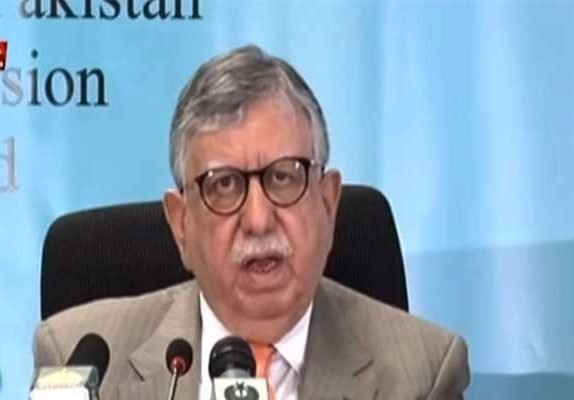
  • Shaukat Tarin presents the Pakistan Economic Survey 2020-21

    Shaukat Tarin presents the Pakistan Economic Survey 2020-21

    Finance Minister Shaukat Tarin presented the Pakistan Economic Survey 2020-21 at a press conference in Islamabad on Thursday. However, the document did not have the latest figures on poverty and unemployment.

    Tarin revealed that the industrial and services sectors had helped the country post-Gross Domestic Product growth of 3.94 per cent in the first nine months of the fiscal year [FY](July to March), significantly higher than the target of 2.1 per cent.

    “The agriculture and manufacturing sectors helped the economy grow to 4.4%, laying stress on the need for sustainable growth in Pakistan in the years to come,” added Tarin.

    Coronavirus Pandemic

    The minister opened his press briefing by speaking highly of Prime Minister Imran Khan’s policies in combating the coronavirus pandemic.

    “The government itself had set [GDP] growth will be 2.1pc and the IMF predicted even lower. But the decisions by this government such as incentivising manufacturing and textiles, construction, and interventions in agriculture have helped the economy recover,” said Tarin.

    He said many people lost their jobs when the pandemic hit Pakistan, however, due to PM’s visionary policy of not imposing a complete lockdown across the country, millions of people who were unemployed were hired again. 

    “The economy is recovering,” he said. 

    Remittances

    Tarin said Pakistan’s remittances had broken records, adding that they had crossed $26bn. He said that lately imports, especially food in the form of wheat and sugar, were increasing as Pakistan’s economy was growing at the same time. 

    “We were net exporter of food but now, we have become a net importer,” he said. “Our exports registered a growth but our remittances increased manifold,” he added. 

    Ehsaas Programme

    Tarin spoke highly of the Ehsaas programme, adding that the World Bank had described it as “one of the best and the largest” poverty alleviation initiatives across the globe. 

    “Full credit goes to Sania Nishtar,” he said, adding that handing out cash to 15 million people was not a small achievement.

    Growth rate

    Tarin said he had told the prime minister it was time to focus on sustainable growth “until we go to 5-8pc GDP growth”.

    “We will do interventions and take care of the poor. The poor man has been crushed in this stabilisation phase because the dreams we have shown them have been of a trickledown economy. And this can only happen when growth is sustainable and continuous for 20-30 years,” he said.

    “Countries which had sustainable growth, they grew continuously for 20-30 years. What have we done? Every time we grow by borrowing money, which is credit-based growth.”

    Current Account

    According to the survey, during FY 2021, while the world was reeling from the economic impact of the pandemic, Pakistan’s “external sector appeared as a key buffer for resilience.”

     “The main driver of improvement in current account balance was the robust growth in remittances,” it stated.

    Trade Deficit

    “During July-March FY 2021, export of goods grew by 2.3 percent to $18.7 bn as compared to US$ 18.3 bn the same period last year. Import of goods grew by 9.4pc to $37.4 bn as compared to US$ 34.2 bn last year. Consequently, the trade deficit increased by 17.7per cent to $18.7bn as compared to $15.9bn last year,” the survey said.

    Inflation

    The finance minister said the government wanted to control inflation “but prices are still high and affecting the common man”.

    “So the way to solve this is by increasing production and that is why we have focused on agriculture in this budget,” Tarin said.

    Federal Board of Revenue (FBR)

    Speaking about the FBR, Tarin said he would end the practice of people being harassed by the bureau. “FBR will not audit [businesses or persons] but a third-party audit will be conducted,” he said. 

    International Monetary Fund (IMF)

    Tarin said Pakistan’s negotiations with the IMF were ongoing, adding that the international money lender had asked the government to hike tariffs and increase taxes. 

    The finance minister said Pakistan and the IMF want the same thing; sustainable growth, adding that the country cannot afford to increase taxes or hike tariffs so that the poor and the salaried class do not feel additional burden of inflation. 

    “This is a red line for the prime minister,” he said. “We will not further burden the poor,” he added. 

    Energy Sector

    Tarin said Pakistan’s economy was burdened due to the overcapacity in the power sector, saying that “it was a very big challenge and a black hole” for Pakistan. 

    Privitisation

     Tarin said it was fair to ask how he can privatise state-owned enterprises when all others, before him, promised to do the same but failed to. 

    “Nawaz Sharif used to shout the same slogan during the first time [when he was prime minister] and then for a second time [when he again became the prime minister] and then a third, but nothing happened,” he said.